Choosing the right expandable foldable luggage bag can feel like navigating a maze of specifications, materials, and marketing claims. Whether you are a frequent flyer, a weekend road-tripper, or someone who just needs a reliable bag that disappears into a closet when not in use, the stakes are real. A poor choice means broken zippers halfway through a trip, a bag that won’t fit in the overhead bin, or a sore shoulder from hauling a heavy, poorly designed carry-on. This guide exists to cut through the noise and give you the confidence to pick a bag that matches your travel style, budget, and storage reality.
Over the next several sections, we will break down every critical factor you need to evaluate, from the type of fabric and wheel construction to the nuances of expandable mechanisms and warranty coverage. We will compare the distinct categories of foldable luggage on the market, highlight the most common (and costly) mistakes shoppers make, and provide a clear budget breakdown so you know exactly what your money buys at each price point. By the end, you will have a personalized checklist and expert strategies to secure the best deal possible.
The market for expandable foldable luggage bags has exploded in recent years, driven by airline fee hikes, the rise of minimalist travel, and innovations in lightweight, high-strength materials. You will find everything from ultra-budget polyester totes that fold into a sandwich-sized pouch to premium polycarbonate-framed spinners that collapse flat enough to slide under a bed. Understanding where your needs fit in this spectrum is the first step to a purchase you won’t regret.

What to Look for When Buying Buying Guide
1. Material and Fabric Durability
The fabric is the skin of your luggage, and it takes the brunt of the abuse. For expandable foldable luggage bags, you will primarily encounter three categories: polyester, nylon, and hybrid composites. Polyester, often labeled by its denier count (e.g., 600D, 1200D), is the workhorse of the budget and mid-range market. It resists UV fading and holds color well, but lower denier counts can snag on rough baggage carousels. Nylon, particularly ballistic nylon (originally developed for flak jackets) and Cordura, offers superior tear resistance and a softer hand feel, but it comes at a higher price and can absorb water unless treated with a durable water repellent (DWR) coating.
Hybrid composites, such as those blending polyester with TPU (thermoplastic polyurethane) films or using proprietary weaves like Helix or Makrolon, aim to deliver the lightness of fabric with the puncture resistance of hardside luggage. When evaluating material, look for the denier rating, but also check for ripstop construction (a grid pattern of thicker threads that stops tears from spreading) and the quality of the coating. A 600D polyester with a high-quality TPU backing and DWR finish will often outperform a cheap 1680D “ballistic” nylon that lacks proper coating. Remember, the fabric must withstand not just abrasion but also the repeated stress of folding and unfolding, so flexibility without cracking is key.
2. Expandable Mechanism and Capacity Gain
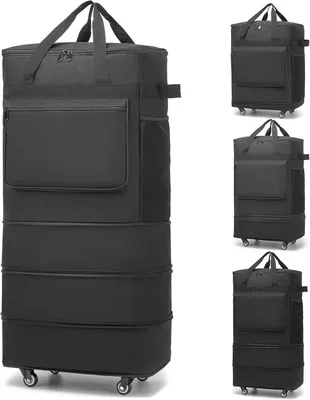
The “expandable” feature is the star of the show, but not all expansion zippers are created equal. The most common design uses a gusseted zipper that releases a folded panel of fabric, adding anywhere from 1.5 to 3 inches of depth. This typically translates to a 15-25% volume increase. However, the execution matters immensely. Cheap models use a single coil zipper that can separate under pressure, while premium bags employ dual-coil or molded-tooth zippers with a locking slider that distributes stress evenly.
Check how the expansion panel is anchored. It should be sewn into the main body with reinforced bar-tack stitching at the corners, not just a simple seam. When expanded, the bag’s center of gravity shifts; a well-designed bag will have a secondary compression strap inside the expansion zone to keep contents from bulging awkwardly. Also, verify the expanded dimensions against airline carry-on limits. Many “carry-on compliant” bags exceed the 22 x 14 x 9 inch standard when fully expanded, forcing you to check them at the gate. If you plan to use the expansion primarily for return-trip souvenirs, a soft-side expansion is fine. If you need the extra space for outbound packing, ensure the expanded profile still fits your most restrictive airline.
3. Foldability and Stowed Footprint
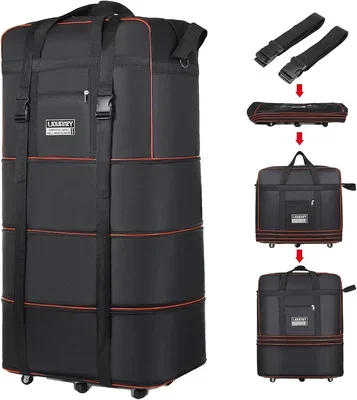
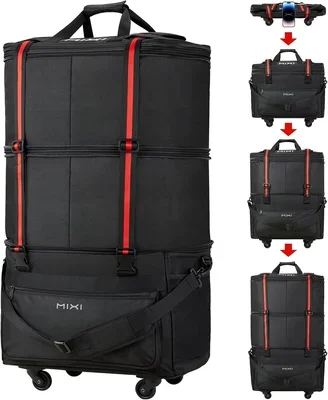
The “foldable” promise is only valuable if the folded form actually solves a storage problem. There are two main folding architectures: the flat-fold and the stuff-sack. Flat-fold designs use a rigid or semi-rigid frame (often a removable plastic or aluminum perimeter) that allows the bag to collapse into a flat rectangle, typically 2-3 inches thick. These slide under beds, behind dressers, or into narrow closet gaps. Stuff-sack designs rely on the fabric’s own pliability; you stuff the bag into an integrated pocket or a separate pouch. These compress smaller in volume but become irregular lumps that are harder to stack.
Consider the folded dimensions relative to your storage space. Measure the height of your under-bed clearance or the depth of your shelf. Also, assess the effort required to fold the bag. Some flat-fold models require you to remove a frame sheet, fold the fabric in a specific sequence, and reinsert the sheet—a process that can take 2-3 minutes. Others use a clever hinge system that collapses with one motion. If you fold and unfold frequently (e.g., business travelers who pack a spare bag inside their checked luggage), prioritize speed and simplicity. If the bag lives in a closet 11 months a year, a slightly more complex fold is acceptable.
4. Wheel System and Mobility
Wheels define the daily experience of using your luggage. For expandable foldable luggage bags, you will encounter inline skate wheels (two fixed wheels) and spinner wheels (four 360-degree rotating wheels). Inline wheels are recessed into the bag’s corners, offering better protection from impacts and a lower center of gravity, which reduces tipping when the bag is heavily loaded and expanded. They handle rough pavement, cobblestones, and curbs better than spinners. Spinner wheels provide effortless gliding in tight airplane aisles and allow you to push the bag beside you rather than pulling it, reducing wrist strain. However, they protrude, making them vulnerable to snapping off, and they add 1-2 inches to the bag’s overall dimensions—critical for carry-on compliance.
Look for wheels with sealed ball bearings (not just bushings) and a polyurethane (PU) tread rather than hard plastic. PU absorbs vibration and rolls quietly. The wheel housing should be riveted or bolted through a reinforced plastic or metal bracket, not just screwed into the fabric. Test the wheel spin in person if possible; it should continue freely for several seconds after a flick. For checked luggage that will be thrown onto conveyor belts, inline wheels with a wide stance are more durable. For carry-on only travel on smooth airport floors, spinners win on maneuverability.
5. Handle System: Telescoping and Carry Handles
The telescoping handle is your primary interface with the bag. A quality handle uses aircraft-grade aluminum or high-strength fiberglass tubes with a smooth, multi-stage locking mechanism (usually 2-3 stops). It should extend and retract without binding, and the buttons should be recessed or flush to avoid accidental deployment. The grip material matters: molded rubber or textured TPU stays grippy with sweaty hands; smooth plastic becomes slippery. Check the handle’s width—wider handles distribute force across the palm better than narrow ones.
Equally important are the carry handles: top, side, and sometimes bottom. These must be securely anchored with box-stitching or riveted webbing that runs into the bag’s internal frame, not just surface-stitched to the fabric. A padded top handle is essential for lifting the bag into overhead bins or car trunks. A side handle allows you to pull the bag off a carousel without bending over. Some premium models add a bottom handle for two-person lifting of heavy checked bags. If you have shoulder or back issues, test the handle height at full extension; it should allow you to walk upright without stooping or hunching your shoulder.
6. Internal Organization and Compression
A cavernous interior is useless if everything shifts into a tangled heap. Look for a main compartment with a full-length zippered divider that creates two separate zones. This lets you keep clean clothes separate from dirty laundry or shoes. Mesh pockets on the divider are great for toiletries, electronics cables, or documents. Compression straps (ideally two per side, crossing in an X pattern) are non-negotiable for expanded packing; they cinch down the contents to prevent the “suitcase explosion” when you open the lid.
Some bags add a removable wet/dry pocket, a dedicated laptop sleeve (usually 15.6-inch compatible), or a zippered panel that covers the wheel wells to create a flat packing surface. If you travel with a suit or dress, check for a built-in garment folder or suiter system. For business travelers, a front-panel quick-access pocket for a laptop and travel documents (accessible without opening the main lid) is a huge time-saver at security. Don’t overlook the lining material: a light-colored, high-contrast lining (e.g., bright orange or yellow) makes it dramatically easier to find small items in a dim hotel room.
7. Weight and Airline Compliance
Every ounce of bag weight is an ounce less you can pack before hitting airline limits. Expandable foldable luggage bags range from 4 lbs (ultra-light carry-ons) to 10+ lbs (large checked spinners). The sweet spot for a durable international carry-on is 5.5-7 lbs. For checked bags, aim under 9 lbs to maximize your 50 lb allowance. Weigh the bag yourself if possible; manufacturers sometimes quote the weight without wheels or handles.
Airline compliance is a moving target. Major US carriers (American, Delta, United) generally enforce 22 x 14 x 9 inches for carry-ons, including wheels and handles. European budget airlines (Ryanair, EasyJet) are stricter, often 21.6 x 15.7 x 9.8 inches, and they weigh bags at the gate. Asian carriers vary widely. If you fly multiple airlines, buy to the smallest standard you encounter. Remember that expansion zippers add depth; a bag that is 9 inches deep unexpanded becomes 11-12 inches expanded—guaranteed gate-check on a full flight. Some clever designs place the expansion gusset at the top of the bag (increasing height rather than depth), which sometimes slides under the sizer more easily, but this is rare.
8. Warranty, Repairability, and Brand Support
A warranty is the manufacturer’s vote of confidence. Lifetime warranties (covering defects in materials and workmanship for the life of the product) are the gold standard, offered by brands like Briggs & Riley, Tumi, Osprey, and Eagle Creek. However, read the fine print: “lifetime” often means the expected lifespan of the product (5-7 years), not your lifetime. Many exclude airline damage, normal wear, and zippers. Limited warranties (2-10 years) are common in the mid-range. Check if the brand has authorized repair centers or a mail-in service. Briggs & Riley, for example, will repair any functional damage for free, even airline damage, for the life of the bag—just pay shipping.
Repairability extends the bag’s life far beyond the warranty. Can you replace a wheel, a handle tube, or a zipper pull yourself? Brands that sell spare parts (often on their website) and provide repair videos score high. Modular designs where the wheel housing unbolts, the handle assembly slides out, and the fabric panels can be resewn are ideal. Avoid bags with riveted frames that cannot be disassembled; a single broken wheel means landfill. Also, consider the brand’s customer service reputation. A quick search for “[Brand] warranty claim experience” on travel forums will reveal whether they honor claims smoothly or drag you through months of bureaucracy.
Different Types of Buying Guide

Common Buying Mistakes to Avoid
❌ Mistake: Buying Solely on Price Without Checking Weight
Why it’s bad: A $60 bag that weighs 9 lbs empty eats 18% of your 50 lb checked allowance before you pack a single sock. You will pay overweight fees that quickly exceed the savings on the bag. Lightweight construction costs money—better fabrics, thinner frames, minimal hardware. If the price seems too good to be true for the size, the weight is usually the compromise.
What to do instead: Set a target empty weight based on your travel style (carry-on: <7 lbs, checked: <9 lbs). Filter your search by weight first, then price. Spend the extra $30-50 for a lighter bag; it pays for itself in one avoided overweight fee.
❌ Mistake: Ignoring Expanded Dimensions for Carry-On Use
Why it’s bad: You buy a “carry-on compliant” bag, pack it expanded for a two-week trip, and get flagged at the gate. The agent forces you to check it, risking loss, damage, and a $35-60 fee. The bag’s marketing shows the unexpanded size in bold; the expanded size is in fine print.
What to do instead: Measure the expanded depth yourself or find a detailed spec sheet. If you must expand, choose a bag whose expanded depth stays within your airline’s limit (often 9 inches). Alternatively, accept that you will only expand on the return trip when you can check the bag if needed.
❌ Mistake: Choosing Spinner Wheels for Checked Luggage on Rough Terrain
Why it’s bad: Spinner wheels are fantastic on smooth airport terrazzo. They are terrible on cobblestones, gravel driveways, broken sidewalks, and snowy streets. The small diameter and protruding axles snap under lateral impact. A checked bag travels through baggage systems, curbs, and hotel driveways—environments that destroy spinners.
What to do instead: For checked bags, default to two-wheel inline designs with large (3+ inch), recessed wheels. If you absolutely want spinners for the airport portion, look for models with removable wheel cassettes or oversized “all-terrain” spinners (e.g., 4-inch PU wheels with metal hubs).
❌ Mistake: Overlooking the Folded Dimensions
Why it’s bad: You buy a bag that folds into a “compact pouch,” only to discover the pouch is 18 x 12 x 6 inches—too big for your closet shelf or under-bed space. The bag becomes a storage nuisance itself, defeating the purpose of foldability.
What to do instead: Measure your actual storage space (under-bed height, shelf depth, closet floor area). Compare those numbers to the manufacturer’s folded dimensions. If they don’t list folded dimensions, ask customer service or check video reviews where the reviewer demonstrates the fold.
❌ Mistake: Assuming All “Lifetime Warranties” Are Equal
Why it’s bad: You buy a $200 bag with a “lifetime warranty,” break a wheel two years later, and discover the warranty excludes “damage caused by common carriers” (airlines). You are left with a broken bag and no recourse. Many budget brands use “lifetime” as a marketing term with so many exclusions it covers almost nothing.
What to do instead: Read the warranty document before buying. Look for explicit coverage of airline damage, zipper failure, and wheel replacement. Check if the brand has a dedicated claims portal and repair center. Brands like Briggs & Riley, Tumi, Osprey, and Eagle Creek have transparent, generous policies. If the warranty page is vague or missing, assume it’s weak.
❌ Mistake: Neglecting Internal Organization for “Maximum Volume”
Why it’s bad: You maximize every cubic inch but spend 10 minutes digging for your passport, chargers, or that one shirt at the bottom. A single cavernous compartment leads to wrinkled clothes, crushed toiletries, and frustration. Volume without organization is chaos.
What to do instead: Prioritize bags with a divided main compartment, compression straps, and at least two mesh zip pockets. If you carry a laptop, ensure a dedicated padded sleeve accessible from the outside. Use packing cubes to create your own organization if the bag lacks it, but built-in systems are more weight-efficient.
❌ Mistake: Not Testing the Handle Height Before Buying
Why it’s bad: You are 6’2″ and the handle maxes out at 38 inches. You hunch over for 20 minutes walking to your gate, arriving with a sore back. Or you are 5’4″ and the lowest handle setting is 36 inches, forcing you to lift the bag rather than roll it. Handle height is ergonomics, and ergonomics is health.
What to do instead: If buying in-store, extend the handle and walk 20 feet. If buying online, find the handle height specs (often listed as “handle height: 38-42 inches”). Match the range to your height. Some brands offer “tall” or “short” handle variants; seek them out.
Budget Guidelines: How Much Should You Spend?
Entry-Level ($30 – $80): Basic Function, Compromises Expected
In this tier, you are buying a bag that will work for occasional trips—maybe 2-3 times a year. Materials will be 600D-900D polyester with a basic PU coating. Zippers are often single-coil YKK or generic brands; they work but can snag. Wheels are typically inline, plastic-hubbed with bushings rather than bearings. The telescoping handle is usually a two-stage steel or thin aluminum tube with a plastic grip. Foldability is often the stuff-sack style: the bag stuffs into an attached pocket, resulting in a soft lump. Warranty is typically 1-2 years limited. You get basic expandability (1.5-2 inches) and minimal internal organization (maybe one mesh pocket).
Best for: College students moving dorms, annual family vacationers who check bags, anyone needing a spare “just in case” bag that lives in a car trunk. Avoid if you fly monthly, carry heavy loads, or need the bag to survive baggage handlers for years.
Mid-Range ($80 – $200): The Sweet Spot for Most Travelers
This is where value peaks. You get 900D-1680D polyester or entry-level ballistic nylon/Cordura. Zippers upgrade to dual-coil YKK with locking sliders. Wheels are larger (2.5-3 inches), often with sealed ball bearings and PU treads. Handles are three-stage aluminum with ergonomic grips. Flat-fold designs appear here, with removable frame sheets that collapse to 2.5-3 inches thick. Internal organization becomes robust: divided main compartment, compression straps, multiple mesh pockets, sometimes a laptop sleeve. Expandability is 2-2.5 inches with reinforced gussets. Warranties extend to 5-10 years or “limited lifetime” with reasonable coverage. Weight for a 22-inch carry-on drops to 5.5-6.5 lbs.
Best for: Frequent leisure travelers (4-8 trips/year), business travelers who check bags occasionally, anyone wanting a bag that lasts 5-7 years with daily use. This tier covers 80% of traveler needs.
Premium ($200 – $450): Refined Engineering, Premium Materials, Superior Support
Here you pay for obsessive detail. Fabrics are high-denier ballistic nylon (1680D-2520D), Cordura, or proprietary weaves with TPU lamination for water resistance. Zippers are top-tier YKK RCW (rain guard) or molded-tooth with oversized pulls. Wheels are custom-designed, often oversized (3.5-4 inches), with precision bearings and replaceable cassettes. Handles are carbon fiber or thick-wall aluminum with multi-position locks and vibration-dampening grips. Flat-fold mechanisms are engineered for one-motion collapse. Interiors feature modular organization: removable packing cubes, suiter systems, RFID pockets, dedicated tech compartments. Expandability is seamless, with internal compression panels that keep the bag’s shape. Warranties are true lifetime with “no questions asked” repair policies (e.g., Briggs & Riley, Tumi). Weight is optimized: 22-inch carry-ons can be under 5.5 lbs despite heavy-duty construction.
Best for: Road warriors (20+ trips/year), international business travelers, anyone who treats luggage as a long-term investment and values repair over replacement. The cost per trip over 10 years is often lower than replacing mid-range bags every 3-4 years.
Luxury ($450+): Status, Bespoke Features, Heirloom Build
This tier enters the realm of brands like Rimowa (though mostly hardside), Globe-Trotter, and ultra-premium lines from Tumi and Briggs & Riley. You pay for hand-stitched leather accents, anodized aluminum frames, monogramming, and concierge-level service (e.g., loaner bags during repairs). Materials may include Tegris composite, carbon fiber frames, or vegetable-tanned leather. The foldable mechanism, if present, is a marvel of engineering—often a carbon fiber frame that folds flat with magnetic locks. These bags are often heavier due to luxury materials but offer unmatched prestige and resale value. Warranty service includes doorstep pickup and global repair networks.
Best for: Luxury travelers, collectors, those for whom luggage is a style statement and budget is no object. Functionally, they rarely outperform the top of the Premium tier; you pay for brand heritage and aesthetics.
Expert Tips for Getting the Best Deal
- Time your purchase to the sales calendar. The best discounts occur during three windows: January (post-holiday clearance), May (Memorial Day sales), and November (Black Friday/Cyber Monday). July (Amazon Prime Day) is also strong for mid-range brands. Avoid buying at full price in June or December unless it’s an emergency.
- Check authorized outlet stores and “factory seconds” sections. Brands like Briggs & Riley, Tumi, and Eagle Creek have dedicated outlet websites selling overstock, discontinued colors, or items with minor cosmetic blemishes (e.g., a tiny scratch on a handle) at 30-50% off. These carry the full warranty. “Factory seconds” from brands like Red Oxx or Tom Bihn are often functionally perfect.
- Use price tracking tools. Install browser extensions like Honey, CamelCamelCamel (for Amazon), or Keepa. Set alerts for your target models. Luggage prices fluctuate weekly; a $220 bag often drops to $160 for 48 hours during a flash sale.
- Consider open-box or returned items from major retailers. REI, Backcountry, and Zappos have generous return policies, and they resell returned gear at a discount (often 20-30% off) with the same warranty. Inspect the bag upon arrival; you can always return it if it’s not as described.
- Leverage credit card perks. Many premium travel cards (Chase Sapphire Reserve, Amex Platinum, Capital One Venture X) offer statement credits for luggage purchases or access to shopping portals with 5-10% cash back. Some cards extend the manufacturer’s warranty by an extra year automatically.
- Buy previous-generation models. When a brand releases a new version (usually every 2-3 years), the prior generation goes on clearance. The changes are often cosmetic (new colors, updated logo, slightly revised pocket layout). The core chassis, wheels, and handle remain identical. You can save 40% for 95% of the performance.
- Test in-store, buy online (ethically). Visit a luggage store to feel the fabric, test the handle height, spin the wheels, and practice the fold. Then buy the exact model online for less. If you value the store’s expertise, ask if they price-match; many will.
- Read the return policy before clicking “buy.” Ensure you have at least 30 days (60 is better) to test the bag at home. Pack it fully, roll it on carpet and hardwood, fold and unfold it three times. If it doesn’t spark joy, return it. Some brands (e.g., Away, Monos) offer 100-day trials.

Frequently Asked Questions
Q: Can I wash my expandable foldable luggage bag?
A: Most manufacturers recommend spot cleaning only with mild soap and a damp cloth. Submerging the bag can damage internal frame components, wheel bearings, and waterproof coatings. If the lining is removable (rare), you can hand-wash it separately. For heavy soiling, some brands offer professional cleaning services. Never machine wash or dry.
Q: How do I know if a bag will fit in my specific airline’s overhead bin?
A: Check the airline’s website for their exact carry-on dimensions (including wheels and handles). Measure the bag yourself at its widest points (including wheels, side handles, and expansion zipper). If the bag is within 0.5 inches of the limit, it’s risky—bins vary by aircraft model. When in doubt, choose a bag 1 inch smaller than the limit.
Q: Are expandable bags less durable because of the extra zipper?
A: Not inherently. A well-engineered expansion zipper with dual coils, a locking slider, and reinforced stitching at stress points is as durable as the main closure. The weak point is usually the fabric panel itself—if it’s a thin, unlined single layer, it can tear. Look for expansion panels that are double-layered or backed with a reinforcing fabric strip.
Q: Can I replace the wheels myself if they break?
A: On many mid-range and premium bags, yes. Brands like Travelpro, Briggs & Riley, and Osprey sell wheel replacement kits (often $15-30 for a set of two) and provide instructional videos. You typically need a Phillips screwdriver and maybe a wrench. On budget bags with riveted wheels, replacement is impractical.
Q: What’s the difference between “water-resistant” and “waterproof” luggage?
A: Water-resistant means the fabric repels light rain and splashes; water will eventually soak through in heavy rain or if submerged. Waterproof means the bag can be submerged without leakage (e.g., dry bags with welded seams and roll-top closures). No expandable foldable luggage with zippers is truly waterproof. For heavy rain, use a rain cover or pack critical items in internal dry sacks.
Q: How do I prevent my expanded bag from becoming too heavy to lift?
A: Pack heavy items (shoes, books, electronics) at the bottom near the wheels, not at the top. Use a luggage scale (under $10) to weigh before you leave. If you’re near the limit, wear your heaviest shoes and jacket. Consider a lightweight foldable duffel as a “personal item” to offload weight if checked.
Q: Is a hard-shell expandable bag better than a soft-side foldable one?
A: They serve different needs. Hard-shell (polycarbonate, aluminum) offers better impact protection for fragile items, is inherently waterproof, and slides easily on conveyors. But it cannot fold flat, is heavier, and the expansion is limited to a zipper gusset that can crack. Soft-side foldable bags are lighter, compress for storage, and expand more volumetrically. Choose hard-shell for checked luggage with valuables; choose soft-side foldable for carry-on flexibility and storage constraints.
Q: What is the best way to store a foldable bag long-term?
A: Clean and dry it thoroughly. Store flat-fold models in their folded state (no need to keep the frame sheet inserted if it’s removable). Store stuff-sack models loosely stuffed, not compressed, to avoid permanent creases in the fabric coating. Keep in a climate-controlled area away from direct sunlight, which degrades fabrics and coatings over time.
Q: Can I use an expandable foldable bag as my only checked bag for a two-week trip?
A: Yes, a large (28-30 inch) expandable checked bag in the mid-range or premium tier can hold 2 weeks of clothing for one person, especially with packing cubes. Expand it for the return trip if you acquire souvenirs. Ensure the bag’s weight + contents stays under 50 lbs (or your airline’s limit). A 28-inch bag expanded can easily hit 60+ lbs if you’re not careful.
Q: Do I need a TSA-approved lock on my expandable bag?
A: If you check the bag, yes. TSA agents have master keys to open approved locks without cutting them. If you use a non-approved lock, they will cut it off. For carry-on, a lock is optional but can deter opportunistic theft in overhead bins. Many premium bags have built-in TSA combination locks; otherwise, buy a sturdy cable lock separately.
Our Final Recommendations
Best for Budget-Conscious Buyers: Amazon Basics Ripstop Nylon Expandable Carry-On (21-inch) – At ~$60, it delivers surprising durability with 840D ballistic nylon, inline skate wheels, and a 2-inch expansion. It folds into a built-in pocket (stuff-sack style). The handle is two-stage only, and the warranty is 1 year, but for 3-4 trips a year, it’s unbeatable value.
Best Overall Value: Travelpro Platinum Elite 22-inch Expandable Spinner – Around $180-220, this is the gold standard for frequent flyers. Magnum 800D nylon with DuraGuard coating, precision MagnaTrac spinner wheels, PowerScope handle with Contour Grip, and a lifetime warranty covering airline damage. It flat-folds to 3 inches with a removable frame sheet. The interior includes a suiter, wet pocket, and USB port pass-through (power bank not included).
Best Premium Option: Briggs & Riley Baseline Domestic Carry-On Expandable Spinner – At ~$350-400, you pay for the “Simple as that” lifetime warranty (covers airline damage, free repairs). CX expansion technology adds 25% volume while maintaining a flat profile. Ballistic nylon with Teflon coating, aircraft-grade aluminum handle, and CX wheels with sealed bearings. It flat-folds to 2.5 inches. If you want one bag for life, this is it.
Best for Beginners: Samsonite Freeform Hardside Expandable Carry-On (21-inch) – While not fabric foldable, it’s the easiest entry point: ultra-light (6.5 lbs), 360 spinner wheels, recessed TSA lock, and a 10-year warranty. The expansion is 1.5 inches. It doesn’t fold, but it stacks neatly. Perfect for someone who wants zero-fuss durability and doesn’t have storage constraints.
Best for Advanced Users / Digital Nomads: Osprey Transporter Wheeled Carry-On 40L – ~$280. This is a backpack/roller hybrid with a deployable harness and hip belt. The HighRoad chassis handles rough terrain; the fabric is 420D recycled nylon with PFC-free DWR. It flat-folds relatively flat (removable frame sheet). Internal organization is minimal by design—you add your own packing cubes. Ideal for mixed-mode travel (cobblestones to airport).
Conclusion: Making the Right Choice
We have covered a lot of ground: the anatomy of fabrics and zippers, the geometry of wheels and handles, the reality of warranties, and the strategy of smart shopping. The perfect expandable foldable luggage bag is not a universal object; it is the one that aligns with your specific travel patterns, physical needs, storage space, and budget. If you take one thing from this guide, let it be this: prioritize the factors that cause you the most pain today. Is it a sore shoulder from a short handle? A bag that won’t fit under your bed? A zipper that burst on the last trip? Solve that problem first.
Remember that luggage is a tool, not a trophy. The best bag disappears into the background of your journey, letting you focus on the destination, not the gear. Whether you choose a $70 workhorse or a $400 heirloom, treat it well: clean it after trips, lubricate the zippers annually, store it properly, and use the warranty if something fails. A quality bag, cared for, can accompany you on adventures for a decade or more.
Now you have the knowledge. You know what to look for, what to avoid, and how to buy smart. The next step is simple: measure your storage space, check your airline’s sizer, set your budget, and pick the bag that makes you feel ready for whatever comes next. Safe travels, and may your zippers never snag.