Choosing the right luggage is one of those decisions that seems small until you are sprinting through a terminal with a broken wheel or realizing your souvenir collection won’t fit in your suitcase. Expandable hard shell luggage has become the gold standard for modern travelers because it solves the two biggest packing dilemmas: protection for your belongings and flexibility for your return trip. But the market is flooded with options ranging from budget-friendly basics to engineering marvels that cost more than a plane ticket.
This guide exists to cut through the marketing noise. We are going to walk through every critical factor—from the molecular structure of the shell material to the warranty fine print—so you can buy with total confidence. Whether you are a weekend warrior looking for a carry-on that fits every overhead bin or a frequent flyer checking a bag that needs to survive baggage handlers for a decade, you will learn exactly what to prioritize, what to ignore, and how to spot the difference between a travel companion and a travel headache.
By the end of this article, you will understand the technical jargon like “polycarbonate vs. polypropylene” and “double spinner wheels,” you will know exactly how much you should spend for your specific travel style, and you will have a clear checklist to evaluate any suitcase you pick up in a store or click on online. Let’s find your perfect travel partner.

What to Look for When Buying Expandable Hard Shell Luggage
1. Shell Material: The Science of Protection
The shell is the skeleton of your luggage. It takes the hits, absorbs the pressure of stacked bags in a cargo hold, and keeps your clothes wrinkle-free. In the hard shell world, there are three main contenders, and understanding the difference is the single most important technical factor.
Polycarbonate (PC) is widely considered the premium standard. It is a thermoplastic polymer that is incredibly impact-resistant. Think of it like a car bumper: it flexes under pressure rather than cracking. If you drop a polycarbonate case from waist height onto concrete, it will likely bounce back with maybe a scuff. It is also the lightest of the hard shell materials. The downside? It scratches more visibly than other materials, and it commands a higher price tag.
Polypropylene (PP) is the rising star. It is lighter than polycarbonate and often cheaper, but it has a different personality. It is more rigid and less flexible. This means it resists scratches better and holds its shape beautifully, but under extreme impact (like being thrown by a baggage handler), it is more prone to cracking or shattering rather than flexing. It is an excellent choice for careful travelers who want the lightest possible bag.
ABS (Acrylonitrile Butadiene Styrene) is the budget workhorse. You will find this on almost every suitcase under $100. It is heavy, brittle, and cracks easily under stress. However, manufacturers often blend ABS with Polycarbonate (labeled as “PC/ABS blend”) to get a middle ground: better durability than pure ABS, lower cost than pure PC. If you travel once a year, a blend is fine. If you travel monthly, invest in 100% Polycarbonate or high-grade Polypropylene.
2. The Expansion Mechanism: Gussets, Zippers, and Volume
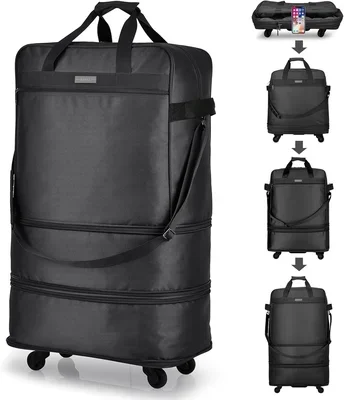
The “expandable” part of the equation is why you are here. Most expandable luggage uses a zippered gusset—a folded panel of fabric hidden between the top and bottom shells—that unzips to add 1.5 to 2.5 inches of packing depth. This typically translates to 15-25% more volume.
However, not all expansion systems are created equal. Cheap models use a single coil zipper on the expansion gusset. When you stuff that extra space full, the tension pulls directly on the zipper teeth, leading to blown-out zippers or fabric tears. Premium models use dual-coil zippers (two rows of teeth) or reinforced binding tape on the gusset fabric.
Also, consider the expansion location. Most expand at the center (the main compartment), but some premium carry-ons offer “front pocket expansion” or “lid expansion.” Center expansion is best for bulky items like shoes or sweaters. Lid expansion is great for last-minute flat items like documents or a light jacket. Check if the expanded dimensions still meet airline carry-on restrictions—many bags expand beyond the 22 x 14 x 9 inch limit, meaning you must check them if full.
3. Wheel System: The Difference Between Gliding and Dragging
This is the factor you feel in your shoulder and wrist. There are two main architectures: Inline Skate Wheels (2 wheels) and Spinner Wheels (4 or 8 wheels).
Two-wheel (Inline) wheels are recessed into the body of the suitcase. They are larger in diameter, more durable, and handle rough terrain (cobblestones, curbs, gravel) significantly better. You tilt the bag and pull. The downside? You bear the weight. They don’t stand upright on their own, and maneuvering down a narrow airplane aisle requires dragging it sideways.
Four-wheel Spinners have 360-degree rotating casters. You push the bag beside you, weightless. It is effortless on smooth airport floors. Eight-wheel Spinners (double wheels per corner) distribute weight better, are more stable when standing, and if one wheel breaks, you still have three corners rolling. For expandable luggage—which gets heavy when full—double spinner wheels (8 wheels total) are highly recommended. They handle the extra loaded weight without wobbling or snapping axles.
Look for ball-bearing construction inside the wheel hub (often marketed as “Hinomoto” or “Mitsubishi” wheels, the gold standard Japanese brands). Avoid “riveted” plastic wheels with no bearings; they grind to a halt after a few trips.
4. Handle System: Ergonomics and Durability
The telescoping handle is your steering wheel. You want a multi-stage locking handle (usually 3 or 4 heights) so travelers of different heights can roll comfortably without hunching or kicking the bag with their heels.
The tube material matters. Aluminum alloy tubes are standard. Carbon fiber is lighter but rare and expensive. The critical failure point is the locking mechanism inside the handle grip. Cheap plastic clips snap. Metal locking triggers (often called “aircraft-grade aluminum triggers”) last decades.
Also, check the top carry handle and side carry handle. On a fully expanded, 50-lb checked bag, you will be hoisting this into trunk beds and onto luggage scales. Handles should be riveted through the shell (not just screwed into the liner) and padded with rubber or leather for grip. A flat, low-profile top handle is better than a rounded one—it doesn’t dig into your fingers under heavy load.
5. Interior Organization: Compression, Dividers, and Pockets
A hard shell is a rigid box; the interior soft goods determine how much you actually fit. Look for a full zippered divider between the two halves. This keeps the bottom half contents compressed while you pack the top.
Compression straps (ideally two per side, crossing in an X-pattern) are non-negotiable. They cinch down clothing volume by 30%, preventing the “exploding suitcase” effect when you open it at the hotel. Zippered mesh pockets on the divider are perfect for underwear, socks, and electronics cables.
Premium bags now feature removable laundry bags, shoe pockets (ventilated), and wet pockets (waterproof lining for toiletries or swimwear). Some high-end brands (like Briggs & Riley or Rimowa) offer modular packing cubes that snap into the liner via Velcro or clips, turning the suitcase into a drawer system. If you are an organizer, this is a game-changer.
6. Security Features: TSA Locks, Zipper Security, and Frame Design
Every checked bag needs a TSA-approved combination lock. This allows security agents to open and relock your bag without cutting the lock. Most mid-range and premium bags have this integrated into the shell (flush mount). Ensure it is a 3-dial combination (1,000 combinations) rather than 2-dial (100 combinations).
Beyond the lock, look at the zipper pulls. Do they have lockable eyelets? Can you thread a cable tie or small padlock through both pulls to secure the main compartment and the expansion gusset simultaneously?
Consider the frame vs. zipper closure. Traditional “zipper closure” hard shells rely on the zipper track to hold the two shells together. “Frame closure” (like Rimowa or high-end Away models) uses an aluminum or reinforced polymer frame that the shells latch into. Frame closures are virtually pry-proof and maintain structural integrity even if the zipper fails, but they add weight and cost.
7. Size, Weight, and Airline Compliance
This is where math meets reality. Airlines are strict.
- Carry-On (International/Domestic US): Max 22″ x 14″ x 9″ (56 x 36 x 23 cm) including wheels and handles. Weight limits vary (often 15-22 lbs / 7-10 kg internationally).
- Checked Bag (Standard): Max 62 linear inches (L+W+H). Weight limit usually 50 lbs (23 kg) before overweight fees.
- Checked Bag (Oversize): 63-80 linear inches. Heavy fees apply.
Critical Rule: A “21-inch” suitcase often measures 22.5 inches with wheels. A “expandable” carry-on might be legal unexpanded but illegal expanded. Buy based on the external dimensions including wheels, not the model name. For carry-ons, prioritize lightweight construction (under 7 lbs / 3.2 kg empty) so you have payload capacity for your stuff. For checked luggage, durability trumps ultra-light weight.
8. Warranty and Brand Support: The Safety Net
Luggage takes a beating. A warranty tells you how much the manufacturer believes in their product.
- Limited Lifetime Warranty (The Gold Standard): Brands like Briggs & Riley, Tumi, Osprey, and Travelpro (on specific lines) cover functional damage (wheels, handles, zippers) for the life of the product. They often cover airline damage too. You usually pay shipping one way.
- 10-Year / 5-Year Limited: Common for Samsonite, Delsey, American Tourister. Covers manufacturing defects. Airline damage usually excluded.
- 2-Year / “Manufacturer’s Defect Only”: Budget brands. Useless for real-world travel damage.
Check the claims process. Do you mail it to a central depot (weeks without a bag) or can you walk into a local authorized repair shop? Briggs & Riley and Travelpro have extensive repair networks. Rimowa has boutiques. Direct-to-consumer brands (Away, Monos, July) usually require mailing back.
Different Types of Expandable Hard Shell Luggage

Common Buying Mistakes to Avoid
❌ Mistake: Buying Based on “Carry-On” Label Alone
Why it’s bad: There is no universal legal definition for “carry-on size.” A bag labeled “International Carry-On” might fit United but be rejected by Ryanair or British Airways. Furthermore, an expandable carry-on is only legal unexpanded. If you pack it full and expand it, it becomes a checked bag at the gate—often with a hefty fee.
What to do instead: Measure the specific airline(s) you fly most. Compare the bag’s exact external dimensions (including wheels/handles) to the airline’s sizer. If you fly multiple airlines, buy to the smallest restriction (usually Asian or European budget carriers: ~21.5 x 15.5 x 9 in).
❌ Mistake: Prioritizing Ultra-Light Weight Over Wheel Quality
Why it’s bad: A 4.5 lb carry-on sounds amazing until a plastic wheel housing cracks on a cobblestone street in Rome, leaving you dragging a 30 lb brick. Ultra-light bags often sacrifice wheel bearings, handle tube thickness, and corner reinforcement to hit that number.
What to do instead: Target the “sweet spot” weight: 6.0 – 7.5 lbs for a 21-22 inch carry-on. This usually indicates a robust double-spinner wheel system, aluminum handle tubes, and corner guards. Your shoulder will thank you for the smooth roll more than you’ll notice the extra 1.5 lbs.
❌ Mistake: Ignoring the “Expanded” Weight Limit
Why it’s bad: You buy a large checked bag, expand it fully, pack 65 lbs of stuff. You get to the airport: 50 lb limit. You pay $100+ overweight fee. Or worse, the zipper bursts on the conveyor belt because the fabric gusset wasn’t rated for that tension.
What to do instead: Know your airline’s weight limit. Pack to that limit minus 3-5 lbs for souvenirs. Use a handheld luggage scale (costs $10) at home. If you need more volume, ship items ahead or buy a second bag—don’t rely on expansion to solve weight problems.
❌ Mistake: Choosing Aesthetics Over Grip Texture
Why it’s bad: High-gloss, mirror-finish polycarbonate looks stunning in the store. After one trip, it looks like it was attacked by a wildcat—every scratch shows. Matte or textured finishes (diamond pattern, brushed, “sandblasted”) hide scratches infinitely better.
What to do instead: Choose a matte or textured finish for checked luggage and frequent-use carry-ons. Reserve high-gloss for occasional use or if you plan to use a protective cover. Darker colors (navy, charcoal, olive) hide scuffs better than white, silver, or pastels.
❌ Mistake: Assuming All TSA Locks Are Equal
Why it’s bad: Some budget bags have a TSA lock on the side but the main compartment zippers don’t have lockable pulls. TSA can open the lock, but the main zipper pulls aren’t secured to anything. A thief (or a rough handler) just unzips the main compartment.
What to do instead: Verify the main compartment zipper pulls have lockable eyelets that align with the integrated TSA lock. The lock shackle should physically pass through both zipper pulls. Test it in the store.
❌ Mistake: Buying a “Set” When You Only Need One Good Bag
Why it’s bad: 3-piece sets (20″, 24″, 28″) are tempting value. But the 20″ might be too small for your laptop bag, the 24″ is an awkward “tweener” size (too big for carry-on, too small for efficient checking), and the 28″ is huge. You end up with three mediocre bags instead of one excellent one.
What to do instead: Build your “luggage wardrobe” piece by piece. Start with one premium carry-on (fits 90% of trips). Add a large checked bag only when you have a specific need (family ski trip, moving). Skip the medium size unless you specifically need it.
❌ Mistake: Overlooking Interior Liner Quality
Why it’s bad: The shell survives, but the cheap polyester liner tears at the seams, the pocket zipper jams, or the compression strap anchor pulls out of the foam. Now your clothes spill into the wheel well or get caught in the handle mechanism.
What to do instead: Unzip the liner completely in the store (or check video reviews). Look for ripstop nylon or high-denier polyester. Check that pockets are double-stitched. Ensure compression straps are anchored with bar-tack stitching (dense rectangle of thread) not just a single line. Removable/washable liners are a huge hygiene plus.
Budget Guidelines: How Much Should You Spend?
Entry-Level ($60 – $130 per piece / $150 – $250 for sets)
What you get: ABS or PC/ABS blend shells. Single or double spinner wheels (often plastic bushings, not bearings). 2-stage handles. Basic TSA lock. Thin polyester liner. 1-2 year warranty.
Reality check: These last 10-20 trips if handled gently. Wheels are the first failure point. Expansion gussets are thin fabric. Good for: Kids’ luggage, occasional domestic flyers, “beater” bags for road trips where you throw it in a trunk.
Brands to watch: American Tourister, Rockland, Kenneth Cole Reaction, Amazon Basics, Merax.
Mid-Range / Sweet Spot ($180 – $350 per piece)
What you get: 100% Polycarbonate or high-grade Polypropylene. Japanese double-spinner wheels (Hinomoto clones or licensed). 3-4 stage aluminum handles. Robust expansion gussets with dual-coil zippers. Ripstop nylon liners. 5-10 year or Limited Lifetime warranties (functional parts).
Reality check: This is where 80% of travelers should buy. A $250 carry-on here lasts 8-12 years of heavy travel. You pay for wheel smoothness, handle rigidity, and a warranty that actually gets honored.
Brands to watch: Travelpro (Platinum Elite, Maxlite 5), Samsonite (Freeform, Omni PC, Winfield 3), Delsey (Chatelet, Titanium), Briggs & Riley (Baseline – often on sale), Away (The Carry-On), Monos (Carry-On), July (Carry-On).
Premium ($350 – $650 per piece)
What you get: Virgin Polycarbonate (Makrolon/Bayer) or proprietary composites (e.g., Curv, Tegris). Precision-engineered Japanese wheels (genuine Hinomoto Lisof). Carbon fiber or aircraft-aluminum handles. Frame construction or reinforced zipper tracks. Modular interior systems. True Lifetime “No Questions Asked” warranties (including airline damage).
Reality check: These are buy-it-for-life tools. The roll is buttery. The shell flexes but doesn’t dent. Repair networks are global. If you fly 20+ times a year, the cost-per-trip is lower than replacing mid-range bags.
Brands to watch: Briggs & Riley (Sympatico, Torq), Tumi (19 Degree, Alpha 3), Rimowa (Essential, Original – though Rimowa is often frame/aluminum), Victorinox (Spectra 3.0).
Luxury / Heirloom ($700 – $1,500+)
What you get: Aluminum-magnesium alloy shells (Rimowa Original), Titanium frames, hand-stitched leather handles, integrated tracking (AirTag slots, GPS), bespoke customization. Status objects that perform flawlessly.
Reality check: You are paying for brand heritage, resale value, and aesthetics as much as function. An aluminum Rimowa dents (patina) rather than cracks. It will outlive you. Buy for joy, not just utility.
Brands: Rimowa (Original), Globe-Trotter, Tumi (Latitude), Horizn Studios (M5).
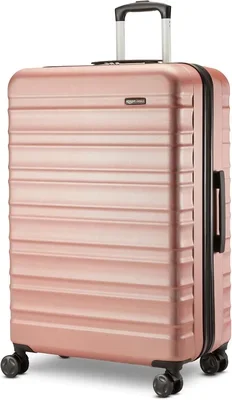
Expert Tips for Getting the Best Deal
- Time Your Purchase: Best sales are January (post-holiday clearance), May (Memorial Day / pre-summer), November (Black Friday / Cyber Monday). Avoid June/July (peak travel pricing).
- Where to Buy: Brand Direct = full warranty support, easy returns, customization. Department Stores (Nordstrom, Bloomingdale’s) = generous return policies, price matching, in-hand inspection. Specialty Luggage Stores = expert fitting, repair services on-site. Amazon/Costco = convenience, but verify “Sold by [Brand]” not 3rd party for warranty validity.
- Test In-Store (Even if Buying Online): Go to a store. Pull the handle up/down 10 times. Roll it on carpet and hard floor. Load it with 20 lbs (ask for a weight). Expand and compress the zipper. Check wheel wobble. Your hands know quality better than specs.
- Register Your Warranty Immediately: Take a photo of the receipt and the warranty card/serial number sticker (usually inside the liner pocket). Register on the brand website that day. Many “Lifetime Warranties” require registration within 30-90 days.
- Use Credit Card Purchase Protection: Many premium cards (Chase Sapphire, Amex Platinum, Citi Prestige) extend manufacturer warranty by 1-2 years AND cover theft/damage for 90-120 days post-purchase. Pay with the right card.
- Consider “Personal Item” Pairing: Your carry-on goes overhead. Your “personal item” (backpack/tote) goes under the seat. Buy a luggage-specific backpack with a pass-through sleeve that slides over your carry-on handle. It transforms two bags into one rolling unit. Brands like Peak Design, Bellroy, and Travelpro make these specifically sized for their carry-ons.
- Don’t Fear Online-Only Brands (DTC): Away, Monos, July, Arlo Skye, Level8. They cut retail markup. You get $350 quality for $225. Risk: You can’t touch it first. Mitigation: Use their 100-day trial/return policies. Keep the box and tags until you’ve taken a test trip.

Frequently Asked Questions
Q: Is polycarbonate better than aluminum for hard shell luggage?
A: For 95% of travelers, yes, polycarbonate is better. It is significantly lighter (half the weight of aluminum), absorbs impact by flexing (aluminum dents permanently), doesn’t conduct heat/cold as extremely, and is usually cheaper. Aluminum (Rimowa Original) is chosen for aesthetics, heirloom durability, and the “patina” look of dents/scratches. It is heavier, costs 3-5x more, and dents easily on corners. Unless you want the specific aluminum look/feel, polycarbonate (or polypropylene) is the superior engineering choice.
Q: Can I use the expansion feature on a carry-on and still fit in the overhead bin?
A: Almost never. Standard overhead bins are designed for the maximum legal carry-on dimensions (22 x 14 x 9 in). The expansion gusset adds 1.5-2.5 inches of depth, making the bag 15.5-16.5 inches deep. It will not fit wheels-first, and often won’t fit sideways either. You must keep the expansion zipper closed for overhead bin use. Use the expansion only if you plan to check the bag at the gate (free on full flights) or for road trips/hotel storage.
Q: How do I clean a hard shell suitcase?
A: Exterior: Mild dish soap, warm water, and a microfiber cloth. Avoid harsh chemicals (acetone, bleach, ammonia) which can degrade polycarbonate or damage the finish. For scuff marks from conveyor belts, a melamine sponge (Magic Eraser) works wonders on textured finishes—test a hidden spot first. Interior: Vacuum debris. Spot clean liner with upholstery cleaner or soap/water. If liner is removable (Briggs & Riley, some Travelpro), machine wash cold, air dry. Wheels: Blow out dust with compressed air. Drop a tiny bit of PTFE (Teflon) dry lube or silicone spray into the bearing hub if they get noisy. Never use WD-40 (attracts dirt).
Q: What does “Linear Inches” mean for checked baggage?
A: It is the sum of Length + Width + Height (including wheels, handles, and any protruding parts). Most airlines allow 62 linear inches (158 cm) for standard checked bags. Example: A 28″ x 20″ x 12″ bag = 60 linear inches (OK). A 30″ x 20″ x 13″ bag = 63 linear inches (Oversize fee). Always measure your specific bag packed, as expansion adds to the height/depth.
Q: Are spinner wheels (4/8 wheels) worse on rough terrain than 2 wheels?
A: Yes, significantly. Spinner wheels are small (1.5-2.5 in diameter), caster-mounted, and have complex axles. They catch on cracks, cobblestones, gravel, and snow. Two-wheel inline wheels are larger (3-4 in), recessed, and fixed-axis—they roll over almost anything. Solution: If you travel to Europe (cobblestones), Asia (uneven sidewalks), or adventure destinations, get a 2-wheel carry-on or a hybrid (like the Travelpro Crew Versapack or Osprey Rolling Transporter) which has large inline wheels but a 360-degree front caster option. For 90% airport/hotel travel, 8-wheel spinners win.
Q: How do I fix a stuck zipper on the expansion gusset?
A: Do not yank. The fabric tears easily. 1. Lubricate: Run a graphite pencil tip, beeswax, or a silicone zipper lubricant (Gear Aid Zipper Lubricant) along the teeth. 2. Align: Gently work the slider back and forth over the stuck spot. 3. Reduce tension: If overpacked, remove items to relieve pressure on the zipper. 4. Realign teeth: If teeth are misaligned, carefully pinch the slider jaws slightly with pliers (very gently) to tighten grip on teeth. Prevention: Never force an overstuffed expansion zipper closed.
Q: Do I need a luggage cover/protector?
A: Only for high-gloss finishes or checked bags on rough routes. A cheap $15 stretchy fabric cover (Spandex/Lycra blend) prevents cosmetic scratches on glossy polycarbonate and keeps dirt off the shell. It does not protect against structural damage (crushing, wheel ripping off). On textured/matte shells, it’s unnecessary. Ensure the cover has openings for top/side handles and wheels. Remove it for TSA inspection if they need to open the bag.
Q: What is the difference between “Checked” and “Carry-On” internal volume?
A: Carry-ons (21-22 in) typically hold 35-45 Liters (unexpanded). Enough for 3-5 days of clothing + toiletries + laptop. Expanded: 45-55L. Medium Checked (24-26 in): 60-75L unexpanded. Large Checked (28-30 in): 90-115L unexpanded. Expanded Large: 110-140L (massive). Pro Tip: Volume specs vary by brand measurement method. Trust dimensions and packing tests more than “Liter” claims.
Q: Can I replace wheels/handles myself?
A: On premium brands (Briggs & Riley, Travelpro, Tumi, Rimowa, Victorinox): Yes. They sell OEM replacement wheel kits, handle assemblies, and even shell halves. Repair videos are on YouTube. Local luggage repair shops can do it in an hour. On budget/mid brands (Samsonite, Delsey, Away, Monos): Often possible but parts may be proprietary or unavailable. Wheels are sometimes riveted, not bolted. Check the brand’s “Repair” page before buying if DIY repairability matters to you.
Q: Is a built-in USB charger / power bank worth it?
A: Generally, no. Most “smart luggage” with built-in (non-removable) batteries are banned from checked baggage by FAA/IATA regulations and many airlines. You would have to carry it on always. Removable battery packs (Away, some Samsonite) are allowed but add weight/complexity. The USB port is just a pass-through cable. Better: Carry a high-quality 20,000mAh power bank (Anker, Baseus) in your personal item. It charges faster, has more ports, works for all devices, and isn’t trapped inside a checked bag.
Our Final Recommendations
Based on the factors, types, and budgets analyzed above, here are our top picks for specific traveler profiles. These are not sponsored picks—they represent the market consensus for best-in-class performance at each tier.
Best for Budget-Conscious Buyers: Samsonite Freeform (or Winfield 3 DLX)
Why: The Freeform uses a Polypropylene shell that is genuinely lightweight (6.4 lbs for 21″) and surprisingly tough for the price (~$160-200 carry-on). It has double spinner wheels, a TSA lock, and a 10-year limited warranty. The Winfield 3 DLX is the Polycarbonate sibling (slightly heavier, more flexible). Both are available everywhere, so warranty service is easy. You get 80% of premium performance for 50% of the price.
Best Overall Value (The “Buy It For A Decade” Pick): Travelpro Platinum Elite
Why: This is the bag airline pilots and flight crews buy with their own money. It uses high-grade Polycarbonate, genuine MagnaTrac spinner wheels (self-aligning), a PrecisionGlide handle with Contour Grip, and a patented PowerScope handle extension that minimizes wobble. The expansion is generous but controlled. The Limited Lifetime Coverage includes “Airline Damage Protection” for the first year. At ~$280-320, it is the reliability benchmark.
Best Premium Option: Briggs & Riley Sympatico (or Torq)
Why: Briggs & Riley offers the only true Unconditional Lifetime Warranty—they fix anything (airline damage, user error, wear) free, forever, no receipt needed (just register). The Sympatico uses Makrolon Polycarbonate with a unique CX expansion system that expands outward then compresses back with a separate zipper, guaranteeing it fits overhead bins even when expanded (magic engineering). The Torq line uses a proprietary woven composite (lighter, stiffer). If you travel weekly, this is the last carry-on you buy.
Best for Beginners / Infrequent Travelers: Away The Carry-On (or Monos Carry-On)
Why: Direct-to-consumer brands simplified the buying process. Away popularized the polycarbonate shell, Hinomoto wheels, ejectable battery (optional), and lifetime warranty (functional parts) at a $275-300 price point. Monos is the current quality leader in this space (better wheel bearings, quieter roll, vegan leather details, better interior layout). Both offer 100-day trials. You order, pack for a trip, if you don’t love it, return for full refund. Zero risk way to learn what you value.
Best for Advanced Users / Heavy Packers: Briggs & Riley Baseline Domestic Expandable Upright (22″) or Large Checked
Why: The Baseline line uses Ballistic Nylon (softside) but their Sympatico and Torq hardsides are the choice for “one-bag” travelers doing 2+ weeks. Why? The CX Expansion-Compression system lets you pack 30% more, then compress it down to legal carry-on size. The SpeedThru pocket accesses laptop/liquids without opening the main lid. The Outsider handle (handle tubes on outside of interior) gives flat, maximized packing space. It is engineering over marketing.
Best for International Carry-On Restrictions (Strict Sizers): Monos Carry-On Pro / Plus / July Carry-On
Why: European/Asian budget airlines (Ryanair, EasyJet, AirAsia) enforce tiny limits (often 21.6 x 15.7 x 9.8 in / 55x40x25 cm). Standard US “22 inch” bags fail. The Monos Carry-On Pro (21.7 x 14.6 x 9.6 in) and July Carry-On (21.6 x 14.5 x 9.6 in) are engineered specifically to maximize volume within these strict limits. They use premium Polypropylene (Monos) or Polycarbonate (July), silent Hinomoto wheels, and have thoughtful interiors. If you fly these carriers, do not buy a standard US carry-on.
Conclusion: Making the Right Choice
We have covered a lot of ground—from the molecular structure of polycarbonate to the fine print of lifetime warranties. The perfect expandable hard shell luggage doesn’t exist in a vacuum; it exists at the intersection of your travel habits, your budget, and your tolerance for hassle.
If you take one thing away, let it be this: Prioritize the wheels and the warranty. A beautiful shell with cheap wheels is a handcart. A cheap shell with a lifetime warranty from a company that answers the phone is an investment. The expansion feature is a bonus—use it wisely, respect weight limits, and never force a zipper.
You now have the knowledge to walk into any store or browse any website and instantly separate the marketing fluff from the engineering reality. You know what “Hinomoto wheels” feel like. You know why a matte finish saves your sanity. You know the difference between a 2-year defect warranty and a lifetime functional guarantee.
Your next trip deserves a suitcase that works as hard as you do. Measure your airline’s sizer, set your budget tier, pick the material that matches your travel intensity, and buy the best wheels you can afford. The world is waiting—go pack it up.