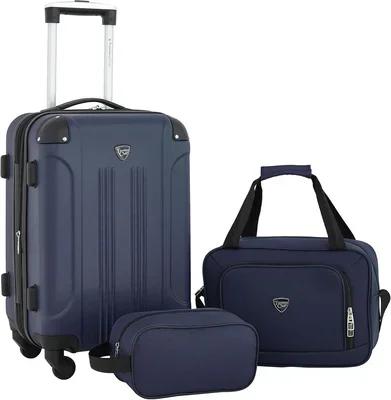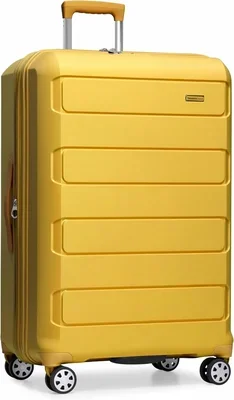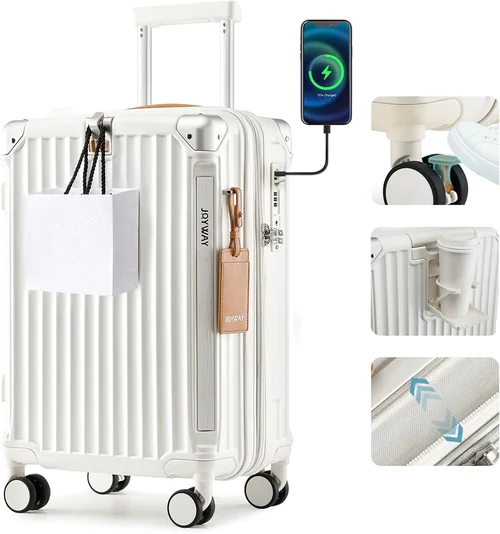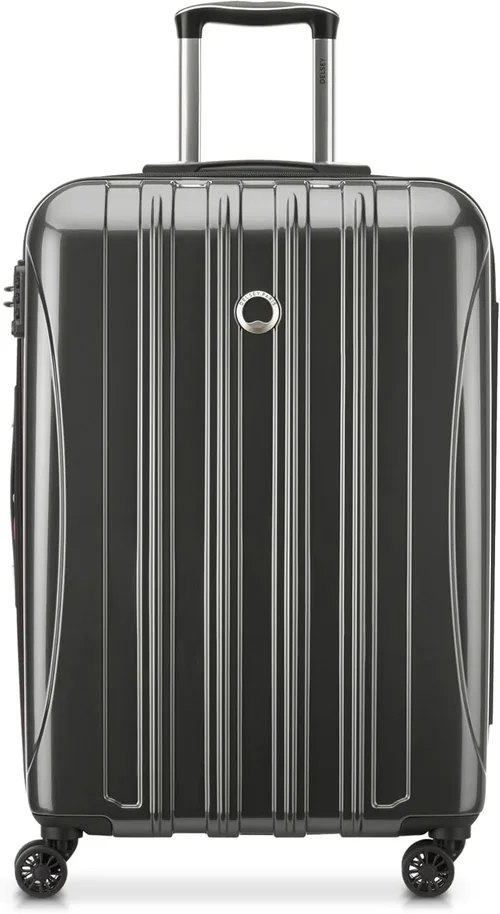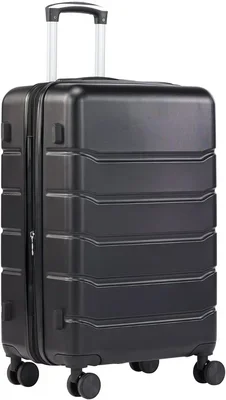
Choosing the right expandable carry‑on luggage with wheels can feel like navigating a maze of specifications, brand promises, and price tags. Whether you’re a frequent business traveler, a weekend adventurer, or someone who simply wants a reliable bag that fits overhead bins, the decision impacts every trip you take. This guide exists to cut through the noise, giving you a clear roadmap of what truly matters so you can invest confidently in a piece that will serve you for years.
In the next sections you’ll learn the key factors that separate a decent bag from a great one, the different categories of expandable carry‑ons on the market, common pitfalls that waste money, and how to match your budget to the features you actually need. We’ll also share expert timing tips, answer the questions travelers ask most often, and finish with concrete recommendations for every type of buyer. By the end you’ll have the knowledge to pick a carry‑on that fits your lifestyle, meets airline regulations, and survives the rigors of modern travel.
The market today offers everything from ultra‑light polycarbonate shells to rugged ballistic nylon hybrids, each with its own expansion mechanism, wheel system, and organizational layout. Understanding the terminology — spinner versus inline wheels, TSA‑approved locks, compression straps, and more — will empower you to compare models on an even playing field. Let’s dive in and turn the shopping process from a chore into a confident choice.

What to Look for When Buying Buying Guide
1. Size Compatibility and Airline Regulations
Before you fall in love with a design, verify that the bag’s external dimensions (including wheels and handles) meet the most restrictive carry‑on limits you’ll encounter. Most U.S. domestic carriers allow 22 × 14 × 9 inches, while many international airlines shrink that to 21.5 × 13.5 × 7.5 inches. An expandable bag typically adds 1.5 to 2 inches of depth when unzipped, so check both the “closed” and “expanded” measurements. A bag that fits the tightest limit in its closed state gives you the flexibility to expand only when you have extra overhead space or when you’re checking the bag at the gate.
2. Expansion Mechanism and Capacity Gain
Expandable luggage uses a zippered gusset that adds volume without changing the bag’s footprint. Look for a gusset that runs the full perimeter of the main compartment; partial gussets only expand one side and can create awkward bulges. A quality expansion zipper should be reinforced with a fabric tape and have a lockable pull tab so you can secure the extra space when not needed. Typical capacity gains range from 15 % to 25 % — enough for a couple of extra outfits or a souvenir — but remember that a fully expanded bag may no longer meet carry‑on size rules.
3. Wheel Type: Spinner vs. Inline
Spinner wheels (four 360‑degree rotating casters) let you glide the bag beside you, reducing wrist strain on long terminal walks. Inline wheels (two fixed wheels) are more durable on rough surfaces like cobblestones or curbs because they have fewer moving parts. If you frequently navigate crowded airports, spinners are a comfort win; if your trips involve uneven pavement or you prefer a lighter bag, inline wheels often weigh less and survive impacts better. Some premium models combine both: two large inline wheels for stability plus two smaller spinners for maneuverability.
4. Handle System Ergonomics and Durability
The telescopic handle should lock at multiple heights (usually three) to accommodate different user heights. Test the grip — rubberized or contoured handles reduce fatigue. The handle tubes are typically aluminum or high‑grade polycarbonate; aluminum resists bending but adds weight, while reinforced polycarbonate offers a good strength‑to‑weight ratio. Ensure the handle retracts smoothly without wobble, and that the release button is easy to operate with one hand.
5. Shell Material and Impact Resistance
Hard‑shell carry‑ons use polycarbonate, ABS, or a blend. Polycarbonate is the gold standard: it flexes under impact rather than cracking, and it resists temperature extremes. ABS is cheaper but more brittle. Soft‑shell bags rely on ballistic nylon (1680D or higher) or Cordura, which resists abrasions and tears while offering external pockets for quick access. Hybrid designs combine a polycarbonate frame with nylon panels, giving you structure plus flexibility. Choose based on whether you prioritize maximum protection (hard shell) or external organization and slight weight savings (soft shell).
6. Interior Organization and Compression
A well‑designed interior saves packing time and keeps clothes wrinkle‑free. Look for a full‑size mesh divider, tie‑down straps, and a zippered pocket for toiletries or electronics. Compression straps that cinch down the main compartment help you maximize the expanded volume while keeping contents stable. Some models include a removable suiter or a dedicated laptop sleeve that slides out for security screening — valuable if you carry a 15‑inch device.
7. Security Features: Locks and Zippers
TSA‑approved combination locks let agents inspect your bag without cutting the lock. Integrated locks built into the zipper pulls are sleeker than aftermarket padlocks and less likely to snag. Double‑coil YKK or equivalent zippers with lockable sliders add a layer of tamper resistance. If you travel to destinations with higher theft risk, consider a bag with a zipper‑guard flap that covers the zipper teeth.
8. Weight and Carry‑On Weight Limits
Many airlines now enforce a 7‑10 kg (15‑22 lb) carry‑on weight limit. A lightweight bag (under 6 lb for a 22‑inch spinner) leaves more allowance for your belongings. Hard shells tend to be heavier than comparable soft shells, but advances in polycarbonate molding have narrowed the gap. Weigh the empty bag before buying; a 0.5 lb difference can mean an extra pair of shoes or a heavier jacket.
9. Warranty, Repair Network, and Brand Reputation
A strong warranty signals confidence. Look for at least a 5‑year limited warranty covering wheels, handles, and zippers. Brands with global repair centers (e.g., Briggs & Riley, Travelpro, Samsonite) let you replace a broken wheel in a foreign city instead of buying a new bag. Read user reviews for real‑world durability stories — especially about wheel bearing wear and handle tube fatigue after 2‑3 years of heavy use.
10. Price vs. Value Proposition
Price alone doesn’t dictate quality. A $250 bag with a lifetime warranty, replaceable wheels, and a proven track record often outperforms a $150 bag that needs replacement after two trips. Calculate cost per trip: if you travel 10 times a year for five years, a $300 bag costs $6 per trip. Factor in the cost of lost time dealing with broken hardware, and the higher upfront investment often pays off.
Different Types of Buying Guide

Common Buying Mistakes to Avoid
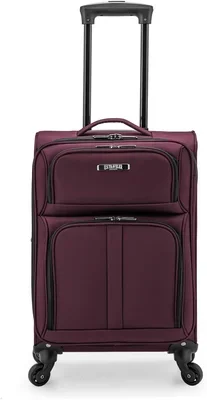
❌ Mistake: Ignoring the Expanded Dimensions
Why it’s bad: Many shoppers only check the closed size, then discover at the gate that the expanded bag exceeds the airline’s limit, forcing a gate check and possible fee.
What to do instead: Verify both closed and expanded measurements against the strictest carrier you fly. Choose a bag whose expanded depth still fits the most common 22 × 14 × 9 inch envelope, or plan to only expand when you have confirmed overhead space.
❌ Mistake: Prioritizing Aesthetics Over Wheel Quality
Why it’s bad: A beautiful bag with cheap plastic wheels will wobble, jam, or snap after a few trips, turning a smooth roll into a frustrating drag.
What to do instead: Spin the wheels in the store; they should rotate freely with minimal resistance. Look for sealed ball bearings and polyurethane tread — these last longer than plain plastic.
❌ Mistake: Overlooking Weight of the Empty Bag
Why it’s bad: A heavy empty bag eats into your carry‑on weight allowance, limiting what you can pack and potentially incurring overweight fees.
What to do instead: Target an empty weight under 6 lb for a 22‑inch spinner. Compare specs across brands; a 0.5 lb difference adds up over many trips.
❌ Mistake: Buying Without a Warranty or Repair Network
Why it’s bad: A broken handle or wheel in a foreign city leaves you stranded with a useless bag and no easy fix.
What to do instead: Choose brands offering at least a 5‑year warranty and authorized repair centers worldwide. Register the product online immediately after purchase.
❌ Mistake: Assuming All Expandable Zippers Are Equal
Why it’s bad: Low‑quality expansion zippers can snag, separate, or burst under pressure, spilling contents onto the conveyor belt.
What to do instead: Inspect the zipper tape for reinforced stitching and a lockable pull. YKK or SBS branded zippers are a reliable indicator.
❌ Mistake: Skipping the Interior Layout Check
Why it’s bad: A bag that looks spacious may lack compression straps or a divider, causing clothes to shift and wrinkle.
What to do instead: Open the bag fully in store. Look for a full‑size mesh divider, tie‑down straps, and a dedicated laptop or tablet sleeve if you carry electronics.
❌ Mistake: Not Testing the Handle Height Range
Why it’s bad: A handle that doesn’t extend tall enough forces you to hunch, causing back strain on long walks.
What to do instead: Extend the handle to its highest lock position and simulate walking. Your elbow should be at a comfortable 90‑degree angle.
Budget Guidelines: How Much Should You Spend?
Understanding price tiers helps you set realistic expectations and avoid over‑paying for features you won’t use. Below is a breakdown of what you typically get at each level.
Entry‑Level ($90 – $150)
At this range you’ll find mostly soft‑shell nylon bags with inline wheels. Construction is functional: basic zippers, a single telescoping handle with two height stops, and a simple interior divider. Expansion is usually a modest 1‑inch gusset. Durability is decent for occasional leisure travel (2‑4 trips per year) but wheels and handles may show wear after 18‑24 months of heavy use. Brands like Amazon Basics, Kenneth Cole Reaction, and some Travelpro “Walkabout” models sit here. If you travel once or twice a year and want a reliable bag without a big investment, this tier works.
Mid‑Range ($150 – $300)
This is the sweet spot for most frequent flyers. You get polycarbonate or high‑denier ballistic nylon, spinner wheels with sealed bearings, a three‑stage telescoping handle, TSA‑approved lock, and a full‑perimeter expansion gusset adding 1.5‑2 inches. Interiors feature compression straps, multiple mesh pockets, and often a removable suiter or laptop sleeve. Warranties extend to 5‑10 years with global repair networks (e.g., Travelpro Platinum Elite, Samsonite Freeform, Briggs & Riley Baseline). Expect a weight of 5.5‑6.5 lb for a 22‑inch spinner. This tier balances longevity, features, and price.
Premium ($300 – $500)
Premium bags add refined details: magnesium or aluminum handle tubes, self‑aligning magnetic wheel housings, water‑resistant coated zippers, and modular interior systems (removable packing cubes, wet/dry pockets). Some include integrated USB ports with power bank pass‑through, though the battery is usually sold separately. Brands like Tumi (Alpha 3), Rimowa (Essential Cabin), and Victorinox (Spectra 2.0) dominate here. Warranties are often lifetime on the shell and 5‑10 years on components. Weight stays low (5‑6 lb) thanks to advanced molding. Choose this tier if you travel weekly, value seamless organization, and want a bag that looks professional in a boardroom.
Luxury ($500 +)
Luxury carry‑ons blend craftsmanship with tech: full‑grain leather accents, carbon‑fiber frames, GPS tracking tiles, biometric locks, and bespoke interior layouts. Brands such as Globe‑Trotter, Horizn Studios (M5), and high‑end Tumi collections live here. While the materials are exquisite, the functional advantage over a $350 premium bag is marginal for most travelers. These are status pieces and heirloom items. If budget is no object and you appreciate design heritage, this tier delivers — but for pure utility, the premium tier already covers 95 % of needs.
Expert Tips for Getting the Best Deal
- Shop End‑of‑Season Sales: Major retailers clear luggage in January (post‑holiday) and July (mid‑year). Discounts of 20‑40 % are common on previous‑year models.
- Use Price‑Tracking Tools: Browser extensions like Honey, CamelCamelCamel, or Keepa alert you when a specific SKU drops below your target price.
- Check Manufacturer Refurbished Programs: Brands like Briggs & Riley and Travelpro sell factory‑refurbished units with full warranties at 30‑50 % off.
- Leverage Credit‑Card Travel Perks: Some premium cards offer statement credits for luggage purchases or extended warranty coverage — read the benefits guide.
- Buy In‑Store for Hands‑On Testing: Even if you plan to order online, visit a store to feel the wheel roll, handle lock, and expansion zipper. Then purchase the exact model online for the best price.
- Bundle with Packing Cubes: Many retailers offer a discount when you add a set of packing cubes; they improve organization and protect the bag’s interior.
- Read Return Policies Carefully: Look for a 30‑day no‑questions‑asked return with free return shipping. This lets you test the bag on a real trip risk‑free.
- Register the Warranty Immediately: Most brands require online registration within 30 days to activate the full coverage period.

Frequently Asked Questions
Q: Can I use an expandable carry‑on on all airlines?
A: Most airlines accept the standard 22 × 14 × 9 inch dimensions when the bag is not expanded. Always check the specific carrier’s policy before you fly; some low‑cost European carriers enforce stricter limits (e.g., 21.5 × 13.5 × 7.5 in). If you plan to expand, do so only when you know overhead space is available or when you’ll check the bag at the gate.
Q: How much extra space does the expansion zipper really add?
A: Typical expansion adds 1.5‑2 inches of depth, translating to roughly 15‑25 % more volume. That’s enough for an extra pair of shoes, a light jacket, or a few souvenirs. Remember that a fully expanded bag may exceed carry‑on size limits.
Q: Are spinner wheels less durable than inline wheels?
A: Spinner wheels have more moving parts, so they can be more vulnerable to debris and impact. However, high‑quality spinners with sealed ball bearings and polyurethane treads (found on mid‑range and premium bags) last 5‑7 years under heavy use. Inline wheels are simpler and often survive rougher terrain longer, but they sacrifice 360‑degree maneuverability.
Q: What’s the difference between polycarbonate and ABS shells?
A: Polycarbonate is a higher‑grade thermoplastic that flexes under impact and returns to shape, making it far more crack‑resistant. ABS is cheaper, more rigid, and prone to cracking on hard hits. Many mid‑range bags use a polycarbonate/ABS blend to balance cost and durability.
Q: Do I need a TSA‑approved lock if my bag has a built‑in combination lock?
A: Yes. Built‑in combination locks that are TSA‑approved allow security agents to open the bag with a master key without cutting the lock. If the lock isn’t TSA‑approved, agents may cut it off, leaving your bag unsecured.
Q: How do I clean and maintain the wheels?
A: Every few trips, wipe the wheel treads with a damp cloth to remove grit. Apply a drop of silicone‑based lubricant to the axle bearings if they start to squeak. Avoid oil‑based lubricants — they attract dust and gum up the bearings.
Q: Can I replace a broken wheel myself?
A: Many mid‑range and premium brands sell replacement wheel kits and provide instructional videos. The process usually requires a Phillips screwdriver and a few minutes. Entry‑level bags often have riveted wheels that aren’t user‑replaceable.
Q: Is a built‑in USB port worth the extra cost?
A: Only if you regularly carry a power bank and want the convenience of charging your phone without opening the bag. The port is just a pass‑through; you still need to supply the battery. If you rarely need on‑the‑go charging, skip it and save weight.
Q: What’s the best way to pack a suit in an expandable carry‑on?
A: Use the built‑in suiter or a dedicated garment folder. Lay the jacket flat, fold the trousers over it, then roll the bundle tightly. Place it in the main compartment secured by compression straps. This minimizes wrinkles and uses the expanded depth efficiently.
Q: How do I know if a bag’s handle will fit my height?
A: Look for a handle with at least three lock positions and a maximum extended height of 41‑43 inches from the floor. In store, extend the handle fully and stand upright; your forearm should be roughly parallel to the ground when gripping the handle.
Our Final Recommendations
- Best for Budget‑Conscious Buyers: Travelpro Maxlite 5 22‑inch Expandable Spinner — lightweight (5.3 lb), durable nylon, smooth spinner wheels, 5‑year warranty, often under $130 on sale.
- Best Overall Value: Samsonite Freeform Hardside Expandable Carry‑On — polycarbonate shell, double‑spinner wheels, TSA lock, 10‑year limited warranty, typically $180‑$220.
- Best Premium Option: Briggs & Riley Baseline Domestic Carry‑On Expandable Spinner — lifetime warranty, CX expansion system, ballistic nylon with leather accents, superb repair network, around $350.
- Best for Beginners: Amazon Basics 21‑inch Hardside Spinner — simple design, no‑frills, easy to maneuver, under $100, good for first‑time travelers testing the waters.
- Best for Advanced Users: Tumi Alpha 3 Continental Carry‑On — modular interior, integrated USB pass‑through, ultra‑durable FXT ballistic nylon, premium handle system, $500‑$600.
Conclusion: Making the Right Choice
You now have a complete framework for evaluating expandable carry‑on luggage with wheels. Start by confirming the size rules of the airlines you fly most often, then prioritize wheel type, handle ergonomics, and shell material based on your travel terrain. Use the budget tiers to set a realistic spending target, and don’t forget to factor in warranty coverage and repair accessibility — those details often determine whether a bag lasts two years or ten.
Remember that the “perfect” bag is the one that matches your personal travel rhythm. A business traveler who lives in airports will value a premium spinner with a lifetime warranty, while a weekend road‑tripper may prefer a lightweight inline‑wheel soft shell that slides into a car trunk. Whichever path you choose, test the bag with a realistic load before you commit, register the warranty the day it arrives, and keep an eye on seasonal sales to stretch your dollars further.
Safe travels, smooth rolls, and may your next carry‑on be the most reliable travel companion you’ve ever owned. If you found this guide helpful, share it with a fellow traveler and let us know which bag you finally chose — we love hearing real‑world success stories.