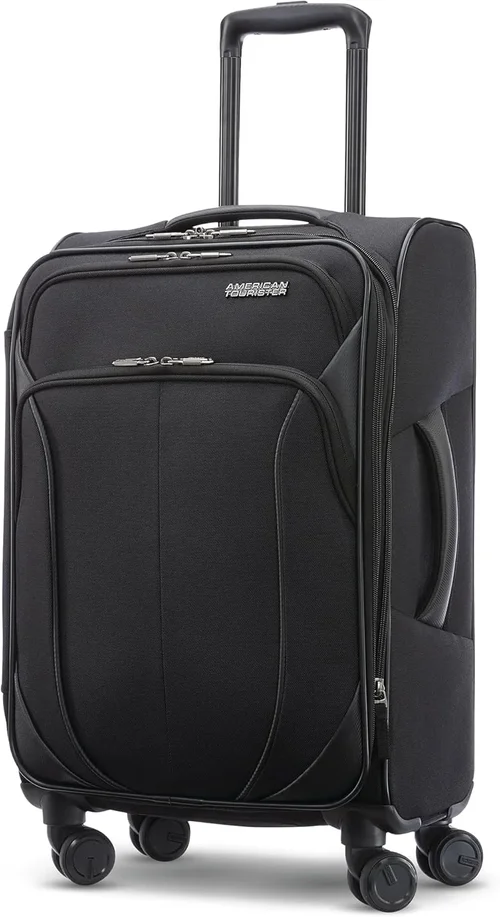
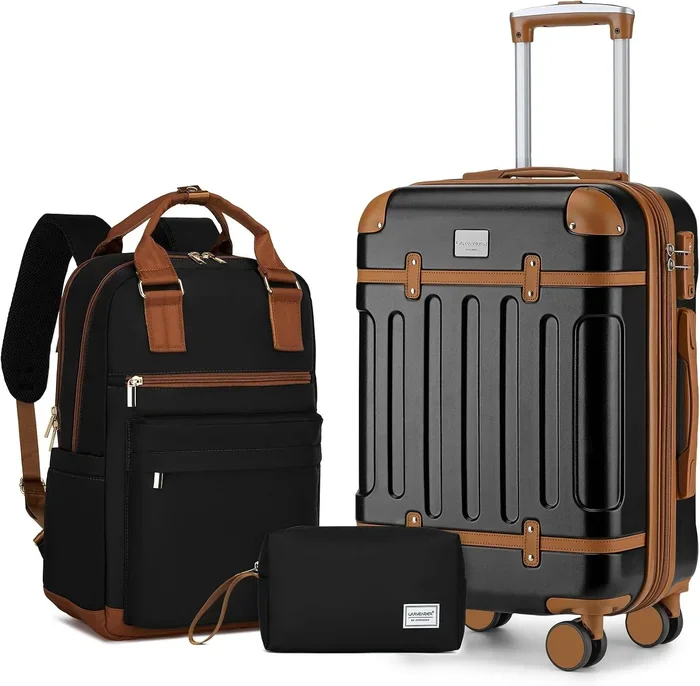
Buying a suitcase used to be simple. You walked into a department store, picked the one that matched your curtains, and hoped the zipper didn’t bust before you reached the carousel. Today? The market is flooded with options. Hard shell, soft shell, spinner wheels, inline wheels, TSA locks, USB ports, compression straps, lifetime warranties — the list goes on. If you are in the market for expandable check-in luggage, the stakes are even higher. You are not just buying a box to hold clothes; you are investing in peace of mind for every trip you take for the next five to ten years.
This guide exists because the “expandable” feature changes the game entirely. It is the difference between paying a $150 overweight fee at the gate and breezing through check-in with a smile. It is the flexibility to pack for a weekend business trip and a two-week family vacation using the exact same bag. But not all expansion systems are created equal. Some add genuine packing volume; others just stretch the fabric until it tears. Some glide through cobblestone streets; others rattle your teeth on airport tile.
Over the next few thousand words, we are going to break down everything you need to know. We will translate the marketing jargon into plain English, compare the major categories side-by-side, expose the common traps that catch unsuspecting buyers, and give you a clear budget roadmap. Whether you are a once-a-year vacationer or a road warrior racking up 100,000 miles annually, you will finish this guide knowing exactly which bag belongs in your closet. Let’s get started.

What to Look for When Buying Expandable Check-In Luggage
Before you fall in love with a color or a brand logo, you need to understand the mechanics of what makes a great check-in bag. The expandable mechanism is the star of the show, but the supporting cast — wheels, handles, shell material, internal organization — determines if that star shines or flops. Here are the eight critical factors, ranked by priority.
1. Expansion Mechanism & Real-World Capacity Gain
This is the single most important factor. Manufacturers love to advertise “25% expansion” or “2 inches of extra depth.” But what does that actually mean for your packing list? You need to look at how the expansion works. There are two main types: the gusseted zipper (softside) and the zipperless frame expansion (hardside).
On softside luggage, a fabric gusset unfolds when you unzip the expansion perimeter. This is generally reliable, but check the stitching. If the gusset is attached with a single row of stitching, it will fail under the pressure of a fully packed bag. Look for double or triple stitching, often called “bar-tacking,” at stress points. On hardside luggage, expansion is trickier. The shell must physically separate. Cheaper models use a simple zipper that pulls the two shell halves apart; this often warps the polycarbonate over time, leading to a lid that won’t close flush. Premium hardside models (like certain Travelpro or Briggs & Riley lines) use a structural frame or a “zipperless” expansion system that maintains the shell’s rigidity even when expanded.
Also, consider the expanded weight. Airlines have strict linear inch limits (Length + Width + Height). A bag that expands to 64 linear inches might be free on Delta but overweight on a European budget carrier. Measure your airline’s specific limits before relying on that extra zipper.
2. Shell Material: Polycarbonate vs. Polypropylene vs. Ballistic Nylon
The material dictates durability, weight, and how the bag ages. This is where “technical specs” meet “real life.”
Polycarbonate (PC) is the gold standard for modern hardside luggage. It is a thermoplastic that flexes under impact rather than cracking. It bounces back. Look for “100% Polycarbonate” or “Makrolon” (a premium Bayer brand). Avoid “ABS/Polycarbonate blend” or “Composite” if durability is priority #1. ABS is brittle; it cracks in cold cargo holds or when baggage handlers throw it. Pure PC costs more but survives the conveyor belt gauntlet.
Polypropylene (PP) is the new challenger. It is lighter than PC and incredibly impact-resistant — arguably more so. However, it scratches easier and can feel “plasticky” or flimsy in the hand. High-end brands (like Samsonite’s Neopulse) use proprietary PP blends that solve the scratch issue, but budget PP bags often look beat up after two trips.
Ballistic Nylon / Cordura (Softside) is the choice for flexibility. “Ballistic” originally referred to a specific 1050d or 1680d nylon weave developed for flak jackets. Today, marketing dilutes the term. Look for the Denier (D) rating — 1680D is tougher than 840D. Better yet, look for Cordura branding. Cordura fabrics are certified for abrasion, tear, and scuff resistance. Softside wins on “squishability” — you can stuff it into tight overhead bins (on smaller sizes) or odd-shaped car trunks. It also usually has exterior pockets for last-minute passport access.
3. Wheel System: Spinner vs. Inline — And Why Bearings Matter More Than Count
Four wheels (spinners) vs. two wheels (inline/roller). The internet argues about this endlessly. Here is the reality: Spinners are superior for airports; Inlines are superior for terrain.
Spinners (360-degree rotating casters) let you push the bag beside you, glide sideways down narrow aisles, and navigate security lines without wrist strain. But the wheels protrude from the body, eating into your linear inch allowance (often 1-2 inches per wheel) and creating snag points. They are also mechanically complex — four casters mean four failure points.
Inlines (two fixed wheels recessed into the body) are tanks. The wheels are protected by the shell. They roll effortlessly over cobblestones, gravel, curbs, and broken pavement. You pull them behind you. They track straight. They rarely break. The downside? You bear the weight on your wrist/arm, and tight turns require tilting.
The hidden spec: Wheel Bearings. A cheap spinner with plastic bushings will grind and wobble within months. A premium inline with sealed stainless steel ball bearings will roll silently for a decade. Always prioritize bearing quality over wheel count. Look for terms like “sealed ball bearings,” “precision bearings,” or “MagnaTrac” (Travelpro). Avoid “spinner wheels” with no bearing description — they are usually plastic-on-plastic.
4. Handle System: Telescoping Mechanism & Ergonomics
The handle is your connection to the bag. A bad handle turns a 50lb bag into a chiropractor appointment. There are two designs: External tubes (running outside the interior cavity) and Internal tubes (running inside the packing space).
External handles (common on premium hardside like Rimowa, Briggs & Riley, high-end Samsonite) preserve 100% of the interior volume — flat packing floor, no tubes digging into your folded suits. They also allow the handle to lock in multiple height positions (usually 3-4 stops). Internal handles (common on budget and mid-range bags) intrude into the packing space, creating two ridges you have to pack around. They often only lock at two heights (short/tall).
Grip material matters. Rubberized, contoured grips with finger grooves reduce fatigue. Cheap plastic tubes with a foam sleeve tear and get sticky. Test the extension/retraction action: it should be smooth, silent, and have zero “play” (wobble) when locked extended. Wobble = bent tubes eventually.
5. Interior Organization & Compression
Expandable luggage tempts you to throw things in haphazardly. Good organization stops the “exploded suitcase” effect when you open it at the hotel. Look for:
- Dual-compartment design: A full zippered divider separating the two halves. This lets you pack dirty laundry on one side, clean on the other.
- Compression straps: Elasticated X-straps or a full compression panel with a buckle. These are essential for expanded packing — they compress the extra volume down so the zipper doesn’t strain.
- Mesh pockets: At least one large zippered mesh pocket on the divider (for toiletries, cables, underwear) and ideally smaller pockets on the lid.
- Suiter system: If you travel with suits/dresses, look for a built-in suiter sleeve or a removable garment folder. Some premium bags (Briggs & Riley, Tumi) have integrated folding boards.
- Laundry/Shoe bags: Many premium brands include branded packing cubes or shoe bags. Factor this value into the price.
6. Security Features: TSA Locks, Zipper Quality, & Puncture Resistance
Every checked bag must have a TSA-accepted lock. It is non-negotiable. If you use a non-TSA lock, security will cut it off. Most quality bags now integrate a combination lock into the frame (hardside) or a lockable zipper pull (softside).
Zipper quality is the silent killer. YKK is the industry standard. Look for “YKK RCW” (racquet coil) or “YKK Metaluxe” on softside. On hardside, the zipper is often the structural weak point. Double-coil, self-healing zippers are a must. Test them: run the pull back and forth. It should glide, not catch. If the teeth separate when you tug the fabric laterally, walk away.
Puncture resistance: A ballpoint pen can puncture a standard coil zipper in seconds, allowing theft and re-zipping without evidence. Anti-puncture zippers (like YKK’s “Security” zipper or Tumi’s “Omega” closure) have tighter coil spacing or a protective flap. For check-in luggage that leaves your sight, this is a worthy upgrade.
7. Warranty & Repair Infrastructure
Luggage takes a beating. A warranty is only as good as the company’s ability to honor it quickly. “Lifetime Warranty” means the lifetime of the product, not your lifetime. Read the fine print.
Tier 1: Briggs & Riley, Rimowa, Tumi. “Unconditional” lifetime warranties. They cover airline damage (the #1 killer). They have global repair networks. You walk into a store, they fix it or replace it on the spot. No receipt needed often.
Tier 2: Travelpro, Samsonite (premium lines), Victorinox, Delsey. Strong limited lifetime warranties. Cover defects, sometimes airline damage (Travelpro specifically covers airline damage for 1 year, then defects for life). Good repair networks.
Tier 3: Mid-range brands (American Tourister, Kenneth Cole, Rockland, generic Amazon brands). “Limited” warranties covering manufacturing defects only. Airline damage = “not our problem.” Repair often means mailing the bag to a central depot (weeks without luggage).
8. Weight vs. Durability Trade-off
Ultra-light luggage (under 7 lbs for a 27″ spinner) is tempting. Airlines charge by weight. But physics is real. To get a hardside shell under 7 lbs, manufacturers thin the polycarbonate walls. A thin shell flexes too much, cracks easier, and transmits every impact to the contents. A 9-10 lb premium polycarbonate bag (like a Samsonite Omni PC or Travelpro Maxlite 5 hardside) uses thicker material, reinforced corners, and better wheel housings.
For softside, lightweight often means thinner nylon (lower Denier) and minimal frame structure. The bag sags when packed, wheels misalign, and the handle tube bends. Sweet spot: 8.5 – 10.5 lbs for a 27-28″ check-in spinner. This balances airline weight limits (usually 50 lbs / 23 kg) with structural integrity. You have 40 lbs of packing capacity — plenty for two weeks.
Different Types of Expandable Check-In Luggage

Common Buying Mistakes to Avoid
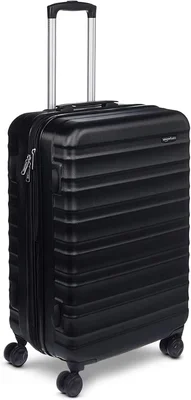
❌ Mistake: Buying Based on “Carry-On” Brand Reputation
Why it’s bad: A brand that makes an amazing 21″ carry-on often cuts corners on their 28″ check-in. The scaling physics are different. A carry-on never hits the baggage belt at 30mph. A check-in bag does. Handles snap, wheels shatter, corners crack. Brands like Away or Monos excel at carry-ons but their check-in lines have historically higher failure rates on wheels and handle tubes because they prioritize weight savings over structural reinforcement for the larger size.
What to do instead: Research the specific model and size you are buying. Read reviews for the 27″/28″ version specifically. Look for “check-in specific” engineering: reinforced corners, double-wheel housings, thicker handle tubes.
❌ Mistake: Ignoring Linear Inch Restrictions
Why it’s bad: You buy a “large” 30″ spinner that expands to 32″. You pack it full. At the airport, it measures 65 linear inches (L+W+H). The agent charges you $200 oversize fee. The bag technically “fits” your stuff, but it doesn’t fit the airline’s contract of carriage. Most US majors allow 62 linear inches for standard checked bags. Many international carriers are stricter (158cm = ~62.2″). Spinner wheels add 1.5-2 inches to width/height.
What to do instead: Target a bag with base dimensions of ~27″ x 18″ x 11″ (56 linear inches). Even expanded (+2″), you stay safely under 62″. If you need massive volume, ship a box or pay for a second bag — it’s cheaper than oversize fees.
❌ Mistake: Choosing “Lightest Weight” as Top Priority
Why it’s bad: The lightest 28″ spinner on the market (often 5-6 lbs) is made of thin ABS blend or 600D polyester with minimal frame. It will not survive 5 round trips as checked luggage. The wheels will shatter, the handle tube will bend, the zipper will blow out. You save 2 lbs of bag weight but lose the bag entirely.
What to do instead: Accept 9-10 lbs for a durable hardside spinner. That leaves you 40+ lbs for contents. If you genuinely pack 50 lbs of clothes, you are the outlier — buy a heavy-duty duffel or pay the fee. Don’t let the tail wag the dog.
❌ Mistake: Overlooking the “Expanded” Zipper Stress Test
Why it’s bad: You expand the bag, stuff it full, zip it up. The zipper track is now under constant tension. On cheap bags, the zipper tape separates from the fabric/shell, or the slider pops off the track. You arrive with a gaping hole in your luggage.
What to do instead: In the store (or immediately upon delivery), expand the bag fully. Stuff it with pillows/blankets to simulate a full load. Zip it closed. Let it sit for 10 minutes. Unzip. Check for: zipper tape pulling away from shell, slider deformation, fabric puckering. If it shows stress, return it.
❌ Mistake: Assuming “Spinner” Means “Easy to Roll”
Why it’s bad: Cheap spinners have small diameter wheels (50-60mm) with plastic bushings. On anything but smooth tile, they vibrate, catch, and require constant correction. They also tip over if you let go on a slope. You end up tilting it back on two wheels anyway — defeating the purpose.
What to do instead: Look for wheel diameter >= 70mm (preferably 75-80mm) and sealed ball bearings. Large wheels roll over cracks, grates, and carpet transitions. Bearings eliminate the “grind.” If the spec sheet doesn’t list bearing type, assume plastic bushings.
❌ Mistake: Forgetting the Return/Exchange Window
Why it’s bad: You buy online. It arrives. Looks great. You put it in the closet. Trip is in 3 months. You pull it out, load it, wheel breaks day 1. Return window closed. Warranty requires shipping bag to New Jersey at your cost ($40). You’re stuck.
What to do instead: Stress test immediately upon arrival. Extend handle 20 times. Roll it loaded with 30 lbs on carpet, tile, sidewalk. Expand/Compress 5 times. Check every zipper, pocket, lock. Do this within the 30-day return window. Treat it like a rental car inspection.
❌ Mistake: Buying a “Set” Without Checking Individual Piece Quality
Why it’s bad: 3-piece sets (20″, 24″, 28″) are seductive. But often the 20″ carry-on is the “hero” product — great wheels, great handle. The 28″ check-in shares the same SKU wheels/handle but scaled up poorly. The 24″ is an afterthought. You pay for three bags, get one good one.
What to do instead: Buy pieces individually. Mix and match. Get the best carry-on for you, the best check-in for you. They don’t need to match. Your back doesn’t care about color coordination.
Budget Guidelines: How Much Should You Spend?
Luggage pricing is strangely disconnected from material cost. You pay for engineering, warranty infrastructure, and brand equity. Here is what each tier actually delivers for expandable check-in luggage (27-28″ size).
Entry-Level ($80 – $150): The “Two-Year” Bag
What you get: ABS/Polycarbonate blend hardside or 600D-900D polyester softside. Spinner wheels with plastic bushings. Internal handle tubes. Basic TSA lock (often flimsy). Single-row stitching on expansion gussets. 1-year limited warranty (manufacturing defects only).
Reality check: These bags are designed for occasional leisure travel — 1-2 trips per year, mostly domestic, handled gently. They will likely survive 4-6 checked flights before a wheel cracks, handle bends, or zipper fails. If you fly Spirit/Frontier (notorious for rough handling), expect 1-2 trips.
Brands in this space: American Tourister (Samsonite’s budget line), Rockland, Kenneth Cole Reaction, Merax, generic Amazon brands (Coolife, Showkoo).
Best pick if forced: American Tourister Moonlight / Belle Voyage. They use Samsonite’s wheel/handle tooling (slightly downgraded) and have a decent 10-year limited warranty backed by Samsonite’s service network.
Mid-Range ($150 – $300): The Sweet Spot for 90% of Travelers
What you get: 100% Polycarbonate (hardside) or 1200D-1680D Ballistic Nylon/Cordura (softside). Sealed ball bearing wheels (often 70mm+). External handle tubes (on hardside) or reinforced internal tubes. YKK RCW zippers. Expansion gussets with bar-tacking. Limited Lifetime Warranty covering defects; some cover airline damage for 1-5 years. Weight: 8.5 – 10 lbs.
Reality check: This is the workhorse tier. These bags handle 5-10 trips per year for 5-8 years. Wheels are replaceable (often standard sizing). Handles don’t wobble. Expansion works reliably. You aren’t paying for “luxury” — you are paying for engineering margins.
Key Players:
- Travelpro Platinum Elite / Maxlite 5: The flight crew standard. External handles, MagnaTrac wheels, precise expansion, lifetime + airline damage coverage (1-5 yrs). Best value in market.
- Samsonite Freeform / Omni PC / Centric: 100% PC, good wheels, TSA lock, 10-year warranty. Omni PC is the best sub-$200 hardside.
- Delsey Paris Chatelet / Helium Aero: French engineering, distinctive style, brake-equipped wheels (Chatelet), strong frames.
- Victorinox Spectra 2.0 / Airox: Swiss over-engineering. Amazing wheels. Softside Spectra is legendary for durability.
- Briggs & Riley Baseline (Entry models / Outlet): Sometimes dip into upper $200s on sale. Unconditional lifetime warranty including airline damage. The gold standard.
Premium ($300 – $600): The “Buy Once, Cry Once” Tier
What you get: Premium polycarbonate (Makrolon, Curv, proprietary blends) or 1680D+ Cordura with TPU coating. Precision Japanese/German wheels (Hinomoto Lisof, MagnaTrac 2.0). Zero-wobble external handle systems (multi-stage locking). Zipperless or frame-reinforced expansion. Integrated suiter/compression systems. Anti-puncture zippers. Global repair network with loaner programs. Weight often 9-11 lbs (prioritizing durability over ultra-light).
Reality check: These last 10-15+ years. They survive baggage handler rage. They look professional in a boardroom. The warranty is a service promise, not a legal shield. If a wheel breaks in Tokyo, you walk into a store and get it fixed.
Key Players:
- Briggs & Riley Baseline / Sympatico: Sympatico is hardside with CX expansion (frame-based). Baseline is the softside king. Unconditional lifetime warranty. CX expansion is the only hardside expansion that doesn’t warp.
- Tumi Alpha 3 / 19 Degree / Latitude: Ballistic nylon (Alpha) or Tegris/PC composite (19 Degree/Latitude). FXT ballistic is abrasion-proof. Omega closure system (zipperless). 5-year warranty + lifetime repair service. High resale value.
- Rimowa Essential / Classic (Polycarbonate/Aluminum): Grooved shells = rigidity. Hinomoto wheels (smoothest in world). 5-year warranty (extendable). Status symbol, but genuinely engineered.
- Samsonite Proxis / S’Cure ECO: Proxis uses Roxkin (PP composite) — incredibly light, self-healing scratches. S’Cure is polypropylene, 3-point locking, made in Europe.
Luxury ($600+): Heritage, Materials, & Service
What you get: Aluminum (Rimowa Classic, Zero Halliburton), Leather-trimmed Ballistic (Globe-Trotter, Valextra), Titanium/Carbon Fiber accents. Hand-assembled. Custom monogramming. White-glove repair (they pick up, repair, return). Lifetime warranties often transferable. Weight: Heavy (Aluminum 13-15 lbs).
Reality check: You are buying an heirloom. The aluminum dents beautifully (patina). The leather ages. The polycarbonate luxury (Rimowa Essential) is lighter but you pay for the brand cachet and the wheel system. Functionally, a $400 Briggs & Riley performs 95% as well. This is for the buyer who wants the object, not just the utility.
Expert Tips for Getting the Best Deal
- Time Your Purchase: Luggage goes on deep discount 3 times a year: January (post-holiday clearance), May (pre-summer new model rollout), November (Black Friday/Cyber Monday). The best “value” buys are previous-year models in May/June. Colors change; tech rarely does.
- Buy “Open Box” / “Refurbished” from Authorized Retailers: Briggs & Riley, Tumi, Travelpro, Samsonite all have certified refurbished programs on their websites or eBay stores. These are returns (often unused) inspected, repaired, warrantied. 30-50% off. The warranty is usually identical to new.
- Check Airline Employee Stores / Discount Programs: If you know a pilot, flight attendant, or gate agent, they have access to “Crew Stores” (Travelpro, Samsonite, Briggs & Riley) at 40-50% off retail. It is the single best way to buy premium luggage.
- Use Price Tracking Tools: CamelCamelCamel (Amazon), Honey, Keepa. Set alerts for your specific model. Luggage prices fluctuate wildly week-to-week based on inventory algorithms.
- Register Your Warranty Immediately: Take a photo of the receipt, the warranty card, and the serial number tag (usually inside the lining or on the frame). Email it to yourself. Register on the brand site. If the handle snaps in 3 years, you have proof.
- Test the “Wobble” Before You Leave the Store / Open Box: Extend handle fully. Shake it side-to-side. Any play at the base? Return it. Spin each wheel. Silent? Smooth? Any grinding? Return it. Expand/Compress 3 times. Smooth zipper? Return if not.
- Pack a “Repair Kit” in Your Checked Bag: A few zip ties, a small roll of duct tape (Gorilla Tape), a pen, a spare TSA lock. If a zipper pull breaks or a wheel wobbles mid-trip, you can MacGyver it to the hotel.
- Consider “Unclaimed Baggage” Sales (Alabama/Online): Unclaimed Baggage Center sells lost luggage contents. Sometimes the luggage itself (high-end brands) appears on their site or eBay store for pennies. Risky, but possible score.

Frequently Asked Questions
Q: Is hardside or softside better for expandable check-in luggage?
A: Neither is universally “better” — they serve different packing styles. Hardside wins for protecting fragile items (electronics, bottles, souvenirs), water resistance (rain on tarmac), and structural rigidity (stands up alone, stacks well). Softside wins for maximum expansion volume (often 2-3″ vs 1.5-2″), exterior pockets for quick access, “squishability” to fit weird spaces, and lighter weight for the same durability. If you pack breakables or hate wet bags — hardside. If you overpack, need last-minute access, or stuff odd shapes — softside.
Q: Does expanding my luggage make it more likely to break?
A: It stresses the zipper and the frame. On a well-engineered bag (mid-range/premium), the expansion gusset and compression straps are designed to handle the load. The zipper is reinforced. On a cheap bag, expansion is the primary failure mode — the zipper track separates from the shell/fabric, or the slider blows off. Rule: Only expand when necessary. Use compression straps to cinch it down. Never sit on an expanded bag to force the zipper closed.
Q: What size check-in bag should I get? 25″, 27″, 28″, 30″?
A: 27″ is the universal sweet spot. It holds ~2 weeks of clothes, fits 62 linear inches easily (even expanded on most models), and weighs 8.5-10 lbs. 25″ is great for 10-day trips or if you are small-statured and struggle lifting 50 lbs overhead (into SUV roof rack, etc). 28-29″ is the max for standard 62″ linear limit — only buy if you routinely pack bulky winter gear or ship gifts. 30″+ is almost always oversize (65+ linear inches) — avoid unless you exclusively fly private or pay for oversize.
Q: Are spinner wheels really that fragile? Should I just get inline?
A: Cheap spinners = fragile. Premium spinners (Hinomoto, MagnaTrac, double-wheel) = very durable. The vulnerability is the caster housing snapping off the shell. Recessed inline wheels are physically protected by the shell wall — they simply cannot snap off. If you travel to developing regions, cobblestone Europe, or check bags on regional jets (thrown harder), inline is safer. If you stay in airports/hotels/convention centers 95% of the time, premium spinners are a joy.
Q: Can I fix a broken wheel/handle myself?
A: On mid-range/premium bags: Yes, often. Travelpro, Samsonite, Briggs & Riley, Delsey sell replacement wheel kits ($15-30) and handle tubes. They use standard screws/rivets. YouTube has tutorials. On budget bags: usually no — wheels are riveted permanently, handle tubes are not sold separately. On aluminum (Rimowa): requires specialized tools/rivets — send to service center.
Q: What’s the deal with “Smart Luggage” (USB ports, GPS, scales)?
A: USB port: Just a pass-through for your power bank. Convenient, but the cable inside can fray. Not a reason to buy a bag. Built-in scale: Handy, but adds weight and a failure point (sensor). A $10 handheld luggage scale is more accurate and replaceable. GPS/Bluetooth tracker: Apple AirTag or Tile Pro ($25) is vastly superior — replaceable battery, global network, hides anywhere. Built-in trackers have poor battery life and limited range. Removable battery: Mandatory for check-in (FAA). If the bag has a non-removable battery, you cannot check it. Avoid.
Q: How do I clean/maintain my expandable luggage?
A>Hardside: Wipe with mild soap/water. Magic Eraser for scuffs (test hidden spot first). Silicone spray on wheel bearings annually. Softside: Vacuum interior. Spot clean with upholstery cleaner (test first). Do not machine wash. Lubricate zippers with silicone spray or beeswax stick yearly. Store empty, uncompressed, in a cool dry place. Stuff with acid-free paper to hold shape.
Q: Is it worth paying extra for a matching carry-on/set?
A: Only if the carry-on is genuinely excellent for your needs. Many sets force a carry-on size (20-21″) that doesn’t fit your preferred airline (e.g., basic economy on United/American requires personal item only, or strict 22x14x9 sizing). Buy the check-in that fits your check-in needs. Buy the carry-on that fits your carry-on needs (or don’t buy one). Mixing brands is smart.
Q: What about the new “Zipperless” hardside expansion (like Briggs & Riley Sympatico CX)?
A: It is a genuine engineering leap. Traditional hardside expansion unzips the shell perimeter, letting the halves separate. This weakens the structure; the lid can warp, pop open, or misalign. CX (and similar systems from other brands) uses a structural frame panel that slides out from between the shells, locked by the frame, not the zipper. The shell rigidity is 100% maintained. It adds weight and cost, but if you expand every trip, it is the only hardside that won’t eventually fail at the expansion seam.
Our Final Recommendations
Based on the factors, types, budgets, and real-world durability data, here are our top picks for specific buyer profiles. These are not sponsored — they are the bags we would buy with our own money for these specific use cases.
Best for Budget-Conscious Buyers: Travelpro Maxlite 5 Hardside 27″ Spinner (~$160-190)
Why: It is the rare sub-$200 bag with 100% Polycarbonate (not blend), MagnaTrac spinner wheels (sealed bearings), external handle tubes (flat packing floor), and a legitimate Limited Lifetime Warranty covering airline damage for the first year. It weighs 8.5 lbs. The expansion is a standard gusset zipper but well-stitched. It lacks anti-puncture zippers and premium interior organization, but for 3-4 trips a year, it is unbeatable value.
Best Overall Value (The “Smart Buy”): Travelpro Platinum Elite 27″ Spinner (~$280-330)
Why: This is the bag airline pilots and flight attendants buy with their own money when not issued crew luggage. It has the best wheel system on the market (MagnaTrac 2.0 — silent, smooth, replaceable), the best handle (Contour Grip, external, zero wobble, 4 stops), PrecisionGlide expansion (smoothest zipper action), and a suiter system. Warranty: Lifetime + 5 years airline damage coverage. It comes in hardside (PC) and softside (Nylon). Weight ~9.5 lbs. It hits every engineering mark perfectly.
Best Premium Option: Briggs & Riley Sympatico CX 27″ Hardside Spinner (~$550-650)
Why: If you expand your bag every single trip, this is the only hardside that solves the structural weakness of zipper expansion. The CX frame system is brilliant. It uses Makrolon polycarbonate, Hinomoto Lisof Silent Run wheels (the smoothest in existence), and the unconditional lifetime warranty covers airline damage forever. No receipt needed. It is an investment, but the last check-in bag you will ever buy.
Best for Beginners / “I Just Want It To Work”: Samsonite Freeform 28″ Spinner (~$180-220)
Why: Widely available (Costco, Target, Amazon, Samsonite.com). 100% Polycarbonate. Double spinner wheels (recessed-ish, decent bearings). TSA lock. 10-year warranty. Simple interior (divider, X-straps, pocket). No fancy suiter, no external handle (internal tubes), but the wheels and shell are genuinely durable for the price. It is the “Toyota Camry” of luggage — reliable, unexciting, everywhere, easy to service.
Best for Advanced Users / Rough Travel: Victorinox Spectra 2.0 27″ Expandable Spinner (~$450-500)
Why: Softside. 1680D Ballistic Nylon with water-repellent coating. The wheels are oversized (80mm) sealed ball bearings — they roll over anything. The handle is the “Swiss Army” of handles — ergonomic, multi-stage, external mount option. Expansion is massive (2.5″) with a full compression panel. It has a built-in suiter, RFID pocket, and the most thoughtful interior layout ever designed. It takes a beating and looks better for it. The choice for photographers, adventure travelers, and global nomads.
Conclusion: Making the Right Choice
We have covered a lot of ground — materials, wheels, handles, warranties, budgets, and the specific traps that catch smart people. But the decision ultimately comes down to one question: What does your travel actually look like?
If you are the family loading up for a week at Disney, the Travelpro Maxlite 5 or Samsonite Freeform will serve you faithfully for years without draining the vacation fund. If you are the consultant flying Thursday-night/Monday-morning, living out of a suitcase 40 weeks a year, the Briggs & Riley Sympatico or Travelpro Platinum Elite isn’t an expense — it’s a business tool that saves you time, back pain, and replacement costs. If you are the adventurer throwing a bag in a tuk-tuk, onto a chicken bus, and into a hostel dorm, the Victorinox Spectra softside will survive abuses that would destroy a hardside in days.
Don’t overthink the brand prestige. Don’t underthink the wheel bearings. Measure your airline’s linear limits. Stress test the expansion zipper before your first trip. Register the warranty the day it arrives.
The perfect expandable check-in luggage doesn’t just hold your clothes. It disappears. It rolls silently beside you while you check email. It expands effortlessly when you find that perfect leather jacket in Florence. It survives the baggage carousel looking the same as when you checked it. It makes travel feel easy.
You now have the knowledge to find that bag. Go pack your bags — the world is waiting.