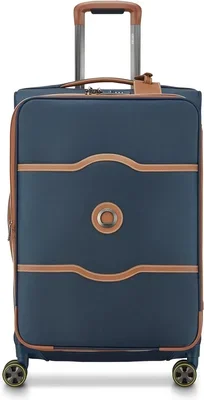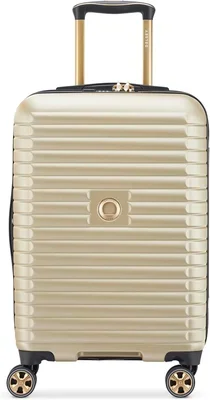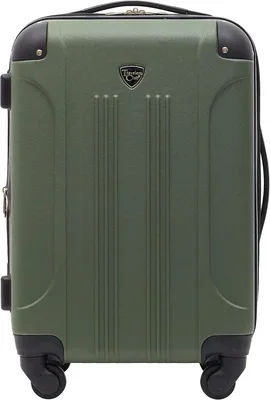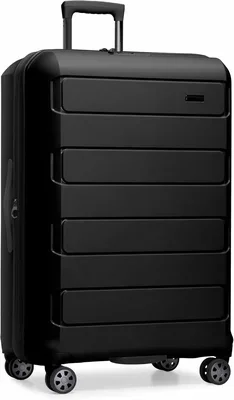
Shopping for expandable hard luggage can feel overwhelming when you first start looking. There are dozens of brands, materials that sound like they belong in a chemistry lab, and price tags that range from a nice dinner to a used car payment. I have spent years helping travelers find the right bag for their specific needs, and I can tell you that the “best” luggage does not exist. Only the best luggage for you exists. This guide exists to cut through the marketing noise and give you the framework to make a confident, informed purchase that lasts for years.
In the next few minutes, you will learn exactly what separates a suitcase that survives one trip from one that survives a decade. We will break down the materials science behind polycarbonate versus aluminum in plain English, explain why wheel quality matters more than the shell material, and show you how to spot a genuine bargain versus a cheap imitation. Whether you are a weekend warrior fitting everything into a carry-on or a family traveler checking two massive bags, this guide covers the critical decision points in order of importance.
The market today is split between legacy brands trading on reputation and direct-to-consumer brands trading on value. You will see names like Samsonite, Travelpro, and Rimowa alongside Away, Monos, and July. By the end of this article, you will understand the “expandable” mechanism itself—how much space you actually gain, when to use it, and the hidden risks of overpacking an expanded bag. Let us dive in.

What to Look for When Buying Expandable Hard Luggage
1. Shell Material: The Science of Survival
The shell is the first line of defense for your belongings. In the hard luggage world, you will encounter three primary materials: Polycarbonate (PC), Acrylonitrile Butadiene Styrene (ABS), and Aluminum. Understanding the difference is the single most important factor in predicting how your bag will look after five trips.
Polycarbonate is the gold standard for a reason. It is a thermoplastic polymer that is incredibly impact-resistant. When you drop a polycarbonate case, it flexes slightly to absorb the energy and then snaps back to its original shape. It resists cracking in cold temperatures and handles the crushing weight of stacked luggage in a cargo hold better than almost anything else. It is also lightweight. If you see a bag labeled “100% Polycarbonate” or “Makrolon” (a premium Bayer brand of PC), you are looking at a top-tier shell.
ABS is cheaper, heavier, and more brittle. It is a rigid plastic. Under impact—especially in cold weather—it tends to crack or shatter rather than flex. You will often see “PC/ABS Blend” on mid-range bags. This is a compromise: the manufacturer adds some polycarbonate for toughness but uses mostly ABS to keep costs down. These bags are fine for occasional leisure travel (once or twice a year), but they will show cosmetic damage—scuffs, dents, and spider-web cracks—much faster than pure polycarbonate.
Aluminum (usually an aluminum-magnesium alloy) is in a league of its own regarding durability and aesthetics. It does not crack; it dents. A dented aluminum case is structurally sound and often considered “character” by enthusiasts. However, aluminum is significantly heavier (often 3-5 lbs heavier than a comparable polycarbonate bag), expensive ($600+), and conducts temperature. If you pack chocolate in an aluminum bag in a hot cargo hold, it melts. If you pack electronics in freezing temps, they get cold fast.
2. The Expansion Mechanism: Zipper Gussets vs. Frame Expansion
“Expandable” almost always means a zippered gusset—a hidden panel of fabric (usually ballistic nylon or polyester) that unfolds when you unzip a secondary perimeter zipper. This typically adds 1.5 to 2.5 inches of packing depth, translating to roughly 15-25% more volume.
There is a critical engineering detail here: the expansion zipper is a structural weak point. A standard suitcase has one main zipper. An expandable one has two. The expansion zipper runs around the entire perimeter of the case. When the bag is expanded, the shell halves are held together only by that fabric gusset and the zipper teeth. The rigid structural integrity of the hard shell is compromised.
Some premium brands (like Rimowa with their “Flex Divider” system or certain aluminum models) use a frame-based expansion where the shell itself slides or hinges, maintaining rigid protection. These are rare and expensive. For the vast majority of zippered expansion systems, follow this rule: Pack the bag in its standard profile first. Only expand it if you absolutely cannot close the main compartment. Never check a fully expanded bag if you can avoid it; the stress on the zipper and fabric gusset during baggage handling is immense.
3. Wheel System: The Make-or-Break Component
If the shell protects your clothes, the wheels protect your back and your sanity. This is where luggage lives or dies. There are two architectures: Spinner (4 wheels) and Inline / Roller (2 wheels).
Spinner wheels rotate 360 degrees. You push the bag beside you upright. This requires zero wrist strain and allows you to navigate narrow airplane aisles sideways. However, the wheels are mounted on external casters (stalks). These stalks are vulnerable to snapping off if the bag is thrown or crushed. Cheap spinners use plastic hubs with no bearings; they wobble, squeak, and seize up within a year.
Inline wheels are recessed into the body of the bag (or mounted on a reinforced axle). They only roll forward/backward. You must tilt the bag and pull it. This puts strain on your wrist and shoulder. The massive advantage? Durability. Recessed wheels are almost impossible to break off. They almost always use sealed ball bearings. A quality inline bag will roll smoothly for 20 years.
What to look for regardless of type:
- Sealed Ball Bearings: Spin the wheel with your finger. It should spin freely for 5-10 seconds with a faint hum, not a gritty grind. “Precision bearings” or “Japanese Hinomoto wheels” (often branded as Lisof or Silent Run) are the industry gold standard.
- Wheel Housing Material: Look for reinforced nylon or metal housings, not bare plastic.
- Removability: On premium bags (Travelpro, Briggs & Riley, high-end Samsonite), wheels are secured with a single screw or clip. You can buy a $15 replacement wheel and fix it in 2 minutes with a screwdriver. On cheap bags, the wheel rivets are drilled out—when a wheel dies, the bag is trash.
4. Handle System: Telescoping Tubes and Ergonomics
The handle is your connection to the bag. A bad handle turns a 20-minute walk to the gate into a wrist workout. There are two main designs: Single-tube (monopole) and Double-tube (dual-pole).
Double-tube handles (two parallel aluminum tubes) are standard on quality luggage. They resist twisting. When you yank the bag over a curb, the force is distributed across two rails. The grip is usually wider, allowing a comfortable two-handed push or a balanced one-handed pull.
Single-tube handles are found on ultra-lightweight or budget models. They save weight (ounces) but flex significantly under load. They often have a smaller, rounder grip that digs into your palm.
Check the locking positions. A good handle locks at 3-4 distinct heights (usually 36″, 39″, 41″, 43″). You want a setting where your arm hangs naturally at a 90-degree angle without hunching or reaching. Test the extension/retraction mechanism: it should be smooth, not sticky. The release buttons should be large, recessed (so they don’t get caught on doorframes), and operable with a thumb while gripping the handle.
5. Interior Organization: Compression, Dividers, and Pockets
The interior is where “expandable” actually happens. A well-designed interior lets you pack more in the standard profile, delaying the need to expand.
Look for a full clamshell opening (50/50 split) rather than a deep bucket with a shallow lid (70/30). A 50/50 split lets you pack both sides equally, compress them flat with straps, and zip the divider. This creates a solid brick that doesn’t shift.
Compression straps are essential. They should be wide (1.5″+), elasticized or ratcheting, and anchored to the shell walls (not just the liner fabric). Compression panels (a zippered fabric panel that presses down on contents) are superior to simple X-straps; they distribute pressure evenly and keep small items from escaping.
The Divider: The zippered panel separating the two halves should have a large mesh pocket (for laundry/shoes) and ideally a zippered pocket for documents or electronics. Some premium bags (like Briggs & Riley) feature a “garment folder” system built into the divider.
Laundry/Shoe Pockets: Dedicated, ventilated pockets for dirty clothes or shoes keep them separate from clean items. This is a quality-of-life feature that becomes essential on trips longer than 4 days.
6. Security: TSA Locks, Zippers, and Anti-Theft
Every checked bag in the USA must be accessible by TSA agents. They have master keys. If you use a non-TSA lock, they will cut it off. Integrated TSA-approved combination locks are standard on hard luggage. They are recessed into the shell (protecting them from snagging) and lock the main zipper pulls together.
The zipper itself is the real security gate. Look for YKK RCW (Racquet Coil Watertight) or similar high-grade coil zippers. They are self-healing (if a tooth misaligns, zipping back and forth often fixes it) and extremely strong. Avoid molded plastic “Vislon” zippers on the main compartment; they break teeth irreversibly.
Anti-theft zippers (like the “Securitech” patent used by some brands) have a unique tooth geometry that resists penetration by a ballpoint pen (a common thief technique to open zippers without leaving a trace). Double-coil zippers (two parallel rows of teeth) offer similar resistance. If you travel through high-theft-risk areas, this feature is worth seeking out.
7. Weight and Airline Restrictions
Weight is a silent budget killer. Most US domestic airlines allow 50 lbs (23 kg) for checked bags. International and budget carriers often drop to 44 lbs (20 kg) or even 33 lbs (15 kg). A heavy empty bag eats your allowance before you pack a single sock.
Typical empty weights for a Large (28-30″) checked expandable:
- Polycarbonate: 8.5 – 11 lbs
- PC/ABS Blend: 10 – 12.5 lbs
- Aluminum: 13 – 17 lbs
For a Carry-on (21-22″):
- Polycarbonate: 5.5 – 7.5 lbs
- PC/ABS Blend: 6.5 – 8.5 lbs
- Aluminum: 9 – 11 lbs
If you are a chronic overpacker or fly budget airlines (Spirit, Frontier, Ryanair, EasyJet), every ounce counts. Target a carry-on under 6.5 lbs and a checked bag under 9.5 lbs. Remember: the expansion feature adds fabric weight (the gusset) even when not in use.
8. Warranty and Repairability: The Hidden Value
A warranty tells you how long the manufacturer expects the bag to last. Limited Lifetime Warranties (Samsonite, Travelpro, Briggs & Riley, Tumi, Rimowa) usually cover defects in materials and workmanship for the life of the product. The gold standard is Briggs & Riley’s “Simple as That” warranty: they cover everything, including airline damage, for free, forever, no receipt required. Travelpro and Samsonite often charge a processing fee ($15-$30) for airline damage claims but cover manufacturing defects free.
Equally important is parts availability. Can you buy a replacement wheel, handle tube, or zipper pull 5 years from now? Brands with dedicated repair centers (Travelpro, Briggs & Riley, Rimowa, Samsonite) stock parts for decades. Direct-to-consumer brands (Away, Monos, July, Paravel) generally do not sell individual parts; they rely on the warranty replacement process. If your Away handle breaks in year 4, you ship the whole bag back for a replacement. If your Travelpro handle breaks, you order a $25 tube and fix it in 10 minutes.
Different Types of Expandable Hard Luggage

Common Buying Mistakes to Avoid
❌ Mistake: Buying Based on Brand Name Alone
Why it’s bad: Legacy brands like Samsonite and American Tourister produce massive product lines. Their $80 bag at a big-box store shares a logo with their $400 bag, but shares zero DNA in materials, wheels, or warranty. Conversely, direct-to-consumer brands (Away, Monos) spend heavily on marketing and aesthetics but may cut corners on wheel bearings or zipper grade to hit a price point.
What to do instead: Ignore the logo. Read the spec sheet. Look for “100% Polycarbonate,” “Hinomoto Wheels,” “YKK Zippers,” and “Lifetime Warranty with Parts Availability.” Compare specs at your price point across 3-4 brands.
❌ Mistake: Ignoring the “Expanded” Dimensions for Carry-On
Why it’s bad: Airlines measure carry-ons at the gate sizer. A 22″ expandable carry-on might measure 22″ x 14″ x 9″ standard, but 22″ x 14″ x 11″ expanded. That expanded depth exceeds almost every major airline limit (usually 9″ or 10″ max depth). If you expand it, you must check it.
What to do instead: Buy a carry-on that fits your airline’s strictest limits in its standard configuration. Treat expansion as a “checked bag only” feature or a “souvenirs on the return flight (which you will check)” feature.
❌ Mistake: Choosing Spinners for Heavy Checked Luggage
Why it’s bad: A fully packed 28″ spinner can weigh 60-70 lbs. That weight rests on four small caster stalks. When baggage handlers toss it onto a conveyor belt, the lateral force snaps those stalks. Spinners are designed for pushing, not surviving impacts.
What to do instead: For checked bags over 26″, strongly consider inline (2-wheel) models. The wheels are recessed into the shell, protected by the frame. They handle 70 lbs and rough handling infinitely better.
❌ Mistake: Overlooking Internal Volume vs. External Dimensions
Why it’s bad: Two 26″ suitcases can have wildly different internal capacities. Thick shell walls, bulky handle tubes intruding into the cavity, and non-removable organizer panels eat space. A “26-inch” bag might only hold 85 liters while another holds 100 liters.
What to do instead: Look for the internal capacity in Liters (L) in the specs. Compare Liters, not inches. Also, check if the handle tubes are “flat” against the lid (minimizing intrusion) or round tubes that eat corner space.
❌ Mistake: Assuming “Waterproof” Means Submersible
Why it’s bad: Hard shells are water-resistant. The seams (where the two halves meet) and the zipper are not waterproof. In a heavy downpour or if left on a wet tarmac, water will wick through the zipper coils and the gasket seal.
What to do instead: Use packing cubes (water-resistant ones) or dry bags inside for electronics, documents, and medications. Never assume the shell alone protects against immersion.
❌ Mistake: Skipping the “Shake Test” In-Store
Why it’s bad: Online photos hide rattle. A loose handle tube, a wobbly wheel, or a misaligned shell half creates a maddening rattle that echoes through quiet hotel hallways and airport terminals.
What to do instead: If buying in store: extend the handle fully, grab the grip, and shake the bag vigorously side-to-side and up-down. Listen for clunks or rattles. Roll it on a hard floor. Listen for bearing noise. If buying online: check video reviews specifically for “rattle test” or “wheel noise.”
❌ Mistake: Buying a Set When You Only Need One Size
Why it’s bad: 3-piece sets (Carry-on, Medium, Large) are often priced attractively. But the carry-on in a budget set is usually the worst item—cheap wheels, thin shell, no compression. You end up with two bags you love and one you hate (or three you tolerate).
What to do instead: Buy individual pieces (“open stock”) tailored to each role. Get a premium carry-on (you use it most) and a durable, cheaper checked bag (it gets beaten up anyway). Mix brands freely.
Budget Guidelines: How Much Should You Spend?
Entry-Level ($50 – $150 per piece)
What you get: ABS or PC/ABS blend shells. 2-wheel inline or basic spinner wheels (plastic hubs, no bearings). Single-tube handles. Basic interior (X-straps only). 1-5 year limited warranty (often “hassle-free” but parts unavailable). Weight: heavier than spec suggests.
Brands: American Tourister, Rockland, Merax, Coolife, generic Amazon brands.
Verdict: Acceptable for 1-2 leisure trips per year where the bag is handled gently (road trips, train travel). Will likely crack, lose a wheel, or develop handle wobble within 3-5 trips if checked on airlines. Not repairable.
Mid-Range / Sweet Spot ($150 – $350 per piece)
What you get: 100% Polycarbonate (often Makrolon or Covestro). Quality double-tube handles. This is where sealed ball-bearing wheels (often Hinomoto Lisof Silent Run) become standard. YKK RCW zippers. Full clamshell with compression panels. Integrated TSA locks. 10-year to Lifetime warranty. Weight optimized (Carry-on ~6.5 lbs, Large ~9.5 lbs).
Brands: Travelpro (Platinum Elite, Maxlite 5), Samsonite (Freeform, Omni PC, Winfield 3 DLX), Briggs & Riley (Baseline Domestic – sometimes on sale), Delsey (Chatelet Hard+, Titanium), Level8, Monos (Check-in), Away (The Bigger Carry-On – borderline price).
Verdict: The sweet spot for 95% of travelers. These bags survive weekly airline travel for 5-10+ years. Wheels and handles are often user-replaceable. You pay for engineering, not just marketing.
Premium ($350 – $650 per piece)
What you get: Advanced polycarbonate blends (lighter, stronger). Precision engineering: tighter tolerances, silent wheels, magnetic catches, integrated USB-C ports (power bank not included), premium leather/aluminum handle touches. Superior interior organization (modular compression, garment folders). Unmatched warranties (Briggs & Riley covers airline damage free). Repair networks with loaner programs.
Brands: Briggs & Riley (Baseline, Sympatico – lifetime free repair including airline damage), Tumi (19 Degree, International – brand premium), Rimowa (Essential / Essential Lite – polycarbonate), Victorinox (Spectra 3.0), Samsonite (Proxis – woven composite).
Verdict: For road warriors (50+ flights/year) or travelers who want “buy it for life” quality. The Briggs & Riley warranty alone justifies the premium if you check bags often. Tumi/Rimowa carry significant brand tax; you pay for status/design as much as function.
Luxury / Specialty ($650+ per piece)
What you get: Aluminum-magnesium alloy shells (Rimowa Original, Zero Halliburton). Titanium frames. Hand-stitched leather details. Bespoke customization. Concierge repair services. Weight is high (Carry-on 9-11 lbs). Expansion is often frame-based (rigid) rather than fabric gusset.
Brands: Rimowa (Original, Classic), Zero Halliburton, Globe-Trotter (vulcanized fiberboard – heritage, not hard shell in modern sense), Louis Vuitton (Horizon).
Verdict: Emotional purchases. Incredible durability (dents don’t kill them), iconic aesthetics, heirloom potential. Terrible weight-to-volume ratio. Buy because you love the object, not for utility.
Expert Tips for Getting the Best Deal
- Time Your Purchase: Luggage goes on deep sale 3-4 times a year: January (Post-Holiday/White Sales), May (Memorial Day / Pre-Summer), July (Amazon Prime Day / Summer Clearance), November (Black Friday / Cyber Monday). Discounts of 30-50% off MSRP are standard during these windows. Never pay full MSRP for Samsonite, Travelpro, or Delsey.
- Check “Open Box” / Refurbished: Briggs & Riley, Travelpro, and Rimowa have official factory refurbished stores (often on eBay or their own sites). These are warranty returns or cosmetic blemishes, repaired to spec, with full warranty. Savings: 40-60%.
- Buy Open Stock, Not Sets: As mentioned in mistakes, build your own set. Retailers discount individual SKUs more aggressively than sets to clear specific inventory colors/sizes.
- Leverage Credit Card Benefits: Many premium cards (Chase Sapphire Reserve, Amex Platinum, Capital One Venture X) offer purchase protection (covers damage/theft for 90-120 days) and extended warranty (doubles manufacturer warranty up to 1-2 years). This effectively upgrades a 10-year warranty to 20 years for free.
- Test the “Wobble” Before You Walk Away: If buying in-store (or immediately upon delivery), load the bag with 20-30 lbs of books/clothes. Roll it fast. Turn sharp corners. Does it tip? Does the handle shake? Does the wheel chatter? Return it immediately if it fails. A bag that wobbles empty will tip over constantly when full.
- Register Immediately & Save the Box: Register the warranty the day it arrives. Keep the shipping box for 30 days (return window). If you must ship a warranty claim later, original packaging prevents “shipping damage” claim denials.
- Consider “International” vs “Domestic” Carry-On Sizes: If you fly internationally often (especially Europe/Asia), buy the International Carry-On (usually 20″ / 55cm). It fits strict EU/Asian sizers (often 55x35x25cm). A US Domestic Carry-On (22″ / 56cm) will be gate-checked on a Ryanair or Lufthansa regional flight. Many brands (Travelpro, Briggs, Rimowa) sell both versions.
- Don’t Fear Minor Cosmetic Damage: Polycarbonate scratches. It’s inevitable. It does not affect function. If a dent doesn’t crack the shell or impede the zipper/handle/wheels, it’s just a travel scar. Aluminum dents beautifully. Embrace the patina.

Frequently Asked Questions
Q: How much extra space does “expandable” actually give me?
A: Typically 1.5 to 2.5 inches of depth. On a carry-on, that’s ~15-20% more volume (approx. 5-7 liters). On a large checked bag, it can be 10-15+ liters. It is designed for “soft” overflow (sweaters, dirty laundry, souvenirs), not hard items. Do not rely on it for your base packing plan.
Q: Can I check an expanded suitcase?
A: You can, but you shouldn’t if avoidable. When expanded, the rigid shell halves are separated, connected only by the fabric gusset and zipper. The structural rigidity that protects contents from crushing is gone. A heavy bag stacked on top in the cargo hold can crush the expanded zone, damaging contents and stressing the zipper to failure. If you must check expanded, wrap the bag in a luggage strap or plastic wrap for reinforcement.
Q: Are spinner wheels really that fragile?
A: On cheap luggage (< $150), yes. The caster stalks are thin aluminum or plastic. On premium luggage ($250+), the stalks are thick forged aluminum, and the wheel hubs are reinforced nylon with metal bearings. They survive normal airline handling well. However, physics dictates that a recessed inline wheel is structurally superior for heavy loads. For checked bags > 26″, inline is the safer engineering choice.
Q: What is the difference between Polycarbonate and “Polypropylene”?
A: Polypropylene (PP) is another thermoplastic, lighter than PC but softer and more prone to scratching and permanent deformation (creasing) under heavy load. It’s common in budget “lightweight” bags. It flexes well but doesn’t snap back as crisply as PC. For hard luggage, Polycarbonate is superior. PP is often used in the expansion gusset fabric or internal frame components, not the main shell of quality bags.
Q: Do I need a luggage cover / protector?
A: For polycarbonate: No. It adds weight, hides the handle/wheels, and traps grit against the shell causing micro-scratches. For aluminum: Optional, prevents cosmetic scratches if you hate them. For fabric/softside: Yes, highly recommended for water/stain resistance. Save your money on hard shell covers.
Q: How do I clean my hard luggage?
A> Exterior: Warm water, mild dish soap, microfiber cloth. Magic Eraser (melamine foam) works wonders on scuff marks on polycarbonate. Do not use acetone, alcohol, or harsh solvents—they can cloud or crack the plastic. Interior: Vacuum debris. Spot clean liner with upholstery cleaner or diluted woolite. Air dry completely open before storing to prevent mold/mildew.
Q: My zipper is stuck / misaligned. Can I fix it?
A: Yes. Most stuck zippers on coil zippers (YKK) are caused by fabric caught in the teeth or a single misaligned tooth. Gently work the slider back and forth over the stuck spot. If a tooth is bent, use pliers to nudge it straight. If the slider is loose (gap between top/bottom), gently squeeze the slider nose with pliers to tighten the grip on the teeth. Do not force it.
Q: Is a built-in USB port worth it?
A: Usually no. It’s just a pass-through cable (USB-A or USB-C) running from an interior pocket to an exterior port. You must supply your own power bank. It adds a failure point (cable fray, port damage) and TSA scrutiny (loose batteries). A power bank in an external pocket with a short cable is faster, cheaper, and more reliable.
Q: What’s the deal with “Hardside” vs “Hard Shell”?
A: Marketing synonyms. Both mean a rigid plastic/metal shell. “Hardside” is older industry terminology; “Hard Shell” is newer consumer marketing. They are the same category.
Q: Should I buy a matching set for the family?
A: Only if everyone travels together always and you want easy identification on the carousel. Functionally, different travelers need different features (kids need light weight + inline wheels; business traveler needs premium spinner + laptop access). Buy for the user, not the aesthetic.
Our Final Recommendations
Best for Budget-Conscious Buyers: Travelpro Maxlite 5 (Softside) or Samsonite Freeform (Hardside)
Wait—this is a hard luggage guide. The Samsonite Freeform (often $130-$180) is the king of budget hard shell. It uses a PC/ABS blend (durable enough), decent double spinner wheels (surprisingly smooth for the price), a solid TSA lock, and a 10-year warranty. It lacks the premium bearings and compression panels of pricier bags, but it survives airline travel remarkably well. For a checked bag, the Samsonite Winfield 3 DLX is the same platform in larger sizes.
Best Overall Value (The “Buy Once, Cry Once” Sweet Spot): Travelpro Platinum Elite
This is the bag airline pilots and flight attendants buy with their own money. 100% Polycarbonate (Makrolon). Magnum 360 Spinner Wheels (precision sealed bearings, incredibly silent). PowerScope Lite Handle (contoured grip, 4 stops, minimal wobble). Suiter system (folding garment sleeve). Lifetime warranty + “Trusted Companion Promise” (covers airline damage for 1 year free, then low fee). Carry-on ~$280, Checked Medium ~$320. It is the benchmark.
Best Premium Option: Briggs & Riley Baseline Domestic / Sympatico
If you check bags, this is the only logical choice. The “Simple as That” Lifetime Warranty covers airline damage for free, forever, no receipt. Broken wheel? They mail you a new one free. Crushed corner? They repair it free. The CX Expansion System expands outward (not into your packing space) and compresses back down with a single handle—genius engineering. Sympatico uses a woven polycarbonate composite (lighter, scratch-hiding texture). Pricey ($450-$600), but the last bag you’ll buy.
Best for Beginners / Carry-On Only Travelers: Monos Carry-On Pro / Plus or Away The Bigger Carry-On
Direct-to-consumer brands nail the unboxing experience and aesthetics. Monos edges out Away on wheel quality (Hinomoto vs generic), handle feel, and interior layout (compression panel standard). Away has better colorways and the ejectable battery pocket (though airlines now require removable batteries anyway). Both are ~$275-$300. Great if you value design and carry-on only; less ideal if you check bags (warranty process requires shipping whole bag).
Best for Advanced Users / Heavy Checked Travel: Travelpro Crew Versapack / Maxlite 5 (2-Wheel) or Victorinox Spectra 3.0
For the checked bag that hauls 50 lbs of dive gear, camera equipment, or family wardrobes: Inline 2-wheel is non-negotiable. The Travelpro Crew Versapack 29″ 2-Wheel (~$300) is a tank. Recessed wheels, ballistic nylon reinforcement at corners, massive volume, suiter, lifetime warranty. Victorinox Spectra 3.0 2-Wheel (~$400) uses pure polycarbonate with a unique “X” frame geometry that makes it incredibly crush-resistant. Both will outlast your passport.
Conclusion: Making the Right Choice
You now possess the knowledge to walk into any luggage aisle—or scroll any product page—and instantly separate the contenders from the pretenders. You know that material (Polycarbonate > ABS/Blend) dictates longevity, that wheels (Sealed Bearings > Plastic Bushings) dictate daily joy, and that warranty terms (Parts Availability > Marketing Slogans) dictate long-term value.
Remember the hierarchy of needs for your specific travel style:
- Carry-On Only / Business: Prioritize weight, spinner smoothness (Hinomoto), laptop access, and fit in overhead bins. Spend $200-$300.
- Checked Bag / Family / Adventure: Prioritize inline wheels, crush resistance, volume (Liters), and a warranty that covers airline damage. Spend $200-$350.
- Road Warrior (Weekly Flights): Prioritize repairability (user-replaceable parts), Briggs & Riley warranty, and lightweight durability. Spend $400-$600.
Do not overthink the color. Do not underthink the wheels. Buy the best mid-range polycarbonate bag you can afford during a sale window, register the warranty, and travel hard. A great suitcase isn’t just a container; it’s a silent partner that carries the weight so you don’t have to. Choose well, pack light, and enjoy the journey.
Safe travels.