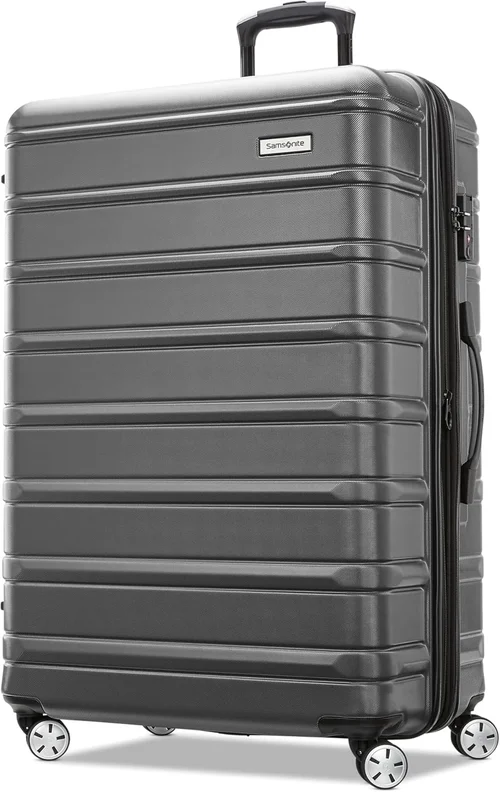
Choosing the right expandable Samsonite luggage can feel like navigating a maze of specifications, materials, and price points. Whether you are a frequent flyer, a weekend road‑tripper, or someone who simply wants a reliable suitcase that grows with your packing needs, this guide is designed to cut through the noise and give you the confidence to make a smart purchase. We will walk you through the most important factors to consider, explain the technical jargon in plain language, compare the main product lines, highlight common pitfalls, break down budget expectations, share insider tips for snagging the best deal, answer the questions travelers ask most often, and finish with clear recommendations tailored to different travel styles.
By the time you reach the end, you will know exactly what to look for in an expandable Samsonite suitcase, how to match a model to your typical trip length, and where to buy it for the best value. The goal is not just to sell you a bag, but to empower you with knowledge so your next journey starts with a suitcase that truly works for you.
What to Look for When Buying Buying Guide
1. Size and Capacity
Size is the first decision point because it dictates how much you can pack and whether the bag meets airline carry‑on restrictions. Samsonite offers expandable models in three core size families: carry‑on (typically 21‑22 inches), medium checked (24‑26 inches), and large checked (28‑30 inches). The expandable zipper usually adds 1.5 to 2 inches of depth, translating to roughly 15‑25 percent more volume. When evaluating size, think about the longest trip you regularly take. A 22‑inch expandable carry‑on can handle a 5‑day business trip with a few extra outfits, while a 28‑inch checked bag can swallow two weeks of clothing plus souvenirs. Always verify the external dimensions (including wheels and handles) against the airline’s maximum allowable size to avoid gate‑check surprises.
2. Material and Shell Construction
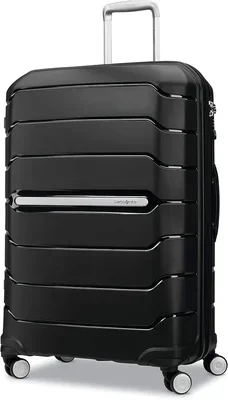
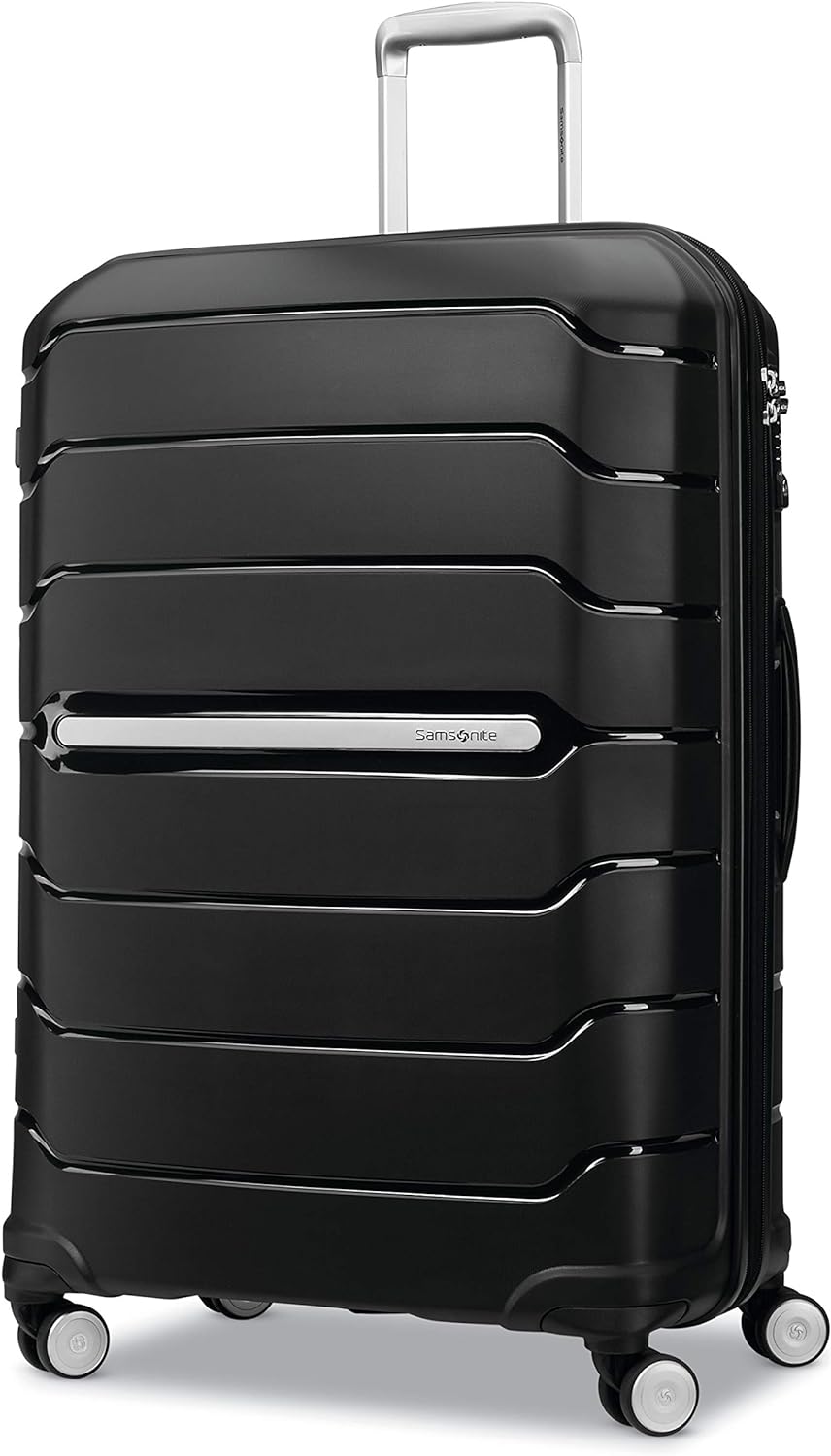
Samsonite uses three primary shell families for expandable luggage: polycarbonate, Curv® (a proprietary woven polypropylene), and ballistic nylon. Polycarbonate is lightweight, impact‑resistant, and flexes under pressure, making it ideal for travelers who want a hard‑shell that can survive rough baggage handling. Curv® is even lighter and boasts exceptional tensile strength; it is often found in the premium “Lite‑Cube” and “Cosmolite” lines. Ballistic nylon, used in soft‑side expandable models like the “Freeform” series, offers abrasion resistance, a degree of water repellency, and the ability to compress slightly when overhead bin space is tight. Consider your travel environment: hard shells protect fragile items better, while soft shells can squeeze into tight compartments and often weigh less.
3. Wheel System and Maneuverability
Four‑wheel spinner systems have become the gold standard for expandable Samsonite luggage. Look for double‑ball‑bearing wheels that rotate 360 degrees and are recessed into the shell to reduce snagging. The wheel diameter matters: larger wheels (70‑80 mm) roll more smoothly over cobblestones, carpet, and curbs. Some premium lines feature “SilentRun” wheels with a rubberized tread that dampens noise on hard floors. Test the bag’s glide by pushing it forward and pulling it backward; a well‑balanced suitcase should track straight without veering. If you frequently navigate stairs, a two‑wheel “inline” option may be lighter, but spinners dominate for airport sprints.
4. Handle System and Ergonomics
The telescoping handle should lock at multiple heights (usually three) to accommodate different user statures. Samsonite’s “Tru‑Fit” handle uses a contoured grip with a soft‑touch coating that reduces hand fatigue during long walks. Check that the handle tubes are made from aircraft‑grade aluminum or reinforced steel; plastic tubes can bend under heavy loads. A top carry handle and a side carry handle are essential for lifting the bag into overhead bins or car trunks. Some models add a bottom “grip handle” for easier pulling when the bag is upright.
5. Expandable Mechanism and Zipper Quality
The expandable gusset is typically a hidden zipper that runs around the perimeter of the main compartment. YKK® or SBS® zippers with self‑healing teeth are the industry benchmark. Look for a “double‑coil” zipper that distributes stress evenly, reducing the chance of a blown zipper when the bag is stuffed to the brim. A lockable zipper pull (compatible with TSA‑approved locks) adds security. The expansion depth should be clearly stated—most Samsonite expandables add 1.5 inches, but some “Max‑Expand” models add up to 2.5 inches. Remember that expanding the bag may push it over airline size limits, so use the feature judiciously.
6. Interior Organization and Compression
Inside, you want a layout that matches your packing style. Samsonite’s “Cross‑Rib” straps hold clothing in place, while a full‑size zippered divider panel separates the two halves. Many models include a “wet pocket” (water‑resistant lining) for toiletries or damp swimwear. Compression straps on the divider panel let you cinch down the contents, maximizing the extra space gained from expansion. Some premium lines add a removable garment folder or a dedicated laptop sleeve (usually 15.6‑inch compatible). If you travel with tech, verify the sleeve dimensions and padding.
7. Weight and Airline Compliance
Weight directly impacts your checked‑bag allowance. A 22‑inch polycarbonate expandable carry‑on typically weighs 6.5‑7.5 lb (2.9‑3.4 kg). Curv® models can dip below 5.5 lb (2.5 kg). Soft‑side nylon bags are often the lightest, sometimes under 5 lb (2.3 kg). Always weigh the empty suitcase before buying; a heavy bag eats into your payload capacity. Also, confirm that the expanded dimensions still fall within the most restrictive airline you fly (e.g., 22 × 14 × 9 in for many U.S. carriers).
8. Warranty, Repairability, and Brand Support
Samsonite backs most expandable luggage with a 10‑year limited warranty covering defects in materials and workmanship. Higher‑end lines (e.g., “Pro‑DLX”, “Cosmolite”) often include a “Global Warranty” that allows service at authorized centers worldwide. Check whether the warranty covers wheel replacement, handle repair, and zipper issues—common wear points. Samsonite’s “Repair‑It‑Yourself” kits (wheel sets, handle tubes) are sold separately and can extend the life of a bag far beyond the warranty period. Good customer service and a network of repair centers add real long‑term value.
Different Types of Buying Guide

Common Buying Mistakes to Avoid
❌ Mistake: Ignoring Airline Size Limits When Expanded
Why it’s bad: Many buyers purchase an expandable suitcase assuming they can always use the extra depth. In reality, most airlines measure the bag at its widest point, including the expanded gusset. If you over‑pack and the bag exceeds the carry‑on limit, you’ll be forced to gate‑check it, often incurring a fee.
What to do instead: Measure the expanded dimensions yourself (or check the spec sheet) and compare them to the strictest airline you fly. Use the expansion only when you know you’ll check the bag or when you’re on a carrier with generous allowances.
❌ Mistake: Choosing the Lightest Model Without Considering Durability
Why it’s bad: Ultra‑light Curv® shells are amazing, but they can be more susceptible to cosmetic scratches and, in rare cases, cracking under extreme impact. If you regularly check bags on conveyor belts that handle heavy loads, a slightly heavier polycarbonate model may survive longer.
What to do instead: Match the material to your travel pattern. For mostly carry‑on use, ultra‑light is fine. For frequent checked baggage, lean toward polycarbonate or a reinforced hybrid frame.
❌ Mistake: Overlooking Wheel Quality
Why it’s bad: Cheap single‑bearing wheels can seize up after a few trips, turning a smooth glide into a drag. Replacing wheels on some models requires a service center, adding cost and downtime.
What to do instead: Insist on double‑ball‑bearing, recessed spinner wheels. Read user reviews specifically about wheel longevity. If possible, test the bag on a hard floor before buying.
❌ Mistake: Skipping the Warranty Registration
Why it’s bad: Samsonite’s 10‑year warranty often requires online registration within 30 days. Unregistered bags may only receive a limited “proof‑of‑purchase” coverage, leaving you out of pocket for repairs.
What to do instead: Register immediately after purchase. Keep the receipt and a photo of the serial number tag (usually inside the main compartment).
❌ Mistake: Buying Based Solely on Brand Name Without Comparing Features
Why it’s bad: Samsonite has many sub‑lines (e.g., “Samsonite Red”, “Samsonite Black Label”). Some are designed for fashion‑forward travelers and sacrifice internal organization or wheel quality.
What to do instead: Compare the feature set of each model side‑by‑side. Use the factor list above as a checklist.
❌ Mistake: Neglecting Interior Layout for Your Packing Style
Why it’s bad: A beautiful exterior means little if the interior lacks a laptop sleeve, compression straps, or a wet pocket that you rely on.
What to do instead: Visualize your typical packing list. If you carry a 15‑inch laptop, confirm the sleeve dimensions. If you pack suits, look for a built‑in suiter or garment folder.
❌ Mistake: Forgetting to Factor in Weight of Accessories
Why it’s bad: Adding a TSA lock, luggage tag, and a portable scale can add 0.5‑1 lb. On a strict weight‑restricted airline, that extra weight may push you over the limit.
What to do instead: Weigh the fully accessorized bag at home. Choose lightweight accessories (e.g., a fabric tag instead of a metal one).
Budget Guidelines: How Much Should You Spend?
Understanding the price tiers helps you set realistic expectations and avoid over‑paying for features you don’t need. Below is a breakdown tailored to the current U.S. market (prices in USD).
Entry‑Level ($120 – $180)
Models: Samsonite Winfield 2, Omni PC, Freeform (base configurations).
What you get: Polycarbonate or ballistic nylon shell, four‑spinner wheels (single‑bearing on some), basic telescoping handle, single expansion gusset (1.5 in), simple interior with cross‑rib straps and a divider. Weight: 7‑8 lb for a 22‑inch carry‑on. Warranty: 10‑year limited (registration required).
Best for: Occasional travelers, students, or anyone who needs a reliable bag for a few trips per year.
Mid‑Range ($180 – $300)
Models: Samsonite Freeform (upgraded), Ascella, Centric, Neopulse (polycarbonate), and some Curv® entry models.
What you get: Double‑ball‑bearing spinner wheels, Tru‑Fit multi‑stage handle, deeper expansion (up to 2 in), improved interior organization (wet pocket, laptop sleeve on select models), lighter weight (5.5‑6.5 lb for carry‑on). Warranty: 10‑year global on many lines.
Best for: Frequent flyers (4‑8 trips/year), business travelers who need a laptop compartment, families wanting a durable checked bag.
Premium ($300 – $500)
Models: Samsonite Cosmolite, Lite‑Cube, Pro‑DLX, S’Cure Eco.
What you get: Curv® or advanced polycarbonate blend, ultra‑light weight (under 5 lb for carry‑on), SilentRun wheels, integrated TSA‑approved lock, premium interior (removable garment folder, multiple zippered pockets, compression system), reinforced corners, often a 10‑year global warranty with complimentary repair kits.
Best for: Road warriors, international travelers, anyone who values weight savings and long‑term durability.
Luxury / Specialty ($500+)
Models: Samsonite Black Label, limited‑edition collaborations, bespoke configurations.
What you get: Hand‑stitched leather accents, custom colorways, proprietary “Smart‑Sleeve” for stacking on a trolley, advanced anti‑theft features (e.g., RFID‑blocking pockets), concierge‑level warranty service (door‑to‑door pickup for repairs).
Best for: Luxury travelers, collectors, or corporate gifting where brand prestige matters.
Expert Tips for Getting the Best Deal
- Shop Off‑Season: Luggage goes on sale in January (post‑holiday), May (pre‑summer), and September (back‑to‑school). Black Friday and Cyber Monday also bring deep discounts, but inventory on popular colors may be limited.
- Use Authorized Retailers: Buying from Samsonite’s official site, major department stores (Macy’s, Nordstrom), or authorized online partners (Amazon “Sold by Samsonite”, Zappos) guarantees warranty coverage. Gray‑market sellers often void the warranty.
- Stack Coupons and Cash‑Back: Sign up for the retailer’s email list for a 10‑15 % welcome coupon. Combine with a cash‑back portal (Rakuten, Honey) for an extra 3‑5 % back.
- Consider Open‑Box or Refurbished: Samsonite’s own “Certified Refurbished” program offers like‑new bags with a full warranty at 20‑30 % off. Check the condition grade (A‑grade = minimal cosmetic wear).
- Leverage Price‑Match Policies: Many big‑box retailers will match a lower price from a competitor if you show a current ad or screenshot. Ask at checkout.
- Buy a Set If You Need Multiple Sizes: A 3‑piece set (carry‑on, medium, large) often costs 15‑20 % less than buying each piece separately. Ensure each piece meets your size needs.
- Test In‑Store Before Ordering Online: Visit a store to feel the handle, spin the wheels, and gauge the expansion zipper smoothness. Then order the exact model online for the best price.
- Read the Fine Print on Return Policies: Some retailers charge a restocking fee for luggage returns. Choose a seller with a free‑return window of at least 30 days.

Frequently Asked Questions
Q: How much extra space does the expandable zipper really add?
A: Most Samsonite expandable models add 1.5 inches of depth, which translates to roughly 15‑25 percent more packing volume. On a 22‑inch carry‑on, that’s about 3‑4 liters—enough for an extra pair of shoes, a light jacket, or a few souvenirs. “Max‑Expand” versions can add up to 2.5 inches, but they may exceed carry‑on limits when fully expanded.
Q: Can I use the expansion on a carry‑on flight?
A: Only if the expanded dimensions still fall within the airline’s carry‑on size limits. Many U.S. carriers allow 22 × 14 × 9 in; a 22‑inch Samsonite that expands to 11 in depth will be too deep. Use the expansion for checked bags or when you know the airline permits larger dimensions (e.g., some European low‑cost carriers allow 55 × 40 × 23 cm).
Q: Are Curv® suitcases worth the extra cost?
A: Curv® is a woven polypropylene composite that is 30‑40 % lighter than polycarbonate while offering comparable impact resistance. If you fly frequently and every ounce matters (e.g., you’re near the 50 lb checked‑bag limit), the weight savings can justify the premium. For occasional travelers, a well‑built polycarbonate model provides similar durability at a lower price.
Q: How do I clean and maintain my Samsonite luggage?
A: For hard shells, wipe with a damp cloth and mild soap; avoid abrasive cleaners. For ballistic nylon, spot‑clean with a fabric cleaner or a mixture of water and gentle detergent. Lubricate wheel bearings annually with a silicone‑based spray. Store the bag empty, unzipped, and in a cool dry place to prevent mold on the interior lining.
Q: What is the difference between “Spinner” and “Inline” wheels?
A: Spinner wheels rotate 360 degrees, letting you push the bag upright beside you. Inline (two‑wheel) bags roll only forward/backward and are pulled behind you. Spinners are easier in crowded terminals; inlines handle rough pavement and stairs better and are often slightly lighter.
Q: Does Samsonite offer a lifetime warranty?
A: Samsonite’s standard warranty is 10 years limited. Some premium lines (e.g., Cosmolite) include a “Global Warranty” that extends service worldwide but still caps at 10 years. There is no true lifetime warranty; however, the brand’s repair‑parts program lets you replace wheels, handles, and zippers long after the warranty expires.
Q: Can I fit a 17‑inch laptop in the dedicated sleeve?
A: Most Samsonite laptop sleeves accommodate up to 15.6 inches. A few Pro‑DLX models have a 17‑inch compartment, but you must verify the exact interior dimensions (usually listed as “Laptop compartment: 16.5 × 11 × 1.5 in”). Measure your device before purchasing.
Q: Are TSA‑approved locks built into the luggage?
A: Many mid‑range and premium Samsonite models include an integrated TSA‑approved combination lock (often a three‑dial lock on the side). Entry‑level models usually have lockable zipper pulls but require a separate padlock. Check the product specs for “integrated TSA lock”.
Q: How do I know if a Samsonite bag is genuine?
A: Purchase from authorized retailers. Genuine bags have a serial number tag inside the main compartment, a holographic “Samsonite” logo on the zipper pulls, and a QR code that links to the brand’s authentication page. Counterfeits often miss one or more of these details.
Q: What should I do if a wheel breaks while traveling?
A: If you’re near a major city, locate an authorized Samsonite service center (list on the website). Many centers can replace a wheel in under an hour. If you’re remote, a temporary fix is to use a strong zip‑tie to secure the broken wheel axle, but replace it as soon as possible to avoid further damage.
Our Final Recommendations
- Best for Budget‑Conscious Buyers: Samsonite Winfield 2 22‑inch Carry‑On. It delivers a polycarbonate shell, four spinner wheels, and a 1.5‑inch expansion for under $160. Perfect for 2‑3 trips per year.
- Best Overall Value: Samsonite Freeform 25‑inch Medium Checked. At around $210 you get double‑bearing wheels, a Tru‑Fit handle, 2‑inch expansion, a wet pocket, and a weight under 7 lb. It balances price, durability, and features for most travelers.
- Best Premium Option: Samsonite Cosmolite 21‑inch Carry‑On. The Curv® shell weighs just 4.6 lb, includes SilentRun wheels, integrated TSA lock, and a 10‑year global warranty. Ideal for frequent flyers who count every ounce.
- Best for Beginners: Samsonite Omni PC 24‑inch Checked. Simple layout, robust polycarbonate, and a forgiving price (~$150). The interior is straightforward—cross‑rib straps and a divider—so new travelers won’t be overwhelmed.
- Best for Advanced Users: Samsonite Pro‑DLX 28‑inch Checked. Features a built‑in suiter, dedicated 15.6‑inch laptop sleeve, compression system, and reinforced corners. The hybrid frame handles heavy loads and keeps business attire wrinkle‑free.
Conclusion: Making the Right Choice
Selecting expandable Samsonite luggage boils down to matching the bag’s strengths to your travel habits. Start with size—carry‑on versus checked—then decide whether a hard shell or soft side fits your protection and weight priorities. Pay close attention to wheel quality, handle ergonomics, and the expandable zipper’s durability, because those are the components that endure the most stress. Use the budget tiers to set a realistic spending target, and don’t forget to register the warranty the moment the box arrives.
Armed with the factor checklist, the type comparison table, the common‑mistake alerts, and the expert buying tips, you can walk into any store or browse any website with a clear plan. Remember, the best suitcase is the one that disappears into the background of your journey—letting you focus on the destination, not the gear.
Ready to upgrade your travel game? Pick the recommendation that matches your profile, grab it during the next seasonal sale, and register the warranty. Your future self—standing at the baggage carousel with a smooth‑rolling, perfectly packed Samsonite—will thank you.