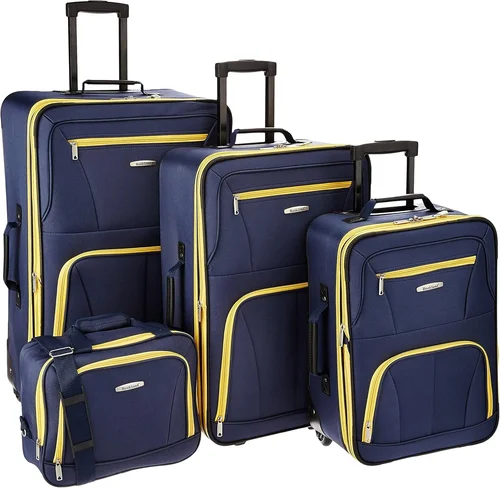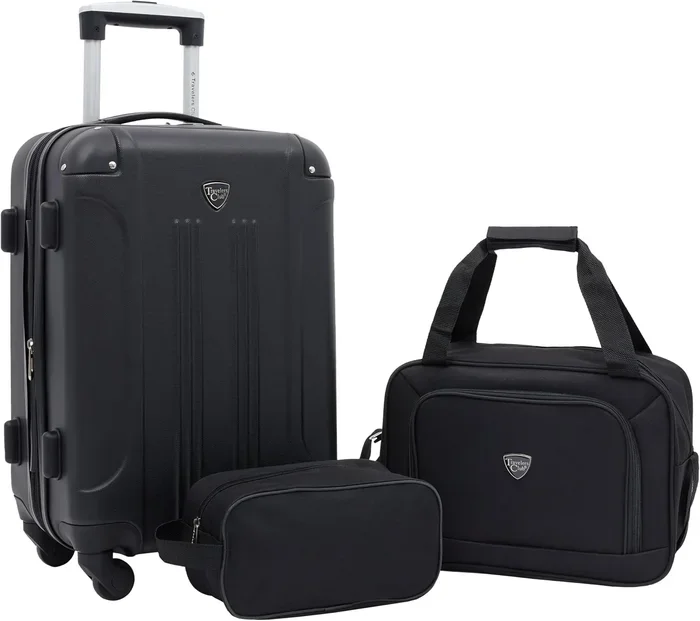
Shopping for luggage can feel overwhelming. You stand in the aisle or scroll through endless product pages, bombarded by terms like “polycarbonate shell,” “double spinner wheels,” and “TSA-approved locks.” It is easy to wonder if you are paying for a brand name or actual engineering. This guide exists to cut through that noise. We are going to walk through everything you need to know about the Gabbiano Architect 3 Piece Expandable Hardside Spinner Luggage Set, but more importantly, we are going to teach you how to evaluate any luggage set like a pro.
By the time you finish reading, you will understand the specific materials that separate a suitcase that survives one trip from one that lasts a decade. You will know exactly what size configuration fits your travel style, whether you are a weekend warrior or an international explorer. We will break down the budget tiers, expose the common marketing traps, and give you a clear checklist so you can buy with total confidence. Let’s start by looking at the landscape of modern hardside luggage and why the Architect series has become a benchmark in its category.

What to Look for When Buying Buying Guide
1. Shell Material and Impact Resistance
The shell is the skeleton of your luggage. It takes the beating from baggage handlers, conveyor belts, and overhead bin shuffling. In the hardside category, you will primarily encounter three materials: ABS, Polycarbonate, and Polypropylene. ABS (Acrylonitrile Butadiene Styrene) is the most budget-friendly. It is lightweight but brittle; a hard impact in cold weather can cause it to crack or shatter. Polycarbonate is the gold standard for a reason. It is flexible enough to absorb impact by flexing rather than cracking, and it has a high strength-to-weight ratio. Polypropylene sits in the middle—more flexible than ABS, lighter than polycarbonate, but often less scratch-resistant.
The Gabbiano Architect series utilizes a 100% Polycarbonate shell. This is a critical detail. When you press on the side of a polycarbonate case, it gives slightly and springs back. That elasticity protects the contents inside—your electronics, toiletries, and souvenirs—from crushing forces. Look for the term “100% Polycarbonate” or “Makrolon” (a premium Bayer polycarbonate grade) on the spec sheet. Avoid “Polycarbonate Composite” or “ABS/Polycarbonate Blend” if durability is your top priority, as these blends often lean heavily on the cheaper ABS to cut costs.
2. Wheel Engineering and Maneuverability
Wheels are the single biggest factor in day-to-day travel joy. A 20-pound bag feels weightless on four smooth spinners; that same bag feels like dragging a sack of concrete on cheap, wobbly wheels. You want “Double Spinner” wheels—eight wheels total, two at each corner. This configuration distributes the load evenly, allows 360-degree upright rolling, and prevents the “tipping over” issue common with two-wheel inline bags.
Dig deeper into the wheel housing. Are the wheels recessed into the body? Recessed wheels protect the axle from snapping if the bag is dropped or thrown. Look for wheels made of polyurethane (PU) rather than hard plastic. PU offers a silent, smooth glide on tile, carpet, and cobblestone. The Gabbiano Architect features multi-directional, double-spinner Hinomoto-style wheels (often Japanese-engineered). These are widely considered the industry benchmark. They use precision ball bearings rather than simple bushings, meaning they roll silently and require minimal force to start moving, even when the bag is packed to the 50-pound airline limit.
3. Handle System Ergonomics and Durability
The telescoping handle is your connection to the bag. A poorly designed handle creates wrist strain, snags on clothing, or jams halfway up. First, check the number of adjustment stages. Three stages are standard, but four stages accommodate a wider range of heights, preventing you from hunching over or walking on your heels. Second, examine the grip material. A contoured, rubberized or gel grip reduces vibration transfer from rough pavement.
The mechanism itself matters. Aluminum alloy tubes are standard, but the locking mechanism inside determines longevity. Cheap handles use plastic pawls that strip out. Premium handles use stainless steel locking pins. The Architect set features a multi-stage ergonomic aluminum trolley system with a push-button release that locks positively at each height. Crucially, test the “wiggle factor.” Extend the handle fully and shake the bag gently. Excessive side-to-side play indicates loose tolerances that will only worsen. A tight, rattle-free handle tube suggests tight manufacturing standards.
4. Interior Organization and Expandability
A beautiful shell is useless if the interior is a chaotic cavern. Modern hardside luggage typically opens clamshell-style into two equal halves. Look for a full-zip divider in the main compartment (the “lid” side). This keeps flat items (suits, dresses, documents) separate from the main cavity. Compression straps in the bottom half are non-negotiable; they cinch down bulky items (sweaters, shoes) to prevent shifting, which throws off the bag’s balance.
Expandability is a game-changer for return trips. The Gabbiano Architect offers a 2-inch expansion zipper on the medium and large check-in sizes (the carry-on usually does not expand to maintain FAA size compliance). This adds roughly 15-20% packing volume. However, use expansion strategically. An expanded bag may exceed airline linear inch limits (L+W+H) for checked baggage, triggering oversize fees. Always measure your expanded bag before heading to the airport. Also, check the expansion gusset material—it should be a high-denier nylon or polyester with a reinforced zipper track, not a flimsy mesh that tears under pressure.
5. Security Features: Locks and Zippers
Security is twofold: keeping people out and keeping the bag closed. For zippers, YKK is the recognized global leader. Look for “YKK RCW” (Reverse Coil) or “YKK AquaGuard” zippers. Reverse coil zippers hide the teeth inside the tape, making them self-healing (snags pull out) and highly water-resistant. The pulls should be large enough to grip with cold or gloved hands.
For locks, TSA-approved combination locks are mandatory for US travel. They allow TSA agents to inspect your bag with a master key without cutting your lock. The Architect set integrates a recessed, side-mounted TSA lock. Recessed mounting is vital—it prevents the lock from snagging on conveyor belts or being used as a leverage point to pry the case open. Some budget sets use a simple padlock loop; avoid these. They offer zero protection against zipper penetration (the “pen trick” where a ballpoint pen separates zipper teeth). A quality integrated lock secures both zipper pulls to a central point, defeating the pen trick entirely.
6. Weight and Airline Compliance
Every ounce of luggage weight is an ounce less you can pack. Airlines are strict: 50 lbs (23 kg) for standard checked bags on most international flights, 7-10 kg (15-22 lbs) for carry-ons. A heavy empty suitcase eats your allowance fast. A quality 28-inch polycarbonate check-in should weigh 9-11 lbs. A 20-inch carry-on should weigh 6-7.5 lbs. The Gabbiano Architect 20-inch carry-on weighs approximately 7.1 lbs, the 24-inch medium 9.3 lbs, and the 28-inch large 11.2 lbs. These are competitive weights for polycarbonate.
Dimensions are equally critical. “Carry-on size” is not universal. US domestic carriers typically allow 22 x 14 x 9 inches (including wheels and handles). International carriers (especially European and Asian budget airlines) can be as strict as 21.5 x 15.5 x 9 inches or even smaller. The Architect 20-inch is sized for US domestic (approx 22 x 14.5 x 9.5 with wheels). If you fly Ryanair, EasyJet, or basic economy internationally, measure carefully. The “personal item” allowance (underseat bag) is a separate dimension—usually around 18 x 14 x 8 inches. A 3-piece set gives you the 20-inch for overhead, the 24/28 for checking, but you still need a backpack or tote for your underseat item.
7. Warranty, Customer Service, and Repairability
Luggage takes abuse. Even the best bag can suffer a broken wheel, a bent handle tube, or a zipper failure. A warranty is only as good as the company backing it. Look for “Limited Lifetime Warranty” but read the fine print. Does it cover “defects in materials and workmanship” only, or does it cover airline damage? Most do not cover airline damage (that’s what travel insurance is for), but the best brands (like Briggs & Riley, Travelpro, and Gabbiano) have excellent “no-questions-asked” repair programs for manufacturing defects.
Repairability is the hidden gem. Can you buy replacement wheels? Can you order a new handle tube? Gabbiano and other premium brands sell spare parts directly. This turns a $300 set into a 20-year investment. Cheap “landfill luggage” uses riveted wheels and proprietary parts that are impossible to replace. Before buying, visit the brand’s website. Search for “replacement parts.” If they have a dedicated parts store with diagrams, that is a massive green flag. It means they design for longevity, not obsolescence.
8. Aesthetics, Colorfastness, and Visibility
While function reigns, aesthetics affect utility. A unique color or pattern makes your bag instantly identifiable on the carousel, saving you the “black bag shuffle.” The Architect series offers sophisticated, muted tones (Graphite, Navy, Silver, Rose Gold) with a subtle geometric texture. This texture does double duty: it hides scratches (as mentioned) and resists fading from UV exposure better than painted finishes. Dark colors hide dirt but absorb heat in direct sun (relevant if your bag sits on a hot tarmac). Lighter colors show scuffs but stay cooler. Choose based on your typical travel environments.
Different Types of Buying Guide

Common Buying Mistakes to Avoid
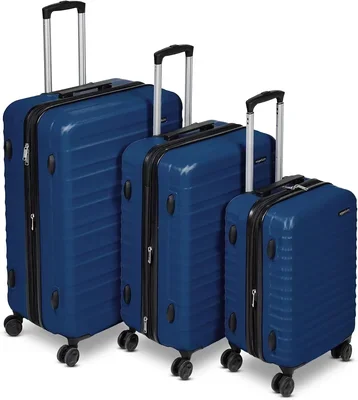
❌ Mistake: Buying Based Solely on Carry-On Dimensions Listed Online
Why it’s bad: Manufacturers often list interior dimensions or body-only dimensions (excluding wheels, handles, and bumpers). Airlines measure the total exterior at the gate. A bag listed as “22 inches” might actually be 23.5 inches with wheels, causing a forced gate check and fee.
What to do instead: Always look for “Overall Dimensions” or “Exterior Dimensions (with wheels/handles).” Better yet, search for user reviews specifically mentioning “fit in United overhead bin” or “fit Ryanair sizer.” The Gabbiano Architect 20-inch lists exterior dimensions clearly; verify them against your most flown airline’s current policy.
❌ Mistake: Ignoring the “Personal Item” Strategy
Why it’s bad: Buying a 3-piece set solves your checked and carry-on needs, but many travelers forget the underseat bag. They end up stuffing a laptop, medications, and snacks into the carry-on, making it too heavy to lift or too full to fit.
What to do instead: Budget for a high-quality backpack or tote that fits the strictest underseat dimensions you encounter (approx 18x14x8). Use the carry-on for clothes/toiletries and the personal item for electronics/valuables. This two-bag carry system is the pro standard.
❌ Mistake: Choosing Glossy Finish for High-Frequency Travel
Why it’s bad: High-gloss polycarbonate looks premium in the showroom. After two checked trips, it looks like it was dragged behind a car. Scratches are permanent and highly visible. It also shows fingerprints and dust immediately.
What to do instead: Opt for matte, textured, or brushed finishes. The Architect’s diamond-pattern texture is designed specifically to diffuse light and mask abrasions. Your bag will look new for years, not days.
❌ Mistake: Overpacking the Expandable Zipper
Why it’s bad: The expansion gusset is the structural weak point of a hardside suitcase. When fully expanded and stuffed to the brim, the stress concentrates on the zipper teeth and the stitching attaching the gusset to the shell. This leads to blown zippers or cracked shell edges at the expansion seam.
What to do instead: Use expansion only for the return trip (souvenirs, dirty laundry). Pack the main cavity firmly using compression straps before zipping the expansion. If you must expand for the outbound trip, leave 10% air space to reduce seam tension.
❌ Mistake: Assuming “Spinner Wheels” Means All Spinners Are Equal
Why it’s bad: Cheap spinners use a single plastic wheel on a plastic axle with a plastic bushing. They develop flat spots, wobble, squeak, and snap off. They also lack brakes, so the bag rolls away on train platforms.
What to do instead: Verify double wheels, recessed housing, polyurethane tires, and precision ball bearings. If the spec sheet doesn’t mention “ball bearings” or “Hinomoto” or “Japanese wheels,” assume they are basic. The Architect’s wheel spec is a major selling point—verify this on the product page.
❌ Mistake: Skipping the “Shake Test” on the Handle
Why it’s bad: A wobbly handle tube transmits every sidewalk crack directly to your wrist and shoulder. Over a long connection walk, this causes fatigue and repetitive strain injury. It also indicates loose internal rivets that will eventually fail.
What to do instead: If buying in store, extend the handle fully, grab the bag by the handle, and shake it vigorously side-to-side and up-down. Zero rattle is the goal. If buying online, read reviews specifically searching for “handle wobble” or “handle rattle.”
❌ Mistake: Not Registering the Warranty Immediately
Why it’s bad: Many brands require registration within 30-90 days of purchase to activate the full lifetime warranty. If a wheel bearing seizes in month 4 and you never registered, you pay for the repair.
What to do instead: The moment the box arrives, find the warranty card or QR code. Register the product on the manufacturer’s website (Gabbiano has a simple online form). Take a photo of your receipt and the serial number tag (usually inside the lining near the handle tube) and save it to your cloud storage.
Budget Guidelines: How Much Should You Spend?
Entry-Level ($80 – $180 for a 3-Piece Set)
At this tier, you are buying almost exclusively ABS or ABS/Polycarbonate blend shells. Expect single-spinner wheels (4 wheels total) or low-quality double spinners with plastic bushings. Zippers will be generic coil, not YKK. TSA locks may be absent or low-quality padlock loops. Interiors are often unlined or thin polyester with minimal organization (maybe one zip pocket, no compression straps). The handle tube will be thin aluminum with 2-3 stops and noticeable wobble. Weight might actually be lower (ABS is light), but durability is measured in trips, not years. These are fine for a child’s first suitcase, a college student moving dorms once a year, or someone who flies once every two years. Do not check these on international connections with tight transfer times—the wheels won’t survive the sprint.
Mid-Range / Sweet Spot ($220 – $450 for a 3-Piece Set) — The Gabbiano Architect Lives Here
This is where 90% of travelers should buy. You get 100% Polycarbonate shells, quality double-spinner wheels (often Hinomoto or equivalent), YKK zippers, integrated recessed TSA locks, fully lined interiors with dividers and compression straps, and multi-stage aluminum handles with ergonomic grips. Warranties are typically 10-year to Limited Lifetime with accessible customer service. The Gabbiano Architect 3-piece set typically retails in the $280-$350 range, placing it squarely in the “smart value” zone. You are paying for engineering that survives weekly airline abuse. The cost-per-trip over 5-10 years becomes negligible. This tier also offers the best aesthetic options—textured finishes, sophisticated color palettes, and cohesive design language.
Premium ($500 – $900 for a 3-Piece Set)
Brands like Travelpro Platinum Elite, Samsonite Proxis, or Tumi V4 inhabit this space. Materials shift to proprietary polycarbonate blends (e.g., Samsonite’s Roxkin, Travelpro’s Curv-woven tech) that are lighter and stronger than standard polycarbonate. Wheels are often wider, with better shock absorption. Handles feature magnesium or carbon fiber components. Warranties become “Unconditional Lifetime” — if an airline crushes it, they fix it free (Briggs & Riley is famous for this). Interiors get premium touches: suede-lined pockets, removable wet bags, garment folders, USB-C pass-through ports for power banks. You are paying for weight savings (a 28-inch might weigh 8.5 lbs vs 11 lbs), marginal durability gains, and a service network that replaces a bag globally in 24 hours. Worth it for road warriors flying 50+ segments a year.
Luxury / Status ($1,000 – $3,000+ for a 3-Piece Set)
Rimowa (Essential, Classic, Original), Globe-Trotter, Louis Vuitton, Hartmann. Here, materials include anodized aluminum-magnesium alloy (Rimowa) or vulcanized fiberboard/leather (Globe-Trotter). Construction is often riveted by hand. Wheels are custom-engineered, whisper-quiet. The “key advantage” is heritage, resale value (Rimowa holds value like a watch), and an ownership experience. Functionally, they are not 3x better than a $400 polycarbonate set. An aluminum Rimowa dents permanently; a polycarbonate Architect flexes back. Buy these because you love the object, not because you need better luggage.
Expert Tips for Getting the Best Deal

Frequently Asked Questions
Q: Is the Gabbiano Architect carry-on size compliant with all airlines?
A: The 20-inch carry-on measures approximately 22″ H x 14.5″ W x 9.5″ D (including wheels and handle). This fits the standard US domestic limit (22 x 14 x 9) but is slightly over on width/depth for some strict international carriers (e.g., Ryanair 21.6 x 15.7 x 9.8, but they are strict on total linear inches). It fits most major international carriers (British Airways, Lufthansa, Emirates, etc.) which allow 22 x 15 x 9 or 23 x 15 x 9. Always measure your specific bag with a tape measure upon arrival and compare to your most restrictive airline. If you fly basic economy on a budget European carrier weekly, you may need a dedicated 19-inch “international carry-on.”
Q: Does the 20-inch carry-on expand?
A: No. The Gabbiano Architect 20-inch carry-on is intentionally non-expandable. This is a design feature, not a limitation. Expandable carry-ons often exceed the depth limit when expanded, forcing a gate check. By keeping the carry-on rigid, Gabbiano guarantees it stays within sizer limits. The 24-inch and 28-inch check-in sizes both feature the 2-inch expansion zipper.
Q: How does the TSA lock work? What if I forget the combination?
A: The lock is a 3-dial combination lock integrated into the side of the case. It is TSA-accepted (red diamond logo), meaning TSA agents have a master key (TSA007) to open it without damage. The default code is 0-0-0. To set your own: open the lock, press the small reset button (usually a pinhole or lever on the bottom/side of the lock mechanism) with a pen, turn dials to your desired code, release the button. Critical: Write your code in your phone notes or passport immediately. If you forget it, there is no “master reset” for the user. You must either try all 1,000 combinations (takes 20 mins) or contact a locksmith/Gabbiano support. TSA cannot give you the master key.
Q: Are the wheels replaceable? How do I do it?
A: Yes. The Architect uses standard 50mm or 60mm double-spinner wheel assemblies (verify your specific model year size). They attach via two screws (usually Phillips or Torx) accessible from the inside of the wheel well. You simply peel back the interior liner fabric (usually held by Velcro at the bottom), unscrew the old wheel cassette, screw in the new one, and re-velcro the liner. Gabbiano sells replacement wheel kits on their website and Amazon. This 10-minute repair saves a $300 suitcase.
Q: Can I stack a backpack on the carry-on handle securely?
A: Yes. The 20-inch carry-on features a dedicated “Add-a-Bag” strap (trolley sleeve) on the rear panel. It is a sturdy woven nylon strap with a Velcro closure. You slide your backpack’s handle through this strap and secure the Velcro. This locks the backpack to the carry-on handle tube, creating a stable two-wheeled unit. Test the fit with your specific backpack before traveling.
Q: What is the actual weight of each piece? I have a strict airline weight limit.
A: Manufacturer specs for the Architect 3-piece set are typically: 20-inch Carry-On: ~7.1 lbs (3.2 kg); 24-inch Medium Check-In: ~9.3 lbs (4.2 kg); 28-inch Large Check-In: ~11.2 lbs (5.1 kg). These are competitive for polycarbonate. Note that the 28-inch at 11.2 lbs empty leaves you ~38.8 lbs for contents on a 50 lb limit. If your airline has a 23 kg (50.7 lb) limit, you have slightly more room. Weigh your packed bag at home with a luggage scale.
Q: How scratch-resistant is the textured finish really?
A: The diamond-pattern texture on the Architect is excellent at hiding scratches, not preventing them. Polycarbonate will scratch if dragged across rough concrete or sharp metal edges. However, the texture breaks up the light reflection, making micro-scratches invisible to the eye at a normal viewing distance. A glossy black case shows every swipe; the Architect’s Graphite or Navy texture looks virtually new after 20+ checked flights. Deep gouges will still be visible, but surface marring disappears.
Q: Does the interior liner rip easily? Can it be cleaned?
A: The interior uses a high-denier (150D-210D) polyester lining, fully sewn in (not glued). It is tear-resistant under normal use. If you spill something (shampoo, wine), spot clean with mild soap and water and a soft brush. Do not machine wash the liner (it’s attached to the frame). For deep cleaning, some users carefully seam-rip the bottom Velcro strip, remove the liner, hand wash, and re-attach, but this voids warranty if done poorly. Use packing cubes and toiletry bags to keep the liner clean.
Q: What is the warranty process like if something breaks?
A: Gabbiano offers a Limited Lifetime Warranty against defects in materials and workmanship. Process: 1) Register product online (keep receipt). 2) If issue arises, contact support via website with photos/video of defect and serial number. 3) They determine if it’s a warranty issue (manufacturing defect) or damage (airline/wear). 4) If warranty: they ship replacement parts (wheels, handle, lock, zipper pulls) free. 5) For major shell damage deemed defect: they may authorize return for replacement (rare). They do not cover airline damage, cosmetic wear, or loss. Their support is generally rated responsive (24-48 hrs).
Q: Is the 24-inch or 28-inch better for a 2-week trip for two people sharing one checked bag?
A: The 28-inch expanded is the correct choice. Two people for 14 days requires significant volume (shoes, jackets, formal wear, souvenirs). The 24-inch expanded holds roughly 10-12 days for one person. The 28-inch expanded holds 14+ days for two if you use packing cubes and compression bags. Remember the 50 lb weight limit. Weigh it. If you tend to pack heavy (books, boots), the 24-inch might be safer to avoid overweight fees, but you’ll sacrifice volume. Most couples sharing a bag opt for the 28-inch and pack light.
Our Final Recommendations
Best for Budget-Conscious Buyers: If your absolute ceiling is $200 for a 3-piece set, look at the Coolife 3-Piece Set or Merax 3-Piece Set. They use ABS/PC blend, single spinners, and basic locks. They will work for 2-3 years of light travel. Accept that wheels may fail and shells may crack under heavy abuse. You are buying “disposable” luggage. The Gabbiano Architect is roughly $100 more but delivers 5x the lifespan. Stretch the budget if you can.
Best Overall Value (The Sweet Spot): Gabbiano Architect 3-Piece Expandable Hardside Spinner Luggage Set. This is the recommendation for 80% of readers. You get true 100% Polycarbonate, Hinomoto-quality double spinners, recessed TSA lock, YKK zippers, textured scratch-hiding finish, perfect nesting, and a legitimate warranty with parts availability. At ~$300, the cost per year over a decade is $30. It handles business trips, family vacations, and international moves with equal competence. The color palette (Graphite, Navy, Silver) is professional and timeless.
Best Premium Option: Travelpro Platinum Elite 3-Piece Set or Samsonite Freeform 3-Piece Set (if on sale near $400). The Travelpro adds a wet pocket, suede garment sleeve, and the “PrecisionGlide” wheel system with a contoured handle that is arguably the most comfortable in the industry. The Samsonite Freeform uses a unique “twist” frame geometry for extreme lightness (28-inch is ~8.8 lbs). Both have slightly better warranty service networks globally. Choose these if you fly weekly and want the lightest possible weight or the absolute best handle ergonomics.
Best for Beginners / Infrequent Travelers: Amazon Basics 3-Piece Hardside Set. It is the quintessential “good enough” starter set. Polycarbonate shell (thin but real), double spinners (basic), TSA lock. Often under $180. It teaches you what you like/dislike (spinner vs inline, hardside vs softside, 24 vs 28 inch) without a massive investment. When you outgrow it in 2-3 years, donate it and upgrade to the Architect tier. Don’t overthink the first set.
Best for Advanced Users / Heavy Packers: Briggs & Riley Baseline or Sympatico 3-Piece Set. These are the only bags with a true “Unconditional Lifetime Warranty — No Proof of Purchase Required.” If an airline runs it over with a tug, Briggs & Riley fixes it free, forever. The Sympatico uses CX expansion technology (expands 34% then compresses back flush with a button). The Baseline uses ballistic nylon (softside) which is lighter and more abrasion-resistant than polycarbonate for heavy packing. The CX compression system lets you overpack legally (compress to airline size). Price: $800-$1,200. For the traveler who checks a bag 50 times a year, this is the only logical financial decision.
Conclusion: Making the Right Choice
We have covered a lot of ground—from the molecular structure of polycarbonate to the ball bearings in your wheels, from airline sizer traps to warranty fine print. The central truth is this: luggage is not a fashion accessory; it is a tool. A tool that fails strands you. A tool that works disappears, letting you focus on the journey.
The Gabbiano Architect 3-Piece Set sits in that rare intersection where engineering meets value. It does not ask you to compromise on the fundamentals—shell integrity, wheel silence, handle stability, security—and it wraps them in a design that ages gracefully. Whether you are buying your first “real” luggage set or replacing a graveyard of broken cheap cases, the Architect is a decision you will not regret.
Remember your priorities: measure your airline’s strictest size limit, weigh your typical packing load, and honestly assess your travel frequency. Match the tool to the job. Register the warranty the day it arrives. Pack with cubes. Roll, don’t fold. And when you hear that silent, smooth glide of quality polyurethane wheels on the airport terrazzo, you’ll know you made the right call. Safe travels, and enjoy the journey.