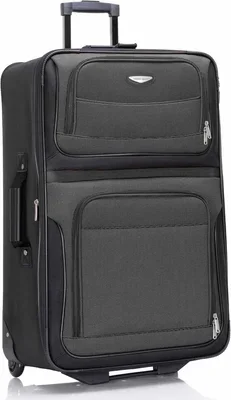
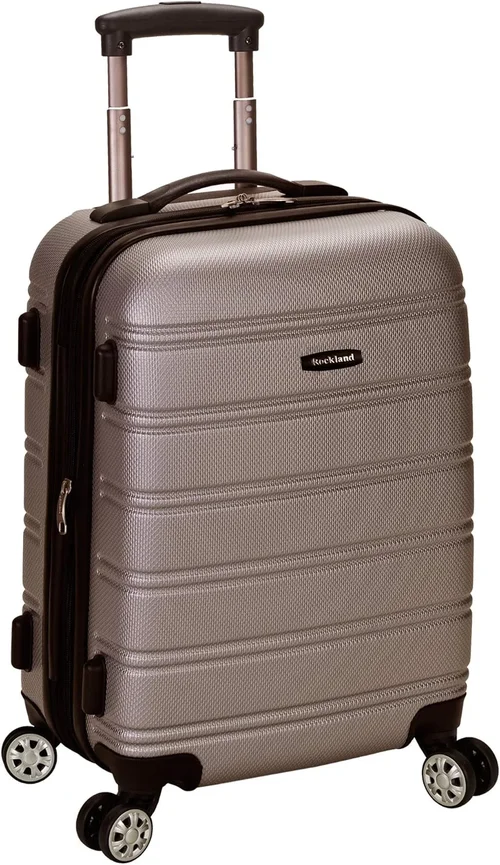
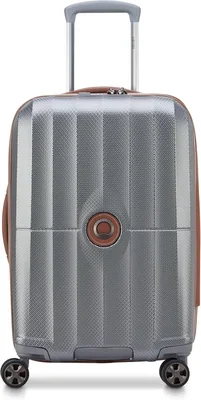
Choosing the right luggage is one of those decisions that quietly shapes every trip you take. Get it wrong, and you are wrestling with a broken zipper on a rainy Heathrow forecourt or paying unexpected overweight fees at the gate. Get it right, and your bags become a reliable travel partner that you barely notice, leaving you free to focus on the journey ahead. For UK travellers, the stakes are specific: we navigate strict airline baggage policies from carriers like British Airways, easyJet, and Ryanair, we contend with cobblestone streets in Edinburgh or the Underground in London, and we face weather that can shift from drizzle to downpour in minutes.
This guide exists to cut through the marketing noise. We will not just list features; we will explain why they matter in the real world. You will learn how to decode technical specifications like denier counts and polycarbonate grades, how to match a set to your specific travel style, and where to spend your money for maximum return. Whether you are a family packing for a fortnight in the Algarve, a business commuter hopping between Manchester and London, or a solo adventurer needing maximum flexibility, this guide covers the full spectrum of the UK market.
The expandable luggage set category has matured significantly in recent years. It is no longer a choice between cheap fabric that tears and expensive hard shells that crack. Today, hybrid materials, advanced spinner wheel engineering, and clever internal architecture mean you can find a set that expands genuinely usefully, rather than just bulging at the seams. We will walk through every factor you need to consider, compare the distinct types available, highlight the costly mistakes shoppers make, and give you a clear budget roadmap so you can buy with total confidence.

What to Look for When Buying Expandable Luggage Sets
1. Expansion Mechanism and Real-World Capacity
The headline feature of these sets is the expansion zipper, but not all expansion is created equal. You will typically see claims of “up to 25% more capacity” or “expands by 4cm.” In practice, the mechanism matters more than the percentage. Look for a gusseted expansion panel—a deep fabric bellows that unfolds when you unzip the secondary perimeter zipper. Cheaper sets often use a simple single-layer zip that merely stretches the existing shell fabric; this puts stress on the seams and offers minimal genuine volume.
Test the expansion in your mind before you buy. A quality gusset adds a structured, boxy depth to the case, meaning you can pack cubes or folded suits flat without them crushing into a ball. Check if the expansion zipper has a protective fabric flap or “rain guard” behind it. This prevents the zipper teeth from snagging on clothes and offers a degree of water resistance—vital for UK travel where a taxi ride in the rain is a daily possibility. Also, verify that the case still meets airline size restrictions when expanded. Many “cabin size” cases become oversized the moment you unzip that extra panel, rendering the feature useless for carry-on only trips.
2. Shell Material: Hard-Side vs. Soft-Side vs. Hybrid
This is the foundational decision that dictates durability, weight, and protection. In the UK market, you will encounter three main categories.
Polycarbonate (Hard-Side): The gold standard for modern hard luggage. It is a thermoplastic polymer that flexes under impact rather than cracking or denting permanently. Look for “100% Virgin Polycarbonate” or specific grades like Makrolon or Bayer. Avoid generic “ABS” or “ABS/Polycarbonate blends” if durability is a priority; ABS is brittle and prone to spider-web cracking on cold baggage belts in winter. Polycarbonate scratches visibly, but the structural integrity remains intact. It offers the best protection for fragile items and is naturally water-resistant.
Polypropylene (Hard-Side): Increasingly common in mid-range sets (brands like IT Luggage, Tripp). It is lighter than polycarbonate and very flexible, but it feels “plasticky” and scratches deeply. It is a solid budget choice for infrequent leisure travel but lacks the premium feel and long-term resilience of polycarbonate.
Ballistic Nylon / High-Denier Polyester (Soft-Side): Measured in “Denier” (D)—a unit of fibre thickness. 1680D Ballistic Nylon is the benchmark for premium soft luggage (e.g., Briggs & Riley, Tumi). It is incredibly abrasion-resistant and self-healing for minor snags. 600D–1200D Polyester is standard for mid-range (e.g., Antler, Cabin Max). Soft-side wins on external pockets for quick access, squeezability into tight overhead lockers or car boots, and lighter tare weight. However, it absorbs water unless treated with a DWR (Durable Water Repellent) coating, and offers less crush protection.
Hybrid: A hard-shell frame (usually polycarbonate) with soft fabric front panels or a soft-sided main body reinforced with a hard frame. These aim to give you the organisation of soft luggage with the structure of hard. They are excellent compromises but check the hinge points where hard meets soft; these are potential failure zones.
3. Wheel Engineering: The Silent Workhorses
Wheels are the single component that defines the daily user experience. A beautiful case with bad wheels is a nightmare. In the UK, where you navigate Tube stations, train platforms, and uneven pavement, you need Double Spinner Wheels (8 wheels total per large case). These are mounted on a castering axle allowing 360-degree rotation. You push the case beside you rather than dragging it behind, saving your wrist and shoulder.
Look for these specifics: Wheel Material: Polyurethane (PU) or Rubberised coating over a nylon core. Pure hard plastic wheels are loud, vibrate on rough ground, and shatter on impact. Wheel Housing: Recessed wheels (cut into the shell) protect the wheel from snapping off if the case is dropped or stacked. Protruding wheels are vulnerable. Ball Bearings: Sealed precision ball bearings (often Japanese NSK or similar) roll silently and smoothly for years. Cheap wheels use a simple plastic bushing that grinds and seizes with grit. Width: Wider wheels (50mm+) distribute weight better and bridge gaps (like Tube gaps) more easily than narrow 35mm wheels.
4. Handle System: Telescopic Strength and Ergonomics
The trolley handle takes your full bag weight repeatedly. A wobbly, sticky, or flimsy handle ruins the experience. Aluminium alloy tubes are standard; look for “aircraft-grade” or specific thickness (e.g., 4mm wall thickness). Multi-stage locking (usually 3 or 4 heights) accommodates different user heights. Test the lock mechanism: it should click positively into place and release with a single button press, not require a wrestle.
Crucially, check the top carry handle and side carry handle. On a heavy large case, you will lift it by these handles into car boots, onto scales, and over curbs. They must be riveted or sewn through multiple layers of the shell/fabric, not just glued or single-stitched. A padded, contoured grip makes a 23kg lift significantly easier on the fingers. For soft-side cases, ensure the handle retracts fully into a dedicated zippered pocket so it doesn’t snag on conveyor belts.
5. Internal Organisation and Packing Geometry
Expansion is useless if the interior is a featureless cavern. Hard-side cases typically use a clamshell (50/50) or 70/30 split. A 50/50 split lets you pack both halves equally and compress with a divider panel—great for two people sharing a case. A 70/30 split gives one deep well (good for bulky items) and a shallow lid section. Look for a full-length zippered divider panel with mesh pockets; this separates dirty laundry or shoes from clean clothes and compresses the load.
Soft-side cases excel here. Look for a suiter system (a folding garment panel with straps) if you travel with suits or dresses. Multiple external pockets are vital for liquids bags, electronics, or travel documents you need at security. Compression straps (ideally X-strap or double straps with metal buckles) cinch the load down to prevent shifting, which keeps the case balanced on its wheels. Packing cube compatibility is a modern must; check internal dimensions (especially height) fit standard cubes (e.g., Eagle Creek, Amazon Basics) without wasting vertical space.
6. Security Features: TSA Locks and Zipper Quality
Every set sold in the UK should feature an integrated TSA-approved combination lock. This allows UK Border Force and TSA agents in the US (and many other countries) to inspect your bag with a master key without cutting your lock. Ensure the lock is recessed into the shell (hard-side) or a low-profile mount (soft-side) so it doesn’t snag or snap off.
The zipper is the primary security point. YKK is the industry gold standard (look for “YKK RC” or “YKK AquaGuard” for water resistance). Avoid generic unbranded zippers. Double-coil zippers (two rows of teeth) allow you to lock both pulls together through the TSA lock. Single-coil zippers can only be locked if the pulls meet in the middle, leaving the ends vulnerable. Puncture-proof zippers (like YKK RCW) resist the “pen trick” where a ballpoint pen forces the zipper teeth apart; the zipper self-heals when you run the pulls over the gap. This is a genuine security upgrade worth seeking.
7. Weight and Airline Compliance (The UK Context)
Tare weight (empty weight) eats directly into your baggage allowance. UK airlines are strict. Ryanair priority allows 10kg cabin bag (55x40x20cm) plus a small underseat bag. easyJet standard is one underseat bag (45x36x20cm); large cabin bag requires extra payment. British Airways allows 23kg checked and a generous 56x45x25cm cabin bag (23kg). Jet2 allows 10kg cabin (56x45x25cm) plus 22kg checked.
A large checked polycarbonate case should weigh 3.5kg–4.5kg. A cabin case should be 2.0kg–2.8kg. Soft-side cases are often lighter (large: 2.8kg–3.5kg; cabin: 1.5kg–2.2kg). Every 0.5kg saved is 0.5kg more clothes or souvenirs. Do not sacrifice wheel/handle quality for ultra-lightweight (sub-2kg large cases); they often use thin shells that crack. Check the external dimensions include wheels and handles. Some brands measure the shell only; airlines measure the extreme external points.
8. Warranty, Repairability, and UK Support
A warranty is only as good as the company honouring it in the UK. Global “Limited Lifetime” warranties (Briggs & Riley, Tumi, Samsonite Proxis, some Antler ranges) are the gold standard—they cover functional damage (wheels, handles, zippers) for the life of the product, often with “no questions asked” repair. Standard 2–10 year warranties (most mid-range brands) cover manufacturing defects only, not airline damage or wear.
Critically, check UK service centres. Samsonite, Antler, Tripp, IT Luggage, and Cabin Max have UK repair networks or easy postal returns. US-centric brands (Travelpro, some Briggs & Riley retailers) may require shipping to Europe or the US for warranty work, adding weeks and cost. Spare parts availability (wheels, handles, lock modules) extends a case’s life indefinitely. Brands like Antler and Samsonite sell genuine spares; budget brands rarely do. A £300 case repaired twice over 15 years is better value than a £100 case replaced three times.
Different Types of Expandable Luggage Sets

Common Buying Mistakes to Avoid
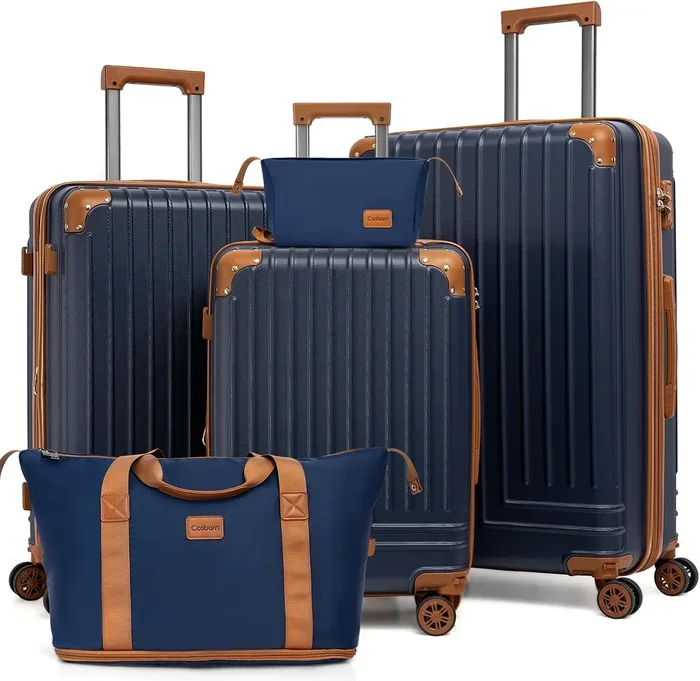
❌ Mistake: Buying a “Cabin Size” Set Without Checking Your Specific Airline
Why it’s bad: There is no universal “cabin size.” A case labelled “Cabin Approved” might fit British Airways (56x45x25cm) but be rejected by Ryanair (55x40x20cm) or easyJet underseat (45x36x20cm). Expandable cabin cases are the biggest trap; unzipped, they almost always exceed limits. You arrive at the gate, the case goes in the sizer, it doesn’t fit, and you pay £50–£70 to check it.
What to do instead: Identify the airline you fly most. Buy a case that fits their exact published dimensions (including wheels/handles) in its non-expanded state. If you fly multiple airlines, buy for the strictest (usually Ryanair/underseat). Treat expansion as a “return journey souvenir buffer” for checked bags only.
❌ Mistake: Prioritising Lightest Weight Over Wheel and Handle Quality
Why it’s bad: Ultra-lightweight cases (large < 2.8kg) achieve weight savings by thinning the shell, using minimal wheel housings, and fitting flimsy trolley handles. A 2.5kg large case that cracks on the first flight or has wheels that seize after two trips is a false economy. You end up buying twice.
What to do instead: Target the “sweet spot” weight: 3.5kg–4.2kg for a large polycarbonate checked case; 2.2kg–2.7kg for a polycarbonate cabin case. This weight class typically retains robust double-spinner wheels, multi-stage handles, and a shell thick enough to flex, not crack.
❌ Mistake: Ignoring the “Nested” Storage Dimension
Why it’s bad: A 3-piece set lives in your loft, garage, or under the bed 95% of the time. Many buyers focus only on packing volume and forget the stored footprint. Some sets (especially soft-side with rigid frames or hard-side with protruding wheels) do not nest tightly. You end up with a tower of cases taking up a whole corner.
What to do instead: Check the “nested dimensions” or measure the largest case’s external footprint. Ensure the medium fits fully inside the large, and the cabin fits fully inside the medium, with lids closing flat. Recessed wheels are key here. If storage space is tight, prioritise sets marketed as “space-saving nest.”
❌ Mistake: Assuming a “10 Year Warranty” Covers Airline Damage
Why it’s bad: Standard warranties cover manufacturing defects (e.g., a handle that won’t extend out of the box, a wheel that falls off due to a faulty mould). They explicitly exclude “consequential damage,” “wear and tear,” and “damage caused by carriers/airlines.” Since airlines damage luggage daily, this exclusion voids the most common claim.
What to do instead: Seek “Global Lifetime Warranty” or “Lifetime Performance Warranty” (Briggs & Riley, Samsonite Proxis/Neopulse, Antler Clifton/Tiber, Tumi). These cover functional damage regardless of cause. Read the small print: “We repair or replace if the product fails to function as intended.” That covers broken wheels, handles, zippers—exactly what airlines break.
❌ Mistake: Buying a 4-Piece Set When You Only Need 2 Sizes
Why it’s bad: Retailers push 4-piece sets (Large, Medium, Cabin, Beauty Case/Toiletry Bag) as “better value.” But if you are a couple or solo traveller, you likely only ever use Large + Cabin, or Medium + Cabin. The extra pieces add cost, weight to your purchase, and storage clutter. The “free” toiletry bag is often low quality.
What to do instead: Buy individual pieces or a 2-piece set tailored to your needs. Many premium brands (Antler, Samsonite, Briggs & Riley) sell open-stock—buy the Large and Cabin now, add a Medium later if family grows. This spreads cost and ensures every piece earns its keep.
❌ Mistake: Overlooking the “Personal Item” / Underseat Bag
Why it’s bad: UK low-cost carriers (Ryanair, easyJet, Jet2 basic fares) now restrict the free bag to a small “underseat” item (approx 40x30x20cm to 45x36x20cm). A standard cabin trolley cannot be taken for free on these fares. Buying a 3-piece set gives you a cabin trolley you have to pay to bring onboard.
What to do instead: If you fly basic fares, prioritise a set that includes a dedicated underseat backpack or tote, or buy a quality underseat bag separately (e.g., Cabin Max Metz, Aerolite, or a premium slim backpack). Ensure it slides over the trolley handle of your main case (luggage sleeve/pass-through) for stacked transport.
❌ Mistake: Choosing Style Over Visibility and Identification
Why it’s bad: Black, navy, and dark grey dominate the carousel. 80% of bags are dark colours. Standing at baggage reclaim in Manchester after a 3am arrival, identifying your black case among 50 identical black cases is stressful and slow. You risk someone else taking yours.
What to do instead: Choose a distinctive colour (olive, sand, terracotta, sage, navy with contrast trim) or a unique pattern. If you love black, add a bright, durable luggage strap (cross-strap, not just a tag) and a unique handle wrap. Some brands (Antler, July, Away) offer limited colours that double as instant ID.
Budget Guidelines: How Much Should You Spend?
Pricing in the UK luggage market is stratified. Understanding what each tier delivers prevents overpaying for features you don’t need or underbuying and facing early replacement. Prices below are for a standard 3-piece set (Large, Medium, Cabin) unless noted.
Entry-Level: £80 – £150
What you get: Polyester soft-side (600D–900D) or ABS/Polycarbonate blend hard-side. Basic 2-wheel or entry-level 4-single-spinner wheels. Plastic trolley handles. Simple expansion (single zip gusset). Standard 2–3 year warranty.
Best for: Infrequent flyers (1–2 trips/year), children’s luggage, car-based UK holidays (no baggage handlers), backup sets.
Compromises: Wheels will be the first failure point (plastic bushings, no bearings). Zippers may snag. Shells crack (hard) or fabric tears at stress points (soft). Tare weight often higher than mid-range due to cheap materials. No spare parts.
Typical Brands: Tripp (entry), IT Luggage (basics), American Tourister (entry), Cabin Max (basics), supermarket own-brands.
Mid-Range: £150 – £350 (The Sweet Spot for Most)
What you get: Quality Polypropylene or 100% Polycarbonate (hard-side); 1200D–1680D Polyester or entry Ballistic Nylon (soft-side). Double spinner wheels with sealed bearings. Aluminium trolley handles (3–4 stage). YKK zippers. TSA locks recessed. Gusseted expansion with rain guard. 5–10 year warranty or limited lifetime (functional). UK repair network.
Best for: Annual family holidays, regular business travel (monthly), durability seekers on a budget. This tier survives 5–10 years of airline handling.
Compromises: Polypropylene scratches heavily. Polycarbonate at this price may be thinner (2.5mm vs 3.5mm+). Soft-side may lack suiter system. Interior lining thinner. Colours limited.
Typical Brands: Antler (Tiber, Clifton – sales), Samsonite (Base Boost, S’Cure Eco, Magnum Eco), IT Luggage (World’s Lightest, Fusion), Tripp (Holiday, Atlas), Cabin Max (premium lines), American Tourister (Soundbox, Wavebreaker).
Premium: £350 – £700
What you get: Virgin Polycarbonate (3.5mm+), often with structural reinforcement (ribs, frames). Japanese Hinomoto or equivalent Lisof silent double-spinner wheels. Precision aluminium handles with ergonomic grips. Puncture-proof YKK RCW zippers. Advanced interior (suiter, compression, wet pockets, modular dividers). Global Lifetime Warranty (functional). UK service centres with rapid turnaround. Spare parts sold online.
Best for: Frequent flyers (monthly+), heavy packers, fragile equipment, buyers wanting a “buy once” case for 15–20 years.
Compromises: Heavier than mid-range (thicker shell). Price jumps significantly. Style options may be conservative.
Typical Brands/Models: Samsonite (Proxis, Neopulse, Lite-Shock), Antler (Clifton, Stamford), Briggs & Riley (Baseline, Sympatico – often US priced, check UK stock), Delsey (Chatelet Air 2.0, Titanium), Rimowa (Essential – polycarbonate entry), July (Carry On Large + Checked).
Luxury / Professional: £700 – £1,500+
What you get: Advanced composites (Samsonite Proxis Roxkin, Rimowa polycarbonate/aluminium). Hand-stitched leather details (Globe-Trotter, Tumi). Modular ecosystems (Tumi). Bespoke repair services. Status signalling. Unmatched resale value.
Best for: Luxury travellers, daily business commuters (Tumi), collectors, those for whom luggage is a primary accessory.
Compromises: Diminishing returns on pure function. Aluminium dents (patina vs damage). Weight often higher. Theft target. Repair costs post-warranty are high.
Typical Brands: Rimowa (Original, Essential Plus), Tumi (19 Degree, Alpha 3), Globe-Trotter (Centenary, Safari), Briggs & Riley (high-end Baseline), Samsonite (Proxis Roxkin).
Expert Tips for Getting the Best Deal

Frequently Asked Questions
Q: What is the best expandable luggage set for Ryanair and easyJet basic fares?
A: For basic fares, you need an underseat bag (max 40x30x20cm Ryanair / 45x36x20cm easyJet), not a standard cabin trolley. Look at the Cabin Max Metz 20L/30L (expands 20L→30L, fits both), Aerolite Underseat Cabin Bag, or Antler Tiber 40cm Cabin (check current dims). If you pay for a large cabin bag (Ryanair Priority / easyJet Large), the Antler Clifton 55cm, Samsonite Base Boost 55cm, or IT Luggage World’s Lightest 55cm are top expandable picks. Always measure wheels/handles included.
Q: Are 4-wheel spinner cases better than 2-wheel cases for UK travel?
A: Yes, overwhelmingly. 4 double-spinner wheels (8 wheels total) allow upright pushing, essential for long terminal walks (Heathrow T5, Gatwick North), train platforms, and cobblestones. 2-wheelers must be tilted, straining your wrist and risking tipping on uneven UK pavements. The only exception: if you frequently pull luggage up/down many stairs (e.g., Tube stations without lifts), a 2-wheeler can be dragged bump-by-bump more easily. But for 95% of journeys, 8-wheel spinners win.
Q: Does expanding a suitcase make it more likely to break?
A: Only if the expansion mechanism is poor. A quality gusseted expansion (fabric bellows) distributes stress across a wide zipper path and reinforced corners. The case gets heavier, so the wheels, handle, and shell base take more load—this is why mid-range/premium frames matter. A cheap case with a simple stretch-panel expansion will stress seams and zipper teeth, leading to blowouts. Never expand a case beyond the zipper’s natural stop; forcing it breaks the zipper track.
Q: Can I check in an expanded cabin bag as hold luggage?
A: Yes, but it’s risky. If your cabin case expands to exceed hold luggage maximum dimensions (rare, but possible on large expansions), it becomes “oversize.” More commonly, the expanded fabric gusset (soft-side) or protruding zipper (hard-side) is vulnerable to snagging on conveyor belts. If you must check an expanded cabin bag, compress it back down if possible, or wrap it in a protective cover/plastic wrap at the airport (£5–£10 machines landside). Better: buy a dedicated medium checked case.
Q: How do I clean mould or musty smells from stored luggage?
A: UK damp causes this. Hard-shell: Wipe inside/out with 50/50 white vinegar/water or diluted Milton sterilising fluid. Dry fully open in sunlight/airing cupboard. Soft-side: Vacuum thoroughly. Spot clean with upholstery cleaner or mild detergent. For deep odours, sprinkle bicarbonate of soda inside, leave 24hrs, vacuum out. Use silica gel packets (save from shoe boxes/electronics) or DampRid hanging bags inside stored cases. Store cases open (unzipped) in a dry, ventilated space—not a damp garage/loft.
Q: What does “Denier” mean and what number should I look for?
A: Denier (D) measures the linear mass density of fibres—essentially thread thickness. Higher Denier = thicker, stronger, more abrasion-resistant fabric. 600D Polyester: Basic, light, okay for occasional use. 900D–1200D Polyester: Standard mid-range, good durability. 1680D Ballistic Nylon: Premium benchmark. Extremely tough, developed for flak jackets. 840D–1000D Nylon: High strength-to-weight, common in premium lightweight soft luggage (e.g., Briggs & Riley). For UK travel durability, 1200D+ Polyester or 840D+ Nylon is the minimum for a main checked bag.
Q: Are “Smart” luggage features (USB ports, GPS, scales) worth it?
A: Mostly no, for UK buyers. USB Ports: Just a pass-through cable to a power bank you supply. Power banks must be carried in cabin baggage (CAAs/FAA rules). If you check the bag, you must remove the bank—defeating the port’s convenience. Built-in Scales: Often inaccurate (±1kg), add weight, and can’t be calibrated. A £5 handheld scale is better. GPS/Bluetooth Trackers (AirTag, Tile, Samsung SmartTag): Highly Recommended. Buy a separate tracker (£25–£35) and place it inside a pocket. It works globally, is airline compliant, and finds lost bags. Integrated GPS adds £100+ and needs charging.
Q: Should I buy a matching 3-piece set or mix and match sizes?
A: Mix and match is often smarter. A family of four might need: 2 Large checked, 2 Medium checked, 4 Cabin/Underseat. A 3-piece set forces a Medium you may not need. Different trips need different sizes. Buying open-stock lets you: 1) Choose the best brand for each size (e.g., Antler Large for durability, Cabin Max Cabin for strict sizing). 2) Replace only the broken piece. 3) Spread cost. Matching aesthetics are nice, but function per trip matters more.
Q: How do I claim compensation if an airline damages my luggage?
A: Act immediately. Before leaving the baggage hall, go to the Baggage Services desk (airline handler: Swissport, Menzies, Dnata). Fill a Property Irregularity Report (PIR). Get a reference number. Take photos of damage and the label on the carousel. UK Law (Montreal Convention): Airlines are liable up to ~£1,300 (SDR 1,288) for checked baggage damage. You must claim in writing within 7 days of receipt. Keep receipts for emergency purchases (toiletries, clothes) if delayed. For expensive luggage (>£1,300), consider specialist travel insurance with “baggage cover” exceeding the convention limit.
Q: What’s the difference between Antler Clifton and Antler Tiber?
A: Clifton is the premium soft-side line: 1680D Ballistic Nylon, leather accents, YKK RCW puncture-proof zippers, Hinomoto Lisof wheels, lifetime warranty, UK made (some models). Tiber is the premium hard-side line: 100% Polycarbonate (3.5mm+), same wheels/handles/locks/warranty, made in China to Antler spec. Clifton = lighter, external pockets, squeezable. Tiber = waterproof, crush-proof, structured. Both are top-tier. Choose Clifton for business/overpacking; Tiber for family holidays/fragile items.
Our Final Recommendations
Based on the analysis above, here are our top picks for UK buyers in 2024/2025, categorised by traveller profile.
Best for Budget-Conscious Buyers: IT Luggage “World’s Lightest” 4-Piece Set (or 3-Piece)
Why: Unbeatable weight (Large ~2.8kg, Cabin ~1.7kg) for the price (often £100–£140 on sale). Polypropylene shell is flexible and crack-resistant. 8 spinner wheels roll well for the class. 10-year warranty backed by UK company (IT Luggage Group). Expansion is genuine gusseted. Trade-off: Scratches instantly, feels thin, handle has slight wobble, zipper not YKK. Buy if: You fly 1–2 times a year, prioritise low tare weight for strict allowances, and want a full family set for under £150.
Best Overall Value (The Sweet Spot): Antler Tiber 3-Piece Set (Polycarbonate) OR Antler Clifton 3-Piece Set (Soft-Side)
Why: These are the benchmark for “buy once, keep forever” under £400 (often £300–£350 on sale). Tiber: Virgin polycarbonate, Hinomoto wheels, YKK RCW zippers, lifetime warranty, UK repairs. Clifton: 1680D Ballistic Nylon, same wheels/handle/lock/warranty, suiter system, lighter. Both nest perfectly. Antler’s UK heritage and service network (Cheshire) mean spare parts and repairs are easy. Buy if: You travel annually, want a set lasting 15+ years, and value British design/engineering.
Best Premium Option: Samsonite Proxis 3-Piece Set
Why: Uses Roxkin—a proprietary multi-layer thermoplastic composite. It is lighter than polycarbonate (Large ~3.6kg) but stronger and more flexible. It rebounds from impacts that dent polycarbonate. Silent Hinomoto wheels, premium handle, puncture-proof zippers, 10-year global warranty (functional). It looks distinctively modern (matte finish, hidden expansion). Trade-off: Price (£600–£750). Buy if: You are a frequent flyer wanting the absolute lightest durable hard-shell, value cutting-edge materials, and want a case that looks new after 50 flights.
Best for Beginners / Occasional Travellers: Cabin Max “Holdall” 3-Piece Set OR Tripp “Atlas” 3-Piece
Why: Cabin Max focuses purely on airline compliance. Their sets clearly label which airline each bag fits. Soft-side, lightweight, huge expansion, lifetime warranty (functional), very affordable (£80–£120). Tripp Atlas (hard-side) is a UK high-street staple: polycarbonate/ABS blend, 8 wheels, TSA lock, 10-year warranty, often £100–£130. Both are widely available (Argos, Amazon, John Lewis) for easy returns. Buy if: You are confused by specs, want guaranteed airline fit, need it tomorrow, and don’t want to overthink it.
Best for Advanced Users / Business Heavy-Hitters: Briggs & Riley “Baseline” or “Sympatico” System (Mix & Match)
Why: The only brand with a true “Simple as that” Lifetime Guarantee—covers all functional damage, forever, no proof of purchase needed, free shipping both ways (UK service centre). Baseline = Ballistic Nylon soft-side, legendary CX expansion (25%+), suiter, modular accessories. Sympatico = Polycarbonate hard-side with same CX expansion (rare in hard-shell). Expensive (£400–£600 per piece), but the last luggage you buy. Buy if: You travel weekly/monthly, pack heavy, demand perfect organisation, and view luggage as a professional tool, not a cost.
Conclusion: Making the Right Choice
We have covered a lot of ground—from the molecular structure of polycarbonate to the fine print of airline baggage policies. The thread connecting it all is this: the best luggage set is the one that matches your specific travel reality. Not the one with the most Instagram likes, not the one your neighbour bought, and certainly not the cheapest one on the shelf that will fail when you need it most.
Start with your airline constraints. If you fly Ryanair basic, your primary purchase is an underseat bag, not a large checked set. Move to material and wheels—these determine longevity. Invest in double-spinner wheels with sealed bearings and a shell or fabric that matches your handling environment (hard for protection/weather, soft for flexibility/organisation). Check the warranty—a UK-supported lifetime functional warranty is the ultimate quality signal. Finally, set your budget honestly: £150–£350 buys excellent mid-range gear that lasts a decade; £350+ buys heirloom quality.
Do not rush. Use the expert tips: wait for a January or June sale, test the handle and wheels in a shop, register the warranty the day it arrives. Your future self—standing on a wet tarmac in Glasgow, or breezing through security at Gatwick, or packing souvenirs in a Barcelona apartment—will thank you for choosing wisely. Travel is stressful enough; your luggage should be the one thing that just works.
Ready to decide? Revisit the comparison table, match your profile to the recommendations, and click through to a trusted UK retailer with a solid return policy. Measure your airline’s limits one last time. Then order the set that fits your life. Safe travels.