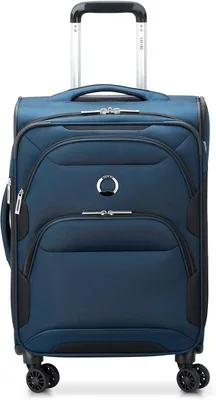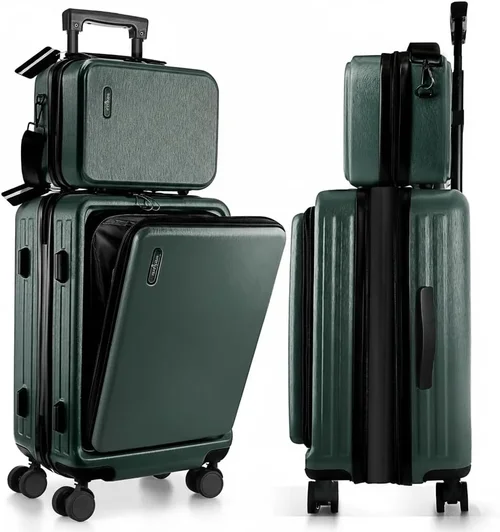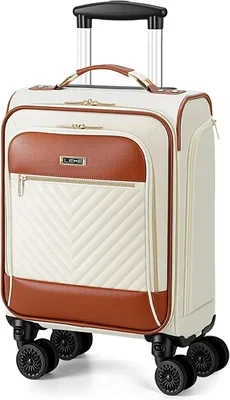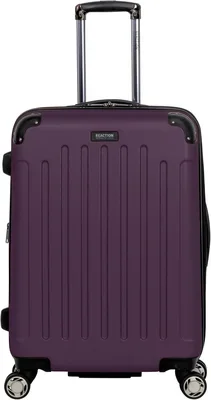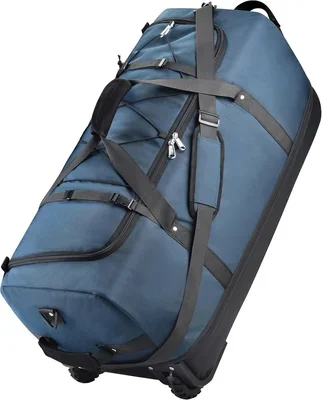
Choosing the right expandable rolling duffel bag wheeled spinner suitcase can feel like navigating a maze of specifications, brand promises, and price tags. Whether you are a weekend warrior heading to a cabin, a business traveler who needs a reliable carry‑on that can stretch for an extra outfit, or a family packing for a two‑week vacation, the right bag makes the journey smoother and protects your belongings. This guide breaks down every critical factor, explains the jargon in plain language, and gives you a clear roadmap so you can buy with confidence and avoid costly mistakes.
In the following sections you will learn how to prioritize size, durability, wheel quality, handle ergonomics, expansion mechanisms, and warranty coverage. We will compare the main categories of spinner duffels on the market, show you where the sweet spot lies for most budgets, and share insider tips on timing your purchase, spotting genuine deals, and testing a bag before you commit. By the end you will have a personalized checklist that matches your travel style, frequency, and budget.
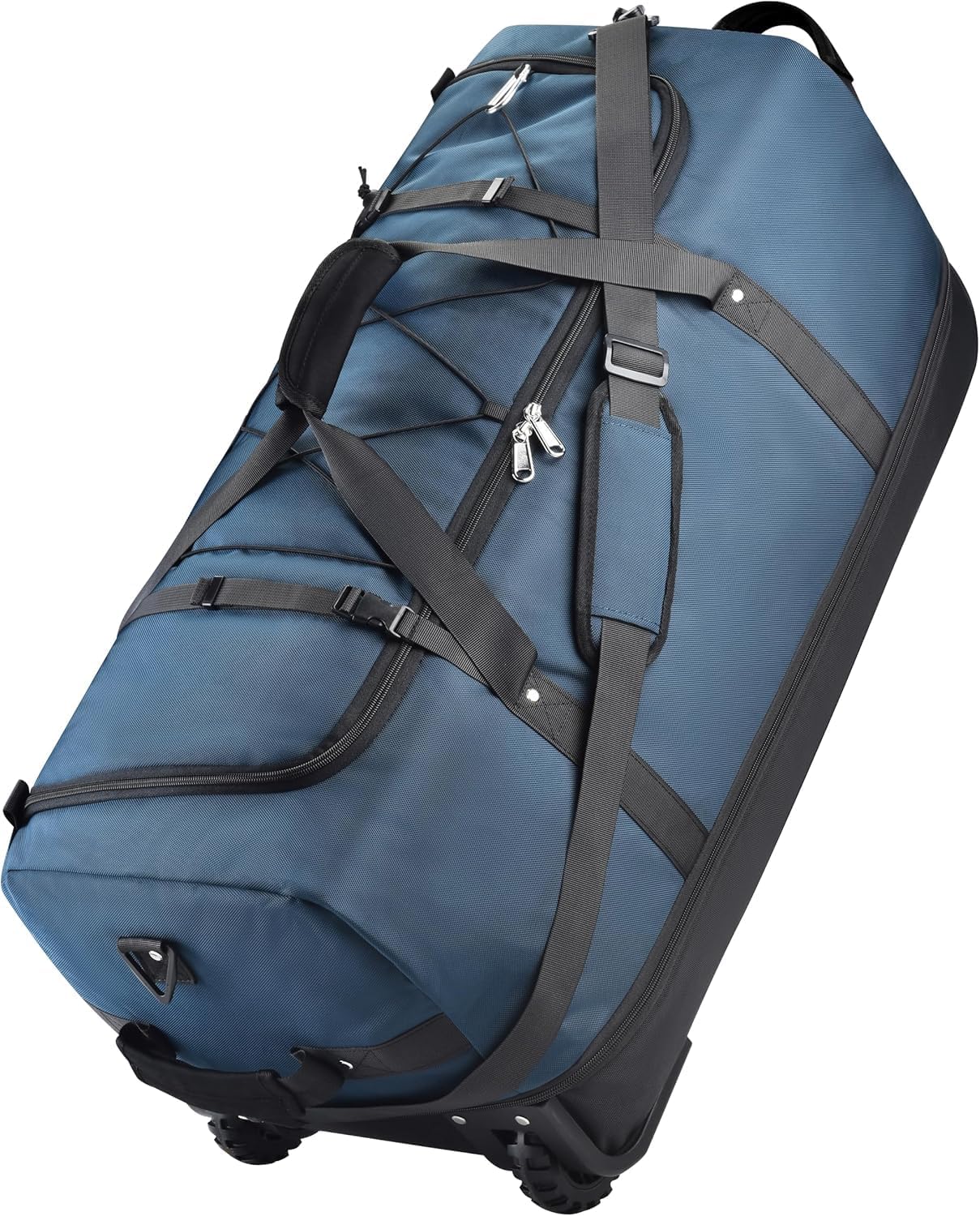
What to Look for When Buying Buying Guide
1. Capacity and Expandability
Capacity is the first number you will see on any product page, usually expressed in liters or cubic inches. A standard carry‑on spinner duffel starts around 35 L, while a checked‑size model can exceed 100 L. The expandable feature adds a zippered gusset that can increase volume by 15‑30 %. When evaluating capacity, think about the longest trip you realistically take. If you only ever travel for three days, a 45 L bag that expands to 55 L is overkill and adds weight. Conversely, a 70 L bag that expands to 90 L gives you flexibility for a week‑long adventure plus souvenirs.
Look for a gusset that runs the full perimeter of the main compartment. Partial expansion panels often create uneven bulges that stress the zipper and make the bag harder to maneuver. A high‑quality YKK or SBS zipper with a lockable pull tab is a good indicator that the expansion will survive repeated use.
2. Wheel System – Spinner vs. Inline
Spinner wheels (four 360° rotating casters) let you push the bag beside you, reducing strain on your wrist and shoulder. Inline wheels (two fixed wheels) are more durable on rough terrain but require you to tilt and pull. For most urban travel — airports, hotel lobbies, smooth sidewalks — spinners are superior. However, not all spinners are created equal.
- Wheel diameter: 50‑60 mm wheels roll easier over carpet and thresholds. Larger 70‑80 mm wheels handle cobblestones and gravel better.
- Wheel material: Polyurethane (PU) offers a quiet, smooth roll and resists flat‑spotting. Hard plastic wheels are cheaper but louder and wear faster.
- Bearing type: Sealed ball bearings last longer than simple bushings. Look for “precision bearings” or “ABEC‑5” in the spec sheet.
- Removability: Some premium models let you pop the wheels off for replacement. This extends the bag’s life dramatically.
3. Handle Ergonomics and Telescoping Mechanism
The telescoping handle is your primary contact point. A poorly designed handle can cause wrist fatigue after a few hundred meters. Key attributes:
- Height settings: At least three lock positions (short, medium, tall) accommodate users from 5′2″ to 6′4″.
- Grip material: Contoured rubber or thermoplastic elastomer (TPE) reduces slippage when hands are sweaty.
- Locking mechanism: Push‑button releases are faster than twist‑locks, but twist‑locks are less prone to accidental collapse.
- Reinforcement: Aluminum or magnesium alloy tubes resist bending. Plastic tubes can crack under heavy loads.
Also check the top carry handle and side grab handles. They should be padded, stitched with bar‑tack reinforcement, and positioned so the bag balances when lifted.
4. Frame Construction and Material Durability
Expandable spinner duffels typically use one of three frame types:
- Soft‑sided with internal aluminum stays: Light, flexible, and easy to stuff into overhead bins. The stays keep the bag upright when packed.
- Hybrid frame (plastic perimeter + fabric): Offers a rigid shell for protection while keeping weight low. Good for checked luggage.
- Hard‑shell (polycarbonate, ABS, or polypropylene): Maximum impact resistance, but no expansion. Not a true duffel, but worth noting if you prioritize protection over flexibility.
Fabric denier (D) indicates thread thickness. 600D polyester is entry‑level; 1680D ballistic nylon or 1000D Cordura® is premium. Higher denier resists abrasion and tears. Water‑repellent coatings (DWR) and TPU laminated backings add moisture protection without adding bulk.
5. Organization Features – Pockets, Dividers, Compression Straps
Internal organization separates clean clothes from dirty laundry, electronics from toiletries, and keeps everything from shifting during transit. Look for:
- Mesh divider panels: Zippered mesh creates two main compartments; some have a third “wet” pocket.
- Compression straps: Adjustable elastic or webbing straps cinch down contents, reducing volume and preventing wrinkles.
- External quick‑access pockets: Ideal for boarding passes, passport, phone, or a water bottle. Ensure they have secure zippers, not just magnetic snaps.
- Laptop/tablet sleeve: Padded, suspended sleeve that fits a 15‑inch laptop is a must for business travelers.
6. Weight and Airline Compliance
Every gram counts when airlines enforce strict carry‑on limits (often 7‑10 kg / 15‑22 lb). A lightweight spinner duffel (2.5‑3.5 kg empty) leaves more allowance for your gear. Verify the external dimensions (including wheels and handles) against the most restrictive carrier you fly. Many brands list “carry‑on compliant” dimensions, but always measure yourself — handles and wheels can add 2‑3 cm.
7. Warranty, Repair Network, and Brand Reputation
A lifetime limited warranty signals confidence. Read the fine print: does it cover wheel replacement, zipper failure, handle collapse? Brands with authorized repair centers (e.g., Briggs & Riley, Travelpro, Osprey) let you send the bag in for service rather than buying new. Check online reviews for patterns — recurring zipper jams or wheel detachments are red flags.
8. Price vs. Value Proposition
Price alone does not guarantee quality. A $120 bag with a 5‑year warranty, replaceable wheels, and ballistic nylon may outperform a $250 bag with a 1‑year warranty and proprietary parts. Calculate cost‑per‑trip: if you travel 4 times a year for 5 years, a $200 bag costs $10 per trip. Factor in potential repair costs and resale value.
Different Types of Buying Guide

Common Buying Mistakes to Avoid
❌ Mistake: Ignoring Real‑World Dimensions
Why it’s bad: Manufacturers often list interior dimensions only. Wheels, handles, and external pockets can push the bag over airline limits, leading to gate‑check fees.
What to do instead: Measure the bag yourself (or request a spec sheet with external dimensions). Add 2‑3 cm for wheel protrusion.
❌ Mistake: Choosing the Cheapest Wheels
Why it’s bad: Low‑quality plastic wheels crack on the first cobblestone street, leaving you dragging a dead bag.
What to do instead: Prioritize PU wheels with sealed bearings. If the spec sheet does not mention bearing type, assume bushings.
❌ Mistake: Overlooking Expansion Zipper Quality
Why it’s bad: A flimsy zipper will snag, split, or burst under pressure, rendering the expansion useless.
What to do instead: Look for YKK or SBS zippers with lockable pulls. Test the zipper in store — it should glide smoothly without catching.
❌ Mistake: Buying a Bag Too Heavy for Your Frame
Why it’s bad: A 4 kg empty bag eats into your weight allowance and makes lifting into overhead bins a struggle.
What to do instead: Target empty weight under 3 kg for carry‑on, under 4 kg for checked sizes. Check the weight spec before purchasing.
❌ Mistake: Skipping Warranty Registration
Why it’s bad: Many lifetime warranties require online registration within 30 days. Missing this voids coverage.
What to do instead: Register immediately after purchase. Keep the receipt and a photo of the serial tag.
❌ Mistake: Assuming All “Spinner” Bags Are Equal
Why it’s bad: Some budget spinners have only two rotating wheels and two fixed wheels, reducing maneuverability.
What to do instead: Verify “4‑wheel 360° spinner” in the product title and description.
❌ Mistake: Neglecting Internal Organization Needs
Why it’s bad: A single cavernous compartment leads to wrinkled clothes and lost chargers.
What to do instead: Choose a model with at least one mesh divider and compression straps. Add packing cubes if the bag lacks them.
Budget Guidelines: How Much Should You Spend?
Entry‑Level ($70 – $130)
Expect polyester 600D‑900D fabric, basic inline or two‑wheel spinner system, plastic telescoping handle, and a 1‑year limited warranty. Expansion gusset may be partial. Good for occasional leisure travelers who fly once or twice a year and treat luggage gently. Brands: AmazonBasics, Kenneth Cole Reaction, Rockland.
Mid‑Range ($130 – $250)
This is the sweet spot for most frequent flyers. You get 1200D‑1680D ballistic nylon or Cordura, four PU spinner wheels with sealed bearings, aluminum telescoping handle with three‑stage lock, full‑perimeter expansion zipper (YKK), and a 5‑year or limited lifetime warranty. Organization includes mesh dividers, compression straps, and a padded laptop sleeve. Brands: Travelpro, Samsonite (mid lines), Delsey, Briggs & Riley (entry models).
Premium ($250 – $400)
Premium bags add replaceable wheel modules, magnesium alloy handle tubes, water‑resistant TPU laminated fabric, self‑healing zippers, and a true lifetime “no‑questions‑asked” warranty with free repair shipping. They often include a removable garment folder, TSA‑approved lock integration, and a dedicated shoe compartment. Brands: Briggs & Riley (Baseline, Sympatico), Tumi (Alpha 3), Victorinox (Spectra).
Luxury ($400+)
Luxury models use exotic materials (e.g., ballistic nylon with Kevlar reinforcement, carbon‑fiber handle tubes), hand‑stitched leather accents, modular interior systems, and concierge‑level service (door‑to‑door repair pickup). They are status pieces as much as functional gear. Brands: Rimowa (soft‑side line), Globe‑Trotter, Louis Vuitton (horizon).
Expert Tips for Getting the Best Deal
- Shop off‑season: Late January (post‑holiday) and September (back‑to‑school) see 20‑30 % discounts on previous‑year models.
- Sign up for brand newsletters: Many manufacturers send a 10‑15 % welcome coupon plus early‑access to sales.
- Check authorized outlet stores: Outlets carry overstock with full warranty. Verify the serial number matches the brand’s database.
- Use price‑tracking tools: CamelCamelCamel (Amazon) and Honey (multi‑retailer) alert you when a specific SKU drops below your target.
- Leverage credit‑card travel perks: Some premium cards offer baggage‑fee credits or extended warranty matching.
- Test in‑store, buy online: Feel the handle, roll the wheels, inspect the zipper. Then purchase from the cheapest authorized retailer.
- Read the return policy: A 30‑day no‑questions return lets you live‑test the bag on a short trip.
- Consider refurbished units: Brands like Briggs & Riley sell factory‑refurbished bags at 40‑50 % off with full warranty.

Frequently Asked Questions
Q: Can I use an expandable spinner duffel as a carry‑on on all airlines?
A: Most carry‑on sized models (22 × 14 × 9 in) meet the major U.S. carriers’ limits, but low‑cost European airlines (Ryanair, easyJet) enforce stricter dimensions (21.6 × 15.7 × 9.8 in). Always measure your specific bag with wheels and handles extended before you fly.
Q: How do I clean a ballistic nylon spinner duffel?
A: Spot‑clean with a mild detergent, soft brush, and lukewarm water. Do not machine wash — agitation can damage the internal frame and wheel bearings. Air‑dry away from direct heat.
Q: Are spinner wheels suitable for rough terrain like cobblestones or gravel?
A: Large‑diameter PU wheels (≥70 mm) with sealed bearings handle moderate rough surfaces. For heavy off‑road use, consider a two‑wheel “all‑terrain” duffel or a hybrid with replaceable wheel modules.
Q: What does “lifetime warranty” actually cover?
A: Typically covers defects in materials and workmanship (zippers, handles, wheels, stitching). It usually excludes damage from airline mishandling, accidents, or normal wear‑and‑tear like fabric fading. Register the product and keep proof of purchase.
Q: Can I replace the wheels myself?
A: On many mid‑range and premium models, wheels are attached with a single screw or quick‑release axle. Replacement kits are sold by the manufacturer. Entry‑level bags often have riveted wheels that cannot be swapped.
Q: How much extra space does the expansion zipper really add?
A: Typically 15‑30 % more volume. A 45 L bag may expand to 55‑58 L. The gain is most useful for bulky items (souvenirs, winter coats) but adds weight and can make the bag exceed carry‑on size limits.
Q: Is a hard‑shell spinner better than a soft‑sided expandable duffel?
A: Hard shells protect fragile items better and are water‑proof, but they cannot expand and are heavier. Soft expandable duffels offer flexibility, lighter weight, and easier storage when empty. Choose based on what you prioritize: protection vs. versatility.
Q: What packing accessories work best with spinner duffels?
A: Compression packing cubes (e.g., Eagle Creek, Gonex) maximize the rectangular interior. A slim toiletry bag that hangs from the internal hook keeps liquids separate. A shoe bag prevents scuff marks on clothing.
Q: How do I prevent the telescoping handle from wobbling?
A: Ensure the handle locks fully at each height. If wobble persists, tighten the set screw at the base of the handle tube (usually a 2 mm hex). Regularly lubricate the sliding mechanism with a dry PTFE spray.
Our Final Recommendations
Best for Budget‑Conscious Buyers: AmazonBasics 21‑Inch Hardside Spinner (soft‑side version) – 600D polyester, four spinner wheels, 1‑year warranty, under $90. Good for 2‑3 trips per year.
Best Overall Value: Travelpro Maxlite 5 Expandable Spinner 25‑Inch – 1200D polyester, 360° MagnaTrac wheels, aluminum handle, full‑perimeter YKK expansion, limited lifetime warranty, ~ $150. Handles 90 % of travel scenarios.
Best Premium Option: Briggs & Riley Baseline Domestic Carry‑On Expandable Spinner – 1680D ballistic nylon, CX expansion system (adds 25 % volume), self‑healing zippers, lifetime “Simple as that” warranty with free repair shipping, ~ $350. Ideal for road warriors.
Best for Beginners: Samsonite Freeform 21‑Inch Spinner (soft‑side) – Lightweight, intuitive push‑button handle, color‑coded interior dividers, 10‑year limited warranty, ~ $130. Easy to pack and maneuver.
Best for Advanced Users / Gear‑Heavy Trips: Osprey Transporter Wheeled Duffel 90L – 1000D recycled nylon, oversized 110 mm wheels, removable internal compression straps, external gear loops, lifetime warranty, ~ $380. Handles expedition loads while still rolling smoothly.
Conclusion: Making the Right Choice
You now have a complete framework for evaluating any expandable rolling duffel bag wheeled spinner suitcase on the market. Start by defining your typical trip length, airline constraints, and how much organization you need. Then match those needs to the capacity, wheel quality, handle ergonomics, frame material, and warranty tier that fit your budget. Remember that a mid‑range bag with a solid lifetime warranty often outperforms a flashy luxury model that lacks replaceable parts.
Use the checklist below each time you shop:
- Measure external dimensions (including wheels/handles).
- Verify four 360° PU wheels with sealed bearings.
- Confirm full‑perimeter YKK/SBS expansion zipper.
- Check handle tube material (aluminum or magnesium).
- Read warranty terms and register within 30 days.
- Test roll on carpet and hard floor before buying.
Armed with this knowledge, you can walk into any store or browse any website confident that you will select a spinner duffel that travels as smoothly as you do. Happy packing, safe travels, and may your next bag be the last one you ever need to buy.