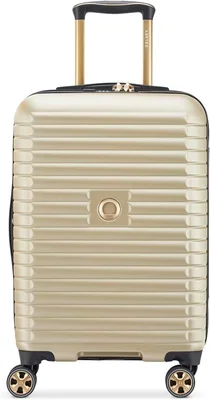
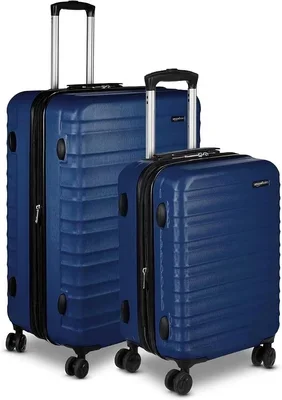
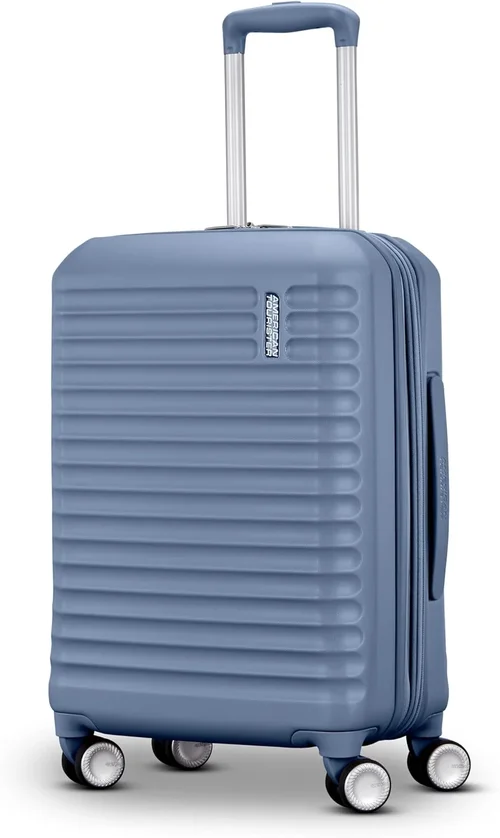
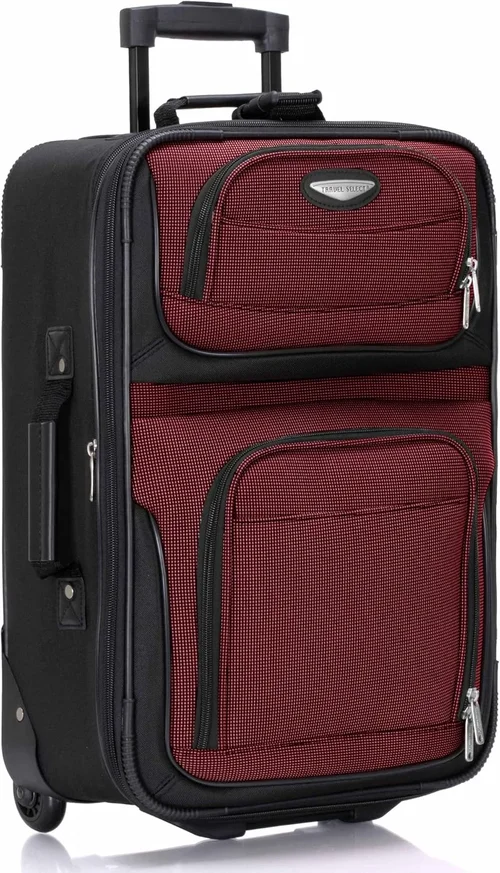
Traveling can be stressful enough without worrying whether your suitcase will stay closed, your gear will shift, or your bag will exceed the airline’s size limits. Expandable luggage straps solve a surprising number of those headaches by giving you a simple, adjustable way to secure, compress, and even expand your bags when you need a little extra room. This guide walks you through everything you need to know before you buy, from the core features that separate a flimsy strap from a travel‑ready workhorse to the price points that match every budget.
By the time you finish reading, you’ll be able to spot the difference between a strap that merely looks good on a shelf and one that survives dozens of baggage‑claim carousels, tight overhead bins, and the occasional over‑packed weekend getaway. We’ll break down the technical jargon — think “load‑bearing capacity,” “quick‑release buckle,” and “elastic webbing” — into plain language, compare the main strap categories side by side, and highlight the most common buying mistakes so you can avoid them. Whether you’re a frequent flyer, a road‑trip enthusiast, or someone who just wants a reliable way to keep a duffel from bursting, this guide has you covered.

What to Look for When Buying Expandable Luggage Straps
1. Load‑Bearing Capacity and Tensile Strength
The first number you should check is how much weight the strap can safely hold. Manufacturers usually express this in kilograms or pounds, and it tells you the maximum force the webbing and buckle can withstand before they stretch permanently or snap. A strap rated for 50 kg (110 lb) is fine for a carry‑on or a light duffel, but if you regularly haul a 30 kg checked bag plus souvenirs, look for 80 kg (175 lb) or higher. Remember that the rating applies to the whole system — webbing, stitching, and buckle — so a weak buckle can undermine a strong strap.
2. Webbing Material and Width
Most expandable straps use nylon, polyester, or a blend of both. Nylon offers higher abrasion resistance and a slightly softer hand, while polyester resists UV degradation better, making it a smart pick for travelers who leave bags in the sun. Width matters, too: a 25 mm (1‑inch) strap distributes load more evenly than a 15 mm strap, reducing pressure points on the bag’s handles and preventing the strap from digging into the fabric. Wider webbing also tends to be more durable because there’s more material to share the stress.
3. Elastic vs. Non‑Elastic Sections
Expandable straps get their name from a stretchy segment — usually a high‑elasticity polyester or rubberized yarn — that lets the strap lengthen when you over‑pack and then snap back to keep everything tight. The length of the elastic portion determines how much extra volume you can accommodate. A 30 cm elastic zone gives you roughly 10‑15 % more space, while a 60 cm zone can handle a full‑size winter coat. If you rarely over‑pack, a shorter elastic section keeps the strap lighter and less bulky.
4. Buckle Type and Release Mechanism
Three buckle styles dominate the market: side‑release (push‑button), cam‑lock (lever), and ratchet (toothed). Side‑release buckles are the most common; they’re quick, intuitive, and work well for most travelers. Cam‑lock buckles provide a more secure, vibration‑resistant hold — ideal for rough handling on conveyor belts — but they can be fiddly with cold fingers. Ratchet buckles give the tightest cinch, perfect for compressing a bulky sleeping bag, yet they add weight and complexity. Choose the mechanism that matches how often you’ll be opening and closing the strap.
5. Adjustability Range and Length Increments
A strap that only adjusts in 5 cm steps can leave you with either a loose fit or an over‑tightened bag. Look for continuous‑adjust sliders or a buckle that lets you fine‑tune the length in 1‑cm increments. The total usable length should cover the smallest bag you own (often a 35 cm daypack) up to the largest checked suitcase (around 120 cm). Some models include a “quick‑pull” tab that lets you cinch the strap with one hand — handy when you’re juggling a boarding pass and a coffee.
6. Durability Features: Stitching, Reinforcements, and Coatings
Double‑stitched or bar‑tacked seams at the buckle attachment points are a must; they prevent the webbing from pulling away under load. Reinforced loop ends (often a folded‑over layer of webbing) add extra tear resistance. Water‑repellent or TPU‑coated webbing resists moisture, mold, and the grime that accumulates on airport floors. If you travel in humid climates or during rainy seasons, a coated strap will stay supple longer and won’t develop a musty smell.
7. Weight and Packability
Every gram counts when you’re trying to stay under a strict carry‑on limit. A minimalist strap made from 15 mm polyester with a plastic side‑release buckle can weigh as little as 30 g, while a heavy‑duty ratchet model with a metal cam‑lock can top 150 g. If you’re a weight‑obsessed ultralight traveler, prioritize a thin, non‑elastic strap with a simple buckle. For most people, the 60‑90 g sweet spot offers a good balance of strength and portability.
8. Brand Reputation, Warranty, and Customer Support
Established travel‑gear brands (e.g., Travelon, Eagle Creek, Gonex, and Lewis N. Clark) typically back their straps with a 1‑year limited warranty and responsive customer service. Lesser‑known brands may offer a lower price but can leave you without a replacement if a buckle fails mid‑trip. Check online reviews for patterns — recurring complaints about buckle breakage or elastic loss of stretch are red flags. A solid warranty also signals the manufacturer’s confidence in their materials and construction.
Different Types of Expandable Luggage Straps

Common Buying Mistakes to Avoid
❌ Mistake: Choosing the Cheapest Strap Without Checking Load Rating
Why it’s bad: A $6 strap may look identical to a $20 model, but its webbing could be rated for only 30 kg. When a baggage handler tosses a 25 kg suitcase onto a conveyor, the sudden shock can exceed that limit, causing the strap to snap and your bag to burst open.
What to do instead: Always verify the tensile strength on the packaging or product page. Match the rating to the heaviest bag you’ll ever secure, adding a 20 % safety margin.
❌ Mistake: Ignoring Buckle Compatibility with Your Bag’s Handles
Why it’s bad: Some straps come with a fixed‑loop end that only fits over a specific handle width. If your suitcase has thick, padded handles, the loop may not slide on, forcing you to improvise with a makeshift knot that weakens the system.
What to do instead: Measure the handle circumference and choose a strap with an adjustable loop or a universal “hook‑and‑loop” attachment that accommodates a range of diameters.
❌ Mistake: Over‑Relying on Elastic Stretch for Heavy Loads
Why it’s bad: Elastic sections are designed for modest expansion — typically 10‑15 % of the bag’s volume. Using them to compress a 30 kg load stretches the fibers beyond their elastic limit, leading to permanent sag and loss of tension.
What to do instead: For heavy compression, use a ratchet or cam‑lock strap with a non‑elastic webbing core. Reserve the elastic portion for light over‑packing only.
❌ Mistake: Forgetting to Test the Quick‑Release Before You Travel
Why it’s bad: A stiff or jammed side‑release buckle can turn a simple airport security check into a frustrating delay, especially if you have to unfasten the strap with one hand while holding a boarding pass.
What to do instead: Open and close the buckle at least five times at home. If it feels gritty or requires excessive force, lubricate the mechanism with a drop of silicone spray or consider a different model.
❌ Mistake: Buying a Single Strap When You Need a Pair
Why it’s bad: Many travelers assume one strap can secure both the top and bottom of a suitcase. In reality, a single strap only prevents the lid from popping open; it does nothing to stop the bag from bulging sideways.
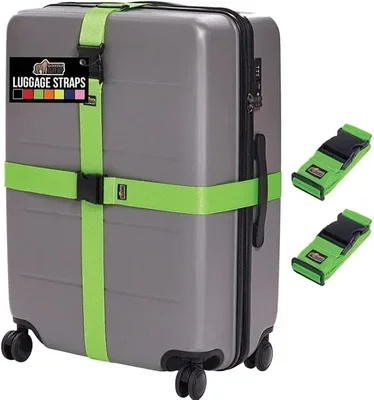
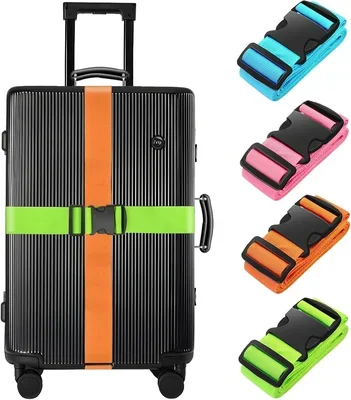
What to do instead: Purchase a matched pair (often sold as a set) so you can run one strap horizontally and one vertically, creating a cross‑hatch that locks the bag’s shape in all directions.
❌ Mistake: Neglecting UV and Moisture Resistance for Outdoor Trips
Why it’s bad: Polyester webbing left in direct sunlight for weeks can lose up to 30 % of its tensile strength. Likewise, a strap that absorbs water becomes heavier and can develop mildew, weakening the fibers.
What to do instead: Choose a TPU‑coated or solution‑dyed polyester strap for any trip that involves prolonged outdoor exposure, such as camping, sailing, or tropical travel.
❌ Mistake: Overlooking Warranty and Return Policy Details
Why it’s bad: A strap that fails after two months is a waste of money if the seller only offers a 30‑day return window and no warranty. You’ll be stuck buying a replacement at full price.
What to do instead: Favor brands that provide at least a one‑year limited warranty and a hassle‑free return process. Keep the receipt and register the product online if the manufacturer offers that option.
Budget Guidelines: How Much Should You Spend?
Entry‑Level ($5 – $12): These are basic elastic straps with plastic side‑release buckles, 15‑mm polyester webbing, and a single elastic segment of 20‑30 cm. They’re perfect for occasional travelers who only need to keep a carry‑on closed or secure a gym bag. Expect a load rating around 30‑40 kg, minimal stitching reinforcement, and a one‑year limited warranty at best. The main trade‑off is durability — after a dozen heavy‑use cycles the elastic may lose its snap.
Mid‑Range ($12 – $25): This tier adds wider webbing (20‑25 mm), double‑stitched buckle attachments, and a choice of cam‑lock or upgraded side‑release buckles. Elastic zones are longer (30‑45 cm) and often feature a higher‑grade rubberized yarn that retains stretch longer. Load ratings climb to 60‑80 kg, making them suitable for checked luggage up to 23 kg plus a few extra kilos of souvenirs. Most brands in this range offer a 2‑year warranty and responsive email support.
Premium ($25 – $45): Premium straps introduce ratchet mechanisms, metal cam‑locks, and dual‑function designs (elastic + ratchet). Webbing is typically 25‑30 mm solution‑dyed polyester with a TPU coating for water and UV resistance. Load ratings exceed 100 kg, and the hardware is often stainless steel or aircraft‑grade aluminum. You’ll also find extras like integrated TSA‑approved locks, RFID‑blocking pockets, and reflective stitching for night visibility. Warranties extend to 3‑5 years, and some manufacturers provide a “no‑questions‑asked” replacement policy.
Luxury ($45 +): At the top end you’re paying for brand prestige, hand‑finished details, and ultra‑light exotic materials such as Dyneema® composite webbing. These straps can weigh under 40 g while still rating 120 kg. They often come in a branded travel pouch, with a lifetime warranty and concierge‑level customer service. Unless you’re a professional photographer hauling expensive gear or a frequent first‑class flyer who values every gram, the performance gains over the premium tier are marginal.
Expert Tips for Getting the Best Deal
- Buy During Off‑Season Sales: Late January and early September see steep discounts on travel accessories as retailers clear inventory after the holiday and back‑to‑school rushes.
- Compare Bundle Pricing: Many brands sell a two‑strap set for only $3‑$5 more than a single strap. If you have more than one bag, the bundle is almost always the better value.
- Check Airline‑Specific Requirements: Some carriers (e.g., Ryanair, Spirit) have strict dimensions for “personal items.” A strap that adds bulk could push your bag over the limit, so measure the strap’s profile before you buy.
- Read Verified Purchase Reviews: Filter for reviews that mention “checked luggage” or “heavy load” to see real‑world performance, not just “looks nice.”
- Test the Buckle with Gloves On: If you travel to cold climates, try operating the buckle while wearing winter gloves. A stiff side‑release can become impossible to open with numb fingers.
- Register Your Product: Many manufacturers extend the warranty only if you register within 30 days of purchase. It takes two minutes and can save you a replacement cost later.
- Use a Luggage Scale Before You Strap: Knowing the exact weight lets you choose the right tension — too loose and the bag shifts; too tight and you risk damaging the frame or zipper.
- Keep a Spare Buckle: A tiny plastic side‑release buckle costs pennies online. Carry one in your toiletry kit; if the original cracks, you can swap it in seconds without buying a whole new strap.

Frequently Asked Questions
Q: Can I use an expandable luggage strap on a hard‑shell suitcase?
A: Yes, as long as the suitcase has integrated handle loops or a strap‑compatible groove. Many hard‑shell cases include a recessed channel on the lid specifically for a strap. If yours doesn’t, you can loop the strap around the telescopic handle and the base, but be careful not to impede the handle’s extension.
Q: Will an elastic strap damage my bag’s fabric over time?
A: Not if the strap’s webbing is smooth and the buckle has no sharp edges. However, constant friction on a single spot can wear thin fabric. Rotate the strap’s contact point each trip, or place a thin fabric sleeve (a cut‑up t‑shirt works) between the strap and the bag.
Q: How do I clean a dirty luggage strap?
A: Most polyester and nylon straps are machine‑washable on a gentle cycle with cold water. Remove any metal buckles first, or place the strap in a mesh laundry bag. Air‑dry away from direct heat; do not tumble dry, as high heat can degrade the elastic fibers.
Q: Are TSA‑approved lock straps worth the extra cost?
A: If you frequently travel to the United States or other countries where TSA agents may need to inspect your bag, a built‑in TSA lock saves you from having to cut a regular strap. For domestic trips where you control the lock, a standard strap is sufficient.
Q: Can I combine two different straps (e.g., one elastic, one ratchet) on the same bag?
A: Absolutely. Many seasoned travelers run an elastic strap horizontally for quick closure and a ratchet strap vertically for maximum compression. Just ensure the combined tension doesn’t exceed the bag’s structural limits — check the manufacturer’s recommended maximum strap tension.
Q: What’s the difference between “load‑bearing capacity” and “working load limit”?
A: Load‑bearing capacity (or breaking strength) is the absolute maximum force before failure. Working load limit (WLL) is typically one‑third to one‑fifth of that number and represents the safe continuous load. Always design your packing around the WLL, not the breaking strength.
Q: Do expandable straps work with backpack‑style luggage?
A: Yes, but you’ll need a strap with a loop that fits over the backpack’s top carry handle and a second anchor point — often the bottom compression strap or a dedicated loop on the pack’s base. Some backpacks have a “strap‑through” channel that makes this easier.
Q: How long does the elastic portion typically last?
A: With moderate use (2‑3 trips per month), a quality rubberized polyester elastic retains 80‑90 % of its original stretch for 3‑5 years. Frequent over‑stretching, exposure to extreme heat, or chlorine (poolside) can cut that lifespan in half.
Q: Is there a weight limit for the strap itself when flying?
A: Airlines don’t weigh straps separately; they count toward your total baggage weight. A 150 g strap is negligible, but if you’re pushing a 7 kg carry‑on limit, every gram matters. Choose the lightest strap that still meets your load rating.
Our Final Recommendations
- Best for Budget‑Conscious Buyers: Gonex Basic Elastic Strap (2‑pack) — 15 mm polyester, 30 kg rating, $9 for two. Light, simple, and enough for occasional carry‑on use.
- Best Overall Value: Travelon Cam‑Lock Adjustable Strap (single) — 25 mm solution‑dyed polyester, 80 kg rating, cam‑lock buckle, $18. Handles checked bags and light over‑packing with a 2‑year warranty.
- Best Premium Option: Eagle Creek Dual‑Function Strap (elastic + ratchet) — 30 mm TPU‑coated webbing, 120 kg rating, stainless‑steel ratchet, integrated TSA lock, $38. One strap covers every scenario from weekend duffel to expedition gear.
- Best for Beginners: Lewis N. Clark Elastic Strap with Quick‑Pull Tab — 20 mm webbing, 45 kg rating, easy one‑hand cinch, $13. Intuitive design reduces the learning curve.
- Best for Advanced Users: Matador UltraLight Dyneema Strap — 12 mm Dyneema composite, 100 kg rating, 35 g weight, lifetime warranty, $52. Minimalist, ultra‑strong, and packable into its own tiny stuff sack.
Conclusion: Making the Right Choice
Choosing the right expandable luggage strap comes down to matching three variables — how much you pack, how often you travel, and how much you’re willing to spend — to the strap’s load rating, buckle style, and material quality. Start by measuring your biggest bag and deciding whether you need a simple elastic loop for occasional over‑packing or a heavy‑duty ratchet system for weekly checked luggage. Then use the factor checklist in this guide to filter out the models that don’t meet your minimum tensile strength, adjustability, and durability thresholds.
Remember that a strap is a small investment that protects a much larger one: your belongings, your time at the airport, and your peace of mind. A well‑chosen strap can survive dozens of trips, while a cheap knock‑off may fail on the first rough handling. Take advantage of sales, read verified reviews, and don’t hesitate to buy a two‑strap set — the extra security of a cross‑hatch configuration is worth the few extra dollars.
Now that you’re armed with the knowledge, go ahead and pick the strap that fits your travel style. Your future self — standing at the baggage carousel with a perfectly intact suitcase — will thank you.