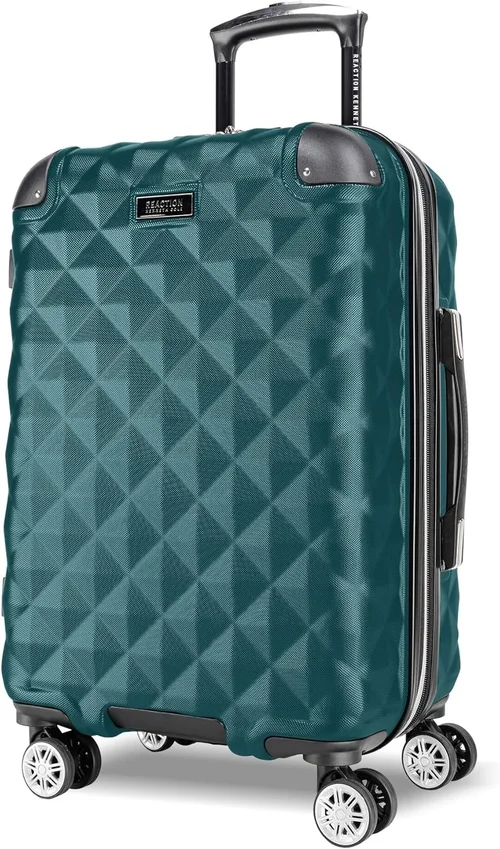
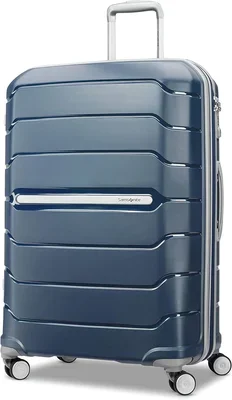
Shopping for luggage can feel overwhelming, especially when you’re staring at a wall of options that all look remarkably similar at first glance. If you’re in the market for expandable soft luggage sets on sale, you’ve come to the right place. This guide is designed to cut through the marketing noise and give you the practical knowledge you need to make a confident purchase. We’ll walk through everything from fabric denier counts to spinner wheel mechanics, so you know exactly what you’re paying for.
Over the next several sections, we’ll break down the critical factors that separate a travel companion that lasts a decade from one that falls apart before your return flight. You’ll learn how to spot a genuine deal versus a clearance trap, understand the different types of sets available, and get a clear picture of what you should expect to spend at every price tier. Whether you’re a weekend warrior, a frequent business traveler, or a family planning a once-in-a-lifetime vacation, this guide will help you match the right set to your unique travel style.
The market for softside luggage is incredibly competitive right now, which is great news for your wallet. Major brands like Samsonite, Travelpro, Delsey, and American Tourister are constantly iterating on designs, meaning even mid-range sets now feature premium touches like TSA-approved locks, precision glide wheels, and high-density ballistic nylon. However, sales events—whether it’s Black Friday, end-of-season clearances, or holiday promotions—can muddy the waters with older models or stripped-down “special buy” SKUs. By the end of this article, you’ll have a mental checklist that ensures the set you bring home is the perfect fit for your life on the go.

What to Look for When Buying Expandable Soft Luggage Sets
1. Fabric Denier and Material Construction
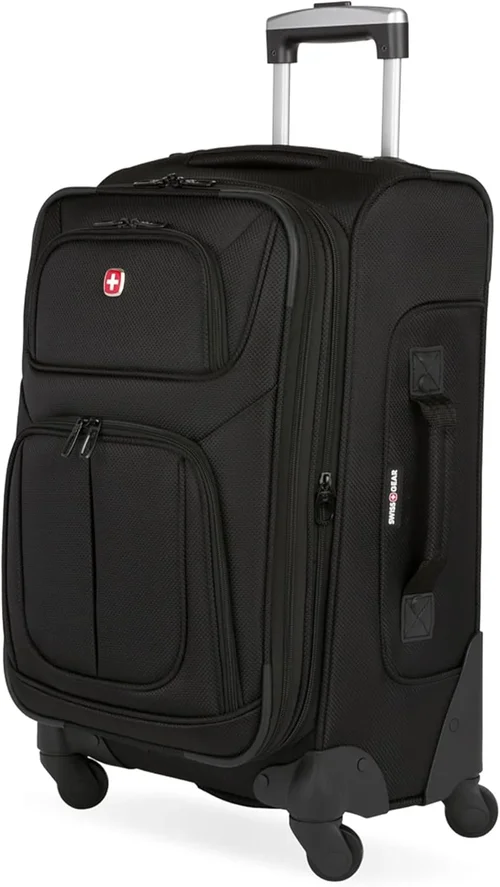
Let’s start with the shell. The “denier” (D) rating you see on tags—like 600D, 1200D, or 1680D—refers to the thickness and weight of the individual threads used to weave the fabric. Higher numbers generally mean a thicker, more abrasion-resistant fabric. For context, 600D polyester is standard for budget bags; it’s lightweight but can snag on rough baggage carousel edges. Step up to 1200D or 1680D ballistic nylon, and you’re looking at a material originally developed for military flak jackets. It resists tears, punctures, and water significantly better.
But denier isn’t the whole story. Look at the weave. A tight, high-thread-count weave on a 900D fabric can outperform a loose 1200D weave. Also, check the coating. Most quality soft luggage has a polyurethane (PU) or polyvinyl chloride (PVC) backing. This is the waterproof barrier. If you scratch the inside of the fabric with a fingernail and it leaves a white mark, the coating might be thin. You want a fabric that feels substantial, almost like a heavy canvas, not a flimsy windbreaker.
2. Expandability Mechanism and Real-World Capacity
The “expandable” feature is why you’re here. Most soft luggage expands via a zippered gusset—a folded panel of fabric that unfolds when unzipped, adding 1.5 to 2.5 inches of depth. This typically translates to 15–25% more packing volume. But here’s the catch: not all expansion is created equal. Cheaper sets use a single zipper track for the expansion gusset. If that zipper fails, you lose the feature entirely. Premium sets often use dual-coil zippers (like YKK RCW or Racquet coil) on the expansion panel, meaning if one coil breaks, the other still holds.
More importantly, test the expanded shape. Unzip the expansion fully and press down on the lid. Does the bag hold a rectangular box shape, or does it balloon into a round, unstable cylinder? A boxy expanded profile stacks better in car trunks and hotel closets and rolls straighter on spinner wheels. Also, check if the expansion zipper has a fabric flap covering it. That flap protects the zipper teeth from rain, dirt, and snagging on conveyor belts.
3. Wheel System: Spinners vs. Inlines and Bearing Quality
This is the single biggest factor in day-to-day usability. You have two main choices: four-wheel spinners (360-degree rotation) or two-wheel inline/roller bags. Spinners let you push the bag beside you down an airplane aisle or pull it effortlessly through a crowded terminal. They excel on smooth surfaces—airport terminals, hotel lobbies, cruise ship decks. Inline wheels are larger, recessed into the bag body, and handle rough terrain (cobblestones, gravel, cracked sidewalks) much better because they don’t swivel sideways and snap off.
Regardless of type, look at the wheel housing. Are the wheels riveted or screwed into a molded plastic corner guard? Rivets are permanent; screws can loosen but are replaceable. Spin the wheel with your finger. It should rotate freely for several seconds with a smooth, quiet hum. A gritty sound or immediate stop indicates cheap bushings instead of sealed ball bearings. Sealed ball bearings are the gold standard—they keep dust and grit out, ensuring smooth rolling for years. Also, check the wheel material: polyurethane (rubbery, quiet, grippy) is superior to hard plastic (loud, slips on wet tile, cracks in cold).
4. Handle System: Telescoping Mechanism and Grip Ergonomics
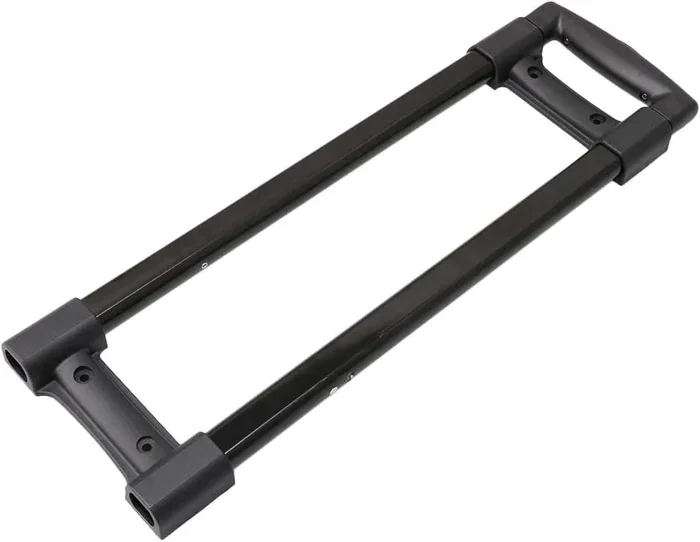
The handle is your connection to the bag. A bad handle turns a 30-minute walk to baggage claim into a wrist workout. Look for a multi-stage telescoping handle (usually 3 stops) that locks securely at each height. Cheap handles have two thin aluminum tubes that wobble side-to-side (play) and bind if you pull at an angle. Premium handles use thicker, often rectangular or oval tubes with internal glide strips (PTFE/Teflon) for smooth, rattle-free extension.
Grip the handle. Is it contoured rubber, foam, or hard plastic? Contoured rubber with finger grooves reduces fatigue. Does the top carry handle (the one you use to lift the bag into a trunk or overhead bin) have a padded wrap? On a heavy checked bag, a thin plastic handle digs into your fingers instantly. Also, check the side carry handle. It should be centered on the bag’s long side so the bag hangs level when you carry it sideways—crucial for navigating stairs or curbs.
5. Interior Organization and Lining Quality
Open the bag. The interior is where you live. Quality sets use a light-colored, high-denier nylon or polyester lining (easier to see contents) with bound seams (fabric tape covering raw edges) so threads don’t unravel and snag your clothes. Look for a full-length zippered divider panel (the “mid-panel”) separating the two halves. It should have a large mesh pocket or two for toiletries, cables, or dirty laundry.
Compression straps are non-negotiable. You need at least two, preferably three, adjustable straps with quick-release buckles (metal or heavy-duty plastic) in the main compartment. They cinch down your clothes to prevent shifting and wrinkles. In the lid compartment, look for a zippered pocket large enough for a tablet or documents, and maybe a wet pocket (PVC lined) for swimsuits or toiletries. Some premium sets now include a removable packing cube or suiter sleeve for dresses/suits—huge value if you travel for business.
6. Zippers: The Unsung Heroes of Durability
Zippers are the number one failure point on luggage. You want self-healing, coil zippers (teeth are a continuous coil, not individual plastic teeth). Coil zippers can withstand being pulled sideways; if a tooth misaligns, zipping and unzipping usually fixes it. Look for brand names: YKK (Japan) is the industry standard, SBS (China) is a solid mid-tier alternative. Avoid no-name zippers.
Pull tabs matter. Metal pulls are durable but can get hot in sun or cold in winter. Large, molded plastic or rubber-coated pulls are easier to grab with gloves or sweaty hands. Crucially, the main compartment should have lockable zipper pulls—loops that align so you can thread a TSA-approved lock shackle through both. If the pulls don’t meet, you can’t lock the bag securely. Some high-end sets now integrate a TSA combination lock into the body (like Travelpro’s MagnaTrac or Samsonite’s TSA lock), which is cleaner but not essential.
7. Frame Structure and Corner Protection
Soft luggage doesn’t have a rigid shell, but it needs a skeleton. Press on the sides and front panel. There should be a high-density foam or plastic frame sheet inside the fabric walls. This keeps the bag from collapsing when half-empty and protects contents from impacts. The corners are impact zones. Quality bags have molded thermoplastic (polypropylene or ABS) corner guards riveted or screwed on. These take the beating when the bag is tossed onto a conveyor or stacked in a cargo hold. If the corners are just folded fabric with a plastic cap glued on, they’ll peel off fast.
Check the bottom. A “kick plate” or “skid rails” (long plastic runners) along the bottom length protect the fabric from abrasion when you drag the bag (which you will, eventually). Four protective feet (bumpers) on the bottom corners are standard; eight (adding mid-bottom) is better for large checked bags.
8. Warranty, Brand Support, and “Sale” Reality Check
A warranty tells you how much the manufacturer trusts their product. “Limited Lifetime Warranty” sounds great, but read the fine print. Does it cover airline damage? (Most don’t). Does it cover zippers and wheels? (The most common failures). Does it require you to pay shipping both ways for repairs? Brands like Travelpro, Briggs & Riley, and Osprey have stellar reputations for honoring warranties with minimal hassle—sometimes even sending replacement parts free. Samsonite and Delsey are good but often require authorized repair centers.
Now, about that “on sale” tag. Retailers often create “derivative models” for big sales events (Black Friday, Prime Day). These look like the mainline model but have cheaper wheels, lower denier fabric, simpler handles, or no expansion. The model number usually differs slightly (e.g., “Travelpro Platinum Elite” vs “Travelpro Platinum Elite Lite” or a specific SKU like “TPL72200” vs “TPL72200-BF”). Always compare the spec sheet on the manufacturer’s website to the sale listing. If the specs are vague (“durable polyester” vs “1200D ballistic nylon”), assume it’s the cheaper derivative.
Different Types of Expandable Soft Luggage Sets

Common Buying Mistakes to Avoid
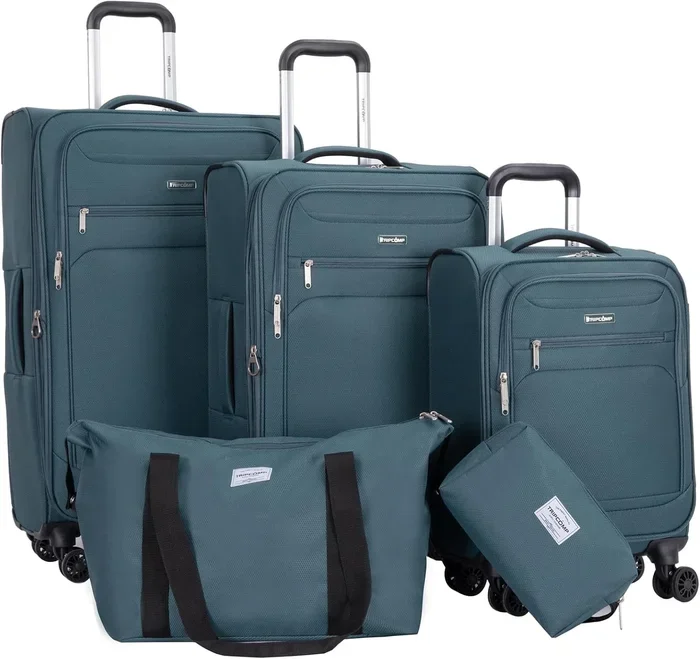
❌ Mistake: Buying Based Solely on the “Piece Count” Number
Why it’s bad: A “5-piece set” sounds like amazing value until you realize it includes a 21″ spinner, a 15″ boarding tote, a cosmetic pouch, a shoe bag, and a laundry sack. The actual luggage pieces might be just one carry-on and one medium checked bag. You’re paying for accessories you could buy for $20 total.
What to do instead: Count only the functional luggage pieces with wheels and handles. A 3-piece set with a 21″, 25″, and 29″ is infinitely more useful than a 5-piece set with one real suitcase. Look at the dimensional specs of each piece, not the marketing bullet points.
❌ Mistake: Ignoring the “Empty Weight” Spec
Why it’s bad: Airlines are strict. A 10 lb empty checked bag leaves you only 40 lbs for your stuff on a standard 50 lb limit. On budget airlines with 33-44 lb limits, a heavy bag eats half your allowance before you pack. Soft luggage is supposed to be lighter than hardside, but premium ballistic nylon and dense frames add weight.
What to do instead: Target empty weights: Carry-on spinner under 7 lbs (ideally 5-6 lbs). Medium checked (25-26″) under 9 lbs. Large checked (28-30″) under 11 lbs. If a set doesn’t list weights, that’s a red flag. Weigh it in your hand if buying in-store.
❌ Mistake: Choosing Spinners for Rough Terrain or Cobblestones
Why it’s bad: Spinner wheels are amazing on marble floors. They are terrible on European cobblestones, gravel paths, sandy beaches, or snowy sidewalks. The small 360-degree casters dig in, snap off, or fill with debris. You end up carrying a 25 lb bag by the top handle.
What to do instead: Match wheels to your destinations. Smooth airports/hotels/cruises → Spinners. Adventure travel, Europe backpacking, rough streets → Two-wheel inline/rollers with large (3″+ diameter), recessed wheels. Many travelers own one of each.
❌ Mistake: Assuming “Water Resistant” Means Waterproof
Why it’s bad: Soft luggage fabric is water-resistant (beads light rain). Zippers, seams, and the expansion gusset are NOT waterproof. A downpour or a leaky bottle in the overhead bin will soak your clothes. The PU coating degrades over time with UV exposure and flexing.
What to do instead: Always pack electronics, documents, and liquids in waterproof packing cubes or zip-lock bags inside the luggage. Consider a rain cover (some sets include one) if you travel in wet climates. Don’t trust the bag alone to keep things dry.
❌ Mistake: Overlooking the “Personal Item” Compatibility
Why it’s bad: You buy a beautiful carry-on spinner, only to realize your laptop backpack doesn’t slide over the handle (no “add-a-bag” sleeve or strap), or the spinner’s handle is too wide for your tote’s sleeve. You’re stuck carrying two bags separately through the airport.
What to do instead: Check for a rear “add-a-bag” strap (a horizontal fabric loop on the back panel) on the carry-on. Test your personal item (backpack, tote, laptop bag) on it before you travel. If buying a set, see if the included tote/boarding bag has a matching sleeve.
❌ Mistake: Falling for “Derivative Models” on Major Sale Days
Why it’s bad: As mentioned earlier, Black Friday/Cyber Monday often feature SKUs made specifically for that sale. They mimic the premium model’s look but cut corners: plastic wheel hubs instead of metal, single-coil zippers, no interior compression straps, thinner frame sheets. The model number is your only clue.
What to do instead: Google the exact model number + “specs” or “review” before buying. Compare it side-by-side with the mainline model on the brand’s site. If the sale price is 50% off MSRP but the mainline model is only ever 20% off, it’s likely a derivative. Sometimes the derivative is still a good buy—just know what you’re getting.
❌ Mistake: Not Checking Airline Size Restrictions for “Carry-On” Sizes
Why it’s bad: A bag labeled “Carry-On 22″” might measure 22″ x 14″ x 9″ without wheels and handles. With wheels and handle housing, it’s 23.5″ x 15″ x 10.5″. That’s too big for many international carriers (often 21.5″ x 15.5″ x 9″) and some US budget airlines (Frontier, Spirit personal item only). Gate-check fees are $60-$100.
What to do instead: Look for “external dimensions including wheels/handles” in the specs. For maximum compatibility, target 21″ x 13.5″ x 9″ (including wheels). If you fly internationally often, consider a 20″ or 21″ “International Carry-On” specific model.
Budget Guidelines: How Much Should You Spend?
Entry-Level ($100 – $200 for a 3-piece set)
At this tier, you’re getting 600D-900D polyester, single-coil zippers (often no-name), plastic wheel hubs with bushings (not bearings), thin aluminum handle tubes, and minimal interior organization (maybe one divider, one strap). Expansion is usually a single zipper track. The fabric coating is thin. These sets work fine for occasional leisure travel—once or twice a year, careful handling, domestic flights. They will show wear fast: fabric pilling, wheel wobble, handle stickiness. Warranty is usually 1-2 years limited or “lifetime” with so many exclusions it’s useless. Brands: American Tourister (low end), Rockland, Merax, generic store brands. Realistic lifespan: 2-4 years with moderate use.
Mid-Range / Sweet Spot ($250 – $450 for a 3-piece set)
This is where 90% of travelers should buy. You get 1200D-1680D ballistic nylon or high-tenacity polyester, YKK or SBS coil zippers (often dual-track on expansion), sealed ball-bearing spinner wheels (polyurethane), multi-stage handles with low-play glide strips, full interior organization (divider, multiple pockets, 3 compression straps), molded corner guards, kick plates, and a legitimate 5-10 year or limited lifetime warranty with decent service. Weight is optimized. Expansion adds 2+ inches cleanly. Brands: Travelpro (Maxlite, Crew Versapack), Samsonite (Freeform, Centric softside), Delsey (Chatelet Air, Titanium), Ricardo Beverly Hills, Briggs & Riley (Baseline entry). Realistic lifespan: 7-12+ years. This is the “buy once, cry once” zone.
Premium ($500 – $850 for a 3-piece set)
You’re paying for materials engineering and refinement. Fabrics: Tegris composite, Cordura, 1680D+ ballistic with TPU lamination, self-healing YKK RCW zippers throughout. Wheels: Precision MagnaTrac (Travelpro) or Hinomoto (Japanese) silent-run spinners with sealed cartridges—often replaceable individually. Handles: Aircraft-grade aluminum, ergonomic grips, magnetic retention (snaps into place). Interiors: Modular systems (removable packing cubes, suiter sleeves, wet pockets, RFID pockets). Warranty: True lifetime, “no questions asked” including airline damage (Briggs & Riley, Tumi, Victorinox). Brands: Briggs & Riley (Baseline, Sympatico), Tumi (Alpha, 19 Degree), Victorinox (Spectra, Airo), Travelpro (Platinum Elite). Realistic lifespan: 15-20+ years. Repairable indefinitely.
Luxury / Specialty ($900+ for a 3-piece set)
This is heritage craftsmanship, ultra-light tech, or bespoke design. Materials: Full-grain leather accents, carbon fiber frames, proprietary ultra-light nylons (e.g., Tumi’s FXT, Rimowa’s fabric lines). Features: Integrated tracking (Apple Find My / Tile), USB-C charging ports (power bank not included), bespoke interior layouts, monogramming. Warranty: Concierge-level service, loaner programs, global repair network. Brands: Tumi (high end), Rimowa (fabric), Globe-Trotter (softside), bespoke makers. Realistic lifespan: Decades. Often becomes a heirloom. Note: Rarely “on sale” in traditional sense; buy for the object, not the discount.
Expert Tips for Getting the Best Deal
- Time Your Purchase: The absolute best sales are January (post-holiday clearance) and July (mid-year clearance). Retailers clear shelf space for new models launching in Feb/March and Aug/Sept. Black Friday is good but crowded with derivatives. Memorial Day and Labor Day weekends are solid #2.
- Buy “Last Year’s Color”: Luggage colors cycle annually. The “Midnight Navy” 2023 model is identical to the “Onyx Black” 2024 model but 30-40% off. Check the manufacturer’s site for “Previous Season” or “Clearance” sections.
- Check Authorized Refurbished / Open Box: Briggs & Riley, Travelpro, and Tumi sell factory-refurbished sets with full warranties at 40-50% off. Amazon Warehouse, eBay Refurbished (authorized sellers), and brand outlet stores are gold mines. Inspect photos for cosmetic flaws only.
- Stack Discounts: Sign up for brand newsletters (10-15% off first order). Use a cashback portal (Rakuten, Capital One Shopping) for 4-10% back. Check if your credit card offers price protection or extended warranty. Amex, Chase, and Citi premium cards often double manufacturer warranty.
- Buy the Set, Not the Pieces: A 3-piece set is almost always 20-30% cheaper per bag than buying the same three models individually. Even if you only need two sizes now, the third nests inside for storage and gives you flexibility later. Resale value of a matched set is higher.
- Test In-Store, Buy Online (or Vice Versa): Go to a luggage store, Macy’s, or Dillard’s. Pull the handle. Spin the wheels. Pack a jacket inside. Feel the weight. Then buy the exact model number online for less. Or, buy online with free returns and test at home with your actual packing list.
- Read the 2- and 3-Star Reviews: 5-stars are often “looks great!” 1-stars are “arrived broken.” The 2-3 star reviews from verified buyers who’ve traveled 3-6 months reveal the real issues: “wheel bearing failed at month 4,” “expansion zipper separated,” “handle won’t lock at middle height.” These are gold.
- Consider a “Starter Set” Strategy: If budget is tight, buy a premium carry-on spinner ($150-250) and a budget checked bag ($60-90). The carry-on takes the abuse (overhead bins, under seats, daily rolling). The checked bag just rides conveyor belts. Upgrade the checked bag later.

Frequently Asked Questions
Q: What does “expandable” actually add in practical packing terms?
A: Typically 1.5 to 2.5 inches of depth. On a 25″ medium checked bag, that’s roughly 3-5 extra outfits, a pair of shoes, or a bulky sweater. On a carry-on, it might let you fit a laptop bag’s worth of extra items. But remember: expanded bags may not fit in overhead bins (too deep) and will exceed carry-on size limits. Use expansion for checked bags or return trips with souvenirs.
Q: Are spinner wheels really worth it over two wheels?
A: For 90% of travelers on standard trips (airports, hotels, smooth pavement), yes. The ability to push the bag beside you, maneuver tight airplane aisles, and spin 360° in a crowded security line saves enormous wrist and shoulder strain. If you do adventure travel, cobblestones, or lots of curb-hopping, two-wheel inline is more durable. Many frequent flyers own both.
Q: How do I clean soft luggage?
A: Spot clean with mild soap (Woolite, dish soap) and a soft brush or cloth. Do not machine wash—it destroys the frame, coating, and wheel bearings. For deep cleaning, use a fabric upholstery cleaner (like Folex or Resolve) and a damp microfiber towel. Let air dry completely, zippers open, away from direct sun. Lubricate zippers annually with silicone zipper lube or a candle wax rub.
Q: Can I repair a broken wheel or handle myself?
A: Often, yes. Many mid-range and premium brands sell replacement wheel kits (2 wheels + axles) and handle tubes on their websites or Amazon. You need a Phillips screwdriver, maybe a drill for rivets (or a rivet gun). Inline skate wheels (72mm-80mm) can sometimes replace spinner wheels if the axle diameter matches. Check YouTube for your specific model + “wheel replacement.”
Q: What’s the difference between ballistic nylon and Cordura?
A: Both are high-tenacity nylon fabrics. Ballistic nylon (originally DuPont, now generic) uses a 2×2 basket weave, extremely tear-resistant, heavy, stiff, with a slight sheen. Cordura (Invista brand) uses air-textured yarns, softer hand, more abrasion-resistant, lighter, often used in military gear. For luggage, ballistic is more structured; Cordura is more packable. Both are excellent. 1680D ballistic ≈ 1000D Cordura in durability.
Q: Do I need a TSA lock if the bag has lockable zippers?
A: Yes. “Lockable zippers” just means the pulls have holes that align. You still need the lock. TSA agents have master keys to open TSA-approved locks without cutting them. If you use a non-TSA lock, they will cut it off. Buy a 2-pack of TSA cable locks (flexible for weird zipper pulls) or a 3-dial combination lock. Keep the combination in your phone notes.
Q: How do I prevent my soft luggage from getting crushed in the cargo hold?
A: You can’t fully prevent it, but you can mitigate: 1) Pack firm—fill every gap with rolled clothes, packing cubes, shoes in the corners. A fully packed bag resists crushing. 2) Use the compression straps tightly. 3) Put fragile items in the exact center, surrounded by soft clothes. 4) Consider a semi-rigid frame sheet insert (sold separately) for the main compartment. 5) Avoid overpacking the expansion—overstuffed bags burst seams.
Q: Is a matching luggage set worth it, or should I mix and match?
A: Matching sets win for: nested storage (they fit inside each other perfectly), uniform weight distribution (if you buy same brand/line), aesthetics, and resale value. Mix-and-match wins for: optimizing each bag for its role (ultra-light carry-on + tank checked bag), budget allocation, and replacing only what breaks. If you find a great deal on a set, take it. If building piece by piece, stick to one brand for handle/feel consistency.
Q: What’s the deal with “smart luggage” features like USB ports and trackers?
A: USB ports: Just a pass-through cable to a power bank pocket inside. You supply the power bank. Convenient but not essential—many prefer a power bank in their personal item. Trackers (Apple Find My / Tile / Samsung SmartTag): Increasingly built-in (e.g., Travelpro, Samsonite, Tumi). Very valuable for checked bags. If not built-in, buy a $25 AirTag/Tile and hide it in a liner pocket. Built-in scales: Gimmicky. Use a $10 handheld luggage scale.
Q: How long should a good soft luggage set last?
A: Mid-range ($300+): 7-12 years with 4-6 trips/year. Premium ($500+): 15-20+ years, often limited by style fatigue or airline size changes, not wear. Entry-level (<$200): 2-4 years. The wheels, handle, and zippers are the life-limiting components. Fabric rarely fails first unless abraded severely. Buying repairable brands (Briggs & Riley, Travelpro, Victorinox) extends life indefinitely.
Our Final Recommendations
Best for Budget-Conscious Buyers: Travelpro Maxlite 5 3-Piece Set
Consistently the highest-rated “affordable quality” set. The 21″ carry-on is 5.4 lbs, the 25″ is 7.3 lbs, the 29″ is 8.8 lbs—exceptionally light. 600D-900D polyester with DuraGuard coating, YKK zippers, 360° spinner wheels (bushings, not bearings, but decent), telescoping handle with two stops. Expansion on all three. Limited Lifetime Warranty covers defects (not airline damage). Often on sale for $180-$220. Perfect for 2-3 trips/year. Why: Unbeatable weight-to-price ratio, trusted brand, genuine warranty.
Best Overall Value (Sweet Spot): Samsonite Freeform Hardside… wait, Softside? Samsonite Centric 2 / Freeform Softside 3-Piece
Actually, for softside at this price, Travelpro Crew Versapack 3-Piece or Delsey Paris Chatelet Air 2.0 3-Piece are the kings. Crew Versapack: 1200D ballistic nylon, MagnaTrac spinner wheels (precision bearings), Contour Grip handle, SpeedThru pocket (quick access), full interior organization, limited lifetime + Trusted Companion Promise (covers airline damage for 1 year). Delsey Chatelet Air 2.0: Stunning vintage look, 100% recycled polyester lining, SecuriTech zipper (3x stronger), silent double wheels, brake system on carry-on. Both ~$350-$420 on sale. Why: Premium features, materials, and warranty at mid-range price.
Best Premium Option: Briggs & Riley Baseline 3-Piece Set
The benchmark for “buy it for life.” 1680D ballistic nylon, CX expansion (expands 25% then compresses back flat—no bulge), aircraft-grade aluminum handle with magnetic lock, Hinomoto silent-run wheels (replaceable), suiter system in carry-on, RFID pocket, Self-Healing zippers. Simple as that Lifetime Warranty: Covers ALL damage, including airline, forever. No receipt needed, no registration. Price: $750-$950, rarely on sale (maybe 10% off). Why: The last luggage you’ll ever buy. Repairable forever. Resale value holds 60%+.
Best for Beginners / Infrequent Travelers: American Tourister Stratum XLT 3-Piece
Samsonite’s value brand. 1200D polyester (surprisingly tough), spinner wheels, push-button handle, expansion on all, 10-year limited warranty. Looks modern, comes in fun colors. Often $130-$160 for 3 pieces. Why: Low risk entry. If you travel once a year, this lasts a decade. If you catch the bug, you’ll know exactly what to upgrade to.
Best for Advanced Users / Frequent Flyers: Travelpro Platinum Elite 3-Piece
The choice of airline crews (literally—Travelpro invented the Rollaboard for pilots). 1680D ballistic nylon with DuraGuard, MagnaTrac wheels (best in class), PowerScope handle (lightest, strongest, magnetic), PrecisionGlide system, suiter, USB port + power bank pocket, wet pocket, RFID pocket. Limited Lifetime + Trusted Companion Promise (1 yr airline damage). $550-$700. Why: Engineered for daily abuse. Every detail refined for the pro. Fits in every regional jet overhead.
Conclusion: Making the Right Choice
We’ve covered a lot of ground—from the nitty-gritty of denier counts and zipper coils to the strategic timing of your purchase. The big takeaway? Match the luggage to your actual travel life, not your aspirational one. If you take two domestic trips a year, a $180 Travelpro Maxlite set will serve you beautifully for years. If you’re on a plane every other week, investing in a Briggs & Riley Baseline isn’t luxury—it’s a tool that pays for itself in saved time, stress, and replacement costs.
Remember the hierarchy of needs: Wheels and Handle > Fabric > Organization > Expansion > Aesthetics. A beautiful bag with sticky wheels is a nightmare. A plain bag that glides silently and stands up to baggage handlers is a joy. Use the “sale” as an opportunity to step up one tier in quality, not to buy more pieces than you need. Check the model number, read the 3-star reviews, weigh the empty bag, and test the handle extension.
You’re now equipped with more knowledge than 95% of shoppers wandering the luggage aisle. Trust your checklist. Prioritize the features that match your trips. And when you’re rolling that new set through the airport—handle smooth, wheels silent, everything packed perfectly—you’ll know you made the right call. Safe travels, and enjoy the journey.