Choosing the right expandable soft luggage can feel overwhelming because the market is flooded with options that promise extra space, lightweight construction, and durability all at once. This guide cuts through the noise by breaking down the most important features, explaining the technical terms in plain language, and showing you how to match a bag to your travel style and budget. By the end you will know exactly what to look for, which common pitfalls to avoid, and how to spot a genuine deal versus a marketing gimmick.
Whether you are a weekend road‑tripper, a frequent flyer who needs to squeeze an extra outfit into a carry‑on, or a family vacation planner who values flexibility, the principles below apply. We’ll start with the factors that matter most, compare the main categories of expandable soft luggage, walk through budget tiers, and finish with expert tips and a quick FAQ so you can shop with confidence.

What to Look for When Buying Expandable Soft Luggage
1. Capacity and Expansion Range
The primary reason to buy expandable luggage is the ability to increase packing volume when you need it. Look for a clear specification of the base capacity (usually measured in liters) and the expanded capacity. A typical carry‑on might start at 35 L and expand to 45 L, while a checked‑size bag could go from 70 L to 95 L. The expansion mechanism should be a sturdy zipper or a gusseted panel that adds depth without compromising the bag’s shape. Test the zipper by pulling it fully open and closed a few times; it should glide smoothly and stay aligned.
2. Fabric Denier and Material Quality
Denier (D) refers to the thickness of the individual fibers in the fabric. Higher denier numbers generally mean a tougher, more abrasion‑resistant shell. For everyday travel, 600D to 900D polyester or nylon offers a good balance of weight and durability. If you frequently check bags or travel to rough‑handling environments, consider 1200D ballistic nylon or a Cordura blend. Also check for a water‑repellent coating (often labeled DWR) which helps keep contents dry during light rain or spills.
3. Frame Structure and Reinforcement
Soft luggage relies on a lightweight frame—usually aluminum, fiberglass, or a high‑strength polymer—to keep its shape when expanded. Look for reinforced corners, a padded bottom panel, and internal compression straps that prevent the bag from bulging awkwardly. A well‑designed frame distributes weight evenly, reducing stress on zippers and seams. Some premium models add a “frame lock” that secures the expanded panel in place, preventing accidental collapse.
4. Wheel System and Maneuverability
Four‑wheel spinner systems are now standard because they allow 360° movement, making tight airport aisles and crowded train platforms easier to navigate. Wheel diameter matters: 50 mm to 60 mm wheels roll smoother over cracks and carpet. Sealed ball bearings reduce friction and extend wheel life. If you often pull a bag over cobblestones or gravel, consider larger, rubberized wheels or a hybrid two‑wheel/ four‑wheel design that can switch modes.
5. Handle Ergonomics and Telescoping Mechanism
A comfortable telescopic handle should lock at multiple heights (usually three to four positions) and retract smoothly without wobble. Grip material matters—soft‑touch rubber or contoured foam reduces hand fatigue on long walks. Test the handle by extending it fully, then shaking the bag gently; there should be no play or rattling. A secondary top and side carry handle with reinforced stitching is essential for lifting the bag into overhead bins or car trunks.
6. Organization Features
Internal organization separates clean clothes from dirty laundry, shoes, and electronics. Look for a full‑length zippered divider, mesh pockets, and a dedicated padded laptop or tablet sleeve if you travel with tech. External quick‑access pockets (often called “front pockets”) are handy for boarding passes, passports, or a water bottle. Some models include a removable toiletry kit or a compression cube system that integrates with the expansion panel.
7. Weight and Airline Compliance
Every ounce counts when you’re trying to stay under airline weight limits. A quality expandable carry‑on should weigh between 5.5 lb and 7 lb (2.5–3.2 kg) empty. Check the dimensions against the most restrictive carriers you fly (often 22 × 14 × 9 in for U.S. domestic). Remember that the expanded depth may exceed the limit, so you’ll need to keep the bag in its base configuration for overhead‑bin compliance.
8. Warranty, Brand Reputation, and Customer Support
A solid warranty (typically 5–10 years or lifetime) signals confidence in build quality. Read the fine print: does it cover zipper failure, wheel damage, or only manufacturing defects? Brands with a long track record—such as Travelpro, Samsonite, Osprey, and Briggs & Riley—tend to have better parts availability and responsive service centers. User reviews on retailer sites and travel forums can reveal real‑world durability trends that specs alone won’t show.
Different Types of Expandable Soft Luggage

The table above highlights the four most common categories. Carry‑on spinners are the most popular because they keep you mobile and avoid checked‑bag fees. Medium checked spinners hit the sweet spot for a week’s worth of clothing plus a few souvenirs. Large checked spinners are ideal when you need to pack bulky items like winter coats or ski gear. Hybrid duffel/spinner models add backpack straps or a shoulder strap, giving you the option to carry the bag like a duffel when wheels aren’t practical.
Common Buying Mistakes to Avoid
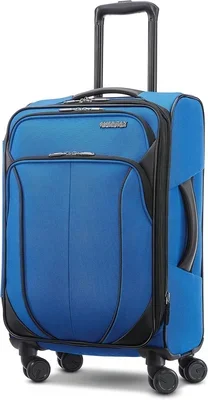
❌ Mistake: Ignoring the Expanded Dimensions
Why it’s bad: Many shoppers focus only on the base size and assume the bag will still fit in an overhead bin when expanded. In reality, the added depth often exceeds airline limits, forcing you to check the bag at the gate.
What to do instead: Measure the expanded depth and compare it to the strictest carrier you use. If you need the extra space only occasionally, choose a model with a modest expansion (2‑3 in) rather than a massive 6‑in gusset.
❌ Mistake: Choosing the Lightest Bag Without Checking Frame Strength
Why it’s bad: Ultra‑light fabrics (under 400D) can tear under the stress of a fully expanded bag, especially when wheels hit a curb.
What to do instead: Aim for at least 600D nylon or polyester with a reinforced frame. The slight weight penalty (0.5‑1 lb) pays off in longevity.
❌ Mistake: Overlooking Wheel Quality
Why it’s bad: Cheap plastic wheels crack after a few trips on rough pavement, leaving you dragging a heavy bag.
What to do instead: Look for sealed ball‑bearing wheels, preferably 55 mm or larger, and read reviews that mention wheel durability after 6‑12 months of use.
❌ Mistake: Skipping the Warranty Details
Why it’s bad: A “lifetime warranty” that only covers manufacturing defects won’t help when a zipper fails from normal wear.
What to do instead: Read the warranty PDF before buying. Prefer brands that cover zipper, wheel, and handle repairs for at least five years.
❌ Mistake: Buying Based Solely on Brand Name
Why it’s bad: Even reputable brands have entry‑level lines that cut corners on materials and hardware.
What to do instead: Compare the specific model’s specs (denier, wheel type, frame material) rather than assuming the brand guarantees quality across all price points.
❌ Mistake: Not Testing the Handle Lock Positions
Why it’s bad: A handle that only locks at two heights forces taller travelers to stoop or shorter travelers to stretch.
What to do instead: In‑store, extend the handle to each click and simulate pulling the bag. Online, look for videos that show the handle in action.
❌ Mistake: Forgetting About Internal Organization
Why it’s bad: A cavernous interior without dividers leads to a jumbled mess, making it hard to find items quickly.
What to do instead: Prioritize models with a full‑length divider, mesh pockets, and a dedicated laptop sleeve if you travel with electronics.
Budget Guidelines: How Much Should You Spend?
Entry‑Level ($80 – $130)
At this price you’ll find basic 600D polyester spinners with two‑wheel or four‑wheel systems, a single expansion zipper, and a one‑year limited warranty. Expect modest organization (one main compartment, maybe a front pocket) and wheels that are adequate for smooth airport floors but may struggle on cobblestones. Good for occasional leisure travelers who fly once or twice a year.
Mid‑Range ($130 – $220)
This is the sweet spot for most frequent flyers. You get 800D–900D ballistic nylon or high‑tenacity polyester, sealed ball‑bearing spinner wheels (55‑60 mm), a multi‑stage telescopic handle with three to four lock positions, and a 5‑year warranty. Organization improves with a full divider, mesh pockets, and often a padded laptop sleeve. Expansion typically adds 2‑3 in of depth.
Premium ($220 – $350)
Premium models feature 1200D Cordura or ballistic nylon, reinforced corner guards, a frame‑lock expansion system, and high‑grade Japanese YKK zippers. Wheels are often larger (65 mm) with precision bearings, and the handle uses a carbon‑fiber or aircraft‑grade aluminum tube for minimal flex. Warranties extend to 10 years or lifetime with hassle‑free claims. Extras include integrated TSA‑approved locks, removable compression cubes, and a dedicated shoe compartment.
Luxury ($350+)
Luxury expandable soft luggage adds hand‑stitched leather accents, custom‑fit interior liners, modular accessory systems (e.g., detachable garment bag), and sometimes smart features like built‑in USB charging ports or GPS tracking. Materials may include ultra‑light yet ultra‑strong Dyneema‑reinforced fabrics. Warranty is lifetime with “no‑questions‑asked” replacement. These bags target elite travelers who value prestige and bespoke service as much as function.
Expert Tips for Getting the Best Deal
- Shop off‑season: Major retailers discount luggage heavily in January (post‑holiday) and September (back‑to‑school). Black Friday and Cyber Monday also bring deep cuts, but inventory may be limited.
- Sign up for brand newsletters: Many manufacturers send a 10‑15 % welcome coupon plus early‑access sale alerts.
- Check outlet stores and authorized refurbishers: Brands like Travelpro and Samsonite sell factory‑refurbished units with full warranty at 30‑40 % off.
- Use price‑tracking tools: Browser extensions (e.g., Honey, CamelCamelCamel) notify you when a specific model drops below your target price.
- Leverage credit‑card travel perks: Some premium cards offer statement credits for luggage purchases or extended warranty coverage beyond the manufacturer’s policy.
- Read return policies carefully: A 30‑day “no‑questions” return window lets you test the bag on a real trip; avoid final‑sale clearance items unless you’re certain.
- Consider bundle deals: Buying a matching carry‑on and checked spinner together often saves 10‑15 % versus separate purchases.
- Test in‑store before buying online: Even if you plan to order online, visit a physical store to feel the handle, wheel roll, and expansion mechanism.

Frequently Asked Questions
Q: How much extra space does an expansion zipper really add?
A: Most expandable soft luggage adds 2‑4 inches of depth, translating to roughly 15‑25 % more volume. A 22‑in carry‑on that starts at 35 L may reach 44 L when fully expanded.
Q: Can I use an expanded carry‑on as a checked bag?
A: Yes, but you must ensure the expanded dimensions still meet the airline’s checked‑bag size limits (usually 62 linear inches). Over‑expanded bags may incur oversize fees.
Q: Are spinner wheels more fragile than two‑wheel inline wheels?
A: Modern sealed‑bearing spinners are quite durable, but they have more moving parts. If you frequently travel on rough terrain, a hybrid with larger inline wheels can be more robust.
Q: What does “ballistic nylon” mean?
A: Ballistic nylon is a high‑tenacity, tightly woven fabric originally developed for military flak jackets. It resists tears, abrasions, and punctures better than standard polyester.
Q: How do I clean expandable soft luggage?
A: Spot‑clean with a mild detergent and a damp cloth. For deeper cleaning, remove any detachable organizers, hand‑wash the interior liner, and air‑dry away from direct heat. Avoid machine washing unless the manufacturer explicitly approves it.
Q: Is a TSA‑approved lock necessary?
A: Not mandatory, but it allows security agents to open and relock your bag without cutting the lock. Many mid‑range and premium bags include a built‑in combination lock that meets TSA standards.
Q: Can I replace wheels or handles myself?
A: Many brands sell replacement wheel kits and handle assemblies. Check the manufacturer’s website for part numbers; some require a simple screwdriver, others need a rivet tool.
Q: What’s the difference between a “gusset” and a “zipper expansion”?
A: A gusset is a folded fabric panel that unfolds when the zipper is opened, adding depth uniformly. A zipper expansion simply separates two zipper tracks; the gusset design tends to keep the bag’s shape better.
Q: How do I know if a bag will fit in my car’s trunk?
A: Measure your trunk’s narrowest opening (often the wheel well) and compare it to the bag’s widest dimension (including wheels). Soft luggage compresses slightly, but allow at least 1‑2 inches of clearance.
Q: Are there expandable soft luggage options for kids?
A: Yes, several brands make 18‑in spinners with fun prints, lightweight frames, and a modest expansion zipper. They weigh under 4 lb and meet most airline carry‑on limits.
Our Final Recommendations
- Best for Budget‑Conscious Buyers: AmazonBasics 22‑Inch Hardside Spinner (soft‑shell version) – 600D polyester, four spinner wheels, 2‑inch expansion, 3‑year limited warranty. Priced around $95, it covers the basics for occasional trips.
- Best Overall Value: Travelpro Maxlite 5 25‑Inch Expandable Spinner – 840D nylon, 360° spinner wheels, 2‑inch expansion, 5‑year warranty, excellent internal organization. Typically $150‑$170.
- Best Premium Option: Briggs & Riley Baseline Domestic Carry‑On Expandable Spinner – 1680D ballistic nylon, CX expansion system (adds 34 % volume), lifetime “no‑questions” warranty, precision‑glide wheels. Around $330.
- Best for Beginners: Samsonite Freeform 21‑Inch Expandable Spinner – Lightweight 600D polyester, simple two‑stage expansion, intuitive handle, 10‑year limited warranty. Easy to use right out of the box, about $130.
- Best for Advanced Users: Osprey Transporter 65 L Wheeled Duffel – Hybrid duffel/spinner, 1200D recycled nylon, removable backpack straps, large U‑shaped opening, lifetime warranty. Ideal for adventure travel, roughly $280.
Conclusion: Making the Right Choice
Expanding soft luggage gives you the flexibility to pack light for a quick business trip and still have room for souvenirs on the way home. By focusing first on capacity, fabric denier, frame reinforcement, wheel quality, handle ergonomics, organization, weight, and warranty, you can filter the market to a handful of models that truly match your travel habits. Remember to measure the expanded dimensions against your most restrictive airline, test the handle and wheels whenever possible, and read the warranty fine print before committing.
Use the budget tiers as a roadmap: entry‑level for occasional trips, mid‑range for regular flyers, premium for heavy‑use travelers, and luxury only if you value bespoke features and service. Apply the expert tips—shop off‑season, track prices, and leverage credit‑card perks—to stretch your dollar further. With this knowledge in hand, you’re ready to select a bag that will accompany you confidently on every journey.
Happy travels, and may your next suitcase be the last one you ever need to replace.