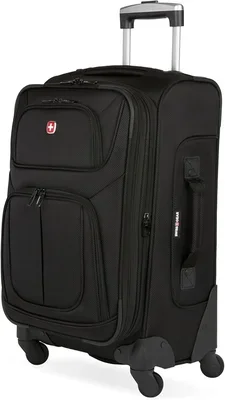
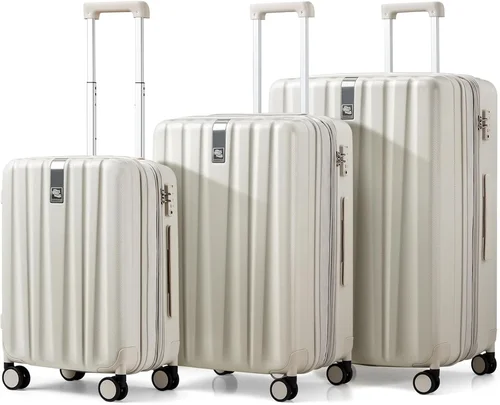
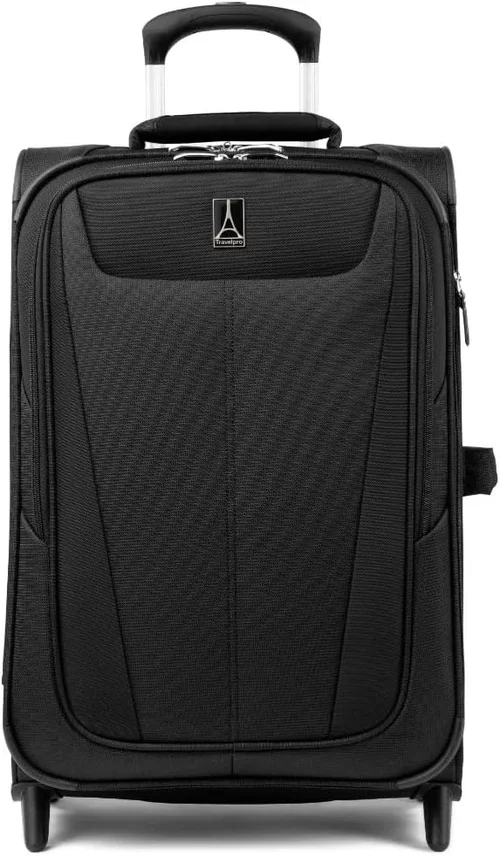
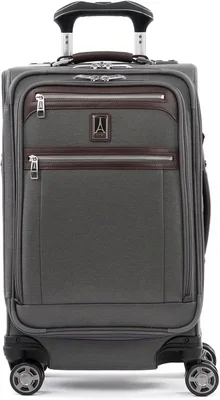
Shopping for luggage used to be simple. You picked a color, checked the zipper, and hoped for the best. But the game has changed. If you have been watching the latest travel segments on morning television, you have seen the buzz around smart expandable luggage. These are not just bags with a zipper that gives you two extra inches. We are talking about integrated technology, modular organization, and materials engineered to take a beating from baggage handlers while keeping your belongings pristine. This guide exists because the market is flooded with options that look identical on a screen but perform wildly differently in the real world. We are going to cut through the marketing noise, decode the technical specifications, and help you find the perfect travel companion that fits your style, your budget, and the overhead bin.
By the time you finish reading, you will understand the difference between polycarbonate and ballistic nylon, why spinner wheel configuration matters more than wheel count, and how to spot a “smart” feature that is genuinely useful versus one that is just a gimmick. We will walk through every critical factor in order of priority, compare the distinct categories of expandable luggage on the market today, and give you a clear budget roadmap so you never overpay or under-buy. Whether you are a weekend warrior hopping on regional jets or a global nomad living out of a suitcase for months, this guide will give you the confidence to click “buy” knowing you made the smart choice.

What to Look for When Buying Expandable Luggage
1. Expansion Mechanism and Capacity Gain
This is the defining feature of the category, yet it is the most misunderstood. Not all expansion is created equal. The traditional method uses a gusseted zipper that releases a folded panel of fabric, typically adding 1.5 to 2.5 inches of depth. On a 22-inch carry-on, that translates to roughly 15 to 25 percent more packing volume. However, premium brands like Away, Monos, and Travelpro have moved toward structural expansion. This means the frame itself expands, maintaining the bag’s rigid shape and protecting the contents from crushing. Cheaper bags often use a simple fabric bellows that bulges outward, making the bag misshapen, difficult to stack, and prone to getting stuck in tight overhead bins or sizers.
When evaluating this factor, look for the expansion depth specification listed in inches or centimeters. More importantly, check if the expanded dimensions still comply with major airline carry-on restrictions (typically 22 x 14 x 9 inches including wheels and handles). A bag that expands to 11 inches deep is useless as a carry-on if you actually use the expansion. Also, test the zipper action if possible. A high-quality expansion zipper (usually YKK or SBS) should glide smoothly without catching on the fabric liner. If it snags in the store, it will fail you on a trip.
2. Shell Material: Hard-Side vs. Soft-Side Durability
The material dictates weight, durability, water resistance, and aesthetics. This is usually the first decision point for buyers.
Polycarbonate (Hard-Side): This is the gold standard for modern hard-shell luggage. It is a thermoplastic polymer that is incredibly impact-resistant. Unlike older ABS plastic which cracks or shatters on a hard corner impact, polycarbonate flexes and absorbs the shock, returning to its original shape. It is lightweight, waterproof, and scratches can often be buffed out. Look for 100% polycarbonate or a polycarbonate composite (often blended with ABS for cost savings). Pure polycarbonate is more expensive but significantly more durable.
Aluminum (Hard-Side Premium): Brands like Rimowa and Away’s aluminum line use aircraft-grade alloys. These are virtually indestructible, develop a beautiful patina, and offer the ultimate security (they cannot be slashed open). The trade-off is weight (often 2-3 lbs heavier than polycarbonate) and price (typically $500+). They also dent rather than flex, which some travelers hate and others love as “character.”
Ballistic Nylon / Cordura (Soft-Side): Measured in denier (D) — a unit of fiber thickness. 1680D ballistic nylon is the industry benchmark for high-end soft luggage (think Tumi, Briggs & Riley). It resists abrasion, tearing, and water exceptionally well. Lower denier counts (600D-900D) are lighter but less durable. Soft-side bags excel at squeezing into tight overhead bins and outside pockets for quick access to passports or laptops. However, they absorb water if not treated with a DWR (Durable Water Repellent) coating, and they offer less crush protection for fragile items.
3. Wheel System: The Silent Workhorses
Wheels are the single point of contact between you and the ground. A failure here ruins a trip. Ignore the marketing term “360-degree spinner” — almost all modern wheels claim this. Instead, look at the wheel architecture.
Double Spinner Wheels (4 wheels, 2 per corner): This is the superior configuration. Each corner housing contains two wheels side-by-side. This distributes the load across a wider surface area, making the bag roll effortlessly over cobblestones, carpet, and expansion joints in airport terminals. It also prevents the “wobble” common on single-wheel spinners when the bag is heavily packed. Brands like Travelpro, Briggs & Riley, and Monos utilize this design.
Single Spinner Wheels (4 wheels, 1 per corner): Common on budget and mid-range bags. They work fine on smooth airport floors but struggle on rough terrain. The axle bears the full weight of the packed bag on a single point, leading to faster bearing wear and potential snapping.
Inline Skate Wheels (2 wheels): Found on traditional “rollaboard” soft-side bags. They are recessed into the body, offering maximum interior volume and durability on rough streets (think European cobblestones). You must tilt the bag to pull it, which puts strain on your wrist and shoulder over long distances.
Wheel Material: Look for polyurethane (PU) tires over hard plastic. PU absorbs vibration, rolls silently, and grips wet floors. Hard plastic wheels are loud, slippery on marble, and transmit every bump to your arm.
4. Handle System: Telescoping Ergonomics
The handle is your steering wheel. A poorly designed handle causes wrist fatigue and back pain. There are three critical specs to check:
- Stage Count: Most quality bags offer 3-stage (or 4-stage) telescoping handles. This allows precise height adjustment for users from 5’0″ to 6’5″. Two-stage handles force taller people to stoop or shorter people to reach up awkwardly.
- Tube Geometry: Square or rectangular tubes resist twisting better than round tubes. When you yank a heavy bag over a curb, round tubes tend to rotate, misaligning the lock mechanism. Square tubes stay true.
- Grip Material: Contoured rubber or gel grips with finger grooves reduce pressure points. Avoid bare plastic or thin foam sleeves that compress flat after a few trips.
Also, check the locking mechanism. It should engage with a satisfying click at each stage and release easily with a thumb press. If you have to shake the handle to collapse it, the tolerance is too tight or the springs are weak.
5. Interior Organization and Compression
Expandable luggage solves the volume problem; interior organization solves the chaos problem. The best interiors feature a clamshell opening (50/50 split) with a zippered divider panel on one side and compression straps on the other.
Look for these specific features:
- Compression Straps: Elasticated X-straps or flat straps with cam buckles. These compress clothing flat, preventing shifting and maximizing the expansion space. Elastic straps are faster; cam buckles provide tighter compression for bulky items like sweaters.
- Zippered Divider Panel: Ideally, this panel has a large mesh pocket (for laundry or shoes) and a full-length zippered pocket (for documents, cables, toiletries).
- Laundry/Shoe Compartments: Dedicated, ventilated pockets keep dirty clothes separate from clean ones. Some premium bags (like the Monos Carry-On Pro) include a removable, washable shoe bag and laundry bag that attach via Velcro loops.
- Laptop/Tablet Sleeve: On soft-side bags, look for a padded, suspended sleeve accessible from the exterior front pocket. On hard-side bags, this is rare internally; you typically need a separate laptop sleeve or a front-pocket model (like the Away Carry-On with Pocket).
6. Smart Features: USB Ports, Tracking, and Power Banks
“Smart luggage” was a minefield a few years ago due to airline bans on non-removable lithium-ion batteries. Today, the market has standardized: any battery must be removable. Do not buy a bag with a built-in, non-removable battery — you will be forced to check it at the gate.
Useful smart features include:
- External USB-A / USB-C Ports: These are pass-through ports. You place your own power bank inside the bag, plug it into the internal cable, and charge your phone via the external port without opening the bag. Ensure the internal cable is long enough to reach your preferred power bank size.
- Integrated Tracking (AirTag/Tag Tile Slot): Many new bags (Monos, Away, Samsara) include a dedicated, hidden sleeve for an Apple AirTag or Tile tracker. This is infinitely better than a built-in GPS tracker which requires a subscription and has poor battery life. AirTags leverage the billion-device Find My network for precise global tracking.
- Digital Locks: Some premium bags feature TSA-approved combination locks integrated into the frame (no dangling padlock to snag). They are convenient but not necessarily more secure than a $10 padlock.
- Built-in Scale: A handle with a weight sensor. Handy for avoiding overweight fees, but adds cost and a potential point of failure. A $10 handheld luggage scale is more reliable.
7. Warranty and Repair Ecosystem
Luggage takes abuse. A warranty is not just a piece of paper; it is a statement of build quality. The industry standard for premium brands is a Limited Lifetime Warranty. Read the fine print. “Lifetime” usually means the lifetime of the product, not your lifetime. It covers manufacturing defects (broken zippers, wheel housing cracks, handle mechanism failure) but not cosmetic damage (scratches, dents, stains) or airline damage.
The real differentiator is the repair process.
- Briggs & Riley: Famous for their “Simple as That” lifetime guarantee. They repair functional damage for free, no receipt required, no questions asked. They even cover airline damage (rare in the industry).
- Travelpro: Offers a “Lifetime Warranty” plus a “Cost-Free Repair” for the first year (covers airline damage). Extensive authorized repair center network.
- Away / Monos: Limited lifetime warranty. Process is usually mail-in to a central hub. Turnaround can be 2-4 weeks.
- Tumi: 5-year warranty (lifetime on some newer lines). Excellent repair service but often requires proof of purchase.
Before buying, Google “[Brand] luggage repair center near me.” If you have to ship a 10lb suitcase across the country for a $15 wheel replacement, the warranty has limited practical value.
8. Weight vs. Capacity Efficiency
Airlines are increasingly strict on weight limits (often 15-22 lbs for international carry-on, 50 lbs for checked). Every ounce of bag weight is an ounce less you can pack. The metric to watch is Volume-to-Weight Ratio.
Calculate it: Internal Liters / Weight in lbs. A good carry-on should be above 3.5 L/lb. For example, a 40L carry-on weighing 7.0 lbs = 5.7 ratio (excellent). A 38L carry-on weighing 9.5 lbs = 4.0 ratio (average). A heavy aluminum bag might be 35L at 11 lbs = 3.2 ratio (poor efficiency).
For checked luggage, the ratio matters less than absolute durability, but a 12 lb empty checked bag leaves you only 38 lbs for contents on a 50 lb limit. That disappears fast with shoes and electronics.
Different Types of Expandable Luggage

Common Buying Mistakes to Avoid
❌ Mistake: Buying Based on Brand Name Alone
Why it’s bad: Legacy brands often coast on reputation while cutting costs on components (wheels, handles, zippers) in their entry-level lines. A $200 Samsonite may use cheaper wheels than a $200 Monos or Away because you are paying for the logo and retail markup.
What to do instead: Compare specifications side-by-side. Look at wheel bearing type, handle tube material, zipper brand (YKK vs generic), and shell composition. Read 2-star and 3-star reviews on retailer sites — they reveal real-world durability issues that 5-star “first impression” reviews miss.
❌ Mistake: Ignoring Airline Size Restrictions (Including Wheels)
Why it’s bad: Manufacturers often list “interior dimensions” or “body dimensions” excluding wheels and handles. A bag listed as 21.5 inches tall might be 23 inches with wheels. On a full flight, gate agents use sizers that include wheels. If it doesn’t fit, you gate-check it — risking damage and losing access to your essentials.
What to do instead: Always verify the overall exterior dimensions (H x W x D including wheels/handles) against your most flown airline’s specific limits. For US domestic, 22 x 14 x 9 inches is the standard. For international (especially European/Asian carriers), limits can be as strict as 21.5 x 15.5 x 9 inches and 15-17 lbs weight.
❌ Mistake: Choosing “Maximum Expansion” Over “Usable Expansion”
Why it’s bad: Some bags advertise 3+ inches of expansion. But fully expanded, the bag becomes a rounded, unstable balloon that won’t stand up, won’t roll straight, and exceeds carry-on limits. You end up never using the feature.
What to do instead: Prioritize structural expansion (frame expands) over fabric bellows. Look for 1.5 to 2 inches of expansion that maintains a rectangular profile. This gives you real packing flexibility for souvenirs or an extra outfit without compromising maneuverability or compliance.
❌ Mistake: Overlooking the “Personal Item” Pairing
Why it’s bad: You buy a perfect carry-on, but your backpack doesn’t stack on the handle (no trolley sleeve) or is too bulky to fit under the seat with your legs. You end up carrying the backpack on your shoulder while pulling the bag — defeating the ergonomic benefit.
What to do instead: Buy as a system. Many brands (Travelpro, Briggs & Riley, Peak Design, Monos) design backpacks and totes with reinforced trolley sleeves that slide securely over the luggage handle. Test the stack in-store or check return policies so you can trial the combo at home.
❌ Mistake: Falling for Non-Removable “Smart” Batteries
Why it’s bad: As mentioned, FAA and IATA regulations prohibit checking luggage with installed lithium-ion batteries. If you are forced to gate-check a bag with a built-in battery, you are technically in violation. Airlines can refuse the bag.
What to do instead: Only buy smart luggage with easily removable batteries (slide-out pocket, no tools required). Better yet, buy a “dumb” bag and add a high-quality power bank and AirTag yourself. It’s cheaper, upgradeable, and airline-compliant forever.
❌ Mistake: Skipping the “Shake Test” for Wheel Stability
Why it’s bad: Online photos hide wheel wobble. A bag with loose wheel housings will veer left or right when pulled fast, requiring constant correction. This causes shoulder torque and fatigue.
What to do instead: If buying in-store, load the bag with 15-20 lbs, extend the handle, and walk briskly. Make sharp turns. Does it track true? Does the handle wobble side-to-side? If buying online, search YouTube for “[Model Name] wheel test” or “shake test” — reviewers often demonstrate this.
❌ Mistake: Assuming Hard-Shell Is Always More Durable
Why it’s bad: A cheap ABS hard-shell will crack on the first hard impact. A high-end 1680D ballistic nylon soft-shell will survive decades. Material quality trumps material category.
What to do instead: Judge by specific material spec and warranty, not category. A $150 polycarbonate bag from a direct-to-consumer brand often outperforms a $300 ABS bag from a department store brand.
Budget Guidelines: How Much Should You Spend?
Entry-Level ($80 – $150): The “Occasional Traveler” Tier
What to expect: Primarily ABS or ABS/Polycarbonate blend hard-shells, or 600D-900D polyester soft-sides. Single spinner wheels (plastic hubs), 2-stage round-tube handles, basic YKK or generic zippers. Expansion is usually fabric bellows. Warranty is typically 2-5 years limited.
Best for: Travelers who fly 1-2 times a year, pack light, stick to smooth airport floors, and want a decent bag without investment. Brands: Amazon Basics, Kenneth Cole Reaction, Rockland, Merax.
Watch out for: Wheels that seize after one rough trip, handles that jam, zippers that split under tension. These bags are essentially disposable — plan to replace every 2-3 years.
Mid-Range ($150 – $300): The “Sweet Spot” for Most Buyers
What to expect: 100% Polycarbonate shells (Makrolon or Bayer sourced) or 1200D-1680D Ballistic Nylon. Double spinner wheels with polyurethane tires. 3-stage square-tube handles. Structural expansion on hard-sides. YKK RCW (reverse coil) zippers. Limited lifetime warranties with decent repair networks.
Best for: Frequent flyers (4-10 trips/year), business travelers, anyone who values reliability. This tier includes the direct-to-consumer darlings: Away, Monos, July, Level8 and heritage workhorses: Travelpro Platinum Elite, Samsonite Freeform/Winfield 3 DLX, Delsey Chatelet Air 2.0.
Why this is the sweet spot: You get 90% of the performance of $500+ bags for 40-60% of the price. The materials, wheels, and handles are genuinely durable. The design is thoughtful (laundry bags, compression pads, AirTag slots).
Premium ($300 – $550): The “Buy It For Life” Tier
What to expect: Top-tier materials: German Makrolon polycarbonate, 1680D Ballistic Nylon with Teflon coating, aircraft-grade aluminum (entry). Precision-engineered double wheels (often Hinomoto Lisof silent-run). 4-stage handles with ergonomic grips. Modular interiors (removable dividers, packing cubes included). Integrated TSA locks. Comprehensive lifetime warranties covering airline damage (Briggs & Riley).
Best for: Road warriors (15+ trips/year), international travelers with strict weight limits, buyers who want zero compromise. Brands: Briggs & Riley (Baseline, Sympatico), Tumi (19 Degree, Alpha 3), Rimowa (Essential Lite – polycarbonate), Victorinox (Spectra 3.0).
Value proposition: You pay for repair ecosystems, resale value, and peace of mind. A Briggs & Riley Baseline can last 20+ years with free repairs. Amortized over two decades, it’s cheaper than replacing a $150 bag five times.
Luxury ($550+): The “Status & Craft” Tier
What to expect: Aluminum (Rimowa Original, Away Aluminum), Titanium handles, hand-stitched leather accents, bespoke customization, white-glove repair service (loaner bags during repair). These are heirloom pieces.
Best for: Buyers for whom luggage is a lifestyle statement, collectors, or those who want the absolute pinnacle of engineering. The performance gain over Premium is marginal; you pay for materials, heritage, and service.
Expert Tips for Getting the Best Deal
- Time Your Purchase: The best sales are January (post-holiday clearance), May (Memorial Day / pre-summer), July (Amazon Prime Day / competitor sales), and November (Black Friday / Cyber Monday). Avoid buying in June or December at full price.
- Check “Open Box” and “Refurbished”: Away, Monos, and Briggs & Riley sell certified refurbished luggage with full warranties at 20-30% off. These are often returns from 30-day trials — essentially new. Check their websites directly.
- Use Price Tracking Tools: Install browser extensions like Honey, CamelCamelCamel (Amazon), or Keepa. Set alerts for your target models. Luggage prices fluctuate weekly.
- Leverage Credit Card Benefits: Many premium cards (Chase Sapphire Reserve, Amex Platinum, Capital One Venture X) offer purchase protection (covers damage/theft for 90-120 days) and extended warranty (doubles manufacturer warranty up to 1 year). This effectively upgrades an Entry-Level warranty to Mid-Range coverage for free.
- Buy the “System” on Sale: Brands often bundle carry-on + checked + backpack for 15-20% off individual prices. If you need multiple pieces, wait for a bundle deal.
- Test the Return Policy: Buy from retailers with generous return windows (Nordstrom, REI, Zappos, direct brand sites with 30-100 day trials). Pack the bag fully at home. Roll it around your house. Put it in your car trunk. If it doesn’t spark joy, return it.
- Register Your Warranty Immediately: Take a photo of the receipt and the serial number tag (usually inside the lining or on the frame). Register on the brand’s website the day it arrives. It saves massive headaches if you need a repair in Year 3.
- Consider “Last Year’s Color”: Luggage brands refresh colors seasonally. The “Discontinued Color” section on brand sites often has the exact same model for $50-$100 less. Performance is identical; only the hue changes.

Frequently Asked Questions
Q: What does “expandable” actually mean in terms of packing space?
A: It typically adds 1.5 to 2.5 inches of depth to the main compartment. On a standard 22-inch carry-on (approx. 35-40 liters), this yields an extra 5-8 liters — enough for 2-3 extra outfits, a pair of shoes, or souvenirs. However, using full expansion usually makes the bag non-compliant for carry-on sizers. Use expansion for the return trip (when you have dirty laundry and souvenirs) or when checking the bag.
Q: Are spinner wheels (4 wheels) better than inline wheels (2 wheels)?
A: For 90% of travelers in airports, yes. Spinners allow upright pushing beside you (saving wrist strain), 360-degree pivoting in tight aisles, and easy maneuvering in security lines. Inline wheels are better only if you frequently traverse cobblestones, gravel, snow, or curbs — the larger diameter recessed wheels handle rough terrain better. If you travel mostly urban/airport, choose double spinners.
Q: Can I use the USB port on the plane to charge my phone?
A: The USB port on the bag is just a pass-through. It does not generate power. You must carry a charged power bank inside the bag, connected to the internal cable. You can then plug your phone into the external port and keep the bag zipped. Most airlines allow power banks up to 100Wh (approx. 27,000mAh) in carry-on only — never in checked luggage.
Q: Is polycarbonate better than aluminum?
A: “Better” depends on priorities. Polycarbonate is lighter (5-7 lbs vs 9-12 lbs), flexes on impact (no dents), costs 1/3 to 1/2 as much, and is waterproof. Aluminum is stronger (cannot be punctured/slashed), has a premium feel, develops character (dents/scratches), and lasts decades. If you check bags often or carry fragile gear, aluminum wins. For carry-on only, polycarbonate is the practical winner.
Q: How do I clean my expandable luggage?
A>Hard-side: Wipe with a damp microfiber cloth and mild dish soap. For scuffs, use a magic eraser (melamine foam) gently. Avoid harsh solvents (acetone, alcohol) on painted finishes. Soft-side: Vacuum interior. Spot-clean exterior with a soft brush, lukewarm water, and mild detergent (like Nikwax Tech Wash or gentle woolite). Air dry completely before storing. Never machine wash or dry clean.
Q: What is the difference between a TSA lock and a regular lock?
A: TSA locks have a special keyway that allows Transportation Security Administration agents to open and relock your bag using a master key without cutting the lock. Regular locks will be cut off if TSA needs to inspect your bag. All locks sold as “TSA Approved” (red diamond logo) work this way. Note: TSA locks are low-security — they deter casual theft, not determined thieves.
Q: Should I buy a luggage set (3-piece) or individual pieces?
A: Buy individual pieces unless you genuinely need all sizes simultaneously. Sets force you into the same brand/line for every size, but your needs differ: a carry-on needs premium wheels/handle; a large checked bag needs maximum durability/volume and matters less on weight. Mix and match: Premium carry-on (Monos/Away) + Budget checked (Samsonite/Level8) + Quality backpack (Peak Design/Osprey).
Q: How important is the “denier” rating on soft luggage?
A: Denier (D) measures fiber thickness. Higher = thicker, stronger fibers. 1680D Ballistic Nylon is the gold standard for abrasion/tear resistance. 1200D is very good. 600D-900D Polyester is budget-tier — less durable, but lighter. However, weave type matters more than denier alone. Ballistic weave (2×2 basket weave) at 1050D beats plain weave 1680D. Look for “Ballistic Nylon” or “Cordura” branding + denier.
Q: Can I repair a cracked polycarbonate shell myself?
A: Cosmetic cracks: No reliable DIY fix. Structural cracks (through the shell): You can drill small holes at each end of the crack to stop propagation, then apply fiberglass repair tape/epoxy inside and out. It will hold but looks ugly and voids warranty. If the bag has a lifetime warranty (Briggs & Riley, Travelpro, Away, Monos), file a claim instead. They replace the shell or the whole bag.
Q: What is the best way to pack an expandable suitcase to prevent wrinkles?
A: Use the bundle wrapping or compression cube method. Place a flat core object (packing cube, toiletry bag) in the center. Wrap larger items (jackets, dresses) around it in layers, alternating orientation. Secure with compression straps. This creates tension that minimizes creases. Rolling works for knits/t-shirts; folding is better for wovens. Use the expansion zipper only for the final layer (souvenirs, dirty laundry) to keep the core compressed.
Our Final Recommendations
Best for Budget-Conscious Buyers: Level8 Grace Carry-On (~$160)
This direct-to-consumer brand punches far above its weight. You get a genuine 100% German Bayer polycarbonate shell, Hinomoto double spinner wheels (silent, smooth), a 3-stage aluminum handle, structural expansion (2 inches), and a TSA lock. The interior includes a compression pad and a removable laundry bag. It rivals $250+ bags in every measurable spec. The warranty is 3 years (not lifetime), but at this price, replacing it in 5 years still beats buying a $300 bag once.
Best Overall Value: Monos Carry-On Pro (~$295)
The current benchmark for the modern traveler. Aerospace-grade polycarbonate, whisper-quiet Hinomoto Lisof wheels, vegan leather handle accents, and a brilliantly organized interior with a built-in, removable compression pad, shoe bag, and laptop sleeve (fits 16″ MacBook). It has a dedicated AirTag slot and a lifetime warranty with a streamlined claims process. The “Pro” model adds the front laptop pocket — essential for TSA PreCheck lines. It hits the perfect balance of weight (7.1 lbs), capacity (40L + expansion), and durability.
Best Premium Option: Briggs & Riley Baseline Domestic Carry-On Expandable (~$479)
If you want the last carry-on you ever buy, this is it. 1680D Ballistic Nylon with a lifetime warranty that famously covers airline damage — no receipt, no questions. The CX expansion system adds 34% volume while keeping the bag rectangular and stable. The Outsider handle (rails on the outside) gives a perfectly flat, uninterrupted interior packing floor. Wheels are oversized, sealed-ball-bearing, and user-replaceable with a screwdriver. It is heavier (9.2 lbs) but carries like a dream. For road warriors, the repair ecosystem alone justifies the premium.
Best for Beginners: Away The Carry-On (~$275)
The bag that launched the DTC luggage revolution. It remains a fantastic entry point. The polycarbonate shell is tough, the 360-degree spinners are smooth, the interior compression system is intuitive (laundry bag + compression pad), and the ejectable battery (optional $30 add-on) is TSA-compliant. The 100-day trial and lifetime warranty (limited) make it risk-free. The design is foolproof — you cannot pack it wrong. Colors are timeless. It teaches you what you value in luggage without punishing mistakes.
Best for Advanced Users / Digital Nomads: Peak Design Travel Carry-On 35L (~$330)
This is a soft-side hybrid built for photographers and tech-heavy travelers. 400D nylon canvas (weatherproof, self-healing), but the magic is the internal modularity: it accepts Peak Design’s packing cubes and camera cubes which lock into place via magnetic anchors. The clamshell opens fully flat. External quick-access pockets fit a 16″ laptop and tablet simultaneously. It expands from 35L to 45L. It doesn’t look like luggage — it looks like gear. For the traveler who lives out of their bag, the organization system is unmatched.
Conclusion: Making the Right Choice
You have now navigated the full landscape of expandable luggage — from the molecular structure of polycarbonate to the geometry of telescoping handles, from the economics of warranty ecosystems to the psychology of packing. The “best” luggage does not exist in a vacuum; it exists at the intersection of your travel patterns, your physical needs, and your budget.
Remember the hierarchy of needs: Fit (airline compliance) > Wheels/Handle (ergonomics) > Shell Material (durability) > Organization (sanity) > Smart Features (convenience) > Aesthetics (joy). Do not sacrifice the top three for the bottom three. A beautiful bag that wobbles, jams, or cracks is a burden, not a companion.
If you take one thing from this guide, let it be this: Buy the lightest, most durable bag that fits your airline’s strictest limits, with double spinner wheels and a 3-stage handle, from a brand that answers the phone when something breaks. Everything else — USB ports, AirTag slots, color options — is gravy.
Your next trip is waiting. You deserve luggage that disappears into the background, letting you focus on the journey, not the gear. Use this guide as your checklist, trust your hands-on test (or generous return policy), and step onto that jetway with confidence. The world is big. Your bag should be ready.