Shopping for a new carry-on can feel overwhelming. You stand in the luggage aisle or scroll through endless product pages, bombarded with terms like “polypropylene,” “spinner wheels,” “expandable zipper,” and “TSA-approved locks.” It is enough to make anyone’s head spin before they even book a flight. I have been there, dragging a heavy, broken-zippered bag through a crowded terminal, wishing I had done a little more homework first. That is exactly why I put this guide together.
In the next few minutes, we are going to cut through the marketing fluff. We will talk about what actually matters when you are buying an expandable polypropylene spinner carry-on. You will learn how to spot the difference between a bag that survives one trip and one that lasts a decade. We will cover the critical factors—shell durability, wheel quality, handle ergonomics, and that all-important expansion zipper—so you can match the right bag to your travel style and budget.
The market for these suitcases has exploded recently. Polypropylene has become the gold standard for hard-shell luggage because it hits a sweet spot: it is lighter than polycarbonate but tougher than ABS plastic. Almost every major brand now offers a spinner line in this material. Whether you are a weekend warrior hopping on budget airlines or a road warrior racking up 100,000 miles a year, there is a perfect bag out there for you. Let’s find it.

What to Look for When Buying Expandable Polypropylene Spinner Carry-on Luggage
1. Shell Material Quality and Construction
The shell is the first line of defense for your belongings. Not all polypropylene is created equal. You will hear terms like “100% virgin polypropylene” or “recycled polypropylene blend.” Virgin polypropylene offers better impact resistance and flexibility. It can flex under pressure—like when an overpacked overhead bin squeezes your bag—and snap back to shape without cracking. Blends or lower-grade materials tend to be more brittle, especially in cold cargo holds.
Look for injection-molded construction rather than vacuum-formed. Injection molding creates a more uniform wall thickness, eliminating weak spots at the corners and edges. Run your hand along the seams. They should feel smooth and fused, not glued or riveted roughly. A high-quality shell often has a subtle texture or diamond pattern. This is not just for looks; it hides scratches and scuffs remarkably well, keeping your bag looking new after dozens of trips.
2. Wheel System: The Heart of the Spinner Experience
This is where cheap luggage fails first. You want four double-spinner wheels (eight wheels total) for the smoothest ride. Single wheels catch on cracks in the pavement; double wheels glide over them. The wheel housing matters just as much as the wheel itself. Recessed wheels are a must. They sit inside the shell profile, protected from baggage handlers who toss bags onto conveyors. Protruding wheels snap off easily.
Check the wheel material. High-grade polyurethane (PU) with precision ball bearings is the standard for quiet, smooth rolling. Cheap plastic wheels with bushings instead of bearings will grind, wobble, and eventually seize up. Give the bag a push in the store. It should track straight without veering. Spin each wheel with your finger. They should spin freely for several seconds with a faint, high-pitched hum—not a gritty rattle.
3. Telescoping Handle Ergonomics and Durability
You grip this handle for hours. It needs to fit your hand and your height. Look for a multi-stage handle with at least three locking positions. This accommodates different user heights and prevents you from hunching over or kicking the bag with your heels. The grip material matters. Rubberized or contoured foam grips reduce hand fatigue and don’t get slippery when your palms sweat.
Test the extension mechanism. It should glide out and lock with a solid click, not a wobble. Push down hard on the extended handle—there should be zero flex. The handle tubes are usually aluminum. Thicker gauge aluminum resists bending if you accidentally lean on the bag or if it gets crushed in a tight overhead bin. Some premium models feature a “comfort glide” system with internal dampening to reduce vibration transfer to your wrist on rough sidewalks.
4. Expansion Mechanism and Capacity Gain
The “expandable” feature is why you are here. Most polypropylene carry-ons expand via a zippered gusset around the perimeter. This typically adds 1.5 to 2.5 inches of packing depth, translating to roughly 15-25% more volume. That is the difference between fitting a bulky sweater and an extra pair of shoes—or checking a bag at the gate.
Inspect the expansion zipper closely. It should be a heavy-duty #10 coil zipper (larger teeth) with a lockable pull. The stitching attaching the gusset to the shell must be reinforced with double or triple rows. Single-stitched gussets rip out under the pressure of a fully expanded bag. Also, check the interior. Does the expansion compress the main compartment, or does it add genuine volume? The best designs have a separate expansion compartment with its own compression strap, so your neatly folded clothes don’t get crushed when you zip it shut.
5. Interior Organization and Compression Systems
A shell is just a box; the interior makes it functional. You want a fully lined interior—usually 150D or 210D polyester. Cheap lining tears at the seams within months. Look for a divided clamshell opening (50/50 split) rather than a deep bucket with a lid. The clamshell lets you pack two flat layers, keeping clothes wrinkle-free and accessible.
Essential features include: a zippered mesh divider panel on one side (for toiletries, electronics, underwear), and compression straps on the other side (to cinch down clothing). The best compression straps are elasticized with quick-release buckles. They maintain tension even as clothes settle during transit. Bonus points for a dedicated padded laptop/tablet sleeve accessible from the outside or inside, and a wet pocket (water-resistant zippered pouch) for swimwear or toiletries.
6. Security Features: Locks and Zippers
TSA-approved combination locks are standard now, but implementation varies. Integrated locks (mounted flush into the shell) are superior to padlock-style loops. They can’t be snagged or cut off easily. Ensure the lock secures both main compartment zippers and the expansion zipper. Some budget bags only lock the main compartment, leaving the expansion gap vulnerable.
Zipper quality is non-negotiable. YKK or SBS brand zippers are industry standards for a reason. Look for “racquet coil” or “reverse coil” zippers. These are self-healing—if a tooth misaligns, zipping back and forth often fixes it. The pulls should be large, metal, and easy to grab with cold or gloved hands. Plastic pulls break; metal pulls last.
7. Weight and Airline Compliance
Every ounce counts, especially on strict budget airlines (Ryanair, Spirit, Frontier, etc.) with 7kg (15lb) or 8kg (17.6lb) carry-on weight limits. A typical polypropylene spinner carry-on weighs between 5.5 lbs (2.5 kg) and 7.5 lbs (3.4 kg). Aim for the lightest shell that still meets your durability needs. Remember, that weight comes out of your packing allowance.
Dimensions are critical. The industry standard “international” carry-on size is 21.5″ x 13.5″ x 9″ (55cm x 35cm x 23cm) including wheels and handles. Many bags advertised as “carry-on” exceed this when expanded. Measure the bag yourself if possible. If you fly mostly domestic US, you have a bit more leeway (22″ x 14″ x 9″), but international sizing guarantees you never get gate-checked.
8. Warranty and Brand Support
A warranty tells you how much the manufacturer trusts their product. Entry-level brands offer 1-3 year limited warranties covering manufacturing defects only. Mid-range brands (Travelpro, Delsey) often offer 5-10 years or “limited lifetime” covering functional damage (wheels, handles, zippers). Premium brands (Briggs & Riley, Tumi, Rimowa) offer unconditional lifetime warranties—”if it breaks, we fix it free, no questions asked,” even for airline damage.
Read the fine print. Does “lifetime” mean the product’s lifetime or your lifetime? Is shipping covered both ways? Is there a dedicated repair center in your country? A great warranty from a brand with no service center in your region is useless. Check online reviews specifically for warranty claim experiences. That tells the real story.
Different Types of Expandable Polypropylene Spinner Carry-on Luggage

Common Buying Mistakes to Avoid
❌ Mistake: Buying Based on Brand Name Alone
Why it’s bad: Big names sometimes coast on reputation. A $300 bag from a famous fashion house might use the same generic components as a $150 travel-specific brand, but you pay for the logo. The warranty might be shorter, and repair parts harder to get.
What to do instead: Research the specific model. Compare specs side-by-side: wheel bearing type, zipper brand, shell thickness, warranty terms. Travel-focused brands (Travelpro, Briggs & Riley, Eagle Creek, Osprey) often outperform lifestyle brands at the same price point.
❌ Mistake: Ignoring the “Expanded” Dimensions
Why it’s bad: You pack the bag expanded for your outbound flight. On the return, you have souvenirs. You zip the expansion shut, but the bag is now over the airline’s size limit because the gusset adds bulk even when “closed.” Or worse, you leave it expanded and get hit with a $75 gate-check fee.
What to do instead: Know your airline’s sizing rules. If you fly budget carriers, buy a bag that fits within limits even when expanded, or discipline yourself to never use the expansion on the return leg. Measure the bag yourself at home with a tape measure.
❌ Mistake: Choosing the Lightest Bag Possible
Why it’s bad: Ultra-light bags (under 5 lbs) often achieve weight savings by thinning the shell walls, using single-spinner wheels, or skipping reinforcement plates. They crack, dent, and lose wheels faster. You end up replacing them every 1-2 years.
What to do instead: Target the 5.5 – 6.5 lb sweet spot for a 21-22 inch carry-on. This weight usually indicates proper corner guards, double wheels, and a shell thick enough to handle overhead bin compression.
❌ Mistake: Overlooking Handle Height Range
Why it’s bad: If you are 6’2″ and the handle maxes out at 38″, you will kick the bag with every step. If you are 5’2″ and the lowest setting is 36″, you will shrug your shoulder to your ear. Both cause back and neck strain over a long connection.
What to do instead: Check the specs for handle height range. Better yet, test it in store. Extend it fully. Walk 20 feet. Does your wrist stay neutral? Do your heels clear the bag? If buying online, check reviewer comments from people your height.
❌ Mistake: Assuming “Water Resistant” Means Waterproof
Why it’s bad: Polypropylene shells are water-resistant. The zippers are not. In a downpour or if a bottle leaks in the overhead bin, water seeps through the zipper coils and into your clothes/electronics.
What to do instead: Use packing cubes (water-resistant ones for electronics). Carry a lightweight rain cover for the bag if you travel in wet climates. Never pack liquids without double-bagging them in zip-lock bags.
❌ Mistake: Skipping the “Shake Test” In-Store
Why it’s bad: A bag looks perfect on the shelf. You get it home, pack it, and the wheels wobble, the handle rattles, or the shell creaks. Manufacturing defects happen.
What to do instead: In the store: extend the handle fully, load 15-20 lbs of weight (use your own bag or store demo weights), and walk it on different surfaces (carpet, tile, pavement if possible). Shake it gently. Listen for rattles. Spin each wheel. Check zipper alignment. Do this before you buy.
❌ Mistake: Not Registering the Warranty Immediately
Why it’s bad: Many “lifetime” warranties require registration within 30-90 days of purchase. Miss the window, and you drop to a 1-2 year limited warranty. Also, proof of purchase (receipt) is almost always required for claims.
What to do instead: The moment you decide to keep the bag (after your shake test), register it on the manufacturer’s website. Take a photo of the receipt and save it to your cloud storage. Email it to yourself. You will thank me in three years when a wheel bearing fails.
Budget Guidelines: How Much Should You Spend?
Entry-Level ($80 – $150): The “Get Me There” Tier
At this price, you are buying a functional tool for light use. Expect: injection-molded polypropylene shell (often thinner), single or double spinner wheels with basic bearings, 2-stage aluminum handle, basic TSA lock, polyester lining, and a 1-3 year limited warranty. Weight: 6.5 – 7.5 lbs. Expansion: usually 1.5-2 inches.
Who should buy: Occasional vacationers (1-2 trips/year), students, anyone replacing a lost bag on a tight budget. Brands to watch: Amazon Basics, Kenneth Cole Reaction, Rockland, Merax, SwissGear (entry lines).
Reality check: Wheels are the weak link. They handle smooth airport floors fine but struggle on cobblestones, gravel, or cracked sidewalks. The handle may develop wobble after a year. The shell will show cosmetic scratches quickly. But for a week in Orlando or a weekend in Vegas? It does the job.
Mid-Range ($150 – $300): The Sweet Spot for Most Travelers
This is where value lives. You get: virgin polypropylene with textured finish, recessed double-spinner wheels with precision ball bearings, 3-stage ergonomic handle with comfortable grip, YKK/SBS racquet coil zippers, fully lined interior with compression straps and divider, integrated TSA lock securing all zippers, 5-10 year or limited lifetime warranty. Weight: 5.5 – 6.5 lbs. Expansion: 2-2.5 inches with dedicated compartment.
Who should buy: Business travelers flying monthly, families taking annual trips, anyone who wants a bag that lasts 5-8 years without drama. Brands: Travelpro (Platinum Elite, Maxlite 5), Delsey (Chatelet, Titanium), Samsonite (Freeform, Omni PC), Briggs & Riley (Baseline – often on sale), Eagle Creek (Global Companion).
Reality check: This tier handles weekly abuse. Wheels roll silently for years. Handles stay rigid. Zippers self-heal. The warranty is real—brands like Travelpro and Briggs & Riley have US repair centers and honor claims quickly. This is the “buy once, cry once” zone for average users.
Premium ($300 – $500): The Road Warrior Standard
You pay for engineering, not marketing. Features: proprietary polypropylene blends (e.g., Samsonite’s Curv, Briggs & Riley’s CX technology) for maximum strength-to-weight, 8-wheel “Hinomoto” or equivalent Japanese spinner wheels (the gold standard), aircraft-grade aluminum handle tubes with vibration dampening, self-repairing zippers with oversized pulls, modular interior systems (removable packing cubes, suiter systems), unconditional lifetime warranty covering airline damage, dedicated global repair network. Weight: 4.8 – 5.8 lbs (remarkably light for the durability).
Who should buy: Consultants, pilots, flight attendants, frequent international flyers (50+ segments/year), anyone who checks a bag never and needs absolute reliability. Brands: Briggs & Riley (Baseline, Torq), Samsonite (Proxis, Securipak), Tumi (19 Degree, International – though Tumi leans polycarbonate), Rimowa (Essential – polycarbonate but relevant comparison).
Reality check: These bags survive being run over by baggage carts (literally). The warranty process is white-glove: print label, drop off, get fixed, shipped back free. Resale value holds remarkably well. If you travel for a living, this tier pays for itself in avoided replacement costs and stress.
Luxury ($500+): The Status & Craft Tier
Here, polypropylene is often blended with carbon fiber or proprietary composites. You pay for: hand-finished details, leather accents, bespoke colorways, concierge warranty service (they come to you), brand heritage, and investment-grade resale value. Functionally, they rarely outperform the $400 premium tier. Weight varies widely.
Who should buy: Collectors, gift buyers, executives for whom luggage is part of personal brand, travelers who want the absolute best and don’t care about cost-per-mile. Brands: Rimowa (Essential Check-In L – though polycarbonate), Tumi (high-end collections), Globe-Trotter (vulcanized fiber, not PP but same tier), Horizn Studios (smart features).
Reality check: A $800 bag does not protect your clothes 4x better than a $200 bag. Buy this for joy, not utility.
Expert Tips for Getting the Best Deal
1. Time Your Purchase to Sales Cycles. Luggage goes on deep discount predictably: January (post-holiday clearance), May (pre-summer travel prep), July (Amazon Prime Day), November (Black Friday/Cyber Monday), and December (last-minute gifts). Mid-range bags often drop 20-30% during these windows. Premium brands rarely discount current models but clear previous colors/years heavily.
2. Check “Open Box” and “Refurbished” from Authorized Retailers. Sites like eBags, Luggage Pros, and manufacturer outlets sell returned bags with full warranties at 30-50% off. These are often buyer-remorse returns (wrong color, size) not defects. Inspect immediately upon arrival using the shake test.
3. Use Price Tracking Tools. CamelCamelCamel (Amazon), Honey, or Keepa track price history. Set alerts for your target model. Don’t buy at the first “sale” price—verify it’s a genuine low.
4. Buy Previous Generation Models. When a brand releases a “Version 2” (new color, slight handle tweak), the Version 1 clears out. Functionally identical, significantly cheaper. Search “[Model Name] V1” or “previous generation.”
5. Leverage Credit Card Benefits. Many premium cards (Chase Sapphire, Amex Platinum, Capital One Venture) offer purchase protection (covers damage/theft for 90-120 days) and extended warranty (adds 1-2 years to manufacturer warranty). Pay with the right card for free extra coverage.
6. Test In-Store, Buy Online (Ethically). Visit a luggage store to handle bags, test wheels, check handle height. Then buy the exact same SKU online for less. But—if the store spent 30 minutes helping you, consider buying from them. Local retailers honor warranties faster and often throw in free tags/locks.
7. Read the 2- and 3-Star Reviews, Not the 5-Stars. 5-star reviews are often “just got it, looks great!” 1-stars are often shipping damage or user error. The 2-3 star reviews from verified purchasers who owned the bag 6-18 months reveal the real durability story: “wheel bearing failed at 8 months,” “expansion zipper separated,” “handle stuck.”
8. Pack a “Repair Kit” in Your Checked Bag. For long trips: carry a spare wheel (some brands sell them), a small multi-tool, zip ties, and a pen spring (fixes broken zipper pulls). Know how to replace a spinner wheel—it takes 2 minutes with a screwdriver and saves a trip.

Frequently Asked Questions
Q: Is polypropylene better than polycarbonate for carry-on luggage?
A: It depends on your priorities. Polypropylene is lighter and more flexible (impact-resistant), making it better for overhead bin compression and weight-restricted airlines. Polycarbonate is harder, more scratch-resistant, and often feels more “premium” rigid, but it’s heavier and can crack under severe impact instead of flexing. For a carry-on you lift constantly, polypropylene’s weight advantage usually wins.
Q: How much does the expansion zipper actually add in packing space?
A: Typically 1.5 to 2.5 inches of depth, adding 15-25% volume. On a 22-inch carry-on, that’s roughly 3-5 liters extra—enough for a bulky sweater, a pair of shoes, or souvenirs. However, the expanded bag may exceed airline size limits. Always check your specific carrier’s dimensions.
Q: Can I replace the wheels myself if they break?
A: On most mid-range and premium bags, yes. Brands like Travelpro, Briggs & Riley, and Samsonite sell replacement wheel kits ($15-30 per wheel) and provide instructions. It requires a Phillips screwdriver and 5 minutes. Budget bags often have riveted (non-removable) wheels—if they break, the bag is done.
Q: What’s the difference between “spinner” and “inline skate” wheels?
A: Spinner wheels (4 double wheels = 8 total) rotate 360 degrees, letting you push the bag beside you upright. Inline skate wheels (2 fixed wheels) only roll forward/back; you must tilt the bag to pull it. Spinners are far superior for airports—less wrist strain, better maneuverability in tight aisles. Inline wheels are more durable on rough terrain (cobblestones, dirt paths) but rare on modern carry-ons.
Q: Do I need a TSA lock if I don’t check the bag?
A: Yes. Even carry-ons get gate-checked on full flights. A TSA lock lets security open and relock your bag without cutting the lock. Also, in crowded overhead bins, a locked bag prevents accidental opening or opportunistic theft during boarding/deplaning.
Q: How do I clean a polypropylene shell?
A: Mix mild dish soap with warm water. Use a soft microfiber cloth or sponge. Wipe the shell, focusing on scuff marks. Avoid abrasive cleaners, magic erasers (they dull the texture), or solvent-based products. Dry with a clean cloth. For stubborn scuffs, a tiny bit of baking soda paste works gently. Clean wheels with a toothbrush to remove hair/debris from bearings.
Q: What does “limited lifetime warranty” actually cover?
A: It covers manufacturing defects in materials and workmanship for the “life of the product” (not your life). It typically excludes: airline damage, normal wear and tear, cosmetic scratches, damage from misuse/overpacking, and lost keys/combinations. Unconditional lifetime warranties (Briggs & Riley, some Tumi) cover airline damage and wear—read the specific terms.
Q: Are front-opening (clamshell) carry-ons better than top-loading?
A: For carry-ons, clamshell (50/50 split) is standard and best. It lets you pack two balanced halves. Front-opening (like a backpack panel) exists on some hybrid bags (e.g., Peak Design, Osprey) for quick laptop access. It’s great for digital nomads but adds weight and potential failure points (extra zippers). Standard clamshell is more durable and lighter.
Q: How do I know if a carry-on fits my specific airline?
A: Check the airline’s website for “carry-on baggage dimensions.” Note: they usually include wheels and handles in the measurement. Measure your bag at its widest points (including wheels, handle buttons, side bumpers). If it’s within 0.5 inches, you’re usually fine. Budget airlines (Spirit, Frontier, Ryanair, Basic Economy on majors) are strictest—consider a dedicated “underseat” bag for them.
Q: Is it worth paying extra for a built-in USB charging port?
A: Usually no. The port is just a pass-through cable; you still need to buy and carry a power bank. The cable inside can fray, the port adds a hole in the shell (water entry risk), and airlines increasingly restrict power banks in checked bags (irrelevant for carry-on but still). Buy a quality 10,000mAh power bank separately and keep it in an exterior pocket.
Our Final Recommendations
Best for Budget-Conscious Buyers: Amazon Basics 21″ Hardside Spinner (Polypropylene Edition) — Around $100. It hits every baseline: double spinner wheels, TSA lock, expansion, 3-year warranty. Wheels are basic but functional. Shell is thin but acceptable for 5-6 trips/year. No frills, but it works. Great “starter” bag or backup.
Best Overall Value: Travelpro Platinum Elite 21″ Expandable Spinner — ~$250-280. This is the bag pilots and flight attendants buy with their own money. Magnum 360° wheels (best in class), PowerScope handle with Contour Grip, precision glide system, high-density nylon fabric accents (more durable than polyester), lifetime warranty + trusted companion promise (covers airline damage for 1 year). Weight: 6.3 lbs. It is the benchmark.
Best Premium Option: Briggs & Riley Baseline Domestic Carry-On Expandable Spinner — ~$450-500. The CX expansion system is unique—it expands outward then compresses back inside the frame, so the bag never exceeds carry-on dimensions even when expanded. Outsider handle (flat interior packing surface). Ballistic nylon corners. Unconditional lifetime warranty (covers airline damage, no receipt needed after registration). Weight: 6.8 lbs (heavier but bombproof).
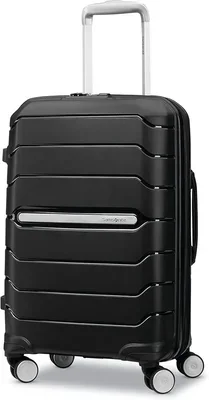
Best for Beginners: Samsonite Freeform 21″ Spinner — ~$180-220. Widely available (Target, Costco, Amazon), easy to see in person. Good wheels, decent handle, 10-year warranty. Lightweight (5.8 lbs). Simple, reliable, forgiving. If you don’t know what you like yet, this teaches you what matters without punishing your wallet.
Best for Advanced Users / Digital Nomads: Peak Design Travel Carry-On 35L — ~$330. Not pure polypropylene (nylon/poly shell) but relevant for the “spinner carry-on” seeker. Front laptop access, modular packing cubes, weatherproof 400D nylon canvas, aluminum handle, lifetime warranty. Converts to backpack. If you work from your bag, this changes the game. (Note: heavier at 7.2 lbs, check airline weight limits).
Conclusion: Making the Right Choice
We have covered a lot of ground—shell chemistry, wheel bearings, zipper coils, warranty fine print. It can feel like a lot for “just a suitcase.” But here is the truth: your carry-on is the only piece of gear that touches every single trip. It protects your clothes, your tech, your medicines, your gifts. When a wheel fails on a connection in Frankfurt, or a handle snaps in a Bangkok downpour, or an expansion zipper bursts at the gate—you feel it viscerally. The right bag fades into the background. The wrong one ruins the journey.
Start with your reality. How often do you fly? What airlines? What do you pack? Match the tier to the truth. If you fly twice a year, the $100 bag is smart, not “cheap.” If you fly twice a month, the $450 bag is an investment, not a splurge. Prioritize wheels and handle—those are the moving parts that fail. Verify dimensions against your most flown airline. Register the warranty the day it arrives.
You now know more than 95% of shoppers wandering the luggage aisle. You know what “polypropylene” actually means for your hands and back. You know why recessed double wheels matter. You know the expansion trap. Walk into that store or click “buy” with confidence. Your perfect travel companion is waiting. Safe travels, and may your overhead bin always have space.