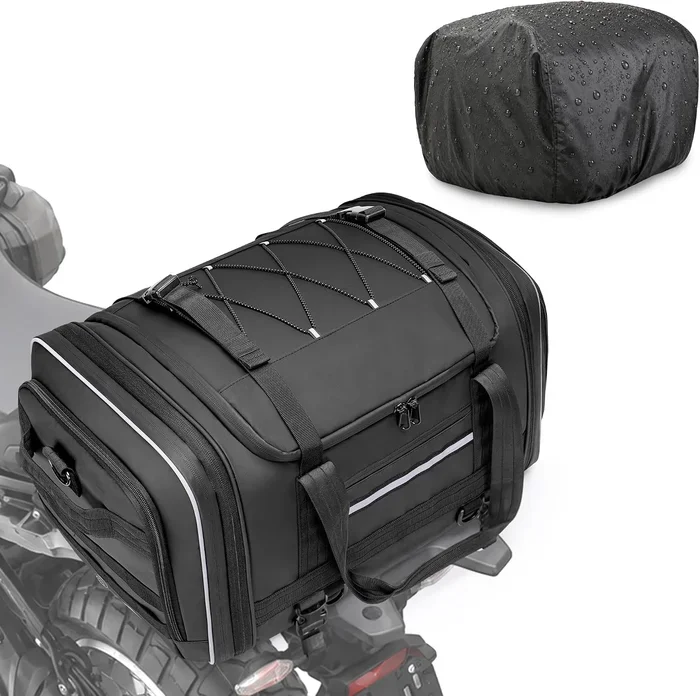
Choosing the right expandable motorcycle luggage can feel like navigating a winding mountain road — there are many turns, occasional blind spots, and the stakes are high because your gear must stay secure, dry, and accessible mile after mile. This guide exists to turn that complexity into a clear, step‑by‑step map so you can ride away confident that every piece of luggage you bolt on or strap down matches your bike, your riding style, and your budget.
In the next sections you will learn the essential factors that separate a reliable travel companion from a frustrating afterthought, the main categories of expandable luggage on the market today, the most common buying pitfalls and how to sidestep them, realistic price tiers, insider tips for snagging the best deal, answers to the questions riders ask most often, and finally our top picks for every type of rider. By the end you’ll have a personalized checklist you can take to the shop or the online cart and make a purchase you’ll be proud of on every adventure.

What to Look for When Buying Buying Guide
1. Capacity and Expandability Range
Capacity is the first number you’ll see on a spec sheet, usually expressed in liters. A base volume of 20‑30 L works well for day trips, while 40‑60 L suits multi‑day touring. The expandable portion — often a zippered gusset or roll‑top extension — adds 5‑15 L extra. Look for a clear statement of both minimum and maximum volumes; some brands only quote the expanded figure, which can mislead you into thinking the bag is larger than it really is when compressed.
2. Mounting System Compatibility
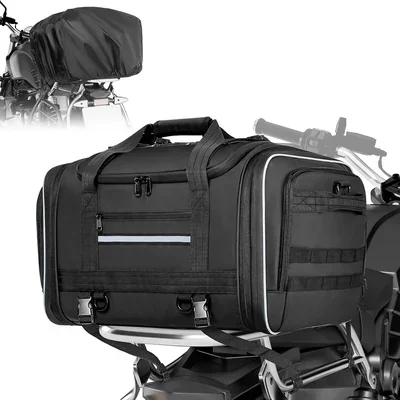
Expandable luggage attaches in three main ways: hard‑case rack mounts, soft‑bag strap systems, and universal “throw‑over” designs that sit on the passenger seat. Hard cases bolt to a dedicated luggage rack and stay rigid; they’re ideal for heavy loads and high‑speed stability. Soft bags use quick‑release straps, MOLLE webbing, or hook‑and‑loop panels, offering flexibility for bikes without racks. Throw‑overs are the simplest but can shift under hard braking. Verify that the mounting hardware matches your motorcycle’s rack, subframe, or seat geometry before buying.
3. Weather Resistance and Waterproofing
Motorcycle luggage lives in rain, road spray, and occasional river crossings. Look for a waterproof rating (IPX4 splash‑proof, IPX6 heavy‑spray, or full submersion rating) and sealed seams. Many expandable bags use a removable inner dry‑liner — essentially a roll‑top dry bag — that guarantees 100 % water protection even if the outer shell gets soaked. If you ride in all seasons, a bag with a built‑in rain cover that deploys in seconds is a worthwhile feature.
4. Material Durability and Abrasion Resistance
Common outer fabrics include 1680D ballistic nylon, 1000D Cordura, and TPU‑coated polyester. Higher denier numbers generally mean tighter weave and better tear strength. Reinforced bottom panels, corner guards, and double‑stitched seams extend life when the bag scrapes against gravel or the bike’s frame. For hard cases, injection‑molded polypropylene or aluminum shells resist impacts better than thin plastic.
5. Security Features
Lockable zippers, integrated cable loops, and tamper‑proof buckles deter opportunistic theft. Some premium models include a built‑in combination lock or a TSA‑approved lock cylinder. If you park in urban areas, a bag that can be locked to the bike’s frame or a fixed rack adds peace of mind. Remember that no soft bag is completely theft‑proof; the goal is to make your luggage a less attractive target than the bike next to you.
6. Weight and Balance Impact
Every kilogram added high on the bike raises the center of gravity and can affect handling, especially in corners. Lightweight soft bags (1.5‑2.5 kg empty) are gentler on balance than heavy hard cases (4‑6 kg). When loading, keep the heaviest items low and centered. Some expandable designs let you shift the expansion zone forward or backward, helping you fine‑tune weight distribution.
7. Accessibility and Organization
Multiple compartments, external pockets, and internal mesh dividers let you separate tools, electronics, and dirty gear. A top‑loading main opening with a wide gusset makes packing bulky items easier, while side‑access zippers let you grab a rain jacket without unpacking everything. Consider whether you prefer a single large cavity (simpler, lighter) or a modular layout (more organized, slightly heavier).
8. Warranty, Support, and Brand Reputation
A solid warranty (2‑5 years, sometimes lifetime) signals confidence in build quality. Check whether the warranty covers zipper failure, seam delamination, and mounting hardware. Brands with dedicated motorcycle divisions — such as Kriega, Givi, SW-Motech, and Nelson‑Rigg — typically offer better crash‑replacement programs and spare‑part availability than generic outdoor‑gear companies.
Different Types of Buying Guide

Common Buying Mistakes to Avoid
❌ Mistake: Ignoring the Bike’s Load Limits
Why it’s bad: Every motorcycle has a maximum payload (rider + passenger + luggage). Overloading stresses the frame, suspension, and brakes, and can void insurance. What to do instead: Check the owner’s manual for the GVWR (Gross Vehicle Weight Rating) and subtract your weight plus typical passenger weight. Choose luggage that keeps the total under that limit.
❌ Mistake: Choosing Capacity Over Fit
Why it’s bad: A 60 L bag that hangs off the rear fender can hit the tire on compression, damage the exhaust, or block the license plate. What to do instead: Measure the available mounting space (width, height, clearance to moving parts) and compare to the bag’s external dimensions in both compressed and expanded states.
❌ Mistake: Assuming “Water‑Resistant” Means Waterproof
Why it’s bad: Water‑resistant fabrics shed light rain but soak through in a downpour or when submerged. What to do instead: Look for a removable dry‑liner or a bag rated IPX6/IPX7. Carry a separate rain cover as backup.
❌ Mistake: Overlooking Zipper Quality
Why it’s bad: Cheap coil zippers snag, split, or corrode from road salt, leaving your gear exposed. What to do instead: Seek YKK AquaGuard or similar sealed zippers, and test the zip action before purchase — it should glide smoothly under tension.
❌ Mistake: Skipping a Test Fit Before a Long Trip
Why it’s bad: You may discover interference with the brake lever, turn signals, or passenger footpegs only after you’re miles from home. What to do instead: Install the luggage, load it with typical gear, and ride a short 30‑minute loop. Adjust straps, reposition expansion zones, and verify clearances.
❌ Mistake: Buying Based Solely on Brand Hype
Why it’s bad: Marketing can inflate perceived value; some lesser‑known brands offer equal or better specs for less money. What to do instead: Read independent forum reviews, watch long‑term test videos, and compare warranty terms side‑by‑side.
❌ Mistake: Neglecting Maintenance Accessories
Why it’s bad: Zippers, buckles, and seam tape degrade faster without occasional lubrication and cleaning. What to do instead: Budget a small amount for zipper wax, seam sealer, and a soft brush; schedule a quick inspection every 5,000 km.
Budget Guidelines: How Much Should You Spend?
Entry‑Level ($80 – $200)
Expect basic throw‑over saddlebags or a single tail bag with a simple zip‑expansion gusset. Materials are typically 600‑800D polyester, water‑resistant coating only, and plastic buckles. Good for occasional weekend rides, but zippers may wear quickly and mounting can shift under hard acceleration.
Mid‑Range ($200 – $500)
This sweet spot delivers 1000D Cordura or ballistic nylon, sealed seams, removable dry‑liners, and robust quick‑release mounting (MOLLE, strap‑and‑buckle, or rack‑specific brackets). Expandable volume usually adds 10‑15 L. Brands in this tier often include a 3‑year warranty and spare‑part kits.
Premium ($500 – $900)
Hard‑case panniers with aluminum or high‑impact polymer shells, integrated lock cylinders, and precision‑engineered rack mounts. Expansion is achieved via a hinged lid or a zippered soft‑panel that maintains structural rigidity. Weight is higher, but crash protection and security are top‑tier.
Luxury ($900 +)
Bespoke modular systems — think carbon‑fiber reinforced shells, electronic lock integration, GPS tracking, and custom‑fit liners for specific bike models. These are aimed at round‑the‑world riders who demand zero compromise. Warranty often extends to lifetime with crash‑replacement programs.
Expert Tips for Getting the Best Deal
- Shop End‑of‑Season Sales: Late autumn and early spring see dealers clearing inventory; discounts of 15‑30 % are common.
- Buy Bundles: Many manufacturers sell a pannier pair plus a matching tank bag at a bundled price lower than individual items.
- Check Certified Refurbished: Brands like Givi and SW‑Motech offer factory‑refurbished units with full warranty at 20‑40 % off.
- Use Price‑Tracking Tools: Browser extensions (Honey, CamelCamelCamel) alert you when a specific model drops below your target price.
- Leverage Loyalty Programs: Motorcycle gear retailers often have points systems; a $500 purchase can earn $25‑$50 credit for future accessories.
- Test Before You Commit: Attend a local motorcycle expo or demo day; many vendors let you mount bags on a show bike and feel the weight distribution.
- Read the Return Policy: Online purchases should allow at least 30 days return with free shipping both ways — crucial if the fit isn’t right.
- Consider Used Marketplaces: Adventure riders frequently sell barely‑used luggage after a single big trip; inspect for seam integrity and zipper function before buying.

Frequently Asked Questions
Q: Can I use expandable luggage on a sportbike without a rack?
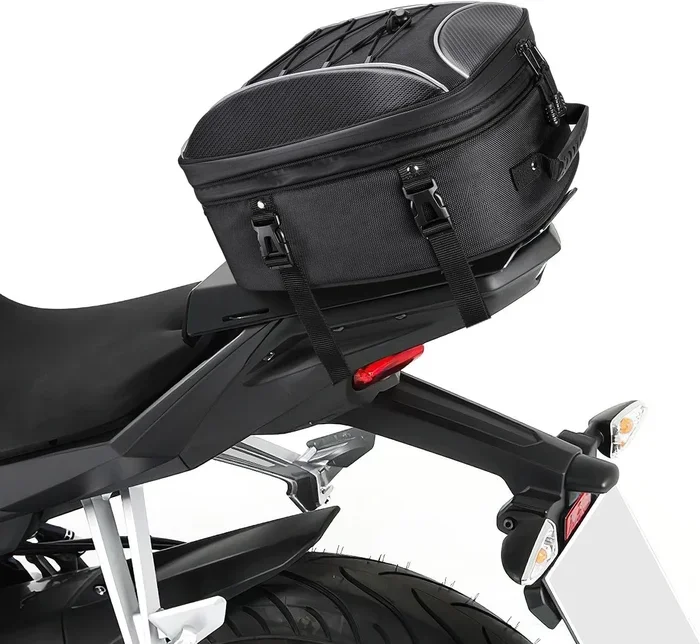
A: Yes — throw‑over saddlebags or a tail bag with strap‑down points work well. Ensure the bag’s base has a non‑slip pad and that straps route under the seat or around the subframe without contacting hot exhaust components.
Q: How do I clean a waterproof dry‑liner?
A: Turn it inside out, rinse with lukewarm water, and mild soap. Avoid harsh detergents or machine washing; air‑dry completely before reinserting to prevent mildew.
Q: Will an expanded soft bag affect my bike’s handling at highway speeds?
A: If the bag is mounted low and centered, the effect is minimal. Keep the heaviest items at the bottom of the expansion zone and avoid over‑inflating the bag beyond its rated max volume.
Q: Are hard‑case panniers worth the extra weight for a weekend rider?
A: For occasional use, the weight penalty may outweigh the security benefit. A high‑quality soft system with a dry‑liner offers comparable weather protection at half the weight.
Q: What’s the difference between MOLLE and PALS webbing?
A: They’re essentially the same — rows of heavy‑duty nylon webbing spaced 1 inch apart. MOLLE is the military term; PALS (Pouch Attachment Ladder System) is the civilian spec. Both accept the same accessories.
Q: Can I lock a soft bag to my bike?
A: Many soft bags include a steel cable loop that threads through the bag’s handle and around a fixed frame point. Pair it with a hardened‑steel padlock for basic theft deterrence.
Q: How often should I re‑apply seam sealer?
A: Once a year or after any prolonged exposure to heavy rain. Apply a thin bead along interior seams, let cure 24 hours, then test with a spray bottle.
Q: Do expandable tank bags interfere with fuel‑cap access?
A: Most designs feature a cut‑out or flip‑up panel for the fuel cap. Verify the dimensions match your bike’s cap location before purchase.
Q: Is there a universal expandable luggage system that fits any bike?
A: No single system fits every model perfectly. Universal strap kits exist, but for optimal stability and safety, choose a bike‑specific rack or mounting kit whenever possible.
Our Final Recommendations
- Best for Budget‑Conscious Buyers: A pair of 30 L throw‑over saddlebags with zip‑expansion (approx. $130). Look for 800D polyester, rain cover included, and four‑point strap system. Ideal for weekend trips on standard or cruiser bikes.
- Best Overall Value: Mid‑range modular soft‑bag system (2 × 35 L panniers + 15 L tank bag) around $380. Features 1000D Cordura, removable dry‑liners, MOLLE attachment, and a 3‑year warranty. Works on adventure, touring, and naked bikes with appropriate rack adapters.
- Best Premium Option: Aluminum hard‑case panniers with hinged expansion lids (45 L each) priced near $750 per pair. Integrated TSA locks, crash‑tested mounting brackets, and a lifetime warranty. Suited for round‑the‑world riders carrying cameras, laptops, and camping gear.
- Best for Beginners: Single 25 L tail bag with roll‑top expansion ($110). Simple strap‑down to rear rack or passenger seat, waterproof liner, and a quick‑release buckle. Low commitment, easy to install, teaches packing discipline.
- Best for Advanced Users: Full modular ecosystem — hard‑case panniers, waterproof tank bag, and a detachable tool roll — all sharing a common mounting rail (approx. $1,200 total). Allows reconfiguration for solo, two‑up, or off‑road modes without buying new hardware.
Conclusion: Making the Right Choice
Expandable motorcycle luggage is more than a storage box — it’s a partner that shapes how far you can go, how comfortably you ride, and how confidently you face unexpected weather or roadside repairs. By prioritizing capacity that matches your typical trip length, a mounting system that integrates cleanly with your bike, genuine waterproof protection, and a warranty backed by a reputable brand, you eliminate the most common sources of frustration.
Remember to measure your bike’s real‑world clearances, test‑fit before a long journey, and invest in a few maintenance basics to keep zippers and seams healthy for years. Whether you choose a lightweight throw‑over for spontaneous weekend escapes or a full aluminum pannier suite for a trans‑continental odyssey, the right luggage lets you focus on the ride, not the gear.
Now that you have the checklist, the price tiers, and the expert tips, you’re ready to browse, compare, and buy with confidence. Safe travels, and may every mile bring a new story worth packing.