Shopping for luggage used to be simple. You picked a size, chose a colour, and hoped the zipper didn’t burst at baggage claim. Today, the market is flooded with options, and the term “expandable” gets thrown around on everything from budget supermarket specials to high-end luxury carry-ons. If you are based in the UK, the stakes are even higher. You are navigating strict airline baggage policies for carriers like British Airways, easyJet, and Ryanair, often damp weather that tests fabric water resistance, and the cobblestone streets of historic cities that destroy cheap wheels in minutes.
This guide exists to cut through the marketing noise. We have spent years testing, reviewing, and comparing suitcases across every price point to understand what actually matters when you are rushing for a connection at Heathrow or packing for a two-week family holiday to the Costa del Sol. By the time you finish reading, you will understand the mechanics of expansion zippers, the difference between polycarbonate and ballistic nylon, and exactly how much you need to spend to get a case that survives the baggage handlers at Gatwick. We will walk you through the critical factors in order of priority, compare the distinct categories of expandable luggage, highlight the costly mistakes most buyers make, and give you a clear budget roadmap so you can buy with total confidence.
The UK market is unique. Our airlines enforce some of the strictest cabin bag dimensions in Europe, our weather demands water-resistant materials, and our travel habits—from weekend city breaks to long-haul emigration moves—require versatile capacity. Whether you are a light packer looking for a carry-on that stretches for duty-free shopping on the return leg, or a family needing a large check-in case that swallows bulky winter coats, this guide covers every scenario. Let’s start with the single most important decision: the factors that separate a travel companion from a travel headache.

What to Look for When Buying Expandable Luggage
1. Airline Compatibility and Size Regulations
This is the absolute first filter. In the UK, we fly on airlines that treat baggage allowances as revenue streams. Ryanair, easyJet, Jet2, and British Airways all have different maximum dimensions for cabin bags, and they measure aggressively at the gate. An “expandable” carry-on is useless if its expanded dimensions exceed your airline’s limit, because you will be forced to check it at the gate for a hefty fee—often £50 to £70.
You must check the unexpanded dimensions against your most flown airline’s policy. For example, Ryanair’s priority allowance is 55cm x 40cm x 20cm. British Airways allows 56cm x 45cm x 25cm. If a case expands by 4cm in depth, it might fit BA but fail Ryanair. Pro strategy: Buy a case that fits your strictest airline unexpanded. Use the expansion only for the return journey (when gate checks are rarer) or for checked luggage where the expansion gives you crucial extra volume for souvenirs.
2. Expansion Mechanism: Depth, Durability, and Gusset Design
Not all expansion is created equal. The “expansion” is typically a zippered gusset—a folded panel of fabric hidden between the main shell and the lid. When unzipped, this panel unfolds, adding depth (usually 3cm to 6cm). This sounds simple, but the engineering varies wildly.
Depth Gain: Carry-ons usually gain 3-4cm (adding roughly 5-8 litres). Large check-in cases gain 5-6cm (adding 15-25 litres). Check the litre capacity spec: “44L expanding to 52L” is a tangible metric.
Gusset Construction: Cheap cases use a single layer of thin polyester for the gusset. It offers zero structure. When packed full, the case bulges into a ball shape, stressing the zipper and making it hard to stack or fit in overhead bins. Premium cases use a reinforced gusset—often a double layer with internal compression straps or a semi-rigid frame panel—that forces the case to expand in a controlled, rectangular shape. This protects the zipper and keeps the case stackable.
Zipper Quality on Expansion: The expansion zipper takes the most stress. It is pulled tight over a fully packed volume. Look for YKK RC (Reverse Coil) or Vislon zippers on the expansion track. They are self-healing (if teeth misalign, zipping back and forth often fixes it) and resist bursting better than standard coil zippers.
3. Shell Material: Hard Shell vs. Soft Shell Trade-offs
This is the biggest decision point. In the UK market, hard shells (polycarbonate, polypropylene, ABS) dominate the high street, but soft shells (ballistic nylon, polyester, Cordura) retain a loyal following for good reason.
Hard Shell (Polycarbonate / Polypropylene): Best for: Protection of fragile items, water resistance, modern aesthetics. Polycarbonate (PC) is the gold standard—it flexes under impact rather than cracking. Polypropylene (PP) is lighter and slightly more flexible but scratches easier. ABS is brittle; avoid it for frequent travel. Hard shells are naturally water-resistant—rain runs off. However, they cannot be overstuffed. If you expand a hard shell, the rigid walls fight the gusset, creating high stress on the zipper. They also show scuffs instantly on UK baggage carousels.
Soft Shell (Ballistic Nylon / High-Denier Polyester): Best for: Maximum stuffing capability, external pockets, squeezing into tight overhead bins, durability against abrasion. “Ballistic Nylon” originally referred to a specific 1050d or 1680d weave developed for flak jackets. Today, marketing dilutes the term. Look for denier count (d): 1680d polyester or 1050d+ ballistic nylon is tough. Soft shells absorb impact by deforming, protecting contents differently. They handle overpacking gracefully—the fabric stretches. They usually feature external pockets for passports, laptops, or liquids bags—critical for UK security queues. The downside? They absorb water in heavy Manchester rain unless treated with a durable water repellent (DWR) coating, and they offer less crush protection for electronics.
4. Wheel System: Spinner vs. Two-Wheel, Bearing Quality, and Wheel Housing
UK airports are vast. Heathrow Terminal 5 to the gate can be a 20-minute walk. Cobblestones in Edinburgh, York, or Bath destroy cheap wheels. The wheel system dictates your physical effort.
Four-Wheel Spinners (360°): The standard now. You push them beside you, wrist neutral. Essential for navigating crowded terminals and train aisles. Critical spec: Look for double wheels (two wheels per corner, 8 total). Single spinner wheels concentrate load on a tiny axle; they snap on kerbs. Double wheels distribute load, roll over gaps (train platform to carriage), and are vastly more stable on UK cobblestones.
Two-Wheel Rollers (Inline Skate Wheels): Larger diameter wheels recessed into the shell. You pull them behind you at a tilt. Advantage: Recessed wheels don’t count towards external dimensions (crucial for strict sizers). They handle rough pavement, gravel, and snow better than spinners. Disadvantage: You bear the weight on your wrist/shoulder. Hard on long walks.
Bearings vs. Bushings: Cheap wheels spin on a plastic bushing (plastic-on-plastic). They grind, squeak, and seize within months. Quality wheels use sealed ball bearings (often Japanese NSK or similar). They spin silently for years. Spin the wheel in the shop: it should rotate freely for 10+ seconds with one flick.
Wheel Housing: On spinners, the wheel housing (the plastic bracket holding the wheel) is the #1 failure point. Look for reinforced, riveted, or metal-reinforced housings moulded into the shell, not just screwed onto a thin plastic lip.
5. Handle System: Telescoping Mechanism, Grip Ergonomics, and Stages
The handle is your steering wheel. A wobbly, sticky, or short handle ruins the experience.
Telescoping Tubes: Aluminum is standard. Thicker wall tubing resists bending if you yank the case up stairs. Multi-stage locking: At least 3 stages (short, medium, tall). If you are 6’2″, a 2-stage handle forces you to hunch. Test the lock: extend fully, shake vigorously. It should not rattle or collapse.
Grip Material: Rubberized or foam grips absorb vibration from rough pavement. Hard plastic grips transmit every crack in the pavement to your hand. Width: Wider handles distribute pressure across the palm.
Carry Handles (Top & Side): You will lift this case into overhead bins, car boots, and onto scales. Padded, riveted (not just stitched) carry handles are non-negotiable. A side handle is essential for pulling a heavy check-in case off a carousel.
6. Internal Organization: Compression, Dividers, and Pocket Logic
Expansion adds volume; organization makes it usable. A 70L cavern with no dividers becomes a jumbled mess where finding socks requires unpacking everything.
Compression Straps: Essential. Two or three adjustable straps per compartment compress clothing flat, preventing shifting (which unbalances spinners) and maximizing space. Look for elasticated straps with strong buckles—plastic buckles snap in cold cargo holds.
Divider Panel: A zippered mesh panel separating the two halves. Keeps dirty laundry separate from clean. Ideally, the divider has two large zippered mesh pockets for toiletries, cables, or shoes.
Laptop/Tablet Sleeve (Cabin Bags): Must be padded, suspended (not resting on the bottom), and accessible without opening the main compartment fully—vital for UK security. TSA-approved “lay-flat” sleeves let you keep the laptop in the bag through scanners.
Wet/Dry Pocket: A lined, water-resistant pocket for swimwear or toiletries leaks. A thoughtful touch found on better soft shells.
7. Security Features: TSA Locks, Zipper Security, and Frame Integrity
UK travellers transit globally. Security features protect against theft and customs damage.
Integrated TSA Lock: Standard on mid-range+. Allows TSA (and UK Border Force) to open, inspect, and relock without cutting your lock. Three-dial combination is standard; some premium brands offer biometric (fingerprint) or Bluetooth app unlocking—convenient but another thing to charge/fail.
Double Coil Zippers + Lockable Pullers: Single coil zippers can be penetrated with a ballpoint pen and re-zipped invisibly. Double coil (two parallel zipper tracks) prevents this. Ensure the zipper pulls have holes to accept a lock shackle or the integrated lock cable.
Puncture-Resistant Zippers (e.g., YKK RCW): The coil is hidden on the reverse side, making pen attacks nearly impossible. Found on premium brands (Briggs & Riley, Tumi, some Samsonite).
Frame/Shell Integrity: On hard shells, the zipper track is moulded into the shell. On soft shells, the zipper is sewn to fabric. A hard shell zipper cannot be “forced” open without destroying the case—a strong deterrent.
8. Weight: The Hidden Cost of Every Kilogram
UK airline checked baggage allowances are typically 23kg (sometimes 20kg or 15kg on basic fares). Cabin allowances can be as low as 10kg (British Airways) or even 7kg on some international connections. Every kilogram of luggage weight is a kilogram less for your belongings.
Target Weights (Empty):
- Cabin Hard Shell (Polycarbonate): 2.5kg – 3.2kg
- Cabin Soft Shell (Ballistic Nylon): 2.0kg – 2.8kg
- Large Check-in Hard Shell (75-85cm): 3.8kg – 4.8kg
- Large Check-in Soft Shell: 3.2kg – 4.2kg
If a carry-on weighs 3.5kg empty, you have only 6.5kg for contents on a 10kg allowance. That disappears fast with a laptop, shoes, and toiletries. Weigh the empty case before buying. Manufacturers often quote “dry weight” without wheels/handles or with the lightest configuration.
9. Warranty and UK After-Sales Support
Luggage takes a beating. Wheels snap, handles jam, zippers split. A warranty is only as good as the UK service network behind it.
Lifetime vs. Limited Warranty: “Lifetime” usually means “lifetime of the product” (defined by manufacturer as 5-10 years), not your lifetime. Read the fine print. Key question: Is there a UK repair centre? Or do you ship to Germany/USA at your cost (£30-£50 shipping each way)?
Brands with Strong UK Presence: Samsonite (UK HQ, repair centres), Antler (British brand, UK repairs), Briggs & Riley (lifetime “Simple as That” warranty, UK service via distributor), Tripp (UK based, affordable repairs), Cabin Max (UK based). Brands requiring EU/US return: Rimowa, Tumi (often), Travelpro (varies), Away (US return).
What’s Covered: Manufacturing defects only. Airline damage is almost never covered. Some premium brands (Briggs & Riley, Red Oxx) cover airline damage—read the policy.
Different Types of Expandable Luggage

Common Buying Mistakes to Avoid
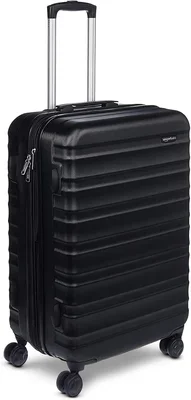
❌ Mistake: Buying Based on “Expanded” Dimensions for Cabin Use
Why it’s bad: You see “55x40x20cm (expands to 55x40x25cm)” and think it fits Ryanair. It does not. The sizer at the gate measures the physical external maximum. If you have expanded it, it fails. You pay £60+ at the gate. The expansion is for checked bags or return journeys only.
What to do instead: Buy based on unexpanded external dimensions matching your strictest airline. Treat expansion as a bonus for checked luggage or the way home.
❌ Mistake: Choosing the Lightest Case Possible
Why it’s bad: Ultra-light cases (sub-2kg cabin) achieve weight savings by using thin shells, minimal frame reinforcement, plastic bushings instead of bearings, and flimsy zippers. They crack, wheels seize, and handles bend within 3-5 trips. The “weight saving” of 300g costs you a replacement case in a year.
What to do instead: Target the “sweet spot” weights listed in Factor 8. A 2.8kg polycarbonate cabin case with double bearings and a reinforced frame will outlast three 2.1kg “featherweight” cases.
❌ Mistake: Ignoring Wheel Housing Construction
Why it’s bad: Marketing highlights “360° Spinner Wheels” but hides the housing. Cheap housings are thin plastic tabs moulded onto the shell. A heavy case dropped on a kerb snaps the housing clean off. The wheel is fine; the bracket is gone. The case is now a drag-bag.
What to do instead: Inspect the wheel housing. Look for metal reinforcement plates, riveted attachment, or housings that are integral to the shell moulding (common on Samsonite, Briggs & Riley, high-end Antler). Push hard sideways on a wheel—it should not flex the housing.
❌ Mistake: Assuming “TSA Lock” Means Theft Proof
Why it’s bad: A TSA lock only stops casual opportunists. The master keys are widely available online. A determined thief cuts the zipper pull or punctures the zipper coil (on single-coil zippers) in seconds. The lock gives false confidence.
What to do instead: For high-value items, use a hard shell with puncture-resistant zippers (YKK RCW) or a cable lock through the frame (if the case has lockable hasps). Never pack valuables (meds, electronics, jewelry, cash) in checked luggage. Period.
❌ Mistake: Buying a “Set” When You Only Need One Size
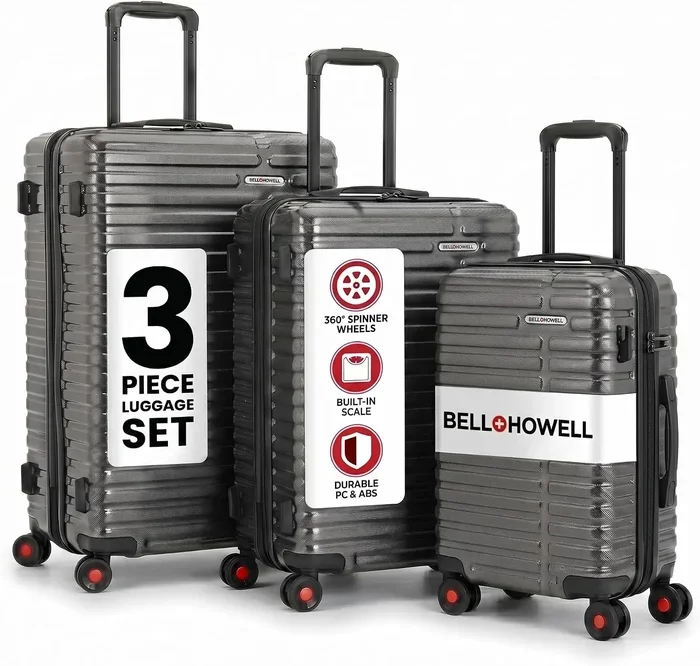
Why it’s bad: A 3-piece set (Cabin, Medium, Large) for £250 sounds like a bargain. But the medium and large are often lower spec than the cabin case (single wheels, thinner shells, no TSA lock) to hit the price point. You end up with one good case and two liabilities. Storage is also a nightmare—three nested cases eat a wardrobe.
What to do instead: Buy individual cases tailored to each trip type. A premium cabin case + a robust large check-in is better than three mediocre matching cases. Mix brands; no one checks your luggage coordination at baggage claim.
❌ Mistake: Overlooking the “Personal Item” Allowance
Why it’s bad: Many UK flyers (especially easyJet, Ryanair non-priority, Jet2) only get a “underseat bag” (approx 45x36x20cm) for free. They buy a max-size cabin spinner, then realize they can’t take it onboard without paying. The spinner stays home; they struggle with a backpack.
What to do instead: Check your specific booking’s allowance before buying. If you only have underseat allowance, buy a structured underseat backpack or tote (expandable ones exist!). If you have overhead bin access, then buy the spinner.
❌ Mistake: Neglecting Internal Volume vs. External Dimensions
Why it’s bad: Two 55x40x20cm cases can have wildly different internal volumes. Thick frames, deep wheel wells, aggressive corner radius, and thick lining eat litres. A case spec’d at 35L might only hold 30L usable.
What to do instead: Look for stated internal capacity in litres. Better yet, watch video reviews where packers do “real world pack tests” (e.g., “how many shirts/pairs of jeans”). Prioritize cases with squared-off corners and recessed wheel wells (wheels don’t intrude into packing space).
Budget Guidelines: How Much Should You Spend?
Entry-Level (£50 – £120): The “Holiday Once a Year” Tier
What you get: ABS or thin Polypropylene hard shells; 1680d/600d polyester soft shells. Single spinner wheels (often plastic bushings). 2-stage handles. Basic 2-dial locks (non-TSA or basic TSA). Thin gussets (2-3cm expansion). 1-2 year warranty.
Brands: Tripp (entry), Cabin Max (budget lines), American Tourister (lower end), IT Luggage, supermarket own-brands (John Lewis, M&S, Next).
Reality Check: Fine for 1-2 trips per year, careful handling, car travel. Will not survive weekly business travel or rough baggage handlers. Wheels are the first failure point. Expansion zippers often burst if fully packed.
Best Pick Logic: Prioritize Tripp or Cabin Max in this range—they are UK brands with actual UK customer service and spare wheels available. Avoid unknown Amazon brands with no UK presence.
Mid-Range (£120 – £280): The “Sweet Spot” for Most UK Travellers
What you get: Genuine Polycarbonate (Makrolon/Bayer or equivalent) or high-denier Ballistic Nylon (1050d-1680d). Double spinner wheels with sealed bearings. 3-stage aluminum handles. Integrated TSA locks. Reinforced expansion gussets (4-5cm). 5-10 year / Limited Lifetime warranties with UK repair networks.
Brands: Samsonite (Neopulse, Lite-Shock, Base Boost), Antler (Clifton, Tiber, Stamford), American Tourister (Soundbox, Wavebreaker), Eastpak (Tranverz), Delsey (Chatelet Air, Belmont Plus), Cabin Max (Metz, Anode).
Reality Check: This is where durability meets value. A £180 Samsonite Neopulse or Antler Clifton lasts 8-12 years with basic care. Wheels are replaceable (often free under warranty). Expansion is structural. Weight is optimized (2.6-3.0kg cabin).
Best Pick Logic: Samsonite for hard shell tech & global warranty. Antler for British design, lifetime warranty, UK repairs. Eastpak Tranverz for the best soft shell warranty (30 years) and squishability.
Premium (£280 – £550): The “Frequent Flyer / Buy Once” Tier
What you get: Advanced materials: Tegris® composite, Curv® woven PP, Roxkin™ (Samsonite), high-tech Ballistic Nylon with TPU coating. Precision engineering: Japanese Hinomoto Lisof® silent wheels (the gold standard), titanium/aluminum handles, self-healing zippers (YKK RCW). Expansion gussets with internal compression frames. True Lifetime warranties covering airline damage (Briggs & Riley).
Brands: Briggs & Riley (Baseline, Sympatico), Samsonite (Proxis, Securipak), Tumi (19 Degree, International), Rimowa (Essential, Original – though expansion rare on Rimowa), Victorinox (Spectra, Avolve).
Reality Check: Diminishing returns on durability vs. mid-range, but massive gains in user experience: silent wheels, effortless glide, perfect balance, luxurious feel, warranty that actually replaces a case crushed by a baggage tractor. Briggs & Riley is unique: “If it breaks, we fix it free, forever, even airline damage.”
Best Pick Logic: Briggs & Riley for the absolute best warranty (covers airline damage). Samsonite Proxis for lightest hard shell tech. Tumi for ballistic nylon perfection and modular accessories.
Luxury (£550+): The “Status & Heirloom” Tier
What you get: Materials: Aluminum-magnesium alloy (Rimowa Original), German polycarbonate (Rimowa Essential), full-grain leather accents, carbon fiber. Craftsmanship: Riveted construction (no glue), hand-finished, numbered limited editions. Wheels: Custom-engineered, often ceramic bearings. Service: White-glove repair, loaner programs, personalization.
Brands: Rimowa, Globe-Trotter, Tumi (top tier), Louis Vuitton, Goyard.
Reality Check: You are paying for brand, aesthetics, and resale value. An aluminum Rimowa dents beautifully (patina) but dents easily. It is heavier than polycarbonate. It does not expand (mostly). A Globe-Trotter is vulcanized fibreboard—stunning, but not waterproof and corners crush. Buy these because you love them, not for pure utility.
Expert Tips for Getting the Best Deal
- Timing is Everything: The UK luggage sales cycle is predictable. January Sales (post-Christmas clearance), Easter (pre-summer push), Black Friday / Cyber Monday (biggest discounts on premium), and August Bank Holiday (end of summer clearout). Mid-range cases often hit 30-40% off. Premium brands rarely discount >20% except Black Friday.
- Outlet Stores & Brand Websites: Bicester Village, Cheshire Oaks, London Designer Outlet have Samsonite, Antler, Tumi, Briggs & Riley outlets. You get 30-50% off RRP on last season’s colours (functionality identical). Sign up for brand newsletters for 10-15% first-order codes.
- Check “Open Box” / Refurbished: Amazon Warehouse, eBay Refurbished (official brand outlets), and brand own “Renewed” sections (Samsonite, Briggs & Riley offer these). Often just a returned wrong colour. Full warranty. Savings 20-40%.
- Buy the “Previous Generation” Model: When Samsonite launches “Neopulse 2.0”, the “Neopulse 1.0” drops 30% instantly. The changes are usually cosmetic (new colours, slightly reshaped handle). The core tech (shell, wheels, warranty) is identical.
- Test In-Store, Buy Online (Ethically): Visit John Lewis, Selfridges, or a brand store. Spin wheels. Extend handles. Pack a jacket inside. Check zipper feel. Then buy the exact model online cheaper. Better: Ask the store to price-match. John Lewis and many independents will match legitimate UK online retailers.
- Leverage Credit Card Purchase Protection: Many UK credit cards (Amex, Barclaycard, Chase, some NatWest/HSBC) offer 90-day accidental damage/theft protection and extended warranty doubling. Pay with the right card; it’s free insurance.
- Consider “Smart” Features Carefully: Built-in scales (often inaccurate), USB ports (power bank not included, adds weight), GPS trackers (subscription fees, battery anxiety). A £10 AirTag/Tag in a hidden pocket beats integrated tech. Removable power banks are fine; built-in are dead weight when battery dies.
- Read the 1-Star Reviews for Your Shortlist: Filter reviews by “1 star” and “most recent”. Look for patterns: “wheel housing cracked”, “handle stuck”, “zipper burst”, “warranty denied”. Ignore “ugly colour” or “shipping late”. If 3 recent 1-stars cite the same structural failure, avoid.

Frequently Asked Questions
Q: Can I use the expansion on a carry-on for Ryanair/easyJet if I pay for overhead bin access?
A: Technically, yes, if your paid allowance dimensions match the expanded size. However, gate staff measure with the sizer. If your expanded case is 25cm deep and the sizer is 20cm (Ryanair) or 25cm (easyJet large cabin), it must fit inside the sizer. Expansion often makes the case rigid and unable to squeeze. Risk is high. Keep it unexpanded for the outbound. Expand on return if you have space (gate checks rare on arrival).
Q: Does expanding a hard shell suitcase weaken the shell or zipper?
A: It stresses the zipper, not the shell. The polycarbonate shell is rigid; the expansion gusset is fabric. When you overpack an expanded hard shell, the fabric gusset pulls tight against the rigid shell edge. This puts massive tension on the zipper teeth. Mitigation: Use internal compression straps before zipping expansion. Pack heavy items at the bottom (wheel end). Don’t sit on the case to close it. Premium cases (Samsonite, Briggs & Riley) engineer the gusset attachment to distribute this stress.
Q: Are spinner wheels really worse on cobblestones than two wheels?
A: Yes, significantly. Small spinner wheels (50-60mm) drop into gaps between cobbles. The caster mechanism gets jammed with grit. Double wheels (8 wheels) are much better than single (4 wheels) because the load is shared and they bridge small gaps. But large diameter (70mm+) recessed inline skate wheels (two-wheelers) roll over cobbles effortlessly. If your UK trips involve York, Bath, Edinburgh, or European old towns, seriously consider a two-wheel cabin bag (e.g., Briggs & Riley Baseline Domestic, Travelpro Platinum Elite 2-wheel).
Q: What does “Denier” mean and what number should I look for?
A: Denier (d) measures the linear mass density of fibers. Higher denier = thicker, stronger thread. For luggage: 600d polyester = thin, budget. 1200d-1680d polyester = tough, mid-range. 1050d Ballistic Nylon = very tough, gold standard for soft luggage (originally military spec). 1680d Ballistic Nylon = extremely heavy duty. Warning: “Ballistic” is unregulated. A 600d polyester can be marketed “ballistic weave”. Trust brands (Tumi, Briggs & Riley, Victorinox, Eastpak, Osprey) over numbers on unknown brands.
Q: Is a built-in USB port worth it?
A: Generally, no. The port is just a pass-through cable inside the case. You must supply your own power bank (adds 200-300g). The cable adds a failure point (fraying inside the lining). Airport security may question non-removable batteries (rare but happens). Better: Buy a slim 10,000mAh power bank (Anker, Ugreen) and keep it in an external pocket. Use your own cable. Total weight similar, zero integration hassle.
Q: How do I clean mould/mildew from a soft shell case stored damp?
A: Common in UK humidity. Exterior: Brush off loose spores outside. Wipe with 1:1 white vinegar/water or dedicated fabric mould remover (e.g., Milton sterilizing fluid diluted). Test patch first. Scrub gently with soft brush. Rinse with damp cloth. Dry thoroughly in sun/wind (UV kills spores). Interior: Vacuum. Wipe with vinegar solution. Leave open in sun for 48 hours. Prevention: Never store damp. Stuff with acid-free tissue or clean towels. Add silica gel packs. Store in breathable cotton bag, not plastic.
Q: Can I get replacement wheels for my specific case model?
A: For Samsonite, Antler, Briggs & Riley, Tumi, Victorinox, Eastpak, Delsey, Tripp, Cabin Max — Yes. Contact UK customer service with model number (inside case, near handle). Often free under warranty. £10-£20 per wheel set out of warranty. For budget/unknown brands — Usually no. Wheels are proprietary. This is a major reason to stick to established brands with UK presence.
Q: What’s the difference between Polycarbonate, Polypropylene, and ABS?
A: ABS (Acrylonitrile Butadiene Styrene): Cheap, rigid, brittle. Cracks on impact. Heavy for its strength. Avoid for frequent travel. Polypropylene (PP): Lighter than PC, very flexible, good impact resistance. Scratches easily (shows white marks). Good budget/mid-range hard shell. Polycarbonate (PC): Best balance. High impact resistance, flexes not cracks, good temperature stability. Makrolon / Bayer PC / Covestro PC = premium grades. Curv® / Roxkin™ / Tegris®: Woven PP composites. Lighter, stronger, pricier. Rule: Mid-range+ = Polycarbonate or Curv. Budget = PP or ABS blend.
Q: Should I buy a hard shell or soft shell for checked luggage?
A: Hard Shell if: You pack fragile items (electronics, bottles, gifts), travel in wet climates (tropical, UK winter), want max water protection, like the look. Soft Shell if: You overpack (expands more easily), need external pockets for quick access (rare for checked), want lighter weight for same volume, travel on rough terrain (soft absorbs drops better), need to squeeze into tight car boots/taxis. Hybrid Strategy: Hard shell large check-in (protects contents in hold), Soft shell cabin (flexibility, pockets).
Q: Are “Smart” suitcases with built-in batteries allowed on UK flights?
A: CAA / EASA / IATA Rules: Lithium batteries must be removable. If the battery is built-in and non-removable, the case is FORBIDDEN on all flights (checked or cabin). Most “smart” brands (Away, Bluesmart – defunct, some Samsonite models) have removable batteries. Always verify: “Is the battery removable without tools?” If yes, carry the battery in cabin (max 100Wh usually). If no, do not buy for air travel.
Our Final Recommendations
Best for Budget-Conscious Buyers: Tripp Holiday 55cm (Hard) / Cabin Max Metz 44L (Soft)
Tripp Holiday (approx £60-£80): British brand. Polypropylene shell (tougher than ABS). Double wheels (rare at this price). 3-stage handle. 3-year warranty. UK repairs. Unsexy but functional. Cabin Max Metz (approx £60-£75): 44L expandable soft shell. Fits Ryanair/easyJet/BA unexpanded. Lifetime warranty (registration required). External laptop pocket. Water-resistant coating. Incredible volume for price. Both available at Argos, John Lewis, Amazon UK.
Best Overall Value (Mid-Range Sweet Spot): Samsonite Neopulse 55cm / Antler Clifton 55cm
Samsonite Neopulse (approx £180-£220): Curv® woven PP tech. Incredibly light (2.2kg cabin). Silent double wheels. 10-year warranty. Expands 4cm. The benchmark others chase. Antler Clifton (approx £170-£200): Polycarbonate. British design. Lifetime warranty. UK repairs. Gorgeous colours. Silent Hinomoto wheels. Slightly heavier (2.7kg) but feels more premium. You cannot go wrong with either. Choose Neopulse for weight; Clifton for warranty service and aesthetics.
Best Premium Option: Briggs & Riley Baseline Domestic Carry-On Expandable / Samsonite Proxis
Briggs & Riley Baseline Domestic (approx £450-£500): Ballistic Nylon. CX® Expansion-Compression system (expands 34%, compresses back flat). Lifetime warranty covers airline damage. Hinomoto wheels. Made in USA. The only case you’ll ever need to buy. Samsonite Proxis (approx £350-£400): Roxkin™ material (multi-layer composite). Self-repairing shell (minor scratches vanish with heat). 2.1kg cabin. 10-year warranty. Futuristic feel. Choose B&R for soft shell perfection & warranty; Proxis for hard shell tech showcase.
Best for Beginners: Eastpak Tranverz S / M / L
Simple. Indestructible. 30-year warranty. Two wheels (recessed, huge, bombproof). No zippers to break (main closure is U-zip with lockable clips). Expands via zippered gusset. Fits Ryanair (S size unexpanded). Looks cool, not “luggage-y”. No spinner wobble. No handle rattle. Just works. Perfect for students, first-time buyers, anyone who wants zero fuss. S (cabin) ~£130, M (medium) ~£160, L (large) ~£190.
Best for Advanced Users / Specific Needs:
- Frequent Business (Hard): Tumi 19 Degree Continental Carry-On (£550+) — Status, organization, modular add-ons, ballistic nylon/hybrid.
- Adventure / Rough Terrain: Osprey Rolling Transporter 40/60/90 (£200-£300) — Soft, huge wheels, backpack straps, waterproof TPU coating, lifetime warranty.
- Maximum Capacity (Check-In): Samsonite S’Cure Eco Large (£180) — Polypropylene, 123L expanded, 3-point lock, very cheap for volume.
- Luxury Aluminium: Rimowa Original Cabin (£900+) — The icon. Dents, patina, heirloom. No expansion. Buy for joy, not utility.
Conclusion: Making the Right Choice
We have covered a lot of ground—from the molecular structure of polycarbonate to the geometry of wheel housings, from Ryanair’s sizer trap to the fine print of lifetime warranties. The market for expandable luggage in the UK is deep, but your decision process doesn’t have to be.
Start with your reality: Which airlines do you actually fly? What is your strictest dimension limit? How often do you travel? What surfaces do you roll on (terminal floors vs. cobbles vs. gravel)? What is your packing style (precision folder vs. chaotic stuffer)? Answer these, and the right category—cabin hard, cabin soft, medium check-in, large check-in—selects itself.
Then apply the quality filters: Double wheels with bearings. Reinforced wheel housings. YKK zippers on expansion. TSA lock. Weight in the sweet spot. UK service network. Ignore the noise: built-in scales, USB ports, “unbreakable” marketing claims, influencer colours.
Finally, buy from the right tier. If you travel once a year, the £70 Tripp or Cabin Max is rational. If you travel monthly, the £200 Samsonite or Antler pays for itself in saved replacements and stress. If you travel weekly or value peace of mind above all, the £500 Briggs & Riley is an insurance policy, not a purchase.
Your luggage is the only travel gear that touches every single journey. It protects your clothes, your gifts, your work tools, your memories. A good case disappears—it just works, trip after trip. A bad case announces itself at every kerb, every staircase, every rainy platform, every broken zipper.
You now have the knowledge to choose the one that disappears. Measure your airline. Check the wheels. Read the warranty. Buy the case that fits your life. Safe travels, and enjoy that extra 5cm of packing space on the way home—you’ve earned it.