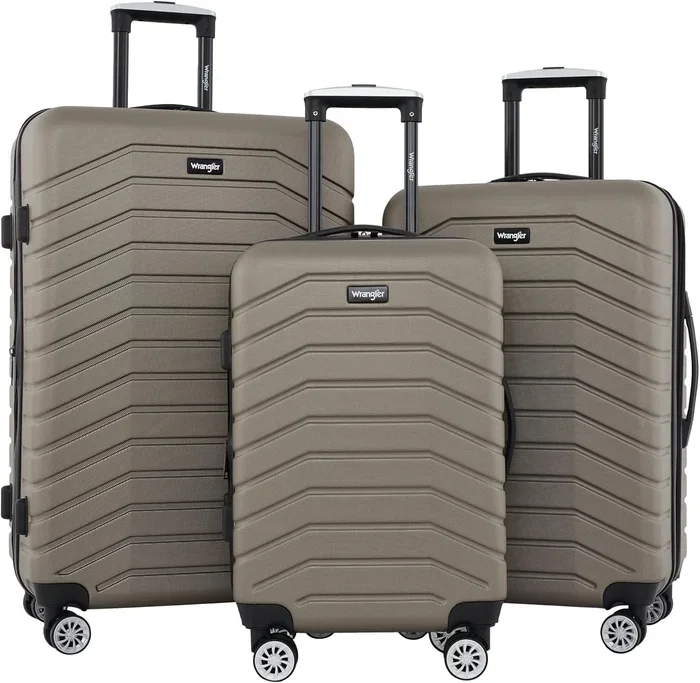
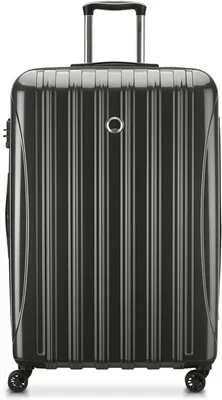
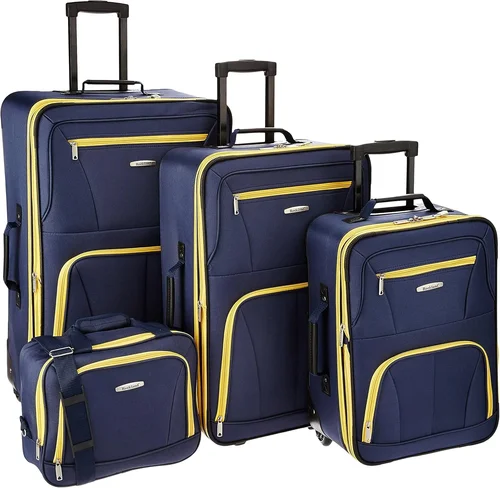
Travel has always been more than moving from point A to point B. For many of us, the journey itself is a practice in presence, a chance to shed old patterns, and an invitation to meet the world with fresh eyes. The gear you carry can either support that intention or quietly undermine it. A suitcase that fights you at every turn, a backpack that digs into your shoulders, or an organizer that adds chaos instead of calm — these things pull you out of the moment. The right luggage, chosen with care, becomes a silent partner in your practice. It holds your essentials without demanding attention, moves with you instead of against you, and reflects the values you carry into the world.
This guide exists because the market is flooded with options that look similar on a spec sheet but feel radically different in real life. Marketing language promises “durability,” “organization,” and “versatility,” but those words mean very different things depending on who you ask. We will cut through the noise. You will learn how to evaluate materials, construction, and design through the lens of conscious travel — where weight, ethics, longevity, and sensory experience matter as much as volume and price. We will explore the major categories, expose the common traps, break down what you actually get at each price tier, and give you a framework for making a choice you will feel good about for years.
The conscious luggage landscape has matured significantly in recent years. Brands are experimenting with recycled ocean plastics, plant-based leathers, modular repair programs, and carbon-neutral shipping. At the same time, legacy manufacturers are doubling down on lifetime warranties and domestic production. Whether you are a weekend retreat-goer, a digital nomad living out of a carry-on, or a pilgrim walking ancient paths, there has never been a better time to find gear that aligns with your values. Let us begin with what matters most.

What to Look for When Buying Conscious Travel Luggage
1. Material Integrity and Environmental Footprint
The fabric and components of your bag tell a story long before you pack it. Conventional nylon and polyester are petroleum-based, shed microplastics, and can take centuries to break down. Conscious alternatives include recycled nylon (often sourced from post-consumer fishing nets or carpet waste), recycled polyester from plastic bottles, organic cotton canvas, hemp blends, and innovative bio-based materials like cork leather, pineapple leaf fiber (Piñatex), or mycelium leather. Each has trade-offs. Recycled synthetics offer high abrasion resistance and water repellency with a lower carbon footprint than virgin equivalents. Natural fibers breathe beautifully and age with character but may require waxing or treatment for water resistance and can be heavier.
Look beyond the shell fabric. Zippers, buckles, thread, coatings, and linings all matter. YKK Natulon zippers use recycled tape. Duraflex hardware can be made from recycled acetal. PFC-free durable water repellent (DWR) treatments avoid forever chemicals. Bluesign® or OEKO-TEX® certifications indicate safer chemistry throughout the supply chain. A bag that claims sustainability but uses virgin plastic buckles and a PFAS-heavy coating is only telling half the story. Ask for the full material breakdown. Brands that publish their bill of materials or partner with third-party auditors are usually walking the talk.
2. Weight and Carry Ergonomics
Every gram you carry is energy spent. For the conscious traveler, weight is not just a number — it is a measure of how much of your vitality goes into transport versus experience. Ultralight bags (under two pounds for a carry-on, under one pound for a daypack) can feel liberating, but they often sacrifice structure, durability, or organization. The sweet spot for most travelers is a carry-on between 2.5 and 4 pounds and a checked bag between 4 and 7 pounds, depending on frame type.
Ergonomics determine whether that weight feels like a burden or an extension of your body. On backpacks, look for contoured shoulder straps with variable-density foam, a padded hip belt that transfers load to your pelvis, an adjustable torso length, and a ventilated back panel that prevents the “wet back” effect. On wheeled luggage, the handle tube should lock at multiple heights, the grip should be comfortable for long corridors, and the wheels must roll true — not wobble, not catch, not scream across tile. Spinner wheels (four multidirectional) excel on smooth surfaces; inline skate wheels (two fixed) handle cobblestones, gravel, and curbs with more grace. Test loaded if you can. A bag that feels fine empty may torque your shoulder or tip sideways when full.
3. Modular Organization and Access Philosophy
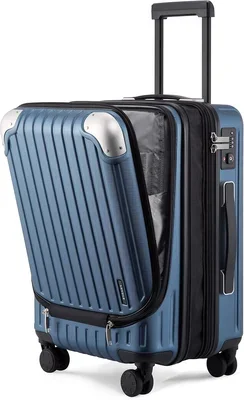
Conscious packing is intentional packing. You want a system that lets you see everything at a glance, access essentials without unpacking the whole bag, and compress or expand based on trip length. Clamshell openings (suitcase-style) give full visibility and are ideal for hotels and structured packing. Top-loading backpacks with a single main zipper force you to dig. Panel-loading or front-loading backpacks combine the carry comfort of a pack with the access of a suitcase. Some designs offer both — a clamshell main compartment plus a quick-access front panel for tech, documents, or a water bottle.
Internal organization should be thoughtful, not excessive. Mesh divider pockets, compression panels with grab handles, dedicated laptop/tablet sleeves (suspended, not bottom-resting), and removable pouches for toiletries or electronics let you build a system that matches your rhythm. Avoid bags with a dozen tiny pockets you will never remember. The best organization is invisible — it supports your flow without demanding management. External access points matter too: a pass-through sleeve for sliding over a rolling suitcase handle, a water bottle pocket that does not collapse when empty, a top grab handle that is actually padded.
4. Repairability and Circular Design
A conscious purchase is one you can keep for a decade or more. That means the bag must be repairable — not theoretically, but practically. Look for replaceable wheels, removable shoulder straps, zipper pulls that can be swapped, and panels that can be patched or replaced without sending the whole bag to a specialty shop. Some brands offer lifetime repair programs (sometimes free, sometimes for a nominal fee) and sell spare parts directly. Others design for modularity: a daypack that zips off a carry-on, a frame sheet that can be removed for washing, a hip belt that upgrades across models.
Circular design goes further. Take-back programs, upcycling initiatives, and resale platforms extend the life of the product beyond your ownership. Brands like Patagonia, Osprey, and newer players like Solgaard and Horizn Studios have formal programs. Even without a brand program, a bag made from mono-materials (single fiber type) is easier to recycle at end of life than a hybrid of laminated fabrics, foams, and metal hardware fused together. Ask: can I fix this myself? Can the brand fix it? What happens when I am done with it?
5. Ethical Manufacturing and Supply Chain Transparency
Who made your bag, and under what conditions? This question is uncomfortable but essential. Look for brands that disclose factory locations, publish social compliance audits (WRAP, SA8000, Fair Trade Certified™, B Corp certification), and pay living wages. Some go further: employee ownership, profit-sharing, community investment in manufacturing regions. Domestic production (USA, EU, Japan) often correlates with higher labor standards and shorter supply chains, but it is not a guarantee — and overseas factories can be exemplary. The key is transparency. A brand that hides its factory list or uses vague language like “ethically made” without evidence is signaling that they do not want you to look closely.
Consider the full chain: raw material sourcing (organic cotton farmers, recycled plastic collectors), textile milling, dyeing and finishing (water-intensive, chemically heavy), cut-and-sew, trims, packaging, shipping. Each stage has human and ecological impact. Brands that map their supply chain and set science-based targets for emissions, water, and waste are leading. Certifications help but are not perfect. Use them as signals, not substitutes for critical thinking.
6. Warranty as a Statement of Values
A warranty is not just a safety net — it is a manufacturer’s confidence statement. The gold standard is a true lifetime warranty: repair or replacement for the functional life of the product, no questions asked, no receipt required, transferable. Brands like Osprey, Tom Bihn, Red Oxx, and Briggs & Riley offer this. Others offer limited lifetime warranties (defects only, original owner, proof of purchase). Some offer “limited” warranties of 2–5 years. Read the fine print. Does it cover zippers? Wheels? Fabric delamination? Damage from airline handling? A strong warranty reduces the real cost of ownership and signals that the brand expects the product to last.
Also consider the repair experience. Is there a dedicated repair center? Do they email you a prepaid label? What is the turnaround time? Do they offer loaners? A warranty that takes six weeks to honor is a warranty that fails the traveler. Call the repair department before you buy. Ask a specific question. The quality of the response tells you more than the policy document.
7. Size, Volume, and Regulatory Fit
Volume is measured in liters, but usable volume depends on shape, pocket intrusion, and frame structure. A 40L backpack with a rigid frame sheet and thick back padding may hold less than a 35L soft-sided pack. Carry-on dimensions are not universal. The IATA guideline is 55 x 35 x 22 cm (21.5 x 13.5 x 8.5 in), but many budget airlines enforce 50 x 40 x 20 cm or even 40 x 30 x 15 cm. Soft-sided bags can compress to fit tighter sizers; hardshell cases cannot. If you fly multiple carriers, measure your bag against the strictest limit you will encounter.
Personal item allowances vary wildly. A slim backpack (15–20L) usually qualifies. A structured briefcase may not. Checked baggage linear dimensions (length + width + height) typically cap at 62 inches (158 cm). Weight limits range from 15 kg (33 lb) to 32 kg (70 lb) depending on airline, class, and status. Weigh your empty bag. A 5 kg checked bag leaves you only 10 kg of payload on a strict carrier. That math matters.
8. Aesthetic Resonance and Sensory Experience
This factor is often dismissed as superficial. It is not. The bag you carry touches you daily. Its texture, color, sound, and smell become part of your travel memory. A stiff, plasticky nylon that crinkles like a trash bag creates a different nervous system response than a waxed canvas that softens with use, or a recycled nylon with a matte hand and silent zippers. Color affects visibility (bright colors are easier to spot on a carousel, less likely to be mistakenly taken) and heat absorption (dark colors bake in sun). Minimalist aesthetics reduce visual noise. Branding — loud logos versus subtle tone-on-tone — signals whether the bag is a billboard or a tool.
Choose a bag that feels right in your hand, on your shoulder, in your space. You will live with it in hostels, temples, train stations, and quiet moments. It should feel like yours.
Different Types of Conscious Travel Luggage

Common Buying Mistakes to Avoid
❌ Mistake: Chasing the Lightest Weight Without Context
Why it’s bad: Ultralight fabrics (sub-100D nylon, Dyneema Composite) sacrifice abrasion resistance, tear strength, and structure. A 1.2 lb carry-on that shreds on a baggage carousel or collapses under a laptop is not a win. You end up replacing it sooner — doubling the environmental cost.
What to do instead: Target a weight appropriate to the category. For a 40L travel backpack, 2.5–3.5 lbs is a robust sweet spot. For a hardshell spinner, 5.5–6.5 lbs is normal. Ask: what is the denier? What is the frame? What is the warranty? Weight is a variable, not a virtue.
❌ Mistake: Assuming “Recycled” Means Sustainable
Why it’s bad: A bag made from 10% recycled polyester with a virgin nylon lining, PFAS coating, and no repair program is greenwashing. The recycled content may be pre-industrial scrap (factory floor waste) rather than post-consumer waste, which does not divert ocean or landfill plastic.
What to do instead: Demand specifics. What percentage? Post-consumer or post-industrial? Certified by whom (GRS, RCS)? What about the rest of the components? What is the end-of-life plan? A 100% recycled shell with a take-back program beats a 30% recycled shell with none.
❌ Mistake: Buying for the Trip You Imagine, Not the Travel You Do
Why it’s bad: You buy a 70L expedition duffel for a fantasy Patagonia trek but actually fly to Lisbon for long weekends. The bag sits in a closet, guilty and unused. Or you buy a sleek hardshell for business travel but actually take trains through rural Vietnam where wheels are useless.
What to do instead: Audit your last five trips. What transport? What terrain? What duration? What gear? Buy for the 80% case. Rent or borrow for the 20%. A front-load 35L backpack covers more real-world scenarios than almost any other single bag.
❌ Mistake: Ignoring the Personal Item Pairing
Why it’s bad: You optimize the main bag but carry a flimsy tote that tears, lacks a laptop sleeve, and cannot slide over your roller handle. You end up checking the main bag because the personal item failed — or you buy a cheap replacement at the airport.
What to do instead: Choose your main bag and personal item as a system. The personal item should nest on the main bag (pass-through sleeve), hold your tech securely, and meet the strictest personal item dimensions you will face (often 40 x 30 x 15 cm). Invest equally in both.
❌ Mistake: Overlooking Zipper and Hardware Quality
Why it’s bad: Zippers are the number one failure point. Cheap coil zippers snag, split, and jam. Plastic buckles crack in cold. Thin webbing frays. A $300 bag with $0.50 zippers is a $300 bag with a death sentence.
What to do instead: Look for YKK RCW (racquet coil water-resistant) or Vislon zippers, metal or high-grade acetal hardware, bar-tacked stress points, and double-stitched seams. Pull the zippers. Feel the buckles. If they feel flimsy in the store, they will fail in the field.
❌ Mistake: Falling for Feature Creep
Why it’s bad: Built-in USB ports (power bank not included), GPS trackers (subscription required), removable daypacks that don’t fit a laptop, shoe compartments that eat main volume, TSA locks that agents cut off anyway. Each feature adds weight, cost, complexity, and failure modes.
What to do instead: Prioritize core function: carry comfort, access, durability, weather resistance. Add accessories (power bank, AirTag, packing cubes, cable lock) that you can upgrade, replace, or leave behind independently.
❌ Mistake: Skipping the Hands-On Test
Why it’s bad: Specs lie. A 35L bag may fit you perfectly or torque your shoulders. A spinner may glide in the showroom but wobble on cracked pavement. A clamshell may open flat or hit the wall behind it. You cannot know until you wear it, roll it, pack it, lift it.
What to do instead: Visit a retailer. Load the bag with 15–20 lbs of gear. Walk for ten minutes. Climb stairs. Sit down. Open and close every compartment. Roll it over thresholds. If you must buy online, order two sizes from a free-return retailer. Test rigorously. Return the loser.
Budget Guidelines: How Much Should You Spend?
Entry-Level ($80 – $180): Functional Foundations
At this tier, you are paying for basic function, not longevity or ethics. Expect virgin polyester or nylon, basic coil zippers, minimal padding, fixed torso lengths, and 1–2 year warranties. Wheels may be riveted (not replaceable). Frames are often plastic sheets or wire. Stitching is single-needle. You can find carry-on rollers, basic travel backpacks, and duffels here. They will work for a few trips a year. They will not survive weekly abuse. Brands: Amazon Basics, Samsonite base lines, Travelpro entry models, generic outdoor brands. If your budget is tight, buy the simplest design with the fewest failure points — a two-wheel rolling duffel with inline skate wheels often outlasts a cheap spinner.
Mid-Range ($180 – $350): The Conscious Sweet Spot
This is where recycled materials, repairable designs, ethical certifications, and thoughtful ergonomics converge. You get YKK zippers, replaceable components, PFC-free DWR, Bluesign fabrics, and 5-year to lifetime warranties. Front-load travel backpacks (Peak Design Travel Backpack 30L, Cotopaxi Allpa 35L, Osprey Farpoint/Fairview 40, Patagonia Black Hole MLC), quality hardshell spinners (Monos Carry-On, Paravel Aviator, Solgaard Carry-On Closet), and rolling duffels (Patagonia Black Hole Wheeled Duffel, Eagle Creek Cargo Hauler) live here. These bags handle 20+ trips per year. They repair. They resell. This is the tier where your values and your wallet align.
Premium ($350 – $600): Refined Engineering and Materials
Here you pay for precision: custom-molded frames, aerospace-grade aluminum handles, magnetic fidlock closures, laser-cut Hypalon reinforcements, mono-material construction for recyclability, and domestic or highly audited manufacturing. Brands: Tom Bihn (made in Seattle), Mystery Ranch (made in Bozeman), Rimowa (German polycarbonate), Tumi (ballistic nylon, extensive repair network), Horizn Studios (smart features, recycled materials), Arcido (modular, European made). Warranties are lifetime, service is white-glove. These bags are tools you hand down. The jump from mid-range is diminishing returns for pure function — you are paying for fit, finish, and philosophy.
Luxury ($600+): Heirloom and Hyper-Specialized
Full-grain vegetable-tanned leather, titanium hardware, hand-stitched seams, bespoke fitting, artisan workshops. Brands: Saddleback Leather, T. Bauer, Globe-Trotter, custom makers. Also hyper-specialized expedition gear: Mystery Ranch Mountain Frame packs, Hyperlite Mountain Gear Dyneema shelters-packs. These are not for everyone. They demand care (leather conditioning, Dyneema UV awareness). They reward it with decades of service. Buy here only if the object itself brings you joy — not because you think you need it to travel consciously.
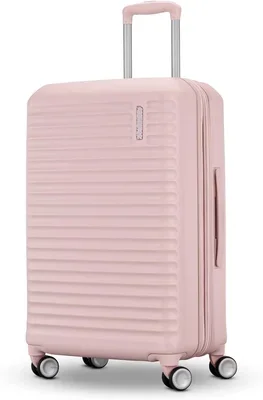
Expert Tips for Getting the Best Deal
1. Time your purchase. The best sales cycles are January (post-holiday clearance), May (pre-summer new model rollout), July (Amazon Prime Day / competitor sales), and November (Black Friday / Cyber Monday). End-of-season closeouts (February for winter, August for summer) yield 30–50% off current models. Sign up for brand newsletters — first-order discounts of 10–15% are common.
2. Buy previous-generation colors. When brands refresh colorways, the outgoing colors drop 20–40% while the product is identical. Check the brand’s “sale” or “outlet” section directly. Third-party retailers (REI, Backcountry, Moosejaw) often have deeper color-specific discounts than the brand site.
3. Consider certified refurbished or “gear trade” programs. Patagonia Worn Wear, REI Re/Supply, Osprey Refurbished, Cotopaxi RePurpose. These are returned, lightly used, or cosmetically imperfect items inspected, repaired, and warrantied. You save 30–60% and extend a product’s life. The selection is unpredictable but the value is unmatched.
4. Stack discounts strategically. Many brands allow a newsletter code on sale items. Some honor military, student, teacher, first responder, or medical professional discounts (10–20%) on top of sales. Cashback portals (Rakuten, TopCashback) add 3–8%. Credit card price protection or extended warranty benefits can cover the gap if a better price appears within 90 days.
5. Test before you commit — use the return window. Order your top two candidates from retailers with free returns (REI, Backcountry, Zappos, brand direct). Load them with your actual gear. Wear them for an hour. Walk your neighborhood. Pack and unpack. Keep the winner. Return the other clean and empty. This costs you only time and prevents a $300 mistake.
6. Register your warranty immediately. Take photos of the tags, receipt, and serial number. Register on the brand site. Save the confirmation. If a zipper fails in year three, you want zero friction. Some brands (Osprey, Briggs & Riley) do not require registration but it speeds claims.
7. Buy the repair kit. Tenacious Tape, Gear Aid Seam Grip, replacement zipper pulls, a mini sewing kit, a multi-tool. Keep it in your bag. A field repair on day two of a three-week trip saves the journey. Knowing you can fix it changes how you travel — lighter, freer.
8. Resist the upgrade urge. New models launch annually. Your two-year-old bag still works. The marginal gain (100g lighter, a new pocket, a fresh color) rarely justifies the resource cost. Keep your gear until it fails functionally, not aesthetically. That is the most conscious choice of all.

Frequently Asked Questions
Q: What is the single most important feature for conscious travel luggage?
A: There is no single feature — but if forced to choose, it is repairability. A repairable bag stays in use longer, reducing the need for replacement, lowering your cumulative footprint, and deepening your relationship with the object. Look for replaceable wheels, straps, zipper pulls, and a brand that sells parts and honors repairs.
Q: Are hardshell suitcases ever a conscious choice?
A: Yes, if made from recycled polycarbonate or aluminum, with replaceable wheels and components, from a brand with a take-back program. Monos, Paravel, and Rimowa (Essential Lite, made with recycled aluminum) are examples. They protect fragile gear better than soft bags, last decades, and recycle cleanly at end of life. Avoid cheap ABS or virgin polycarbonate spinners with riveted wheels.
Q: How do I know if a brand’s sustainability claims are real?
A: Look for third-party certifications (Bluesign, GRS, RCS, Fair Trade, B Corp, Climate Neutral), a published sustainability report with measurable targets, a factory list, a repair program, and a take-back or resale channel. Vague language (“eco-friendly,” “green,” “conscious”) without evidence is a red flag. Email their sustainability contact with a specific question — the response quality reveals everything.
Q: Can I wash my travel backpack?
A: Most can be hand-washed in a bathtub with mild detergent (Nikwax Tech Wash, Grangers Performance Wash), rinsed thoroughly, and air-dried. Remove framesheets and hip belts first. Never machine wash unless the manual explicitly allows it — agitation destroys coatings, foam, and seam tape. Waxed canvas requires re-waxing after washing. Leather needs conditioner. Always check the care label.
Q: What size carry-on backpack should I get for international travel?
A: 35L is the most versatile. It fits most international sizers (including strict European budget airlines) when not overstuffed, holds 5–7 days of clothing with packing cubes, and carries comfortably for most torsos. 30L works for minimalists or warm climates. 40L fits US domestic sizers but risks gate-check on Ryanair, EasyJet, etc. If you check a bag, a 20–25L daypack is better than a maxed carry-on.
Q: Are packing cubes worth it?
A: Absolutely. They compress clothing, create modular zones (tops, bottoms, underwear, tech), speed security checks (pull one cube instead of digging), and keep dirty laundry separate. Ultralight cubes (Hyperlite Mountain Gear, Eagle Creek Pack-It Reveal, Peak Design) add 3–6 oz total. Compression cubes save 20–30% volume. They are the highest ROI travel accessory.
Q: How do I choose between a travel backpack and a rolling carry-on?
A: Choose a backpack if: you navigate stairs, cobblestones, dirt paths, crowded transit, or prefer hands-free movement. Choose a roller if: you move mostly through airports, hotels, paved cities, have shoulder/back issues, or carry heavy tech/gear that benefits from structure. Many conscious travelers own both and choose per trip. A hybrid (backpack with stowable straps + wheels) exists but compromises both modes.
Q: What about TSA locks — do I need them?
A: TSA-approved locks (Travel Sentry certified) allow agents to open and relock your bag without cutting the lock. They deter casual theft but offer no real security — the master keys are widely available. A simple cable tie or zip tie is tamper-evident and lighter. For high-value gear, carry it on. For checked bags, a TSA lock is fine but not essential.
Q: How do I pack a suit or formal wear without wrinkles?
A: Use a dedicated garment folder (Eagle Creek, Peak Design) or the bundle wrapping method: lay jacket face down, sleeves folded back, place trousers folded at knee on top, fold jacket over, roll tightly from bottom. Pack in a structured compartment or hardshell. Hang immediately on arrival. Steam in the bathroom shower. Merino wool and technical blends resist wrinkles better than cotton or linen.
Q: Is a lifetime warranty actually lifetime?
A: It depends on the brand. Osprey, Tom Bihn, Red Oxx, Briggs & Riley, and Mystery Ranch honor true lifetime warranties — repair or replace for any functional failure, any owner, no receipt. Others (Patagonia, Eagle Creek, Tumi) cover defects in materials/workmanship for the “practical lifetime” (their judgment). Read the policy. Call the repair department. The best brands make it easy.
Our Final Recommendations
Best for Budget-Conscious Buyers: Osprey Transporter 40 / 60 / 90
Simple, bombproof, lifetime warranty, made in a Bluesign-certified factory. No framesheet, no hip belt (buy separately), minimal organization — but the 40L fits most carry-on sizers, the 60L and 90L are checked-bag legends. $120–$160. Pair with an Osprey Daylite 13L personal item ($50). You get Osprey’s “Any Reason, Any Product, Any Era” guarantee. No recycled content in the main line yet (the Arcane series has it), but the longevity argument is strong.
Best Overall Value: Cotopaxi Allpa 35L Travel Pack
Front-load access, stowable backpack straps, padded laptop sleeve, TPU-coated 840D recycled nylon, YKK zippers, lifetime warranty, B Corp certified, colorful “del día” editions use remnant fabric. $180–$200. The 35L hits the international carry-on sweet spot. The 42L adds a hip belt for heavier loads. The organization is intuitive, not excessive. It carries like a backpack, packs like a suitcase. Hard to beat at this price.
Best Premium Option: Tom Bihn Synik 30 / 40
Made in Seattle, lifetime warranty, legendary customer service, modular organization (O-rings, cache sleeves, packing cubes sold separately), incredibly comfortable harness with adjustable torso, 400D and 500D Halcyon (recycled option available) or 1050D ballistic nylon. The Synik 30 is the ultimate carry-on for tech travelers; the 40 adds volume for clothing. Expensive ($300–$380 plus accessories), but you buy once. The community and resale value are unmatched.
Best for Beginners: Peak Design Travel Backpack 30L
Thoughtful design, magnetic fidlock closures, expandable 30–35L, external camera cube compatibility, lifetime warranty, carbon neutral, recycled nylon and aluminum hardware. $260–$290. The clamshell opens flat, the dividers are intuitive, the straps stow completely for checked baggage. It teaches you how to pack well. The ecosystem (packing cubes, tech pouches, camera cubes) grows with you. A gateway to conscious gear.
Best for Advanced Users: Mystery Ranch 3-Day Assault (BVS) / Coulee 40 / Overload
If you carry heavy, walk far, and demand absolute durability. The BVS (Body Ventilation System) frame transfers load to hips like a hiking pack but opens like a suitcase. Made in Bozeman, Montana. Lifetime warranty. Military heritage, civilian soul. $350–$500. Not pretty, not light, not for everyone — but if you know, you know. The Coulee 40 is the travel-specific variant with laptop sleeve and clamshell access.
Conclusion: Making the Right Choice
You have read the factors, compared the types, seen the mistakes, studied the budgets, absorbed the tips, and scanned the recommendations. Now comes the moment of decision. Remember: the perfect bag does not exist. The right bag is the one that matches your travel reality, respects your values, fits your body, and earns its place in your life through years of service.
Start with your next trip. Not the dream trip. The one on the calendar. What will you carry? How will you move? What matters most — weight, organization, ethics, aesthetics, price? Rank your top three factors. Filter the market by those. Test two finalists. Choose the one that feels like a partner, not a compromise.
And when that bag arrives — register the warranty. Load it mindfully. Walk out the door. The world is waiting. Your gear is ready. So are you.