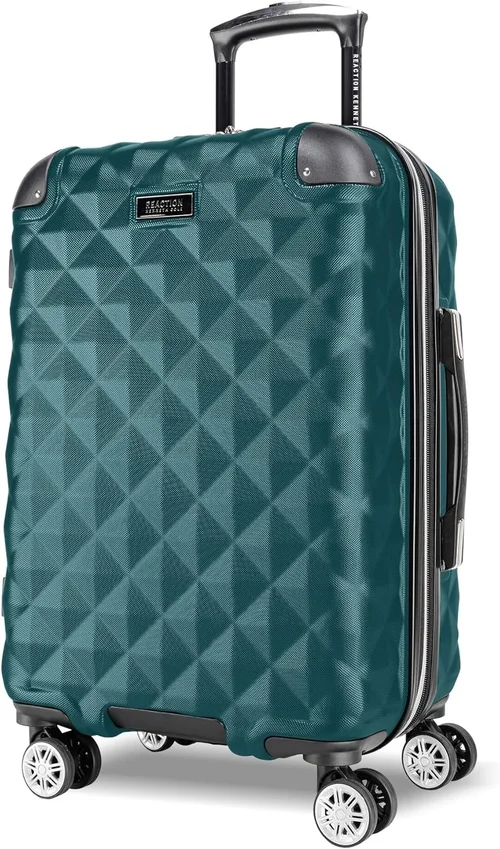
Shopping for luggage used to feel straightforward. You picked a size, chose a color, and hoped the zipper held. Today, the market has exploded with options, and the single feature that separates a frustrating travel experience from a seamless one is often expandability. Whether you are a chronic over-packer, a souvenir hunter, or a business traveler who needs to fit a week of suits into a carry-on, an expandable suitcase is the closest thing to a magic trick the travel industry offers. But not all expansion systems are created equal, and the wrong choice can leave you with a bulging bag that won’t close, a broken zipper at the baggage claim, or a carry-on that suddenly exceeds airline dimensions.
This guide exists to cut through the marketing noise. We have tested, researched, and compared the current landscape of expandable luggage to bring you the definitive resource for making a confident purchase. You will learn exactly what mechanical details separate a durable expansion gusset from a weak point, how to interpret material specs like denier and polycarbonate grades, and why the wheel housing design matters more than the wheel count. By the end, you will know precisely how to match a bag to your travel style, your budget, and the specific airlines you fly most often.
The market currently sits at a fascinating intersection. Premium brands like Rimowa and Briggs & Riley are pushing the boundaries of lifetime warranties and CX expansion technology, while value-driven brands like Travelpro and Samsonite are democratizing features like external USB ports and wet pockets in the sub-$200 range. Meanwhile, direct-to-consumer brands such as Away and Monos have forced the entire industry to rethink aesthetics and direct pricing. Understanding where the real value lies—versus where you are paying for a logo—is the single biggest money-saver in this category. Let’s dive in.

What to Look for When Buying Expandable Luggage
1. Expansion Mechanism and Real-World Capacity Gain
The expansion mechanism is the heart of what you are buying, yet it is the most misunderstood spec on the tag. Manufacturers love to advertise “up to 2 inches of expansion” or “25% more capacity,” but those numbers rarely tell the whole story. You need to look at how the bag expands. There are two primary architectures: the zipper gusset and the CX (Compression Expansion) system.
A traditional zipper gusset uses a folded panel of fabric (softside) or a flexible plastic joint (hardside) hidden behind a secondary zipper. When unzipped, the panel unfolds, adding depth. The critical detail here is the gusset material. On softside bags, look for high-denier nylon (1680D ballistic or similar) reinforced with a thermoplastic polyurethane (TPU) coating. Cheap bags use thin polyester that stretches permanently after one heavy trip, leaving the bag misshapen. On hardside bags, the expansion joint is usually a flexible polycarbonate or ABS hinge. If this hinge is too thin, it cracks under the stress of a fully packed bag being tossed by baggage handlers.
The superior alternative, pioneered by Briggs & Riley and now licensed to others, is the CX Expansion System. Instead of simply adding volume, CX uses a mechanical expansion panel that compresses the contents while expanding the shell. You pack the bag, zip the main compartment, then engage the expansion zipper which mechanically compresses the clothes down, creating space without increasing the bag’s external dimensions beyond the expanded limit. This is a game-changer for carry-on compliance because the bag stays within sizer limits even when “expanded” in many configurations. If you fly carry-on only, prioritize CX or similar compression-expansion hybrids.
2. Shell Material: Polycarbonate vs. ABS vs. Ballistic Nylon
The material dictates the bag’s weight, durability, scratch resistance, and how it handles the stress of expansion. This is not just about “hard vs. soft” anymore; the grades within those categories vary wildly.
Polycarbonate (PC) is the gold standard for hardside luggage. It is a thermoplastic polymer that is incredibly impact-resistant and flexible. When a PC suitcase is dropped or crushed, it flexes and snaps back rather than cracking. Look for 100% Virgin Polycarbonate or specific grades like Makrolon (Covestro/Bayer) or Lexan (Sabic). These are industry benchmarks. Avoid “Polycarbonate Composite” or “PC/ABS Blend” if durability is a priority. These blends use cheaper ABS plastic to cut costs; they are brittle, crack in cold temperatures, and the expansion hinges on these shells fail fast.
ABS (Acrylonitrile Butadiene Styrene) is the budget hardside material. It is rigid, heavy for its strength, and scratches if you look at it wrong. It is fine for a bag that takes two trips a year and lives in a closet, but the expansion zipper on an ABS bag is a structural weak point. The shell doesn’t flex, so all the stress of an overpacked bag transfers directly to the zipper teeth and the hinge screws.
Ballistic Nylon (typically 1680D or 1050D) remains the king of softside durability. Originally developed for flak jackets, “Ballistic” refers to a specific 2×2 basket weave that resists tearing and abrasion exceptionally well. The “D” stands for Denier—a measure of fiber thickness. 1680D is the heavyweight champ; 1050D is lighter but still very tough. Crucially for expandable softside bags, the fabric must be PU (Polyurethane) coated or TPU laminated on the back. This waterproofs the interior and, more importantly, gives the expansion gusset the structural memory to snap back flat after being stretched. Uncoated nylon stretches like a cheap t-shirt.
Cordura is a brand name for high-tenacity nylon (often 1000D or 1680D) used by premium brands like Tom Bihn and Red Oxx. It is lighter than Ballistic for the same strength but shows scuffs more readily. It is an excellent choice if weight is your primary metric.
3. Wheel Engineering: Spinner vs. Inline, Bearings, and Housing
Wheels are the first thing to fail on cheap luggage, and on expandable bags, the physics are harsher. An expanded bag is heavier and has a higher center of gravity. This puts immense lateral stress on the wheel axles and housing.
Spinner Wheels (4-wheel/8-wheel) allow 360-degree maneuvering. You push them beside you rather than dragging them behind. This saves your wrist and shoulder. 8-wheel configurations (dual-wheel per corner) are significantly more stable than 4-wheel singles, especially on cobblestones, carpet, or cracked pavement. The load is distributed across two axles per corner. If you pack heavy (expanded), 8 wheels are non-negotiable for comfort.
Inline Wheels (2-wheel) are recessed into the body. They are virtually indestructible compared to spinners because the wheel housing is protected by the shell. They handle rough terrain (gravel, snow, curbs) better. The trade-off: you must tilt and drag. If you have back or shoulder issues, stick to spinners.
The Hidden Spec: Wheel Bearings and Housing. Marketing counts wheels; engineers count bearings. Sealed Ball Bearings (often Japanese NSK or similar) roll silently and smoothly for years. Sleeve Bearings (bushings) or plain plastic-on-plastic axles grind, squeak, and seize up with dust and hair. Grab the wheel and spin it hard. It should spin freely for 10+ seconds. Wobble the wheel side-to-side. There should be near-zero play. The wheel housing should be a separate, replaceable module bolted or riveted through the shell with metal hardware, not molded plastic clips that snap off. Brands like Travelpro, Briggs & Riley, and Muzen offer user-replaceable wheel cartridges. This single feature can extend a bag’s life from 3 years to 15.
4. Handle System: Telescoping Mechanism, Ergonomics, and Stages
The handle is your interface with the bag. A bad handle turns a 30-pound bag into a 50-pound torture device. On expandable luggage, the handle tubes run through the interior volume. When the bag expands, the handle mechanism is stressed differently.
Look for a multi-stage (3-4 stop) aluminum or aircraft-grade alloy tube system. Single-stage or two-stage handles force tall people to hunch and short people to reach up awkwardly. The grip material matters: contoured rubber or gel wraps absorb vibration from spinner wheels on rough pavement. Hard plastic grips transmit every bump.
Test the extension/retraction action. It should be buttery smooth with a positive “click” at each lock position. If it sticks, grinds, or requires two hands to collapse, the internal cable or spring mechanism is cheap. Critically, check the handle mounting points inside the bag. On expandable softside bags, the handle tubes often run through the main packing compartment, covered by a fabric sleeve. Ensure this sleeve is padded and securely stitched. On hardsides, the handle recess eats into packing space—check if the recess is flat (good) or domed (wastes space).
Top Carry Handles & Side Handles: You will lift this bag into overhead bins, car trunks, and onto scales. Handles must be riveted or bolted through the shell/frame, not just stitched to fabric. Look for a padded, contoured grip on the top and side. A flat nylon strap cuts into fingers on a 40lb expanded bag.
5. Interior Architecture: Compression, Organization, and Wet Pockets
Expansion is useless if your clothes arrive wrinkled and your toiletries leak onto your laptop. The interior layout determines packing efficiency.
Compression Straps/Panels: Essential. You need to compress the base layer before engaging the expansion zipper. Look for adjustable, elasticized compression straps with quick-release buckles (metal or heavy-duty acetal resin) on the main compartment floor. Some premium bags (Briggs & Riley, Tumi) use a full-floating compression panel with a handle—you pack, lower the panel, zip it shut, and it compresses everything evenly. This is vastly superior to loose straps.
Divider Panels: A zippered mesh divider between the two halves keeps contents separated. The best designs feature a full-zip mesh pocket on the divider for flat items (documents, tablets, lingerie). Avoid dividers that are just a flap of fabric with Velcro—they don’t hold bulk.
Wet/Dirty Pocket: A dedicated, waterproof (PU-lined), zippered pocket accessible from the interior (or exterior on some softside bags) for shoes, wet swimwear, or toiletries. This is a non-negotiable for frequent travelers. If the bag lacks one, you are stuffing shoes in plastic grocery bags.
Suiter Systems: If you travel with suits, dresses, or structured garments, look for a built-in suiter sleeve or folding board. Briggs & Riley’s “Tri-Fold Garment Folder” and Travelpro’s “Suiter” are benchmarks. They fold flat into the lid or main compartment and prevent creasing far better than rolling.
6. Security: Zippers, Locks, and Anti-Theft Features
An expandable bag has two main zippers (the primary and the expansion). That is two failure points and two entry points for thieves.
Zipper Brand & Type: YKK is the industry standard. Look for YKK RC (Racquet Coil) or YKK Vislon (Delrin molded tooth) on the main compartment. RC coil zippers are self-healing—if a tooth misaligns, zipping back and forth usually fixes it. Vislon is stronger against forced entry but harder to repair. Avoid no-name zippers; they split under the tension of an expanded bag. The expansion zipper should be the same quality as the main zipper. Cheap bags use a lighter gauge zipper for expansion because “it doesn’t see as much stress”—until you overpack it.
TSA-Approved Locks: Integrated, recessed combination locks (Travel Sentry approved) are standard on mid-range+ bags. They allow TSA agents to inspect with a master key without cutting your lock. Ensure the lock shackle engages both zipper pulls (main and expansion) simultaneously. Some cheap bags only lock the main zipper, leaving the expansion gusset open.
Anti-Puncture Zippers: Standard coil zippers can be penetrated by a ballpoint pen and re-zipped closed without evidence. Puncture-resistant zippers (like YKK RCW or similar) have a tighter coil pitch or a protective flap, making this common theft technique much harder. It’s a subtle but valuable feature.
7. Weight and Airline Compliance (The Carry-On Trap)
This is where expandable luggage gets dangerous. Airlines are increasingly strict and aggressive about carry-on dimensions and weight.
- US Domestic Carry-On Standard: 22″ x 14″ x 9″ (45 linear inches). Includes wheels and handles.
- International / Budget Airline Standard: Often 21.5″ x 13.5″ x 7.5″ (or stricter) and 7kg (15.4 lbs) weight limit.
An expandable carry-on is a trap if you don’t understand the math. A 22″ hardside spinner might weigh 7.5 lbs empty. Expand it, and you add 1.5-2 inches of depth. You are now at 22″ x 14″ x 11″. You will be gate-checked. If you buy an expandable carry-on, you must have the discipline to never expand it for carry-on use. The expansion is strictly for checked-bag trips or return journeys with souvenirs.
For checked luggage (25″-30″), weight is the enemy. Most airlines charge heavy fees at 50 lbs (23 kg). A premium 27″ spinner weighs 9-11 lbs. A budget 27″ spinner weighs 12-14 lbs. That 3-5 lb difference is 3-5 lbs more clothes you can pack before fees. Target checked bag weights under 10 lbs (4.5 kg) for 25-27 inch sizes.
8. Warranty, Repairability, and Brand Support
Luggage takes abuse. A warranty is the manufacturer’s vote of confidence in their engineering.
Lifetime Warranty (Functional): Briggs & Riley, Travelpro (Platinum Elite/Maxlite 5), Tumi, Victorinox, Osprey, Patagonia, Tom Bihn, Red Oxx. These cover defects in materials and workmanship for the life of the product. The best (Briggs, Travelpro, Osprey) are “No Questions Asked” – they repair airline damage, broken wheels, torn handles, failed zippers for free (you pay shipping one way usually).
Limited Lifetime / 10-Year Warranty: Samsonite, Delsey, American Tourister, Away, Monos, July. These cover manufacturing defects but often exclude airline damage, cosmetic wear, or “acts of God.” Read the fine print. Away’s warranty, for example, is 100 days for a full refund, then limited lifetime for defects only.
Repairability: Can you buy replacement wheels, handles, and zipper pulls? Can a local cobbler or luggage repair shop fix it? Briggs & Riley, Travelpro, and Tumi have extensive parts networks. Many direct-to-consumer brands (Away, Monos, July) do not sell parts; you must ship the bag to them for warranty service, leaving you bag-less for weeks.
Different Types of Expandable Luggage

Common Buying Mistakes to Avoid
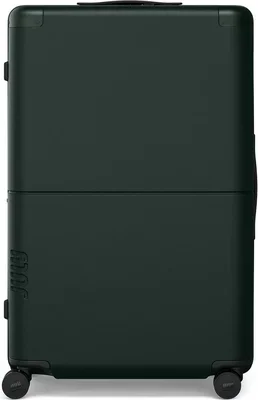
❌ Mistake: Buying “Expandable Carry-On” Expecting to Use Expansion Onboard
Why it’s bad: This is the number one regret. You buy a 22″ expandable carry-on, pack it full, expand the zipper, and stride to the gate. The gate agent drops it in the sizer. It doesn’t fit. You pay $60-$100 to check it. The expansion feature on a carry-on is designed for checked-bag trips (when you check the bag but want the volume) or return trips (bringing home souvenirs). It is not for squeezing extra volume onto the plane.
What to do instead: If you strictly fly carry-on, buy a non-expandable bag that maximizes the legal sizer dimensions (like a 22x14x9 rigid box) or a CX Compression-Expansion bag (Briggs & Riley) that expands internally. If you must have expansion flexibility, buy a 21″ or 20″ expandable bag so that even expanded, it stays within 22″ total depth.
❌ Mistake: Choosing ABS Hardside for Frequent Travel
Why it’s bad: ABS (Acrylonitrile Butadiene Styrene) is brittle. It cracks on impact, especially in cold cargo holds. The expansion hinge on an ABS bag is a structural weak point—once the shell cracks near the hinge, the bag is trash. It also scratches instantly, looking terrible after one trip.
What to do instead: Spend the extra $30-$50 for 100% Polycarbonate (Makrolon/Lexan). It flexes on impact. If you are on a strict budget, a softside ballistic nylon bag at $120 will outlast a $120 ABS hardside by 5x.
❌ Mistake: Ignoring Empty Weight on Checked Bags
Why it’s bad: You buy a massive 30″ “lightweight” spinner that weighs 13 lbs empty. You pack 38 lbs of stuff. Total: 51 lbs. You pay a $100 overweight fee at the counter. That “bargain” bag just cost you $100 extra on one trip.
What to do instead: Target under 9.5 lbs for a 25-27″ checked spinner and under 11 lbs for a 28-30″. Premium polycarbonate (Samsonite Freeform, Travelpro Maxlite 5, Briggs & Riley Torq) hits these numbers. Weigh the empty bag before your first trip.
❌ Mistake: Overlooking Wheel Housing Replaceability
Why it’s bad: A wheel cracks on a cobblestone street in Prague. The housing is riveted into the shell with no access panel. You cannot fix it. The bag becomes a stationary storage box. You buy a new bag.
What to do instead: Prioritize brands with user-replaceable wheel modules (Travelpro, Briggs & Riley, Victorinox, Muzen, some Samsonite lines). It costs $15-$30 and 5 minutes with a screwdriver. The bag lasts decades.
❌ Mistake: Falling for “Smart Luggage” Gimmicks Without Removable Battery
Why it’s bad: Many “smart” bags have built-in USB ports powered by a non-removable power bank. Airlines ban these in checked baggage (fire risk in cargo hold). If you gate-check your carry-on, you must remove the battery. If you can’t, the bag stays behind.
What to do instead: Only buy smart luggage with a easily removable, TSA-compliant battery pack (like Away, Arlo Skye, or some Samsonite models). Better yet: buy a dumb bag and a high-quality 20,000mAh Anker power bank. It charges faster, holds more, and goes in your pocket.
❌ Mistake: Buying a “Set” (3-Piece) When You Only Need One Size
Why it’s bad: Luggage sets are marketing. The 20″ carry-on in a set is often lower spec (cheaper wheels, no expansion, thinner shell) than the standalone model. The 28″ checked bag is often too heavy empty. You pay for three bags but get 1.5 good ones.
What to do instead: Buy individual pieces tailored to each role. A premium 22″ carry-on + a lightweight 27″ checked bag from different brands beats a matched set every time. Mix and match for function.
❌ Mistake: Neglecting the “Personal Item” Pairing
Why it’s bad: You optimize the carry-on but your backpack doesn’t slide over the handle (no pass-through sleeve). You juggle two bags through the airport, your shoulder kills, and you stuff the backpack under the seat awkwardly.
What to do instead: Ensure your personal item (backpack, tote, briefcase) has a luggage pass-through sleeve (trolley strap) that fits securely over your carry-on’s extended handle. Test the fit before you travel. It transforms two bags into one stable unit.
Budget Guidelines: How Much Should You Spend?
Entry-Level ($50 – $150): The “Occasional Traveler” Tier
What you get: ABS or Polycarbonate/ABS blend hardsides; 600D-1200D polyester softsides. Single-spinner wheels (often sleeve bearings). Two-stage handles. Basic TSA locks (sometimes non-recessed). Expansion via simple zipper gusset. 1-5 year limited warranties.
Brands: American Tourister, Rockland, Kenneth Cole Reaction, Amazon Basics, Level8, Coolife.
Reality Check: These bags last 3-8 trips if checked. Wheels are the failure point. Expansion zippers often misalign. Fine for: “I fly once a year to Florida, check a bag, and don’t want to spend $300.” Not fine for: weekly business travel, cobblestone streets, or heavy packing.
Best Pick Strategy: Buy a softside polyester spinner over a hardside at this price. The fabric absorbs abuse better than brittle ABS. Look for “inline skate wheels” (2-wheel) for maximum durability if you don’t need spinners.
Mid-Range ($150 – $350): The Sweet Spot for 90% of Travelers
What you get: 100% Polycarbonate (often Makrolon) hardsides; 1680D Ballistic Nylon or high-denier Cordura softsides. 8-wheel (dual) spinner systems with sealed ball bearings. 3-4 stage aluminum handles. YKK RC zippers. Recessed TSA locks. Well-designed interiors (wet pockets, compression straps, suiter loops). 10-year to Lifetime warranties (often covering airline damage). Replaceable wheels on key models.
Brands: Travelpro (Platinum Elite, Maxlite 5), Samsonite (Freeform, Omni PC, Centric), Delsey (Chatelet, Titanium), Briggs & Riley (Baseline – entry models), Victorinox (Spectra, Werks), Osprey (Rolling Transporter), Away (The Carry-On, The Medium), Monos (Carry-On, Check-In), July (Carry-On, Checked).
Reality Check: This is where you get “buy it for life” potential. A Travelpro Platinum Elite or Samsonite Freeform handles 50+ flights. The expansion mechanisms are robust. The materials resist UV and abrasion. This is the tier where you stop buying luggage.
Premium ($350 – $600): The “Road Warrior” Tier
What you get: Advanced materials (Tegris thermoplastic composite, Curv self-reinforced polypropylene, premium Makrolon grades). CX Compression-Expansion technology (Briggs & Riley). Precision-engineered Japanese Hinomoto Lisof wheels (silent, indestructible). Magnesium or carbon-fiber handle tubes. Modular interiors (removable packing cubes, garment folders). “No questions asked” lifetime warranties covering airline damage. Dedicated repair centers globally.
Brands: Briggs & Riley (Baseline, Torq, Sympatico), Tumi (19 Degree, Alpha 3, International), Rimowa (Essential, Original – though expansion is rare on Rimowa), Victorinox (Werks Traveler 6.0, Spectra 3.0), Thule (Subterra, Crossover).
Reality Check: You pay for engineering that eliminates friction. The CX system on a Briggs & Riley Baseline Domestic Carry-On lets you pack 5 days of business wear in a legal carry-on. The Hinomoto wheels on a Tumi 19 Degree glide over broken pavement like ice. If you fly 50+ segments a year, the ROI is real: zero checked bags, zero wrist pain, zero repair costs.
Luxury ($600+): The “Heritage & Status” Tier
What you get: Hand-stitched leather details (Globe-Trotter), anodized aluminum-magnesium shells (Rimowa Original, Zero Halliburton), bespoke customization (monogramming, custom colors), white-glove service/repair. Materials are often heavier (aluminum dents but doesn’t crack; leather patinas). Expansion is rare on aluminum; common on premium polycarbonate (Rimowa Essential) or hybrid leather/nylon (Globe-Trotter).
Brands: Rimowa (Original, Essential), Globe-Trotter, Zero Halliburton, Louis Vuitton, Goyard, Tumi (high-end 19 Degree Aluminum).
Reality Check: These are luxury goods first, tools second. An aluminum Rimowa Original Check-In L weighs 13+ lbs empty. You pay for the sound of the wheels, the click of the latches, the heritage. If that brings you joy, buy it. If you want the best packing tool, a $450 Briggs & Riley outperforms a $1,200 Rimowa functionally.
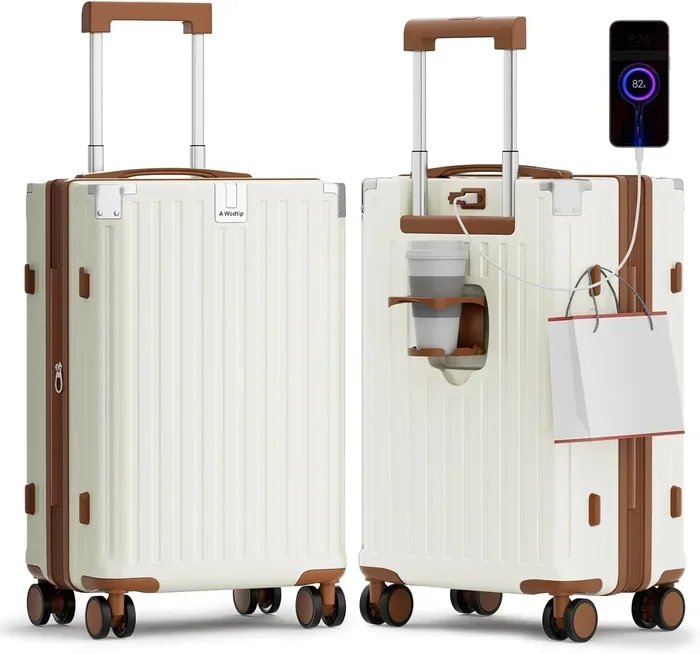
Expert Tips for Getting the Best Deal
- Time Your Purchase: The best sales are January (post-holiday clearance), May (pre-summer travel prep), July (Amazon Prime Day / Summer sales), and November (Black Friday / Cyber Monday). Avoid March-April (spring break demand) and December (holiday premium).
- Buy “Last Year’s Color”: Luggage brands refresh colors annually. The “Discontinued Color” page on Travelpro, Briggs & Riley, Samsonite, or Away sites often has 20-40% off the exact same SKU. Performance is identical.
- Check Authorized Outlet/Refurbished: Briggs & Riley “Factory Outlet” and Travelpro “Renewed” on eBay/Amazon sell warranty-covered returns/repairs at 30-50% off. The lifetime warranty transfers. This is the single best hack for premium luggage.
- Test In-Store, Buy Online (Often): Visit a luggage store (Luggage Factory, Tumi store, department store). Pull the handle. Spin the wheels. Pack a jacket inside. Feel the weight. Then buy the specific SKU online where it’s cheaper. Support the store if the price is close—they let you touch the product.
- Leverage Credit Card Benefits: Many premium cards (Chase Sapphire Reserve, Amex Platinum, Capital One Venture X) offer luggage purchase protection (damage/theft coverage for 90-120 days) and extended warranty (adds 1-2 years to manufacturer warranty). Some offer statement credits for specific brands (e.g., Amex offers on Away, Tumi, Rimowa). Check your benefits portal.
- Know the Return Policy: Buy from retailers with generous return windows (30-100 days) and free return shipping (Zappos, Nordstrom, REI, Backcountry, brand direct sites). Pack the bag fully at home. Weigh it. Carry it up stairs. Roll it on carpet and tile. If it doesn’t spark joy or fit your specific packing style, return it. Do not keep a $300 mistake.
- Register the Warranty Immediately: Do this before the first trip. Scan the serial number tag. Save the receipt PDF. If the airline crushes a corner on trip #2, you want a pre-approved claim, not a scavenger hunt for proof of purchase.
- Consider “Checker” vs “Carry-On” Strategy: If you check bags, prioritize lightweight checked spinners (under 9 lbs) over premium carry-ons. The savings on overweight fees over 5 years pays for the bag. If you carry-on only, spend the budget on the carry-on (CX expansion, perfect fit, laptop access) and buy a cheap checked bag for rare occasions.

Frequently Asked Questions
Q: Can I use the expansion zipper on a carry-on bag for a flight?
A: Technically yes, but practically no. Almost all airlines measure the external dimensions including wheels, handles, and expanded zippers. A standard 22″ carry-on expands to ~24″ depth. It will fail the sizer. The only exception is CX Compression-Expansion bags (Briggs & Riley) which expand internally without increasing external dimensions. For all other bags: keep the expansion zipper closed for carry-on flights. Use it only when checking the bag or on the return leg.
Q: Do hardside suitcases expand as much as softside?
A: Generally, no. Softside bags (ballistic nylon) typically expand 2-2.5 inches (25-35% volume gain) because the fabric gusset unfolds freely. Hardside bags (polycarbonate) typically expand 1-1.5 inches (15-20% volume gain) because the rigid shell limits the hinge travel. However, hardside expansion is more structural—it holds its shape better when expanded. Softside bags can become “blobby” and hard to stack when fully expanded.
Q: Are 8 wheels (dual spinners) worth the extra cost over 4 wheels?
A: Yes, unequivocally, for expandable luggage. An expanded bag is heavier and taller. Single wheels (4-wheel) concentrate all that weight on one small axle per corner, leading to wobble, tipping, and premature bearing failure. Dual wheels (8-wheel) distribute the load across two axles per corner, drastically improving stability, reducing drag resistance, and halving the load per bearing. They also handle cracks and cobblestones without jamming. If you ever pack heavy, 8 wheels are mandatory.
Q: What is the difference between “Water Resistant” and “Waterproof” luggage?
A: Water Resistant (almost all luggage): The fabric/shell repels rain and splashes. Zippers are coated but not sealed. Seams are stitched (holes). In a downpour or if left on a wet tarmac, water will eventually seep in through zippers and seams. Waterproof (rare, e.g., some Pelican cases, Yeti, specialized dry bags): Welded seams, waterproof zippers (like YKK AquaGuard), roll-top closures. Submersible. For 99.9% of travelers, water resistant is sufficient. Use a packing cube liner or dry sack inside for electronics/meds if you worry.
Q: How do I clean and maintain expandable zippers?
A: Expansion zippers collect grit, sand, and salt (corrosive). After beach or dirty trips: 1) Vacuum the zipper teeth (brush attachment). 2) Wipe with a damp cloth. 3) Apply zipper lubricant (silicone-based, e.g., Gear Aid Zipper Lubricant, McNett Zip Care) or a bar of paraffin wax. Run the zipper back and forth. Wipe excess. Do NOT use WD-40, oil, or petroleum jelly—they attract dirt and degrade coil plastic. Do this every 5-10 trips for smooth operation.
Q: Is a built-in suiter system worth it, or should I use a separate garment bag?
A: Built-in suiters (folding panels with clips/straps) are excellent for 1-2 suits/dresses. They integrate perfectly, use zero extra space, and keep garments flat. For 3+ garments, or heavy winter coats, a dedicated hanging garment bag (carried separately or strapped to the spinner handle) is better. Built-in systems compress the garments against the bag’s contents; a hanging bag lets them breathe. Many road warriors use both: suiter in the spinner for the daily suit, hanging bag for the formal wear.
Q: Can I repair a cracked polycarbonate shell myself?
A: For a hairline crack: Plastic welding (soldering iron + polycarbonate filler rod) or epoxy (JB Weld PlasticWeld) reinforced with fiberglass mesh tape on the interior can work structurally. It will be ugly. For a shattered corner or cracked expansion hinge: No. The structural integrity is gone. Check your warranty. Briggs & Riley, Travelpro, Victorinox, Tumi will often replace the shell or entire bag under lifetime warranty for airline damage. That is why you buy the warranty tier.
Q: What is the best way to pack an expandable bag to prevent wrinkles?
A: Use the Bundle Wrapping or Compression Cube method. 1) Lay flat items (pants, skirts) flat in the bottom, alternating waistbands left/right. 2) Place a core object (packing cube with socks/underwear, shoes in bags) in the center. 3) Wrap shirts, sweaters, dresses around the core, sleeves folded in. 4) Engage compression straps/panel firmly. 5) Only then engage expansion zipper if needed for bulkier items (sweaters, souvenirs) on top. The expansion space should be the final layer, not the base. This keeps pressure even and minimizes creasing.
Q: Are luggage scales worth buying?
A: Absolutely. A $10 digital luggage scale (Etekcity, Travelon, Samsonite) saves $100+ overweight fees. Weigh your packed bag before you leave for the airport. If you are at 48 lbs (limit 50), you have buffer for the scale variance. If you are at 51 lbs, you repack at home (move heavy items to personal item, wear your boots/jacket). It is the highest ROI travel accessory.
Q: How do I choose between a 25″, 27″, and 29″ checked bag?
A: 25″ (Medium): ~60-75L. 1-2 weeks for one person. Fits in most car trunks easily. Weight ~7-9 lbs. Best all-rounder. 27″ (Large): ~85-100L. 2-3 weeks or 2 people sharing. Fits in SUV trunks, tight in sedans. Weight ~8.5-10.5 lbs. 29-30″ (Extra Large): ~110-130L+. Moving, family of 4, sports gear. Often exceeds 62 linear inches (L+W+H) on some airlines = oversize fees ($150-200). Weight ~10-13 lbs. Recommendation: Buy a 25″ and a 27″. Two 27″ bags give you massive flexibility for 2 people. Avoid 30″ unless you specifically need the volume and accept oversize risk.
Our Final Recommendations
Best for Budget-Conscious Buyers: Travelpro Maxlite 5 (Softside) or Samsonite Freeform (Hardside)
Why: The Travelpro Maxlite 5 21″ or 25″ Spinner (~$130-$160) is a legend. It weighs 5.4 lbs (21″) / 7.5 lbs (25″), uses 8-wheel spinners with ball bearings, has a genuine lifetime warranty covering airline damage, a PowerScope handle, and a surprisingly robust expansion gusset (2″). The polyester fabric is coated and durable. It lacks the prestige of Ballistic nylon, but it performs 90% as well for 40% of the price. The Samsonite Freeform 21″ or 25″ Spinner (~$160-$200) is the hardside equivalent: 100% polycarbonate (not blend), 8 double wheels, TSA lock, 1.5″ expansion, 10-year warranty. It weighs ~6.5 lbs (21″) / 8.5 lbs (25″). Both are available everywhere, parts are findable, and they just work.
Best Overall Value: Travelpro Platinum Elite / Briggs & Riley Baseline (Softside) or Samsonite Omni PC / Delsey Chatelet Air 2.0 (Hardside)
Why: This $250-$400 tier is where “buy once, cry once” happens. The Travelpro Platinum Elite 22″ Carry-On (~$300) adds Magnesium handle tube, precision glide wheels, leather touchpoints, suiter, wet pocket, and the best lifetime warranty service in the industry (they have repair trucks at major airports). The Briggs & Riley Baseline Domestic Carry-On (~$380) adds the CX Compression-Expansion magic—true carry-on legal expansion. It is the only bag that lets you legally expand on a plane. For hardside, the Samsonite Omni PC (~$220) or Delsey Chatelet Air 2.0 (~$300) offer premium polycarbonate, silent Hinomoto-style wheels, beautiful design, and 10-year warranties. You cannot go wrong with any of these four.
Best Premium Option: Briggs & Riley Torq / Tumi 19 Degree Aluminum / Victorinox Werks Traveler 6.0
Why: If budget is no object and performance is paramount. Briggs & Riley Torq (Hardside) (~$500-$600) uses Tegris composite shells (lighter/stronger than PC), CX expansion on hardside (rare!), Hinomoto wheels, and the same unbeatable warranty. Tumi 19 Degree Aluminum Carry-On (~$750) is a status icon with incredible engineering: magnesium frame, custom shock-absorbing wheels, modular interior, but heavy (9.8 lbs) and no expansion. Victorinox Werks Traveler 6.0 22″ (~$450) is the Swiss Army Knife: ballistic nylon, CX-style expansion, removable packing cubes, laptop sleeve, indestructible wheels, lifetime warranty. These are 20-year bags.
Best for Beginners: Away The Carry-On / Monos Carry-On / July Carry-On
Why: Direct-to-consumer brands nailed the unboxing experience and aesthetic simplicity. Away (~$275), Monos (~$295), July (~$295) offer clean polycarbonate shells, 360 Hinomoto wheels, ejectable batteries (Away, July) or separate power bank (Monos), lifetime warranties (defects only), and 100-day trials. They remove decision paralysis: 2-3 colors, 2 sizes, done. The expansion is standard zipper gusset (1.5″). The warranty excludes airline damage. But for a first “nice” bag that looks great and works well for 5-7 years? Perfect. Buy the Carry-On (not Bigger Carry-On) for strict airline compliance.
Best for Advanced Users / Specific Needs: Tom Bihn / Red Oxx / Osprey / Patagonia
Why: These brands ignore trends and build for specific missions. Tom Bihn Aeronaut 45 / 30 (Softside Duffel/Backpack, ~$320-$380): No wheels. Carries as backpack, briefcase, or shoulder. Expands via end pockets. Fits under any seat or overhead. Indestructible Halcyon/Cordura. Lifetime warranty. For one-bag minimalists. Red Oxx Air Boss / Sky Train (~$350-$450): American-made, Cordura, YKK, no wheels, no zippers (clips/straps), modular. Built for 30 years of abuse. Osprey Rolling Transporter 40/60/90 (~$250-$350): Hybrid duffel/roller. Chassis + wheels + backpack straps. Expands via end pockets. For adventure travel (kilimanjaro base camp, safari). Patagonia Black Hole Wheeled Duffel 40L/55L/70L (~$250-$330): Recycled TPU-film laminate. Waterproof. Burly. Simple. Lifetime repair program (Worn Wear). For gear haulers.
Conclusion: Making the Right Choice
We have covered a lot of ground—from the molecular structure of polycarbonate to the geometry of zipper gussets, from the physics of spinner wheels to the fine print of lifetime warranties. The through-line is simple: the best expandable luggage is the one that matches your specific travel reality. Not the one with the most Instagram tags. Not the one your favorite influencer packs. The one that fits your airline’s sizer, survives your packing density, rolls over your home terrain, and backs you with a warranty that actually pays out when the conveyor belt eats a wheel.
If you take one thing away, let it be this: Prioritize the expansion mechanism and the wheel system above all else. A beautiful shell with a weak gusset becomes a paperweight. A feature-packed interior on wobbly single wheels becomes a chore. Invest in the mechanical heart of the bag—the parts that move and flex—and the rest follows.
Start by auditing your last three trips. How many days? Carry-on or checked? Business or leisure? Cobblestones or carpet? What failed on your current bag? Write those answers down. Then map them to the factors in this guide. Narrow to two finalists. Order both if the return policy allows. Pack them fully. Live with them for a weekend. The right choice will reveal itself immediately—your shoulder will thank you, your clothes will arrive crisp, and you will walk through the terminal with that quiet confidence of a traveler who has their gear dialed.
Safe travels. Pack smart. Expand wisely.