Shopping for luggage can feel overwhelming, especially when you are staring at a wall of similar-looking suitcases all promising durability, lightness, and smooth rolling. If you have landed on the Delsey Helium Aero Expandable series, you are already looking at one of the most respected names in the mid-range luggage market. This guide exists because buying a suitcase is not just about picking a color; it is about matching a travel companion to your specific habits, airline requirements, and packing style. A wrong choice means cracked shells, stuck zippers, or overweight baggage fees at the check-in counter.
Over the next several sections, we will dissect every critical aspect of this collection. You will learn how to decode the technical specifications that manufacturers love to print on tags, why the difference between polycarbonate and ABS matters for your belongings, and how to spot the “sweet spot” in the product lineup that balances price with performance. We will also compare the Helium Aero against its direct competitors and its own siblings in the Delsey catalog so you can see exactly where your money goes.
Whether you are a weekly business traveler needing a reliable carry-on that fits overhead bins on regional jets, a family vacationer checking a large suitcase stuffed with souvenirs, or a minimalist looking for the lightest possible checked bag, this guide will give you the confidence to click “buy” or walk into a store knowing exactly what you need. Let us start by looking at the factors that should drive your decision before you even look at a price tag.
What to Look for When Buying Buying Guide
1. Shell Material and Construction
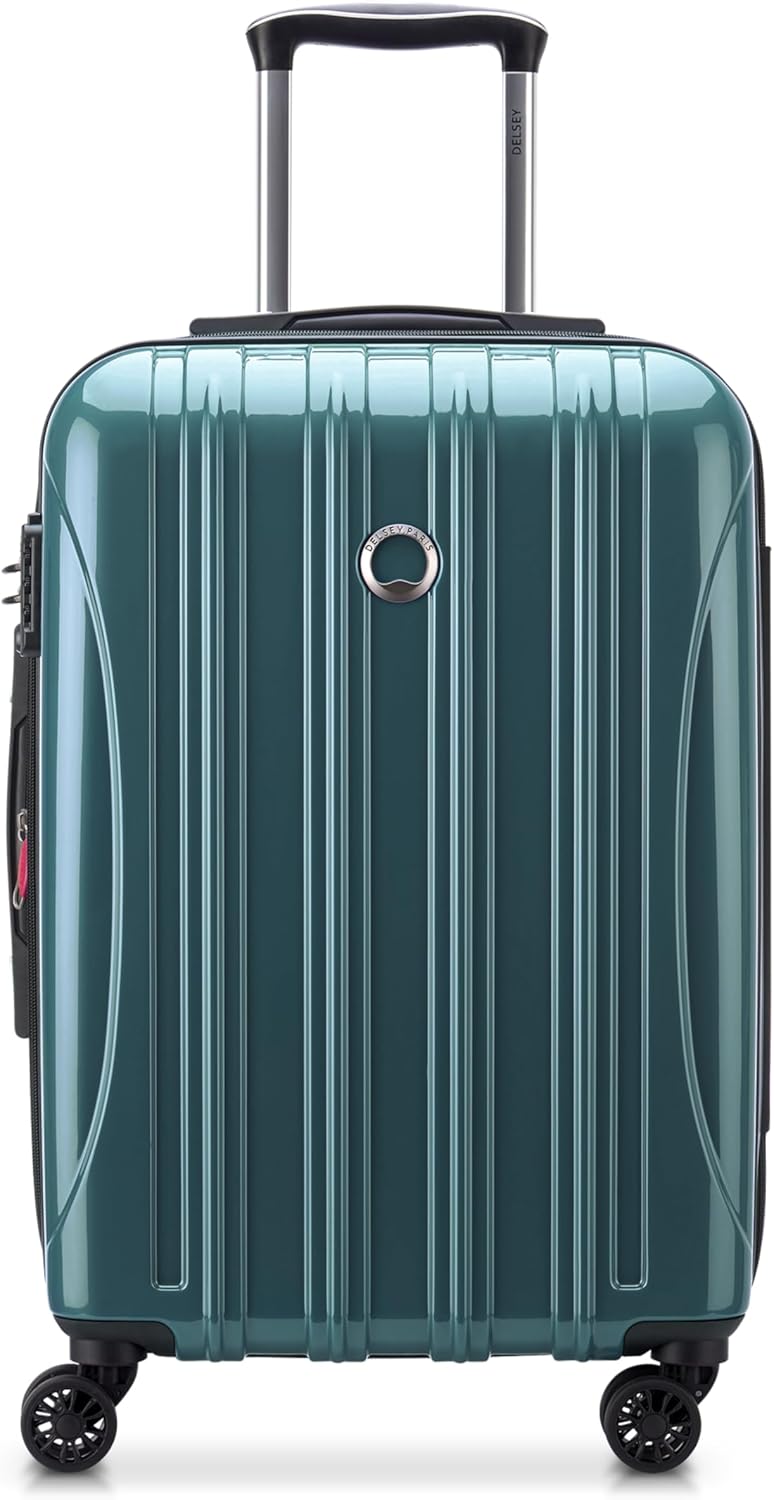
The shell is the first line of defense for your clothes, electronics, and souvenirs. The Delsey Helium Aero uses 100% polycarbonate, and that single fact separates it from many budget competitors that use ABS plastic or an ABS/polycarbonate blend. Polycarbonate is a thermoplastic polymer known for high impact resistance and flexibility. In plain English, it means the shell can flex under pressure—like when a baggage handler stacks a heavy bag on top of yours—without cracking or permanently deforming. ABS is cheaper and more rigid, but it turns brittle in cold cargo holds and shatters on sharp impacts.
Look closely at the finish. The Helium Aero features a deep, metallic brushed texture. This is not just aesthetic; it hides the inevitable scuffs and scratches from conveyor belts far better than high-gloss finishes. When evaluating construction, check the corners. These are the stress points. Delsey reinforces the corners with molded guards, a detail often missing on cheaper cases. If you travel frequently, this reinforcement alone can add years to the life of the bag.
2. Weight and Airline Compliance
Weight is the silent budget killer. Most major airlines enforce a 50-pound (23 kg) limit for checked bags and strict dimensional limits for carry-ons. Every pound the empty suitcase weighs is a pound of clothes, shoes, or gifts you cannot bring. The Helium Aero line is engineered specifically for lightness—hence the “Helium” name. The international carry-on (21-inch) typically weighs around 6.4 lbs (2.9 kg), while the large 29-inch checked version comes in near 9.5 lbs (4.3 kg). These are competitive numbers, but you must verify the specific model dimensions against your most flown airlines.
Pay special attention to “international” vs “domestic” carry-on sizing. The 21-inch Helium Aero is designed for international standards (roughly 21.5 x 14.5 x 9.5 inches including wheels/handle). Some US domestic carriers allow slightly larger bags (22 x 14 x 9), but budget carriers like Spirit, Frontier, or European low-cost airlines (Ryanair, EasyJet) are often stricter. If you fly basic economy or budget carriers often, measure the bag yourself—do not trust the marketing label alone.
3. Wheel System and Maneuverability
You will spend hours pushing or pulling this bag. The wheel system dictates whether that time is effortless or a wrist-straining chore. The Helium Aero uses double-spinner wheels—four wheels per corner, eight total. This is superior to two-wheel “inline skate” designs because it allows 360-degree upright rolling. You can glide it beside you down a narrow airplane aisle or push it in front of you through a crowded terminal without tilting the weight onto your arm.
However, not all spinner wheels are created equal. Look for recessed wheels. The Helium Aero wheels sit partially inside the shell profile. This protects them from snapping off if the bag is dropped or crushed against a curb. The wheels should use precision ball bearings, not simple plastic bushings. Spin a wheel with your finger; it should rotate freely for several seconds with a smooth, quiet hum, not a gritty rattle. The wheel housing material matters too; high-grade polyurethane tires over a nylon core absorb vibration from cobblestones or cracked pavement better than hard plastic.
4. Handle System Ergonomics and Durability
The telescoping handle is your primary interface with the bag. The Helium Aero features a multi-stage locking handle with an ergonomic comfort grip. “Multi-stage” means it locks at several heights (usually three), accommodating users of different heights. If you are tall, a handle that only extends to 38 inches will force you to hunch over, causing back strain. If you are shorter, a handle that doesn’t lock low enough will feel awkward.
Test the extension mechanism. It should glide out and retract with a solid, mechanical “click” at each stage, not a loose rattle. The tubes should be thick-gauge aluminum or reinforced steel. Thin tubes bend if you yank the bag up a curb or if a TSA agent handles it roughly. Also, check the top carry handle and side carry handle. They should be padded and riveted or bolted through the shell, not just screwed into plastic anchors. A broken carry handle turns a spinner into a drag-bag instantly.
5. Interior Organization and Expandability
This is where the “Expandable” in the name earns its keep. The Helium Aero typically offers 2 inches of expansion via a heavy-duty gusseted zipper around the main compartment. That 2 inches translates to roughly 15-20% more packing volume—enough for the extra pair of boots, the bulky sweater, or the duty-free bottles on the return trip. Crucially, the expansion zipper on this line is high quality (often YKK or equivalent) and runs smoothly without snagging on the fabric liner.
Inside, look for a fully lined interior. The Helium Aero uses a premium polyester lining with a distinct pattern. One half usually features a zippered divider panel with a large mesh pocket—perfect for dirty laundry, shoes, or toiletries you want to keep separate. The other half features tie-down compression straps (often elasticized with buckles) to cinch down contents and prevent shifting. Shifting clothes create wrinkles and can throw off the bag’s balance, making it tip over when standing upright. Some newer models include a removable wet pocket or a dedicated laptop sleeve in the carry-on version; verify the specific SKU if these matter to you.
6. Security Features: Locks and Zippers
Security is twofold: keeping honest people honest and surviving TSA inspection. The Helium Aero comes standard with a recessed, TSA-accepted combination lock integrated into the side of the case. “Recessed” means the lock mechanism sits flush with the shell, preventing it from snagging on conveyor belts or being used as a leverage point to pry the case open. “TSA-accepted” means Transportation Security Administration agents have a master key to open it without cutting the lock or damaging the zipper pulls.
The zippers themselves are the weak link on any soft-sided or hardside bag. The Helium Aero uses coil zippers (teeth are coiled nylon) rather than molded plastic teeth. Coil zippers are self-healing; if a tooth gets misaligned, zipping and unzipping usually forces it back into place. They also resist jamming from dust and sand better. Ensure the zipper pulls are large, metal, and easy to grip with cold or wet fingers. Small, flimsy plastic pulls break off quickly.
7. Warranty and Brand Support
A warranty tells you how much the manufacturer trusts their product. Delsey offers a 10-year limited warranty on the Helium Aero collection. This covers defects in materials and workmanship—broken wheels, handle mechanisms, zipper failure, shell cracking under normal use. It typically does not cover airline damage (crushed corners, punctures), cosmetic wear, or loss. However, Delsey has a widespread authorized repair network. Before buying, check if there is a repair center near you or if they offer a mail-in service with prepaid shipping labels. A lifetime warranty from a brand with no repair infrastructure is useless; a 10-year warranty from a brand with global service centers is gold.
8. Aesthetic Longevity and Resale Value
Luggage is a visual product. You want a bag that looks professional in a boardroom and rugged enough for a hostel dorm. The Helium Aero’s metallic color palette (Titanium, Deep Blue, Champagne, Rose Gold, Black) is deliberately timeless. Trendy patterns or neon colors date quickly and can make you a target for theft in some areas. The brushed finish, as mentioned, ages gracefully. If you ever decide to upgrade, Delsey luggage holds resale value surprisingly well on secondary markets like eBay or Poshmark because buyers recognize the brand’s durability. A well-maintained 5-year-old Helium Aero can often fetch 40-50% of its original retail price.
Different Types of Buying Guide

Common Buying Mistakes to Avoid
❌ Mistake: Buying Based Solely on Price Tag
Why it’s bad: A $80 suitcase that cracks on trip two costs you $40 per trip plus the hassle of replacing clothes and the bag mid-journey. The Helium Aero sits in the $180-$300 range, which feels steep compared to department store brands. However, the cost-per-trip over a decade of heavy use drops to pennies. Cheap luggage uses thin ABS shells, rivet-less handles, and bushings instead of bearings. These fail at the worst possible moment—usually at the airport, far from a store.
What to do instead: Calculate cost per expected trip. If you travel 4 times a year for 8 years, that is 32 trips. A $250 bag costs $7.80 per trip. A $100 bag lasting 2 years (8 trips) costs $12.50 per trip—and adds stress. Invest in the polycarbonate shell and double spinners once.
❌ Mistake: Ignoring “Linear Inches” vs “Internal Capacity”
Why it’s bad: Manufacturers advertise the external dimensions (linear inches = height + width + depth) to show airline compliance. But the internal capacity determines how much you actually pack. Wheels, handles, corner guards, and the expansion zipper gusset eat into interior space. A 25-inch bag from Brand A might hold 85 liters, while the Helium Aero 25-inch holds 92 liters expanded due to efficient corner radius design and recessed wheels.
What to do instead: Look for the liter (L) capacity spec. Compare the Helium Aero’s specs directly against competitors like Samsonite Freeform or Travelpro Maxlite. Pack a “test load” at home (use towels or clothes) to visualize the space before your trip.
❌ Mistake: Overlooking the Carry-On Size Trap
Why it’s bad: You buy the “Carry-On” size, arrive at the gate on a basic economy ticket or a European budget carrier, and the bag doesn’t fit the sizer. You are forced to gate-check and pay $60-$100. The Helium Aero 21-inch is sized for international carry-on limits (often 21.5 x 15.5 x 9.5 inches including wheels). Some US domestic “carry-on” bags are 22 x 14 x 9 inches—too big for Ryanair or Air France overhead bins.
What to do instead: Know your airline’s exact published dimensions. Measure the bag yourself at home with a tape measure, including wheels and handle housing. If you fly mixed carriers, buy the smallest compliant size (usually the 21-inch international).
❌ Mistake: Not Testing the “Tumble Factor”
Why it’s bad: A bag that rolls perfectly on a smooth showroom floor may wobble violently on airport tile or cobblestones. This “tumble factor” is caused by a high center of gravity, narrow wheelbase, or loose handle tubes. If the bag tips over every time you let go, you will hate it within an hour.
What to do instead: In the store (or immediately upon delivery), load the bag with 15-20 lbs of weight. Push it, pull it, spin it 360 degrees, and let go of the handle while walking. Does it stay upright? Does the handle wobble side-to-side? The Helium Aero’s wide wheel stance and low center of gravity generally score well here, but verify with your specific load distribution.
❌ Mistake: Forgetting the “Personal Item” Pairing
Why it’s bad: You optimize the carry-on but forget you also need a backpack, tote, or laptop bag that slides over the telescoping handle (via a “luggage pass-through” sleeve). If your personal item doesn’t have this sleeve, you are carrying two separate bags through the terminal, negating the spinner convenience.
What to do instead: Buy a matching Delsey backpack/tote (like the Chatelet Air or Titanium collections) or ensure your existing laptop bag has a rear sleeve that fits over the Helium Aero’s handle. Test the fit before you travel.
❌ Mistake: Assuming “Expandable” Means “Unlimited”
Why it’s bad: You pack the expanded bag to the brim, hit the airport, and it weighs 58 lbs. You now face a $100+ overweight fee (often $100 for 51-70 lbs, $200 for 71-100 lbs). The expansion zipper also strains the shell and seams if chronically overstuffed, leading to premature failure.
What to do instead: Use a handheld luggage scale. Pack the bag unexpanded first. Weigh it. Only expand if you have weight allowance remaining. Remember: the expansion is for volume (bulky items), not weight (dense items like books or shoes).
❌ Mistake: Skipping the Registration and Inspection
Why it’s bad: You skip the 5-minute online warranty registration. Two years later, a wheel bearing seizes. You have no proof of purchase date (receipt faded/lost), and the warranty claim is denied. Or, you don’t inspect the bag upon delivery, missing a factory defect like a misaligned zipper track or a scratched shell.
What to do instead: Register the warranty on Delsey’s website the day it arrives. Take photos of the serial number tag (usually inside the zippered liner pocket) and the receipt. Inspect every seam, wheel, handle lock, and zipper track immediately. Report defects within the return window (usually 30 days).
Budget Guidelines: How Much Should You Spend?
Understanding the price tiers helps you set realistic expectations and avoid overpaying for features you don’t need—or underbuying and regretting it. The Delsey Helium Aero sits firmly in the Mid-Range to Premium transition zone. Here is how the market breaks down:
Entry-Level ($50 – $120): The “One-Trip Wonder” Zone
Brands: Amazon Basics, Rockland, Merax, generic department store brands.
What you get: ABS or thin ABS/PC blend shells. Two-wheel inline skate systems. Plastic handle tubes that bend. No TSA lock (or a flimsy add-on). Thin polyester lining that tears. Zippers that jam.
Reality check: These are fine for a college student moving dorms once a year or a very occasional traveler checking a bag on a single annual vacation. They will not survive weekly business travel. Expect 2-4 trips before a major failure (wheel, handle, zipper, shell crack).
Helium Aero context: The Helium Aero costs roughly 2x the top of this tier but delivers 5-10x the lifespan. The math is undeniable if you travel more than once a year.
Mid-Range ($130 – $220): The Sweet Spot (Where Helium Aero Carry-Ons Live)
Brands: Delsey (Helium Aero, Chatelet Hard), Samsonite (Freeform, Omni PC), Travelpro (Maxlite 5, Platinum Elite), Briggs & Riley (Baseline – entry).
What you get: 100% Polycarbonate shells (mostly). Double spinner wheels with bearings. Multi-stage aluminum handles. TSA locks. Good interior organization. 5-10 year warranties.
Reality check: This is where 80% of travelers should buy. The Helium Aero carry-ons ($180-$220) are arguably the best value in this tier due to the superior brushed finish (hides scratches), recessed wheels (durability), and Delsey’s French engineering heritage. You are paying for materials and mechanics, not just marketing.
Premium ($230 – $400): The “Buy It For Life” Territory (Helium Aero Checked Sizes & Sets)
Brands: Delsey (Helium Aero Large/Sets, Chatelet Hard+), Samsonite (Proxis, Lite-Shock), Tumi (19 Degree, V4 – entry), Rimowa (Essential – entry), Briggs & Riley (Baseline, Torq).
What you get: Advanced materials (Roxkin, Curv, Tegris, high-grade Makrolon polycarbonate). Precision-engineered wheel modules (often replaceable). Lifetime warranties (Briggs & Riley, Tumi) with “no questions asked” airline damage coverage. Lighter weights for same volume. Better ergonomics.
Reality check: The Helium Aero 29-inch ($250-$300) and 3-piece sets ($450-$550) sit at the entry of this tier. They offer 90% of the performance of $600 bags for 50% of the price. If you are a heavy traveler (20+ trips/year), the step up to Briggs & Riley or Tumi for the lifetime airline damage warranty makes financial sense. For everyone else, the Helium Aero Premium tier is the rational ceiling.
Luxury ($400+ per piece): Status, Materials, and Service
Brands: Rimowa (Original, Classic), Tumi (high-end), Globe-Trotter, Horizn Studios (high-end), Louis Vuitton.
What you get: Aluminum-magnesium alloys, polycarbonate composites with carbon fiber, hand-stitched leather details, bespoke colors, white-glove repair service (loaner bags during repair), lifetime transferable warranties.
Reality check: You are paying for the brand, the feel, the resale value, and the service ecosystem. Functionally, a $1,200 Rimowa Original Check-L does not protect clothes better than a $280 Helium Aero 29-inch. Buy this tier if luggage is your hobby or status symbol, not if you just need reliable transport.

Expert Tips for Getting the Best Deal
- Time Your Purchase: Luggage follows predictable sales cycles. The best prices are: January (post-holiday clearance), May (pre-summer travel sales), July (Amazon Prime Day / competitor sales), November (Black Friday / Cyber Monday). The Helium Aero often drops 20-30% during these windows. Avoid buying in June or December at full price.
- Check “Open Box” and “Renewed” on Major Retailers: Amazon Warehouse, Best Buy Outlet, and Delsey’s own outlet store often sell returned Helium Aero bags with cosmetic-only issues (a scuff on the shell, damaged box) at 15-25% off. Since the shell hides scuffs anyway, this is free money. Verify the warranty still applies (usually it does for “Like New” condition).
- Buy the Set If You Need 2+ Sizes: The 3-piece set (21″+25″+29″) typically sells for $450-$550. Buying those three individually at sale prices would cost $600-$700. Even if you only need two sizes now, the third nests inside for storage and covers future needs (kids grow, trips get longer). Sets also guarantee color matching across years of production runs.
- Leverage Price Match Policies: Retailers like Target, Walmart, Best Buy, and Bed Bath & Beyond (online) will often match Amazon or Delsey.com prices plus apply a store coupon (e.g., 20% off one item via email signup). Stack the match + coupon for the lowest possible price. Bring the URL on your phone to the physical store.
- Use Cashback Portals and Credit Card Benefits: Before clicking “buy” on Delsey.com, Amazon, or a department store site, click through a cashback portal (Rakuten, TopCashback, your credit card’s shopping portal). Typical rates: 4-10% back. On a $500 set, that is $20-$50 cash back. Combine with a credit card offering purchase protection (covers damage/theft for 90-120 days) for free extended coverage.
- Inspect the “Date Code” on Clearance Items: Delsey stamps a manufacture date code inside the bag (often on the warranty card or liner tag). Luggage rubber/plastic components (wheel tires, handle grips, zipper tape) degrade slowly even in storage. Avoid “new old stock” older than 3-4 years unless deeply discounted (50%+ off). The polycarbonate shell is fine, but the soft goods may be brittle.
- Pack a “Repair Kit” in the Bag: This costs $5 and saves a trip. Include: a few zip ties (replace a broken zipper pull instantly), a small multi-tool (tighten loose handle screws), a pen (for customs forms), and a copy of your warranty registration confirmation. If a wheel bearing gets gritty, a drop of light oil (from a hotel sewing kit) quiets it for the rest of the trip.
- Know the Return Policy Before You Fly: Some retailers (Costco, Nordstrom, LL Bean, REI) have legendary “lifetime” or “no questions asked” return policies. If you buy your Helium Aero there, you have a safety net far beyond the manufacturer warranty. Costco specifically often carries the 3-piece set at a competitive price with their generous return policy. That membership fee pays for itself on one luggage return.

Frequently Asked Questions
Q: Is the Delsey Helium Aero waterproof?
A: No hardside luggage is fully waterproof. The Helium Aero is water-resistant. The polycarbonate shell itself is impervious to water. However, the zipper coils and the expansion gusset are entry points for heavy rain or standing water. In a downpour, water will eventually seep through the zipper teeth. For true waterproofing, use packing cubes with waterproof zippers (like YKK AquaGuard) or line the interior with a heavy-duty trash bag / dry bag for electronics and documents. The recessed zipper design helps shed water better than flush zippers.
Q: Can the wheels be replaced if they break?
A: Yes, but with caveats. The Helium Aero wheels are attached via screws into molded threaded inserts in the shell (not rivets). This means they are user-replaceable with a Phillips screwdriver. Delsey sells official replacement wheel kits (usually $25-$40 for a set of 4) through their website and authorized repair centers. Third-party “universal” spinner wheels on Amazon may fit, but the screw spacing and axle diameter must match exactly. Always buy OEM Delsey wheels for guaranteed fit and bearing quality. Save your receipt/warranty registration; Delsey often sends free wheels under warranty if the failure is a defect.
Q: Does the 21-inch International Carry-On fit in the overhead bin of a regional jet (CRJ/ERJ)?
A: Usually, but not guaranteed. Regional jets (Canadair CRJ-200/700/900, Embraer ERJ-145/175) have smaller, tapered overhead bins. The Helium Aero 21-inch is 21.5″ tall (including wheels). Many regional bins only accept bags up to 20″ tall if placed wheels-first in the tapered rear section. However, the Helium Aero’s depth (9.5″) is shallower than many competitors (often 10-11″), allowing it to fit wheels-first where deeper bags cannot. Strategy: Board early (Group 1/2 or priority). Place bag wheels-first, handle facing out. If forced to gate-check (pink tag), it goes in the cargo hold and is returned at the jet bridge—free and usually safe.
Q: How does the Helium Aero compare to the Samsonite Freeform?
A: They are the two heavyweights of the $180-$220 carry-on class. Samsonite Freeform: Slightly lighter (approx 6.0 lbs vs 6.4 lbs), more color options, often cheaper on sale, 10-year warranty. Shell is more glossy (shows scratches more). Wheels are slightly less recessed. Delsey Helium Aero: Brushed finish hides scratches better. Recessed wheels are more protected. Handle feels more premium (thicker tubes, better grip). Interior organization is slightly more thoughtful (elastic straps vs simple straps). Delsey’s 10-year warranty has better repair network reputation in Europe; Samsonite better in US. Verdict: If you prioritize absolute lightest weight and lowest price -> Freeform. If you prioritize durability feel, scratch resistance, and wheel protection -> Helium Aero.
Q: What is the difference between the Helium Aero and the Chatelet Hard+?
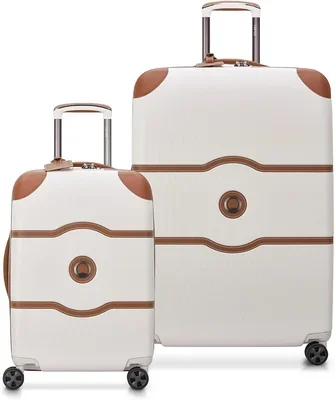
A: Both are Delsey polycarbonate spinners. Helium Aero: Modern, technical aesthetic. Brushed metallic finish. Recessed double wheels. Focus on pure function and lightness. Price: $180-$300. Chatelet Hard+: Vintage/Parisian aesthetic. Faux leather accents on handles and corners. Glossy finish with “leather” trim. Standard (non-recessed) double wheels. Slightly heavier. Includes a unique “Securitech” zipper (3x more resistant to forced entry) and a built-in TSA lock with a different design. Price: $250-$400. Choose Helium Aero for maximum durability/weight ratio. Choose Chatelet Hard+ for style, the Securitech zipper, and if you love the leather-trim look.
Q: Can I sit on the Helium Aero? (e.g., waiting in a long line)
A: Technically yes, practically no. The polycarbonate shell can support an adult’s weight (200+ lbs) without cracking if the weight is distributed evenly on the flat lid. However, the telescoping handle mechanism runs through the interior of the lid. Concentrated pressure (sitting on the handle hump) can bend the handle tubes or crack the plastic handle housing. The recessed wheels also mean the bag is less stable as a seat (tips sideways easily). Better: Carry a lightweight foldable stool ($15, 2 lbs) or sit on the floor/your carry-on backpack.
Q: Does the expansion zipper weaken the structural integrity?
A: Not on the Helium Aero. Delsey uses a reinforced “bridge” construction at the expansion gusset. The zipper runs through two layers of polycarbonate with a fabric gusset sandwiched between, rather than just joining two shell edges. This distributes stress. However, chronically traveling fully expanded (stuffed tight) puts constant tension on the zipper coils and the shell rim. Over years, this can lead to zipper misalignment or shell warping at the expansion seam. Best practice: Use expansion only when needed. Compress the bag back to standard size for storage and when weight is a concern.
Q: Is the TSA lock easy to set? I always forget the combination.
A: Yes, it is standard 3-dial. The default is 0-0-0. To set: 1) Open lock (0-0-0). 2) Press and hold the small reset button (usually a pinhole or lever on the bottom/side of the lock body) with a pen. 3) Turn dials to your desired code. 4) Release button. 5) Scramble dials. Pro Tip: Take a photo of your combination with your phone immediately after setting it. Email it to yourself or save in a password manager. If you forget, there is no “backdoor” for you—only TSA has the master key. A locksmith can pick it, but that costs more than a new lock.
Q: How do I clean the brushed metallic finish?
A: The beauty of the brushed finish is that it hides dirt. For actual cleaning: Use a microfiber cloth dampened with warm water and a drop of mild dish soap. Wipe in the direction of the brush grain (usually vertical). Dry with a clean microfiber cloth. Do not use: Armor All, tire shine, Goo Gone, acetone, alcohol wipes, or abrasive cleaners (Magic Erasers). These will strip the clear coat or leave a sticky residue that attracts more dirt. For scuff marks from other luggage (black rubber streaks), a pencil eraser (art gum) works wonders gently rubbed along the grain.
Q: What is the actual capacity difference between the 25″ Medium and 29″ Large?
A: The numbers vary slightly by model year, but typically: 25″ Medium: ~75 Liters standard / ~90-92 Liters expanded. 29″ Large: ~98 Liters standard / ~118-122 Liters expanded. That is a ~30% jump in volume. The 29″ is significantly larger—it is the “move abroad” or “family of 4 for 2 weeks” size. The 25″ is the “1 person, 10-14 days” or “2 people, 1 week” size. Critical: The 29″ expanded will almost certainly exceed the 62 linear inch (L+W+H) checked bag limit on many airlines if you expand it fully. Keep it unexpanded for airline compliance; use expansion only for road trips or shipping via freight.
Our Final Recommendations
Best for Budget-Conscious Buyers: Delsey Helium Aero 21″ International Carry-On (Solo)
If you can only buy one piece, make it this one. At ~$180-$200 on sale, it covers 80% of trips (business, weekends, carry-on only vacations). It forces packing discipline, saves checked bag fees ($35-$70 round trip), and eliminates lost luggage risk. The polycarbonate shell and double spinners give you 90% of the premium experience for half the price of a set. Wait for a May or November sale.
Best Overall Value: Delsey Helium Aero 3-Piece Set (21″ + 25″ + 29″)
This is the mathematical winner. At ~$480-$520 on sale, you get three bags for the price of 2.2 individual bags. You cover every scenario: carry-on only, week-long checked, and “kitchen sink” moves. They nest for storage (21″ inside 25″ inside 29″). Color match is guaranteed. The per-bag cost drops to ~$160-$175. If you have a household with 2+ travelers, or you take varied trips, this is the single smartest purchase.
Best Premium Option: Delsey Helium Aero 25″ Medium Checked (Standalone or + Carry-On)
The 25-inch is the “Goldilocks” checked bag. Large enough for 10-14 days of clothes or two people’s week, small enough to stay under 50 lbs easily (empty weight ~8.2 lbs), and maneuverable enough to not feel like wrestling a refrigerator. At ~$230-$250, it sits at the top of the Mid-Range / entry Premium tier. Pair it with the 21″ carry-on for the ultimate 2-bag travel system (~$420 on sale). You skip the massive 29″ unless you know you need it.
Best for Beginners / Infrequent Travelers: Delsey Helium Aero 22″ Domestic Carry-On (if US-based)
If you fly mostly US domestic (Southwest, Delta, United, American mainline) and rarely check bags, the 22″ Domestic version gives you ~15% more packing volume than the 21″ International for the same price (~$200). It fits standard US overhead bins (22 x 14 x 9). The slightly larger footprint makes packing easier (less Tetris). You avoid the stress of “will it fit?” on regional jets by… not flying regional jets often. Simple, spacious, durable.
Best for Advanced Users / Heavy Travelers: Delsey Helium Aero 21″ Carry-On + 25″ Medium + Compression Packing Cubes
The bag is the hardware; packing cubes are the software. Advanced travelers know the Helium Aero’s clamshell opening is designed for cubes. Buy a set of 3-4 compression cubes (e.g., Eagle Creek, Peak Design, Gonex). One cube for tops, one for bottoms, one for underwear/socks, one for laundry. The compression zippers on the cubes remove air, letting you fit 30% more in the same bag, often avoiding the need to expand or check a bag. This combo (Bag + Cubes) is the ultimate efficiency hack.
Conclusion: Making the Right Choice
We have covered a lot of ground—from the molecular structure of polycarbonate to the geometry of spinner wheels, from airline linear-inch math to the psychology of brushed metallic finishes. The Delsey Helium Aero Expandable series stands out because it refuses to compromise on the fundamentals: a 100% polycarbonate shell that flexes instead of cracks, double-spinner wheels recessed for survival, a handle system built for human ergonomics, and a warranty backed by a century-old French company with a global repair network.
Your perfect choice comes down to honesty about your travel reality. Are you the carry-on minimalist? The 21-inch International is your partner. The family planner? The 3-piece set is your fleet. The “two-week Europe in fall” traveler? The 25-inch Medium hits the volume/weight/maneuverability trifecta. There is no “best” bag in a vacuum—only the best bag for your next trip.
Do not overthink the color. Titanium hides scratches best. Deep Blue hides scuffs and looks sharp. Champagne shows personality but shows dirt slightly more. Black is invisible on a black carousel—tie a bright ribbon. Pick the one that makes you smile when you pull it from the closet.
Now you have the knowledge. You know the jargon. You know the traps. You know the price cycles. You know how to inspect, register, maintain, and repair. Go buy the bag that fits your life. Pack it well. Travel safe. And enjoy the journey—because with the right luggage, the journey really is half the fun.