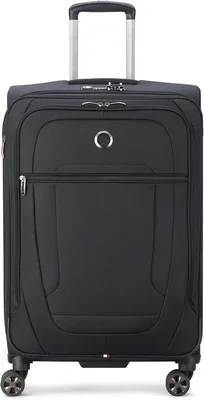
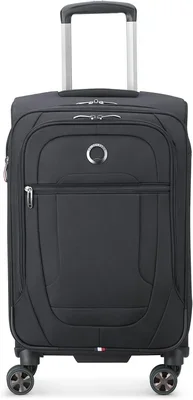
Shopping for a large checked suitcase can feel overwhelming. You are faced with dozens of brands, confusing technical specs, and price tags that range from budget-friendly to eye-watering. If you have landed on the Delsey Hyperglide 25-inch expanding spinner, you are already looking at one of the most popular contenders in the mid-range luggage market. But popularity alone doesn’t guarantee it’s the right fit for your specific travel style.
This guide exists to cut through the marketing noise. We are going to break down every aspect of this suitcase—and its direct competitors—so you can buy with total confidence. Whether you are a frequent flyer racking up elite status or a family packing for a two-week vacation, understanding the nuances of durability, wheel quality, expansion mechanics, and warranty terms will save you money and headaches down the road. By the end of this article, you will know exactly what to prioritize, what to ignore, and how to spot a genuine deal.
The luggage market in the 25-inch category is fiercely competitive. Brands like Samsonite, Travelpro, Briggs & Riley, and American Tourister all fight for the same overhead bin space—well, checked baggage space in this case. Delsey, a French heritage brand founded in 1946, positions the Hyperglide series as a sweet spot: lighter than the heavy-duty “pro” lines but significantly more durable than entry-level department store brands. We will explore where this specific model shines, where it compromises, and how it stacks up against the alternatives you are likely considering.

What to Look for When Buying Buying Guide
1. Shell Material and Impact Resistance
The very first thing you need to understand is what the suitcase is made of. The Delsey Hyperglide uses a 100% polycarbonate shell. In layman’s terms, polycarbonate is a high-tech plastic that is incredibly tough but flexible. Think of it like a football helmet: it can take a massive hit and flex back into shape rather than cracking or shattering.
This is a critical differentiator. Cheaper suitcases often use ABS plastic or an ABS/polycarbonate blend. ABS is rigid and brittle. If a baggage handler throws an ABS suitcase onto a conveyor belt, it might crack. Polycarbonate will bounce. The Hyperglide uses a textured finish on this polycarbonate, which does two things: it hides the inevitable scratches and scuffs from conveyor belts, and it provides a better grip when you are lifting a heavy 50-pound bag into a trunk.
What to look for: Verify the shell is 100% polycarbonate, not a blend. Check the texture—matte or brushed finishes hide wear better than high-gloss. Press on the shell; it should have a slight “give” or flexibility, not feel like a hard brittle board.
2. Wheel System: Spinner vs. Inline and Bearing Quality
Since this is a “spinner,” it has four wheels that rotate 360 degrees. This allows you to push the bag beside you rather than dragging it behind you. It saves your wrist and shoulder on long terminal walks. However, not all spinner wheels are created equal. The Hyperglide features double wheels (two wheels per corner, eight total). This is a massive stability advantage over single-wheel spinners.
Double wheels distribute the weight across a wider surface area. They are far less likely to snap off if you hit a curb or a crack in the pavement. But the real magic—and the hidden spec—is the bearing inside the wheel hub. Delsey uses precision ball bearings in the Hyperglide line. Cheaper bags use a simple plastic bushing (a hole in the plastic wheel spinning on a metal axle). Ball bearings roll smoother, quieter, and last exponentially longer.
What to look for: Double wheels (8 total) are non-negotiable for a 25-inch checked bag. Spin the wheels in the store (or watch close-up videos). They should spin freely for several seconds after a flick and feel silent. Grindy, wobbly, or sticky wheels indicate cheap bushings.
3. Handle System: Telescoping Mechanism and Ergonomics
The handle is your primary interface with the bag. The Hyperglide uses a multi-stage telescoping handle made of aluminum. “Multi-stage” means it locks at several heights (usually 3 or 4), accommodating users of different heights. This is essential. If you are 6’2″ and the handle only locks at a height for someone 5’6″, you will be hunched over, ruining your back.
Look for a handle that retracts flush into the body of the suitcase. Some cheaper designs leave a hump or a gap inside the packing cavity, eating up precious volume. The Hyperglide’s handle tubes are recessed into the back panel. Also, check the grip material. A rubberized or soft-touch grip is far superior to hard plastic for comfort and sweat management.
What to look for: At least 3 lock positions. Smooth extension/retraction with a satisfying “click” at each stage. Zero wobble when fully extended and locked. Recessed tubes that don’t intrude into packing space.
4. Expansion Mechanism and Real-World Capacity
The “Expanding” in the name refers to a zippered gusset that lets the suitcase grow deeper—usually by 1.5 to 2 inches. On the Hyperglide 25, this adds roughly 15-20% more volume. This is a lifesaver for return trips when you have souvenirs, dirty laundry that takes up more space, or duty-free purchases.
Here is the catch: Airlines have strict linear inch limits (Length + Width + Height) for checked bags, usually 62 inches. A 25-inch spinner is typically around 25 x 18 x 11 inches unextended (54 linear inches). Expanded, it might hit 25 x 18 x 13 (56 linear inches). You are usually safe, but you must weigh the bag. The expansion adds zero structural support; it’s just fabric. Overpacking an expanded bag stresses the zipper and the shell seams.
What to look for: A strong, self-repairing zipper (YKK or equivalent) on the expansion gusset. The expansion fabric should be high-denier nylon or polyester (ballistic nylon is best). Test the zipper—it should glide, not catch.
5. Interior Organization and Packing Efficiency
You are buying a 25-inch bag for volume, but volume is useless without organization. The Hyperglide typically features a clamshell opening (opens 50/50) with a full zippered divider on one side and compression straps on the other. The divider usually has a large zippered mesh pocket—perfect for toiletries, cables, or underwear.
Compression straps are vital. They cinch down your clothes, preventing the “suitcase explosion” when you open it at the hotel. They also keep the center of gravity stable so the bag doesn’t tip over when standing. Look for a “suiter” system or a dedicated garment sleeve if you travel with suits or dresses. The Hyperglide often includes a removable suiter sleeve that folds flat.
What to look for: Full zippered divider (not just a flap). Mesh pocket on divider. Sturdy compression straps with metal or heavy-duty plastic buckles. Removable wet/dry pocket or suiter sleeve. Light-colored lining (makes finding items easier).
6. Security Features: TSA Locks and Zipper Design
Every checked bag needs a TSA-approved lock. The Hyperglide integrates a recessed, 3-dial combination lock into the shell. “Recessed” is the keyword here. Protruding locks get snapped off by conveyor belts. The lock secures the two main compartment zippers together.
Equally important is the zipper design. The Hyperglide uses double-coil zippers (two rows of teeth). This allows the lock to secure both zipper pulls. Single-coil zippers can often be forced open with a pen and re-zipped without you knowing. Double coils are puncture-resistant. Some newer Delsey models feature “SecuriTech” zippers which are even more resistant to forced entry.
What to look for: Recessed TSA lock (not a padlock loop). Double-coil (or SecuriTech) main zippers. Zipper pulls that are large enough to grip with cold or gloved hands.
7. Weight and Airline Weight Limits
This is the silent budget killer. Most US domestic airlines have a 50 lb (23 kg) weight limit for checked bags. International or budget carriers can be as low as 40-44 lbs. The Hyperglide 25 typically weighs between 9.5 and 10.5 lbs depending on the specific generation. That leaves you roughly 39-40 lbs for your stuff.
A heavier bag (like a vintage aluminum Rimowa at 13+ lbs) eats your payload. A super-light bag (6-7 lbs) often sacrifices durability (thin shell, flimsy wheels). The Hyperglide sits in the “Goldilocks zone”—structurally sound but not a brick. Always weigh the empty bag before you buy if possible, or check the manufacturer’s spec sheet carefully.
What to look for: Target weight under 10.5 lbs for a 25-inch polycarbonate spinner. Verify the weight includes wheels and handle (some specs list “shell only”).
8. Warranty and Brand Support
Luggage takes a beating. A warranty is the manufacturer’s promise that they stand behind their engineering. Delsey offers a 10-year limited warranty on the Hyperglide series. “Limited” is the standard industry term—it covers manufacturing defects (broken wheels, handle failure, zipper failure, shell cracking under normal use). It does not cover airline damage, cosmetic wear, or loss.
Crucially, check how claims are handled. Delsey has authorized repair centers in many major cities. If you have to ship the bag to France for a wheel replacement, the shipping cost might exceed the bag’s value. Brands like Briggs & Riley offer a “Simple as That” lifetime warranty with no proof of purchase required and free shipping for repairs—that is the gold standard. Delsey’s 10-year is very good for the price point, but read the fine print on registration requirements.
What to look for: Minimum 5-10 year warranty. Accessible repair network (or prepaid shipping labels). Clear claim process. Coverage for wheels, handles, and zippers—the three highest failure points.
Different Types of Buying Guide

Common Buying Mistakes to Avoid
❌ Mistake: Buying Based Solely on Brand Name
Why it’s bad: Big names like Samsonite or Tumi have entry-level lines that use cheaper materials (ABS blends, single wheels, plastic bearings) to hit a price point. A $150 Samsonite might be inferior to a $220 Delsey Hyperglide. The brand on the logo doesn’t guarantee the specs inside.
What to do instead: Ignore the logo. Compare the spec sheet: Shell material (100% Polycarbonate?), Wheel type (Double spinner ball bearings?), Handle stages, Weight, Warranty length. Buy the specs, not the badge.
❌ Mistake: Ignoring the “Linear Inch” Math
Why it’s bad: You buy a massive 28 or 30-inch suitcase thinking “more space.” You show up at the airport, and the bag exceeds the 62 linear inch limit (L+W+H). You get hit with a $100-$200 oversize fee instantly. A 25-inch bag is the strategic maximum for standard checked baggage.
What to do instead: Stick to 25-inch (or 26-inch max) for checked luggage. Measure the bag yourself including wheels and handles. Confirm the airline’s specific policy before you fly—basic economy fares sometimes have stricter limits.
❌ Mistake: Overvaluing “Lightweight” as the #1 Spec
Why it’s bad: The lightest 25-inch spinners (6-7 lbs) achieve that weight by thinning the polycarbonate shell, using single wheels, plastic handle tubes, and minimal internal structure. They dent easily, wheels snap off, and handles bend. You save 3 lbs of bag weight but risk a catastrophic failure mid-trip.
What to do instead: Target the 9.5 – 10.5 lb range for a 25-inch polycarbonate bag. That weight indicates sufficient material thickness for durability. Your back will thank you for the durable wheels and handle more than it will notice the extra 2 lbs.
❌ Mistake: Not Testing the Expansion Zipper
Why it’s bad: The expansion zipper is the highest-stress zipper on the bag. In stores, bags sit empty. You don’t feel the tension. A cheap expansion zipper will burst open under the pressure of a fully packed expanded bag, spilling clothes onto the baggage carousel.
What to do instead: If buying in person, expand the bag and stuff it with display pillows or jackets. Zip it. Does it strain? Does the zipper track straight? If buying online, read reviews specifically mentioning “expansion zipper burst” or “zipper failure.”
❌ Mistake: Forgetting About the Return Trip
Why it’s bad: You pack the bag perfectly at home, weighing 48 lbs. You buy souvenirs, duty-free liquor, and dirty laundry expands. Your return bag weighs 65 lbs. You face massive overweight fees ($100-$200) or have to wear three sweaters and stuff pockets at the counter.
What to do instead: Pack a foldable duffel bag inside your Hyperglide. On the return, move soft goods (dirty clothes) to the duffel as a carry-on/personal item (if weight allows) or pay for a second checked bag online in advance (cheaper than airport fee). Leave 5-10 lbs of weight buffer on the outbound.
❌ Mistake: Skipping Luggage Registration
Why it’s bad: Many warranties (including Delsey’s) require you to register the product online within a certain window (often 30-90 days) to activate the full coverage. If a wheel falls off in month 11 and you didn’t register, you pay for the repair.
What to do instead: The moment the box arrives, find the warranty card/QR code. Register it on the manufacturer’s website. Take a photo of the receipt and the serial number label (usually inside the bag or on the handle tube). Save it to your cloud storage.
❌ Mistake: Assuming “Spinner” Means “All-Terrain”
Why it’s bad: Spinner wheels are designed for smooth airport floors, hotel lobbies, and sidewalks. They are terrible on cobblestones, gravel, sand, grass, or snow. The small wheels catch, the axles bend, and the bearings grind. Dragging a 50lb spinner over cobblestones will destroy it.
What to do instead: If your trip involves rough terrain (European old towns, beach resorts, outdoor adventures), buy a two-wheeled “roller” bag with large, recessed inline skate wheels (like the Travelpro Platinum Elite or Osprey Meridian). Keep the Hyperglide for smooth-surface trips.
Budget Guidelines: How Much Should You Spend?
Entry-Level ($80 – $150): The “One Trip Wonder”
At this price, you are almost exclusively buying ABS or ABS/Polycarbonate blend shells. Wheels will be single spinners with plastic bushings. Handles will be two-stage steel or thin aluminum. Zippers will be single-coil. The lining will be thin, unlined polyester.
What you get: A box to hold clothes. It will likely survive 2-4 checked trips before a wheel cracks, the handle jams, or the shell cracks at a corner.
Who should buy: College students moving dorms (car, not plane), kids’ luggage, extremely infrequent travelers (once every 3 years), or as a “disposable” bag for a move.
Representative Models: American Tourister Moonlight, Rockland Melbourne, Amazon Basics Hardside.
Mid-Range ($180 – $300): The Sweet Spot (Delsey Hyperglide Lives Here)
This is where you get 100% Polycarbonate shells, double spinner wheels with ball bearings, multi-stage aluminum handles, recessed TSA locks, double-coil zippers, and 10-year warranties. The fit and finish are noticeably tighter. The shell texture is better. The interior organization is thoughtful.
What you get: A suitcase that can handle 5-10+ trips per year for 5-10 years. It protects your belongings from rain, crushing, and rough handling. Repairs are often feasible (replaceable wheels).
Who should buy: The vast majority of leisure travelers, families, and business travelers checking a bag. This is the “buy once, cry once” tier.
Representative Models: Delsey Hyperglide 25, Samsonite Freeform 25, Travelpro Maxlite 5 25 (softside but same tier), Ricardo Beverly Hills Rodeo Drive.
Premium ($450 – $700): The “Buy It For Life” Tier
Here you pay for advanced material engineering (lighter, stronger polycarbonate blends like Makrolon or Curv), lifetime “no questions asked” warranties (Briggs & Riley), precision Japanese wheels (Hinamoto), and hand-stitched leather accents. The weight drops to 8-9 lbs for the same strength.
What you get: Heirloom quality. If a wheel bearing fails in 12 years, the manufacturer emails you a prepaid label, fixes it, and ships it back free. The resale value remains high.
Who should buy: Road warriors (flying 20+ weeks/year), travelers who check fragile gear (camera equipment in padded cases), buyers who hate shopping for luggage and want to do it once.
Representative Models: Briggs & Riley Sympatico CX 25, Tumi 19 Degree Aluminum/Polycarbonate, Rimowa Essential Check-In L.
Luxury ($800+): Status and Extreme Protection
This is aluminum, magnesium, or carbon fiber territory. The shells don’t flex; they are rigid monocoques. They weigh 12-15 lbs empty. They dent instead of cracking (dents can be popped out). They are theft-proof (no zippers to slash). They are fashion statements.
What you get: Maximum physical security for contents. Incredible aesthetics. A lifetime of patina development. Very heavy.
Who should buy: Luxury travelers, collectors, those transporting extremely high-value fragile items where a dented shell is preferable to a cracked one.
Representative Models: Rimowa Classic Check-In L, Zero Halliburton Classic, Away The Large Aluminum.
Expert Tips for Getting the Best Deal
- Time Your Purchase: Luggage goes on deep sale three times a year: January (post-holiday clearance), May (pre-summer travel prep), and November (Black Friday/Cyber Monday). The Hyperglide 25 frequently hits 30-40% off MSRP during these windows. Avoid buying in June or December at full price.
- Check “Open Box” and “Refurbished”: Retailers like Amazon Warehouse, eBay (certified refurbished), and brand outlet stores sell returned luggage. Often the bag was returned because the color wasn’t right or the buyer bought the wrong size. You can save 20-30% with full warranty. Inspect the wheels and handle immediately upon arrival.
- Use Price History Tools: Install browser extensions like CamelCamelCamel (Amazon) or Honey. They show you the price history. If the Hyperglide is currently $280 but was $199 last November, wait. Don’t fall for “Limited Time Deal” banners if the price history shows it’s the regular price.
- Buy the Previous Generation: Delsey updates the Hyperglide every 2-3 years (e.g., Hyperglide 2.0, 3.0). When the new version launches, the old version is cleared out. The changes are usually cosmetic (new colors, slightly different zipper pull, updated logo). The core chassis (shell, wheels, handle) often remains identical. Save $50-$80 buying the “old” model new in box.
- Leverage Credit Card Benefits: Many premium travel credit cards (Chase Sapphire Reserve, Amex Platinum, Capital One Venture X) offer purchase protection that covers damage/theft for 90-120 days. Some extend the manufacturer’s warranty by an extra year. Pay with the right card for free extended coverage.
- Check Airline Employee Stores / Discount Programs: If you know anyone who works for an airline, hotel, or travel agency, they often have access to “pro deals” or employee purchase programs offering 40-50% off brands like Delsey, Travelpro, and Briggs & Riley. It never hurts to ask politely.
- Bundle with Packing Cubes: Retailers often bundle a set of packing cubes with the suitcase during promotions. Packing cubes are essential for a 25-inch bag to keep it organized. Getting them “free” adds $30-$50 value.
- Understand the Return Policy: Buy from a retailer with a generous return window (30-60 days) and free return shipping (Amazon, Zappos, Nordstrom, REI, LL Bean). When the bag arrives, pack it fully for a “dress rehearsal.” Weigh it. Roll it around your house. Check the handle height. If it doesn’t feel right, send it back. Don’t keep a $250 mistake.

Frequently Asked Questions
Q: Is the Delsey Hyperglide 25-inch considered a “large” checked bag?
A: Yes. In the luggage industry, 25-26 inches is classified as “Large Checked.” 27-28 is “Extra Large” (often oversize), and 29-32 is “Jumbo” (almost always oversize). The 25-inch is the standard size for a 1-2 week trip for one person, or a long weekend for a couple sharing a bag.
Q: What is the actual packing capacity in liters?
A: The Hyperglide 25 typically offers around 95-100 liters unextended and 110-115 liters expanded. For context, a standard carry-on is ~35-40 liters. This bag holds roughly 2.5x a carry-on volume.
Q: Can I use this as a carry-on?
A: Absolutely not. At ~25 inches tall (plus wheels/handle), it exceeds the maximum carry-on limit (usually 22 inches) by a significant margin. It must be checked. Attempting to carry it on will result in a forced gate check and potential fee.
Q: How does the Hyperglide compare to the Samsonite Freeform 25?
A: They are direct rivals. The Freeform is often slightly lighter (~9 lbs vs ~10 lbs) and has a more modern, geometric shell design. The Hyperglide typically has a more robust handle mechanism and a better interior layout (removable suiter/wet pocket). The Freeform wheels are excellent (double spinner). The Hyperglide usually wins on price when on sale. You can’t go wrong with either; pick the one on sale or the aesthetic you prefer.
Q: Are the wheels replaceable on the Delsey Hyperglide?
A: Yes, but with a caveat. The wheels are attached via screws into the shell (riveted on some older models, screwed on newer). Delsey sells replacement wheel kits (usually a set of 2 or 4). You need a Torx screwdriver (usually T10 or T15) and some mechanical aptitude. If you aren’t handy, an authorized repair shop can do it for ~$30-$50 labor plus parts. This repairability is a major plus over cheap bags where wheels are riveted permanently.
Q: Does the 10-year warranty cover airline damage?
A: No. No standard luggage warranty covers airline damage (crushed corners, torn wheels, punctured shells). That is what travel insurance or the airline’s liability is for (though airline liability is capped and difficult to claim). The warranty covers defects: a wheel bearing seizing, a handle button sticking, a zipper tooth misaligning, or the shell cracking along a seam without impact.
Q: What is the “SecuriTech” zipper and does this model have it?
A: SecuriTech is Delsey’s proprietary zipper design where the zipper pulls are integrated into the slider in a way that makes them impossible to separate with a pen (a common theft tactic on standard double-coil zippers). Newer generations of the Hyperglide (3.0 and later) feature SecuriTech on the main compartment. Check the product description for “SecuriTech” or “anti-theft zipper.”
Q: How do I clean the polycarbonate shell?
A: Use a microfiber cloth dampened with warm water and mild dish soap. Wipe down the exterior. For scuff marks (black rubber marks from conveyor belts), a “Magic Eraser” (melamine foam) works wonders—rub gently. Do not use harsh solvents (acetone, bleach, Goo Gone) as they can cloud or weaken the polycarbonate. Clean the wheels by blowing out debris with compressed air.
Q: Is the Hyperglide water-resistant?
A: The polycarbonate shell itself is waterproof. The zippers are water-resistant (coiled zippers shed water well) but not waterproof. In a heavy downpour or if the bag sits in a puddle on the tarmac, water can seep through the zipper teeth. For true waterproofing, use a rain cover (cheap elasticized cover) or pack critical electronics/clothes in waterproof dry bags or ziplock bags inside.
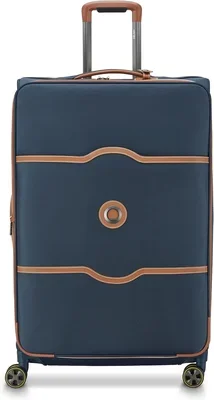
Q: What is the difference between the Hyperglide and the Delsey Chatelet?
A: The Chatelet is Delsey’s “heritage” line. It uses the same polycarbonate shell and similar wheel/handle hardware but features a retro aesthetic (leather accents, brass-finish hardware, unique colorways like “Champagne” or “Marine Blue”). It costs $50-$100 more for the look. The Hyperglide is the “performance” line—more utilitarian, better color hiding (textured finish), usually lighter, and better value. Same guts, different skin.
Our Final Recommendations
Best for Budget-Conscious Buyers: Delsey Hyperglide 25 (Previous Gen / On Sale)
If you watch the price and strike when it drops near $200, this is unbeatable value. You get 100% polycarbonate, double ball-bearing wheels, a recessed TSA lock, and a 10-year warranty for the price of a budget ABS bag. Buy the previous generation in a clearance color to maximize savings. It covers 95% of traveler needs.
Best Overall Value: Delsey Hyperglide 25 (Current Gen) at Standard Price (~$250)
Even at full MSRP (often ~$280-$300), it outperforms competitors like the Samsonite Freeform in handle ergonomics and interior organization. The removable suiter/compression sleeve is a thoughtful touch missing on many rivals. It is the safe, smart, “no regrets” purchase for a family’s primary checked bag.
Best Premium Option: Briggs & Riley Sympatico CX 25-Inch Spinner
If your budget stretches to ~$550, this is the upgrade. It uses Makrolon polycarbonate (lighter/stronger), Hinamoto wheels (the smoothest in the industry), and the legendary “Simple as That” lifetime warranty—covers airline damage, no receipt needed, free shipping both ways for repairs. It is the last checked bag you will ever buy.
Best for Beginners / Infrequent Travelers: Samsonite Freeform 25-Inch Spinner
Widely available at Costco, Target, and department stores. You can see and touch it before buying. The return process is effortless. It’s slightly lighter than the Hyperglide and the geometric shell design hides scratches exceptionally well. A perfectly competent “first real suitcase.”
Best for Advanced Users / Rough Travel: Travelpro Platinum Elite 25-Inch Spinner (Softside)
If you check bags on regional jets, throw them in pickup truck beds, or travel to places with cobblestones and dirt roads, switch to a high-end softside. The Platinum Elite uses ballistic nylon, massive inline skate wheels, a PowerScope handle, and a lifetime warranty. It absorbs impacts that would crack a hard shell and squeezes into tight cargo holds.
Conclusion: Making the Right Choice
You started this guide looking for information on the Delsey Hyperglide 25-inch expanding spinner. You are finishing it with a framework for evaluating any piece of luggage. Remember the hierarchy of needs: Shell material (Polycarbonate) > Wheel system (Double ball-bearing spinners) > Handle ergonomics (Multi-stage, recessed) > Weight (Under 10.5 lbs) > Warranty (10+ years, accessible repair). The Hyperglide checks every single one of these boxes at a price that respects your wallet.
Don’t overthink the color. Don’t obsess over the exact liter count. Focus on the fact that this bag is engineered to survive the baggage handling system—the conveyor belts, the tugs, the rain, the stacking—while keeping your clothes dry and organized. It is a tool. A good tool gets the job done and stays out of your way.
Your next step is simple. Check the current price against the history. If it’s near the low end ($200-$220), click buy. If it’s high, set an alert and wait two weeks. Register the warranty the day it arrives. Pack a scale. And then go have the trip you’ve been planning. The right luggage doesn’t make the trip, but the wrong luggage can sure ruin it. You’ve just ensured you have the right one. Safe travels.