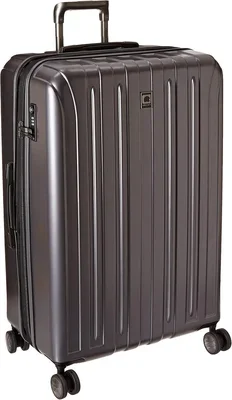
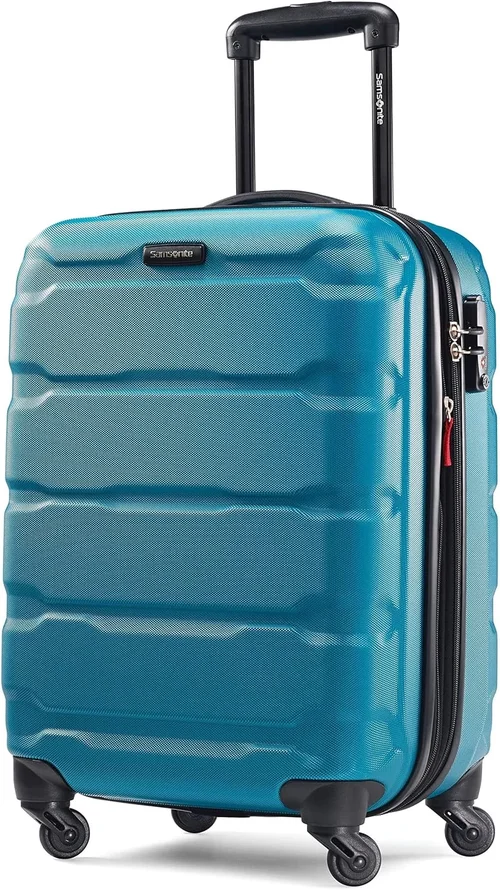
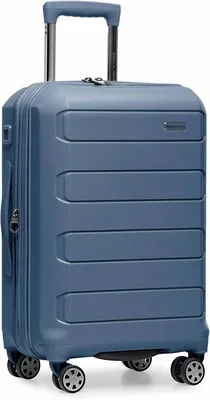
Shopping for a hardside carry-on can feel overwhelming. You are faced with a wall of polycarbonate shells, spinner wheels that promise the moon, and price tags that range from a weekend splurge to a major investment. If you have been eyeing the Echo Max 22 expandable hardside carry-on spinner luggage, you already know that the market is packed with options that look nearly identical on the surface. But the devil is in the details. A handle that jams on a cobblestone street, a zipper that bursts at the seams, or a shell that cracks under pressure can turn a dream vacation into a logistical nightmare.
This guide exists to cut through the marketing noise. We are not here to sell you a specific brand; we are here to teach you how to buy. By the end of this article, you will understand the materials science behind the shell, the engineering behind the spinner wheels, and the fine print of warranty policies. You will learn how to match a suitcase to your travel style—whether you are a weekly business commuter, a family vacation planner, or a minimalist weekend warrior. We will break down the “Budget vs. Premium” reality, expose the common traps that catch smart shoppers off guard, and give you a clear roadmap to the best hardside carry-on for your money.
The carry-on market has shifted dramatically in the last five years. Airlines have tightened size restrictions, materials have moved from brittle ABS to flexible polycarbonate blends, and “smart luggage” regulations have forced a redesign of built-in battery packs. We will cover all of this. Think of this as your pre-flight check. Once you finish reading, you will walk into a store or click “checkout” with the confidence of a seasoned buyer who knows exactly what separates a travel companion from a disposable box.

What to Look for When Buying Buying Guide
1. Shell Material and Impact Resistance
The shell is the skeleton of your luggage. It takes the hits from baggage handlers, the compression of overhead bins, and the scraping of conveyor belts. You will see three main materials on the market: ABS (Acrylonitrile Butadiene Styrene), Polycarbonate, and Polypropylene. ABS is the entry-level choice. It is rigid and cheap, but it is also brittle. A hard drop on a cold tarmac can spider-web an ABS shell. Polycarbonate is the industry gold standard for a reason. It flexes under pressure rather than cracking, absorbing impact energy and popping back into shape. It is lighter than ABS and significantly more durable. Polypropylene sits in the middle—it is very flexible and lightweight, but it scuffs easily and can feel “plasticky.”
When evaluating a case like the Echo Max 22 expandable hardside carry-on spinner luggage, look for 100% polycarbonate or a high-percentage polycarbonate blend. Marketing terms like “PC composite” often hide a high ABS content. Press on the shell with your thumb. A quality polycarbonate case will yield slightly and feel cool to the touch. An ABS case will feel hard, hollow, and warm. If you travel frequently or check your bag at the gate occasionally, polycarbonate is non-negotiable. If you are a once-a-year traveler on a strict budget, ABS will survive, but treat it gently.
2. Wheel Engineering: Spinner vs. Inline
Four-wheel spinners (360-degree rotation) are the standard for carry-ons today, and for good reason. They allow you to push the bag beside you, navigate narrow airplane aisles, and spare your wrist and shoulder. However, not all spinners are created equal. The wheel housing is the weak point. Recessed wheels—where the wheel sits partially inside the shell profile—are superior. They protect the wheel hub from snapping off if the bag is dropped or crushed. Exposed wheels roll smoother on carpet but are vulnerable.
Look at the wheel material. Cheap luggage uses hard plastic wheels that rattle on tile and crack on gravel. Premium bags use polyurethane (PU) or rubberized wheels with sealed ball bearings. These roll silently, handle cracks in pavement, and last years. Test the spin in the store. Flick the wheel with your finger. It should spin freely for 10-15 seconds with a smooth, quiet hum. A gritty sound or immediate stop indicates cheap bearings or misalignment. Also, check the wheel width. Wider wheels (2.5 inches+) distribute weight better and handle cobblestones or brick paths far better than narrow pencil wheels.
3. Handle System: Telescoping Mechanism and Ergonomics
The handle is your connection to the bag. A wobbly, sticky, or short handle creates fatigue fast. Most modern carry-ons use a two-stage or three-stage aluminum telescoping handle. Three stages allow a lower minimum height, which is critical for shorter travelers or children pulling the bag. The tubes should be thick-walled aircraft-grade aluminum, not thin steel that bends if you lean on the bag.
Grip the handle. Is it contoured rubber or hard plastic? Rubber absorbs vibration from rough pavement. Does the release button sit flush or protrude? Protruding buttons get snapped off by conveyor belts. Crucially, test the “wobble.” Extend the handle fully, grip the grip, and wiggle it side-to-side. A tiny amount of play (1-2mm) is normal for smooth extension. If the handle feels like a loose tooth, the internal bushings are cheap, and the handle will eventually jam or snap. The Echo Max 22 expandable hardside carry-on spinner luggage features a multi-stage handle; verify the locking mechanism engages with a solid click at each stage, not a vague mush.
4. Interior Organization and Expandability
A hardside shell splits into two equal halves (clamshell) or a deep bucket with a shallow lid. Clamshells are standard for carry-ons because they let you pack two flat compartments, keeping clothes pressed and organized. Look for a full zippered divider in the center. Mesh pockets on the divider are essential for underwear, socks, cables, and toiletries. Cross straps (X-straps) in the bottom half compress clothing and prevent shifting.
Expandability is a game-changer for return trips. A zippered gusset adds 1.5 to 2.5 inches of depth. However, expanded luggage often exceeds airline carry-on size limits. Most US domestic airlines allow 22 x 14 x 9 inches. An expanded 22-inch bag usually hits 11-12 inches deep. You can carry it on expanded only if the gate agent is lenient or the flight is half-empty. Never rely on it. Use the expansion for checked-bag scenarios or road trips. Check the expansion zipper quality—it takes the most stress. YKK or SBS branded zippers with large, easy-to-grip pulls are ideal. Self-repairing coil zippers are better than molded tooth zippers, which jam if a single tooth breaks.
5. Locks, Zippers, and Security Features
TSA-approved combination locks are standard on quality hardside luggage. They allow TSA agents to inspect your bag without cutting the lock. Look for a recessed lock body integrated into the shell. Protruding locks snag and break. The lock should operate smoothly; dial the combination several times. Stiff dials mean dirt ingress or poor machining.
Zipper security matters more than the lock. A locked zipper on a coil zipper can be penetrated with a ballpoint pen in seconds—the zipper pulls separate, the pen opens the coil, and the thief zips it closed again, leaving no trace. The only true defense is a zipper with anti-puncture pulls (often called “Securitech” or “YKK RCW” zippers) where the pulls interlock or the coil is reinforced. If your budget allows, prioritize this feature. Otherwise, use a cable tie through the zipper pulls as a tamper-evident seal.
6. Weight and Airline Compliance
Every ounce counts. A 6-pound empty carry-on leaves you only 34-44 pounds for contents (depending on airline weight limits, often 40-50 lbs for carry-on on international flights, though US domestic rarely weighs carry-ons). Ultra-light polycarbonate spinners now weigh 5.5 to 6.5 lbs for a 22-inch. Anything over 7.5 lbs is heavy for a modern polycarbonate case. ABS cases are often heavier for the same durability.
Measure the bag yourself. Manufacturer specs often measure the shell body only, ignoring wheels, handles, and bumper feet. A “22-inch” bag with large wheels and a top carry handle often measures 23.5 inches total height. That 1.5 inches gets you gate-checked. Bring a tape measure to the store. Measure height (with wheels), width (at widest point, usually the wheel housing), and depth (including expansion zipper if applicable). The Echo Max 22 expandable hardside carry-on spinner luggage is designed to fit major US carriers, but always verify against your most flown airline’s specific sizer.
7. Warranty, Repair Network, and Brand Support
A warranty is only as good as the company behind it. “Lifetime warranty” sounds great, but read the fine print. Does it cover airline damage? (Most don’t). Does it cover wheels and handles? (The parts that break most). Is there a repair center in your country, or do you ship the bag to China at your expense? Major brands (Briggs & Riley, Travelpro, Samsonite, Tumi, Away) have authorized repair centers globally. They stock wheels, handles, and zipper pulls. You walk in, they fix it while you wait.
Budget brands often have “warranty departments” that require photos, receipts, and 6-8 week turnarounds. For a $150 bag, that hassle rarely pays off. For a $400+ bag, a robust repair network saves you from buying a new suitcase every three years. Register your product immediately upon purchase. Keep the receipt digitally. Take photos of the luggage tag and serial number.
8. Aesthetics, Color, and Personalization
This seems superficial, but it is practical. A black bag is invisible on a black carousel. A unique color (olive, sand, navy, terracotta) or a distinct pattern saves you 15 minutes of staring at identical black boxes. It also deters theft—thieves grab the anonymous bag. Matte finishes hide scuffs; gloss shows character (scratches) immediately. Consider add-ons: leather luggage tags, colorful handle wraps, or patterned straps. These make identification instant. Some brands offer monogramming or custom colorways. If you travel often, a distinctive bag is a quality-of-life upgrade.
Different Types of Buying Guide
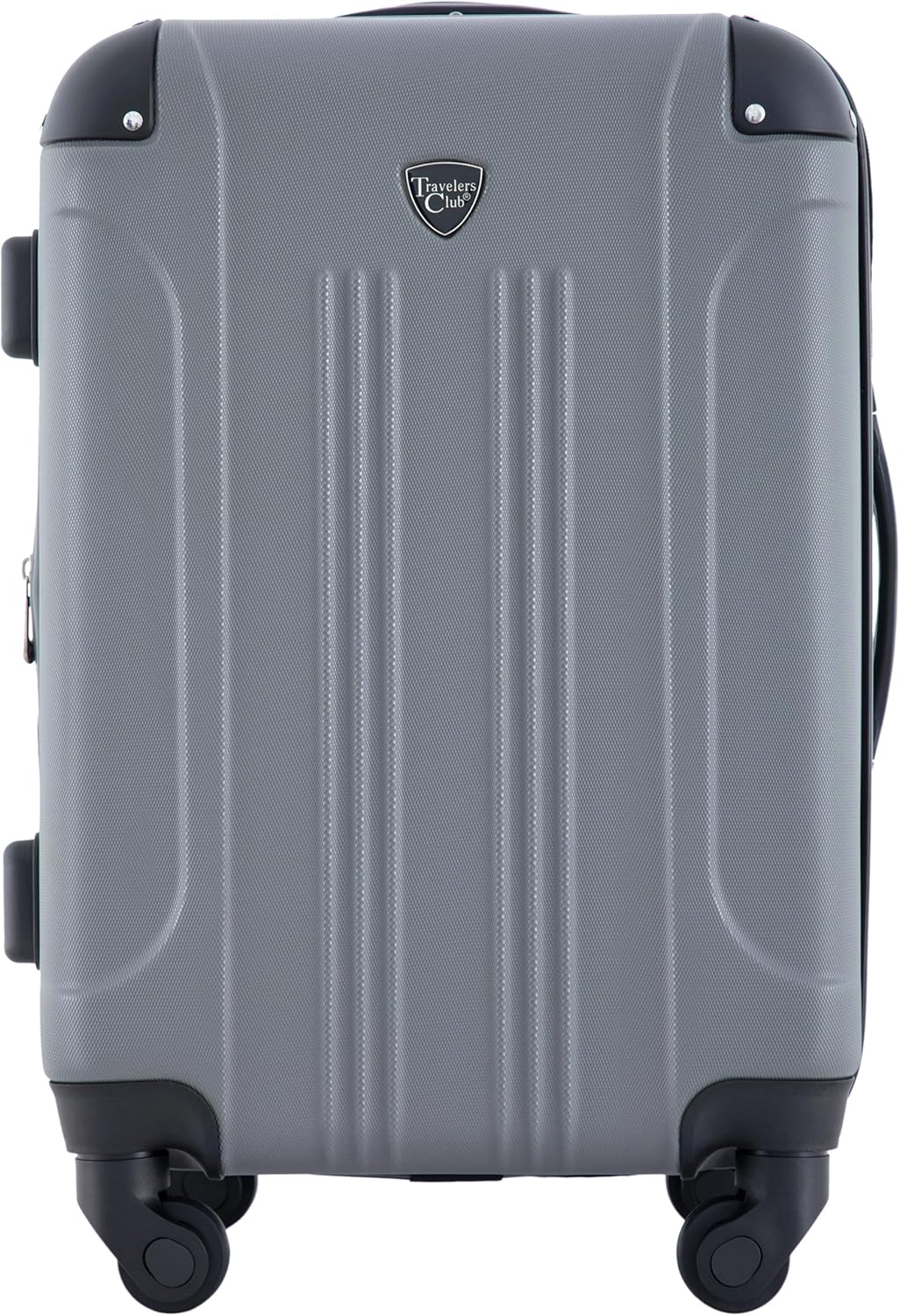
Common Buying Mistakes to Avoid
❌ Mistake: Buying Based on Brand Name Alone
Why it’s bad: Legacy brands often license their name to third-party manufacturers for entry-level lines. A $100 “Samsonite” at a big-box store shares nothing but a logo with their $400 polycarbonate line. The materials, wheel bearings, and zipper quality are completely different. You pay for the label, not the engineering.
What to do instead: Ignore the logo. Inspect the spec sheet. Look for “100% Polycarbonate,” “YKK Zippers,” “Hinomoto Wheels” (Japanese gold standard), “Aircraft Aluminum Handle.” These component brands tell you the real quality. Read 3-star reviews on retailer sites—they reveal the real-world failures better than 5-star unboxing videos.
❌ Mistake: Ignoring “Linear Inches” vs. Exterior Dimensions
Why it’s bad: Airlines measure linear inches (Length + Width + Height). A bag sold as “22-inch carry-on” might be 22 x 14 x 9 (45 linear inches) which fits most US domestic. But add wheels (2 inches), a top handle (1 inch), and side bumper feet (0.5 inches each side), and you hit 49+ linear inches. That bag fits in the sizer only if you angle it perfectly. Gate agents use the sizer as a hard pass/fail.
What to do instead: Measure the bag yourself at the widest points including all protrusions. Target a bag that measures 44 linear inches or less externally. This gives you a 1-inch buffer for manufacturing tolerances and overstuffing. If you fly international carriers (Ryanair, EasyJet, British Airways), the limits are often stricter (e.g., 55x40x20cm / 21.6×15.7×7.8in). Buy to the strictest standard you fly.
❌ Mistake: Overvaluing “Smart” Features (Built-in Batteries, GPS, Scales)
Why it’s bad: Airlines ban checked luggage with non-removable lithium-ion batteries. Since carry-ons are frequently gate-checked on full flights, a built-in battery renders your bag un-checkable unless you can remove the battery easily. Many “smart” bags have batteries screwed in or glued. GPS trackers add weight and subscription fees. Built-in scales are rarely accurate and add mechanism complexity.
What to do instead: Buy a “dumb” high-quality bag. Add a $25 Apple AirTag or Tile tracker inside. Carry a $10 handheld luggage scale. Use a $30 Anker power bank that you can move between bags, pockets, and hotel rooms. Modular tech beats integrated obsolescence every time.
❌ Mistake: Choosing Glossy Finish for High-Use Travel
Why it’s bad: High-gloss polycarbonate looks premium in the showroom. After two trips through baggage claim, it looks like it was dragged behind a truck. Micro-scratches catch light and make the bag look old instantly. You cannot buff them out easily.
What to do instead: Choose matte, textured, or brushed finishes. They hide scratches, scuffs, and conveyor belt rubber marks. A 3-year-old matte bag still looks professional. A 3-month-old gloss bag looks beaten. If you love the glossy look, accept it as a “costume” piece for light leisure travel only.
❌ Mistake: Skipping the “Shake Test” and “Push Test” In-Store
Why it’s bad: Online photos hide structural flaws. A bag can look perfect but have a handle that binds, wheels that track sideways, or a shell that flexes alarmingly when you press the corners.
What to do instead: If buying in-store: 1) Extend handle, shake vigorously. Listen for rattles (loose rivets, broken wheel bearings). 2) Push it loaded with 15 lbs (use store demo weights or your backpack). It should track straight, not veer. 3) Press hard on the shell corners. It should flex and rebound, not creak or stay dented. 4) Open/close main zipper 5 times. Smooth? Teeth align? If buying online, order two top contenders from a free-return retailer (Amazon, Zappos, REI, brand direct). Test them side-by-side at home. Return the loser.
❌ Mistake: Assuming Expandability Means Carry-On Compliant
Why it’s bad: Marketing shows the bag expanded, implying you get “free extra space.” In reality, an expanded 22-inch carry-on is almost always over the depth limit (9 inches). You will be forced to gate-check it, paying fees ($30-$60) and risking damage/loss.
What to do instead: Treat expansion as a “checked bag mode” or “road trip mode.” Pack the bag unexpanded for flights. Use the expansion only when you check the bag intentionally or drive. If you must* carry-on expanded, fly Southwest or JetBlue (generous sizers) and board early (Group A/B). Never risk it on basic economy or full flights.
❌ Mistake: Neglecting Interior Lining Quality
Why it’s bad: Cheap linings are thin polyester that tears at the seams, snags on velcro, and pills into fuzz balls that stick to clothes. They are glued, not sewn, to the shell. A tear means loose threads wrapping around wheels or handle mechanisms.
What to do instead: Look for 150D-300D polyester or nylon lining, preferably ripstop. Check the attachment: sewn into the shell gusset is best. Zippered lining access (a “hidden pocket” at the bottom) lets you inspect the frame, retrieve lost items, or repair a stuck handle cable without destroying the bag. This is a hallmark of premium construction.
Budget Guidelines: How Much Should You Spend?
Entry-Level ($50 – $120): The “Get Me There” Tier
At this price, you are buying ABS or thin polycarbonate/ABS blend. Wheels are plastic, often single-bearing. Handles are two-stage steel. Zippers are unbranded coil. Linings are thin glued polyester. Warranty is typically 1-2 years limited, no repair network. What to expect: 2-3 years of light leisure use (1-2 trips/year). It will scuff, wheels will get noisy, handle may stick. It protects clothes from rain and crushing. Best for: Students, infrequent flyers, kids’ luggage, backup bag. Watch for: “Polycarbonate” claims under $100—usually a thin layer over ABS. Check weight; heavy ABS defeats the purpose.
Mid-Range ($150 – $300): The Sweet Spot for Most Travelers
This is where 100% polycarbonate becomes standard. Wheels upgrade to double-spinner Hinomoto or equivalent PU wheels with sealed bearings. Handles are three-stage aluminum. Zippers are YKK or SBS. Linings are sewn ripstop. Warranty extends to 5-10 years or “limited lifetime” with actual repair centers. What to expect: 5-8 years of regular use (4-10 trips/year). Wheels and handles are replaceable. Shell resists cracking. Best for: Business travelers, families, anyone flying monthly. The Echo Max 22 expandable hardside carry-on spinner luggage competes aggressively in this tier, often offering premium features (anti-puncture zippers, TSA lock, recessed wheels) near the $200-$250 mark. This is the tier where cost-per-trip drops below $10.
Premium ($300 – $550): The “Buy It For Life” Tier
Brands: Briggs & Riley, Travelpro Platinum Elite, Tumi International, Rimowa Essential (polycarbonate), Away Bigger Carry-On (with caveats). Materials: Makrolon or Bayer polycarbonate (highest grade). Wheels: Hinomoto Lisof Silent Run (whisper quiet, indestructible). Handles: Custom ergonomic grips, zero-wobble tolerances. Zippers: YKK RCW anti-puncture or Securitech. Warranty: True lifetime, “no questions asked,” including airline damage (Briggs & Riley is famous for this). Repair: Global network, loaner programs. What to expect: 10-20+ years. You replace wheels/handles like tires on a car. The shell outlasts your career. Best for: Road warriors (weekly flights), status chasers, gift buyers. The cost-per-trip approaches zero over a decade.
Luxury ($600+): The Status & Engineering Tier
Brands: Rimowa Original (aluminum), Tumi 19 Degree (aluminum/tecarbon), Globe-Trotter, Horizn Studios. Materials: Aluminum-magnesium alloy, carbon fiber, titanium hardware. Construction: Riveted (aluminum) or monocoque molding. Features: Integrated TSA locks (seamless), leather handles, customizable interiors, electronic tags. Reality check: Aluminum dents. It doesn’t crack, but it shows every bump as a badge of honor (or annoyance). It is heavier (9-11 lbs). You pay for heritage, design, and resale value. Best for: Luxury travelers, collectors, those who want luggage as jewelry. Not practical for max-weight budget airline travel.
Expert Tips for Getting the Best Deal
- Time Your Purchase: Black Friday/Cyber Monday is good, but “Travel Sales” in January and September are better for luggage specifically. New models launch in Feb/March and Aug/Sept. Last year’s model is structurally identical.
- Buy Direct for Warranty: Purchasing from the brand’s website (Away, Briggs & Riley, Travelpro, Monos) ensures warranty registration is automatic and you get the full “lifetime” terms. Third-party sellers (even authorized) sometimes complicate claims.
- Use Price History Tools: CamelCamelCamel (Amazon) or Honey/Capital One Shopping show you the 90-day price history. Don’t buy at a “sale” price that is the regular price.
- Leverage Credit Card Benefits: Many premium cards (Chase Sapphire, Amex Platinum, Citi Prestige) offer purchase protection (damage/theft for 90-120 days) and extended warranty (doubles manufacturer warranty up to 1 year). Pay with the right card.
- Test the “Personal Item” Fit: Before buying, place your daily backpack/laptop bag on top of the carry-on (using the rear strap/sleeve). Does it balance? Does it block the handle? Does the combo fit under the seat in front of you? This “stackability” is crucial for under-seat storage on basic economy.
- Check Return Policy for “Used” Inspection: REI, Nordstrom, LL Bean, and Away allow returns after use (30-100 days). Take a weekend trip. If the wheels wobble or the handle hurts your hand, return it. This is the only true test.
- Register Immediately: Photograph the receipt, the serial number tag (usually inside near the handle tube), and the luggage tag. Email it to yourself. Register on the brand site. This takes 3 minutes and saves hours of grief later.
- Consider a “Travel Bundle”: Brands often sell Carry-On + Checked Large + Packing Cubes at 15-20% off individual prices. If you need a checked bag anyway, the bundle math works. Don’t buy a checked bag you don’t need just for the discount.

Frequently Asked Questions
Q: What is the difference between the Echo Max 22 and a standard 22-inch carry-on?
A: The “Max” designation typically indicates maximum allowable exterior dimensions for US domestic airlines (22 x 14 x 9 inches) combined with an expansion zipper that adds packing volume for non-carry-on use. A standard 22-inch might be slightly smaller (e.g., 21.5 inches) to guarantee fit on international carriers with stricter limits. The Echo Max 22 prioritizes volume for US travelers; check your specific airline if you fly internationally often.
Q: Can I actually carry on an expanded hardside bag?
A: Technically, rarely. Most US airlines allow 9 inches depth. Expanded bags are 11-12 inches deep. You might squeeze by on a half-empty flight with a soft-sided bag that compresses. A hardside shell cannot compress. The sizer is a rigid box. If it doesn’t drop in flat, you gate-check. Use expansion only when you plan to check the bag or travel by car/train.
Q: Are spinner wheels really better than two wheels?
A: For flat airports, hotels, and smooth sidewalks: yes, spinners are superior (push, don’t pull). For cobblestones, gravel, dirt paths, curbs, or snow: two large inline wheels (like on Travelpro Crew or Briggs & Riley Baseline) roll over obstacles; spinners get stuck, snap, or fill with debris. If 80% of your travel is urban airports/hotels, spinners win. If you do adventure travel or European old towns, consider a two-wheel “roller” hardside.
Q: How do I clean a polycarbonate hardside shell?
A: Magic Eraser (melamine foam) works wonders on scuffs and rubber marks. Dampen slightly, rub gently. For deep cleaning: mild dish soap, warm water, microfiber cloth. Avoid solvents (acetone, alcohol, Goo Gone) — they can cloud or crack polycarbonate. Dry thoroughly. Lubricate wheel bearings annually with a drop of light machine oil (3-in-1 or sewing machine oil) if they sound gritty.
Q: What does “Limited Lifetime Warranty” actually cover?
A: It covers manufacturing defects in materials and workmanship (broken zipper pull, handle stuck out of box, wheel bearing seizure). It almost never covers: airline damage (crushed corners, torn wheels), cosmetic wear (scratches, dents), loss, theft, or damage from overpacking. Brands like Briggs & Riley and Red Oxx are rare exceptions covering airline damage. Always read the specific warranty PDF before buying.
Q: Is a built-in TSA lock worth it vs. a separate lock?
A: Built-in is more convenient (no lost keys, no loose lock dangling). But if the lock mechanism fails, the whole zipper pull assembly may need replacement. A high-quality separate TSA lock (Master Lock, Forge, Lewis N. Clark) can be moved between bags and replaced for $15. If you buy a bag with a built-in lock, ensure the lock body is recessed and the zipper pulls have a lockable hole even if the lock breaks.
Q: How much does a quality 22-inch carry-on weigh empty?
A: Target 5.5 – 6.8 lbs (2.5 – 3.1 kg) for polycarbonate. Under 5.5 lbs often means thin shell or minimal structure (less durable). Over 7 lbs is heavy for modern materials (unless it’s aluminum). The Echo Max 22 expandable hardside carry-on spinner luggage typically weighs around 6.5-7 lbs, balancing durability and weight. Remember: every pound of bag is a pound less of clothes.
Q: Can I repair a cracked polycarbonate shell?
A: Small cracks (<1 inch) can be stabilized with epoxy (JB Weld PlasticWeld) and fiberglass tape on the inside, but it's cosmetic only. The structural integrity is compromised. Large cracks or shattered corners = replacement. This is why polycarbonate's flex is better than ABS’s brittleness. Polycarbonate rarely cracks catastrophically; it dents and rebounds.
Q: What packing cubes fit best in a clamshell carry-on?
A: Look for “half-cube” sets (e.g., Eagle Creek, Peak Design, Gonex, Amazon Basics). Two half-cubes (17x12x3 inches) fit perfectly side-by-side in one half of a 22-inch clamshell. A full cube (17x12x6) fits in one half but leaves awkward gaps. Compression cubes save 30% volume but wrinkle clothes more. Match cube height to your bag’s half-depth (usually 3-4 inches unexpanded).
Q: Should I buy a matching checked bag set?
A: Only if you genuinely need a checked bag. Matching sets look nice but force you into the same brand’s large size, which may not be the best value or weight for checked luggage. Checked bags take more abuse; you might want a cheaper “beater” checked bag (softside is often lighter and more durable for checking) and keep your premium carry-on for the cabin. Mix and match freely.
Our Final Recommendations
Best for Budget-Conscious Buyers: Amazon Basics 21-Inch Hardside Spinner (or similar Costco/Kirkland Signature)
At ~$70-90, this ABS/polycarbonate blend gets you a functional spinner with a TSA lock and decent interior organization. It won’t survive weekly gate-checks, but for 3-4 leisure trips a year, it delivers 80% of the experience for 25% of the premium price. Accept the noise, the wobble, and the scuffs. It is a tool, not an heirloom.
Best Overall Value (The Sweet Spot): Echo Max 22 Expandable Hardside Carry-On Spinner Luggage
This model hits the critical intersection: 100% polycarbonate shell, Hinomoto-style silent spinner wheels, three-stage aluminum handle, YKK anti-puncture zippers, recessed TSA lock, and a sewn ripstop liner with zippered access. Priced typically $200-$250, it offers 90% of the premium brand performance (Travelpro Platinum, Briggs & Riley) at 60% of the cost. The expansion gusset is reinforced, the wheel housing is recessed, and the handle wobble is minimal. It fits US domestic sizers unexpanded. For the traveler flying 4-10 times a year who wants one bag to last a decade, this is the rational choice.
Best Premium Option: Briggs & Riley International Carry-On Expandable Spinner
Price: ~$450-500. Why: The only major brand with a true “Simple as That” lifetime warranty covering airline damage. If a baggage handler crushes a corner, they fix it free. The CX expansion system compresses clothing inside the shell, adding volume without expanding exterior dimensions—meaning it stays carry-on legal while expanded. Makrolon polycarbonate, Hinomoto Lisof wheels, zero-wobble handle. It is an investment that pays dividends in peace of mind.
Best for Beginners: Away The Bigger Carry-On
Price: ~$300-350. Why: Away removed the friction from buying luggage. Direct-to-consumer, beautiful colors, lifetime warranty (functional parts), 100-day trial, ejectable battery (optional, removable), and a cult-favorite unboxing experience. The polycarbonate is good (not Makrolon grade), wheels are decent (not Hinomoto), handle is comfy. It is the “iPhone of luggage”—easy, reliable, stylish, slightly overpriced for specs, but you pay for the ecosystem and hassle-free support. Perfect for a first “nice” bag.
Best for Advanced Users / Road Warriors: Travelpro Platinum Elite 22-Inch Expandable Spinner
Price: ~$350-400. Why: Designed by a pilot, for pilots. The “Contour Grip” handle is ergonomically superior for heavy loads. “PowerScope” handle extends with one hand, locks magnetically. “Magnetrap” wheel pockets keep wheels tucked in overhead bins. PrecisionGlide system (ball bearings + polyurethane) is buttery smooth. Fabric is high-density nylon with DuraGuard coating (scuff/water resistant) — lighter than polycarbonate, more abrasion resistant. This is the tool professionals choose when their livelihood depends on the bag working perfectly, every time.
Conclusion: Making the Right Choice
You started this guide facing a wall of similar-looking boxes. Now you see the architecture underneath. You know that polycarbonate flexes where ABS snaps. You know that recessed Hinomoto wheels survive the baggage system while exposed plastic wheels shatter. You know that a “lifetime warranty” without a repair center is a marketing slogan, not a safety net. You understand that the Echo Max 22 expandable hardside carry-on spinner luggage represents a remarkable engineering value—delivering premium components at a mid-range price—while brands like Briggs & Riley sell you an insurance policy against airline chaos, and Away sells you a lifestyle.
The “best” carry-on does not exist. The right carry-on exists for you. If you fly twice a year to visit family, the budget tier serves you honorably. If you commute weekly between Chicago and New York, the premium tier pays for itself in saved time and avoided replacements. If you want the satisfaction of owning a beautifully designed object that makes packing feel like a ritual, the luxury tier delivers joy. There is no wrong answer—only mismatched expectations.
Take your tape measure. Check your airline’s sizer. Honestly assess your travel frequency and terrain. Set your budget. Then buy the bag that matches your reality, not the influencer’s highlight reel. A great suitcase disappears. It rolls silently beside you, fits every overhead bin, protects your belongings, and asks for nothing but an occasional wheel lubrication. When you find that bag, travel stops being about the luggage and starts being about the destination. That is the goal. Safe travels, and enjoy the journey.