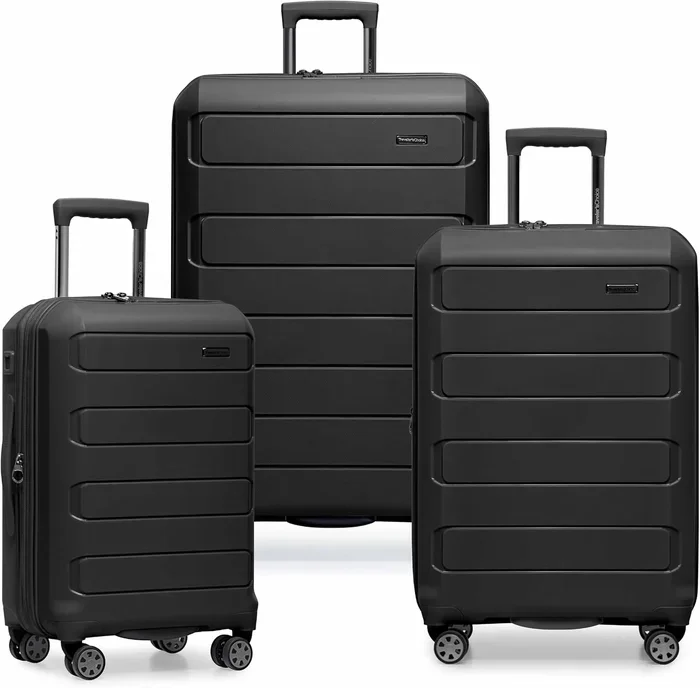
Shopping for luggage can feel overwhelming. You’re faced with endless options, confusing specifications, and price tags that range from budget-friendly to luxury investment. If you’ve been eyeing the Gabbiano Bravo Collection 3-Piece Expandable Luggage Set, you’re likely looking for that sweet spot where durability meets value. This guide exists to cut through the marketing noise and give you the knowledge to make a confident purchase. We’ll walk through every critical factor—from spinner wheel quality to shell material—so you know exactly what you’re getting before you click “buy.”
Over the next several sections, we’ll break down the anatomy of a great luggage set, compare the Bravo collection against the broader market, and highlight the common pitfalls that lead to buyer’s remorse. Whether you’re a weekend warrior hopping on short domestic flights or a frequent international traveler, understanding these nuances will save you money and headaches down the road. Think of this as having a seasoned travel companion whispering advice in your ear before you commit.
The luggage market is flooded with brands promising “lightweight durability” and “smooth maneuverability,” but the reality often falls short. The Gabbiano Bravo line positions itself as a mid-range contender, aiming to deliver premium features—like 360-degree spinner wheels and expandable capacity—without the premium price tag. But does it deliver? Let’s dive deep into the factors that actually matter when your luggage is your lifeline on the road.

What to Look for When Buying Luggage Sets
1. Shell Material and Construction
The shell is your luggage’s first line of defense against baggage handlers, conveyor belts, and overpacked overhead bins. You’ll typically encounter three main materials: polycarbonate, ABS, and polypropylene. Polycarbonate is the gold standard for a reason—it’s flexible enough to absorb impact without cracking, yet rigid enough to hold its shape. ABS is cheaper but more brittle; a hard drop in cold weather can spiderweb an ABS shell. Polypropylene sits in the middle, offering decent flexibility at a lower weight.
The Gabbiano Bravo collection uses a textured ABS shell. This is an important distinction. While ABS doesn’t have the same impact resistance as polycarbonate, the textured finish does a great job hiding scratches and scuffs—inevitable realities of travel. For the price point, this is a reasonable trade-off. However, if you frequently check bags on international flights where handling can be rough, you might want to budget for a polycarbonate upgrade. Look for reinforced corners and a wraparound design; these structural details often matter more than the base material alone.
2. Wheel System: Spinners vs. Inlines
This is the single feature that defines your daily travel experience. Two-wheel “inline” rollers are durable and handle rough pavement well, but they require you to tilt and pull. Four-wheel “spinner” systems let you glide the bag beside you upright, navigating tight airplane aisles and crowded terminals with wrist-flick ease. The catch? Spinner wheels are more exposed to damage.
Look for recessed wheels—wheels that sit partially inside the shell profile rather than protruding outward. This design protects the wheel housing from snapping off if the bag is dropped or crushed. The Bravo set features 360-degree multi-directional spinner wheels. In this price bracket, check if the wheels are riveted or screwed on (replaceable) versus molded into the shell (not replaceable). Also, test the roll: spin a wheel with your finger. It should rotate freely for several seconds without wobbling or grinding. Cheap bearings will seize up after a few trips through airport grit.
3. Handle System: Telescoping Mechanism and Ergonomics
A handle that jams halfway up or wobbles like a loose tooth turns a smooth journey into a wrestling match. The telescoping handle should lock securely at multiple heights—typically at least three stops—to accommodate different user heights. Grip material matters too: rubberized or contoured handles reduce hand fatigue during long walks between terminals.
Inspect the handle tubes where they meet the bag interior. This is a common failure point. Quality sets use aluminum or reinforced steel tubes with smooth, lubricated channels. The Bravo collection uses a multi-stage aluminum trolley handle. Aluminum is lighter than steel but can bend under extreme force. Ensure the release button operates smoothly with one thumb—you’ll be doing this one-handed while juggling a coffee and passport.
4. Expandability and Internal Organization
Expandable luggage adds 15-25% more packing volume via a zippered gusset. This is invaluable for return trips laden with souvenirs or bulky winter gear. However, expansion adds weight and can push you over airline size limits. The Bravo set offers expansion on all three pieces—a notable feature at this price.
Inside, look for a fully lined interior with tie-down straps (compression straps) to keep clothes from shifting. A divider panel with zippered mesh pockets separates the two halves and holds toiletries, electronics, or laundry. Some premium sets include removable packing cubes or wet/dry pockets. The Bravo includes a zippered divider and cross straps—functional basics done well. Check the zipper quality: YKK or similar branded zippers with large pulls are far more reliable than generic no-name zippers that snag and split.
5. Weight and Airline Compliance
Every ounce of luggage weight is an ounce less you can pack. Most US domestic airlines allow 50 lbs (23 kg) for checked bags; international and budget carriers often drop to 44 lbs (20 kg) or less. Carry-on size limits vary wildly—always check your most-flown airline’s current specs. The Bravo 21-inch carry-on typically fits domestic overhead bins, but the expanded depth may exceed limits.
Weigh the empty bags before buying if possible. A 21-inch carry-on should ideally weigh under 7 lbs; a 28-inch checked bag under 10 lbs. The Bravo set runs slightly heavier than polycarbonate competitors due to the ABS shell, but remains within reasonable range for its class. Remember: a lighter bag lets you pack more without fees, effectively paying for itself over a few trips.
6. Security Features: Locks and Zippers
TSA-accepted combination locks are standard on mid-range and up luggage. They allow security agents to inspect your bag without cutting the lock. The lock should be integrated into the shell (recessed) rather than a dangling padlock. Double-coil zippers that meet at the lock provide a single locking point for both pulls.
The Bravo set includes side-mounted TSA locks on the two larger pieces. Verify the lock mechanism feels solid—cheap locks jam or forget combinations. A pro move: set a unique code immediately and photograph it. Also, consider zipper security beyond the lock. Puncture-resistant zippers (with larger, interlocking teeth) defeat the common ballpoint-pen break-in trick where thieves separate zipper coils and re-zip the track.
7. Warranty and Brand Support
A warranty tells you how much the manufacturer trusts their product. Limited lifetime warranties are common, but read the fine print. “Lifetime” often means the product’s expected lifespan (5-10 years), not your lifetime. Coverage should include wheels, handles, zippers, and shell cracks—not just “defects in materials.” Check if the brand has a US-based service center or authorized repair network. Shipping a 28-inch suitcase for warranty repair can cost half the bag’s value.
Gabbiano offers a limited 5-year warranty on the Bravo collection. This is decent for the price tier, though brands like Travelpro and Briggs & Riley offer more comprehensive coverage. Research the claims process: do they require original receipts? Photos? Pre-approval? A warranty you can’t easily use is just marketing.
8. Aesthetics and Identifiability
Black luggage is the invisible man of baggage claim. A distinctive color, pattern, or texture saves you from the “is that mine?” dance. The Bravo collection’s textured finish comes in several colors—navy, burgundy, champagne, black. The texture itself adds grip when stacking bags and hides the inevitable scrapes. If you choose a common color, invest in bold luggage tags, straps, or a distinctive handle wrap. Your future self at 11 PM after a delayed flight will thank you.
Different Types of Luggage Sets

Common Buying Mistakes to Avoid
❌ Mistake: Buying Based Solely on Price
Why it’s bad: A $79 three-piece set seems like a steal until a wheel snaps on day two of a two-week trip, leaving you dragging a lopsided bag through cobblestone streets. Ultra-budget luggage uses thin shells, plastic wheel housings, and handles that bend permanently. The cost per trip skyrockets when you replace it annually.
What to do instead: Calculate cost-per-trip. A $250 set lasting 5 years and 20 trips costs $12.50 per trip. A $80 set lasting 2 trips costs $40 per trip. Invest in the “mid-range sweet spot” where materials and components are built for repeated use.
❌ Mistake: Ignoring Carry-On Dimensions (Including Wheels and Handles)
Why it’s bad: Manufacturers often list interior dimensions or exterior dimensions without wheels/handles. Airlines measure the total footprint. A “21-inch” bag that’s actually 22.5 inches with wheels will get gate-checked—forcing you to pay fees and wait at baggage claim.
What to do instead: Measure the bag yourself (or verify specs on the airline’s website) including wheels, handles, and any expansion. If you fly basic economy on United, American, or Delta, the personal item limit is strict. Consider a dedicated underseat bag instead of relying on the smallest set piece.
❌ Mistake: Overlooking Weight Distribution and Balance
Why it’s bad: A bag that’s top-heavy or has a high center of gravity tips over constantly. This happens when the handle mechanism adds bulk at the top, or when the wheels are too small for the bag’s loaded weight. You’ll fight it every step.
What to do instead: Load the bag with 30-40 lbs of books and roll it around the store (or your home if buying online with a return window). It should track straight without veering, stay upright when you let go of the handle, and not wobble at walking speed.
❌ Mistake: Assuming “Expandable” Means “Free Extra Space”
Why it’s bad: Expanded bags often exceed linear inch limits (length + width + height) for checked luggage, triggering oversize fees of $100-$200. The expansion zipper also creates a stress point—overstuffed expanded bags burst seams or pop zippers.
What to do instead: Use expansion strategically: only for return trips, and weigh the bag before leaving the hotel. Know your airline’s linear inch limit (usually 62 inches). Measure your expanded bag fully packed.
❌ Mistake: Neglecting Wheel Replacement Availability
Why it’s bad: Wheels are the #1 failure point. On many budget and mid-range bags, wheels are riveted or molded—non-replaceable. One broken wheel = total bag loss.
What to do instead: Before buying, search “[Brand] [Model] replacement wheels.” If parts aren’t readily available on the manufacturer’s site, Amazon, or eBay, factor in the bag’s effective lifespan. The Bravo set uses screwed-on wheels; replacements are generally available, but verify your specific model.
❌ Mistake: Skipping the “Shake Test” for Interior Quality
Why it’s bad: Loose lining fabric, unsealed seams, and exposed raw edges inside the shell snag clothing, trap moisture, and deteriorate fast. You can’t see this from the outside.
What to do instead: Unzip the divider fully. Run your hand along every interior seam. Feel for rough plastic edges, loose threads, or glue residue. The lining should be taut and securely attached. The Bravo set generally has clean interior finishing, but always check your specific unit.
❌ Mistake: Buying a 3-Piece Set When You Only Need 2
Why it’s bad: Sets force you to pay for and store pieces you may never use. If you never check bags, the 28-inch is dead weight in your closet. If you travel solo, the 24-inch might be your only checked size.
What to do instead: Price the pieces individually. Sometimes buying a carry-on + 25-inch checked separately (even different brands) costs the same as a 3-piece set but gives you better specs on each. The Bravo pieces are rarely sold separately, so the set is your only path to this line.
Budget Guidelines: How Much Should You Spend?
Entry-Level ($80 – $150 for 3-piece set)
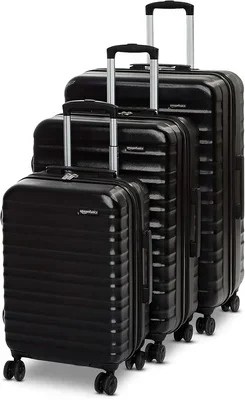
Expect: Thin ABS shells, basic inline or low-quality spinner wheels, single-stage handles, minimal interior organization, generic zippers, 1-2 year limited warranties. Brands: Amazon Basics, Rockland, Merax, generic store brands.
Reality check: These are disposable luggage. Acceptable for a child’s first trip, occasional car travel, or as a backup “dirty laundry” bag on return. Not suitable for regular air travel. Wheels will fail, handles will jam, shells will crack.
Mid-Range / Value Sweet Spot ($150 – $300 for 3-piece set) — Gabbiano Bravo Lives Here
Expect: Textured ABS or polycarbonate/ABS blend shells, 360-degree spinner wheels (often replaceable), multi-stage aluminum handles, TSA locks on larger pieces, full interior lining with dividers and straps, 3-5 year warranties. Brands: Gabbiano, Kenneth Cole Reaction, London Fog, Ricardo Beverly Hills, American Tourister (upper models).
This is where most leisure travelers should land. You get genuine usability: smooth rolling, decent protection, expandability, and security features. The Bravo collection sits comfortably here, often priced $180-$220 for the 3-piece. You’re paying for functional components that survive 3-5 years of moderate travel (4-8 trips/year).
Premium ($300 – $600 for 3-piece set)
Expect: 100% polycarbonate or advanced composites (Curv, Tegris), precision Japanese spinner wheels (Hinamoto), ergonomic handles with comfort grips, advanced interior organization (removable cubes, suiter systems), 10-year to limited lifetime warranties with accessible repair networks. Brands: Travelpro Platinum Elite, Samsonite Omni PC/Winfield 3, Delsey Chatelet, Briggs & Riley Baseline (entry).
You’re paying for weight savings (2-3 lbs lighter per bag), impact resistance that handles baggage system abuse, and a warranty that actually gets honored. If you fly 10+ times a year or check bags internationally, this tier pays for itself in avoided replacements and reduced physical strain.
Luxury / Lifetime Investment ($600 – $1,500+ for 3-piece set)
Expect: Exotic materials (aluminum-magnesium alloy, carbon fiber, leather accents), engineering tolerances measured in microns, lifetime “no questions asked” repair warranties (Briggs & Riley, Tumi), concierge-level service. Brands: Rimowa, Briggs & Riley, Tumi, Globe-Trotter.
These are buy-once-cry-once purchases. A Briggs & Riley set can last 20+ years with free repairs. But diminishing returns on pure utility are real—a $1,200 Rimowa doesn’t hold more clothes than a $250 Samsonite. Buy for the ownership experience, not just function.
Expert Tips for Getting the Best Deal
- Time your purchase: Luggage goes on deep sale 3-4 times a year: January (post-holiday clearance), May (pre-summer travel), July (Amazon Prime Day / competitor sales), and November (Black Friday / Cyber Monday). The Bravo set often hits its lowest price in November.
- Use price tracking tools: CamelCamelCamel (Amazon), Honey, or Keepa show price history. Set alerts for your target model. Don’t buy at the first “sale”—verify it’s a genuine low.
- Check outlet and refurbished channels: Samsonite, Travelpro, and Briggs & Riley outlet stores sell overstock and factory seconds with full warranties at 30-50% off. Gabbiano doesn’t have a dedicated outlet, but check Sierra, 6pm, or Overstock for past-season colors.
- Leverage retail price matching: If buying in-store (Macy’s, Dillard’s, Bed Bath & Beyond), show the lower online price from an authorized retailer. Many will match on the spot.
- Bundle with packing accessories: Some retailers throw in packing cubes, toiletry kits, or luggage tags when you buy a set. Ask—especially at department stores where managers have discretion.
- Read the return policy before buying: You need at least 30 days (60 is better) to test the bag packed, rolled, and lifted. Some “final sale” clearance luggage is non-returnable. Avoid unless you’ve handled the exact model.
- Test the “two-finger lift”: Pack the largest bag to 45 lbs. Lift it by the top carry handle with two fingers. If the handle digs painfully or the bag feels unbalanced, the handle padding or weight distribution is poor. This simulates hoisting into a trunk or overhead bin.
- Register your warranty immediately: Take photos of the receipt, the warranty card, and the bag’s serial number (usually inside near the handle tube). Register online the day it arrives. This prevents “lost receipt” denials later.

Frequently Asked Questions
Q: Is the Gabbiano Bravo collection carry-on size compliant with all airlines?
A: The 21-inch carry-on measures approximately 21″ x 14″ x 9″ (including wheels/handles) unexpanded. This fits most US domestic carriers (American, Delta, United, Southwest) but may exceed limits for international carriers (often 21.5″ x 15.5″ x 9″ or smaller) and budget airlines (Spirit, Frontier, Ryanair, EasyJet). Always measure your specific bag and check your airline’s current policy before flying. The expanded depth adds ~2 inches—never fly expanded as a carry-on.
Q: How durable is the ABS shell compared to polycarbonate?
A: ABS is more brittle than polycarbonate. In cold temperatures (below freezing), ABS can crack on sharp impact where polycarbonate would flex. However, the Bravo’s textured finish hides scratches better than glossy polycarbonate. For checked luggage on domestic flights, ABS holds up well. For international travel with multiple connections and rougher handling, polycarbonate is worth the upgrade.
Q: Can the spinner wheels be replaced if they break?
A: Yes, the Bravo set uses screwed-on wheel assemblies (typically 4 screws per wheel housing). Replacement wheel kits are available from Gabbiano’s website and third-party sellers. Keep the screws if you ever remove a wheel—finding the exact thread pitch can be tricky. This is a significant advantage over riveted or molded wheels on cheaper sets.
Q: Does the set come with a TSA lock on all three pieces?
A: Typically, only the 24-inch and 28-inch checked pieces include side-mounted TSA combination locks. The 21-inch carry-on relies on zipper pulls that can be locked with a separate TSA-approved padlock (not included). This is standard across most mid-range sets to save weight and cost on the carry-on.
Q: What is the actual weight of each piece?
A: Specs vary slightly by production run, but approximate weights are: 21″ carry-on ~7.5 lbs, 24″ medium ~9.5 lbs, 28″ large ~11.5 lbs. These are 1-2 lbs heavier than comparable polycarbonate sets. Factor this into your packing allowance—especially on 44 lb (20 kg) international limits.
Q: How does the expandable feature work, and how much extra space does it add?
A: A zippered gusset around the main compartment perimeter releases an additional 1.5-2 inches of depth. This adds roughly 15-20% volume. On the 28-inch, that’s ~200-300 cubic inches—enough for a few sweaters or a pair of boots. The expansion zipper is a stress point; don’t force it. Pack the base compartment fully, then expand only if needed.
Q: Is the interior lining removable for washing?
A: No, the lining is sewn in. Spot clean with mild detergent and a damp cloth. For deep cleaning, use a handheld garment steamer on the interior (avoid soaking the shell seams) and air dry fully open. Consider using packing cubes to keep the interior clean—they’re easier to wash anyway.
Q: Can I stack the three pieces for storage?
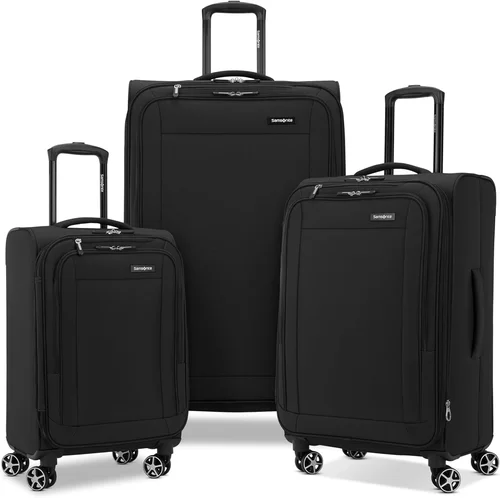
A: Yes, they nest perfectly: 21″ inside 24″ inside 28″. The textured shells grip slightly, preventing sliding. Store them empty with zippers half-open to prevent musty odors. Include a dryer sheet or cedar block for freshness.
Q: What’s the warranty claim process like for Gabbiano?
A: Contact Gabbiano customer service via their website with photos of the damage, a description, and proof of purchase. They typically authorize a replacement part (wheel, handle, lock) shipped to you, or in rare cases, a full bag replacement. You may need to cut off the damaged part and photo it. The process takes 2-4 weeks. It’s not as seamless as Briggs & Riley’s walk-in repair, but functional for the price.
Q: Are there any known design flaws with the Bravo collection?
A: Some users report the telescoping handle button can stick in very cold weather (below 20°F). The fix: work it gently with gloved hands or warm the button area with your palm. Also, the carry-on’s top carry handle is thinly padded—uncomfortable for heavy lifts. A $5 handle wrap solves this. These are minor quibbles, not dealbreakers.
Our Final Recommendations
Best for Budget-Conscious Buyers: Gabbiano Bravo 3-Piece Set (Current Model)
If your budget is firm at $200 or below for a full 3-piece spinner set, the Bravo is arguably the best executed option in its class. You get textured ABS that hides wear, replaceable spinner wheels, TSA locks on checked bags, and a 5-year warranty. It covers 90% of leisure travel needs competently. Buy it on sale (target $170-$190) and you’ll feel smart every trip.
Best Overall Value: Travelpro Maxlite 5 3-Piece Set (or similar polycarbonate hybrid on sale)
Stretch to $250-$280 (often on sale) and you enter polycarbonate territory. The Maxlite 5 uses a polycarbonate shell that’s lighter and tougher than ABS, with Travelpro’s legendary wheel and handle engineering. The warranty is better (lifetime limited + trusted repair network). If you fly more than 3 times a year, this upgrade pays for itself in durability and weight savings.
Best Premium Option: Samsonite Freeform 3-Piece Hardside Set
Around $350-$400, the Freeform delivers a modern split-shell polycarbonate design, double spinner wheels, and a 10-year warranty. It’s lighter than the Bravo, stronger, and Samsonite’s global service network is unmatched. This is the “buy once for a decade” choice for frequent checkers.
Best for Beginners: Gabbiano Bravo 3-Piece Set
New to travel? The Bravo set removes decision fatigue. Three coordinated sizes, matching aesthetics, all the basic features (spinners, locks, expansion), and a price that doesn’t induce panic if you scratch it. It’s a forgiving first set that teaches you what you value—weight, organization, wheel quality—before you invest in premium gear.
Best for Advanced Users: Build Your Own System (Mix & Match)
Experienced travelers rarely buy matched sets. They pair a premium carry-on (e.g., Travelpro Crew Versapack or Briggs & Riley Baseline Domestic) with a dedicated checked bag (e.g., Samsonite Omni PC 28″) and a personal item backpack (e.g., Peak Design Travel Backpack 30L). Each piece is optimized for its role. Total cost: $500-$800, but every component is best-in-class for its job.
Conclusion: Making the Right Choice
You’ve now got a comprehensive framework for evaluating not just the Gabbiano Bravo collection, but any luggage set you encounter. The key takeaways: prioritize wheel and handle quality over shell aesthetics, match the luggage tier to your actual travel frequency, and never ignore the warranty fine print. The Bravo set hits a respectable balance for its price—it’s not the lightest, toughest, or most feature-packed, but it delivers core functionality without fatal compromises.
Remember, the best luggage is the one that matches your travel reality. A business traveler living out of a carry-on has vastly different needs than a family of four checking two large bags for a week at Disney. Be honest about your habits: how often you fly, what you pack, how you handle your bags (gentle or rough), and what frustrates you about your current luggage. Let those answers guide your budget allocation.
Ready to decide? If the Bravo’s feature set aligns with your needs and you catch it on a good sale, buy with confidence. If you’re on the fence, spend a weekend with a borrowed or inexpensive set first—note what annoys you. That real-world data is worth more than any spec sheet. Safe travels, and may your wheels always spin true.