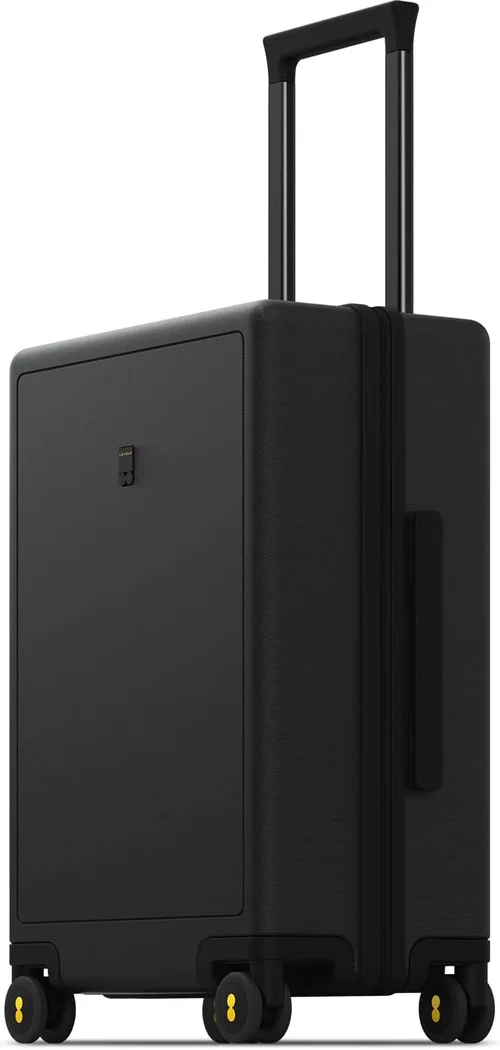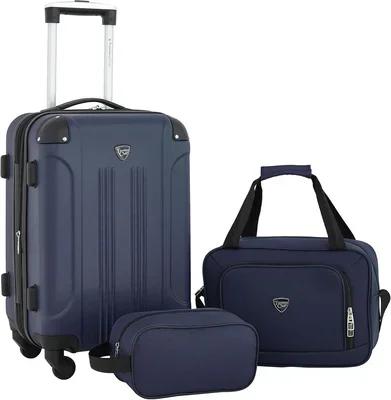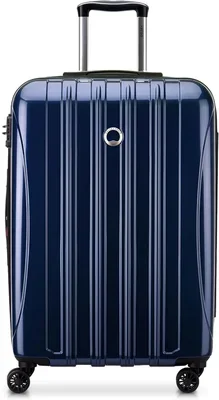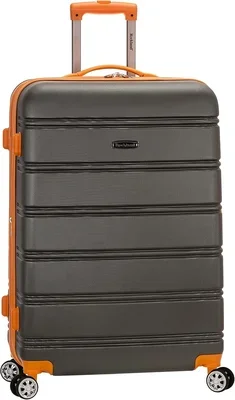
Shopping for checked luggage feels overwhelming because every brand promises the same thing: durability, smooth wheels, and lightweight design. But when you’re standing at the baggage carousel watching your bag come around the bend—or worse, when it doesn’t—you realize those promises matter. The Englewood 28″ Expandable Hardside Checked Spinner from eBags has earned a loyal following for a reason. It sits in that sweet spot where smart engineering meets a price tag that doesn’t require a second mortgage. This guide isn’t just about this one suitcase; it’s about teaching you how to evaluate any large checked spinner so you can buy with total confidence.
We’re going to break down the anatomy of a great checked bag. We’ll talk about why polycarbonate isn’t just a buzzword, how to spot a wheel system that will actually survive cobblestones, and why the handle mechanism is the unsung hero of your travel day. By the end of this, you’ll know exactly what to look for, what to avoid, and how to decide if the Englewood—or a competitor—is the right travel partner for your specific adventures.

What to Look for When Buying Checked Spinner Luggage
1. Shell Material and Impact Resistance
The shell is your bag’s first line of defense. In the hardside world, you’ll mostly see three materials: ABS, Polycarbonate, and Polypropylene. ABS is the budget option. It’s rigid but brittle; a hard impact in cold weather can crack it. Polypropylene is flexible and tough, often used in high-end lines, but it scuffs easily and can feel a bit “plasticky.”
Polycarbonate is the gold standard for a reason. It offers the best strength-to-weight ratio. It flexes under pressure instead of shattering, absorbing the shock of baggage handlers tossing it onto conveyors. The Englewood uses a 100% polycarbonate shell, often with a textured finish. That texture isn’t just for looks—it hides the inevitable scratches and scuffs that happen during transit, keeping your bag looking newer, longer. When you press on a polycarbonate shell, it should have a slight give and snap back. If it feels like a hard plastic toy, it’s likely ABS or a thin blend.
2. Wheel Engineering: The Make-or-Break Component
Wheels are the number one failure point on checked luggage. You want spinner wheels (360-degree rotation) because they let you push the bag beside you rather than dragging it behind you, saving your wrist and shoulder. But not all spinners are created equal.
Look for double wheels (two wheels per corner, eight total). Single wheels concentrate all the weight on one small axle point; double wheels distribute the load, reducing wobble and axle stress. The wheel housing matters immensely. Recessed wheels—where the wheel sits partially inside the shell profile—are superior. They protect the wheel hub from snapping off if the bag is dropped on a corner. The Englewood features recessed, double-spinner wheels with precision ball bearings. Spin them in the store (or watch a video). They should spin freely for 10-15 seconds with a light flick and feel silent, not gritty.
Also, check the wheel material. High-grade polyurethane (often marketed as Hinomoto or similar Japanese brands) rolls smoothly on carpet, tile, and cracked pavement. Cheap plastic wheels flat-spot quickly and sound like a shopping cart with a bad wheel.
3. Handle System: Telescoping Mechanism and Ergonomics
The handle is your steering wheel. A bad handle turns a 50-pound bag into a wrestling match. You need a multi-stage telescoping handle (usually 3-stage) so you can adjust the height to your exact stride. If you’re tall, a 2-stage handle forces you to hunch over. If you’re short, the lowest setting might still be too high.
Grip the handle. Is it a flat plastic bar, or a contoured, rubberized grip? Contoured grips reduce hand fatigue on long terminal walks. The Englewood uses an aluminum alloy tube system with a comfortable ergonomic grip. Crucially, test the locking mechanism. Pull it up and down five times rapidly. It should click into place securely at every stage with zero wobble. Side-to-side play in the handle tubes transfers directly to the bag’s stability, causing it to fishtail behind you.
4. Interior Organization and Capacity Management
A 28-inch checked bag is a volume game. You’re looking at roughly 90-100 liters of space. But raw volume isn’t enough; usability is key. The standard layout is a 50/50 split opening (clamshell). Inside, you need a divider panel (usually mesh with a zipper) separating the two halves. This keeps clean clothes separate from dirty laundry or shoes.
Look for compression straps (often X-straps) in the bottom half. These cinch down your clothes, preventing the “explosion” effect when you open the bag after a bumpy ride. The Englewood features a full-zip divider with a large mesh pocket—perfect for toiletries or electronics cables—and robust compression straps with easy-pull buckles. Check the liner material too. 150D or 210D polyester lining resists tearing if a zipper pulls on a loose thread. Cheap lining shreds after one trip.
5. Expandability: The “Just in Case” Feature
Almost every modern checked bag expands, usually via a zippered gusset that adds 1.5 to 2 inches of depth. This adds roughly 15-20% more volume. It’s invaluable for bringing home souvenirs or packing winter coats. However, expanded bags often exceed airline linear inch limits (62 linear inches: L+W+H).
The Englewood expands by 2 inches. When expanded, it pushes the linear limits for many airlines. Use expansion strategically: pack it standard for the outbound flight, expand for the return. Ensure the expansion zipper is a high-quality YKK or similar coil zipper with large, easy-to-grip pulls. A flimsy expansion zipper is a nightmare when you’re trying to close an overstuffed bag.
6. Security Features: TSA Locks and Zipper Quality
Every checked bag needs a TSA-approved combination lock. These allow security agents to inspect your bag with a master key without cutting your lock. The lock should be integrated into the shell (recessed) so it doesn’t snag on conveyor belts. The Englewood features a side-mounted, recessed TSA lock.
Equally important are the main compartment zippers. Look for #10 (large) coil zippers with double pulls. Double pulls allow you to lock both pulls together with a single shackle. Single-pull zippers can’t be locked securely. YKK is the industry standard for a reason—they don’t separate under stress. Run your finger along the zipper track; it should feel smooth, with no misaligned teeth.
7. Weight and Airline Compliance
Weight is the silent budget killer. Most US airlines allow 50 lbs (23 kg) for standard checked bags. A 28-inch hardside typically weighs 8.5 to 11 lbs empty. That leaves you 39-41 lbs for your stuff. The Englewood weighs in around 9.3 lbs, which is competitive. Ultra-light bags (7-8 lbs) often sacrifice shell thickness or wheel durability to hit that number. Heavier bags (11+ lbs) eat into your allowance before you pack a single sock.
Always verify the exterior dimensions include wheels and handles. Some brands list “body dimensions” which are smaller. The Englewood’s specs (approx 28″ x 19″ x 12.5″ + 2″ expansion) are true exterior measurements, keeping you compliant on major carriers.
8. Warranty and Brand Support
Luggage takes a beating. A warranty is the manufacturer’s vote of confidence. Look for a Limited Lifetime Warranty that covers defects in materials and workmanship (wheels, handles, zippers, shell cracking). Read the fine print: does it cover “wear and tear”? Usually not. Does it cover airline damage? Almost never—that’s what travel insurance is for.
eBags (now part of Samsonite) backs the Englewood with a strong limited lifetime warranty and, crucially, accessible US-based customer service. If a wheel bearing seizes in year three, you want a phone number or email that gets a human response, not a chatbot. Check reviews specifically for warranty claim experiences. A great bag with a ghost company behind it is a bad investment.
Different Types of Checked Spinner Luggage

Common Buying Mistakes to Avoid
❌ Mistake: Buying Based Solely on Price
Why it’s bad: A $90 suitcase that fails on trip two costs you more in replacement fees, damaged clothes, and frustration than a $250 bag that lasts a decade. Cheap luggage uses thin shells, single-spinner wheels, and plastic handle mechanisms that snap under load.
What to do instead: Calculate Cost Per Trip. If a $280 bag lasts 30 trips, that’s $9.33/trip. A $100 bag lasting 4 trips is $25/trip. Invest in the mid-range sweet spot ($200-$300) where you get polycarbonate, double wheels, and a real warranty.
❌ Mistake: Ignoring “Linear Inches” vs. “Height”
Why it’s bad: Airlines restrict checked bags by linear inches (Length + Width + Height), usually 62 inches. A bag marketed as “28 inches” might be 28″ tall but 20″ wide and 13″ deep (61 linear inches). Add 2 inches of expansion, and you’re at 65 inches—technically oversize, triggering $100+ fees.
What to do instead: Always add the three exterior dimensions (including wheels/handles) yourself. If the sum is over 60 inches, you have zero margin for expansion. The Englewood sits at roughly 59.5 inches standard, giving you a tiny buffer.
❌ Mistake: Overlooking Interior Liner Quality
Why it’s bad: You focus on the hard shell, but the liner takes the daily abuse. Cheap 75D polyester liners tear if a zipper catches or a shoe heel pokes through. A torn liner means loose items migrating into the frame channels, jamming the handle or wheels.
What to do instead: Look for 150D-210D ripstop nylon or polyester lining. Ripstop has a grid pattern that stops tears from spreading. The Englewood uses a durable, light-colored liner (easier to see contents) with reinforced stress points.
❌ Mistake: Choosing “Cute” Colors Over Practicality
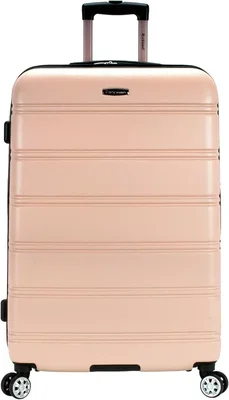
Why it’s bad: That beautiful pastel pink or crisp white bag looks stunning in the store. After two trips on airport conveyors, it looks gray and stained. Dark colors and textured finishes hide scuffs, grease, and dirt infinitely better.
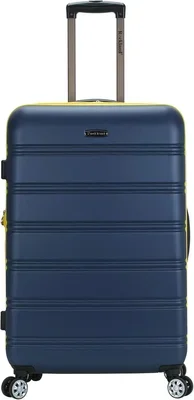
What to do instead: Pick charcoal, navy, olive, or a textured metallic. If you must have a light color, buy a protective cover. The Englewood’s exclusive colors (like “Deep Sea” or “Graphite”) are chosen specifically to mask travel wear.
❌ Mistake: Not Testing the “Fishtail” Effect
Why it’s bad: You roll the empty bag in the smooth store aisle. It tracks perfectly. You load 45 lbs, hit a cracked sidewalk, and the bag swings wildly side-to-side (fishtailing), threatening to trip you or tip over.
What to do instead: Stability comes from three things: a wide wheelbase (wheels far apart), low center of gravity (heavy items packed low), and a rigid handle tube with minimal play. The Englewood’s wide stance and recessed wheels provide excellent stability even when fully packed.
❌ Mistake: Assuming “Spinner” Means “All-Terrain”
Why it’s bad: Spinner wheels are designed for smooth airport floors. They are terrible on gravel, cobblestones, grass, or snow. The small diameter and exposed axles get jammed or clogged.
What to do instead: If your travel involves rough terrain (European cobblestones, dirt paths), consider a two-wheel “roller” bag with large diameter (3-4 inch) recessed wheels. If you need a spinner, carry it over rough patches or buy a bag with larger-than-average wheels (the Englewood’s are a decent size, but still airport-optimized).
❌ Mistake: Skipping the “Shake Test”
Why it’s bad: You buy online, it arrives, you pack it, you go. Three months later, a rivet pops on the handle, or a wheel bearing makes a horrible screech.
What to do instead: When the box arrives, do the Shake Test. Extend the handle fully. Shake the bag vigorously side-to-side and up-down. Listen for rattles. Rattles mean loose screws, broken rivets, or wheel hub play. Check every zipper. Spin every wheel. Do this before you remove the tags. Returns are easy with tags on; warranty claims are harder.
Budget Guidelines: How Much Should You Spend?
Entry-Level ($80 – $150): The “Once a Year” Tier
What you get: ABS or thin Polycarbonate/ABS blend shells. Single spinner wheels (usually 4 total). 2-stage steel handles with plastic collars. Basic TSA lock. Thin 75D liner. 1-2 year limited warranty.
Reality check: These bags weigh 7-9 lbs (surprisingly light because the shell is thin). They work fine for a week in a hotel with smooth floors. They will crack if dropped on a corner in winter. Wheels will wobble within 5-10 trips. Brands: Amazon Basics, Rockland, Merax, generic department store brands.
Verdict: Buy only if you travel once a year, stay in one place, and treat luggage gently. Don’t check it on connecting flights with tight transfers.
Mid-Range ($180 – $300): The Sweet Spot (Englewood Territory)
What you get: 100% Polycarbonate shell (often 3-4mm thick). Double spinner wheels (8 wheels) with ball bearings, often recessed. 3-stage aluminum handles with ergonomic grips. YKK zippers. 150D+ ripstop liner. Full clamshell organization with compression straps and divider pockets. Limited Lifetime Warranty. Weight: 8.5 – 10 lbs.
Reality check: This is the “buy once, cry once” zone. The Englewood 28″ lives here (typically $220-$260). It handles 4-6 trips a year for 5-8 years easily. Components are serviceable (wheels can often be replaced). You get exclusive colors and eBags’ direct support.
Verdict: This is where 80% of travelers should buy. You get professional-grade durability without professional-grade pricing.
Premium ($350 – $600): The “Road Warrior” Tier
What you get: Premium polycarbonate (Makrolon/Curv) or proprietary blends (Samsonite’s Curv, Tumi’s SRPP). Japanese Hinomoto Lisof silent-run wheels (the gold standard). Precision-machined aluminum handles with zero play. Magnesium or carbon fiber handle tubes. Self-healing zippers. “No questions asked” lifetime warranties (Briggs & Riley, Tumi). Weight often 9-11 lbs due to beefier components.
Reality check: You pay for refinement. The wheels are eerily silent. The handle glides like a syringe. The warranty department sends a prepaid shipping label and fixes cosmetic damage. Brands: Samsonite (Proxis, S’Cure), Tumi (19 Degree, Alpha 3), Briggs & Riley (Baseline, Sympatico), Rimowa (Essential).
Verdict: Worth it if you fly 15+ times a year, hate checking bags but must, or want a bag that lasts 15-20 years. Diminishing returns on durability vs. mid-range; you’re paying for experience and warranty ease.
Luxury ($600+): The “Heirloom” Tier
What you get: Aluminum-magnesium alloys (Rimowa Original, Zero Halliburton), carbon fiber, or titanium frames. Leather accents. Frame-based construction (no zippers to fail). Articulating handle systems. Concierge-level repair service (loaner bags while yours is fixed). Weight: 11-15+ lbs.
Reality check: These are status objects that happen to hold clothes. They dent beautifully (patina) but don’t crack. They are heavy, eating 20% of your weight allowance. Theft targets.
Verdict: Buy for the joy of ownership, not utility. The Englewood outperforms these on weight and practicality for 1/5th the price.
Expert Tips for Getting the Best Deal
1. Timing is Everything. Luggage goes on deep sale three times a year: January (post-holiday clearance), May (pre-summer travel prep), and November (Black Friday/Cyber Monday). The Englewood often drops 20-30% during these windows. Sign up for eBags email alerts.
2. Check “Open Box” and “Refurbished”. Major retailers (eBags, Amazon Warehouse, Backcountry, REI) sell returned luggage. Often, the buyer returned it because “it was too big” or “wrong color,” not because it was broken. You can save 30-40% on a pristine bag with full warranty. Inspect immediately upon arrival.
3. Bundle and Save. If you need a carry-on too, buy a set. The Englewood 28″ often pairs with a 22″ carry-on spinner. Sets are typically 15-20% cheaper than buying pieces separately. Ensure the carry-on fits your airline’s sizer (domestic vs. international).
4. Use Price Tracking Tools. CamelCamelCamel (Amazon) or Honey/Capital One Shopping (universal) track price history. The Englewood has a MAP (Minimum Advertised Price) policy, so discounts are usually via % off sitewide codes rather than direct price drops. Stack a sitewide code with a newsletter signup discount (often 10-15%).
5. Credit Card Perks. Many premium travel cards (Chase Sapphire Reserve, Amex Platinum, Capital One Venture X) offer statement credits for luggage purchases or bonus points on specific retailers. Check your card’s benefit portal before buying.
6. Register Your Warranty Immediately. Don’t throw away the paperwork. Register the serial number (usually inside the bag near the handle tube or on a card) on the brand’s website before your first trip. This activates the lifetime warranty and speeds up any future claims. Take a photo of the serial number sticker for your records.
7. Pack a “Repair Kit”. Throw a small pouch in your checked bag with: a multi-tool (Leatherman), zip ties (heavy duty), duct tape (wrapped on a old gift card), and a spare wheel bearing (if you’re handy). A loose wheel screw can be tightened in 30 seconds in a hotel lobby, saving your trip.
8. Know Your Airline’s Specifics. Southwest allows two free checked bags (50 lbs each). Basic Economy on United/American/Delta often charges $35-$45 for the first checked bag. Weigh your packed bag at home with a $10 luggage scale. Repacking at the check-in counter with a line behind you is the worst travel stress.

Frequently Asked Questions
Q: Is the Englewood 28″ too big for international flights?
A: It depends on the airline. Most international carriers allow 62 linear inches (L+W+H) and 23kg (50.7 lbs). The Englewood 28″ measures roughly 28″ x 19″ x 12.5″ = 59.5 linear inches standard. That fits. However, some budget European/Asian carriers (Ryanair, AirAsia, etc.) have smaller hold limits or strict weight limits of 20kg (44 lbs). Always check your specific carrier. If you fly budget carriers often, a 25″ or 26″ spinner is safer.
Q: Can I replace the wheels myself if they break?
A: On the Englewood, the wheels are attached via screws into the shell (recessed housing). This is user-replaceable with a Phillips head screwdriver and a replacement wheel kit (available from eBags support). Many cheaper bags have riveted wheels—those require drilling. Premium bags (Briggs & Riley, Rimowa) often have tool-free, click-in wheel cartridges. The Englewood hits the sweet spot: replaceable at home with basic tools.
Q: Does the “eBags Exclusive” mean it’s different from other Englewood models?
A: Yes. eBags (owned by Samsonite) collaborates with the manufacturer to spec unique colorways, upgraded interior organization (often extra pockets or better compression straps), and sometimes upgraded wheel bearings or handle finishes not found on the standard retail SKU sold elsewhere. It also means you buy direct from the warranty holder, simplifying claims.
Q: How does the Englewood compare to the Samsonite Freeform or Centric?
A> They are cousins. Samsonite owns eBags. The Freeform is Samsonite’s direct-to-consumer mid-range star—very similar polycarbonate shell, double wheels, but often lighter (8.6 lbs) with a slightly different aesthetic (more curves). The Centric 2 is a step up—better wheels (often Hinomoto), tighter tolerances, higher price. The Englewood typically offers the best interior organization of the three (more pockets, better divider) and exclusive colors. If you prioritize interior layout, Englewood wins. If you prioritize lightest weight, Freeform wins. If you want the best components, Centric wins.
Q: Will a 28″ bag fit in a standard car trunk?
A: Most sedan trunks fit two 28″ spinners side-by-side, or one 28″ plus two carry-ons. SUV trunks swallow three easily. Measure your trunk opening height if you have a low-slung sports car or a high liftover trunk lip. The Englewood is 28″ tall; add a few inches for the handle in the down position.
Q: Is hardside better than softside for checked luggage?
A: Hardside (Polycarbonate) wins for: protection of fragile items (wine, electronics), water resistance (rain on tarmac), security (can’t be slit open with a knife), easy cleaning (wipe down), and structure (stands upright when packing). Softside (Ballistic Nylon) wins for: exterior pockets (quick access to documents/jackets), squeeze-ability (fits tight overhead bins or car trunks), lighter weight (often 1-2 lbs lighter), and expandability (often 2-3 inches vs 1.5-2). For checked luggage, hardside is generally preferred because you don’t need exterior pockets (bag is out of reach) and protection matters more.
Q: What’s the best way to pack a 28″ spinner to prevent wrinkles?
A: Use the Bundle Wrapping method (wrap clothes around a central core object) or Packing Cubes. Cubes are superior for organization. Fill the bottom half (wheel side) with heavy items (shoes, toiletry bag, jeans) to lower the center of gravity. Use the compression straps tight. Put delicate items in the center of the cube stack. The Englewood’s compression straps are wide and grippy—use them.
Q: Does the Englewood have a USB port or battery?
A: No. And that’s a feature, not a bug. Built-in USB ports require a power bank (which you must remove for flight anyway) and add a failure point (wire fraying, port damage). The TSA and FAA require lithium batteries to be in carry-on. A smart luggage bag with a non-removable battery is banned from checked baggage. The Englewood keeps it simple: just a bag. Bring a slim 20,000mAh power bank in your carry-on.
Q: How do I clean the textured polycarbonate shell?
A: Magic Eraser (melamine foam) works wonders on scuff marks. For deeper grime, use a microfiber cloth with warm water and mild dish soap. Avoid harsh solvents (acetone, Goo Gone, armor all) which can cloud the finish or degrade the polycarbonate over time. Dry thoroughly. The texture hides micro-scratches, so it rarely looks “dirty.”
Our Final Recommendations
Best for Budget-Conscious Buyers: Englewood 28″ (On Sale)
Wait for a 25% off sitewide code (common on holidays). At ~$190, this is unbeatable value. You get true polycarbonate, double recessed wheels, lifetime warranty, and great organization. No other bag at this price point matches the component quality.
Best Overall Value: Englewood 28″ at Full Price (~$250)
Even at MSRP, it’s the benchmark. The interior layout (full divider + large mesh pocket + compression straps) is genuinely better than competitors costing $100 more. The exclusive colors hide wear. eBags support is responsive. It’s the bag I’d buy for my partner, my mom, or myself for a family vacation.
Best Premium Upgrade: Samsonite Freeform 28″ or Centric 2 28″
If you want the brand prestige of Samsonite, slightly lighter weight (Freeform), or Hinomoto wheels (Centric 2), spend the extra $80-$150. The Freeform is the closest direct rival. The Centric 2 is a tangible step up in wheel smoothness and handle feel. You’re paying for the Samsonite global repair network.
Best for Beginners: Englewood 28″ + Packing Cube Set
A beginner needs forgiveness. The Englewood’s wide opening, clear organization, and stable wheelbase make packing and maneuvering intuitive. Pair it with a 6-set of packing cubes (compression cubes for the win) and a digital luggage scale. You’ll look like a pro on day one.
Best for Advanced Users / Heavy Travelers: Briggs & Riley Sympatico 28″ or Tumi 19 Degree 28″
If you fly 20+ times a year, the “Unconditional Lifetime Warranty” (B&R) or “Tumi Tracer” + 5-year warranty + exceptional components justify the $500-$700 price. The Sympatico uses a unique CX expansion system that expands outward then compresses flat, keeping the bag within linear limits even expanded. The 19 Degree uses Tegris composite—lighter and stronger than polycarbonate. These are tools for professionals.
Conclusion: Making the Right Choice
You started this guide looking at one specific suitcase. You’re finishing it with a framework for evaluating any suitcase. The Englewood 28″ Expandable Hardside Spinner earns its reputation because it nails the fundamentals: a legitimate polycarbonate shell, recessed double-spinner wheels that track true, a handle that doesn’t wobble, and an interior designed by people who actually pack. It sits perfectly in that mid-range tier where smart money gets spent.
Remember the priorities: Shell material > Wheel system > Handle stability > Interior layout > Weight > Warranty > Color. Don’t let marketing fluff distract you from those seven pillars. If a bag fails on pillar 1 or 2, walk away. The Englewood passes all seven.
Your luggage is the only piece of gear that touches every single part of your trip—your home, your car, the Uber, the check-in counter, the conveyor belt, the plane’s belly, the carousel, the hotel lobby, the cruise ship cabin. It deserves to be a tool you trust, not a source of anxiety. Buy the bag that matches your travel reality, not your Instagram feed. Pack it well. Weigh it at home. Register the warranty. And go make some memories. The Englewood will be ready for the next one, and the one after that.