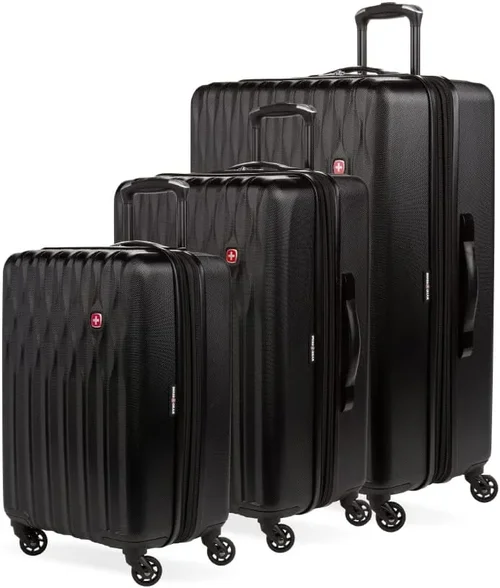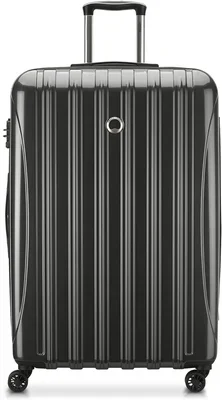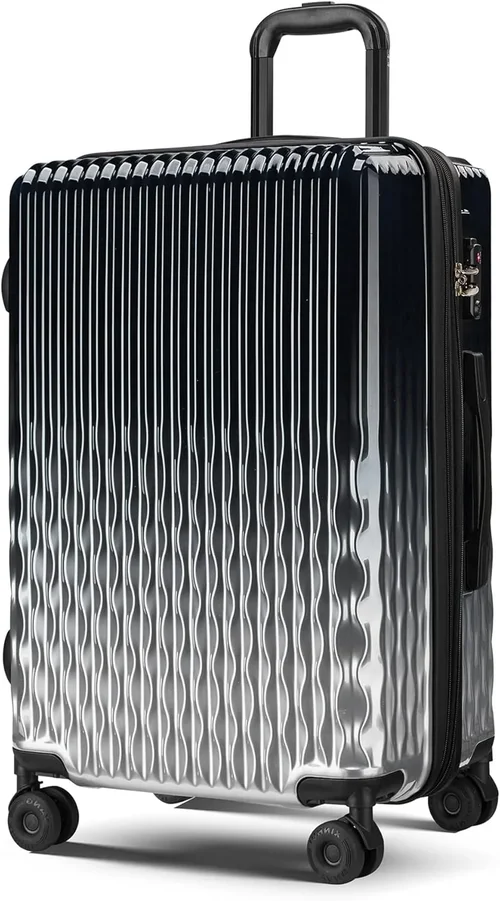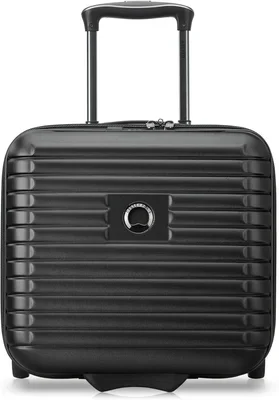
Shopping for luggage can feel overwhelming. You stand in the aisle or scroll through endless product pages, bombarded with terms like “polycarbonate,” “spinner wheels,” “TSA locks,” and “expandable capacity.” It is easy to get lost in the specifications and forget what actually matters: arriving at your destination with your belongings safe, organized, and without a sore shoulder. That is exactly why this guide exists. We are going to cut through the marketing noise and give you the practical, real-world knowledge you need to decide if the Delsey Paris Cruise Lite 2.0 Expandable Hardside line is the right travel companion for you.
Over the next several sections, we will dissect every critical aspect of this popular luggage collection. We will explore the materials that make it lightweight yet tough, the wheel systems that determine how smoothly it glides through a crowded terminal, and the interior organization features that keep your clothes wrinkle-free. We will also compare the different sizes available, highlight the common pitfalls buyers encounter, and break down exactly what you should expect to pay. Whether you are a weekend warrior looking for a reliable carry-on or a family packing for a two-week international adventure, this guide will help you buy with total confidence.
The luggage market is saturated with options ranging from budget basement bargains to ultra-premium investment pieces. The Delsey Paris Cruise Lite 2.0 sits in a fascinating “sweet spot”—it aims to deliver premium features like a 100% polycarbonate shell and double spinner wheels at a price point that is accessible to most serious travelers. But does it live up to the hype? Let’s dive in and find out.

What to Look for When Buying Buying Guide
1. Shell Material and Construction
The very first thing you need to understand about any hardside luggage is what the shell is made of. This single factor dictates the weight, the durability, the flexibility, and ultimately, the lifespan of the bag. The Delsey Paris Cruise Lite 2.0 uses 100% polycarbonate. In layman’s terms, polycarbonate is a high-tech plastic polymer that is incredibly impact-resistant. Think of it like the material used in riot shields or safety glasses—it is designed to absorb a hit by flexing slightly rather than cracking or shattering.
Why does this matter to you? Cheaper hardside bags often use ABS (Acrylonitrile Butadiene Styrene) or an ABS/Polycarbonate blend. ABS is rigid and brittle. If a baggage handler throws an ABS bag onto a conveyor belt, it might crack. Polycarbonate will bounce back. The Cruise Lite 2.0 takes this a step further with a textured finish. This isn’t just for looks; the texture hides the inevitable scratches and scuffs that happen during transit. A glossy shell looks beautiful in the store but shows every mark after one trip. A textured shell still looks good after ten trips. When you are evaluating any bag, press on the shell with your thumb. It should have a slight “give” and spring back immediately. That is the hallmark of quality polycarbonate.
2. Wheel System: Spinner vs. Inline and Wheel Quality
If the shell is the skeleton, the wheels are the legs. This is the single biggest factor in your day-to-day happiness with a suitcase. The Cruise Lite 2.0 features four double-spinner wheels. Let’s break that down. “Spinner” means the wheels rotate 360 degrees independently. This allows you to push the bag beside you, pull it behind you, or maneuver it sideways down a narrow airplane aisle without tilting it and straining your wrist. “Double” wheels mean two wheels per corner (eight wheels total). This distributes the weight load across a wider surface area, making the roll smoother, more stable on uneven pavement (cobblestones, anyone?), and significantly more durable than single wheels.
Cheap spinner wheels are often recessed into the body with minimal housing. They wobble, they catch on cracks, and they snap off if you hit a curb too hard. The Cruise Lite 2.0 wheels are recessed for protection (so they don’t snap off if the bag is dropped) but mounted on robust axles with precision ball bearings. You want to listen to the wheels spin. They should be whisper-quiet. A rattling, grinding sound indicates cheap bearings or misaligned axles. Also, check the wheel housing material. It should be a reinforced nylon or similar high-strength polymer, not thin plastic.
3. Handle System: Telescoping Mechanism and Ergonomics
The handle is your connection to the bag. A poorly designed handle turns a 20-pound bag into a 50-pound burden. The Cruise Lite 2.0 utilizes a multi-stage telescoping handle made of aluminum. Aluminum is the gold standard here—it is lighter than steel but stronger than plastic. Look for a handle that locks securely at multiple heights (usually three stops) so both a 5’2″ traveler and a 6’2″ traveler can find a comfortable position without stooping or reaching.
The grip material matters too. You want a soft-touch, ergonomic rubber or foam grip that doesn’t get slippery when your hands are sweaty or cold. Test the “wobble.” Extend the handle fully and shake the bag gently. There should be minimal side-to-side play. Excessive wobble means the internal tubing is thin or the locking mechanism is loose, which leads to the handle jamming or collapsing unexpectedly when you are rushing for a connection. The Cruise Lite 2.0 generally receives high marks for a sturdy, low-wobble handle system, but always check the specific unit you buy.
4. Security Features: TSA Locks and Zipper Quality
Security is non-negotiable. The Cruise Lite 2.0 comes standard with a recessed, integrated TSA-approved combination lock. “TSA-approved” means Transportation Security Administration agents have a master key to open it for inspection without cutting your lock off. “Recessed” means the lock sits flush inside the shell, protecting it from being snapped off by conveyor belts or rough handling. This is a crucial design detail; protruding locks are the first thing to break.
Equally important are the zippers. The lock secures the zipper pulls together, but the zipper teeth themselves must be durable. Look for YKK or similar high-grade zippers (Delsey typically uses high-quality coil zippers). They should have large, easy-to-grab pulls—preferably metal or heavy-duty plastic—that you can operate with gloves on. The Cruise Lite 2.0 uses double-coil zippers which are self-healing to an extent; if the teeth misalign, running the slider back and forth often fixes it. Also, check for anti-theft zipper designs where the pulls tuck into a garage or lock housing, making it impossible to insert a pen or blade to pop the zipper open—a common theft tactic.
5. Interior Organization and Expandability
This is where the “livability” of the suitcase lives. The Cruise Lite 2.0 is a clamshell design (opens in half like a book). Inside, you are looking for a few key features. First, a full-zip divider in the middle. This separates the two halves, keeps items from shifting during transit, and usually features a zippered mesh pocket for toiletries, electronics, or dirty laundry. Second, compression straps (often called tie-down straps) in the bottom half. These are essential. They cinch down your clothing, preventing the “explosion” effect when you open the bag and maximizing space.
The “Expandable” part of the name is a major selling point. The Cruise Lite 2.0 typically offers 1.5 to 2 inches of expansion via a gusseted zipper around the perimeter. This is a lifesaver for return trips when you’ve acquired souvenirs or simply didn’t pack as efficiently on the way out. However, a word of caution: when expanded, the bag may exceed carry-on size limits for many airlines. Use expansion strategically—usually for checked bags only. The interior lining should be high-quality, tear-resistant polyester (often recycled in newer Delsey models) that feels smooth, not plasticky, and resists snagging on zippers or Velcro.
6. Weight and Airline Compliance
Every ounce counts. Airlines are increasingly strict about weight limits (often 50 lbs / 23 kg for checked bags and 15-22 lbs / 7-10 kg for carry-ons). The Cruise Lite 2.0 is marketed as “Ultra Light.” The 21-inch carry-on weighs approximately 6.6 lbs (3 kg). The 25-inch medium is around 8.4 lbs (3.8 kg), and the 29-inch large is roughly 10.1 lbs (4.6 kg). Compare this to older hardside models that could weigh 9-11 lbs empty for a carry-on. Saving 3-4 pounds of “dead weight” means you can pack an extra pair of shoes, a heavier jacket, or simply avoid overweight baggage fees.
Dimensions are equally critical. The 21-inch model is designed to fit in the overhead bins of most major domestic and international carriers (approx. 21.7 x 14.2 x 9.8 inches including wheels/handle). However, “21-inch” usually refers to the packing body height; the total height with wheels and handle is what the airline measures. Always verify the total exterior dimensions against your most frequent airline’s specific carry-on policy. Budget airlines (Spirit, Frontier, Ryanair, etc.) often have smaller sizers. If you fly budget carriers frequently, you may need a dedicated “underseat” or specific “international carry-on” size, which the standard 21-inch might not satisfy.
7. Warranty, Customer Support, and Brand Reputation
Luggage takes a beating. Even the best bag can suffer a broken wheel, a stuck handle, or a cracked shell. What happens then? Delsey Paris offers a 10-year limited warranty on the Cruise Lite 2.0. “Limited” is the key word—it covers manufacturing defects in materials and workmanship. It does not cover airline damage, cosmetic wear, or accidents. However, a 10-year warranty signals the manufacturer’s confidence in the product’s build quality.
Just as important is the ease of claiming that warranty. Does Delsey have authorized repair centers near you? Do they ship replacement parts (wheels, handles, locks) directly to consumers? Delsey has a generally strong reputation for parts availability. You can often order a replacement wheel housing or handle tube online and install it yourself with a screwdriver, extending the life of the bag indefinitely. This “repairability” is a huge hidden value factor. A $200 bag that lasts 15 years with a $15 wheel replacement is a far better investment than a $100 bag you throw away after two years because a wheel fell off and you can’t fix it.
8. Aesthetics, Color Options, and Personalization
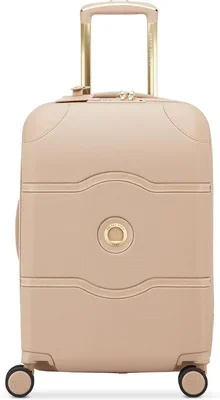
While function is paramount, you have to live with the look. The Cruise Lite 2.0 typically comes in a sophisticated palette: deep Navy, classic Silver, elegant Champagne, bold Red, and sometimes limited editions like Rose Gold or Olive. The textured finish we mentioned earlier plays a huge role here—it maintains the color vibrancy and hides scuffs. Consider visibility on the baggage carousel. A unique color (Red, Champagne, Olive) is instantly identifiable. A black or navy bag requires a bright luggage tag or ribbon to spot quickly.
Personalization options are growing. Some retailers offer monogramming on the front plate or a leather handle wrap. While not a performance feature, a personalized bag is less likely to be stolen by mistake (or on purpose) and adds a touch of joy to the travel experience. If you travel for business, the Silver or Navy projects a professional image. For leisure, the bolder colors add personality. Choose a color you’ll still like in five years; luggage isn’t a seasonal accessory.
Different Types of Buying Guide

The table above outlines the core configurations of the Cruise Lite 2.0 line. The most critical decision is Carry-On vs. Checked. The 21-inch is your daily driver. If you check bags often, the 25-inch is widely considered the “Goldilocks” size—large enough for two weeks of clothes if packed well, but not so large it becomes unwieldy or hits weight limits instantly. The 29-inch is a beast; only buy it if you genuinely need that volume, as it will likely be overweight if packed to the brim with dense items. Sets offer the best value per bag and ensure your luggage matches aesthetically and functionally (same wheels, handles, locks).
Common Buying Mistakes to Avoid
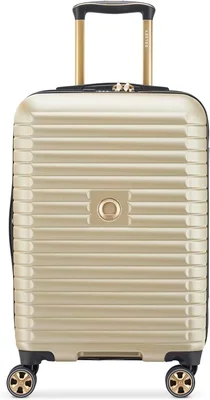
❌ Mistake: Buying Based Solely on the “21-Inch” Label Without Checking Total Dimensions
Why it’s bad: Manufacturers measure the packing cavity height. Airlines measure the entire exterior—wheels, handle housing, side bumpers, expansion zipper included. A “21-inch” bag can easily measure 22.5 or 23 inches total. On a strict airline (especially budget European or Asian carriers, or basic economy on US majors), that 1.5 inches gets you gate-checked and hit with a $60+ fee.
What to do instead: Always look for the “Overall Dimensions” or “Exterior Dimensions” in the specs. For the Cruise Lite 2.0 21″, the overall is roughly 21.7″ H x 14.2″ W x 9.8″ D. Compare these exact numbers to your airline’s sizer. If you fly United, Delta, American, Southwest regularly, you are likely fine. If you fly Spirit, Frontier, Ryanair, EasyJet, or Basic Economy on internationals, measure twice, buy once.
❌ Mistake: Overpacking the Expandable Section on a Carry-On
Why it’s bad: The expansion zipper adds ~1.5 inches of depth. On the 21-inch, that pushes the depth to ~11.3 inches. Most airline sizers are 9 or 10 inches deep. An expanded carry-on will not fit in the sizer, and it will not fit in the overhead bin wheels-first (the standard way). You will be forced to gate-check.
What to do instead: Treat the expansion feature on the carry-on as an “emergency only” option for the return flight if you are checking the bag on the way back, or for car road trips where size doesn’t matter. For the 25″ and 29″ checked bags, expand away—that is what they are for.
❌ Mistake: Ignoring the “Hand Feel” of the Handle and Wheels in Store (or Not Testing Immediately Upon Delivery)
Why it’s bad: Specs on a screen don’t tell you if the handle wobbles enough to annoy you, if the wheel bearings feel gritty, or if the zipper pulls are too small for your fingers. A minor annoyance in the living room becomes a major rage-inducer in a hot, crowded airport terminal.
What to do instead: If buying in-store, bring the bag to a hard floor. Extend the handle. Push it, pull it, spin it. Load it with 15-20 lbs of stuff (use store items). If buying online, open the box immediately. Test the wheels on your hardwood/tile floor. Extend/retract the handle 10 times. Open/close the main zipper fully. Check the lock mechanism. You usually have a 30-day return window—use it to stress test, not just admire.
❌ Mistake: Assuming “Hardside” Means “Indestructible”
Why it’s bad: Polycarbonate is amazing, but it is not magic. It can crack under extreme impact (e.g., run over by a baggage tug, crushed by a heavy crate). More commonly, the corners are stress points. A hard corner impact can crack the shell even if the flat panels are fine. Also, hardside bags cannot be squeezed into tight overhead bins or odd-shaped car trunks like softside bags can.
What to do instead: Treat it with respect. Don’t sit on it. Don’t overstuff the expansion to the point where the shell is under constant tension. Use the corner protectors (the Cruise Lite 2.0 has integrated corner guards—make sure they are intact). If you need a bag you can stuff into a tiny space, buy a softside. If you need protection for fragile items and structure, hardside is king.
❌ Mistake: Not Registering the Warranty or Saving Proof of Purchase
Why it’s bad: You drop the bag, a wheel cracks. You contact Delsey. They ask for the purchase date and serial number. You bought it on sale at a third-party site two years ago and deleted the email. You are now paying for a repair that should have been free.
What to do instead: The moment you decide to keep the bag (after your test run), go to the Delsey website and register the product. Take a photo of the receipt/order confirmation and the serial number label (usually inside the lining or on the warranty card) and save it to a cloud folder labeled “Luggage Warranty.” It takes 3 minutes and saves headaches years later.
❌ Mistake: Choosing Color Purely on Aesthetics Without Considering Visibility
Why it’s bad: You love the sleek Midnight Navy. So does everyone else. At baggage claim, 50 black/navy bags go around. You lift three wrong ones before finding yours. Or worse, someone else lifts yours by mistake.
What to do instead: If you check bags, pick a high-visibility color (Champagne, Red, Olive, Rose Gold). If you must have Navy/Silver/Black for work, buy a very distinctive, large, colorful luggage tag/strap/cover. Make your bag instantly identifiable from 20 feet away.
❌ Mistake: Overlooking the “Personal Item” Strategy
Why it’s bad: You buy the perfect 21″ carry-on. You board the plane. The overhead bins are full (because everyone else has a carry-on). The flight attendant forces you to gate-check. Your laptop, meds, and valuables are inside. Panic ensues.
What to do instead: Always pack a “personal item” backpack or tote that fits under the seat and holds your absolute essentials (laptop, meds, passport, wallet, keys, one change of clothes). Your carry-on goes in the bin; your life support goes under the seat. The Cruise Lite 2.0 has a nifty rear strap to slide over the handle of a rolling bag—use a backpack with that strap.
Budget Guidelines: How Much Should You Spend?
Luggage pricing can be confusing. You see similar-looking bags for $80 and $800. Where does the Delsey Paris Cruise Lite 2.0 fit, and what does each tier actually get you? Let’s break down the market landscape so you can contextualize the investment.
Entry-Level ($80 – $150): The “Get Me There” Tier
At this price, you are almost exclusively looking at ABS or ABS/Polycarbonate blend shells. They will be heavier (8-10+ lbs for a carry-on), have single spinner wheels (often noisy and prone to breaking), basic telescoping handles with two stops and noticeable wobble, and simple zippers without TSA locks (or cheap plastic locks). The lining is thin polyester. The warranty is usually 1-3 years or “limited lifetime” with so many exclusions it’s useless.
Who this is for: Infrequent travelers (1-2 trips per year), kids/teens who are rough on gear, backup bags, or situations where the bag might be lost/stolen/damaged and you don’t want to cry over it. Cruise Lite 2.0 Context: The Cruise Lite 2.0 is roughly 2x the price of this tier. You are paying for half the weight, double the wheels, 3x the warranty, and a shell that survives baggage handling.
Mid-Range ($160 – $280): The “Smart Value” Sweet Spot (Where Cruise Lite 2.0 Lives)
This is the most competitive segment. Here you find 100% polycarbonate shells, double spinner wheels, aluminum handles, TSA locks, and 10-year warranties. Brands like Delsey, Samsonite (Freeform, Omni PC), Travelpro (Maxlite 5 Hardside), and American Tourister (Curio, Belleview) battle here. Weights are optimized (6-7.5 lbs carry-on). Features are complete: expansion, wet pockets, tie-down straps, ID tags.
Who this is for: The vast majority of travelers. Business travelers flying monthly. Families taking annual vacations. People who want a bag that lasts 8-12 years with minimal maintenance. Cruise Lite 2.0 Context: This is its home turf. It competes directly with the Samsonite Freeform (often slightly cheaper) and Travelpro Maxlite 5 Hardside (lighter, but less structured). The Delsey often wins on aesthetics, wheel smoothness, and interior layout elegance.
Premium ($280 – $450): The “Frequent Flyer / Pro” Tier
Now you enter brands like Briggs & Riley (Baseline, Sympatico), Tumi (19 Degree, Alpha 3), Rimowa (Essential – polycarbonate), and Victorinox (Spectra 2.0). What changes? Materials get exotic (Tegris, Curv, ballistic nylon hybrids). Wheels are often custom-engineered, whisper-quiet, and easily user-replaceable (Briggs & Riley). Handles are carbon fiber or aircraft-grade aluminum with zero wobble. Warranties become “Unconditional Lifetime – No Proof of Purchase Required” (Briggs & Riley) or “We fix it for free forever” (Tumi). Fit and finish are impeccable.
Who this is for: Road warriors (100+ flights/year), travelers who check expensive gear (cameras, instruments), people who view luggage as a buy-it-for-life heirloom, status-conscious buyers. Cruise Lite 2.0 Context: The Cruise Lite 2.0 gives you 85% of the performance for 50-60% of the price. Unless you need the absolute best warranty service or specific proprietary features (like Briggs’ CX expansion), the value proposition of Premium is diminishing returns for most.
Luxury ($450+): The “Status & Engineering” Tier
Rimowa Original (aluminum), Globe-Trotter, high-end Tumi, Louis Vuitton, Goyard. You are paying for brand heritage, hand-crafted construction (sometimes), iconic design, and resale value. Aluminum dents instead of cracking (some love the patina, others hate it). They are heavy. They are targets for theft. They are incredible objects.
Who this is for: Collectors, luxury travelers, those for whom the luggage is the accessory. Cruise Lite 2.0 Context: Not a competitor. Different planet.
Expert Tips for Getting the Best Deal
- Time Your Purchase: The absolute best times to buy luggage are January (post-holiday clearance), May (pre-summer sales), July (Amazon Prime Day / competitor sales), and November (Black Friday / Cyber Monday). Avoid buying in June or December at full price if you can wait.
- Check “Open Box” / “Renovated” on Amazon Warehouse or eBay: Delsey luggage is often returned for cosmetic reasons (wrong color, tiny scuff) or buyer’s remorse. “Like New” open box units carry the full warranty (verify with seller) and can be 20-30% off. Inspect immediately upon arrival.
- Leverage Retailer Price Matching: If you find the Cruise Lite 2.0 cheaper at a competitor (e.g., Macy’s vs. Delsey.com vs. Amazon), ask the retailer with the better return policy or rewards program to match it. Many do.
- Buy Sets for Maximum Value: If you need more than one size, the 2-piece or 3-piece sets lower the per-bag cost significantly (often $50-$80 savings vs. individual). Even if you don’t need the large bag now, it nests inside the medium for storage and is there for future family trips.
- Use Credit Card Benefits: Many premium travel cards (Chase Sapphire Reserve, Amex Platinum, Capital One Venture X) offer statement credits for luggage purchases or extended warranty protection that doubles the manufacturer’s warranty. Check your card benefits before buying.
- Inspect the “Seconds” / Outlet Stores: Delsey has outlet stores (physical and online). Sometimes they sell “factory seconds” with minor cosmetic blemishes (a tiny paint flaw, a slightly crooked logo) at deep discounts. These are fully functional. Ask for details on the flaw before buying.
- Don’t Forget the Accessories Budget: Factor in $30-$50 for a quality luggage tag (metal/leather, not paper), a TSA-approved lock (if not integrated, but it is here), packing cubes (essential for organization), and a portable luggage scale (saves $100+ in overweight fees).
- Read the 3-Star Reviews, Not Just 5 or 1: 5-star reviews are often “just got it, looks great!” 1-star are often “shipping box crushed it” or “I didn’t read the dimensions.” 3-star reviews tell you the real long-term truth: “Wheel bearing failed at 18 months,” “Handle stuck after 2 years,” “Zipper pull broke.” Look for patterns.

Frequently Asked Questions
Q: Is the Delsey Paris Cruise Lite 2.0 carry-on size guaranteed to fit all airlines?
A: No luggage brand can guarantee fit on all airlines because regulations vary wildly. The 21″ Cruise Lite 2.0 (overall ~21.7″ x 14.2″ x 9.8″) fits the standard IATA carry-on recommendation (21.5″ x 13.5″ x 7.5″) in height and width, but exceeds the depth by ~2 inches. It fits major US carriers (United, Delta, American, Southwest, JetBlue) overhead bins comfortably. It will NOT fit the strict personal item/carry-on sizers of Spirit, Frontier, Allegiant, Ryanair, EasyJet, Wizz Air, or Basic Economy tickets on some international carriers without paying extra. Always check your specific airline’s current policy before flying.
Q: How does the Cruise Lite 2.0 differ from the original Cruise Lite?
A: The 2.0 is a significant refresh. Key upgrades: 1) Weight reduction: The 2.0 is roughly 0.5 – 1 lb lighter per size due to shell thinning optimization and lighter components. 2) Wheel upgrade: 2.0 features the “Silent Run” double spinner wheels with improved ball bearings for quieter, smoother rolling. 3) Interior: Updated lining (often recycled PET), better zipper pulls, refined compression strap buckles. 4) Aesthetics: New color palette, updated logo placement, slightly more modern texture. If you find the original Cruise Lite heavily discounted, it’s still a great bag, but the 2.0 is worth the small premium for the weight savings and wheels alone.
Q: Can the wheels be replaced if they break?
A: Yes, but with a caveat. The wheels are recessed and secured with screws/rivets inside the wheel housing. Delsey sells replacement wheel kits (usually a set of 2 or 4) through their website or authorized service centers. You need a Torx (star) screwdriver and some patience. It is a DIY-able repair for a moderately handy person. This is a major advantage over riveted-only wheels found on cheaper bags. However, it’s not as tool-free as Briggs & Riley’s “One-Click” wheel system.
Q: Does the TSA lock come with a default combination? How do I reset it?
A: Yes, the default combination is almost always 0-0-0. To reset it: 1) Open the lock (dial 0-0-0). 2) Locate the small reset button/pinhole on the side or bottom of the lock mechanism (inside the zipper pull area). 3) Press and hold the reset button firmly with a pen/paperclip. 4) While holding, turn the dials to your desired 3-digit code. 5) Release the button. 6) Test the new code before locking the bag. Write your code down immediately and store it digitally.
Q: Is the polycarbonate shell prone to cracking in cold weather?
A: Polycarbonate has excellent low-temperature impact resistance (down to -40°F / -40°C). It does not become brittle in normal winter travel conditions (airplane holds can get cold, but not that cold). However, extreme cold combined with a sharp, heavy impact could theoretically cause a crack where a warmer shell would flex. For 99.9% of travelers, this is a non-issue. Do not leave the bag in an unheated car trunk at -20°F for weeks then drop it on concrete. Normal travel? Zero risk.
Q: How does the expansion mechanism work, and does it weaken the zipper?
A: The expansion is a second zipper track running parallel to the main closure zipper, hidden behind a fabric gusset. When you unzip the expansion zipper, the gusset unfolds, adding ~1.5-2 inches of depth. The main closure zipper remains zipped. This design does not weaken the main closure. The expansion zipper itself is a heavy-duty coil zipper. The only risk is overpacking the expanded section so the zipper is under high tension—this can cause the zipper to burst open if the bag is dropped or crushed. Pack expanded sections firmly but not to the bursting point.
Q: Can I stack the 21″ on top of the 25″ or 29″ using the handle?
A: Yes. The telescoping handle on the larger bags extends high enough and is sturdy enough to support the 21″ carry-on stacked on top (using the carry-on’s rear trolley strap). This “piggyback” method is excellent for navigating airports with multiple bags solo. The Cruise Lite 2.0 handle tubes are aluminum and rated for this load. Just ensure the carry-on is secured with its rear strap so it doesn’t slide off during turns.
Q: What is the actual packing capacity in liters?
A: Delsey doesn’t always publish exact liter volumes, but industry estimates for the Cruise Lite 2.0 are approximately: 21″ ~38-40L (non-expanded) / ~44-46L (expanded); 25″ ~70-75L / ~80-85L; 29″ ~100-105L / ~115-120L. For reference, a standard 40L backpack is a typical carry-on volume. The 25″ holds roughly 1.5-2 weeks of clothing for one person (with packing cubes). The 29″ holds 3+ weeks or a family’s gear.
Q: Is the interior lining removable for washing?
A: No, the lining is sewn into the shell (standard for hardside luggage). It is not removable. However, the polyester lining is easy to spot clean with a damp cloth and mild soap. For deep cleaning, use a handheld vacuum for debris, then wipe down with a fabric refresher or diluted vinegar solution. Let air dry completely open before storing. Using packing cubes keeps the lining pristine.
Q: How does it compare to the Samsonite Freeform?
A: They are the two titans of the mid-range polycarbonate category. Samsonite Freeform: Often slightly lighter (by 0.2-0.5 lbs), slightly cheaper, more angular/modern look, single-spinner wheels (on some models) or double, 10-year warranty. Delsey Cruise Lite 2.0: Double-spinner wheels standard (smoother), more rounded/organic shape (fits overhead bins slightly better curves), textured finish hides scratches better than Freeform’s often glossier/matte finish, interior organization is generally preferred (better divider layout, larger wet pocket), handle feels slightly more premium. Verdict: If wheels and interior org are priority → Delsey. If absolute lightest weight and price are priority → Freeform. You can’t go wrong with either.
Our Final Recommendations
Best for Budget-Conscious Buyers: Delsey Paris Cruise Lite 2.0 21″ Carry-On (Solo Purchase on Sale)
If your budget is tight but you refuse to buy junk, hunt for the 21″ carry-on solo during a major sale event (Target $160, Amazon Prime Day $170). It gives you the core 2.0 experience—polycarbonate shell, double spinners, TSA lock, expansion—at the lowest entry cost. You avoid checked bag fees forever (if you pack light). It forces packing discipline. Pair it with a high-quality backpack as your personal item. This is the highest ROI luggage purchase you can make.
Best Overall Value: Delsey Paris Cruise Lite 2.0 2-Piece Set (21″ + 25″)
This is the configuration I recommend to 80% of friends asking “what luggage should I buy?” For ~$380 on sale, you cover every trip scenario. The 21″ handles 90% of your trips (business, weekends, solo). The 25″ handles the family vacation, the week-long conference with samples, the winter trip. They nest for storage. They share the same wheels, handles, locks, aesthetic. The per-bag cost drops to ~$190. You get the warranty on both. It is the complete travel system for a household.
Best Premium Option: Delsey Paris Cruise Lite 2.0 3-Piece Set (21″ + 25″ + 29″)
If you have a family, or you are a “pack for every contingency” traveler, or you have the storage space, the 3-piece set at ~$520 sale price is the ultimate peace of mind. The 29″ is there for the move, the month abroad, the ski trip, the grandkids’ visit. You never have to borrow a bag or buy a cheap one last minute. The cost per bag is ~$173. The consistency across the fleet means you know exactly how every bag rolls, packs, and locks. It’s a “buy once, cry once” investment for a decade of travel.
Best for Beginners: Delsey Paris Cruise Lite 2.0 21″ Carry-On + Packing Cubes Starter Kit
New to hardside? New to carry-on only? Start with just the 21″ and a set of 3-4 packing cubes (compression cubes are even better). The cubes solve the “clamshell organization” learning curve. They compress clothes to fit the fixed dimensions. They act as drawers. They make packing/unpacking foolproof. The Cruise Lite 2.0’s interior dimensions are perfectly sized for standard packing cubes (e.g., Eagle Creek, Gonex, Amazon Basics). This combo teaches you to travel light and organized without the overwhelm of a 3-piece set.
Best for Advanced Users / Road Warriors: Delsey Paris Cruise Lite 2.0 25″ Medium Checked + 21″ Carry-On (Mix & Match Colors)
Experienced travelers know the 25″ is the workhorse. Buy the 25″ in a high-visibility color (Champagne/Red) for checked duty—easy to spot, hard to lose. Buy the 21″ in Navy/Silver for carry-on professionalism. Advanced users know the 25″ expanded fits two weeks of business attire plus gym gear plus gifts. They know the 21″ fits the overhead even on regional jets (gate-check risk is lower). They appreciate the double spinners on the 25″ for hauling 45 lbs through a terminal. They register warranties immediately. They buy replacement wheel kits proactively. This two-bag combo in distinct colors is the pro move.
Conclusion: Making the Right Choice
We have covered a lot of ground—from the molecular structure of polycarbonate to the psychology of baggage claim color selection. The Delsey Paris Cruise Lite 2.0 Expandable Hardside line emerges not as a perfect, flawless object (none exist), but as a remarkably well-balanced tool for the modern traveler. It hits the critical intersection of lightweight agility, structural resilience, thoughtful organization, and accessible pricing.
Your perfect choice within the line comes down to honest self-assessment. Are you the minimalist who lives by the carry-on creed? The 21″ is your Excalibur. Are you the prepared planner who needs options for every scenario? The 2-piece set is your arsenal. Are you the family logistician? The 3-piece set is your command center. There is no wrong answer here, only the answer that matches your travel reality.
Remember the mistakes we discussed: measure your airline, test your wheels, register your warranty, pack your essentials separately. These habits matter more than the brand logo on the handle. The Cruise Lite 2.0 provides the hardware; you provide the travel wisdom.
So go ahead. Pick your size. Pick your color. Catch that sale. Register that warranty. And then—this is the most important part—fill it with experiences. The best luggage is the kind you forget you’re pulling because you’re too busy looking forward to where you’re going. Safe travels, and enjoy the journey.