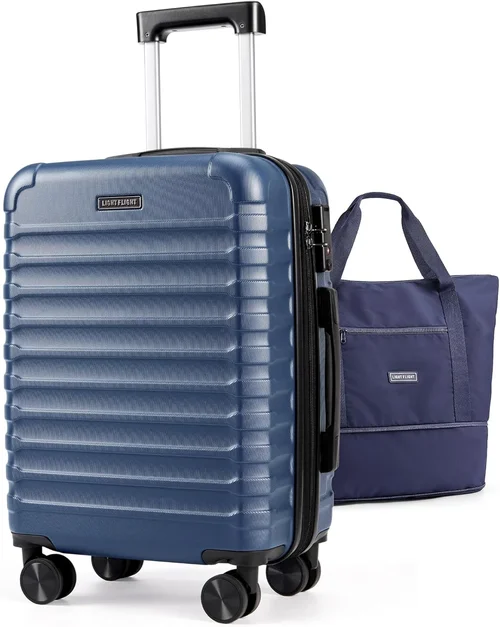
Finding the perfect travel companion can feel like searching for a needle in a haystack, especially when you are trying to balance airline restrictions with your packing needs. The market for convertible expandable under seat carry-on luggage has exploded in recent years, offering travelers a versatile solution that adapts to both short business trips and extended vacations. This guide exists to cut through the marketing noise and give you the practical knowledge you need to make a confident purchase.
We will walk through every critical aspect of these bags, from understanding dimensional limits and expansion mechanisms to evaluating wheel quality and material durability. By the end of this article, you will know exactly which features match your travel style, how to spot a well-built bag versus a disposable one, and how to allocate your budget for maximum value. Whether you are a weekly commuter hopping on regional jets or an occasional traveler trying to avoid checked bag fees, this guide is your roadmap to the ideal under seat carry-on.

What to Look for When Buying Buying Guide
1. Dimensional Compliance and Airline Restrictions
The single most important factor is whether the bag actually fits under the seat in front of you. Airlines have strict maximum dimensions for personal items, typically ranging from 16 to 18 inches in height, 13 to 14 inches in width, and 7 to 9 inches in depth. However, these numbers vary significantly between carriers. A bag that fits perfectly under a Boeing 737 seat might be too tall for a regional Embraer jet.
Look for bags that list their external dimensions clearly, including wheels and handles. Manufacturers often advertise the “packing dimensions” which are smaller than the true external footprint. If you fly multiple airlines, choose a bag that meets the most restrictive standard you encounter. Some brands design their bags to be “universal” personal items, typically around 17 x 13 x 8 inches, which covers the vast majority of domestic US carriers. Always measure your bag yourself when it arrives, fully packed, to ensure compliance before you reach the gate.
2. Expansion Mechanism and Capacity Gain
The “expandable” feature is the defining characteristic of this category, but not all expansion systems are created equal. Most bags use a zippered gusset that adds 1.5 to 3 inches of depth. This can increase volume by 20% to 35%, turning a 20-liter bag into a 27-liter bag. However, an expanded bag often exceeds under seat height or depth limits.
You need to understand the conversion capability. Does the bag expand while remaining compliant as a personal item, or does expansion turn it into a standard overhead carry-on? Some innovative designs expand outward rather than upward, preserving the height profile. Others feature a “compression” mode where the expansion zipper doubles as a compression strap to condense contents. Test the expansion mechanism in person if possible; the zipper should glide smoothly without catching on the fabric liner, and the expanded panel should feel structural, not floppy.
3. Convertible Carry Configurations
The term “convertible” implies the bag can be carried in multiple ways. At a minimum, expect a top grab handle, a padded shoulder strap, and a trolley sleeve (also called a pass-through sleeve) that slides over the handle of a rolling suitcase. Premium models add backpack straps that tuck away into a zippered pocket, transforming the bag into a hands-free backpack for navigating crowded terminals or cobblestone streets.
Evaluate the ergonomics of each mode. A shoulder strap should be wide, padded, and non-slip. Backpack straps should have decent lumbar support and a sternum strap for heavier loads. The trolley sleeve must be deep enough to secure the bag firmly over a spinner handle without wobbling. If you plan to carry the bag as a backpack frequently, prioritize models with a dedicated laptop compartment accessible from the back panel so you don’t have to dig through the main compartment at security.
4. Material Durability and Weather Resistance
Under seat luggage takes a beating. It gets shoved under seats, scraped against jet bridges, dragged over curbs, and exposed to rain on the tarmac. The fabric denier (D) rating is a key indicator of toughness. Ballistic nylon (typically 1680D) is the gold standard for abrasion resistance and tear strength. High-denier polyester (900D-1200D) offers good value but may pill or snag more easily. Look for a TPU (thermoplastic polyurethane) or PVC backing on the interior of the fabric; this provides water resistance and structural rigidity.
Zippers are the most common failure point. YKK zippers are the industry benchmark. Look for #10 (large) zippers on the main compartment and #8 or #10 on expansion gussets. Self-repairing coil zippers are preferable to molded tooth zippers because they can realign if a tooth gets bent. Water-resistant zipper garages or storm flaps add a layer of protection for electronics. The base of the bag should feature a reinforced, water-resistant panel (often tarpaulin or ballistic nylon) with protective feet or “skid rails” to prevent wear when you set the bag down.
5. Wheel System and Mobility
Since these bags are designed to roll, the wheel system dictates the daily user experience. There are two main types: inline skate wheels (two wheels) and spinner wheels (four multidirectional wheels). Inline wheels are recessed into the chassis, offering better durability on rough terrain (cobblestones, gravel) and taking up less internal packing space. Spinner wheels offer 360-degree maneuverability, allowing you to push the bag beside you down narrow airplane aisles, but they protrude more, consuming external dimensions and are more vulnerable to snapping off if checked gate-side.
For under seat bags, high-quality inline wheels are often the superior choice because they maximize internal volume and survive the “gate check” gauntlet better. Look for sealed ball bearings, polyurethane tread (not hard plastic), and a wide wheelbase for stability. The handle system should be a single-tube or dual-tube aluminum telescoping handle with a comfortable ergonomic grip. It must lock securely at multiple heights and retract smoothly without jamming.
6. Internal Organization and Laptop Protection
A cavernous main compartment is useless without organization. Look for a clamshell opening (opens flat like a book) rather than a top-loading U-zip, as it allows full visibility and easy packing. Essential internal features include: a padded laptop sleeve (fitting 15.6″ or 16″ devices) suspended off the bottom to prevent impact damage, a tablet sleeve, mesh zippered divider panels for cables/toiletries, and compression straps to secure clothing.
External pockets are equally critical. You need a quick-access pocket for boarding pass/phone/passport (ideally RFID-blocking), a water bottle pocket that lies flat when empty, and a front administrative panel for pens, cables, and chargers. Some bags feature a dedicated “tech organizer” sleeve that unzips and lays flat for TSA screening. The layout should match your workflow: if you work on the go, prioritize laptop access; if you pack clothes, prioritize compression and divider panels.
7. Weight and Packable Ratio
Every ounce of bag weight eats into your packing allowance. Ultra-light models weigh 3-4 lbs, while feature-heavy convertible bags can weigh 6-8 lbs empty. Aim for a “packable ratio” (internal volume in liters divided by empty weight in pounds) of at least 4:1. A 20L bag weighing 5 lbs gives you a 4:1 ratio, which is decent. A 25L bag at 4 lbs is excellent (6.25:1).
Be wary of bags lighter than 3 lbs; they often sacrifice frame structure, wheel quality, or fabric thickness. The bag should hold its shape when empty. A floppy bag is difficult to pack, unstable when rolling, and offers zero protection for fragile items. The frame is usually achieved by a combination of high-density foam walls, a rigid bottom plate, and the telescoping handle frame. Press on the sides of an empty bag; it should spring back, not collapse.
8. Warranty, Repairability, and Brand Support
A warranty tells you how much the manufacturer trusts their product. “Limited Lifetime” warranties are standard for premium brands (e.g., Osprey, Briggs & Riley, Tumi, Travelpro) but read the fine print. Many cover defects in materials/workmanship but exclude airline damage, zippers, or wheels after a certain period. The best warranties are “no questions asked” or offer affordable repair services.
Check if replacement parts (wheels, handles, straps) are available for purchase. Brands like Travelpro and Briggs & Riley sell individual components, meaning a broken wheel doesn’t retire the bag. Customer service responsiveness matters; search for recent reviews mentioning warranty claims. A bag is a long-term investment; buying from a company that stands behind their product for a decade saves money and landfill waste.
Different Types of Buying Guide

Common Buying Mistakes to Avoid
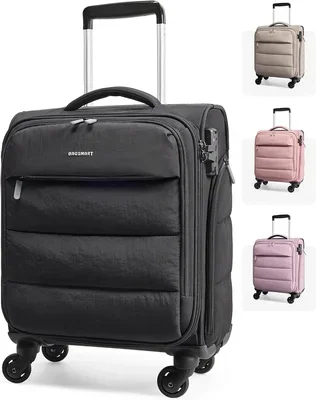
❌ Mistake: Ignoring the “Personal Item” vs “Carry-On” Distinction
Why it’s bad: Many travelers buy a bag labeled “carry-on” assuming it fits under the seat. Standard carry-ons (22 x 14 x 9 in) go in the overhead bin. Personal items (approx. 18 x 14 x 8 in) go under the seat. If you buy a standard carry-on thinking it’s an under seat bag, you will be forced to gate-check it on full flights, risking damage and delaying your exit.
What to do instead: Explicitly search for “under seat” or “personal item” dimensions. Verify the product specs list height, width, and depth including wheels and handles. If the height is over 18 inches, it is likely an overhead bin bag, not an under seat bag.
❌ Mistake: Prioritizing Spinner Wheels for Under Seat Use
Why it’s bad: Spinner wheels are fantastic for 22-inch carry-ons in wide aisles. On under seat bags, the four protruding wheels add 1.5-2 inches to the width and depth. This often pushes the bag over the strict personal item limits of budget airlines (Spirit, Frontier, Basic Economy). They are also the first thing to break if the bag is gate-checked.
What to do instead: Choose high-quality inline (two-wheel) models for under seat luggage. They sit flush against the chassis, maximizing internal volume and staying within dimensional limits. They roll straight and true over thresholds and jet bridge gaps.
❌ Mistake: Overlooking the “Expanded” Dimensions
Why it’s bad: You pack the bag expanded for the outbound trip. On the return, you have souvenirs. You zip the expansion shut, but the bag is now bulging and rigid. It no longer compresses to fit the sizer. You get flagged at the gate and pay a fee.
What to do instead: Only use expansion when you are certain you will check the bag or store it overhead. For under seat travel, pack the bag in its compressed state. Use packing cubes to maximize the non-expanded volume. Treat expansion as an emergency overflow, not the standard packing mode.
❌ Mistake: Buying Based on “Laptop Compartment Size” Alone
Why it’s bad: A bag fits a 16-inch laptop on paper. In reality, the sleeve is at the very back of the bag, against your back (in backpack mode) or the bottom (in roller mode). A thick gaming laptop or a laptop in a bulky case won’t slide in. The sleeve padding might be thin foam, not impact-absorbing EVA.
What to do instead: Measure your laptop in its sleeve/case. Look for a “suspended” laptop compartment (doesn’t touch the bottom of the bag). Check reviews for “fits 16″ MacBook Pro in case” specifically. Ensure the laptop pocket opens flat for TSA screening (checkpoint-friendly design).
❌ Mistake: Choosing Style Over Structural Integrity
Why it’s bad: Sleek, minimalist bags often use thin 400D-600D nylon, minimal internal framing, and lightweight plastic hardware. They look great in the hotel lobby but collapse under the weight of a weekend’s clothes, the wheels wobble after two trips, and the telescoping handle bends.
What to do instead: Squeeze the bag. Press the corners. Shake the handle. It should feel rigid, not flimsy. Look for internal framesheets (HDPE plastic sheets) or dense foam perimeter frames. Hardware should be metal (aluminum/steel) or heavy-duty acetal resin, not thin plastic.
❌ Mistake: Neglecting the Trolley Sleeve Design
Why it’s bad: A shallow trolley sleeve (less than 6 inches deep) or one without a securing strap/buckle causes the under seat bag to slide off the rolling suitcase handle during turns. You end up carrying both bags, defeating the purpose of the convertible system.
What to do instead: Look for a deep sleeve (8+ inches) with a Velcro or snap closure at the bottom to lock it onto the suitcase handle. Test it in the store: put the bag on a roller handle and walk fast, make sharp turns. It should stay put.
❌ Mistake: Assuming “Water Resistant” Means “Waterproof”
Why it’s bad: Water-resistant fabrics (DWR coating) bead light rain. They fail in downpours, standing water on the tarmac, or if a bottle leaks inside. Zippers are rarely waterproof unless specifically rated (e.g., YKK AquaGuard).
What to do instead: If you travel in wet climates or carry sensitive electronics, use a pack liner (trash compactor bag) inside the main compartment. Use dry sacks for electronics. Look for bags with storm flaps over zippers and a bathtub-style floor (fabric wraps up the sides 2-3 inches before seams).
Budget Guidelines: How Much Should You Spend?
Entry-Level ($60 – $130): Functional Basics
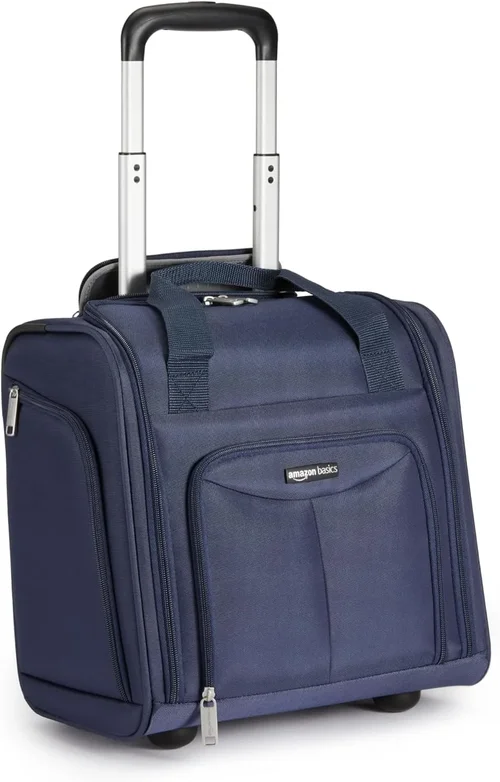
At this price point, you are buying a “trip bag” — good for a few trips a year. Expect 600D-900D polyester, two inline wheels, a basic telescoping handle, and a simple expansion zipper. Organization will be minimal: one main compartment, one front pocket, maybe a laptop sleeve. Zippers will be generic coil zippers (not YKK). The trolley sleeve is often just a strap. Warranty is typically 1-2 years limited. Brands: Amazon Basics, Kenneth Cole Reaction, Rockland, Samsonite base lines. Best for: Occasional leisure travelers, students, backup bag.
Mid-Range ($130 – $250): The Sweet Spot
This is where value peaks. You get ballistic nylon or high-denier polyester (1000D-1680D), YKK zippers, sealed-bearing wheels, aluminum telescoping handles, and thoughtful organization (admin panel, RFID pocket, water bottle pocket). Expansion is standard. Convertible backpack straps appear here. Warranties extend to 5-10 years or limited lifetime. Brands: Travelpro (Platinum Elite, Maxlite), Briggs & Riley (Baseline – sometimes on sale), Osprey (Rolling Transporter), Eagle Creek, Thule. Best for: Frequent business travelers (monthly), serious leisure travelers, best balance of durability/weight/features.
Premium ($250 – $450): Refined Engineering
You pay for precision. Materials are top-tier: 1680D ballistic nylon, Cordura, or proprietary fabrics (e.g., Tumi FXT, Briggs & Riley CX). Wheel systems are custom-molded, often replaceable. Handles are aircraft-grade aluminum with ergonomic grips. Organization is modular (removable packing cubes, wet/dry pockets). Convertible backpack systems are highly padded with airflow channels. Warranties are truly lifetime, often covering airline damage (Briggs & Riley “Simple as That”). Brands: Briggs & Riley, Tumi (Alpha/19 Degree), Victorinox, Peak Design (Travel Duffel 35L – borderline), Tom Bihn. Best for: Weekly travelers, road warriors, those who want a “buy it for life” bag.
Luxury ($450+): Status and Specialization
Diminishing returns on durability, gains in aesthetics, materials (leather accents, carbon fiber, custom hardware), and brand service. Tumi, Globe-Trotter, Rimowa (personal items), bespoke makers. Warranty includes concierge repair. Best for: Luxury travelers, gift buyers, specific aesthetic requirements. Not necessary for functional performance.

Expert Tips for Getting the Best Deal
- Time Your Purchase: The best sales occur in January (post-holiday clearance), July (mid-year clearance), and November (Black Friday/Cyber Monday). Luggage is seasonal; new models launch in February/March and August/September. Last year’s model in February is 30-50% off and functionally identical.
- Check “Scratch & Dent” or Outlet Stores: Briggs & Riley, Tumi, and Travelpro have official outlet sites selling returns or cosmetic blemishes at 40-60% off with full warranties. The “blemish” is often a tiny scuff on the bottom panel nobody sees.
- Leverage Credit Card Benefits: Many premium travel cards (Chase Sapphire Reserve, Amex Platinum, Capital One Venture X) offer statement credits for luggage purchases or extended warranty protection that doubles the manufacturer warranty.
- Buy the “System” on Sale: If you need a checked bag too, buy a matching set. Manufacturers design trolley sleeves to work perfectly with their own rolling suitcases. Sets are often discounted 20% vs individual pieces.
- Test the Telescoping Handle In-Store: Extend and retract it 20 times. Does it stick? Does it wobble side-to-side at full extension? A sticky handle is the #1 annoyance in daily use. If buying online, order two sizes, test both, return the loser (check return policy first).
- Read 3-Star Reviews: 5-star reviews are often “looks great!” 1-star are “arrived broken.” 3-star reviews from verified buyers after 6+ months of use reveal real durability: “wheel fell off,” “zipper separated,” “handle stuck.” These are gold.
- Consider Refurbished: Briggs & Riley Certified Pre-Owned and Travelpro Refurbished come with full warranties at 50% off. These are returned/open-box items inspected and repaired by the factory.
- Pack a “Go Bag” Inside: Keep a packing cube with toiletries, charging cables, and a change of underwear permanently in the bag. You never “forget” essentials, and packing takes 60 seconds.
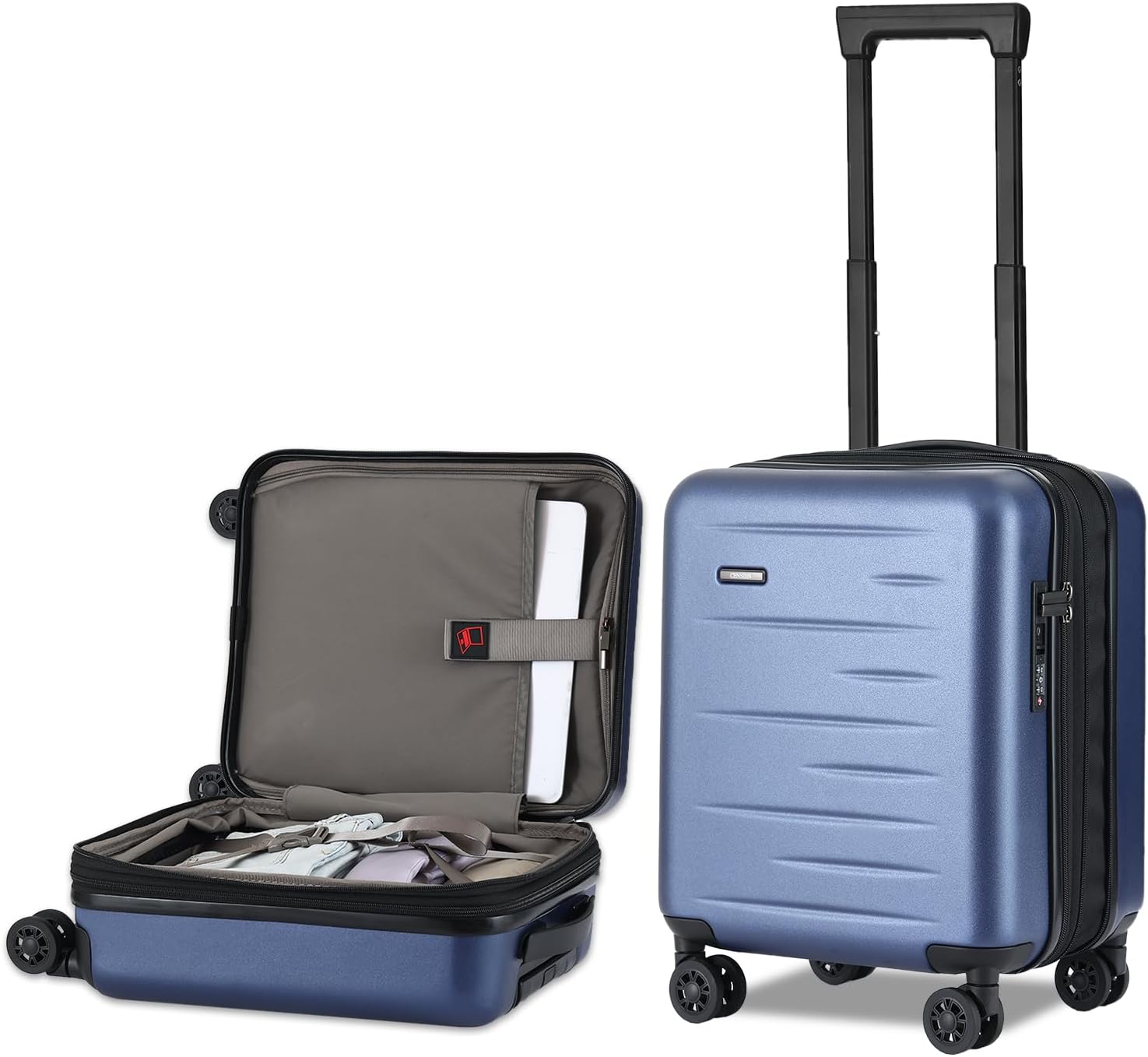
Frequently Asked Questions
Q: Can I use an expandable under seat bag as my only bag for a week-long trip?
A: Yes, if you are a minimalist packer or use packing cubes and compression sacks. A 20-25L expanded bag holds roughly 5-7 days of clothing (2 bottoms, 5 tops, underwear/socks, light jacket) plus toiletries and a laptop. For bulkier items (sweaters, boots), you will struggle. It works best for business casual or warm-weather trips.
Q: Do the backpack straps on convertible bags actually comfortable for walking long distances?
A: It depends entirely on the model. Budget hybrids ($100) have thin, unpadded straps that dig in after 15 minutes with 15+ lbs. Premium hybrids ($250+) have contoured, foam-padded straps with load lifters and sternum straps that are genuinely comfortable for 30-60 minute walks. If you plan to walk miles (e.g., European train travel), prioritize the backpack carry quality or use a separate daypack.
Q: Will a convertible under seat bag fit on a regional jet (CRJ/ERJ)?
A: Regional jets have the tightest under seat clearance, often tapering sharply at the floor. A bag with a rigid frame or tall wheels may not slide all the way in. Soft-sided, squishy bags (duffel-style) conform best. If you fly regional often, choose a bag under 17″ height and 7.5″ depth, soft-sided, with low-profile inline wheels.
Q: Is a hardside under seat bag better than softside?
A: Hardside (polycarbonate/aluminum) offers superior crush protection for fragile items (camera gear, samples) and is fully waterproof. However, it has zero give — it either fits the sizer or it doesn’t. You cannot squish it into a tight space. It scratches visibly. Softside is lighter, expands, fits irregular spaces, and absorbs impacts better. For general travel, softside is more practical.
Q: How do I clean my under seat luggage?
A: Never machine wash. Spot clean with a soft brush, mild soap (Woolite or tech wash), and lukewarm water. Rinse with a damp cloth. Air dry completely upside down. Lubricate zippers annually with silicone zipper lubricant (not WD-40). Clean wheels with compressed air and a drop of light oil on axles if they squeak.
Q: What is the difference between a “personal item” and a “carry-on” bag?
A: A personal item fits under the seat in front of you (max ~18x14x8 in). A carry-on fits in the overhead bin (max ~22x14x9 in). Most airlines allow one of each for free (except Basic Economy on some carriers). This guide focuses on the personal item category.
Q: Can I replace the wheels myself if they break?
A: On premium brands (Travelpro, Briggs & Riley, Victorinox, Osprey), yes. They sell wheel kits ($15-$30) and provide instructions. It requires a Phillips screwdriver and 10 minutes. On budget brands, wheels are usually riveted or the chassis cracks before the wheel fails, making repair impossible. This is a key reason to buy mid-range or premium.
Q: Are TSA locks necessary on an under seat bag?
A: Not strictly, since the bag stays at your feet. However, if you ever gate-check it (common on full flights), a TSA lock prevents casual theft by baggage handlers. Many mid-range bags now include a built-in TSA lock on the main compartment. If yours doesn’t, a small TSA-approved cable lock through the zipper pulls is a $5 investment.
Q: How much does a typical convertible under seat bag weigh empty?
A: Inline two-wheel: 4.5 – 6.5 lbs. Spinner four-wheel: 5.5 – 7.5 lbs. Backpack hybrid: 3.5 – 5.5 lbs. Ultralight minimalist: 2.5 – 3.5 lbs. Target 5 lbs or less for a good balance of durability and weight.
Q: Can I fit a 17-inch laptop in these bags?
A: Rarely. Most laptop sleeves max out at 15.6″ or 16″ (MacBook Pro 16). A 17″ gaming laptop is physically wider than the bag’s internal width (usually ~12-13″). You would need a dedicated 17″ laptop backpack, which likely won’t fit under the seat with the laptop inside. Consider a 15″ ultrabook for travel.
Our Final Recommendations
Best for Budget-Conscious Buyers: Travelpro Maxlite 5 Underseat Carry-On (~$100) — Incredible value. 2.5 lbs, 840D nylon, smooth inline wheels, expansion, decent organization, limited lifetime warranty. It lacks backpack straps and premium materials, but for 4-6 trips a year, it is unbeatable.
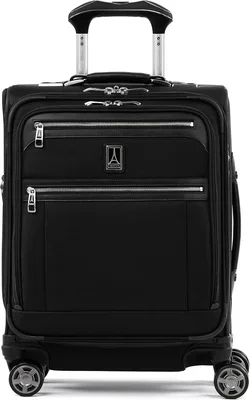
Best Overall Value: Osprey Rolling Transporter 40L (~$230) or Travelpro Platinum Elite Underseat (~$250) — The Osprey is a softside duffel/roller hybrid with stowable backpack straps, massive U-zip access, and legendary warranty. The Travelpro is a traditional structured roller with suiter system, precision wheels, and wet pocket. Both are durable enough for weekly travel.
Best Premium Option: Briggs & Riley Baseline Domestic Carry-On Expandable (~$400) — The CX expansion system expands outward (not upward), keeping it under seat compliant even when expanded. Ballistic nylon, self-repairing zippers, lifetime warranty covering airline damage. It is the “last bag you’ll buy.”
Best for Beginners: Samsonite Freeform Hardside Underseater (~$180) — Hardside simplicity. No expansion to manage, spinner wheels for easy airport sprints, integrated TSA lock, distinct colors. Rigid shell protects contents. Great “set and forget” option for new travelers.
Best for Advanced Users / Digital Nomads: Peak Design Travel Duffel 35L (~$300) or Tom Bihn Pilot (~$320) — Peak Design offers modular camera cubes, external access panels, weatherproof 400D nylon canvas, and a brilliant strap system. Tom Bihn is the organizer’s dream: infinite pockets, bombproof construction, made in Seattle, lifetime warranty. Both carry like backpacks primarily, roll secondarily.
Conclusion: Making the Right Choice
Choosing a convertible expandable under seat carry-on is ultimately an exercise in matching a tool to your specific travel rhythm. We have covered the critical dimensions that keep you gate-check free, the expansion mechanics that adapt to trip length, the carry systems that save your shoulders, and the materials that survive the journey. Remember that the “best” bag is not the one with the most features or the highest price tag — it is the one that disappears into your workflow, letting you focus on the trip, not the luggage.
Prioritize dimensional compliance first; a bag that doesn’t fit is a liability, not an asset. Next, match the wheel and carry system to your terrain: inline wheels for the road warrior, backpack straps for the urban explorer. Invest in YKK zippers and ballistic nylon if you travel monthly; save with polyester if you travel quarterly. And never underestimate a great warranty — it is the manufacturer’s promise that they believe in the product as much as you need to.
You now have the framework to evaluate any bag on the market. Measure your most common aircraft’s under seat space. Audit your packing list. Set your budget. Then buy with confidence, knowing your next trip will start with a smooth roll down the jet bridge, not a struggle with the overhead bin. Safe travels.