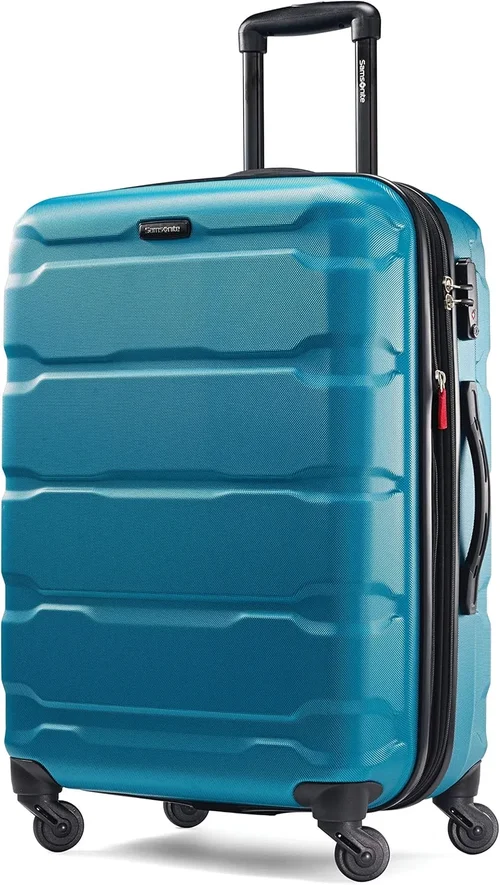
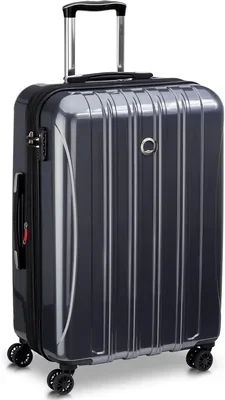
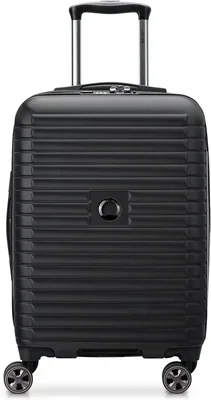
Buying a 32-inch expandable suitcase is one of those decisions that feels bigger than it should be. You are not just picking a bag; you are choosing the companion that will hold two weeks of outfits, the souvenirs you haven’t bought yet, and the peace of mind that comes from knowing your gear is safe. The market is flooded with options ranging from budget-friendly basics to high-end engineering marvels, and the spec sheets can read like a foreign language. This guide exists to cut through that noise. We are going to walk through every critical factor, decode the jargon, compare the distinct categories, and give you a clear roadmap so you can invest in a piece of luggage that works as hard as you do.
By the time you finish reading, you will understand the difference between polycarbonate and ballistic nylon, why spinner wheel count matters more than you think, and how to spot a “deal” that will actually cost you more in the long run. We will cover budget breakdowns, common pitfalls that trap even seasoned travelers, and expert timing strategies for the best price. Whether you are a family vacation planner, a long-haul business traveler, or someone preparing for a big move, this guide will help you match the right 32-inch expandable luggage to your specific travel style.
The 32-inch class is the heavy lifter of the luggage world. It is the standard “large checked bag” size accepted by virtually every major airline, sitting right at the edge of the 62 linear inch limit (length + width + height) when expanded. The expandable feature is the game-changer here, typically adding 1.5 to 2.5 inches of packing depth. That extra space is the difference between sitting on your suitcase to zip it closed and sliding the zipper shut with one finger. Let’s dive into what makes one of these giants worth your money.

What to Look for When Buying Expandable Luggage
1. Shell Material: Hard Side vs. Soft Side Construction
The very first decision you face is the shell. This dictates weight, durability, water resistance, and how the bag handles being tossed onto a conveyor belt. Hard side luggage is typically made from polycarbonate, ABS plastic, or a composite blend. Polycarbonate is the gold standard for a reason. It is incredibly impact resistant, meaning it flexes under pressure rather than cracking or shattering. If you see a bag labeled “100% Polycarbonate,” that is a strong buy signal. ABS is cheaper and lighter but significantly more brittle; a hard impact in cold weather can spiderweb the shell. Many mid-range bags use a Polycarbonate/ABS composite to balance cost and toughness.
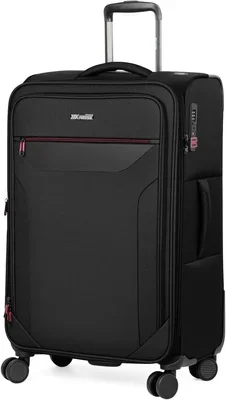
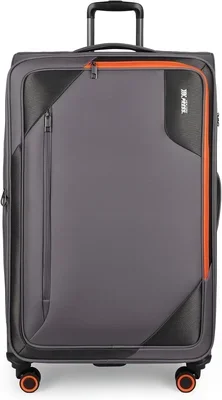
Soft side luggage uses woven fabrics, most commonly ballistic nylon, Cordura, or high-denier polyester. “Denier” (D) refers to the fiber thickness—higher numbers (1680D, 2520D) indicate a tighter, more abrasion-resistant weave. Ballistic nylon was originally developed for flak jackets; it offers exceptional tear resistance and a premium feel. Soft sides excel at squeezing into tight overhead bins (though less relevant for 32-inch checked bags) and outside pockets for last-minute items. However, they absorb water unless treated with a durable water repellent (DWR) coating, and they offer less crush protection for fragile items inside.
2. Wheel System: Spinner vs. Inline Skate Wheels
This is the single biggest factor in day-of-travel fatigue. A 32-inch bag fully packed can weigh 50 to 70 pounds. You want that weight rolling, not dragging. Spinner wheels (four wheels, 360-degree rotation) allow you to push the bag upright beside you, maneuvering down narrow airplane aisles and crowded terminals with wrist flicks rather than back strain. Look for “double spinner” wheels—two wheels per corner. They distribute the load better, track straighter on uneven pavement, and are far less likely to snap off if the bag is dropped.
Inline skate wheels (two fixed wheels) are recessed into the body of the bag. This protects them from baggage handlers and saves interior packing space. They are superior for pulling over curbs, cobblestones, gravel, and snow. However, you must tilt the bag and bear some weight on your arm. For a 32-inch bag, that gets old fast. Premium brands like Briggs & Riley and Travelpro have engineered hybrid systems or exceptionally high-quality spinners that handle rough terrain surprisingly well, but as a general rule: smooth airports = spinners; adventure travel/rough ground = inlines.
3. Handle System: Telescoping Mechanism and Grip Ergonomics
The handle is your steering wheel. A cheap handle wobbles, sticks at specific heights, or retracts with a jarring snap. You want a multi-stage telescoping handle (usually 3-stop) made of aircraft-grade aluminum or reinforced steel. Test the “wiggle factor” mentally: when fully extended, the handle tubes should have minimal side-to-side play. Excessive wobble translates to torque on your wrist.
Grip material matters for long walks. Molded rubber or gel grips with contouring reduce pressure points. Some premium models feature a “comfort grip” that wraps around the top handle for two-handed lifting into truck beds or overhead storage. Also, check the top and side carry handles. On a 32-inch bag, these take serious abuse. They should be riveted or sewn with heavy-duty bar-tack stitching, not just glued or single-stitched. A broken carry handle on a 60-pound bag is a travel nightmare.
4. Expansion Mechanism: Gusset Depth and Zipper Quality
This is the namesake feature. The expansion gusset is the folded panel of material (fabric or plastic) that unfolds when you unzip the expansion zipper. Depth typically ranges from 1.5 inches to 2.5 inches. On a 32-inch bag, 2 inches of expansion adds roughly 15-20% more volume—enough for three sweaters, a pair of boots, or a case of wine.
Critically, inspect the expansion zipper. It should be a heavy-duty coil zipper (YKK is the industry standard brand) with large, easy-to-grip pulls. Ideally, it has a “zipper garage” or protective flap at the end stop to prevent the slider from snagging or popping open under pressure. Some high-end bags feature a “compression expansion” system where the expansion zipper is the compression zipper—you pack flat, zip the expansion shut to compress contents, then unzip for more space. This is superior to separate compression straps inside.
5. Interior Organization: Dividers, Pockets, and Compression
Don’t underestimate the interior. A cavernous single compartment becomes a jumbled mess after one flight. Look for a full clamshell opening (both halves open flat) with a zippered divider panel in the middle. This creates two distinct packing zones. The divider should have at least one large mesh zippered pocket for toiletries or laundry. The bottom half benefits immensely from built-in compression straps (X-straps or clamps) to lock clothes down and prevent shifting—which causes wrinkles.
Soft side bags often shine here with external pockets. Look for a full-length front “U-zip” pocket for boarding passes, tablets, or a light jacket. Interior “wet pockets” (PVC lined) are invaluable for swimsuits or leaky toiletries. Hard side bags sometimes include a removable zippered liner or a dedicated shoe pocket that clips in. Removable liners are fantastic for washing—just unzip the liner, toss it in the machine, and your bag stays fresh.
6. Weight and Airline Restrictions
Every ounce of luggage weight is an ounce less you can pack before hitting the 50lb (23kg) standard checked bag limit (or 70lb for business/first on some carriers). Ultra-light 32-inch spinners can weigh as little as 7.5 lbs (3.4 kg). Heavy-duty premium models can hit 12-14 lbs (5.4-6.3 kg). That 5-6 lb difference is a laptop, a pair of boots, or two bottles of wine.
However, the lightest bags often sacrifice durability (thin shells, minimal frame reinforcement). The sweet spot for a durable polycarbonate spinner is usually 8.5 – 10.5 lbs. For soft side, 8 – 10 lbs is standard. Always weigh the empty bag yourself if possible; manufacturer specs can be optimistic. Remember: linear inches = height + width + depth. Measure the bag expanded to ensure it stays under 62 inches. Many 32-inch bags expand to 63 or 64 inches—technically oversize, which risks fees.
7. Locks and Security Features
TSA-approved combination locks are standard now. The Transportation Security Administration has master keys to open them without cutting. Look for a recessed, integrated lock body mounted flush to the shell (hard side) or sewn into the frame (soft side). Protruding lock shackles get caught on conveyor belts and snapped off. A 3-dial combination is standard; some premium models offer a TSA cable lock system that lets you zip multiple compartments together with one lock.
Double-coil zippers (two zipper pulls meeting in the middle) are essential. They allow you to lock both pulls together through the lock shackle. Single-pull zippers cannot be secured this way. Some brands (like Samsonite with their Securitech) use a zipper pull that tucks into a hardened steel loop, making it nearly impossible to puncture the zipper coils with a pen—a common theft technique.
8. Warranty and Brand Support
Luggage takes a beating. A warranty is the manufacturer’s vote of confidence in their build quality. “Limited Lifetime Warranty” sounds great, but read the fine print. Does it cover airline damage (the #1 cause of failure)? Many explicitly exclude “conveyor belt damage” or “normal wear and tear.” The best warranties (Briggs & Riley, Travelpro, Osprey, Eagle Creek) are truly unconditional: “If it breaks, we fix it, no questions asked, free shipping both ways.”
Check the repair network. Can you drop it at a local authorized repair center, or must you ship it to a central depot? Shipping a 32-inch box round-trip can cost $50+, negating a “free repair.” Brands with retail stores or widespread authorized dealers (like Travelpro or Samsonite) offer huge convenience advantages. Also, check parts availability. Can you buy replacement wheels, handles, or zipper pulls yourself 5 years from now? That extends the life of a $300 bag indefinitely.
Different Types of Expandable Luggage

Common Buying Mistakes to Avoid
❌ Mistake: Buying Strictly on Price
Why it’s bad: A $60 32-inch spinner from a big-box store looks like a steal until the wheel housing cracks on the first trip, the handle jams halfway up, or the zipper separates under the weight of your clothes. Cheap luggage uses thin ABS plastic, single-spinner wheels on plastic axles, pot-metal handle tubes, and low-grade zippers. These fail catastrophically, often stranding you at the baggage carousel or forcing a mid-trip replacement purchase at inflated airport prices.
What to do instead: Set a realistic floor. For a 32-inch expandable spinner you expect to last 5+ years of regular travel, plan to spend at least $150-$200 on a reputable brand sale, or $250+ for premium. View it as cost-per-trip. A $300 bag lasting 30 trips is $10/trip. A $80 bag lasting 3 trips is $27/trip—plus the headache.
❌ Mistake: Ignoring the “Expanded” Dimensions
Why it’s bad: You pack the bag expanded, zip it up, and head to the airport. At check-in, the agent runs it through the sizer. It sticks out. You get hit with a $100-$200 oversize baggage fee per leg of your journey. Many 32-inch bags measure 31.5″ x 20″ x 12.5″ unexpanded. Adding 2 inches of expansion makes them 14.5″ deep. Total linear inches = 31.5 + 20 + 14.5 = 66 inches. That is 4 inches over the standard 62-inch limit.
What to do instead: Check the manufacturer specs for expanded linear inches. If they exceed 62, know that you are taking a risk. Some airlines are strict; others never check. If you need that expansion, look for bags designed to expand within the 62-inch limit (rare in 32-inch class) or be prepared to pay fees. Better yet, pack the bag unexpanded and use the expansion only for the return trip with souvenirs.
❌ Mistake: Choosing 4 Single Spinner Wheels Over Double Spinners
Why it’s bad: Single spinner wheels (one wheel per corner) concentrate the entire bag’s weight on four small contact points. On a heavy 32-inch bag, the axles bend, the wheel hubs crack, or the rivets pull out of the shell. They also “shimmy” badly when pulled fast, causing the bag to tip over. Double spinners (8 wheels total) spread the load across eight contact points. They track straight, handle cracks in pavement smoothly, and if one wheel fails, the other three on that corner keep rolling.
What to do instead: Filter your search for “double spinner wheels” or “8 wheels.” It is the single most reliable indicator of a bag built for heavy checked loads. If a listing doesn’t explicitly state double spinners, assume they are singles.
❌ Mistake: Overlooking Interior Volume vs. Exterior Dimensions
Why it’s bad: Two bags can have identical 32-inch exterior dimensions but vastly different packing capacities. Thick frames, deep wheel wells intruding into the interior, bulky handle tubes eating corner space, and non-removable liners all steal volume. A bag with a 115L capacity vs one with 100L is a massive difference—roughly a week’s worth of rolled clothes.
What to do instead: Look for the stated interior volume in Liters (L) or Cubic Inches. For a 32-inch expandable, aim for 110L+ unexpanded and 125L+ expanded. Read reviews specifically mentioning “packed a surprising amount” or “wheel wells eat space.” If possible, watch a video review where someone does a “pack-out” demo.
❌ Mistake: Assuming “Waterproof” Means Submersible
Why it’s bad: Marketing loves the word “waterproof.” In luggage, it usually means “water-resistant.” Hard side shells are waterproof, but the zipper is not. Water flows right through the coil teeth. Soft side fabrics have DWR coatings that wear off. In a heavy downpour on the tarmac or a leaky cargo hold, your clothes will get wet if you rely solely on the bag.
What to do instead: Use packing cubes with water-resistant zippers (like Eagle Creek or Peak Design) or line the interior with a heavy-duty trash compactor bag (the ultimate cheap hack). For true waterproofing, look at specialized brands like Watershed or Yeti, but expect to pay $500+ and lose the spinner wheels.
❌ Mistake: Not Testing the Handle Height (If You Are Tall or Short)
Why it’s bad: Standard handles stop at ~41-42 inches from the ground. If you are 6’2″, you will be hunched over, straining your lower back. If you are 5’2″, the lowest setting might still be too high, forcing you to shrug your shoulder. Many brands now offer “extended reach” handles (up to 44-45″) or “short reach” options, but you have to seek them out.
What to do instead: Check the handle height specs. If you are over 6’0″, look for “extended handle” or “tall traveler” models (Travelpro Platinum Elite, Briggs & Riley Baseline often have longer throws). If buying in a store, extend the handle fully and walk 20 feet. Your elbow should be at a comfortable 90-100 degree angle.
❌ Mistake: Forgetting About Storage at Home
Why it’s bad: A 32-inch rigid hard side shell is a giant hollow box. If you live in an apartment or have limited closet space, storing it between trips is a headache. It won’t fit under most beds. Soft side bags with aluminum frames have the same issue. Frame-less soft side bags or nesting luggage sets (where the 32-inch holds the 24-inch and carry-on) solve this.
What to do instead: Measure your storage space before buying. If space is tight, prioritize a nesting set or a frame-less soft side bag (like the Eagle Creek Cargo Hauler or Patagonia Black Hole Wheeled Duffel) that collapses flat. Some hard sides (like the Monos Carry-On Plus nesting system, though rare in 32-inch) offer nesting, but it is uncommon in large checked sizes.
Budget Guidelines: How Much Should You Spend?
Entry-Level ($80 – $150): The “Occasional Traveler” Tier
At this price, you are almost exclusively looking at Polycarbonate/ABS composite hard sides or 1200D-1680D polyester soft sides. Brands: American Tourister, Rockland, Kenneth Cole Reaction, Amazon Basics, SwissGear. Expect: Single spinner wheels (mostly), 2-stage handles with noticeable wobble, basic TSA locks, minimal interior organization (maybe one divider, no compression straps), expansion zippers that feel flimsy. Weight: often surprisingly light (7-8 lbs) due to thin shells. Warranty: usually 2-5 years “limited,” excluding airline damage.
Who should buy: Someone taking 1-2 trips per year, checking the bag maybe 4-6 times annually. You pack clothes and soft items only. You are okay replacing the bag in 2-3 years. You treat luggage as a consumable.
Mid-Range ($150 – $300): The “Sweet Spot” for Most Travelers
This is where quality materials meet mass production efficiency. You find 100% Polycarbonate shells (Samsonite Freeform, Winfield 3, Centric), double spinner wheels become standard, handles are 3-stage aluminum with better tolerances. Soft side entries appear: Travelpro Maxlite 5, Samsonite Freeform Softside, Delsey Chatelet Soft. Interiors get full dividers, multiple mesh pockets, sturdy compression straps. Expansion gussets are deeper (2-2.5″). Warranties extend to 10 years or Limited Lifetime (with exclusions). Weight: 8.5 – 10.5 lbs typical.
Who should buy: The sweet spot for 90% of buyers. You travel 3-6 times a year. You pack electronics, shoes, maybe a bottle of wine. You want a bag that survives baggage handling without babying it. You want double spinners. This tier delivers 80% of premium performance for 40% of the price.
Premium ($300 – $500): The “Frequent Flyer / Quality Obsessed” Tier
Here you pay for engineering details: molded polycarbonate shells with structural ribs (Samsonite Proxis, Monos Check-In Large, Tumi 19 Degree Aluminum/ Polycarbonate). Wheels are precision Japanese Hinomoto Lisof silent-run double spinners—whisper quiet, buttery smooth. Handles are carbon fiber or reinforced magnesium, zero wobble. Interiors are modular: removable, washable liners, dedicated shoe pods, compression panels with mechanical advantage. Zippers are YKK RCW (reverse coil) or Securitech anti-theft. Warranties are truly global, often “no questions asked” with easy claims processes. Weight is optimized: 8-9.5 lbs for maximum strength-to-weight.
Who should buy: Road warriors (10+ trips/year), travelers with expensive gear (cameras, drones), those who value the experience of smooth rolling and satisfying clicks. You keep luggage for a decade. You appreciate repair-ability (replaceable wheels/handles).
Luxury / Specialty ($500 – $1000+): The “Buy It For Life” Tier
This is Briggs & Riley Baseline/Rhapsody, Tumi Alpha 3 / 19 Degree Aluminum, Rimowa Essential / Classic, Globe-Trotter. Materials: Ballistic 1680D/2520D nylon with leather trim, anodized aluminum-magnesium alloy shells, hand-stitched details. Features: CX expansion (Briggs & Riley expands outward not inward, preserving interior flatness), self-healing zippers, lifetime warranties that explicitly cover airline damage with free 2-way shipping. Aluminum bags (Rimowa, Tumi 19 Degree, Zero Halliburton) develop a patina, don’t crack, and protect contents like a bank vault—but weigh 13-15 lbs empty and dent permanently.
Who should buy: The 1% of travelers for whom luggage is a passion, a status signifier, or a tool requiring absolute reliability (photojournalists, musicians with gear, luxury travelers). You accept the weight penalty (aluminum) or the high cost (Briggs & Riley) for a warranty that means you will likely never buy another large checked bag again.
Expert Tips for Getting the Best Deal

Frequently Asked Questions
Q: What does “32-inch” actually measure?
A: It refers to the height of the bag body (usually measured with wheels). The total height including wheels and handle retracted is typically 31-32 inches. Width is usually 19-21 inches. Depth is 11-13 inches unexpanded, 13-15.5 inches expanded. Always check the specific model’s spec sheet.
Q: Is a 32-inch bag too big for international travel?
A: Generally, no. 62 linear inches (L+W+H) is the global standard for checked baggage on almost all international carriers. A 32-inch bag usually sits right at this limit. However, weight limits vary wildly. Many international carriers (Emirates, Qatar, Singapore, most European/Asian legacy carriers) allow 23kg (50lbs) in Economy, but some budget carriers (AirAsia, Scoot, Jetstar) have lower limits (20kg/44lbs or even 15kg/33lbs) unless you pay extra. Always verify your specific ticket’s baggage allowance.
Q: Can I use a 32-inch expandable bag as a carry-on?
A: Absolutely not. Carry-on limits are typically 22″ x 14″ x 9″ (approx 45 linear inches). A 32-inch bag is nearly double that size. It must be checked.
Q: How do I clean a polycarbonate shell?
A: Use a microfiber cloth dampened with warm water and mild dish soap. Wipe down the exterior. For scuff marks (black marks from conveyor belts), a “Magic Eraser” (melamine foam) works wonders—test a small hidden spot first. Avoid harsh solvents (acetone, alcohol, Goo Gone) which can dull or crack the finish. Dry thoroughly before storing.
Q: My spinner wheel is wobbly/noisy. Can I fix it?
A: Often, yes. Hair, string, or gravel gets wrapped around the axle. Flip the bag over. Use tweezers or a seam ripper to clear debris from the wheel hub. Spray a tiny bit of PTFE (Teflon) dry lubricant or silicone spray into the bearing—avoid WD-40 (attracts dirt). If the wheel housing is cracked or the axle bent, you need a replacement wheel. Check the brand’s website for parts.
Q: Are aluminum suitcases worth the weight penalty?
A: For most people, no. A 32-inch aluminum Rimowa or Tumi weighs 13-15 lbs empty. That leaves only 35-37 lbs for your stuff before hitting 50 lbs. You pay a massive weight tax for the shell. However, they are virtually indestructible, waterproof, and if dented, can often be popped out. They are status objects and “buy it for life” items. If you check fragile gear (camera cases, instruments) and money is no object, they are unmatched. For clothes? Overkill.
Q: What is the difference between “Expandable” and “Compression”?
A: Expansion adds physical volume by unzipping a gusset, making the bag physically thicker. Compression uses internal straps (or an external zipper panel) to squeeze the contents down, removing air and stabilizing the load. You want both. Expand for the return trip souvenirs. Compress for the outbound trip to keep clothes wrinkle-free and prevent shifting.
Q: Should I buy a matching luggage set or individual pieces?
A: Sets (3-piece or 5-piece) are usually better value if you need all the sizes. A 32-inch + 24-inch + carry-on set covers 95% of trips. The 24-inch is the “goldilocks” checked bag for 1-week trips. Buying individually lets you mix brands (e.g., a premium 32-inch for durability, a cheap 24-inch for kids, an ultra-light carry-on). If you only ever check one large bag, buy the best single 32-inch you can afford.
Q: How do I prevent my zipper from bursting open on an overpacked expanded bag?
A: Don’t rely solely on the zipper. Use the internal compression straps first to cinch the contents down. Then close the main compartment zipper. Then close the expansion zipper. The expansion zipper should not be under tension from the contents; it should just be closing the empty gusset space. If you have to sit on the bag to zip the expansion, you are overpacking—remove items or ship them.
Our Final Recommendations
Best for Budget-Conscious Buyers: Samsonite Freeform Hardside 32″ Spinner
Consistently the top-rated value in the $150-$180 range. It uses 100% polycarbonate (rare at this price), has double spinner wheels, a decent 3-stage handle, and a 10-year limited warranty. It weighs ~9.5 lbs. The interior is basic but functional. It comes in great colors. It hits the durability/price sweet spot perfectly for 3-4 trips a year.
Best Overall Value (Mid-Range): Travelpro Platinum Elite 32″ Expandable Spinner
This is the bag airline crews buy with their own money. It uses high-density nylon fabric with DuraGuard coating, precision MagnaTrac double spinners (the smoothest in class), a PowerScope handle with Contour Grip (minimal wobble), and a brilliant interior with a removable wet pocket, suiter sleeve, and accessory pockets. The “PrecisionGlide” system makes 70 lbs feel like 40. Lifetime warranty covers airline damage. Price ~$300-350. Worth every penny.
Best Premium Polycarbonate: Monos Check-In Large
Minimalist design, maximum engineering. Aerospace-grade polycarbonate shell with structural ribs, silent Hinomoto Lisof wheels, vegan leather handles, TSA lock integrated flush. The interior features a compression pad with a hidden laundry bag, anti-microbial lining. Lifetime warranty with easy claims. Looks stunning in muted tones (Slate, Sand, Terracotta). ~$350. For the design-conscious traveler who wants premium without logos.
Best Premium Soft Side: Briggs & Riley Baseline 32″ Expandable Spinner
The CX Expansion system is unique: the bag expands outward into a curved radius, not inward eating packing space. You get full interior width even when expanded. Ballistic 1680D nylon is tank-tough. The “Simple as That” lifetime warranty is the industry gold standard—covers airline damage, free shipping both ways, no receipt needed (they track by serial). It costs ~$550, but it is likely the last large checked bag you will ever buy.
Best for Beginners / Infrequent Travelers: Amazon Basics 32″ Hardside Spinner
If you travel once a year and just need a box to hold clothes, this ~$90 bag does the job. It is ABS/Polycarbonate composite, single spinners, basic handle. It will survive a handful of trips. Don’t expect smooth rolling or longevity. But for the price, it is functional. Buy two for the price of one mid-range bag if you have a family.
Best for Advanced Users / Adventure Travel: Osprey Transporter Wheeled Duffel 130L (approx 32″)
Not a traditional suitcase. This is a burly duffel with a chassis and massive 110mm treaded wheels. It eats gravel, dirt paths, and cobblestones for breakfast. The HighRoad chassis lifts the bag off the ground. It has backpack straps (!) for carrying when wheels fail. 130L volume swallows expedition gear. Lifetime “All Mighty Guarantee.” ~$380. For the traveler whose “airport” is a dirt strip in Patagonia.
Conclusion: Making the Right Choice
We have covered a lot of ground—from the molecular structure of polycarbonate to the geometry of double spinner wheels, from the fine print of lifetime warranties to the strategy of January clearance sales. The 32-inch expandable luggage category is the workhorse of travel, and choosing the right one transforms the logistics of a trip from a chore into a non-event. You now know that the “best” bag isn’t the most expensive or the lightest; it is the one that aligns with your travel frequency, packing style, physical needs, and storage reality.
If you take one thing away, let it be this: Prioritize the wheels and the handle. Those are the interfaces between you and 70 pounds of momentum. A smooth, silent, double-spinner roll and a rigid, comfortable handle will save your back and your temper on every single journey. The shell material protects your stuff; the running gear protects you. Spend your budget there first.
Now you have the knowledge. You can walk into a store or scroll a product page and instantly separate the marketing fluff from the structural reality. You know what questions to ask, what specs to compare, and what price tier matches your commitment level. Go forth, pick your perfect travel partner, and pack it full of adventures. The world is waiting, and your new 32-inch expandable is ready to carry you there.