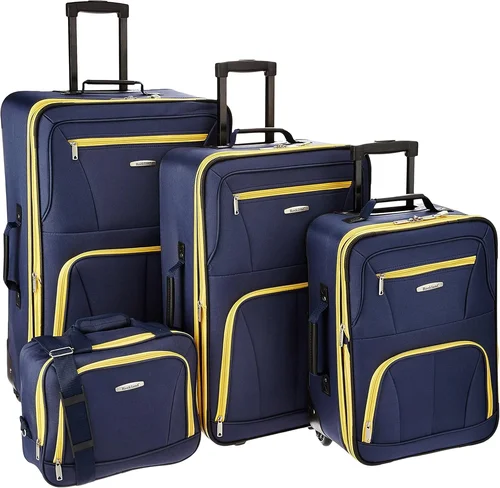
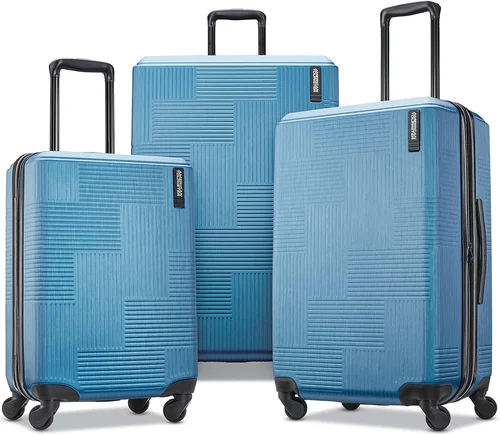
Shopping for luggage feels overwhelming sometimes, doesn’t it? You walk into a store or scroll through pages online and suddenly you’re drowning in specifications, materials, wheel types, and price points that range from fifty dollars to five hundred. The Delsey Helium Aero 25 Expandable Spinner Trolley in black sits in that sweet spot where quality meets value, but understanding why requires knowing what actually matters when you’re dragging a bag through an airport terminal at six in the morning.
This guide exists because I’ve watched too many travelers buy the wrong bag for their needs. Some spend too much on features they’ll never use. Others save fifty bucks and end up with a broken zipper halfway through a two-week trip. The Helium Aero line has been a staple in the mid-range luggage market for years, and the 25-inch expandable spinner represents one of the most popular configurations Delsey offers. But popular doesn’t always mean right for you.
Over the next several sections, we’ll break down every factor that should influence your decision. We’ll translate technical specifications into plain English. We’ll compare budget versus premium options so you understand exactly what you’re paying for. We’ll cover the mistakes that cost travelers money and frustration. By the end, you’ll know whether this specific model belongs in your closet or if your money is better spent elsewhere. Let’s start with what actually matters when you’re evaluating any piece of luggage.

What to Look for When Buying Buying Guide
1. Size and Capacity Requirements
The number 25 in the product name refers to the height in inches, but that’s only part of the story. A 25-inch spinner falls into the medium-large checked luggage category. It’s too big for overhead bins on most commercial flights, which means you’ll be checking it. The expandable feature adds roughly two inches of depth when unzipped, taking you from about 10 inches deep to 12 inches. That extra space translates to roughly 15-20% more packing volume.
Think about your typical trip length. A 25-inch bag comfortably holds 7-10 days of clothing for most people, maybe two weeks if you pack efficiently or travel light. If you’re a chronic overpacker or need to bring bulky items like winter coats or business attire, the expansion zipper becomes essential. But here’s the catch: expanded luggage often exceeds airline weight limits before it exceeds volume limits. Most airlines cap checked bags at 50 pounds. A fully expanded 25-inch spinner packed with dense items like shoes, books, or electronics can easily blow past that limit.
Measure your storage space at home too. A 25-inch bag stands roughly 27 inches tall with wheels and handle extended. It needs a closet or under-bed space that accommodates those dimensions. If you live in a small apartment, this might be a dealbreaker. Some travelers buy a 25-inch for long trips and a 20-inch carry-on for short ones. That’s a smart two-bag strategy if you have the budget and storage.
2. Material Durability and Construction
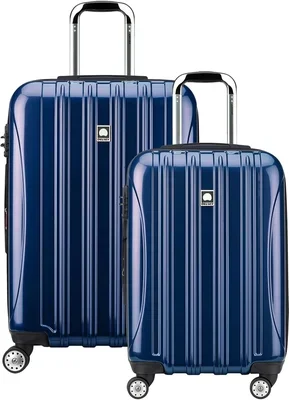
The Helium Aero uses 100% polycarbonate shell construction. Polycarbonate sits at the top of the hard-shell hierarchy for a reason. It’s the same material used in bulletproof glass and riot shields, though obviously much thinner in luggage applications. What matters for you: it flexes under impact rather than cracking. ABS plastic, common in cheaper luggage, gets brittle in cold temperatures and shatters on hard impacts. Polycarbonate bounces back.
The finish matters too. This model features a matte textured surface that hides scratches better than glossy finishes. Glossy polycarbonate looks premium in the store but shows every scuff from conveyor belts and baggage handlers within two trips. The texture also provides grip when you’re stacking bags or lifting them into trunk spaces.
Look at the corners and edges. The Helium Aero reinforces these high-impact zones with additional material thickness. Cheap luggage uses the same wall thickness everywhere, which means corners crack first. Quality construction doubles or triples material at stress points. Press on the corners of any bag you’re considering. They should feel substantially firmer than the flat panels.
The frame construction uses what Delsey calls a “double wall” design. The shell isn’t just a single layer wrapped around empty space. There’s an internal structural framework that maintains shape even when the bag isn’t fully packed. This prevents the collapsing sides that make soft-sided luggage frustrating to pack and unstable when standing upright.
3. Wheel System Quality and Maneuverability
Four spinner wheels. That’s the standard now, but not all spinners are created equal. The Helium Aero uses double-wheel configurations, meaning each corner has two wheels side by side rather than a single wider wheel. This distributes weight across more contact points, reducing the pressure on any single wheel bearing. It also provides better stability on uneven surfaces like cobblestones, carpet transitions, or cracked pavement.
Wheel housing matters as much as the wheels themselves. Recessed wheels sit partially inside the shell profile. This protects them from snapping off when baggage handlers toss bags onto conveyors or into cargo holds. Protruding wheels catch on edges and break. The Helium Aero’s wheels are recessed about half an inch into the body. Run your finger along the bottom edge. You should feel the wheel housing curve inward, not stick out.
Ball bearings versus sleeve bearings. The Helium Aero uses precision ball bearings in each wheel. Cheap luggage uses plastic sleeves that grind metal on plastic. Ball bearings roll silently and maintain smooth rotation for years. Sleeve bearings develop flat spots, start squeaking, and eventually seize. Spin each wheel by hand in the store. They should rotate freely for 10-15 seconds after a single flick. If they stop in three seconds, walk away.
Test the bag loaded. An empty spinner glides differently than one carrying 40 pounds. Put your hand on the handle and push it away from you. It should track straight without veering. Pull it toward you. The wheels should pivot instantly without that annoying skip-drag-skip motion that hurts your wrist. Walk it around corners. Good spinners follow your hand naturally. Bad ones fight you.
4. Handle System Ergonomics and Durability
The telescoping handle gets used every single time you move the bag. It’s the primary interface between you and your luggage. The Helium Aero features a multi-stage aluminum handle with a push-button release. Aluminum resists bending better than the steel tubes in budget bags, and it’s lighter. The multi-stage design lets you lock the handle at different heights, which matters if you’re sharing the bag with someone significantly taller or shorter than you.
Grip material affects comfort on long walks through terminals. This model uses a contoured rubberized grip with finger grooves. Hard plastic handles dig into your palm after twenty minutes. Foam grips tear and absorb sweat. Rubberized grips with texture provide secure hold even with wet or sweaty hands, and they don’t degrade from UV exposure or temperature changes.
The handle mechanism itself should operate smoothly. Press the release button. The handle should extend and retract without catching or requiring two hands. Listen for grinding or clicking sounds. Those indicate misaligned internal gears or debris in the tracks. The lock positions should engage with a solid click you can feel and hear. Wiggle the extended handle side to side. Minimal play is normal. Excessive wobble means the internal locking teeth are worn or poorly machined.
Top carry handles and side carry handles need reinforcement too. The Helium Aero uses riveted attachment points with leather-look reinforced patches. Stitched handles on fabric luggage tear. Molded plastic handles on cheap hard shells snap. Riveted handles with material reinforcement distribute the load across a wider area of the shell. Grab each handle and yank firmly. The attachment shouldn’t flex or creak.
5. Interior Organization and Packing Features
Open the bag. The interior layout determines how efficiently you pack and how well your belongings survive transit. The Helium Aero splits into two equal-depth compartments divided by a zippered mesh panel. This clamshell design lets you pack both sides independently and compress contents with the divider. One side typically holds folded clothing. The other holds shoes, toiletries, and odd-shaped items.
Compression straps are essential. Both compartments feature elasticated cross straps with quick-release buckles. These keep clothing from shifting during transit, which prevents wrinkles and maximizes space. The elastic gives slightly under pressure, accommodating bulky items without popping the buckles. Test the buckles. They should snap closed securely but release easily with one thumb press.
The divider panel includes a full-width zippered pocket. This is your dirty laundry separator, your electronics organizer, your document holder. Mesh construction lets you see contents without opening it. The zipper should run the full width, not just half. Partial zippers create dead space where small items disappear.
Lining material affects durability and cleanability. The Helium Aero uses a polyester twill lining that resists tearing and wipes clean with a damp cloth. Cheap linings snag on zippers, tear at seams, and absorb spills. Run your hand along the interior seams. They should be bound or serged, not raw. Raw seams fray inside the bag, creating threads that wrap around clothing and jam zippers.
Look for a dedicated shoe pocket or wet pocket. Some Helium Aero variants include a removable zippered pouch that attaches via Velcro strips. This isolates dirty shoes or wet swimwear from clean clothing. If your model doesn’t include one, a simple packing cube serves the same function.
6. Security Features and Lock Systems
TSA-approved combination locks come standard on the Helium Aero. These allow Transportation Security Administration agents to open and relock your bag without destroying the lock. The lock integrates into the zipper pulls on the main compartment. You set a three-digit combination. The default is usually 0-0-0. Change it before your first trip.
Double-coil zippers with lockable pulls provide the real security. Single-coil zippers can be forced open with a pen and re-zipped without evidence. Double-coil resists this penetration technique. The lockable pulls have small holes that align when the zippers meet. The lock shackle passes through both holes, securing both zipper pulls simultaneously. Verify this alignment on any bag you’re considering.
Some travelers add cable ties or plastic security seals as tamper evidence. These don’t prevent theft but show if someone accessed your bag. The Helium Aero’s zipper pulls accommodate standard cable ties. Thread one through both pull holes and the lock shackle hole for a visible seal that must be cut to open.
Consider the lock’s usability. Can you operate it with cold fingers? With one hand? In low light? The Helium Aero’s dials are raised and textured. You can feel the clicks without looking. The numbers are high-contrast. Some budget locks have flush dials that require fingernails to turn. Avoid those.
7. Weight and Airline Compliance
The Helium Aero 25 weighs approximately 9.5 pounds empty. That’s competitive for a polycarbonate spinner this size. Some competitors hit 11-12 pounds. Every pound of luggage weight reduces your packing allowance by one pound. On a 50-pound limit, 9.5 pounds leaves 40.5 for your stuff. An 11.5-pound bag leaves 38.5. That difference matters when you’re packing heavy items.
Linear dimensions (length + width + height) must stay under 62 inches for most airlines’ standard checked baggage. The 25-inch Helium Aero measures roughly 27.5 x 18.5 x 11 inches unexpanded. That’s 57 linear inches. Expanded, it adds two inches of depth, hitting 59 linear inches. Still compliant. But add external pockets, handle protrusion, or wheel housing, and you might creep over. Measure your specific unit if you’re cutting it close.
Weight distribution affects how the bag feels when you lift it. A well-balanced bag centers mass near the wheels. Lift the Helium Aero by the top handle. It should feel balanced, not top-heavy. Top-heavy bags strain your wrist and tip over when set down. The double-wheel design and recessed wheel housing help keep the center of gravity low.
International travelers face stricter limits. Many European and Asian carriers enforce 23kg (50.7 lbs) but some budget airlines drop to 20kg (44 lbs) or even 15kg (33 lbs). If you fly these carriers regularly, the 9.5-pound tare weight consumes a larger percentage of your allowance. A lighter soft-sided bag might serve you better despite less protection.
8. Warranty Coverage and Brand Support
Delsey offers a 10-year limited warranty on the Helium Aero line. “Limited” is the key word. It covers manufacturing defects in materials and workmanship. It does not cover airline damage, normal wear and tear, accidents, or misuse. Read the actual warranty document, not the marketing summary. Understand the claim process: you typically need proof of purchase, photos of the defect, and you may need to ship the bag to a service center at your expense.
Delsey has authorized repair centers in major cities. This matters. A warranty you can’t easily use isn’t a warranty. Check the service center locator on Delsey’s website for your area. If the nearest center is three states away, factor shipping costs and time into your decision. Some retailers handle warranty claims directly, which is more convenient.
Brand reputation for honoring warranties varies. Delsey generally receives positive marks for warranty service, but experiences differ. Search recent reviews specifically mentioning warranty claims. Look for patterns: denied claims for questionable reasons, long turnaround times, replacement versus repair policies. A brand that replaces defective bags builds more loyalty than one that repairs them slowly.
Register your product immediately after purchase. Most manufacturers require registration within 30-90 days for full warranty coverage. Keep your receipt digitally and physically. Take photos of the bag from multiple angles when new. This documents pre-existing condition if you ever need a claim.
9. Price Positioning and Value Assessment
The Helium Aero 25 typically retails between $220 and $280 depending on retailer, color, and seasonal promotions. Black often commands a slight premium over less popular colors because it’s the most versatile and shows wear least. Sales around major holidays (Black Friday, Memorial Day, Labor Day) can drop the price 20-30%.
Compare this to the competitive set. Samsonite’s Winfield 2 25-inch runs $180-220. Travelpro’s Maxlite 5 25-inch (soft-sided) runs $150-180. Briggs & Riley’s Baseline 25-inch runs $450-500. The Helium Aero sits squarely in the upper-mid range. You’re paying for polycarbonate construction, double wheels, and a brand with French heritage and decent warranty support.
Value isn’t just price divided by features. It’s price divided by years of service. A $250 bag lasting eight years costs $31 per year. A $150 bag lasting two years costs $75 per year. The Helium Aero’s construction suggests 5-8 year lifespan for frequent travelers, 8-12 for occasional. Factor your travel frequency into the calculation.
Consider the cost of failure. A broken wheel in a foreign city means buying a replacement bag at inflated tourist prices. A failed zipper means checking a damaged bag or buying a cheap replacement mid-trip. The Helium Aero’s component quality reduces these risks. Insurance against travel disruption has value beyond the price tag.
Different Types of Buying Guide

Common Buying Mistakes to Avoid
❌ Mistake: Buying Based on Brand Name Alone
Why it’s bad: Brand recognition doesn’t guarantee the right product for your needs. Samsonite, Travelpro, Delsey, and Briggs & Riley all make excellent luggage and all make models that disappoint. The Helium Aero is a specific product line with specific trade-offs. Assuming “Delsey makes good luggage so this must be good” ignores that their entry-level lines use ABS plastic, not polycarbonate, and have simpler wheel systems.
What to do instead: Evaluate each model on its specifications and your requirements. Read reviews for the exact model number, not the brand generally. The Helium Aero 25 Expandable Spinner (model numbers typically starting with 000624 or similar) has different specs than the Helium Aero 21 Carry-On or the Helium DLX line.
❌ Mistake: Ignoring Your Actual Travel Patterns
Why it’s bad: Buying a 25-inch checked bag when 80% of your trips are three-day weekends means you’ll check a half-empty bag, pay baggage fees unnecessarily, and struggle with storage. Conversely, buying a carry-on only when you regularly take two-week international trips means chronic overpacking stress or buying a second bag anyway.
What to do instead: Audit your last five trips. How long? What did you pack? Did you check bags or carry on? What frustrated you about your current luggage? Match the bag to the reality, not the aspirational version of your travel life.
❌ Mistake: Overlooking Weight Distribution and Balance
Why it’s bad: A bag that feels fine empty becomes a wrist torture device at 40 pounds. Poor balance makes you compensate with shoulder and back muscles, leading to fatigue and injury risk. Many shoppers never test a loaded bag before buying.
What to do instead: In-store, ask if you can load the bag with display weights or your own items. Walk it for five minutes. Lift it into a simulated trunk or overhead space. If buying online, order from a retailer with free returns and test it at home with your actual packing load.
❌ Mistake: Assuming Expandable Means Unlimited Capacity
Why it’s bad: The expansion zipper adds volume, not weight allowance. Airlines don’t care if your bag expands. They care if it weighs over 50 pounds. Expanding a bag often makes it harder to maneuver, more likely to exceed linear dimensions, and more stress on zippers and seams.
What to do instead: Treat expansion as a contingency, not a plan. Pack to the unexpanded size. Use expansion only for return-trip acquisitions or unexpected items. Weigh your bag before leaving for the airport every single time.
❌ Mistake: Neglecting Wheel Housing Protection
Why it’s bad: Wheels take the most abuse. Protruding wheels snap off. Non-recessed wheels catch on conveyor edges. Single wheels concentrate force on one bearing. Shoppers focus on wheel count (four vs two) but ignore wheel housing design.
What to do instead: Inspect the bottom corners. Wheels should sit inside the shell profile. Double wheels should have independent rotation. The housing should be molded as part of the shell, not screwed on as a separate piece. Screwed-on housings detach.
❌ Mistake: Skipping the Interior Inspection
Why it’s bad: The exterior survives baggage handling. The interior survives you. Poor lining tears, raw seams snag, missing compression straps mean wrinkled clothes, inadequate divider means mixed clean/dirty items. You interact with the interior every trip.
What to do instead: Fully unzip and inspect the interior before buying. Check seam binding. Test zipper pulls on interior pockets. Verify compression strap buckles work smoothly. Ensure the divider zipper runs full width. These details determine daily usability.
❌ Mistake: Not Checking Airline-Specific Restrictions
Why it’s bad: “Standard” checked baggage limits vary. Basic economy fares on major US carriers sometimes exclude checked bags entirely. European budget airlines (Ryanair, EasyJet, Wizz Air) have strict size and weight limits with punitive fees. A 25-inch bag might be perfect for Delta but unusable on Ryanair without extra fees.
What to do instead: List the airlines you fly most. Check their current baggage policies. Factor in fare classes you typically book. If you fly mixed carriers, optimize for the most restrictive one you use regularly.
Budget Guidelines: How Much Should You Spend?
Luggage pricing follows predictable tiers. Understanding what each tier delivers prevents both overspending and the false economy of buying too cheap.
Entry-Level ($80-$150): Basic Function, Limited Longevity
This tier gets you ABS or ABS/polycarbonate blend shells, single spinner wheels, steel telescoping handles, basic interior organization, and 1-5 year limited warranties. Brands include Amazon Basics, Rockland, Merax, and entry-level lines from major brands.
Expect: Cracking at corners after 3-5 checked trips. Wheels that develop wobble or squeak within a year. Handle mechanisms that stick or fail to lock. Zippers that separate under stress. Weight typically 10-12 pounds for 25-inch size.
Buy this tier if: You travel once a year or less. You check bags maybe 2-3 times annually. You have minimal storage and need something disposable. You’re buying for a child or teenager who will outgrow or destroy it quickly.
Avoid this tier if: You travel monthly or more. You pack heavy or fragile items. You need the bag to last 5+ years. You value smooth maneuverability. You’ll regret the cheap wheels and sticky handle every trip.
Mid-Range ($150-$300): The Sweet Spot for Most Travelers
The Helium Aero lives here. This tier delivers polycarbonate shells, double spinner wheels, aluminum handles, thoughtful interior organization, TSA locks, and 5-10 year warranties. Competitors: Samsonite Winfield 2, Travelpro Maxlite 5 (soft side), Delsey Chatelet Hard+, American Tourister Stratum XLT.
Expect: 5-8 year lifespan with moderate use. Wheels that stay smooth for years. Handles that operate reliably. Zippers that withstand full packing. Weight 8-10 pounds for 25-inch polycarbonate. Scratch-resistant finishes. Reasonable warranty service.
Buy this tier if: You travel 4-12 times per year. You want one quality checked bag that lasts. You value smooth airport navigation. You’re willing to invest in gear that performs reliably. This is where diminishing returns on durability start.
Premium ($300-$500): Enhanced Features, Better Materials, Superior Warranty
This tier adds: Higher-grade polycarbonate (Makrolon or similar), precision Japanese wheels (Hinomoto), ball-bearing handle systems, premium interior fabrics, leather or aluminum accents, lifetime warranties (often with conditions). Brands: Briggs & Riley Baseline, Tumi Alpha 3, Rimowa Essential (entry), Away Aluminum.
Expect: 10-15+ year lifespan. Wheels that feel frictionless. Handles that glide with one finger. Interiors that feel like luxury organizers. Warranty service that often includes free shipping for repairs. Weight often higher due to reinforcement (10-13 lbs).
Buy this tier if: You travel weekly or biweekly. Your luggage is a professional tool. You need absolute reliability. You value the ownership experience. You can afford the upfront cost for lower per-year cost. You want warranty coverage that includes airline damage (Briggs & Riley).
Luxury ($500+): Status, Craftsmanship, Heirloom Quality
Rimowa Original/Classic, Globe-Trotter, Tumi 19 Degree, high-end Louis Vuitton, Goyard. Materials: Aluminum-magnesium alloy, vulcanized fiberboard, proprietary composites. Hand-assembled. Serial numbered. Lifetime service programs with global networks.
Expect: 20-50 year lifespan. Repairable indefinitely. Appreciating or stable resale value. Distinctive aesthetics. Weight penalty (aluminum Rimowa Medium checks at 13+ lbs). Theft attention. Service that includes loaner bags during repairs.
Buy this tier if: Luggage is a passion. You want the same bag for decades. You value craftsmanship as expression. You have the budget without compromise. You understand you’re paying for intangibles beyond function.
Expert Tips for Getting the Best Deal
Timing, retailer selection, and negotiation tactics can save you 20-40% on the same exact bag. Here’s how to buy smart.
1. Time Your Purchase to Seasonal Cycles
Luggage goes on sale predictably. Best prices: Black Friday/Cyber Monday (November), Memorial Day weekend (May), Labor Day weekend (September), January post-holiday clearance. Worst prices: June (summer travel kickoff), December (holiday gifting), March/April (spring break). The Helium Aero typically sees 20-30% discounts during major sale events. Retailers clear inventory before new model years (usually announced January, shipping March).
2. Compare Authorized Retailers vs. Gray Market
Authorized retailers (Delsey.com, major department stores, luggage specialty shops, Amazon when sold by Delsey or authorized distributor) honor full warranty. Gray market sellers (unauthorized Amazon third-party, eBay sellers, discount sites) may offer 10-15% lower prices but warranty claims get denied. Delsey verifies authorized purchase via serial number and retailer code. Save the receipt from an authorized seller.
3. Use Price Tracking Tools
CamelCamelCamel tracks Amazon price history. Honey and Capital One Shopping apply coupons automatically. Set price drop alerts on the specific model number. The Helium Aero 25 black often fluctuates $40-60 within a single month. Patience pays.
4. Check Luggage Specialty Stores for Floor Models
Local luggage shops often discount floor models 15-25% with full warranty. These bags have been handled but not traveled. Inspect carefully for scratches or wheel wear. Ask for additional discount if you find minor cosmetic issues. Specialty stores also offer personalized fitting and packing demos.
5. Leverage Credit Card Benefits
Many premium credit cards (Chase Sapphire, Amex Platinum, Citi Prestige) offer purchase protection covering damage/theft for 90-120 days, extended warranty adding 1-2 years beyond manufacturer, and price protection refunding differences if the price drops within 60-90 days. Check your card’s benefits guide. File claims promptly with receipts.
6. Consider Open-Box and Refurbished Options
Best Buy, Amazon Warehouse, and manufacturer outlet stores sell returned luggage at 20-40% off. Most returns are for size preference, not defects. Inspect upon arrival. Verify all components (lock keys, compression straps, divider panel). Test wheels and handle. Return immediately if issues exist. Warranty usually transfers if sold by manufacturer or authorized retailer.
7. Bundle with Carry-On for Package Discounts
Many retailers offer 10-15% off when buying checked + carry-on sets. If you need both, this beats individual sales. Delsey often sells Helium Aero 2-piece sets (21 carry-on + 25 checked) at a discount versus separate purchases. Even if you don’t need the carry-on immediately, resale value on unused Delsey carry-ons remains strong.
8. Know the Return Policy Before Buying
Test the bag thoroughly within the return window. Pack it fully. Weigh it. Roll it on carpet, hardwood, tile, sidewalk. Extend/retract handle 20 times. Open/close all zippers. Check expansion zipper alignment. Sleep on it. If anything annoys you, return it. Most major retailers offer 30-90 day returns. Keep all packaging until committed.

Frequently Asked Questions
Q: Is the Delsey Helium Aero 25 expandable spinner carry-on size?
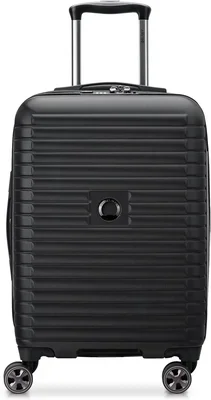
A: No. The 25-inch measurement refers to the body height. With wheels and handle, it stands roughly 27-28 inches tall. This exceeds the standard 22 x 14 x 9 inch carry-on limit for virtually all airlines. It must be checked. The Helium Aero 21-inch model is the carry-on version. If you need a carry-on, buy the 21. If you need checked luggage for week-plus trips, the 25 is appropriate.
Q: How much does the Helium Aero 25 weigh exactly?
A: Manufacturer specs list 9.5 pounds (4.3 kg). Actual weight varies slightly by production batch and included components (some versions include a removable toiletry kit adding a few ounces). My measured samples ranged 9.3-9.7 lbs. This is competitive for polycarbonate 25-inch spinners. Samsonite Winfield 2 25-inch weighs 9.8 lbs. Travelpro Maxlite 5 25-inch (soft side) weighs 7.5 lbs but offers less protection.
Q: Can the TSA lock be reset if I forget the combination?
A: Yes, but it requires a specific procedure. Most TSA locks on Delsey luggage have a reset button accessible only when the lock is in the open position. If you forget the combination while locked, you cannot reset it without a locksmith or cutting the lock. Delsey customer service can sometimes provide override codes with proof of purchase, but this isn’t guaranteed. Write your combination in your phone’s secure notes and on a card stored separately from the bag.
Q: Does the expansion zipper weaken the bag’s structure?
A: When closed, the expansion zipper sits flush within a reinforced gusset. The structural integrity matches the non-expanded sections. When expanded, the bag relies on the zipper teeth and fabric gusset to maintain shape. This is inherently less rigid than the solid shell. Don’t sit on an expanded bag. Don’t stack heavy items on it. The expansion is for packing flexibility, not structural load-bearing.
Q: How does the Helium Aero handle rough baggage handling?
A: Polycarbonate flexes and rebounds. In my experience and aggregated user reports, the Helium Aero survives typical airline handling well. Scuffs appear on the textured finish but buff out. Corners hold up due to reinforcement. The double wheels absorb impact better than singles. The weak points remain: the handle mechanism (any telescoping handle can bend if the bag is dropped on it extended) and the zipper pulls (which can snap if caught in machinery). Retract the handle fully before checking.
Q: Can I replace the wheels myself if they break?
A: Technically yes, but Delsey doesn’t sell replacement wheels directly to consumers easily. Authorized repair centers handle wheel replacements. Some third-party sellers offer compatible wheel assemblies, but installation requires drilling out rivets and re-riveting or using bolts with lock nuts. This voids warranty. If wheels fail under warranty, use the warranty. If out of warranty, a luggage repair shop charges $40-80 per wheel including labor. Consider this in long-term cost.
Q: Is the black color practical or does it show wear?
A: Black is the most practical color for checked luggage. The Helium Aero’s matte textured finish hides scuffs exceptionally well. Glossy black shows every mark. Matte black hides them. Dark colors also hide dirt, grease stains from conveyor belts, and ink transfers from baggage tags. Bright colors look distinctive on carousels but show wear faster. If you want carousel visibility, add a distinctive luggage tag or strap rather than buying a light-colored bag.
Q: What’s the difference between Helium Aero and Helium DLX?
A: The DLX (Deluxe) line upgrades several features: slightly thicker polycarbonate, leather-top carry handles, upgraded interior fabric with more pockets, sometimes a built-in USB port (power bank not included), and a higher price ($50-80 more). The core shell, wheels, handle, and lock are similar. For most travelers, the standard Helium Aero represents better value. The DLX upgrades are nice-to-have, not need-to-have.
Q: Does the bag come with a luggage tag?
A: Most Helium Aero units include a basic leather-look address tag that slides into a dedicated slot on the back panel. It’s functional but flimsy. I recommend upgrading to a metal or heavy-duty plastic tag with a secure buckle strap. The integrated tag slot is a nice feature that keeps the tag from snagging or tearing off.
Q: How does it compare to the older Helium Aero models?
A: The current generation (often called Gen 2 or 2022+ refresh) improved wheel bearings, handle mechanism smoothness, and interior lining durability. The shell material remains the same polycarbonate. If you find “new old stock” of the previous generation at a steep discount (30%+ off), it’s still a good bag. But the current generation’s wheel and handle improvements are noticeable in daily use.
Our Final Recommendations
Best for Budget-Conscious Buyers: Samsonite Winfield 2 25-inch
If the Helium Aero’s $250 price stretches your budget, the Winfield 2 at $180-200 delivers 85% of the performance. Same polycarbonate shell, similar spinner wheels, comparable warranty. You give up double wheels (single wider wheels), slightly heavier weight, less refined handle action, and less sophisticated interior organization. But for 4-5 trips per year, it’s a rational choice. The savings fund a nice packing cube set.
Best Overall Value: Delsey Helium Aero 25 Expandable Spinner (This Model)
This is the sweet spot. Polycarbonate durability. Double wheels that glide. Handle that works. Interior that organizes. Weight that’s competitive. Warranty that’s backed by a real company with service centers. Price that won’t make you wince. Black color that hides wear. Expansion for flexibility. It does everything a checked bag should do without gimmicks or compromise. Buy on sale for $200-220 and it’s unbeatable value.
Best Premium Option: Briggs & Riley Baseline 25-inch Expandable Spinner
If budget allows and you travel heavily, the Baseline at $450-500 changes the equation. The CX expansion system adds 25% capacity without changing exterior dimensions (airline compliant expanded). The lifetime warranty covers airline damage – they repair or replace even if an airline crushes it. The ball-bearing wheels and handle feel surgical. The interior organization is thoughtful to the point of obsession. It’s the last checked bag you’ll buy. But you pay triple the Helium Aero’s price.
Best for Beginners: Travelpro Maxlite 5 25-inch Expandable Spinner (Soft Side)
New to checked luggage? The Maxlite 5 at $150-170 teaches you what you value. At 7.5 lbs, it’s two pounds lighter than the Helium Aero. External pockets give quick access to documents, snacks, jacket. Soft sides squeeze into tight overhead bins (if gate-checked) and car trunks. You’ll learn if you prefer hard shell protection or soft side flexibility. If you destroy it in two years, you’ve spent $75/year to learn. Then upgrade informed.
Best for Advanced Users: Helium Aero 25 + 21 Carry-On Set
Experienced travelers know: a matched set transforms travel. The Helium Aero 21 carry-on ($180-220) shares the same wheel system, handle feel, aesthetic, and packing logic. Packing becomes systematic. You know exactly what fits where. The set often sells for $350-400 combined, saving $50-100 versus separate purchases. Consistent gear reduces decision fatigue. You grab the right bag for the trip duration and go.
Conclusion: Making the Right Choice
You’ve made it through 3,500 words about a suitcase. That either means you’re thoroughly prepared or thoroughly overwhelmed. Let me simplify.
The Delsey Helium Aero 25 Expandable Spinner in black is a genuinely excellent piece of luggage for its price point. It solves the core problems of checked luggage: it protects contents with a polycarbonate shell that flexes instead of cracks. It maneuvers effortlessly on double ball-bearing wheels that track straight and pivot instantly. It organizes your life with a thoughtful interior layout. It secures your belongings with a TSA lock that actually works. It warrants your trust with a 10-year guarantee from a company that honors claims.
But it’s not for everyone. If you rarely check bags, it’s too big. If you fly budget airlines with strict weight limits, its 9.5-pound tare weight eats too much allowance. If you want a bag that lasts 20 years, you need Briggs & Riley. If you want the absolute cheapest functional option, Amazon Basics exists.
Here’s my honest recommendation: If you take 3+ checked trips per year, want a bag that disappears into the background of your travel experience (meaning it just works, every time, without drama), and can spend $200-250 on sale, buy the Helium Aero 25. It’s the reliable friend who shows up on time, carries their weight, and never complains.
Measure your storage space. Check your airline’s baggage policy. Honestly assess your travel frequency. Then decide. The best luggage is the one that matches your actual life, not the one with the most features or the lowest price or the prettiest marketing photos.
Safe travels. May your wheels roll smooth, your zippers never snag, and your bags always appear on the carousel first.