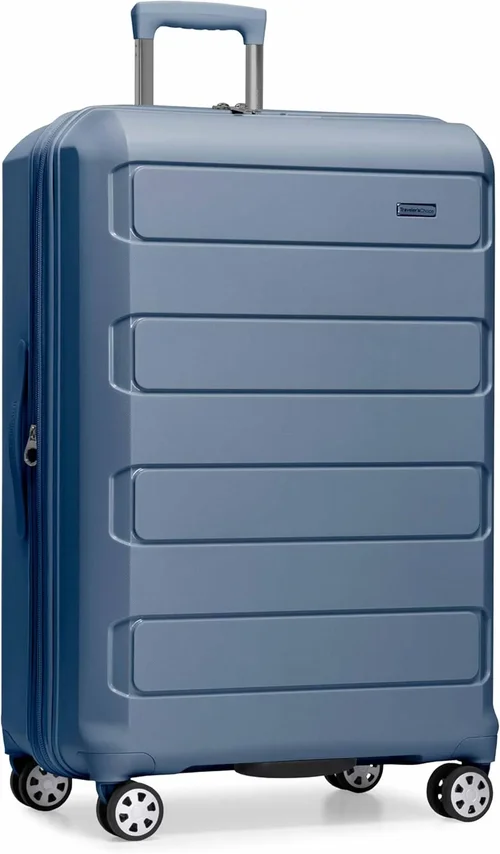
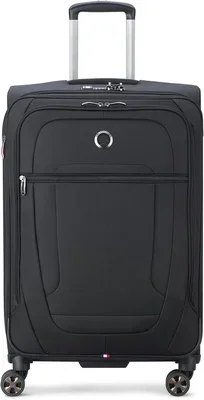
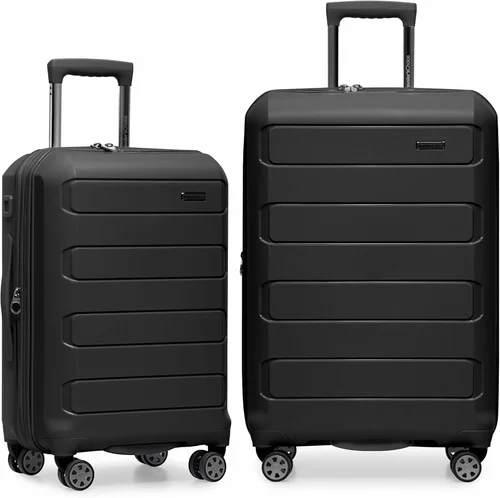
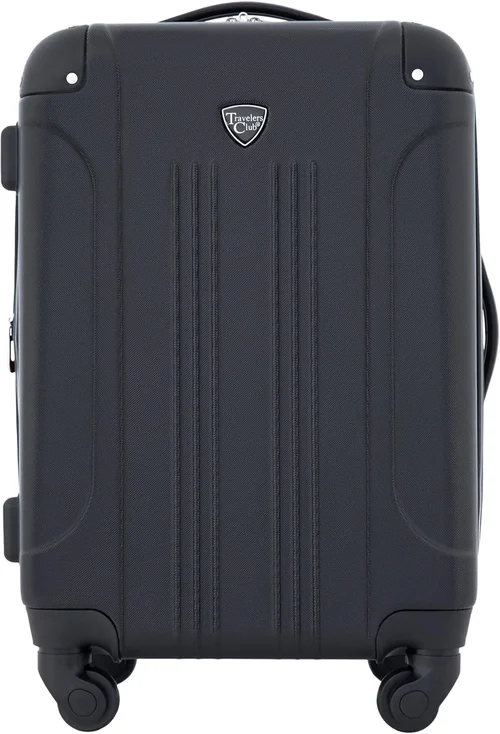
Finding the perfect travel companion can feel overwhelming, especially when you are staring down a page full of options during an expandable carry on luggage sale. You want something that fits in the overhead bin, survives baggage handlers, and still has room for that extra pair of shoes you just know you will need. This guide exists to cut through the marketing noise. We have spent years testing, reviewing, and listening to traveler feedback to bring you a clear, honest roadmap. Whether you are a weekend warrior or a frequent flyer racking up elite status, understanding the nuances of expandable luggage will save you money, stress, and precious packing space.
In the next few minutes, you will learn exactly what separates a bargain bin special from a decade-long travel partner. We will break down the technical specifications into plain English, compare the major categories side-by-side, and highlight the common traps that catch even savvy shoppers. By the end, you will have a personalized checklist tailored to your travel style and budget, ensuring your next purchase is the last one you need to make for a long time.

What to Look for When Buying Expandable Carry On Luggage
1. Airline Size Compliance and Expandability Depth
This is the single most critical factor. An expandable bag is useless if it exceeds carry-on limits when expanded. Most US domestic airlines allow 22 x 14 x 9 inches (including wheels and handles). International carriers are often stricter, sometimes enforcing 21.5 x 13.5 x 7.5 inches or weight limits as low as 7kg (15 lbs). When shopping an expandable carry on luggage sale, look for the unexpanded dimensions first. The expansion zipper typically adds 1.5 to 2.5 inches of depth. Ask yourself: will I actually use the expansion? If you only expand for the return trip (souvenirs, dirty laundry), a 2-inch expansion is plenty. If you plan to travel expanded full-time, you risk gate-checking fees. Pro tip: measure the bag yourself with a tape measure; manufacturer specs sometimes round down or exclude wheels.
2. Shell Material: Polycarbonate vs. ABS vs. Ballistic Nylon
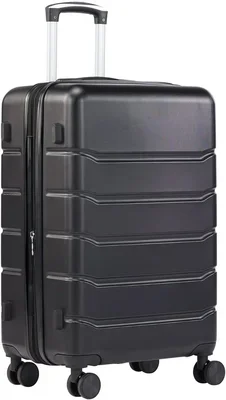
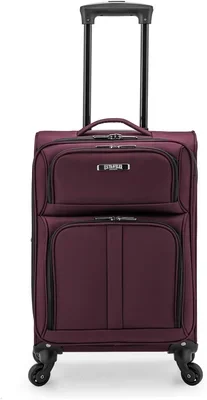
The material dictates weight, durability, and how the bag ages. Polycarbonate is the gold standard for hardside luggage. It is flexible, impact-resistant, and pops back into shape after being crushed. It is lighter than ABS but pricier. ABS (Acrylonitrile Butadiene Styrene) is cheaper and rigid but brittle; a hard hit in cold weather can crack the shell. You will see many “PC/ABS blends” in mid-range sales; these are decent compromises. For softside, Ballistic Nylon (originally developed for flak jackets) offers incredible tear and abrasion resistance. Look for a denier count of 1680D or higher. Polyester is common in budget bags; 600D is thin, 1200D is acceptable for light travel. If you check your carry-on at the gate frequently, hardside polycarbonate protects contents better. If you stuff bags into tight overhead bins or car trunks, softside compresses slightly.
3. Wheel System: Spinner vs. Inline Skate Wheels
Four-wheel spinners (360-degree rotation) are the standard now. They glide beside you, reducing wrist strain. However, not all spinners are equal. Double spinner wheels (two wheels per corner, 8 total) distribute weight better, roll smoother over cracks, and are far more durable than single wheels. Inline skate wheels (two fixed wheels) are recessed into the body, saving interior space and handling rough pavement, cobblestones, and curbs better. They require tilting the bag. If you navigate crowded terminals, smooth floors, and prefer pushing your bag, spinners win. If you walk long distances between gates, traverse uneven sidewalks, or pack heavy, inline wheels are more robust. Check the wheel housing: recessed wheels are protected; protruding wheels snap off. Spin the wheels in the store; they should rotate freely with a faint hum, not a grind.
4. Handle System: Telescoping Mechanism and Grip Comfort
The handle is your connection to the bag. A poor handle makes a 15-minute walk feel like an hour. Look for a multi-stage telescoping handle (usually 3 heights) so users of different heights can roll comfortably without hunching or kicking the bag. The tubes should be aluminum or high-grade steel, not thin plastic. Extend and retract it 10 times in the store; it should lock firmly at each stage with a satisfying click and retract smoothly without sticking. The grip material matters: contoured rubber or gel reduces vibration transfer. Top carry handles (top and side) should be padded and securely riveted, not just stitched. A bottom handle (for lifting into overhead bins) is a thoughtful feature often missing on cheaper models.
5. Interior Organization: Compression, Dividers, and Pockets
Expandability changes how you pack. A good interior turns a cavernous space into an organized system. Essential features: Compression straps (ideally elasticized or with cam buckles) to cinch down clothes and prevent shifting. A full zippered divider panel separates the two halves; mesh panels allow visibility. Look for a wet pocket (water-resistant lining) for toiletries or swimwear. Shoe pockets or dedicated laptop sleeves add value. In expandable models, check if the expansion zipper is on the lid side or the main body side. Lid-side expansion adds depth to the shallow lid compartment (good for flat items); body-side adds depth to the deep main compartment (better for bulkier items). Some premium bags offer a suiter system (fold-out garment sleeve) which is excellent for business travel.
6. Lock Security: TSA-Approved and Integrated vs. Aftermarket
TSA agents have master keys to open approved locks without cutting them. An integrated TSA lock (built into the frame) is superior to a padlock: it cannot be lost, the shackle cannot be shimmed, and it often secures both main zippers to a central point. Look for a 3-dial combination (easier than key management) with a visible indicator showing if TSA opened it. If the bag lacks an integrated lock, ensure the zipper pulls have lockable holes (small loops) for a separate TSA padlock. Anti-theft zippers (puncture-resistant, like YKK RCW or similar) prevent the “pen trick” where a thief punctures the zipper track and re-zips it closed. This is a worthwhile feature for international travel.
7. Weight: The Hidden Cost of Features
Every ounce of luggage weight is an ounce less for your belongings. With strict airline weight limits (especially international), a 9 lb empty carry-on leaves only 6 lbs for clothes if the limit is 7kg (15.4 lbs). Hardside spinners typically weigh 6.5–8.5 lbs. Softside spinners 5.5–7.5 lbs. Inline two-wheelers are often lightest (5–6.5 lbs) due to simpler wheel housings. Ultralight models (under 5 lbs) exist but sacrifice durability (thin shells, minimal frames). During an expandable carry on luggage sale, compare weights at the same price point. A lighter bag with a good warranty is often a better investment than a heavier “tank” that eats your weight allowance.
8. Warranty and Repair Network: The Long-Term Value
A warranty tells you how much the brand trusts its product. Limited lifetime warranties (covering defects in materials/workmanship for the life of the product) are standard for reputable brands (Travelpro, Briggs & Riley, Osprey, Eagle Creek, Away). Read the fine print: “lifetime” often means the expected lifespan of the bag (5-10 years), not your lifetime. Crucially, check repair accessibility. Does the brand have authorized repair centers? Do they sell replacement wheels, handles, zippers? Briggs & Riley and Travelpro have excellent repair networks; you can often send a bag in for a $20 wheel replacement instead of buying new. Cheap brands offer “warranties” but no parts availability, rendering the warranty useless. Register your product immediately after purchase; it speeds up claims.
Different Types of Expandable Carry On Luggage

Common Buying Mistakes to Avoid
❌ Mistake: Buying Based Solely on Brand Name or Aesthetics
Why it’s bad: A beautiful leather-accented bag from a fashion house may lack reinforced corners, quality wheels, or a repair network. You are paying for the logo, not the engineering. Many “designer” luggage lines are manufactured by third parties with lower specs than dedicated travel brands.
What to do instead: Research the model, not the brand. Read 2- and 3-star reviews on retailer sites; they reveal real-world durability issues (wheel failure, handle sticking, zipper blowouts) that 5-star “looks great!” reviews miss. Prioritize brands that specialize in luggage (Travelpro, Briggs & Riley, Osprey, Samsonite, Rimowa, Away, Eagle Creek).
❌ Mistake: Ignoring the “Personal Item” Pairing
Why it’s bad: You buy a max-size carry-on, only to realize your backpack doesn’t fit under the seat because the carry-on’s handle box protrudes, or the two bags don’t stack securely. You end up checking one or struggling.
What to do instead: Buy as a system. Many brands sell matching backpacks/totes with a pass-through sleeve (a strap that slides over the carry-on handle). Test the stack: place the personal item on the carry-on, extend the handle, and walk. It should not wobble or slide off. If buying separately, measure the handle width and personal item sleeve width.
❌ Mistake: Overlooking the Expansion Zipper Quality
Why it’s bad: The expansion zipper is a high-stress point. Cheap zippers (thin coil, plastic sliders) separate under pressure, rendering the expansion useless or causing a blowout mid-trip. A broken expansion zipper often means the bag cannot close at all.
What to do instead: Inspect the zipper. It should be a YKK or similar brand, large gauge (#8 or #10), with metal or heavy-duty nylon coil teeth and a locking slider (stays put when you stop pulling). Test it: expand fully, stuff the bag firm, zip closed. It should glide without catching. If it feels flimsy in the store, it will fail on the road.
❌ Mistake: Assuming “Lightweight” Means “Better”
Why it’s bad: Ultralight bags achieve weight savings by thinning the shell, using minimal frames, and lighter wheels. They dent, crack, and lose wheel alignment faster. A 4.5 lb bag that lasts two trips costs more per trip than a 7 lb bag lasting ten years.
What to do instead: Target the sweet spot: 6.0 – 7.5 lbs for spinners. This usually indicates a polycarbonate shell with a proper frame and double spinner wheels. If you fly basic economy with strict weight checks, then prioritize sub-5.5 lbs, but accept reduced durability.
❌ Mistake: Not Checking the Interior Liner Quality
Why it’s bad: Thin, unlined interiors snag on zippers, tear at stress points, and offer no spill containment. A shattered shampoo bottle ruins clothes in an unlined bag; a lined, water-resistant compartment contains it.
What to do instead: Unzip the divider fully. Feel the fabric. Is it substantial polyester or thin taffeta? Are seams bound (covered) or raw? Look for a water-resistant coating on the main compartment floor and wet pocket. A quality liner adds negligible weight but massive practical value.
❌ Mistake: Skipping the “Shake Test” In-Store
Why it’s bad: Online photos hide rattles, loose rivets, and misaligned frames. A bag that rattles empty will drive you crazy in a quiet hotel hallway.
What to do instead: If buying in person: extend handle, shake vigorously. Listen for internal rattles (loose screws, broken frame bits). Roll it fast, turn sharply. Does it track straight or veer? Push down on the top handle; does the frame flex excessively? If buying online, order from a retailer with free returns (Amazon, Zappos, REI, brand direct) and do the shake test at home within the return window.
❌ Mistake: Forgetting About Warranty Registration and Proof of Purchase
Why it’s bad: You buy a $350 bag with a lifetime warranty. Two years later, a wheel cracks. You contact support but threw away the receipt and never registered. Claim denied.
What to do instead: Immediately upon receipt: register online (takes 2 minutes). Save the digital receipt (email folder “Luggage Warranties”). Take a photo of the serial number label (usually inside near the handle tube). Keep the hang tags. This ensures coverage for the most common failures: wheels, handles, zippers.
Budget Guidelines: How Much Should You Spend?
Entry-Level ($60 – $130): The “Occasional Traveler” Tier
At this price, you are buying ABS hardside or 600D-900D polyester softside. Expect single spinner wheels (often plastic hubs), basic telescoping handles (2-stage, sticky), minimal interior organization (maybe one divider, no compression straps), and a 1-2 year limited warranty. Expansion is usually 1.5 inches via a thin zipper. These bags work fine for 2-3 trips a year, careful handling, and domestic flights. Brands: Amazon Basics, Kenneth Cole Reaction, Rockland, Merax. Reality check: Wheels are the first failure point. If a wheel cracks, the bag is usually landfill because parts aren’t available. Buy here only if you travel infrequently and treat luggage gently.
Mid-Range ($130 – $280): The Sweet Spot for Most Flyers
This is where value lives. You get polycarbonate shells (often Makrolon or generic equivalent), double spinner wheels, 3-stage aluminum handles, full interior organization (compression straps, mesh divider, wet pocket), integrated TSA locks, and 5-10 year or limited lifetime warranties with parts availability. Expansion is typically 2 inches with a robust zipper. Weight: 6.5-7.8 lbs. Brands: Travelpro (Maxlite 5, Platinum Elite), Samsonite (Freeform, Centric 2), Delsey (Chatelet Air 2.0, Titanium), Away (The Carry-On), American Tourister (Stratum XLT). This tier handles 10+ trips/year comfortably. During an expandable carry on luggage sale, you can often snag $250 bags for $180.
Premium ($280 – $500): The “Buy It For Life” Territory
Here you pay for materials engineering and service. Ballistic nylon (1680D-2520D) or premium polycarbonate (Bayer Makrolon, Tegris composites). Features: precision Japanese Hinomoto or German Friedrich wheels (silent, buttery smooth), ergonomic handles with leather/grip inserts, suiter systems, modular packing cubes included, lifetime warranties with no-questions-asked repair policies (Briggs & Riley “Simple as That”, Osprey “All Mighty Guarantee”). Weight optimized (6.0-7.0 lbs despite heavy-duty build). Brands: Briggs & Riley (Baseline, Sympatico), Tumi (19 Degree, V4), Rimowa (Essential, Original), Victorinox (Spectra 3.0, Airox). If you fly weekly, the cost-per-trip justifies this. The resale value also holds remarkably well.
Luxury ($500+): Status, Craftsmanship, and Bespoke Service
This is Rimowa Original (aluminum/magnesium), Globe-Trotter (vulcanized fibreboard), high-end Tumi (SRPP ballistic), and bespoke makers. You pay for hand-assembly, iconic aesthetics, materials that age beautifully (patina), and white-glove service (loaners during repair, complimentary monogramming). Functionally, they do not outperform the Premium tier significantly. Buy these because you love the object, not because you need better luggage. They are heirlooms.
Expert Tips for Getting the Best Deal
- Time Your Purchase: The best sales are January (post-holiday clearance), May (pre-summer travel), July (Amazon Prime Day / competitor sales), November (Black Friday / Cyber Monday), and December (post-Black Friday leftovers). Avoid buying at full price in June or December peak travel weeks.
- Shop “Open Box” and “Refurbished”: Retailers like Amazon Warehouse, eBay Refurbished (certified sellers), and brand outlets (Briggs & Riley Outlet, Travelpro Outlet) sell returned/demo units at 30-50% off. These often have full warranties. Inspect photos for cosmetic damage only.
- Use Price Tracking Tools: CamelCamelCamel (Amazon), Honey, Keepa. Set alerts for your target model. Luggage prices fluctuate wildly week-to-week.
- Check Brand Direct vs. Retailers: Sometimes the brand site has a “Friends & Family” sale (20-25% off) or a bundle deal (carry-on + packing cubes) that beats Amazon. Sign up for email lists for 10-15% first-order codes.
- Leverage Credit Card Benefits: Many premium cards (Chase Sapphire Reserve, Amex Platinum, Capital One Venture X) offer purchase protection (covers damage/theft for 90-120 days) and extended warranty (adds 1-2 years to manufacturer warranty). Pay with these cards.
- Buy the Previous Generation: When a new model launches (usually annually or biannually), the prior version drops 20-40%. Changes are often cosmetic (new colors, slight handle tweak). The core chassis is identical. This is the single smartest move during an expandable carry on luggage sale.
- Test the Return Policy: Only buy from retailers with free return shipping and a 30+ day window (REI, Zappos, Nordstrom, Amazon, Brand Direct). Pack it fully at home, roll it on your floors, try the overhead bin simulation (lift it onto a high shelf). Return if it doesn’t spark joy.
- Consider “Checked Bag” Insurance: If you must gate-check, some premium cards cover damage. But better: never pack valuables, electronics, meds, or keys in a gate-checked bag. Keep a foldable tote in your personal item to transfer essentials instantly if forced to check.

Frequently Asked Questions
Q: Can I use the expansion on every flight?
A: Only if the expanded dimensions stay within your airline’s carry-on limit. Most US domestic airlines allow 22x14x9 inches. If your bag is 22x14x9 unexpanded, expanding it makes it non-compliant. You risk forced gate-checking (free but risky for damage/loss) or fees. Use expansion for the return trip (souvenirs) or when you know the flight isn’t full and overhead space is ample. Always measure your specific bag expanded.
Q: Hardside or softside: which lasts longer?
A: For impact protection, polycarbonate hardside wins. It absorbs hits by flexing. For abrasion, tears, and stuffing into tight spaces, ballistic nylon softside wins. A quality polycarbonate spinner lasts 5-10 years; wheels usually fail first. A quality ballistic nylon spinner lasts 10-15+ years; fabric rarely fails, frames/wheels/handles are replaceable. If you check your carry-on at the gate often, hardside. If you carry-on exclusively and value external pockets, softside.
Q: Are double spinner wheels worth the extra cost?
A: Absolutely. Single wheels (one per corner) concentrate load on a small axle; they wobble, catch on cracks, and snap off. Double wheels (two per corner, 8 total) distribute load, track straight, handle heavy loads smoothly, and if one wheel on a corner breaks, the other three on that side still roll. They add ~0.5 lbs. Worth every penny.
Q: What does “TSA-approved lock” actually mean?
A: It means the lock has a keyway accessible by TSA master keys (held only by TSA agents). They can open, inspect, and relock your bag without cutting the lock. Non-approved locks will be cut off. Integrated locks (built into the bag frame) are best. If using a separate padlock, look for the red diamond “Travel Sentry” logo.
Q: How do I clean my luggage?
A> Hardside: Wipe with damp microfiber cloth + mild soap (dish soap). Avoid harsh chemicals (acetone, alcohol) on polycarbonate—they can cloud the finish. Magic Eraser works on scuffs. Softside: Vacuum interior. Spot clean exterior with upholstery cleaner or mild soap/water. Do not machine wash. Let air dry completely before storing to prevent mildew. Lubricate zippers annually with silicone zipper lube or beeswax.
Q: My airline has a 7kg (15.4 lb) weight limit. What do I do?
A: This is common in Asia, Europe, and budget carriers. You need an ultralight carry-on (under 4.5 lbs empty) or a softside with minimal frame. Weigh your packed bag at home. Wear your heaviest items (boots, jacket, sweater). Move dense items (electronics, books) to your personal item (backpack), which often has a separate, higher, or unenforced weight limit. Consider a portable luggage scale ($10).
Q: Can I replace wheels myself?
A: On many mid-range and premium bags, yes. Brands like Travelpro, Briggs & Riley, Osprey, and Samsonite sell wheel kits ($15-$40 per set). You need a screwdriver (often Torx or Phillips) and 15 minutes. Watch a YouTube tutorial for your model. On cheap bags (riveted wheels, proprietary axles), it’s usually impossible or not cost-effective.
Q: Is a built-in USB charger / power bank pocket useful?
A: The pocket (with cable pass-through) is useful for organizing your own power bank. The built-in battery is usually low capacity, non-replaceable, and adds weight. Airlines require removable batteries for checked bags; if you gate-check, you must remove it. Most travelers prefer their own high-capacity power bank in an external pocket. Skip the built-in battery; get the pass-through pocket if convenient.
Q: What’s the difference between “Carry-On” and “International Carry-On”?
A: “International Carry-On” (often 20″ or 21″) is sized for stricter international limits (approx 21.5 x 13.5 x 7.5 – 9 inches). “Domestic Carry-On” (22″) maximizes US limits. If you fly internationally even occasionally, buy the International size. It fits everywhere. The 1-inch loss in height costs minimal packing space but saves major headaches at foreign gates.
Q: Should I buy a luggage set (carry-on + checked)?
A: Only if you genuinely need checked luggage frequently. Sets force you into the same brand/line for both. Checked luggage takes a beating; you might want a cheaper “beater” checked bag (like a heavy-duty duffel or inexpensive hardside) and invest your budget in a premium carry-on you keep with you. Mix and match for best value.
Our Final Recommendations
Best for Budget-Conscious Buyers: Travelpro Maxlite 5 Expandable Spinner (21″)
At ~$110-130 on sale, this is unbeatable value. 5.4 lbs (ultralight for a spinner), honeycomb frame, 360° spinner wheels (single but decent), 2-inch expansion, full interior organization, and Travelpro’s trusted limited lifetime warranty with repair network. It’s not bombproof, but for 5-8 trips/year, it’s the smart money choice.
Best Overall Value: Samsonite Freeform Hardside Expandable Carry-On (21″)
Frequently $160-200. 100% polycarbonate shell (textured hides scratches), double spinner wheels, recessed TSA lock, 1.5-inch expansion, 6.5 lbs. Samsonite’s global repair network is a safety net. It hits the durability/weight/price trifecta perfectly. A true “set and forget” bag for most travelers.
Best Premium Option: Briggs & Riley Baseline Domestic Carry-On Expandable Spinner
~$450-500. The “Simple as That” lifetime warranty covers everything (even airline damage) with no receipt needed after registration. Ballistic nylon, CX expansion system (expands 25% then compresses back flat), outsider handle (flat interior floor), Hinomoto wheels. It is the bag you buy once. If the price stings, check their Outlet for certified pre-owned at ~$300.
Best for Beginners: Away The Carry-On (Polycarbonate)
~$275 (often 10-15% off via referral). Simple, stylish, 7.1 lbs, ejectable battery (remove for gate-check), interior compression pad, laundry bag. Limited lifetime warranty (covers shell, wheels, handles, zippers). Direct-to-consumer model means easy returns (100 days). Great entry to quality luggage; the compression pad teaches organized packing.
Best for Advanced Users / Heavy Travelers: Travelpro Platinum Elite 21″ Expandable Spinner
~$350-400. Designed with flight crew input. MagnaTrac self-aligning wheels (stay straight), Contour Grip handle, PrecisionGlide system, Suiter, USB port pocket, high-density nylon fabric with DuraGuard coating. 7.6 lbs. Handles 150+ segments/year. The choice of many airline pilots and flight attendants for a reason.
Conclusion: Making the Right Choice
You now possess the knowledge to navigate any expandable carry on luggage sale with confidence. Remember the hierarchy: Size compliance first (measure twice), wheel quality second (double spinners), material third (polycarbonate or ballistic nylon), warranty fourth (repairability). Everything else—color, brand prestige, gadget pockets—is secondary.
Your perfect bag is the one that matches your travel reality. If you fly basic economy on European budget airlines, chase the ultralight softside. If you’re a road warrior on US legacy carriers, invest in the premium hardside with the unbreakable warranty. If you take two leisure trips a year, the mid-range sweet spot delivers 90% of the performance for 50% of the cost.
Don’t overthink it. Pick the tier that fits your frequency and budget, choose a model from the recommended brands above, wait for a sale (or buy last-gen), and register the warranty the day it arrives. Then pack it, zip it, roll it out the door, and enjoy the journey. The best luggage is the one you barely notice—because it just works, trip after trip. Safe travels.