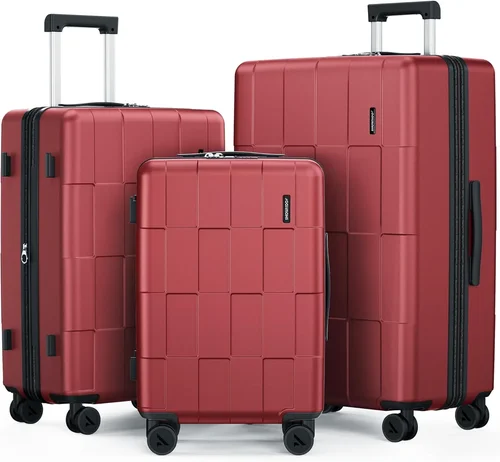
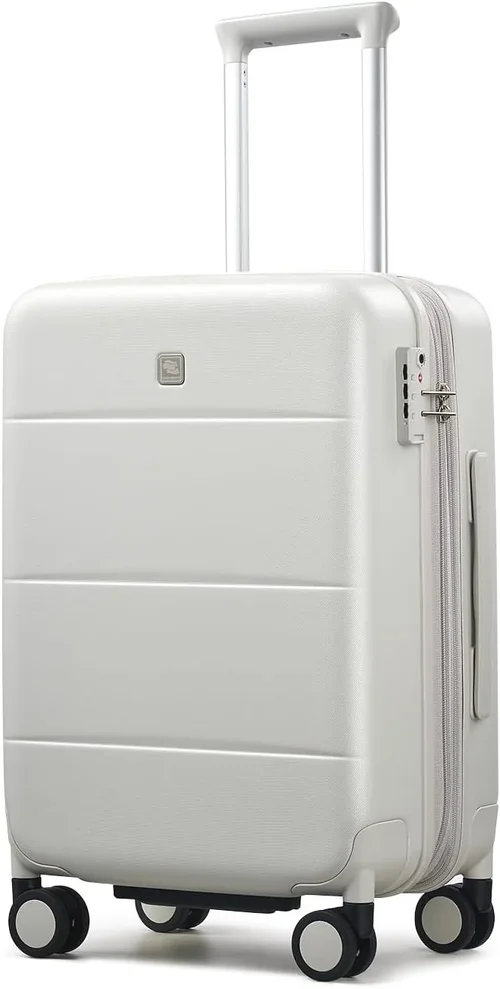
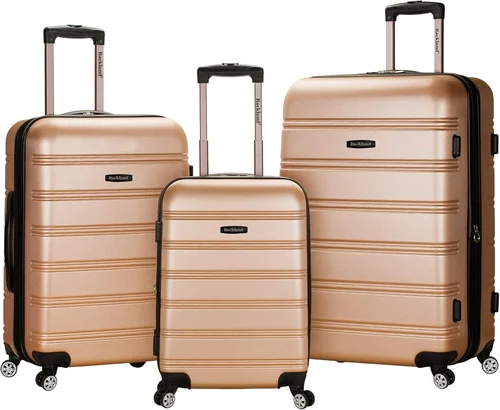
Shopping for luggage feels overwhelming because every brand promises durability, lightweight design, and smooth rolling. Delsey Paris stands out with their Titanium collection because they actually deliver on those promises through materials science rather than marketing fluff. This guide walks you through everything you need to know before investing in a Delsey Titanium hardside expandable suitcase, from understanding the proprietary material blend to choosing the right size for your travel style.
You will learn how to evaluate shell construction, wheel systems, handle mechanisms, and interior organization features that separate a good suitcase from a great one. We will compare the Titanium line against other Delsey collections and competitor brands so you can see where your money goes. By the end, you will know exactly which model fits your travel frequency, packing habits, and budget without second-guessing.
The hardside luggage market has exploded with options ranging from fifty-dollar specials to thousand-dollar luxury cases. Delsey Paris occupies a sweet spot where French engineering meets accessible pricing, and the Titanium collection represents their flagship innovation in impact resistance and weight reduction. Understanding what makes this line special helps you avoid overpaying for features you don’t need or underbuying and regretting it at the baggage carousel.

What to Look for When Buying Buying Guide
1. Shell Material and Construction
The shell defines everything about a hardside suitcase. Delsey Titanium uses a proprietary blend of polycarbonate reinforced with titanium particles, which sounds like marketing speak but translates to real-world performance. Pure polycarbonate flexes under impact, which absorbs energy but can deform permanently. The titanium reinforcement creates a composite that resists cracking while maintaining the flex property that prevents shattering. This matters when baggage handlers toss your case onto conveyor belts or stack heavy bags on top.
Look for the term “Makrolon” in specifications. This is Bayer’s premium polycarbonate grade, and Delsey uses it in the Titanium line. Cheaper cases use generic polycarbonate or ABS blends that become brittle in cold cargo holds. The titanium particle infusion adds cost but reduces weight for a given strength rating. A 26-inch Titanium spinner weighs roughly 9.5 pounds versus 11 to 12 pounds for comparable generic polycarbonate cases. That two-pound difference means more packing capacity before hitting airline weight limits.
Check the shell thickness specification. Delsey does not always publish exact millimeters, but the Titanium line uses a variable-thickness design. Corners and edges get extra material because those areas absorb the most impact. The flat panels stay thinner to save weight. This engineering approach costs more to mold but produces a lighter, stronger case. Press on the corners of any case you examine. They should feel solid with minimal give, not hollow or creaky.
2. Wheel System Quality and Configuration
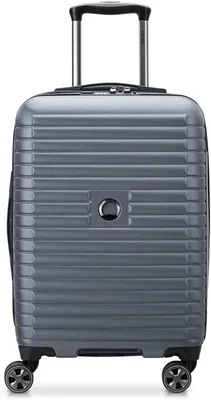
Wheels determine whether you glide through terminals or wrestle a wobbling box. Delsey Titanium features double-spinner wheels, meaning each corner has two wheels side by side on a single axle housing. This distributes weight across four contact points per corner instead of two, reducing the load on each wheel by half. The result: smoother rolling over expansion joints, carpet transitions, and cobblestones.
Examine the wheel housing material. Titanium models use reinforced nylon housings with sealed ball bearings. Cheaper cases use plastic housings with simple bushings that grind after a few trips. Spin each wheel by hand. They should rotate freely for several seconds without grinding or lateral wobble. The wheels should also recess slightly into the shell profile. This protects them from snapping off during rough handling and keeps the case within linear inch limits for carry-on compliance.
Test the wheel track width. Wider track spacing improves stability when the case stands upright. Delsey positions wheels at the extreme corners, maximizing the footprint. Some competitors inset wheels to save shell space, which makes tall cases tippy. If you pack heavy, a wide-track double-spinner prevents the frustrating tip-over when you let go of the handle.
3. Telescoping Handle Mechanism
The handle gets grabbed, yanked, and leaned on every trip. Delsey Titanium uses a multi-stage aluminum tube system with a push-button release. The tubes should extend and retract with a smooth, damped action, not a rattly click-clack. Grip the handle at full extension and apply downward pressure. There should be zero flex or wobble at the connection points.
Check the number of height positions. Three stages (short, medium, tall) accommodate different user heights. The locking mechanism should engage positively at each stage with an audible click. Test the release button. It should require deliberate pressure, not trigger accidentally when you set the case down. The button recess should protect it from snagging on doorframes or conveyor belts.
Inspect the handle attachment points inside the case. Quality cases use metal brackets riveted or bolted to the shell, not plastic clips screwed into thin material. Open the main compartment and look at where the handle tubes penetrate the interior liner. Reinforced grommets or metal plates prevent the tubes from wearing through the fabric liner over time.
4. Expandability and Capacity Management
Expandable luggage adds a zippered gusset that increases depth by 1.5 to 2 inches, typically adding 15 to 25 percent more volume. Delsey Titanium uses a dual-zipper expansion system with a protective fabric flap that covers the zipper teeth when expanded. This prevents the zipper from snagging on baggage handling equipment.
Understand the trade-off. Expanded cases exceed standard checked baggage dimensions on some airlines. A 26-inch case expanded may hit 64 to 66 linear inches (length + width + height), pushing past the 62-inch limit common on US carriers. International limits can be stricter. If you fly basic economy or budget airlines, you may need to keep the case compressed.
The expansion gusset material matters. Delsey uses high-denier ballistic nylon with water-resistant coating. Cheaper cases use thin polyester that tears if you overstuff. Test the expansion zipper. It should track smoothly around curves without catching. The dual pulls should meet cleanly at the center. A misaligned zipper track indicates manufacturing tolerance issues that worsen with use.
5. Interior Organization and Liner Quality
The interior separates thoughtful design from afterthought. Delsey Titanium features a fully lined interior with two main compartments divided by a zippered mesh panel. One side typically includes a suiter bracket or compression straps. The other side has a zippered pocket for toiletries or electronics. The liner fabric should feel substantial, not like disposable gift bag material.
Compression straps matter more than people realize. They prevent contents from shifting during transit, which protects fragile items and keeps clothing wrinkle-free. Delsey uses wide elasticated straps with strong plastic buckles that stay fastened under pressure. Test the buckle release. It should open easily with one hand but not pop open when you press on the packed contents.
The divider panel should have a full-perimeter zipper, not a three-sided flap. Full zippers let you access both compartments independently. Look for a padded laptop or tablet sleeve if you carry electronics. Some Titanium models include a removable wet/dry pocket for toiletries or dirty laundry. These details add convenience without adding weight.
6. Security Features and Lock Systems
TSA-approved combination locks come standard on Delsey Titanium cases. The lock integrates into the shell with a low-profile design that does not snag. The three-dial combination lets you set a personal code. TSA agents have a master key to open it for inspection without cutting the lock. This matters because cut locks leave your case unsecured for the remainder of the journey.
Check the zipper pulls. They should have interlocking loops that the lock shackle passes through. Some cheaper cases have a single loop on one pull, forcing you to zip the pulls together off-center. Dual loops on both pulls center the lock and distribute stress evenly. The zipper itself should be YKK or equivalent quality with self-healing teeth that realign if slightly separated.
Consider additional security. The Titanium shell resists puncture attacks better than softside luggage. However, determined thieves can still penetrate zippers with a pen technique. Some travelers add cable ties through the zipper pulls as tamper evidence. Delsey’s lock shackle diameter accommodates standard cable ties without interfering with the TSA keyway.
7. Weight and Airline Compliance
Every pound of luggage weight reduces your packing allowance. Most US domestic flights allow 50 pounds for checked bags. International and budget carriers often drop to 44 pounds or less. A 26-inch Titanium spinner at 9.5 pounds leaves 40.5 pounds for your stuff. A 12-pound competitor leaves only 38 pounds. That difference equals a pair of boots, a heavy sweater, or a laptop.
Carry-on compliance gets trickier. US domestic allows 22 x 14 x 9 inches including wheels and handles. International carry-on limits often shrink to 21.5 x 15.5 x 9 inches or smaller. Delsey Titanium carry-ons (21-inch models) are designed to the most generous US standard. They may exceed restrictions on European budget airlines like Ryanair or EasyJet. Measure your specific model against your most restrictive carrier before relying on it as carry-on only.
Weight distribution affects perceived heaviness. A well-balanced case with centered wheels feels lighter than a nose-heavy case with the same scale weight. Delsey positions the handle tubes and wheel housings to center the mass. Lift the packed case by the top carry handle. It should hang level, not tilt forward or backward.
8. Warranty Coverage and Customer Support
Delsey Paris offers a 10-year limited warranty on the Titanium collection. This covers manufacturing defects in materials and workmanship: wheels, handles, zippers, locks, and shell integrity. It does not cover airline damage, cosmetic wear, or misuse. Register your purchase on Delsey’s website within 30 days to activate the full term. Keep your receipt.
Understand the claim process. Delsey has authorized repair centers in major US cities. You ship the case at your expense; they repair and return it. Turnaround runs two to four weeks. Some retailers offer in-store exchange for the first 30 to 90 days. Buying from an authorized dealer (not a third-party marketplace seller) ensures warranty validity. Unauthorized sellers may offer “gray market” goods without manufacturer backing.
Compare warranty terms across brands. Briggs & Riley offers lifetime warranty with airline damage coverage. Travelpro offers limited lifetime on many models. Samsonite offers 10-year on premium lines. Delsey’s 10-year is competitive for the price point. The key difference: Briggs & Riley covers airline damage; Delsey does not. If you check bags frequently on carriers with rough handling reputations, factor that into your brand decision.
Different Types of Buying Guide

Common Buying Mistakes to Avoid
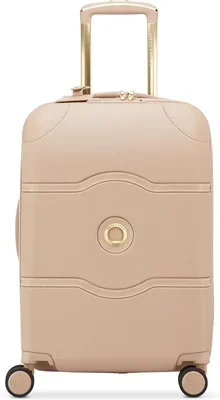
❌ Mistake: Buying Based on Brand Name Alone
Why it’s bad: Delsey makes multiple collections at different price points. The Titanium line sits at the top. Lower lines like Chatelet Aero or Helium Aero use different materials, wheel systems, and warranty terms. Assuming all Delsey luggage performs equally leads to disappointment when a budget model lacks the impact resistance or wheel smoothness you expected.
What to do instead: Compare specific model specifications, not brand reputation. Verify the shell material (Makrolon polycarbonate with titanium reinforcement), wheel type (double spinner with sealed bearings), and warranty length (10-year limited for Titanium). The model number usually appears on the hang tag and interior label.
❌ Mistake: Ignoring Airline Size Restrictions
Why it’s bad: A 21-inch Titanium carry-on fits US domestic overhead bins but may exceed limits on European budget airlines, Asian carriers, or regional jets with smaller bins. The wheels and handle add 1-2 inches to the stated dimensions. Overweight or oversized fees at the gate cost $75-$150 per bag, instantly erasing any savings from a cheaper case.
What to do instead: Measure your most restrictive carrier’s limits. Check both linear inches (L+W+H) and individual dimensions. If you fly mixed carriers, buy to the smallest standard. Consider a softside carry-on for maximum compressibility on tight routes, reserving the Titanium for checked duty.
❌ Mistake: Overlooking Weight Distribution
Why it’s bad: Two cases weighing 9.5 pounds can feel completely different. A case with heavy wheels and a light shell feels nose-heavy when tilted. A case with weight concentrated in the handle mechanism pulls awkwardly. Poor balance causes wrist fatigue and makes the case tip over when released.
What to do instead: Test the case packed with 30-40 pounds. Tilt it onto the wheels. Push it forward, pull it backward, turn corners. It should track straight without veering. Release the handle. It should stand upright without tipping. If possible, compare two models side by side with identical loads.
❌ Mistake: Skipping the Expansion Feature Test
Why it’s bad: Expansion zippers are failure points. A misaligned zipper track, weak gusset fabric, or poorly anchored zipper tape will fail under the stress of overpacking. Discovering this on a return trip with souvenirs leaves you taping a split case.
What to do instead: Fully expand and compress the case three times before your first trip. Load it to expanded capacity, then compress it. The zipper should track smoothly without forcing. The gusset fabric should lay flat when compressed, not bunch or pucker.
❌ Mistake: Assuming All Spinner Wheels Are Equal
Why it’s bad: Single-spinner wheels (one wheel per corner) concentrate load on a small bearing surface. They dig into carpet, catch on expansion joints, and fail faster under heavy loads. Double-spinner wheels (two wheels per corner) distribute load, roll over obstacles, and last significantly longer. The price difference is $30-$50; the performance difference is massive.
What to do instead: Insist on double-spinner wheels for any checked bag over 24 inches. For carry-ons, single spinners suffice if you travel light. But double spinners on a carry-on improve stability when you stack a personal item on top. Delsey Titanium uses double spinners across all sizes.
❌ Mistake: Not Registering the Warranty
Why it’s bad: Delsey’s 10-year warranty requires registration within 30 days of purchase. Unregistered products may only receive the statutory minimum (often 1 year). Many buyers toss the registration card or ignore the email prompt. A wheel bearing failure at year three becomes a full replacement cost instead of a free repair.
What to do instead: Register immediately at Delsey’s website. Photograph the receipt and the serial number label (usually inside the main compartment near the zipper). Save both in a cloud folder. If a component fails, you have documentation ready for the claim.
❌ Mistake: Buying the Largest Size “Just in Case”
Why it’s bad: A 29-inch case tempts overpacking. You fill the space because it exists. The result: overweight fees, back strain, and a case that barely fits in hotel closets or rental car trunks. Most travelers need a 25-inch checked bag at most. The 29-inch serves specific needs: extended relocation, bulky gear (ski boots, camera cases), or shared family packing.
What to do instead: Audit your last three trips. How much space did you actually use? Buy for your 80th percentile trip, not your maximum theoretical trip. You can always ship excess items home or buy a duffel for overflow. A right-sized case encourages disciplined packing.
Budget Guidelines: How Much Should You Spend?
Entry-Level ($150 – $220): This range covers Delsey’s Helium Aero and Chatelet Aero collections. Shells use standard polycarbonate or polycarbonate/ABS blends. Wheels are typically single-spinner with basic bearings. Handles use two-stage aluminum. Warranty runs 3-5 years limited. These cases work fine for occasional leisure travelers (1-2 trips per year) who pack light and handle their own bags. Expect 3-5 years of service before wheel or handle issues appear. The weight penalty runs 1.5-2 pounds heavier than Titanium equivalents.
Mid-Range ($250 – $380): This is the Delsey Titanium sweet spot for individual pieces. You get the titanium-reinforced Makrolon shell, double-spinner wheels with sealed bearings, three-stage handles, 10-year warranty, and the full interior organization suite. A 25-inch medium checked bag at $320 represents the best cost-per-trip value for frequent flyers. At 20 trips per year over 7 years, that is $2.30 per trip. The weight savings alone (2 lbs vs entry-level) pays for the difference in avoided overweight fees within 2-3 heavy trips.
Premium ($400 – $550): Large 29-inch Titanium cases and 2-piece sets live here. The large case adds capacity for specific use cases: family travel, equipment transport, month-long trips. The 2-piece set (21″+25″) covers 90% of travel scenarios for a couple or solo traveler who mixes carry-on and checked trips. Buying as a set saves 10-15% versus individual purchases and ensures matching aesthetics and nesting storage.
Luxury ($600+): Three-piece Titanium sets and special editions (limited colors, collaborative designs) exceed $600. The 3-piece set (21″+25″+29″) suits families or travelers who want every size option. Special editions add unique finishes (metallic, matte, textured) but identical performance. At this level, consider whether Briggs & Riley Baseline or Rimowa Essential might better serve your needs. Briggs & Riley adds airline damage coverage. Rimowa adds brand prestige and aluminum construction. Delsey Titanium remains the value leader for pure performance-per-dollar.
Expert Tips for Getting the Best Deal
Time your purchase to sales cycles. Luggage follows predictable discount patterns. January (post-holiday clearance), May (Memorial Day), July (summer travel push), September (Labor Day), and November (Black Friday/Cyber Monday) offer the deepest discounts. Delsey specifically runs “Friends & Family” events in April and October with 25% off sitewide. Avoid buying at full price in March, June, or December unless you have an immediate trip.
Buy from authorized retailers only. Delsey’s warranty requires proof of purchase from an authorized dealer. Major authorized online retailers include LuggagePros.com, eBags.com, Amazon (sold by Delsey Paris or Amazon.com, not third-party), Macy’s, Nordstrom, and Bloomingdale’s. Unauthorized sellers on eBay, Walmart Marketplace, or random websites may sell returns, refurbs, or counterfeits. The $30 savings risks a voided warranty.
Check for open-box and certified refurbished. Retailers like Best Buy, Amazon Warehouse, and Luggage Pros sell open-box Titanium cases at 15-30% off. These are typically returns with cosmetic-only issues (scuffed shell, missing hang tag). The structural integrity and warranty remain intact if sold by an authorized dealer. Inspect immediately upon delivery. Test wheels, handle, zippers, lock. File any claim within the return window.
Leverage price matching. Many authorized retailers price-match competitors. If Macy’s has the 25-inch Titanium at $319 and Luggage Pros has it at $299, show Macy’s the lower price. They often match plus honor their own coupon codes. Department stores also run “extra 20% off luggage” events that stack on already-reduced prices.
Consider the cost-per-trip metric. A $350 Titanium case used for 50 trips over 7 years costs $7 per trip. A $180 entry-level case replaced twice in 7 years (3-4 year lifespan) costs $510 total, or $10.20 per trip for 50 trips. The premium case saves money long-term if you travel regularly. If you travel once a year, the entry-level case makes financial sense.
Test before you commit. Visit a physical store (Macy’s, Nordstrom, specialty luggage shop) to handle the Titanium line. Extend the handle. Roll it on carpet and hard floor. Open and close the expansion zipper. Sit on it (gently) to test shell rigidity. Online specs cannot convey the tactile experience of a well-balanced spinner versus a wobbly one.
Read the warranty fine print for your region. Delsey warranty terms vary by country. US purchases get 10-year limited. European purchases may get 2-5 years depending on local consumer law. If you buy while traveling abroad, confirm the warranty transfers to your home country. Some brands honor global warranties; others require service in the purchase country.
Protect your investment with proper care. Clean the shell with mild soap and water after dirty trips. Lubricate wheel bearings annually with silicone spray (not WD-40, which attracts grit). Store the case empty, uncompressed, in a climate-controlled space. Extreme heat (attic, car trunk) degrades polycarbonate over time. Extreme cold makes it brittle. The liner can be spot-cleaned or removed for hand-washing on some models.

Frequently Asked Questions
Q: Is Delsey Titanium actually made with real titanium?
A: The shell contains titanium particles infused into the polycarbonate matrix during molding. It is not a titanium metal shell. The particles act as reinforcement fibers, similar to carbon fiber in composite materials. This increases tensile strength and scratch resistance while maintaining polycarbonate’s impact-flex property. The result is a lighter shell for a given durability rating.
Q: How does Delsey Titanium compare to Samsonite Omni PC or Freeform?
A: Samsonite Omni PC uses standard polycarbonate without reinforcement. It weighs more for equivalent strength. Freeform uses a polycarbonate blend with a different wheel system (single spinner on some models). Delsey Titanium’s double-spinner wheels and titanium-reinforced shell outperform both in roll smoothness and impact resistance. Samsonite often wins on interior organization variety and color options. Price-wise, they compete directly in the $250-$400 range.
Q: Can I repair a cracked shell myself?
A: Polycarbonate cracks cannot be reliably repaired at home. Epoxy adhesives fail under flex stress. A cracked shell compromises the structural integrity designed to protect contents. Delsey’s warranty covers shell cracking from manufacturing defects. Airline damage is not covered. For out-of-warranty cracks, professional luggage repair shops can weld polycarbonate, but cost often exceeds replacement value. Prevention (not overpacking, using the expansion correctly) beats repair.
Q: Do the spinner wheels lock in place?
A: Delsey Titanium wheels are 360-degree spinners without a directional lock. Some competitors offer a “directional lock” switch that limits wheels to forward/backward only. This helps on inclines but adds mechanical complexity. Delsey’s wide-track double spinners provide sufficient stability without a lock. On steep ramps, tilt the case slightly more upright to reduce sideways drift.
Q: What is the difference between Titanium and Chatelet Hard+?
A: Chatelet Hard+ uses a polycarbonate/ABS blend with a retro leather-accent aesthetic. It has single-spinner wheels, a two-stage handle, and a 5-year warranty. Titanium uses reinforced Makrolon polycarbonate, double-spinner wheels, three-stage handle, and 10-year warranty. Chatelet weighs 1-2 pounds more per size. Chatelet targets style-conscious travelers; Titanium targets performance-focused travelers. Both are quality lines at different price points.
Q: Will the titanium-reinforced shell set off metal detectors?
A: No. The titanium particles are microscopic and dispersed in the polymer matrix. They do not create a detectable metal signature. The case passes through X-ray and metal detectors normally. Only the aluminum handle tubes, zipper pulls, and lock mechanism contain significant metal, same as any luggage.
Q: How do I clean the interior liner if something spills?
A: Most Titanium models have a removable interior liner secured by Velcro or snaps along the top edge. Check your specific model. If removable, hand-wash in cool water with mild detergent, air dry flat. If not removable, spot-clean with a damp cloth and mild soap. Avoid saturating the foam padding behind the liner. Do not machine wash or dry. The water-resistant coating on the gusset fabric withstands light wiping.
Q: Can I stack a backpack on the carry-on handle?
A: Yes. The Titanium carry-on handle extends to a height that accommodates a backpack strap looped over it. The wide wheel track prevents tipping with a typical 15-20 pound backpack. For heavier loads, use a dedicated luggage strap with a hook that clips to the handle tubes, not just the grip. This distributes weight to the frame, not the handle mechanism.
Q: What colors hide scratches best?
A: Matte finishes (Graphite, Navy, Bronze) hide scratches better than gloss finishes (Silver, White, Rose Gold). Textured finishes hide best of all. Delsey Titanium offers both matte and gloss options depending on the season. If you check bags frequently, choose matte. If you carry-on only and want that showroom shine, gloss works fine with careful handling.
Q: Does the 10-year warranty cover zipper failure?
A: Yes, zipper failure from manufacturing defects (misaligned tracks, separating teeth, slider malfunction) is covered. Zipper damage from overpacking (forced closure stressing teeth), foreign object damage, or airline handling is not covered. The dual-zipper design on expansion gussets reduces stress on individual teeth. Lubricate zippers annually with silicone wax or beeswax for smooth operation.
Our Final Recommendations
Best for Budget-Conscious Buyers: Delsey Helium Aero 25-inch If the Titanium price exceeds your budget, the Helium Aero delivers 80% of the performance at 60% of the cost. You get a polycarbonate shell, single-spinner wheels, and a 5-year warranty. It weighs 1.5 pounds more but handles occasional travel perfectly. Upgrade to Titanium when your travel frequency increases or the Helium wears out.
Best Overall Value: Delsey Titanium 25-inch Medium Checked This single piece hits the sweet spot for most travelers. It fits a week’s clothing, expands for souvenirs, weighs 9.5 pounds, and costs $320-$350. The double-spinner wheels and 10-year warranty make it a decade-long companion. Pair with a quality backpack for carry-on items. This one bag covers 85% of trips for solo travelers and couples.
Best Premium Option: Delsey Titanium 2-Piece Set (21″+25″) The set covers every scenario: carry-on for short trips, checked for long trips, nesting storage at home. Buying together saves $80-$100 versus separate purchases. You get consistent wheel feel, handle height, and aesthetic. The 21-inch carry-on at 6.8 pounds is among the lightest premium spinners available.
Best for Beginners: Delsey Titanium 21-inch Carry-On Only Start with the carry-on. Learn to pack efficiently in 40 liters. Master the expansion feature. Experience the wheel quality. If you later need checked capacity, add the 25-inch. This approach prevents buying luggage you don’t need and builds packing discipline that saves money on baggage fees forever.
Best for Advanced Users: Delsey Titanium 29-inch Large + 21-inch Carry-On Combo Frequent long-haul travelers, family coordinators, and gear-heavy adventurers (photographers, divers, skiers) need the 29-inch volume. Pair it with the 21-inch for essentials carry-on. The 29-inch at 11.8 pounds still undercuts competitor large cases by 1-2 pounds. The combination maximizes checked capacity while keeping valuables accessible.
Conclusion: Making the Right Choice
You now understand what makes Delsey Titanium special: a titanium-reinforced Makrolon shell that is lighter and stronger than standard polycarbonate, double-spinner wheels that glide over terrain that stops lesser cases, a three-stage handle that locks solidly at your height, and a 10-year warranty backed by a century-old French company. You know how to evaluate shell construction, test wheel quality, verify expansion zipper durability, and match case size to your actual travel patterns.
The right luggage does not just hold clothes. It reduces travel friction. It eliminates the wrist strain of dragging a wobbly bag. It prevents the panic of a shattered shell at baggage claim. It fits in the overhead bin so you never gate-check. It lasts long enough that the cost per trip becomes negligible. Delsey Titanium delivers these benefits at a price that respects your budget.
Prioritize your needs. If you fly weekly for work, invest in the 2-piece set. If you vacation twice a year, the 25-inch single piece serves you perfectly. If you only carry-on, the 21-inch is a joy to maneuver. Resist the urge to buy larger than you need. Resist the urge to buy cheaper than you deserve. Quality luggage pays for itself in avoided fees, replaced items, and travel peace of mind.
Your next step: measure your most restrictive airline’s limits, define your typical trip length, and choose the Titanium model that matches. Register the warranty the day it arrives. Pack it thoughtfully. Roll it confidently. The world is waiting, and now you have the right companion for the journey.