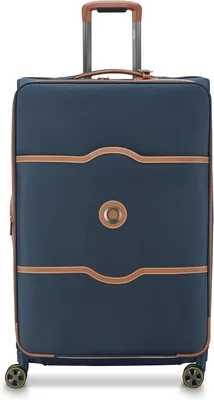
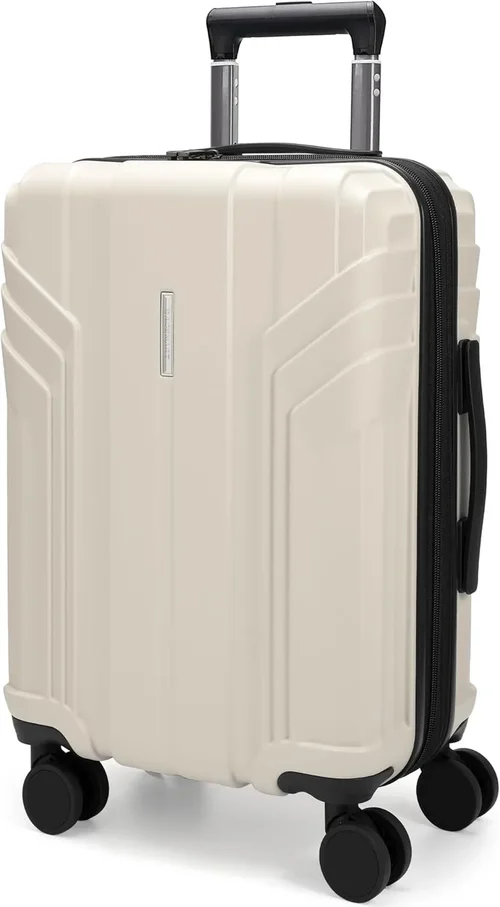
Shopping for a large checked bag can feel overwhelming. You stand in the luggage aisle or scroll through endless product pages, and every suitcase looks remarkably similar: a hard shell, four wheels, a telescoping handle. But when you are preparing for a two-week international trip, a family vacation, or a move across the country, the differences between a frustrating travel companion and a reliable workhorse become critically important. This guide exists to cut through the marketing noise and help you understand exactly what makes a 30-inch expandable spinner worth your investment.
We will walk through the structural anatomy of these bags, decode the technical specifications that actually matter, and compare the different categories available on the market today. You will learn how to spot the difference between a bag that survives one baggage claim carousel and one that lasts a decade. Whether you are eyeing a specific model like the Columbia expandable spinner luggage 30 inch spinner or comparing brands across price tiers, this guide will give you the framework to make a confident, informed decision. By the end, you will know exactly which features align with your travel style, how to allocate your budget effectively, and which common pitfalls to avoid.

What to Look for When Buying Buying Guide
1. Frame Construction and Material Integrity
The skeleton of your luggage determines its lifespan. In the 30-inch category, you are dealing with significant volume and, consequently, significant weight when packed. The two dominant material categories are polycarbonate (often blended with ABS) for hard shells and ballistic nylon or high-denier polyester for soft shells. Polycarbonate is prized for its flexibility; it can flex under pressure and pop back into shape, absorbing the shock of being tossed onto a conveyor belt. ABS is cheaper but more brittle, prone to cracking on impact. If you are looking at a Columbia expandable spinner luggage 30 inch spinner, you will often find a hybrid polycarbonate/ABS shell which aims to balance cost and resilience.
For softside luggage, look for “denier” ratings. A 1680D ballistic nylon is the gold standard for abrasion and tear resistance. Lower denier counts (600D, 900D) are lighter but sacrifice durability. Pay close attention to the frame itself. Some budget bags use a partial frame or plastic stays that can warp. A full aluminum or reinforced fiberglass frame running the perimeter of the bag maintains structural integrity when the bag is stuffed to its expansion limit. Press on the corners of the shell; they should feel rigid, not hollow or flimsy.
2. Wheel Engineering and Maneuverability
This is the single most tactile feature of a spinner. “Spinner” means four multi-directional wheels, but not all spinners are created equal. You want double-spinner wheels (eight wheels total) rather than single wheels. Double wheels distribute the load across a wider surface area, reducing stress on the axle and providing significantly better stability on uneven surfaces like cobblestones, curbs, or carpet.
Examine the wheel housing. Are the wheels recessed into the body of the bag? Recessed wheels are protected from snapping off if the bag is dropped or crushed by other luggage. Look for wheels made of polyurethane (PU) rather than hard plastic. PU offers a “rubberized” feel that rolls silently and grips the floor. Test the spin: flick a wheel with your finger. It should spin freely for several seconds without wobbling or grinding. Listen for a smooth hum, not a plastic rattle. The wheel attachment mechanism matters too; riveted metal axles are far superior to plastic molded posts that snap under torque.
3. Handle System Ergonomics and Durability
The telescoping handle is your primary interface with the bag. A poorly designed handle causes wrist fatigue and back strain. Look for a handle tube made of aircraft-grade aluminum or high-strength steel. It should extend and retract with a smooth, dampened action—no sticking or sharp edges. The grip material matters for long walks through terminals. Contoured rubber or gel grips with finger grooves reduce pressure points.
Check the number of stop positions. A good system offers at least three distinct height locks to accommodate users of different heights. Crucially, inspect where the handle tubes meet the bag interior. This is a high-stress failure point. Quality bags reinforce this area with a metal plate or heavy-duty plastic bracket inside the lining. If you can see the handle mechanism inside the main compartment, ensure it is covered by a protective fabric sleeve to prevent your clothes from snagging on the gears.
4. Expansion Mechanism and Gusset Quality
The “expandable” feature is why you are buying a 30-inch bag—you need that extra 15-25% capacity for the return trip souvenirs. The expansion gusset is typically a zippered panel that releases a folded section of fabric (softside) or allows the shell halves to separate slightly (hardside). The zipper on this gusset takes immense strain. It must be a heavy-duty, self-healing coil zipper (like YKK RC or similar), not a molded plastic tooth zipper which separates under tension.
For hardside expandables, check the seal when expanded. There should be a fabric or flexible polymer bridge connecting the two shell halves. Without this, the expanded gap exposes your contents to rain, dust, and prying eyes. For softside bags, the expansion fabric should be the same high-denier material as the main body, not a thin mesh that tears easily. Test the expansion zipper in the store; it should glide smoothly without catching on the fabric edges.
5. Interior Organization and Compression
A cavernous 30-inch interior becomes a jumbled mess without intelligent organization. Look for a fully lined interior—preferably a light-colored, ripstop nylon or polyester so you can actually see small items. The best layouts feature a clamshell opening (50/50 split) with zippered dividers on both sides. One side should have a large zippered mesh pocket for laundry or shoes; the other side needs robust compression straps (ideally X-straps with quick-release buckles) to lock down clothing and prevent shifting.
Compression straps are vital for maximizing space. They should attach to the frame or heavy-duty anchor points, not just the liner fabric. Some premium models offer a removable zippered wet/dry pocket or a built-in suiter system for dresses and suits. If you travel with electronics, check for a padded laptop/tablet sleeve in the lid or front pocket, though in a 30-inch checked bag, this is less critical than in a carry-on.
6. Security Features: Zippers, Locks, and Frames
Checked luggage is out of your sight for hours. Security is non-negotiable. The primary closure zippers must be lockable. Look for zipper pulls that have a hole for a shackle or a built-in TSA-approved combination lock. A built-in lock is superior to a padlock because it cannot be lost and sits flush against the body, reducing snag risk. Ensure the lock is TSA-accepted (red diamond logo) so agents can inspect without destroying the lock.
Beyond the lock, consider the zipper chain itself. Coil zippers (nylon coil) are self-healing; if a tooth misaligns, zipping back and forth often fixes it. Molded plastic tooth zippers are stronger against straight pulls but fail catastrophically if one tooth breaks. Double-coil zippers (two parallel coils) offer redundancy. For ultimate security on softside bags, some travelers prefer a frame-locking system (like the Travel Sentry approved frame locks) where the zipper pulls lock into the frame itself, making the bag impossible to open without the code, even if the zipper is cut.
7. Weight vs. Capacity Ratio
This is the math problem every checked bag buyer must solve. Most international airlines enforce a 50 lb (23 kg) weight limit for checked bags. A 30-inch bag has a massive volume (often 100+ liters). If the empty bag weighs 12 lbs, you only have 38 lbs for your belongings. If it weighs 7.5 lbs, you have 42.5 lbs. That 4.5 lb difference is a pair of boots, a heavy sweater, and a book.
Ultra-lightweight bags (under 7 lbs for 30-inch) often achieve this by using thinner shells, minimal frames, and lighter wheels. They are great if you pack light items (clothing), but risky if you pack dense items (books, gear, liquids). Heavier bags (11+ lbs) usually offer better wheels, frames, and shell thickness. Your goal is to find the “sweet spot” for your packing style. If you consistently hit the weight limit, prioritize the lightest durable bag you can find. If you rarely exceed 40 lbs, prioritize durability and wheel quality.
8. Warranty, Repairability, and Brand Support
A warranty is a manufacturer’s vote of confidence. Read the fine print. “Lifetime warranty” often means “lifetime of the product” (which they define) or covers only manufacturing defects, not airline damage. Look for brands that offer “worry-free” or “trust” warranties that cover airline damage for the first few years. Brands like Briggs & Riley, Travelpro, and Osprey are legendary for standing behind their products.
Equally important is repairability. Can you buy replacement wheels, handle tubes, or zipper pulls? Can a local luggage repair shop fix it, or does it require factory service? A $400 bag that lasts 15 years with a $30 wheel replacement is a far better value than a $150 bag you throw away after two years because a wheel fell off and the model is discontinued. Check the brand’s website for a parts store or authorized repair network before buying.
Different Types of Buying Guide

Common Buying Mistakes to Avoid
❌ Mistake: Buying Based Solely on Brand Name Recognition
Why it’s bad: A famous outdoor or apparel brand entering the luggage market often licenses their name to a third-party manufacturer. The resulting product may share the logo but not the engineering heritage of dedicated luggage brands. You pay a “brand tax” for the label, often getting mediocre wheels, thin shells, and poor warranty support compared to a specialist brand at the same price.
What to do instead: Research the actual manufacturer. Look for brands that only make luggage (Travelpro, Briggs & Riley, Rimowa, Samsonite, Delsey, Victorinox). Read professional reviews from sites that stress-test luggage (crush tests, wheel abrasion tests, handle cycle tests), not just lifestyle blogs.
❌ Mistake: Ignoring the “Personal Item” Compatibility
Why it’s bad: You buy a massive 30-inch spinner, but you also need a carry-on and a personal item (backpack/tote). If your 30-inch bag doesn’t have a secure “piggyback” strap (a leather or webbing strap on the back panel that slides over the carry-on handle), you are forced to carry your backpack on your shoulders while pulling the spinner. This leads to fatigue and instability.
What to do instead: Verify the bag has a dedicated, reinforced add-a-bag strap. Test it with your carry-on if possible. The strap should be wide, securely stitched (box-X stitching), and positioned so the carry-on sits balanced, not tipping backward.
❌ Mistake: Overlooking Interior Liner Quality
Why it’s bad: The liner takes the most abuse—sharp zippers, shoe heels, spilled liquids, friction from clothing. Cheap liners are thin polyester that shreds, pills, and traps odors. A torn liner exposes the internal frame, handle mechanism, and raw edges of the shell fabric, leading to snagged clothes and potential injury from sharp frame ends.
What to do instead: Unzip the interior divider and feel the liner. It should be thick, smooth, and preferably ripstop nylon. Look for bound edges (fabric wrapped around the raw edge) rather than serged/overlocked edges which unravel. Dark liners hide stains but make finding small items impossible; light grey or tan is ideal.
❌ Mistake: Choosing “Cute” Colors Over Practicality
Why it’s bad: That beautiful pastel pink or sky blue bag looks adorable in the store. On the baggage carousel at 11 PM, it looks like 50 other bags. Light colors show every scuff, grease mark, and conveyor belt stain permanently. Dark colors (navy, charcoal, black) hide wear but are harder to spot.
What to do instead: Choose a distinctive, saturated color (deep red, forest green, burnt orange, purple) or a unique pattern. If you love neutrals, buy a bright, durable luggage tag and a distinctive handle wrap. This saves you the “is that mine?” dance at every arrival.
❌ Mistake: Assuming “Expandable” Means “Pack It Full”
Why it’s bad: Expanding the bag increases its linear dimensions (L+W+H). Many airlines have a maximum linear inch limit (often 62 inches) for standard checked bags. A 30-inch bag expanded often exceeds 62 linear inches, triggering oversize fees ($100-$200+). Furthermore, a fully expanded bag stresses the zipper gusset, frame, and wheels beyond design limits.
What to do instead: Measure the bag expanded (or check specs). Ensure expanded dimensions + wheels/handle stay under 62 linear inches. Use expansion only for the return trip or soft items (dirty laundry) that compress. Never expand a bag packed with rigid items.
❌ Mistake: Skipping the “Shake Test” In-Store
Why it’s bad: Online photos hide rattles. A bag with loose internal components (handle mechanism, wheel rivets, zipper pulls) will drive you crazy on a 20-minute walk to your gate. It also indicates poor build quality control.
What to do instead: If buying in person, load the bag with 20-30 lbs of store merchandise (ask staff). Pull it, push it, turn it sharply, go over a threshold. Listen for rattles, feel for wobble. If buying online, order from a retailer with free returns (Amazon, REI, Zappos, brand direct) and do the shake test at home within the return window.
❌ Mistake: Neglecting the “Gate Check” Scenario
Why it’s bad: You buy a 30-inch bag assuming it’s always checked. But on a tight connection or a small regional jet, you might be forced to gate-check a carry-on, or you might want to check your 30-inch bag at the gate to avoid baggage claim. If the bag has fragile external components (protruding wheels, external pockets that snag, a non-recessed handle), gate checking destroys them.
What to do instead: Ensure the bag has a smooth profile when the handle is down. Wheels should be recessed. External pockets should lie flat or be absent. The handle lock button should be flush or recessed. The bag should survive a toss onto a metal cart from 4 feet up.
Budget Guidelines: How Much Should You Spend?
Price correlates strongly with component quality in luggage, but diminishing returns set in. Here is what you get at each tier for a 30-inch expandable spinner.
Entry-Level ($60 – $130): The “Occasional Traveler” Tier
At this price, you are almost exclusively buying ABS hardside or low-denier (600D-900D) polyester softside bags. Expect single-spinner wheels (plastic), partial internal frames, molded plastic zippers, and a weight of 10-13 lbs. The expansion gusset will be a thin mesh or low-grade fabric. The handle will have 1-2 stops and feel wobbly at full extension. Warranty is typically 1-2 years limited.
Who this is for: You travel once a year, domestically, pack light (under 35 lbs), and treat luggage as disposable. You accept that a wheel might break or a zipper might fail after 3-5 trips. Brands in this space: American Tourister (entry lines), Rockland, Merax, generic Amazon brands.
Mid-Range ($130 – $280): The “Sweet Spot” for Most Travelers
This is where polycarbonate blends become standard, double-spinner wheels appear, and frames become full-perimeter. Weight drops to 8.5-10.5 lbs. You get YKK or equivalent coil zippers, TSA locks (often built-in), 3-stop handles with comfortable grips, and decent interior organization (tie-down straps, mesh divider). Expansion gussets are durable. Warranties extend to 5-10 years or “limited lifetime” (defects only).
Who this is for: You travel 3-6 times a year, mix of domestic and international. You pack to the weight limit. You want a bag that lasts 5-8 years with basic care. This tier includes the Columbia expandable spinner luggage 30 inch spinner models, Samsonite Winfield/Freeform, Travelpro Maxlite 5 (softside), Delsey Chatelet Hard+, and Kenneth Cole Reaction.
Premium ($280 – $500): The “Frequent Flyer / Durability Focused” Tier
Here you pay for advanced materials (pure polycarbonate, Tegris, Curv, 1680D Ballistic Nylon), precision engineering (Japanese Hinomoto Lisof wheels—widely considered the gold standard), aluminum handle tubes with dampened retraction, and comprehensive warranties that cover airline damage for 1-3 years (e.g., Briggs & Riley “Simple as That”, Travelpro “Lifetime” with airline coverage). Weight is optimized (7.5-9.5 lbs). Interiors feature suiter systems, removable packing cubes, wet pockets, and premium liners.
Who this is for: You fly monthly, check bags weekly, or travel with expensive gear (camera equipment in padded cases, suits). You need absolute reliability. The cost per trip over 10 years is lower than replacing a mid-range bag every 3 years. Brands: Briggs & Riley (Baseline, Sympatico), Travelpro (Platinum Elite, Crew Versapack), Rimowa (Essential/Cabin – though often carry-on size), Tumi (19 Degree, International), Victorinox (Spectra, Apex).
Luxury / Ultra-Premium ($500 – $1,500+): The “Buy It For Life / Status” Tier
Materials are aerospace-grade: Curv technology (woven polypropylene), pure polycarbonate (Makrolon), anodized aluminum-magnesium alloys, full-grain leather accents. Wheels are often custom-engineered, silent, and replaceable by the user with a screwdriver. Frames are monocoque (single piece). Warranties are truly unconditional lifetime (Rimowa, Briggs & Riley top tiers). Weight is astonishingly low for the strength (6-8 lbs for 30-inch).
Who this is for: You view luggage as a heritage purchase. You want user-serviceable parts (buy a wheel kit, replace in 5 minutes). You value design, silence, and the absolute pinnacle of protection. Brands: Rimowa (Original, Classic), Globe-Trotter, Tumi (highest lines), Horizn Studios (top models).

Expert Tips for Getting the Best Deal
- Time Your Purchase: Luggage goes on deep sale predictably. The best times are January (post-holiday clearance), May (pre-summer travel rush), Labor Day weekend (end of summer), and Black Friday/Cyber Monday. Avoid buying in June or December at full price.
- Check “Scratch & Dent” / Open Box: Retailers like Amazon Warehouse, REI Used Gear, Backcountry Outlet, and brand outlet stores sell returned luggage with cosmetic flaws (scuffs on the shell, torn box) at 30-50% off. Since a checked bag gets scratched on its first trip anyway, this is the smartest way to buy premium bags.
- Leverage Price Match Policies: Many authorized retailers (Briggs & Riley, Travelpro, Tumi sites, department stores) will match a lower price from a competitor if you ask via chat or phone. Have the competitor’s URL ready.
- Buy Previous Generation Models: When a brand releases a “Version 2” or new colorways, the previous version is often identical structurally but 20-40% cheaper. Search for the model number (e.g., “Travelpro Platinum Elite 29” vs “30”).
- Use Credit Card Benefits: Many premium travel cards (Chase Sapphire Reserve, Amex Platinum, Capital One Venture X) offer statement credits for luggage purchases or extended warranty protection that doubles the manufacturer warranty. Check your benefits portal.
- Sign Up for Brand Newsletters: Almost every major luggage brand offers 10-15% off your first order for email signup. Use a dedicated email address to avoid spam. Combine this with a sale for stacking discounts (where allowed).
- Consider Refurbished Direct from Manufacturer: Briggs & Riley and Travelpro often sell factory-refurbished units on their own sites with full warranties. These are returns inspected and repaired to new condition. Savings of 25-35% are common.
- Read the Return Policy Before Buying: Ensure you have a 30-60 day no-questions-asked return window. Pack the bag fully at home, weigh it, roll it around your house/apartment/hallway. If the handle height hurts your back or the wheels catch on your rug, return it. Do not keep a bag that doesn’t fit you.

Frequently Asked Questions
Q: Is a 30-inch spinner too big for international travel?
A: It depends on the airline. Most international carriers allow a maximum of 62 linear inches (L+W+H) for standard checked bags. A standard 30-inch spinner is roughly 30 x 20 x 12 inches = 62 linear inches without expansion. If you expand it, you will exceed the limit and face oversize fees. Measure your specific model expanded. If you fly budget international carriers (Ryanair, EasyJet, AirAsia), their limits are often stricter (sometimes 58 linear inches or weight limits as low as 15-20kg). For those, a 27-28 inch bag is safer.
Q: What is the actual packing capacity of a 30-inch expandable spinner?
A: Unexpanded, expect 90-105 liters. Expanded, 110-130 liters. To visualize: that’s roughly 3-4 weeks of clothing for one person, or 10-14 days for two people sharing a bag. Remember: volume ≠ weight allowance. You can fit 50 lbs of feathers easily, but 50 lbs of books fills only half the volume.
Q: Are double spinner wheels (8 wheels) really worth the extra cost over single spinners (4 wheels)?
A: Yes, unequivocally for a 30-inch bag. The load on each wheel is halved. This drastically reduces axle breakage, wheel wobble, and “flat spotting” (where the wheel develops a flat spot from sitting under heavy load). Double wheels also bridge gaps (grates, elevator thresholds) smoothly. On a 20-inch carry-on, singles are fine. On a 70-lb checked bag, doubles are essential.
Q: Can I replace the wheels myself if they break?
A: On premium bags (Briggs & Riley, Travelpro Platinum, Rimowa, high-end Samsonite), yes. They use standard bolt-on or clip-on wheel assemblies. You buy the kit ($30-$60), unscrew 2-4 bolts, swap wheels. On mid-range and budget bags, wheels are often riveted or molded into the shell—non-replaceable without drilling/riveting tools. Check the product page or manual for “self-replaceable wheels” before buying if this matters to you.
Q: How do I clean a hardside polycarbonate shell?
A: Use a microfiber cloth with warm water and mild dish soap. For scuff marks (black rubber streaks from conveyor belts), a “Magic Eraser” (melamine foam) works wonders—test a small hidden spot first. Avoid acetone, alcohol, or abrasive cleaners; they dull the finish or damage decals. For softside, spot clean with upholstery cleaner or a damp cloth with mild detergent. Never machine wash luggage.
Q: Does the Columbia expandable spinner luggage 30 inch spinner have a lifetime warranty?
A: Columbia Sportswear luggage (often licensed to a partner like Samsonite or a luggage specialist) typically offers a Limited Lifetime Warranty covering manufacturing defects in materials and workmanship. It generally does not cover airline damage, wear and tear, or cosmetic scratches. Always register your product on the manufacturer’s website immediately after purchase and keep your receipt.
Q: Should I buy a luggage set (3-piece) or just the 30-inch single?
A: Only buy a set if you genuinely need the carry-on and personal item included. Sets force compromise: the carry-on in a $300 3-piece set is often a $60 carry-on quality-wise. You are usually better off buying the best 30-inch checker you can afford ($200) and a separate high-quality carry-on ($150) tailored to your needs. Mix and match for optimal performance.
Q: What’s the difference between a “spinner” and a “roller” (inline skate wheels)?
A: Spinners have 4 (or 8) 360-degree rotating wheels. You push them beside you upright. Rollers have 2 fixed inline wheels; you tilt the bag back and pull it. Spinners are vastly superior for airports (maneuvering crowds, narrow aisles, standing in lines). Rollers are better for rough terrain (cobblestones, dirt paths, snow, stairs) because the large fixed wheels don’t get stuck or snap off. For 95% of modern air travel, spinners win.
Q: How do I prevent my expanded bag from bursting open on the conveyor belt?
A: First, don’t over-expand. Pack the main compartment firmly so the expansion gusset isn’t under tension. Second, use the compression straps inside to condense contents. Third, run a heavy-duty luggage strap (or two) around the exterior of the bag horizontally, cinching tight over the expansion zipper. This provides a mechanical backup if the zipper fails. TSA can cut the strap if needed, but it saves the bag.
Q: Are “Smart Luggage” features (USB charging, GPS tracking, digital scale) worth it on a checked bag?
Our Final Recommendations
Based on the factors, types, and budgets discussed, here are our top picks for specific traveler profiles. Note that specific model availability changes; always verify current specs.
Best for Budget-Conscious Buyers: Samsonite Freeform 30″ Spinner
Often found under $180, this is the benchmark for the mid-range tier. It uses a polycarbonate blend shell that is surprisingly resilient, double spinner wheels that roll well, a 10-year limited warranty, and a weight around 9.6 lbs. The expansion is standard, the TSA lock works smoothly, and the interior has cross straps and a mesh divider. It lacks premium touches (silent wheels, dampened handle), but for 4-5 trips a year, it is unbeatable value.
Best Overall Value: Travelpro Maxlite 5 29″ Expandable Spinner (Softside)
If you prefer softside, this is the king of the $150-$200 range. At 7.8 lbs, it is incredibly light for its size, leaving maximum weight allowance. It uses high-tenacity nylon with a DuraGuard coating, Honeycomb framing for structure, and the excellent MagnaTrac wheel system (self-aligning). The exterior pockets are huge for last-minute items. The “Lifetime Warranty + Trusted Companion Promise” covers airline damage for 1 year. It expands 2 inches. A workhorse.
Best Premium Option: Briggs & Riley Sympatico CX 30″ Spinner (Hardside)
At ~$450, this is an investment. It features a pure Makrolon polycarbonate shell with a unique “CX” expansion system: the expansion is inside the shell contour, maintaining the 62 linear inch limit even when expanded—genius engineering. It has Hinomoto Lisof Silent Run wheels (the quietest, smoothest on market), a titanium handle tube, and the industry’s best warranty: “Simple as That” – covers airline damage, no receipt needed, free repair shipping. Weight: 9.3 lbs. It will be the last 30-inch bag you buy.
Best for Beginners: Delsey Paris Chatelet Hard+ 30″ Spinner
This bag hits a style and function sweet spot around $220-$260. It looks expensive (leather accents, brake system on wheels). The “SecuriTech” zipper is 3x more resistant to forced entry. The brake wheels lock with a foot pedal—fantastic for waiting in lines or on train platforms. It’s 10.1 lbs, so not the lightest, but the organization (laundry bag, shoe bag, tie-down straps) teaches good packing habits. 10-year warranty.
Best for Advanced Users / Heavy Packers: Travelpro Crew Versapack 30″ Spinner (Softside)
Designed for airline crews (pilots/flight attendants), this ~$350 bag is built for daily abuse. 1680D Ballistic Nylon with a hydrophobic coating. PrecisionGlide wheels (sealed ball bearings). PowerScope handle with Contour Grip. The interior is a masterpiece: removable wet pocket, suiter, multiple zippered compartments, external USB port pass-through (battery not included). It weighs 10.8 lbs but carries 70 lbs like it’s 40. Lifetime warranty covers airline damage. If you live out of a suitcase, this is the tool.
Conclusion: Making the Right Choice
Choosing a 30-inch expandable spinner is ultimately about matching the tool to the job. You now understand that the shell material dictates protection, the wheel system dictates your physical effort, the handle dictates your posture, and the warranty dictates your long-term cost. You know to weigh the empty bag, check the linear dimensions expanded, test the shake, and verify the add-a-bag strap.
Don’t be seduced by features you don’t need (built-in scales, USB ports, fancy patterns) at the expense of the fundamentals: a strong frame, double Hinomoto-style wheels, a comfortable multi-stop handle, YKK zippers, and a warranty backed by a company that answers the phone. Whether you settle on a high-value mid-range workhorse like the Columbia expandable spinner luggage 30 inch spinner or invest in a premium heirloom piece from Briggs & Riley, the right bag disappears into the background of your journey. It just works. You arrive. Your belongings arrive intact. Your back doesn’t hurt.
Take this knowledge, measure your typical packing list against airline limits, set your budget using the tiers above, and buy with confidence. The perfect trip starts with the right bag. Safe travels.