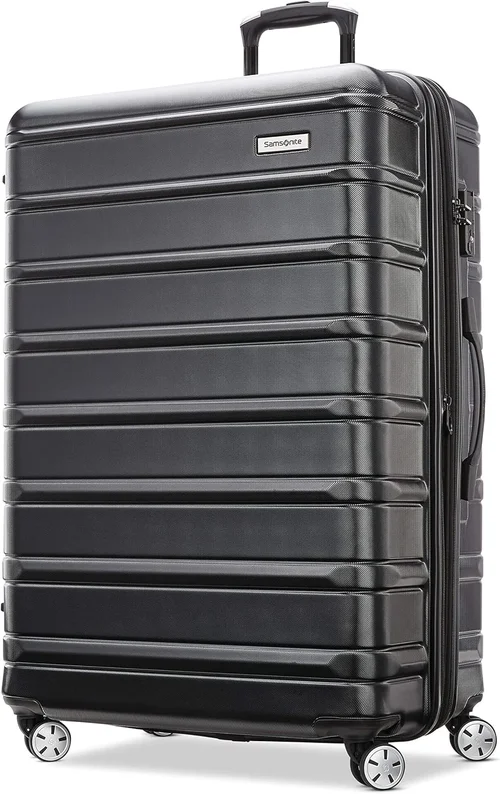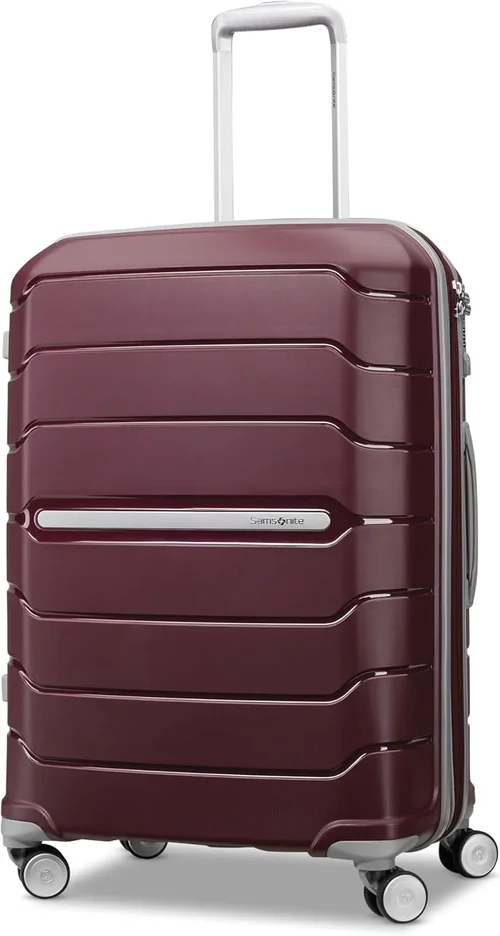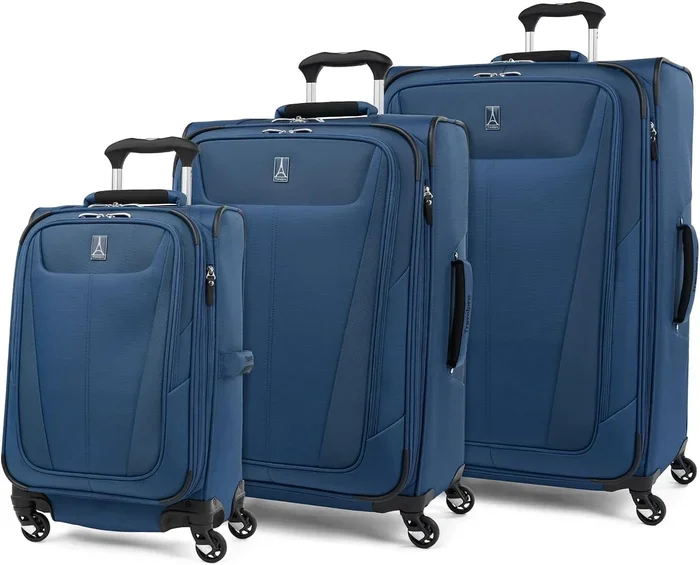
Shopping for luggage can feel overwhelming. You stand in the aisle or scroll through endless product pages, bombarded by terms like ballistic nylon, spinner wheels, expandable capacity, and TSA-approved locks. It is easy to get lost in the specifications and forget the most important thing: how this bag will actually perform when you are sprinting through a terminal, hauling it over cobblestones, or stuffing it into a tight overhead bin. That is exactly why this guide exists. We are going to cut through the marketing noise and give you the practical, real-world knowledge you need to decide if the Columbia Impavid Trek 3 Piece Expandable Wheeled Luggage Set is the right travel companion for you.
In this comprehensive guide, we will dissect every critical aspect of this luggage set. We will explore the construction materials that determine longevity, the wheel systems that dictate maneuverability, the organizational features that keep you sane while packing, and the warranty details that protect your investment. We will also compare this set against the broader market landscape, highlight common purchasing pitfalls, and provide a clear budget framework. By the end, you will not just know the specs; you will understand exactly how this luggage fits into your specific travel life.

What to Look for When Buying Buying Guide
1. Luggage Configuration and Trip Duration Compatibility
The very first factor to consider is the composition of the set itself. The Columbia Impavid Trek comes as a 3-piece set, typically including a 20-inch carry-on, a 24-inch medium checked bag, and a 28-inch large checked bag. This configuration is the industry standard for a reason: it covers virtually every trip length. The 20-inch is designed to fit in overhead bins on most major domestic airlines, making it perfect for weekend getaways or business trips where you want to avoid baggage claim. The 24-inch is the sweet spot for a week-long vacation for one or two people. The 28-inch is a beast designed for extended stays, family trips, or when you need to bring back souvenirs.
However, you must be honest about your travel habits. If you exclusively take weekend trips, a 3-piece set means two large bags will sit in your closet gathering dust for years. Conversely, if you frequently travel with a family of four, you might actually need two 28-inch bags. Think about the longest trip you realistically take in a typical year and buy for that scenario, not the once-a-decade around-the-world cruise. The expandable feature on all three pieces adds roughly 15-25% more packing volume, which is a fantastic safety net for over-packers or return-trip shopping, but remember that an expanded bag might exceed airline linear inch limits for checked luggage, potentially incurring oversize fees.
2. Material Durability: Denier Count and Fabric Technology
Softside luggage lives or dies by its fabric. The Impavid Trek utilizes a high-denier polyester construction, often marketed around 1200D or 1680D ballistic nylon in key wear areas. Denier (D) is a unit of measurement for the linear mass density of fibers; simply put, a higher number indicates a thicker, more robust thread. Standard luggage often uses 600D or 900D polyester. Moving up to 1200D or 1680D represents a significant jump in tear resistance and abrasion protection. This is crucial because checked luggage suffers brutal handling: conveyor belts, baggage carts, and the not-so-gentle toss into the aircraft hold.
Look for reinforcement at stress points. The corners, the handle mounting brackets, and the wheel housings should feature additional layers of fabric or thermoplastic rubber (TPU) guards. The Columbia set typically includes Corner Guards and Kick Plates (a protective strip running along the bottom/side). These are not cosmetic; they are the first line of defense against the baggage handler’s equivalent of a rugby tackle. If you check bags frequently, prioritize these reinforcements over aesthetic details like color or pattern.
3. Wheel System Architecture: Spinner vs. Inline
This is the single biggest quality-of-life feature. The Impavid Trek features 360-degree multi-directional spinner wheels (typically 8 wheels total, 4 per bag). This is non-negotiable for modern travel. Inline skate wheels (two wheels) force you to tilt the bag and pull it behind you, putting strain on your wrist, shoulder, and lower back. Spinner wheels allow you to push the bag upright beside you, glide it sideways down a narrow airplane aisle, or spin it 360 degrees in place while waiting in a security line.
But not all spinner wheels are created equal. You need to look at the wheel housing and the bearing quality. Cheap wheels are often riveted directly to a thin plastic shell with no suspension; they crack on the first curb impact. Quality wheels, like those on the Impavid Trek, are usually recessed into the bag’s frame (protecting them from snapping off) and feature sealed ball bearings for a silent, smooth roll. Test the “wobble”: grab a wheel and wiggle it side-to-side. Minimal play indicates a tight, durable assembly. Also, listen for a smooth hum rather than a gritty rattle; that sound is the bearing quality speaking.
4. Handle System Ergonomics and Locking Mechanism
The telescoping handle is your primary interface with the bag. A poorly designed handle turns a 50lb bag into a wrist injury waiting to happen. The Impavid Trek typically features a multi-stage aluminum telescoping handle with a push-button release. Key things to verify: Does it lock securely at multiple heights? This accommodates users of different statures. Is the grip material comfortable? Look for a contoured, rubberized or gel grip rather than a hard plastic tube. Does the handle retract fully into a zippered pocket? If the handle tubes protrude into the packing cavity, they eat up valuable space and create annoying lumps you have to pack around.
Additionally, check the top and side carry handles. You will lift this bag into overhead bins, car trunks, and onto luggage scales. The handles should be heavily padded, securely stitched (box-stitching or bar-tacking), and wide enough to distribute weight across your fingers. A thin, unpadded handle on a packed 28-inch bag is painful.
5. Internal Organization and Packing Efficiency
Open the bag. What do you see? A cavernous void? Or a thoughtfully engineered interior? The Impavid Trek generally offers a full-zip interior divider (creating two main compartments), compression straps (essential for minimizing volume and preventing clothes from shifting into wrinkles), and multiple zippered mesh pockets for toiletries, electronics, cables, and dirty laundry separation. Some models include a dedicated wet pocket (often PVC-lined) for swimsuits or toiletries that might leak.
Consider your packing style. Are you a roller (rolling clothes into tubes) or a folder (folding flat)? Rollers love deep, open compartments with compression straps. Folders prefer a flat, structured bottom and a divider panel to keep stacks neat. The best sets cater to both. Also, check the lid pocket on the divider panel; it is the perfect spot for a packing cube, shoes, or documents you need quick access to. A well-organized interior saves you 20 minutes of rummaging every time you need a charger or a clean shirt.
6. Expandability Mechanism and Structural Integrity
Almost all modern checked luggage expands, but the implementation matters. The Impavid Trek uses a zippered expansion gusset that adds roughly 1.5 to 2 inches of depth. When shopping, unzip the expansion and inspect the gusset material. Is it the same high-denier fabric as the main body, or a flimsy mesh? Mesh expands easily but offers zero structural support and tears quickly. A fabric gusset maintains the bag’s shape when expanded and resists punctures.
Crucially, test the zipper tracking on the expansion. It should glide smoothly without catching on the fabric. YKK zippers are the gold standard; look for the YKK stamp on the pulls. Also, verify that the expanded bag still rolls stably. Some cheap bags become top-heavy and tippy when expanded because the frame doesn’t widen at the base. The Impavid Trek’s frame is designed to maintain a stable center of gravity even at full expansion.
7. Security Features: TSA Locks and Zipper Design
Security is a layered concept. The Impavid Trek usually includes side-mounted, recessed TSA-approved combination locks. “Recessed” is the keyword here; a protruding lock snags on conveyor belts and gets smashed. “TSA-approved” means security agents have a master key to open it without cutting your lock. Ensure the lock mechanism feels solid—clicky dials, not mushy ones. Set your own combination immediately upon purchase (default is usually 0-0-0).
Beyond the lock, look at the zipper pulls. Are they large enough to grip with cold or gloved hands? Do they have lockable zipper heads (a small hole or loop on the pull tab that the lock shackle passes through)? This secures the main compartment even if you don’t use the built-in lock (e.g., using a cable lock through the zipper pulls). Double-coil zippers (two rows of teeth) are significantly more resistant to forced entry (pen puncture attacks) than single-coil zippers.
8. Weight vs. Capacity Ratio
Every ounce of luggage weight is an ounce less you can pack before hitting the airline limit (typically 50lbs / 23kg for checked bags). The Impavid Trek, being a softside set, has a significant advantage over hardside polycarbonate or aluminum sets: it is lighter. A 28-inch hardside can weigh 10-12 lbs empty. A comparable softside like this typically weighs 7-9 lbs. That 3-4 lb difference per bag translates directly into souvenirs, shoes, or an extra outfit.
However, ultra-lightweight fabrics (like 400D nylon) sacrifice durability. The Impavid Trek strikes a balance: heavy-duty enough to survive baggage systems, light enough to maximize your packing allowance. Weigh the empty bags yourself if possible. If the 20-inch carry-on weighs over 7.5 lbs, it might be too heavy for strict international carry-on weight limits (some European/Asian carriers enforce 7kg / 15lb total limits including personal item).
9. Warranty Coverage and Brand Support Reality
A warranty is only as good as the company honoring it. Columbia Sportswear is a massive, established outdoor brand with a reputation for standing behind their gear. The Impavid Trek typically carries a Limited Lifetime Warranty. Read the fine print: “Limited” usually covers defects in materials and workmanship (broken zippers, handle failure, wheel detachment, fabric delamination). It almost never covers airline damage (crushed corners, ripped wheels, punctures), cosmetic wear (scuffs, stains), or loss/theft.
Before buying, visit the Columbia warranty claim page. Is the process online? Do you need the original receipt? Do they repair or replace? A brand that offers easy online claims and repair centers is worth a premium over a no-name brand with a “lifetime warranty” that requires you to ship a 28lb bag to a PO box in another country at your own expense. Register your product immediately after purchase; it often extends coverage or speeds up claims.
Different Types of Buying Guide

Common Buying Mistakes to Avoid
❌ Mistake: Buying Based Solely on Carry-On Dimensions Listed Online
Why it’s bad: Manufacturers often list the internal dimensions or the dimensions of the bag body only, excluding wheels, handles, and side pockets. Airlines measure the total linear inches (Height + Width + Depth) including wheels and handles. A bag listed as “20 inches” might actually measure 22.5 inches with wheels, making it a gate-check risk on strict carriers (like basic economy fares or international flights).
What to do instead: Always check the “Overall Dimensions” or “Exterior Dimensions” spec. Better yet, read recent verified buyer reviews specifically mentioning “fit in overhead bin” or “gate checked.” For the Impavid Trek, verify the 20-inch model’s total height including wheels against your most-flown airline’s specific sizer.
❌ Mistake: Ignoring the “Personal Item” Strategy
Why it’s bad: Buying a 3-piece set and trying to stuff everything into the three bags. Modern airline economics punish checked bags ($35-$60 each way). The savvy traveler uses the 20-inch carry-on plus a maximum-size personal item (backpack, tote, or underseat roller) that rides free.
What to do instead: When evaluating the 20-inch carry-on, check if it has a rear trolley sleeve (piggyback strap). The Impavid Trek usually does. This allows you to slide a backpack over the handle, creating a unified, one-hand rolling system. Invest in a quality 20-30L travel backpack as your personal item; it holds your tech, meds, snacks, and a change of clothes (in case checked bags are delayed).
❌ Mistake: Overlooking the “Empty Weight” Trap
Why it’s bad: You buy a feature-packed, heavy-duty 28-inch bag that weighs 11 lbs empty. You pack 42 lbs of stuff. Total: 53 lbs. You arrive at the counter and face a $100+ overweight fee (or frantic repacking in your socks at the check-in counter).
What to do instead: Target a 28-inch checked bag under 9.5 lbs empty. The Impavid Trek usually hits ~8.5-9.5 lbs for the large, which is excellent. Weigh your packed bag at home with a digital luggage scale (costs $10). It is the single highest-ROI travel accessory you can own.
❌ Mistake: Assuming “Expandable” Means “Free Extra Space”
Why it’s bad: You pack the bag expanded. It now exceeds the 62 linear inch limit (L+W+H) for standard checked baggage. The airline charges an oversize fee ($100-$200) which often exceeds the bag’s value.
What to do instead: Use expansion only for the return trip (souvenirs, dirty laundry bulk). Pack the bag in its standard profile for the outbound journey. Measure your expanded bag’s dimensions once; if L+W+H > 62 inches, tape a note inside the lid: “DO NOT EXPAND FOR CHECK-IN.”
❌ Mistake: Neglecting Wheel Maintenance Until Failure
Why it’s bad: Hair, thread, sand, and grit wind around the wheel axles. This increases rolling resistance, wears the bearings, and eventually seizes the wheel. A seized wheel on a 50lb bag dragging through a hot parking lot is a nightmare.
What to do instead: Every 3-4 trips, flip the bag over. Use tweezers or a seam ripper to clear debris from the wheel axles. Spray a tiny bit of silicone lubricant (not WD-40, it attracts dirt) into the bearing housing. Spin the wheels to distribute. This 2-minute habit adds years to the wheel life.
❌ Mistake: Not Testing the Handle Lock Before First Trip
Why it’s bad: You discover the handle won’t stay extended (or won’t retract) when you are late for a flight. The locking mechanism can be stiff out of the box or have a manufacturing burr.
What to do instead: Upon unboxing, extend and retract the handle 20 times. Lock it at every click-stop. Shake the bag vigorously. If it slips, contact warranty immediately. Do this for the TSA lock too: set a code, lock it, unlock it, repeat 10 times.
❌ Mistake: Choosing Color Purely on Aesthetics
Why it’s bad: Black, navy, and dark grey are the three most common luggage colors. At baggage claim, you are playing “Spot the Black Bag” among 50 identical black bags. This wastes time and increases the chance someone accidentally takes yours.
What to do instead: If the Impavid Trek comes in a distinct color (deep red, olive, teal, graphite with contrast piping), choose it. High visibility saves minutes per trip. If you must have black, add distinctive identifiers: a bright luggage belt, a unique handle wrap, or a large, colorful sticker on the front and back.
Budget Guidelines: How Much Should You Spend?
Entry-Level ($80 – $160 for 3-Piece Set)
What you get: Thin polyester (300D-600D), inline skate wheels (2 wheels) or cheap spinners that wobble, plastic handle tubes, minimal interior organization, 1-year limited warranty. Zippers are often single-coil, non-locking.
Who it’s for: The traveler who flies once a year, drives mostly, or needs luggage for kids who will outgrow/destroy it quickly. Accept that a wheel will likely break within 3-5 trips. The Columbia Impavid Trek is significantly above this tier.
Mid-Range / Sweet Spot ($180 – $350 for 3-Piece Set) — The Impavid Trek Lives Here
What you get: High-denier fabric (900D-1680D), quality 8-wheel spinners with sealed bearings, aluminum multi-stage handles, full interior organization (dividers, compression, pockets), recessed TSA locks, YKK zippers, limited lifetime warranty. Weight is optimized (carry-on ~6.5-7.5 lbs).
Who it’s for: 90% of travelers. This is the “buy once, cry once” zone. You pay for 5-10 years of reliable service. The Columbia Impavid Trek sits comfortably here, often priced $200-$280 on sale. You get brand accountability, outdoor-grade materials, and features that genuinely reduce travel friction.
Premium ($350 – $600 for 3-Piece Set)
What you get: Ballistic nylon (1680D-2520D) or high-end polycarbonate hardsides, precision-engineered wheel systems (often Hinomoto or similar Japanese bearings), magnesium or aircraft-aluminum handles, modular interior systems (removable packing cubes, suiter systems), lifetime “no-hassle” warranties (Briggs & Riley, Tumi, Victorinox).
Who it’s for: Road warriors (50+ flights/year), travelers carrying expensive gear (cameras, suits), those who view luggage as a 20-year asset. Diminishing returns on durability per dollar spent, but the warranty service (free repairs, loaners) is the real product.
Luxury / Specialty ($600+ for 3-Piece Set)
What you get: Exotic materials (carbon fiber, leather trim, titanium frames), hand-stitched details, concierge-level warranty service, bespoke customization. Brands: Globe-Trotter, Rimowa (top tier), Tumi 19 Degree.
Who it’s for: Status signaling, collectors, or extreme niche use (e.g., professional photographers needing custom foam inserts integrated into the shell). Not a practical purchase for general travel.

Expert Tips for Getting the Best Deal
- Time Your Purchase: Luggage follows a strict retail calendar. Best prices: January (post-holiday clearance), May (pre-summer sales), July (Prime Day), November (Black Friday/Cyber Monday). Worst prices: June (peak summer travel prep), December (holiday gifting). If you can wait 4-6 weeks, you will save 20-30%.
- Check “Open Box” / “Warehouse Deals”: Major retailers (Amazon Warehouse, Best Buy Outlet, REI Used Gear) often have returned sets with nothing wrong but a torn box or a cosmetic scuff. Savings of 15-25% with full warranty are common. Inspect the wheels and handle immediately upon arrival.
- Leverage Price Match Policies: If buying from a big-box store (Target, Walmart, Dick’s Sporting Goods), show them a lower price from a competitor’s website on your phone. Many will match instantly at the register.
- Stack Discounts: Combine a sale price with a credit card portal bonus (e.g., Chase Shop Through, Amex Offers, Capital One Shopping) for 5-10% cash back. Add a discounted gift card (Raise, CardCash) for another 5-10% off. On a $250 set, stacking can net $50+ real savings.
- Buy the Set, Not Pieces: Buying the 20, 24, and 28 individually often costs 30-40% more than the bundled 3-piece SKU. Even if you only think you need the carry-on and medium now, the large is “free insurance” for future moves, family growth, or holiday hosting.
- Inspect Immediately Upon Delivery: Do not shove the boxes in the closet for 3 months. Open them. Roll the wheels. Extend handles. Check zippers. Look for fabric snags. Most return windows are 30 days; warranty claims for shipping damage are easier within 48 hours.
- Register the Warranty Online Day One: Takes 3 minutes. Creates a digital paper trail. If you lose the receipt, the registration timestamp is your proof of purchase date.
- Consider “Last Year’s Color”: Luggage colors rotate annually. The “Discontinued Color” (e.g., “Pacific Blue” vs new “Navy”) is functionally identical but often 20% cheaper. Unless you are color-coordinating with a specific outfit, buy the discount.

Frequently Asked Questions
Q: Does the Columbia Impavid Trek 20-inch carry-on fit major US airline overhead bins?
A: Generally, yes. The listed dimensions (usually approx 20″H x 13.5″W x 9″D plus wheels/handle) fall within the standard 22″ x 14″ x 9″ limit for United, Delta, American, and Southwest. However, Basic Economy fares on some airlines may restrict overhead bin access, forcing a gate check. Always measure your specific unit (including wheels) against a tape measure before flying. International carriers (Ryanair, EasyJet, Air Asia) have much stricter, smaller limits—this bag will likely need to be checked on those airlines.
Q: How does the expandable feature work, and does it make the bag too big for carry-on?
A: The expansion is a zippered gusset that adds ~1.5-2 inches of depth. Critical: When expanded, the 20-inch carry-on will exceed standard overhead bin depth limits. Use expansion only for checked bags (24/28 inch) or for the carry-on if you are driving/transporting by train/car where size limits don’t apply. Keep the carry-on in standard profile for flights.
Q: Are the spinner wheels removable or replaceable?
A: On the Impavid Trek, the wheels are typically riveted or screwed into a reinforced wheel housing integrated into the frame. They are not designed for user replacement (unlike some premium brands like Briggs & Riley or Travelpro which offer replaceable wheel cassettes). However, the sealed bearing construction is robust. If a wheel fails under warranty, Columbia usually replaces the entire bag or authorizes a repair center.
Q: Can I wash the luggage fabric?
A: Do not machine wash. The internal frame, wheels, and handle mechanism will be destroyed. For cleaning: Mix mild dish soap with warm water. Use a soft brush (nail brush) to scrub spots. Wipe with a clean damp cloth. Air dry completely open, upside down, out of direct sun. For heavy odors (smoke, mildew), use an enzyme cleaner spray (like Nature’s Miracle) inside and out, then air dry.
Q: What is the actual weight of each piece?
A: Weights vary slightly by production year, but typical specs are: 20-inch: ~6.8 – 7.2 lbs; 24-inch: ~8.0 – 8.5 lbs; 28-inch: ~9.0 – 9.8 lbs. These are competitive weights for durable softside luggage. Always verify the hang tag on the specific model you are buying, as manufacturers update materials.
Q: Does the set come with a packing cube or toiletry kit?
A: Typically, no. The Impavid Trek is sold as the luggage shells only. Some promotional bundles during holidays might include a small toiletry pouch, but don’t count on it. Budget $30-$50 separately for a quality packing cube set (3-4 cubes) and a hanging toiletry kit. They transform the organization of these bags.
Q: How does the TSA lock work? What if I forget the combination?
A: It’s a 3-dial combination lock. Default is 0-0-0. To set: Open lock, press reset button (usually a small pinhole) with a pen, set your 3-digit code, release button. Scramble dials. If you forget the code: There is no master reset for the user. You must try all 1,000 combinations (takes ~20 mins) or cut the lock shackle (destroying the lock). Write your combination in your phone’s secure notes AND on a card in your wallet.
Q: Is the fabric waterproof?
A: It is water-resistant, not waterproof. The high-denier polyester usually has a DWR (Durable Water Repellent) coating and a polyurethane backing. It handles rain, snow, and wet pavement well for 30-60 minutes. In a downpour or if left in a puddle, water will eventually seep through zippers and seams. For true waterproofing, use dry bags or zip-lock bags inside for electronics and documents.
Q: Can the 24-inch and 28-inch be stacked on top of the 20-inch for transport?
A: Yes, the 20-inch has a top carry handle designed to bear the weight. However, a stacked tower of three fully packed bags is very top-heavy and tippy. It is safer to use a luggage strap to bind the 24 to the 20, and pull the 28 separately, or use a luggage cart. The trolley sleeve on the 24/28 allows them to piggyback on the 20’s handle, but only if the 20 is the base (which it isn’t, it’s the smallest). Usually, you put the largest on bottom.
Q: How does this compare to the Columbia Expandable Wheeled Duffel bags?
A: The Impavid Trek is a structured upright suitcase with a rigid frame, wheels, and handle. Duffels are soft, unstructured bags with wheels on one end. The Trek protects contents better, rolls upright effortlessly, and organizes clothes flat. Duffels are lighter, squish into tight spaces (car trunks, overhead bins on small planes), and are better for bulky soft gear (sleeping bags, ski clothes). Choose Trek for clothes/business; Duffel for gear/adventure.
Our Final Recommendations
Best for Budget-Conscious Buyers: Columbia Impavid Trek 3-Piece Set (On Sale)
Reasoning: If you can catch this set in the $180-$220 range (common during sales), the cost-per-trip over 5 years is pennies. You get brand-backed durability, smooth spinners, and expandability that cheaper sets lack. It avoids the “buy cheap, buy twice” trap. Prioritize buying the distinct color option for easy identification.
Best Overall Value: Columbia Impavid Trek 3-Piece Set (Standard Price ~$250)
Reasoning: At full retail, it still beats competitors like Samsonite Base Boost, Travelpro Maxlite 5, or Kenneth Cole Reaction sets on fabric denier and wheel housing reinforcement. The Columbia outdoor heritage shows in the material specs. It balances weight, durability, and features perfectly for the 90% of travelers who fly 2-8 times a year.
Best Premium Option: Upgrade to Briggs & Riley Baseline or Tumi Alpha 3 (If Budget Allows)
Reasoning: If you travel weekly for work, the Impavid Trek’s zippers and wheels will wear out in 2-3 years. The premium brands offer unconditional lifetime warranties covering airline damage. You pay 3x the price, but you never buy luggage again. The Impavid Trek is the best “non-premium” set; these are the best “buy it for life” sets.
Best for Beginners / Infrequent Travelers: Columbia Impavid Trek 2-Piece Set (Carry-on + Medium) + Quality Backpack
Reasoning: Many retailers sell 2-piece sets (20″+24″). If you never check a large bag, don’t pay for the 28-inch. Put the savings toward a Osprey Farpoint 40 or Peak Design Travel Backpack 30L as your personal item. This combo (carry-on roller + travel backpack) covers 95% of trips for solo/duo travelers with maximum flexibility and minimum cost.
Best for Advanced Users / Family Travel: Two Impavid Trek 3-Piece Sets (6 Bags Total) + Color Coding
Reasoning: A family of 4 checking 4 bags needs standardization. Buying two identical 3-piece sets means: every bag has the same wheel feel, same handle height, same lock operation, same packing layout. Assign a color per family member (Red set = Mom/Dad, Blue set = Kids). When a wheel fails, you have spare parts. When packing, you know exactly how many cubes fit in “the medium blue.” This is next-level travel logistics.
Conclusion: Making the Right Choice
You started this guide looking for luggage. You are finishing it with a framework for evaluating any travel gear purchase. The Columbia Impavid Trek 3 Piece Expandable Wheeled Luggage Set represents a remarkably mature, well-engineered entry in the mid-range category. It respects your money by using high-denier fabrics, quality spinner bearings, a comfortable handle system, and a warranty backed by a century-old outdoor company. It does not pretend to be a $1,000 heirloom, nor does it feel like a $80 disposable bag.
Your decision now comes down to honesty about your travel reality. If you fly 2-6 times a year, check bags occasionally, want expandability for return trips, and want a matching set that looks professional and survives baggage handling, this is your set. Buy it on sale, register the warranty, maintain the wheels, and it will be the reliable background character in your travel stories for years.
If you are a weekly flyer, invest in the premium tier. If you travel once a year, the budget tier suffices. But for that vast, wonderful middle ground—where real life happens, where trips are memorable but not constant—the Columbia Impavid Trek hits the bullseye.
Pack smart. Travel light. Enjoy the journey. The right luggage makes the travel invisible, so you only remember the destination.