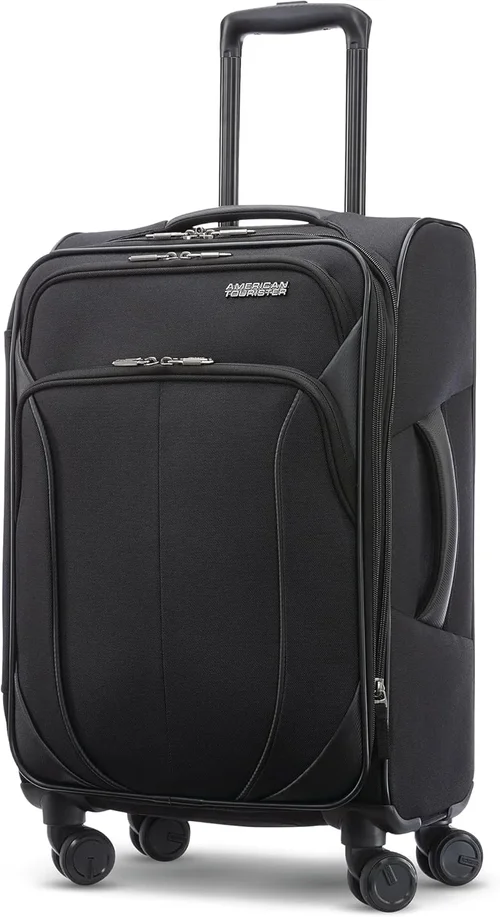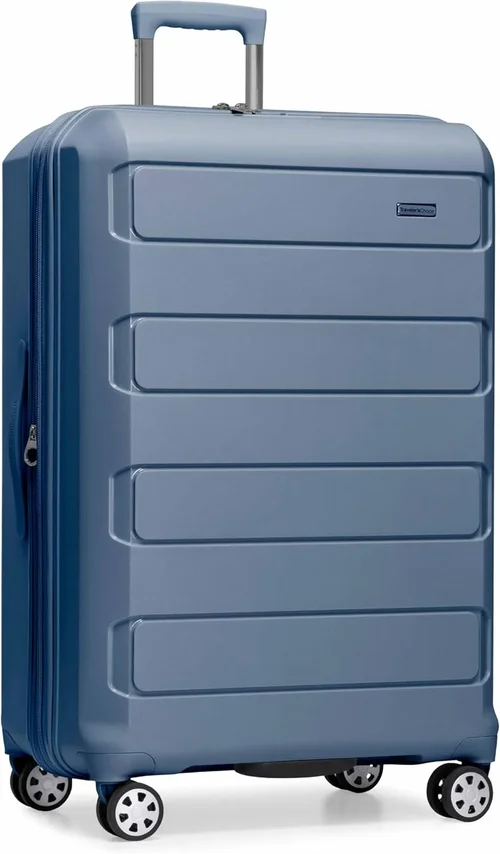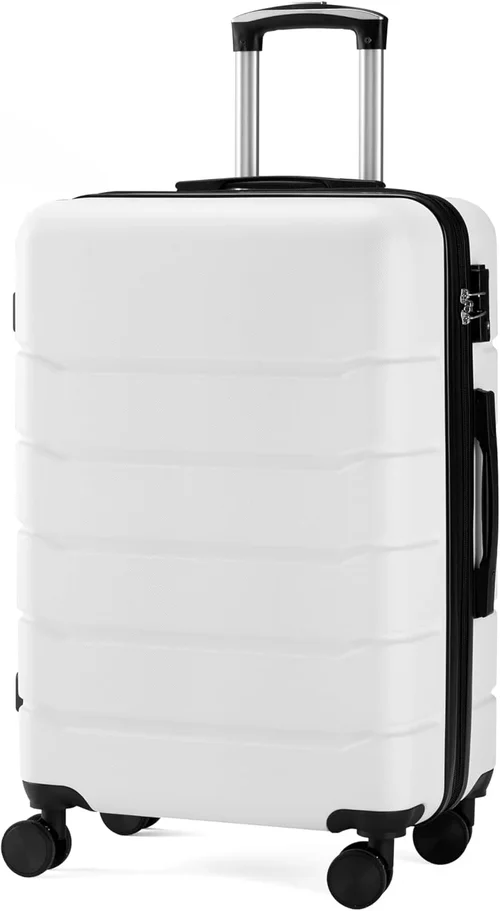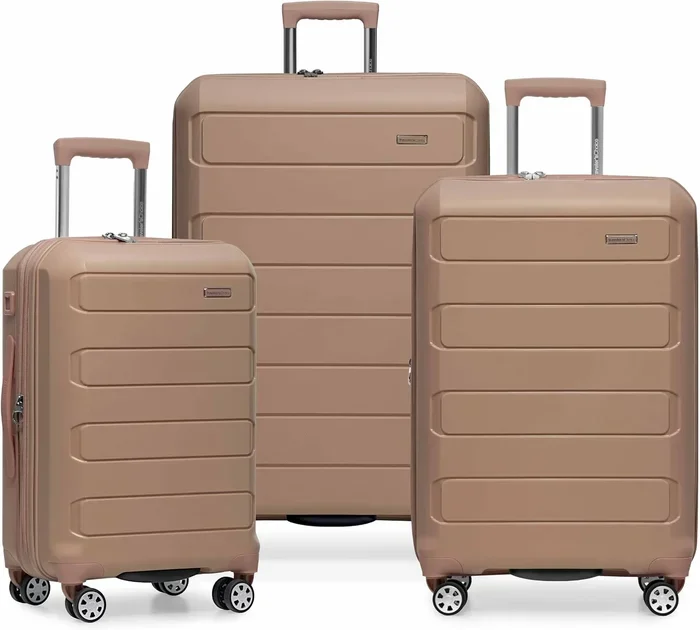
Shopping for luggage used to feel straightforward. You picked a size, chose a color, and hoped the zipper didn’t bust before you reached baggage claim. Today, the market is flooded with options that range from ultra-light tech fabrics to heavy-duty aluminum shells, and somewhere in the middle sits a charming category that refuses to go out of style: the retro spinner set. The Collins 3-piece expandable retro spinner luggage set has been generating buzz for its blend of vintage aesthetics and modern maneuverability, but buying a three-piece set is a commitment. You are not just buying a bag; you are investing in a travel system that needs to survive conveyor belts, overhead bins, and the trunk of a rental car for years to come.
This guide exists because the “look” of a suitcase only tells half the story. The real value lies in the wheel housing construction, the handle lock mechanism, the quality of the expansion gusset, and the warranty fine print that nobody reads until a wheel falls off in Terminal C. We are going to peel back the marketing layer and look at the engineering, the materials, and the practical reality of living with a three-piece retro set. Whether you are a weekend warrior hitting regional flights or a family planning a two-week international trek, understanding what separates a decorative prop from a reliable travel companion will save you money and frustration.
Over the next several sections, we will break down the critical factors that determine if this specific set—or any competitor in its class—deserves a spot in your closet. We will compare the different types of construction you will encounter, highlight the expensive mistakes travelers make when seduced by aesthetics, and give you a clear budget framework so you know exactly what you should be paying for quality. By the end, you will have the confidence to click “buy” or walk away, knowing exactly what you need.
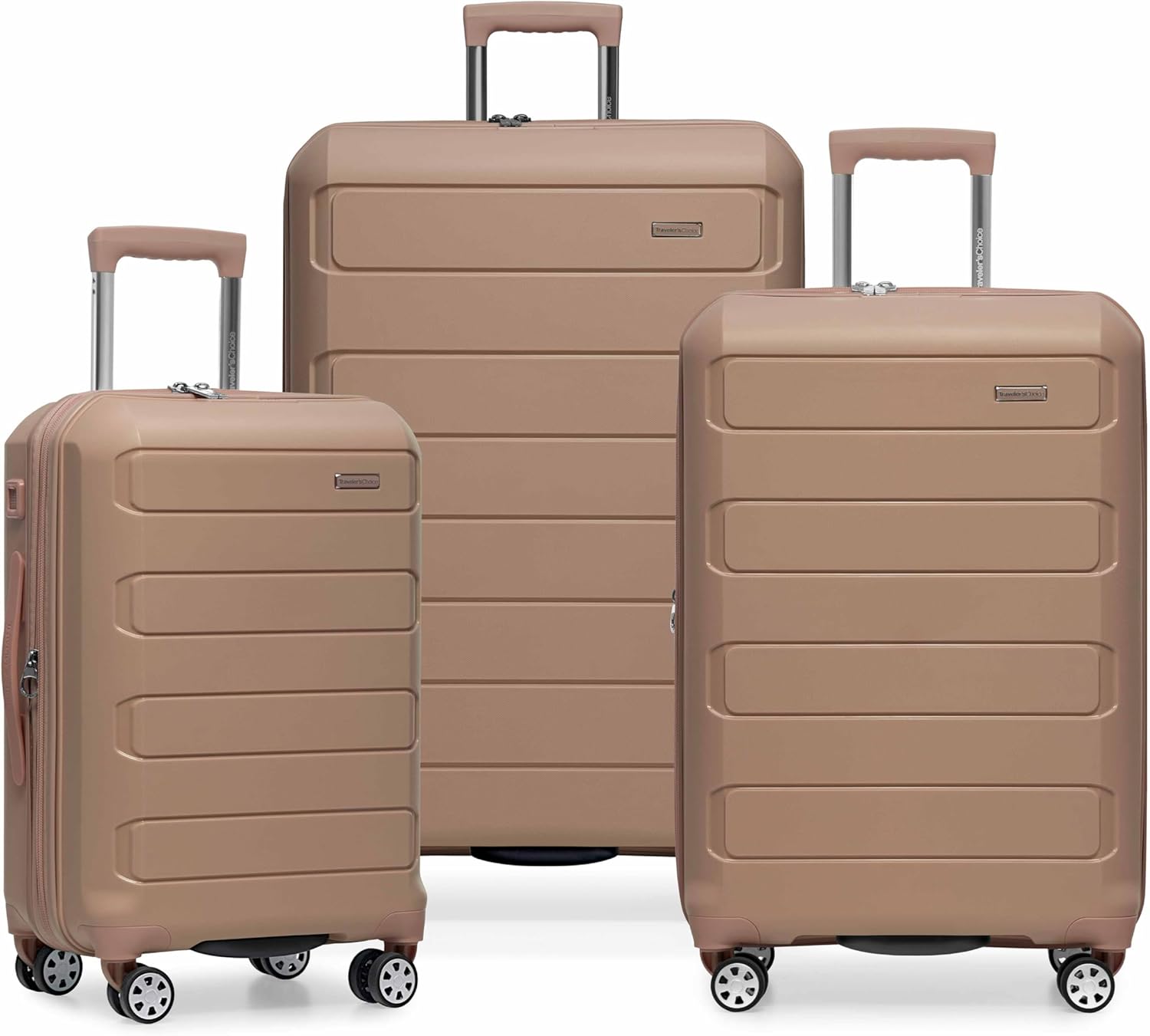
What to Look for When Buying Buying Guide
1. Shell Material and Impact Resistance
The very first thing you need to understand about any hardside luggage—retro or not—is what the shell is actually made of. The Collins retro line typically utilizes ABS (Acrylonitrile Butadiene Styrene) or a polycarbonate/ABS blend. This distinction is not marketing fluff; it dictates how the bag handles a tumble down a baggage carousel. Pure ABS is rigid and affordable, but it is brittle in cold temperatures. A hard check-in on a winter tarmac can result in a spiderweb crack rather than a dent. Polycarbonate, by contrast, is the gold standard for a reason: it flexes under impact and snaps back to shape. It is lighter and significantly more durable.
When evaluating this set, check the product specifications for the exact blend. A “polycarbonate composite” often means a thin layer of polycarbonate over an ABS core. That is perfectly fine for most leisure travelers, but if you check bags frequently or pack heavy, you want a higher percentage of polycarbonate. Press on the shell with your thumb. Does it have a little give, or does it feel like a hard plastic toy? That tactile test tells you more than the product description. Remember, a cracked shell on a checked bag usually means the contents are compromised—water, dirt, or theft becomes a real risk.
2. Spinner Wheel Engineering and Replaceability
This is the single most common failure point on modern luggage. The “spinner” label means four wheels that rotate 360 degrees, allowing you to push the bag beside you rather than dragging it behind. On a retro set, the wheels are often recessed or styled to look like vintage casters, but the internal mechanism is what matters. You are looking for double-spinner wheels (two wheels per corner) rather than single wheels. Double wheels distribute the load better, roll smoother over cracks in pavement, and are far more stable when the bag is fully packed and heavy.
Equally critical: are the wheels riveted or screwed on? Riveted wheels are permanent; if a bearing seizes or a wheel cracks, the bag is effectively trash unless you have a very specialized repair shop. Screwed-on wheels can be replaced at home with a Phillips head screwdriver and a $15 part from the manufacturer. Check the Collins warranty page or manual—brands that sell replacement wheel kits are signaling confidence in their product longevity. Also, spin the wheels in the store (or watch close-up videos). They should spin freely for several seconds with a light flick. Grinding, wobbling, or stiff rotation out of the box indicates poor bearing quality that will only get worse under 50 pounds of clothes.
3. Telescoping Handle System: Stages, Lock, and Rigidity
The handle is your primary interface with the bag. A cheap handle develops “play”—that annoying side-to-side wobble that makes the bag veer left when you push straight. On a three-piece set, you are getting three handles, so consistency matters. Look for a multi-stage handle (usually three stops) that locks positively at each height with an audible click. Test the lock mechanism: push down hard on the extended handle. Does it collapse? If it slips under downward pressure, it will collapse when you hit a curb or try to lift the bag into an overhead bin by the handle.
The handle tubes themselves should be aluminum or high-grade steel, not thin plastic. On the Collins retro models, the handle often features a retro-styled grip (leatherette or shaped plastic). Ensure the grip is comfortable for your hand size; you will be holding it for long walks through terminals. A handle that digs into your palm after ten minutes turns a pleasant stroll into an ordeal. Also, check the handle housing inside the bag. It should be reinforced with a plastic or metal frame that distributes stress to the shell, not just screwed into the thin interior liner.
4. Expansion Gusset Design and Capacity Management
The “expandable” feature is a major selling point, but not all expansion zippers are created equal. The gusset is the folded panel of fabric that unfolds when you unzip the expansion zipper, adding typically 1.5 to 2.5 inches of packing depth. On a quality set, the expansion zipper is a heavy-duty #10 coil zipper (larger teeth) with a fabric guard behind it to prevent the liner from snagging. Cheap sets use standard #8 zippers that separate under the tension of an overstuffed bag.
Here is the reality check: expanding a spinner bag changes its center of gravity. A 28-inch checked bag expanded to max capacity becomes top-heavy and prone to tipping over when you let go of the handle. The Collins set typically offers expansion on the two larger pieces (the 24-inch and 28-inch), while the carry-on (usually 20-inch) remains fixed to comply with airline sizing. This is smart design. Use expansion strategically: pack the bag flat, zip the main compartment, then unzip the expansion only for the return trip when you have souvenirs. Never check a fully expanded bag if you can avoid it—the stress on the zipper and shell seams is immense.
5. Interior Organization: Dividers, Straps, and Pockets
You don’t realize how much you miss a good divider until you open your bag at the hotel and find your shoes have migrated onto your clean shirts. The interior of the Collins set usually features a full-zip divider panel on one side and compression straps on the other. The divider panel should have a large mesh pocket for toiletries or electronics cables. The compression straps (ideally two per side, crossing in an X-pattern) are essential for keeping clothes compressed so they don’t shift and wrinkle.
Look for a “wet pocket” or a designated compartment with a water-resistant lining for swimsuits or toiletries. On the carry-on, a padded laptop sleeve or a quick-access front pocket (if it’s a hybrid design) adds versatility. However, on a strict hardside retro set, the interior is usually open-plan. If you are an organizer, plan to bring your own packing cubes. The liner fabric should be ripstop nylon or polyester—something that won’t snag on Velcro or zippers. A cheap, papery liner tears the first time you pack a pair of boots, leaving loose threads to tangle in the zipper track forever.
6. Lock Security: TSA Standards and Integration
Every checked bag needs a TSA-accepted lock. The Collins retro sets typically feature a recessed, side-mounted combination lock integrated into the shell. This is superior to a padlock hanging off a zipper pull because it cannot be snagged by conveyor belts. The lock controls the two main zipper pulls, securing the entire perimeter. Verify that the lock is Travel Sentry approved (look for the red diamond logo). This allows TSA agents to open and relock your bag with a master key without cutting your lock.
Test the combination mechanism before you travel. Set a unique code (not 0-0-0) and practice opening it five times in a row. If the dials feel sticky or the release button requires excessive force, lubricate it with a graphite pencil lead (not oil, which attracts dust). A jammed lock at the airport is a nightmare. Also, ensure the zipper pulls have large enough holes for the lock shackle to pass through smoothly. Some retro designs prioritize aesthetics over function here, using tiny decorative pulls that make locking fiddly with cold fingers.
7. Weight and Airline Compliance
Weight is the silent budget killer. Most US domestic airlines allow 50 lbs for checked bags; international carriers often drop to 23 kg (50.7 lbs) or even 20 kg (44 lbs) for economy. A heavy empty bag eats into your packing allowance fast. A quality 28-inch spinner should weigh between 9 and 11 pounds. A 24-inch around 7 to 9 pounds. A 20-inch carry-on ideally under 7 pounds. The Collins retro sets, with their thicker shells and decorative hardware, can run slightly heavier than minimalist polycarbonate competitors. Weigh the empty bags when they arrive.
Carry-on sizing is a minefield. The “20-inch” measurement usually includes wheels and handles. The actual packing cavity is smaller. Major US carriers (Delta, United, American) generally allow 22 x 14 x 9 inches. Budget airlines (Spirit, Frontier, Allegiant) and many European carriers (Ryanair, EasyJet) are stricter. Measure the Collins carry-on yourself: height x width x depth including wheels. If it exceeds 22 inches tall, you risk gate-check fees on a full flight. The retro styling sometimes adds curved corners or bumpers that push the dimensions over the limit. Know your airline before you rely on the carry-on.
8. Warranty, Customer Service, and Parts Availability
A warranty is only as good as the company backing it. “Lifetime warranty” sounds impressive, but read the fine print. Does it cover “defects in materials and workmanship” only? That excludes airline damage, which is 90% of luggage claims. Does it require you to ship the 28-pound bag to a repair center at your cost? That can cost $40+ in shipping. The best warranties (like Briggs & Riley or Travelpro) offer “worry-free” coverage that includes airline damage for the first few years and have authorized repair centers in major cities.
For the Collins set, check if they have a US-based claims department and if they stock replacement parts (wheels, handles, zipper pulls) for at least 5-10 years. A retro design often uses proprietary wheel shapes or handle grips that you cannot buy at a luggage repair shop. If the manufacturer doesn’t sell parts directly, a broken wheel means a retired suitcase. Register your product immediately upon purchase—take photos of the serial number tags (usually inside the liner pocket) and save the receipt. This speeds up any future claim exponentially.
Different Types of Buying Guide

Common Buying Mistakes to Avoid
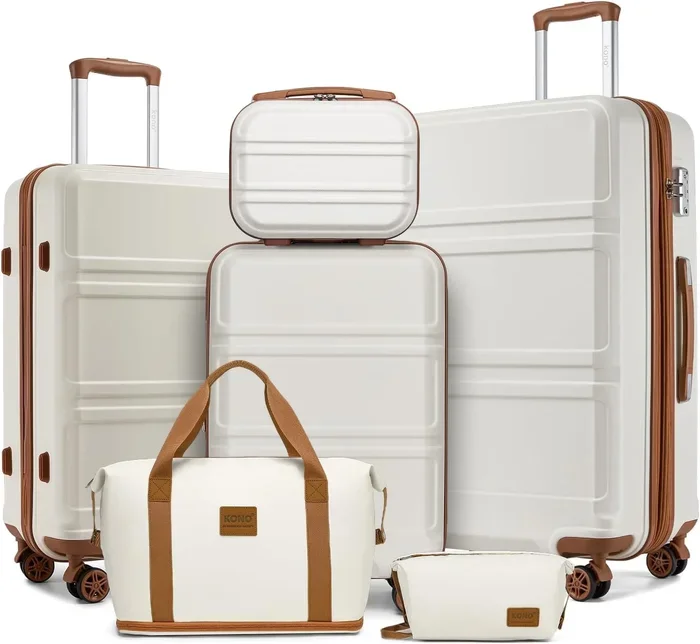
❌ Mistake: Buying Based Solely on Aesthetics
Why it’s bad: The retro look is undeniably charming—mint green, powder blue, cream with leather accents. It looks amazing on Instagram and in your hotel room. But a pretty shell hiding brittle plastic, wobbly wheels, and a handle that jams is a liability, not an asset. You will hate that bag the first time a wheel falls off in the rain while you’re running for a connection.
What to do instead: Treat the aesthetic as a filter, not the decision. Narrow your search to the styles you love, then apply the technical criteria (wheel type, shell material, handle rigidity) ruthlessly. The Collins set balances both well, but verify the specs match the look.
❌ Mistake: Ignoring the “Personal Item” Reality
Why it’s bad: A three-piece set gives you a carry-on, a medium checked, and a large checked bag. It does not give you a backpack, tote, or under-seat bag. Airlines allow one carry-on (overhead) and one personal item (under seat). If you buy the set and don’t have a quality backpack or weekender, you are forced to stuff your laptop, medications, and snacks into the carry-on, making it overweight and disorganized.
What to do instead: Budget for a matching or complementary personal item. A slim backpack that slides over the spinner handle (via a trolley sleeve) is the gold standard. This keeps your hands free and your essentials accessible.
❌ Mistake: Assuming “Expandable” Means “Pack More For Free”
Why it’s bad: Expansion adds volume, not weight allowance. An expanded 28-inch bag can easily hold 70+ lbs of stuff. You will face hefty overweight fees ($100-$200 per bag) at check-in. The expansion zipper also creates a stress point; an overstuffed expanded bag is a zipper blowout waiting to happen.
What to do instead: Use a luggage scale. Pack the bag flat first. Only expand if you are well under the weight limit. Think of expansion as “return trip flexibility,” not “departure capacity.”
❌ Mistake: Not Checking Carry-On Dimensions Against YOUR Airlines
Why it’s bad: The product title says “20-inch Carry-On.” The actual external dimensions with wheels might be 22.5 inches. On a full United flight, the gate agent will size it, it will fail, and you pay $60 to gate-check a bag you paid $150 for.
What to do instead: Measure the bag yourself when it arrives. Compare to the strictest airline you fly. If it’s borderline, keep the tags on and return it. Do not gamble.
❌ Mistake: Overlooking the “Set” Trap (Buying Sizes You Don’t Need)
Why it’s bad: A 3-piece set is a great value if you use all three pieces. If you only ever take carry-ons and one checked bag, the 28-inch monster sits in your attic gathering dust for a decade. You paid for plastic you don’t use, and you have to store it.
What to do instead: Audit your last three years of travel. If you never checked a large bag, buy a 2-piece set (carry-on + medium) or individual pieces. Many retailers sell the Collins pieces separately.
❌ Mistake: Skipping the “Shake Test” on Arrival
Why it’s bad: Manufacturing defects happen. A misaligned wheel, a handle that doesn’t lock, a zipper track with a burr. If you don’t test it immediately, you discover the flaw on your trip, miles from support.
What to do instead: Open the box. Extend the handle fully. Lock it. Shake the bag vigorously. Roll it on carpet and hard floor. Listen for rattles. Zip every zipper fully. Check the lock. Do this for all three pieces. Return immediately if anything feels off.
❌ Mistake: Forgetting to Register the Warranty
Why it’s bad: Most warranties require registration within 30-90 days. If you skip this, you may lose coverage for a handle failure two years later. The receipt fades, the email gets deleted, and you are out of luck.
What to do instead: Register on your phone while the box is open. Take a photo of the serial number sticker (inside the liner) and the receipt. Save to a “Luggage” folder in your cloud storage. Takes 3 minutes. Saves hundreds later.
Budget Guidelines: How Much Should You Spend?
Entry-Level ($100 – $180 for 3-Piece Set)
At this price point, you are almost exclusively looking at pure ABS shells, single-spinner wheels, riveted construction, and basic two-stage handles. The liners are thin, the zippers are #8 coil, and the warranty is typically 1-2 years limited. Brands here include generic Amazon brands (Amazon Basics, Coolife, Merax) and entry-level lines from known brands.
What to expect: The bags will look fine in photos. They will survive 2-3 trips a year if handled gently. They will not survive being thrown by baggage handlers regularly. Wheels will develop wobble within a year. The handle may get sticky. The finish scratches easily. If you travel once a year for a week, this is a rational purchase. If you travel monthly, you will replace the set in 18 months, costing more long-term.
Mid-Range / Sweet Spot ($180 – $350 for 3-Piece Set) — The Collins Zone
This is where the Collins 3-piece retro set lives. You get polycarbonate/ABS blend shells (or full polycarbonate on sale), double-spinner wheels (often replaceable), three-stage aluminum handles, #10 expansion zippers, TSA locks, and 5-10 year warranties. The retro detailing (faux leather handles, corner guards, color-matched wheels) adds cost but also personality.
What to expect: This is the “buy it once for 5-8 years” tier. The wheels roll silently. The handle doesn’t wobble. The shell flexes instead of cracking. The interior organization is thoughtful. The finish resists scuffs better. Customer service is usually responsive (email/phone). Replacement parts are often available. This is the tier I recommend for 90% of leisure travelers. You get 80% of the performance of premium bags for 40% of the price.
Premium ($350 – $600+ for 3-Piece Set)
Here you find brands like Travelpro Platinum Elite, Samsonite Omni PC/Winfield 3, Delsey Chatelet, Briggs & Riley Baseline (though Briggs is often sold as separates). Materials are 100% virgin polycarbonate or proprietary blends (Makrolon, Curv). Wheels are precision Japanese Hinomoto or similar silent spinners. Handles are aircraft-grade aluminum with ergonomic grips. Warranties are often lifetime, covering airline damage. Interiors feature premium suede-like liners, removable laundry bags, shoe pockets, USB ports (sometimes).
What to expect: These bags feel different. Heft one; it feels solid, not hollow. The zipper glide is buttery. The wheel roll is effortless. They are lighter for their size. If you fly 20+ times a year, check bags every trip, and hate replacing gear, this tier pays for itself in peace of mind and avoided overweight fees (lighter bag = more packing weight). The Collins retro set at the top of its range brushes this tier but usually lacks the “airline damage” warranty coverage.
Luxury / Heritage ($800 – $2000+ for 3-Piece)
This is Rimowa, Tumi (high end), Globe-Trotter, Briggs & Riley Torq. You are paying for brand heritage, hand-assembled construction, exotic materials (aluminum-magnesium alloy, carbon fiber, vulcanized fiberboard), and status signaling. The Collins retro aesthetic actually draws inspiration from Globe-Trotter’s vintage vulcanized fiber cases. These are buy-it-for-life items with transferable warranties and dedicated concierge repair services.
What to expect: Incredible durability, but also weight (aluminum is heavy) or extreme cost. They dent rather than crack (aluminum) or are impossibly light (carbon). For most people, this is an emotional purchase, not a practical one. If you have to ask if it’s worth it, it probably isn’t for your needs.
Expert Tips for Getting the Best Deal
1. Time Your Purchase to the “Luggage Sales Calendar.” Luggage goes on deep discount at predictable times: January (post-holiday clearance), May (pre-summer travel prep), July (Amazon Prime Day / summer clearance), and November (Black Friday / Cyber Monday). The deepest discounts on current-year models are usually Black Friday and July. January is best for last-year’s colors (which is perfect for retro styles—colors don’t go out of fashion). Avoid buying in March/April or June at full price right before summer.
2. Check “Open Box” and “Refurbished” at Major Retailers. Best Buy, Target, Walmart, and Amazon Warehouse often have returned luggage sets with damaged boxes but perfect bags. Returns are high for luggage because people misjudge size. You can save 20-40% on a Collins set this way. Inspect immediately upon delivery (do the shake test). Most retain full manufacturer warranty if sold by the retailer.
3. Buy Individual Pieces If You Don’t Need Three. Do the math. Sometimes buying the 20-inch and 24-inch separately costs the same as the 3-piece set, but you avoid storing the 28-inch. Conversely, if you need two 24-inch bags for a family, buying two mediums might be cheaper than a 3-piece set plus a separate medium. Mix and match.
4. Use Price Tracking Tools. CamelCamelCamel (for Amazon) or Honey/Capital One Shopping (browser extensions) show price history. The Collins set often fluctuates $30-50 week to week. Set a drop alert for your target price. Don’t buy the first price you see.
5. Leverage Credit Card Purchase Protection. Many premium credit cards (Chase Sapphire, Amex Platinum, Citi Premier) offer purchase protection covering damage/theft for 90-120 days and extended warranty matching (adds 1 year to manufacturer warranty). Pay with the right card. It’s free insurance.
6. Check Manufacturer Direct for “Scratch & Dent” or Outlet Sections. Brands like Samsonite, Travelpro, and Delsey have outlet sites. Collins may have a “Factory Seconds” page. Cosmetic blemishes (tiny scuff, off-center logo) that don’t affect function can save 30-50%. Great for checked bags that get beat up anyway.
7. Bundle with a Personal Item Backpack. Some retailers offer “Buy the 3-piece set, get 30% off a backpack” deals. Since you need a personal item anyway (see Mistake #2), this is a smart bundle. Look for a backpack with a trolley sleeve (pass-through strap) so it stacks securely on the spinner handle.
8. Read the 2-Star and 3-Star Reviews, Not Just 5 and 1. 5-star reviews are often “looks cute!” written 2 hours after delivery. 1-star are often “arrived damaged” (shipping issue) or user error. 2-3 star reviews from verified purchasers 6+ months out tell the real story: “Wheel bearing failed at 8 months,” “Handle lock slipped,” “Expansion zipper separated.” These are gold.

Frequently Asked Questions
Q: Is the Collins 3-piece retro spinner set carry-on compliant with all airlines?
A: The 20-inch carry-on is designed to meet most major US domestic airline limits (22 x 14 x 9 inches including wheels/handles). However, budget carriers (Spirit, Frontier, Allegiant) and many international low-cost airlines (Ryanair, EasyJet, Vueling) have stricter limits, sometimes as small as 21.5 x 15.5 x 9.5 inches or weight limits as low as 7kg (15 lbs) for the carry-on combined with your personal item. Measure your specific unit upon arrival and compare to the strictest airline you fly. If you fly basic economy on a budget carrier frequently, this carry-on may be too large.
Q: Can the wheels be replaced if they break?
A: Most current Collins retro models feature screwed-on double-spinner wheels, which are user-replaceable. You need to order the correct replacement wheel kit from the manufacturer or an authorized parts dealer (often available on their website or Amazon). Do not assume standard hardware store wheels will fit—the axle diameter and mounting hole pattern are proprietary. Keep your model number (found on the warranty card or inside liner tag) handy when ordering. If your specific model has riveted wheels, replacement requires drilling and riveting tools—best left to a luggage repair shop.
Q: Does the retro faux-leather handle grip wear out or get sticky?
A: High-quality PU leatherette (used on better Collins models) is durable and resistant to the “sticky melt” that plagued cheap vinyl grips in hot cars. However, prolonged exposure to extreme heat (trunk of a car in Arizona summer) or harsh chemicals (hand sanitizer with high alcohol content, bug spray) can degrade the coating over years. Wipe grips down with a damp cloth and mild soap occasionally. Avoid leaving bags in hot cars for days. If the grip does peel years later, it’s usually cosmetic; the metal handle tube underneath remains functional.
Q: How much does the 3-piece set weigh altogether?
A: Typical weights for a polycarbonate/ABS retro set: 20-inch carry-on ~6.5 – 7.5 lbs; 24-inch medium ~8.5 – 9.5 lbs; 28-inch large ~10.5 – 11.5 lbs. Total set weight: ~25 – 28 lbs. This is 2-4 lbs heavier per piece than ultra-light pure polycarbonate sets (like Samsonite Freeform) due to thicker shells, decorative corner guards, and metal hardware. Factor this into your packing weight budget.
Q: Can I stack all three bags for storage?
A: Yes, they are designed to nest. The 20-inch fits inside the 24-inch, which fits inside the 28-inch. This is a major advantage of buying a matched set over mixing brands. Ensure the handles are fully retracted and the wheels are aligned. Some users place a thin towel between shells to prevent scuffing during long-term storage. The nested footprint is roughly the size of the largest bag.
Q: What is the difference between the Collins “Retro” and “Modern” spinner lines?
A: The “Retro” line features design cues from mid-century luggage: rounded corners, faux leather accents (top/side carry handles, handle grip), color-matched or contrasting corner protectors, and often a matte or textured finish rather than high gloss. The “Modern” lines prioritize minimalism: sharp corners, integrated handles, glossy finishes, lighter weight. Internally, the frame, wheels, and handle systems are often shared across lines. You are paying for the aesthetic tooling on the Retro line.
Q: Is hardside luggage better than softside for checked bags?
A: For checked bags, hardside (like the Collins set) generally wins on protection. The rigid shell prevents crushing of fragile items (souvenirs, electronics, liquids) and resists water intrusion better than fabric. It also slides off conveyor belts more smoothly, reducing snag tears. Softside wins on flexibility (squeezing into tight car trunks/overhead bins), external pockets for last-minute items, and slightly lighter weight. If you check bags, hardside is the safer bet for contents. If you only carry-on, softside offers more packing flexibility.
Q: How do I clean the textured retro finish?
A: The matte/textured finish on the Collins retro shells hides scratches better than gloss but can hold dirt in the texture. Do not use abrasive cleaners (Magic Erasers, scouring pads) or solvents (acetone, Goo Gone). Use warm water, mild dish soap, and a soft microfiber cloth or soft-bristle brush (old toothbrush). Rinse with a damp cloth. Dry thoroughly. For scuff marks from other luggage, a small amount of baking soda paste (baking soda + water) on a cloth, gently rubbed, often lifts the transfer without damaging the finish. Test on a hidden spot first.
Q: Does the set come with a luggage tag or identifier?
A: Most Collins sets include a matching leatherette luggage tag with a privacy flap for the address card. It attaches via a leather strap to the top carry handle. It’s a nice touch but basic. I strongly recommend adding a distinctive, high-visibility luggage belt/strap (bright color/pattern) and an Apple AirTag / Tile / Samsung SmartTag inside each bag. The included tag is easily missed on a carousel full of similar bags.
Q: What if the TSA lock mechanism jams or I forget the combination?
A: If you forget the combination, there is no master reset for the user. You must try every combination (000-999) systematically—it takes 20-30 minutes. Start at 000 and work up. If the mechanism jams (button won’t depress, shackle won’t release), do not force it. Apply graphite lubricant (pencil lead powder) into the dial gaps and shackle hole. Work the dials gently. If it remains jammed, contact Collins warranty support. They may authorize a lock replacement or provide a drill-out procedure (last resort). Always set a memorable but non-obvious code (not birth year, not 1234) and store it in your phone’s secure notes.
Our Final Recommendations
Best for Budget-Conscious Buyers: Collins 3-Piece Retro Set (Entry Colorways / Previous Season)
If your budget is firm around $200, hunt for last season’s colors (often mint, lavender, or yellow) on clearance. You get the same polycarbonate/ABS shell, double wheels, and TSA lock as the current colors. The aesthetic is timeless—retro doesn’t follow seasonal trends. You sacrifice nothing functional. Check Amazon Warehouse, Kohl’s clearance, or the brand’s outlet site. This is the highest “value per dollar” in the retro category.
Best Overall Value: Collins 3-Piece Retro Set (Current Core Colors: Navy, Sage, Cream, Black)
At the standard $250-$300 price point, this is the sweet spot. You get current production, full warranty, all three sizes, and the color selection fits any wardrobe. The navy and sage are particularly good at hiding travel scuffs. The cream/white looks stunning but shows every mark—buy this only if you accept the patina or plan to clean it religiously. This set covers 95% of travel scenarios (weekend carry-on only, weeklong checked, two-week family checked). The nesting storage solves the closet space issue.
Best Premium Option: Travelpro Platinum Elite 3-Piece Set (or Delsey Chatelet Air 3-Piece)
If your budget stretches to $500-$600 and you fly frequently (10+ trips/year), step up. You get 100% polycarbonate (lighter, tougher), MagnaTrac/ Hinomoto wheels (silent, buttery), precision glide handles, “wet pockets,” suede liners, and crucially—warranties that cover airline damage. The Delsey Chatelet Air even mimics the retro aesthetic (leather accents, chrome details) with premium internals. You are paying for less weight, smoother roll, and a warranty that actually covers the reality of checked baggage handling.
Best for Beginners / Infrequent Travelers: Amazon Basics / Coolife 3-Piece Hardside Set
If you travel once a year, drive more than fly, or are buying for a teenager/college student, spend $120-$150 on a basic ABS set. It will work fine for gentle use. Don’t overthink it. The wheels are single-spinner, the handle is two-stage, the shell might crack if thrown hard—but for a bag that spends 360 days in a closet, it’s the rational choice. Upgrade later if travel frequency increases.
Best for Advanced Users / Heavy Packers: Mix-and-Match Individual Pieces
Experienced travelers rarely use a matched 3-piece set identically. They might want a 20-inch carry-on (Collins retro for style), a 24-inch checked (Travelpro for durability/weight), and a 28-inch (only if needed, maybe a cheap one for dirty laundry/ski gear). Or they want a 21-inch international carry-on (smaller than 20-inch domestic) plus a 26-inch. Buying pieces individually lets you optimize each slot. The Collins 20-inch retro carry-on is a standout piece that pairs well with any checked bag.
Conclusion: Making the Right Choice
Buying a luggage set is one of those rare purchases that sits at the intersection of utility, self-expression, and logistics. The Collins 3-piece expandable retro spinner set occupies a compelling niche: it refuses to treat luggage as purely disposable appliance, instead offering a travel companion with personality. But personality without durability is just a prop. We’ve walked through the shell materials that protect your belongings, the wheel systems that save your shoulder, the handles that won’t betray you on a sprint to the gate, and the expansion zippers that demand respect.
The market rewards informed buyers. The traveler who understands the difference between ABS and polycarbonate, who checks wheel attachments before buying, who measures their carry-on against their most restrictive airline—that traveler buys once and travels well for years. The traveler seduced solely by a mint-green photo on Instagram buys twice: once for the look, once for the replacement when the handle snaps.
Your next step is simple. Define your travel reality: How often? How far? Carry-on or checked? What’s your budget? Match that reality to the budget tier that fits. If you land in that $180-$350 sweet spot, the Collins retro set is a genuinely strong contender—it delivers the aesthetic you want with the engineering you need. Order from a retailer with easy returns. Do the shake test the day it arrives. Register the warranty. Pack a bag, roll it down your hallway, and feel the confidence of a choice well made.
Safe travels. The world is waiting, and now your luggage is ready for it.