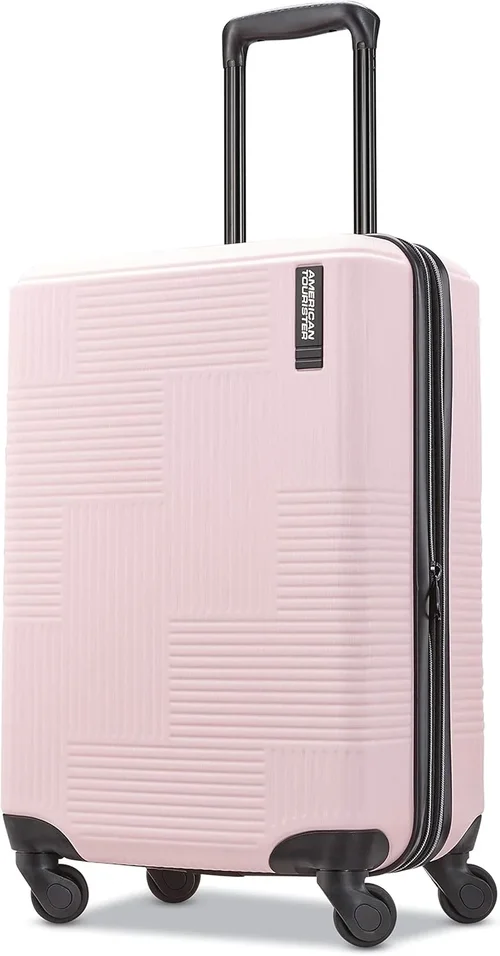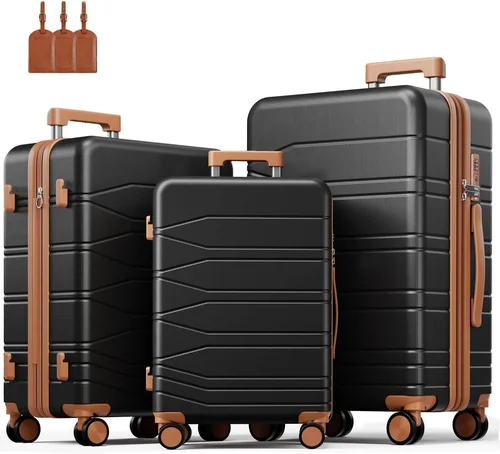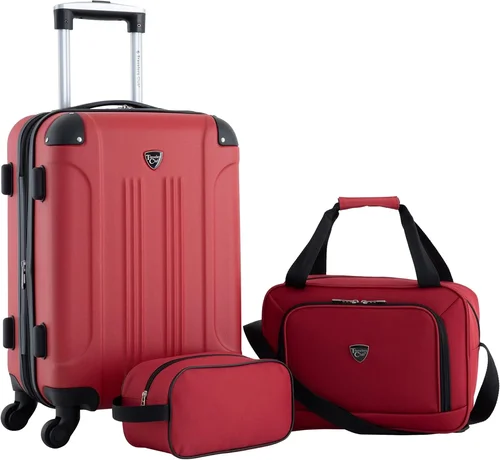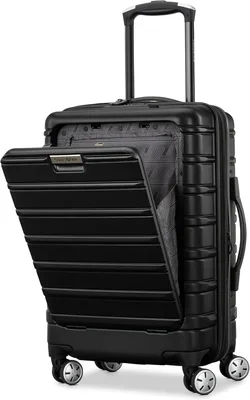
Choosing an expandable carry‑on with a front pocket can feel like navigating a maze of specs, brands, and price tags. As a shopping consultant who has helped hundreds of travelers find the perfect bag, I know that the right luggage does more than hold clothes — it protects your essentials, speeds you through security, and survives the rough handling of overhead bins and baggage carts. This guide distills years of hands‑on testing, customer feedback, and industry research into a clear roadmap so you can buy with confidence and avoid costly mistakes.
In the next sections you will learn the six most critical factors to evaluate, the main categories of expandable carry‑ons on the market, common pitfalls that trip up even seasoned flyers, a realistic budget breakdown, insider tips for snagging the best deal, and answers to the questions I hear most often. By the end you’ll have a personalized checklist that matches your travel style, frequency, and wallet.
The market today is split between hard‑shell polycarbonate, soft‑shell ballistic nylon, and hybrid designs that blend both. Front‑pocket configurations range from a simple zippered sleeve to a full‑size laptop compartment with RFID‑blocking organization. Prices swing from under $80 for entry‑level models to well over $500 for premium brands with lifetime warranties. Understanding where your needs intersect with these options is the first step to a purchase you’ll love for years.

What to Look for When Buying Buying Guide
1. Size Compliance and Expandability Range
Airline carry‑on limits are the non‑negotiable starting point. Most U.S. carriers allow 22 × 14 × 9 inches (including wheels and handles), while many European airlines shrink that to 21.5 × 15.5 × 9 inches. An expandable bag typically adds 1.5–2.5 inches of depth when the zipper is released. Look for a model that stays within the strictest limit when unexpanded, yet gives you the extra volume for a weekend trip or a souvenir haul. Measure the external dimensions yourself — manufacturers sometimes quote interior space only.
2. Front Pocket Layout and Accessibility
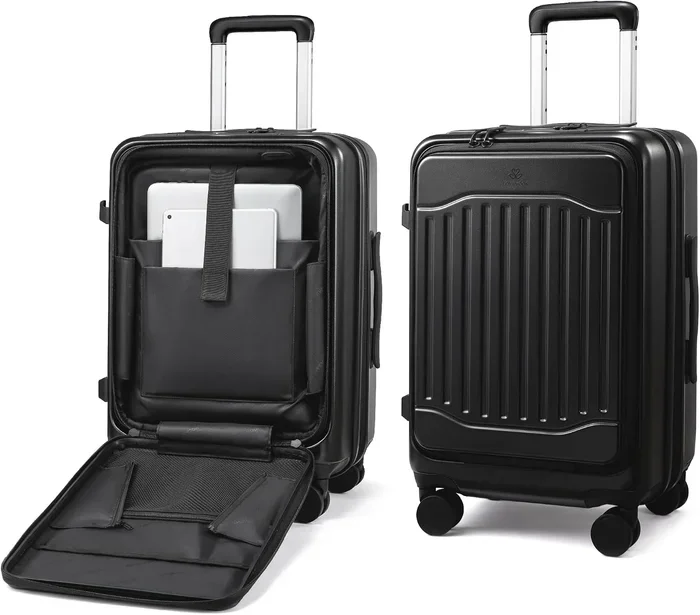
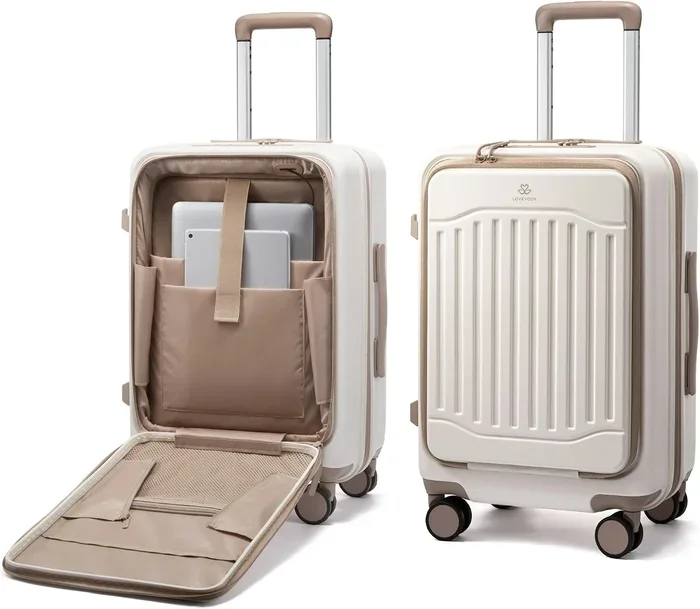
The front pocket is the hallmark of this category. Decide what you need to reach instantly: a 15‑inch laptop, a tablet, travel documents, or a quick‑grab snack. A dedicated padded laptop sleeve with a TSA‑friendly lay‑flat design saves you from unpacking at security. RFID‑blocking card slots protect contactless cards. Some bags add a shallow “quick‑access” zip for boarding passes and phone, while others integrate a full‑size organizer panel with pen loops, cable pockets, and a key fob. Test the pocket’s opening angle — a 180‑degree clamshell opening is far easier to load than a narrow top zip.
3. Build Materials and Durability
Hard‑shell polycarbonate or polypropylene shells resist dents and water but can crack under extreme impact. Soft‑shell ballistic nylon (typically 1680D) offers abrasion resistance and a bit of give, which helps absorb shocks. Hybrid models combine a polycarbonate frame with nylon panels for the best of both worlds. Check the denier rating, seam reinforcement, and whether corners are reinforced with molded bumpers. A high‑quality YKK or SBS zipper with self‑healing teeth is a durability indicator that often outweighs brand name alone.
4. Wheel System and Maneuverability
Four double‑spinner wheels (360° rotation) are now standard, but wheel diameter matters. Larger 3‑inch wheels roll over carpet, cobblestones, and airport thresholds more smoothly than 2‑inch versions. Look for recessed wheel housings — they protect the wheels from being sheared off in tight overhead bins. Precision ball bearings and a sturdy axle reduce wobble. If you frequently navigate narrow aisles, a “push‑pull” handle with a comfortable grip and multiple lock positions reduces wrist strain.
5. Handle Mechanism and Ergonomics
The telescopic handle should extend in at least three height settings (usually 38, 41, 44 inches) to suit different users. Aluminum alloy tubes are lighter and stronger than steel. A contoured, rubberized grip prevents slipping when your hands are sweaty. Test the handle’s lock — a positive click at each stage prevents accidental collapse. Some premium bags add a secondary top carry handle with a padded grip for lifting into overhead bins.
6. Interior Organization and Compression
Inside, you want a balance of open space and structured compartments. A full‑length zippered divider creates two packing zones — ideal for separating clean and dirty clothes. Compression straps (ideally elasticized) keep contents from shifting and let you squeeze the bag down when the expandable zipper is closed. Mesh pockets on the divider are perfect for toiletries or electronics accessories. Some models include a removable packing cube or a wet/dry pocket for swimwear.
7. Weight and Carry‑On Allowance Impact
Every ounce counts when airlines enforce strict weight limits (often 15–22 lb for carry‑on). A lightweight polycarbonate shell can weigh 5.5 lb, while a heavily featured ballistic nylon bag may hit 7.5 lb before you pack. Subtract the bag’s tare weight from your airline’s allowance to see how much payload you truly have. If you’re a frequent flyer on low‑cost carriers, prioritize sub‑6‑lb models even if they sacrifice a few organizational bells.
8. Warranty, Repairability, and Brand Support
A lifetime limited warranty signals confidence, but read the fine print: does it cover zipper failure, wheel replacement, or only shell cracks? Brands with authorized repair centers or a “send‑in‑for‑service” program extend the bag’s usable life. Check whether replacement parts (wheels, handles, zipper pulls) are sold separately. A responsive customer‑service team that answers emails within 24 hours can turn a potential headache into a quick fix.
Different Types of Buying Guide

Common Buying Mistakes to Avoid
❌ Mistake: Ignoring Airline‑Specific Size Limits
Why it’s bad: A bag that fits a major U.S. carrier may be rejected on a European budget airline, forcing you to check it at the gate and pay fees.
What to do instead: Compile the dimensions of the three airlines you fly most often. Choose a bag that meets the smallest limit when unexpanded, and verify the expanded depth still complies with at least one carrier you use regularly.
❌ Mistake: Overvaluing Brand Name Over Construction Details
Why it’s bad: A famous logo does not guarantee reinforced corners, quality zippers, or a reliable warranty. Some premium‑priced bags use the same off‑the‑shelf components as mid‑range models.
What to do instead: Compare spec sheets side‑by‑side: denier rating, zipper brand, wheel bearing type, handle material. Read independent durability tests (e.g., drop tests, abrasion cycles) rather than relying solely on marketing copy.
❌ Mistake: Skipping the Front Pocket Test
Why it’s bad: A front pocket that looks spacious in photos may have a narrow opening, poor padding, or no laptop sleeve, making it useless for your daily workflow.
What to do instead: If possible, visit a store and physically place your laptop, tablet, and charger into the pocket. Check that the zipper glides smoothly when fully loaded and that the pocket does not bulge into the main compartment.
❌ Mistake: Buying the Lightest Bag Without Checking Durability
Why it’s bad: Ultra‑light models often sacrifice corner reinforcement, use thinner fabric, or employ plastic wheel hubs that crack after a few trips.
What to do instead: Target a weight range (5.5–6.5 lb for hard‑shell, 6–7 lb for soft‑shell) that balances payload capacity with proven durability. Look for user reviews that mention “wheel failure after 6 months” or “zipper teeth separating.”
❌ Mistake: Overlooking Expandable Zipper Quality
Why it’s bad: Cheap expansion zippers snag, misalign, or burst under pressure, turning a useful feature into a broken seam.
What to do instead: Choose a bag with a double‑track, self‑healing YKK or SBS expansion zipper. Test the zipper by opening and closing it fully five times in the store — feel for smoothness and listen for grinding.
❌ Mistake: Forgetting About Repair Parts Availability
Why it’s bad: A broken wheel or handle on a discontinued model forces you to replace the entire bag.
What to do instead: Before purchase, search the brand’s website for “replacement wheels” or “handle kit.” Brands that stock parts for at least five years after a model’s release are safer long‑term investments.
❌ Mistake: Not Checking Return Policy for Online Purchases
Why it’s bad: Luggage feels different in hand than on screen. A restrictive return window (e.g., 14 days, no‑questions‑asked only if unused) can leave you stuck with a bag that doesn’t fit your workflow.
What to do instead: Buy from retailers offering at least 30‑day free returns with prepaid shipping. Keep all tags and packaging until you’ve done a full pack‑out test at home.
Budget Guidelines: How Much Should You Spend?
Setting a realistic budget prevents impulse buys and ensures you get the features that matter most. Below is a practical breakdown based on current market pricing (2024‑2025).
Entry‑Level ($60 – $110)
Expect basic polycarbonate or 1200D polyester shells, two‑wheel inline skate wheels, a single‑stage telescoping handle, and a modest front zip pocket that fits a 13‑inch laptop. Expandability is usually 1.5 inches. Warranty is often 1‑year limited. Good for occasional leisure travelers who fly once or twice a year and don’t need heavy organization.
Mid‑Range ($110 – $250) — Sweet Spot for Most Buyers
This tier delivers 1680D ballistic nylon or polycarbonate with reinforced corners, four double‑spinner wheels (3‑inch), three‑stage aluminum handle, a padded 15‑inch laptop sleeve with TSA lay‑flat, RFID pockets, and a 2‑inch expansion zipper with YKK teeth. Warranties extend to 5‑10 years or lifetime limited. Brands like Travelpro, Samsonite, and Briggs & Riley dominate here. You’ll get a bag that survives weekly business trips for 5+ years.
Premium ($250 – $450)
Premium models add hybrid frames, magnetic quick‑release front pockets, integrated USB‑C pass‑through charging (power bank not included), premium leather accents, and a full‑length interior divider with compression straps. Wheels often feature sealed ball bearings and polyurethane tires for silent rolling. Lifetime “no‑questions‑asked” warranties with free repair shipping are common. Ideal for road warriors logging 30+ flights per year.
Luxury ($450 +)
Luxury carry‑ons use aerospace‑grade polycarbonate, hand‑stitched leather trim, modular interior systems (removable packing cubes, garment folders), and smart features like GPS tracking, biometric lock, and app‑controlled weight sensor. Brands such as Rimowa, Tumi, and Horizn Studios operate here. The price pays for heritage, resale value, and a service network that can replace a wheel in a hotel lobby within hours.
Expert Tips for Getting the Best Deal
- Time your purchase. Major sales happen during Black Friday/Cyber Monday, but also during “Travel Gear” events in early March and late August when retailers clear last‑season inventory.
- Shop authorized dealers. Buying from the brand’s official site or an authorized retailer guarantees warranty validity. Gray‑market sellers often void the lifetime warranty.
- Use cashback portals. Sites like Rakuten, TopCashback, or your credit‑card shopping portal can return 3‑8 % on luggage purchases.
- Consider open‑box or certified‑refurbished. Premium brands sometimes sell returned units with full warranty at 20‑30 % off. Inspect the return reason — cosmetic scratches are fine; structural damage is not.
- Leverage price‑match policies. Many big‑box stores (Best Buy, Target, REI) will match a lower online price if you show the link at checkout.
- Test before you commit. If a local store carries the model, pack it with your typical load, roll it over carpet and tile, and lift it into a mock overhead bin (a high shelf). Feel the handle lock, wheel spin, and front pocket access.
- Read the warranty fine print. Some “lifetime” warranties cover only the shell, not wheels or zippers. Choose a brand that explicitly lists covered components.
- Bundle with packing cubes. Retailers often discount a set of packing cubes when bought with a carry‑on. Cubes maximize the expandable space and keep you organized.

Frequently Asked Questions
Q: Can I use an expandable carry‑on on a budget European airline like Ryanair or EasyJet?
A: Yes, but only if the bag’s unexpanded dimensions meet the airline’s strict limits (often 21.5 × 15.5 × 9 in). Keep the expansion zipper closed at check‑in and gate. Some travelers carry a small measuring tape to prove compliance if challenged.
Q: Does the front pocket count toward the airline’s size limit?
A: Most airlines measure the overall external envelope, including any protruding front pocket. Choose a design where the front pocket lies flush when empty, or a “recessed” pocket that sits within the main shell profile.
Q: How do I clean a ballistic nylon front pocket without damaging RFID lining?
A: Spot‑clean with a mild detergent diluted in lukewarm water, using a soft brush. Avoid submerging the pocket; the RFID foil can delaminate if soaked. Air‑dry away from direct heat.
Q: Are spinner wheels really better than two‑wheel inline wheels?
A: Spinners excel on smooth terminal floors and allow 360° maneuvering in tight aisles. Inline wheels handle rough pavement and cobblestones better because they’re larger and recessed. If you split time between airports and city streets, a hybrid with larger spinner wheels (3 in) is a good compromise.
Q: What’s the difference between a “lifetime limited warranty” and a “lifetime warranty”?
A: “Limited” usually excludes wear‑and‑tear items (zippers, wheels, handles) and may require proof of purchase. A true “lifetime warranty” (rare) covers all components for the product’s usable life. Always read the warranty document before buying.
Q: Can I replace the wheels myself?
A: Many mid‑range and premium bags use bolt‑on wheel assemblies that a handy traveler can swap with a screwdriver. Check the brand’s website for a “wheel replacement kit” and video tutorial. If the wheels are riveted, you’ll need professional repair.
Q: Is a built‑in USB port worth the extra cost?
A: Only if you already carry a power bank and want a convenient pass‑through. The port itself does not store charge. Ensure the port supports USB‑C Power Delivery (PD) 18 W or higher for fast phone charging.
Q: How much extra volume does a 2‑inch expansion actually give?
A: Roughly 15‑20 % more packing space, translating to an additional 2‑3 liters. That’s enough for a light jacket, a pair of shoes, or a few souvenirs, but not a full extra outfit.
Q: Should I buy a matching checked‑bag set?
A: Sets can look cohesive and sometimes cost less per piece, but you may end up with a checked bag that’s heavier or less durable than a dedicated model. Evaluate each piece on its own merits.
Q: What’s the best way to store an expandable carry‑on when not in use?
A: Collapse the expansion zipper, retract the handle fully, and store the bag upright in a cool, dry closet. Stuff the interior with a clean pillowcase or bubble wrap to maintain shape and prevent creasing of the front pocket.
Our Final Recommendations
- Best for Budget‑Conscious Buyers: Amazon Basics 21‑Inch Hardside Spinner with Front Pocket — ~ $85, meets U.S. size limits, 1.5‑inch expansion, basic laptop sleeve, 1‑year warranty. Good for 2‑3 trips per year.
- Best Overall Value: Travelpro Platinum Elite 22‑Inch Expandable Spinner — ~ $210, 1680D nylon, 2‑inch expansion, dedicated 15‑inch laptop compartment, MagnaTrac spinner wheels, lifetime limited warranty. Handles 30+ flights per year with ease.
- Best Premium Option: Briggs & Riley Baseline Domestic Carry‑On Expandable — ~ $350, CX‑expansion (adds 2.5 in), ballistic nylon with leather trim, self‑healing YKK zippers, lifetime “no‑questions‑asked” warranty including wheels and zippers. Ideal for daily business travelers.
- Best for Beginners: Samsonite Freeform 21‑Inch Hardside Expandable — ~ $130, lightweight polycarbonate, recessed spinner wheels, simple front zip pocket fits 13‑inch laptop, 10‑year limited warranty. Easy to use, forgiving if overpacked.
- Best for Advanced Users: Horizn Studios M5 Smart Cabin Luggage — ~ $480, polycarbonate shell, integrated 10,000 mAh power bank (removable), GPS tracker, app‑controlled lock, front pocket with magnetic closure and RFID shielding. Suits tech‑savvy globetrotters who value connectivity.
Conclusion: Making the Right Choice
You now have a complete framework: start with airline size compliance, then weigh front‑pocket functionality against your daily carry needs, evaluate materials and wheel quality for durability, and match the price tier to your travel frequency. Remember that the “perfect” bag is the one that disappears into your routine — letting you focus on the journey, not the luggage.
Take the checklist you’ve built from this guide, compare at least three models side‑by‑side, and don’t hesitate to test in‑store or order two with a generous return policy. Your future self, breezing through security with a well‑organized front pocket and a smoothly rolling spinner, will thank you for the effort you invest today.
Safe travels, and may your next carry‑on be the last one you ever need to buy.