Choosing the right expandable luggage bag can feel overwhelming when you’re staring at a wall of options online or in a store. You want something that fits your packing style, survives baggage handlers, and doesn’t break the bank. I’ve spent years helping travelers find their perfect match, and I’ve learned that the “best” bag isn’t about the brand name—it’s about how the features align with your specific trips. This guide cuts through the marketing noise to give you the practical knowledge you need to buy with confidence.
Over the next few sections, we’ll break down the critical factors that separate a travel companion from a travel headache. We’ll explore the different types of expandable luggage, compare budget tiers honestly, and highlight the common pitfalls that catch even seasoned travelers off guard. By the end, you’ll have a clear checklist tailored to your travel habits, whether you’re a weekend warrior, a business road warrior, or a family vacation planner.
The market today offers incredible variety: from ultra-light polycarbonate spinners to rugged ballistic nylon rollers, with expansion zippers that add anywhere from 15% to 30% more packing space. Prices range from under $100 to well over $1,000. Understanding what drives those price differences—and which features actually matter for your travel style—will save you money and frustration. Let’s dive in.

What to Look for When Buying Expandable Luggage
1. Expansion Mechanism and Capacity Gain
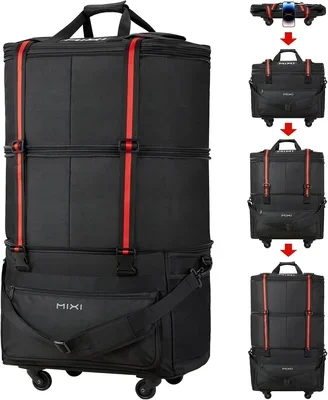
The defining feature of this category is the expansion zipper, but not all expansion systems are created equal. Most bags use a gusseted zipper that releases a folded panel of fabric, adding depth to the case. The typical gain is 1.5 to 3 inches of extra packing depth, translating to roughly 15–25% more volume. However, the quality of the zipper and the reinforcement of the gusset determine whether that extra space holds up over time.
Look for YKK or similarly reputable zipper brands. Cheap zippers snag, misalign, or burst under the pressure of a fully expanded bag. The gusset fabric should be double-stitched and reinforced with a binding tape; otherwise, the stress of overpacking will tear the material away from the frame. Some premium models (like certain Briggs & Riley or Tumi lines) use a patented CX expansion system that adds up to 34% more space while maintaining structural integrity—worth the premium if you routinely push capacity limits.
2. Frame Material: Hardside vs. Softside Construction
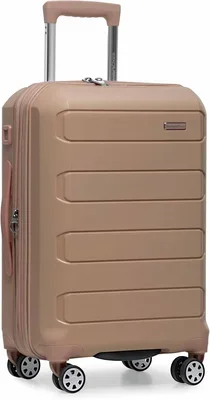
This is the first major fork in the road. Hardside luggage (polycarbonate, ABS, aluminum) offers superior protection for fragile items and resists water better. Softside luggage (ballistic nylon, Cordura, polyester) provides more flexibility for squeezing into tight overhead bins and usually features external pockets for quick access.
Polycarbonate is the gold standard for hardsides—it flexes under impact rather than cracking. ABS is cheaper but more brittle; avoid it for checked bags. Aluminum (e.g., Rimowa, Away) is virtually indestructible but heavy and expensive. On the softside, 1680D ballistic nylon is the durability benchmark; Cordura offers excellent abrasion resistance with a lighter weight. Denier (D) counts matter: 1200D polyester is decent for occasional use, but 1680D+ ballistic nylon handles weekly travel abuse.
Consider your packing style: if you carry electronics, camera gear, or souvenirs that need rigid protection, lean hardside. If you stuff bags to the brim and need that last inch of give to close the lid, softside’s fabric yield is a lifesaver.
3. Wheel System: Spinner vs. Inline Skate Wheels
Four-wheel spinners (360° rotation) dominate the market for a reason: they glide beside you effortlessly, reducing wrist strain. But wheel quality varies wildly. Look for:
- Double wheels (two wheels per corner) – distribute weight better, more stable on cracks and cobblestones.
- Sealed ball bearings – keep grit out; unsealed bearings grind within months.
- Polyurethane (PU) tread – quieter and grippier than hard plastic.
- Recessed wheel housings – protect wheels from impacts and maximize interior volume.
Two-wheel inline (roller) bags still have fans. They track straighter on rough pavement, handle curbs better, and the recessed wheels eat less interior space. If you frequently navigate European cobblestones, gravel driveways, or subway stairs, a high-quality two-wheeler (like Travelpro Platinum Elite) may outperform a cheap spinner.
4. Handle System: Telescoping Mechanism and Grip Ergonomics
The handle is your primary touchpoint. A poorly designed handle turns a 30-minute walk to the gate into a wrist workout. Key things to check:
- Number of stages: At least three (short, medium, tall) to accommodate different heights.
- Locking mechanism: Should click securely at each stage with no wobble.
- Tube material: Aircraft-grade aluminum or reinforced steel; avoid thin aluminum that bends.
- Grip material: Contoured rubber or gel > hard plastic. Some premium bags offer leather-wrapped handles for comfort.
- Top and side carry handles: Padded, reinforced stitching. You’ll use these more than you think—lifting into overhead bins, car trunks, conveyor belts.
Test the handle extension: pull it up and down five times. It should glide without grinding. Wiggle the extended handle side-to-side; minimal play indicates a tight tolerance build.
5. Interior Organization: Compartments, Straps, and Dividers
Expandable luggage shines when the interior layout helps you stay organized while expanded. Look for:
- Full-zip divider between the two main compartments—keeps clean/dirty separate and prevents contents from shifting when you compress the bag back down.
- Compression straps (ideally X-strap or clamshell) – essential for cinching down expanded loads so items don’t crush.
- Mesh zip pockets on the divider – perfect for toiletries, cables, underwear.
- Suiter system / garment sleeve – if you travel with suits or dresses, a built-in suiter or removable garment folder is a game-changer.
- Wet pocket / lined pocket – for swimwear or toiletries that might leak.
Some bags (e.g., Eagle Creek, Osprey) include removable packing cubes or a dedicated laptop sleeve that doubles as a day bag. These modular systems add versatility but check that they don’t consume too much base volume when not in use.
6. Weight and Airline Size Compliance
Every ounce of luggage weight eats into your payload allowance. Most airlines allow 22″ x 14″ x 9″ for carry-ons (including wheels/handles) and 62 linear inches (L+W+H) for checked bags with a 50 lb weight limit. Expandable bags often exceed carry-on depth when expanded. If you plan to carry on, ensure the non-expanded dimensions comply. Many 22″ expandable spinners expand to 11″ or 12″ deep—technically a checked bag at that point.
Typical weights:
- Carry-on hardside (polycarbonate): 6.5–8.5 lbs
- Carry-on softside (ballistic nylon): 5.5–7.5 lbs
- Checked large (28–30″): 9–13 lbs
Ultra-light models (4–5 lbs for carry-on) exist but often sacrifice wheel durability or frame rigidity. Balance weight savings against how rough you are on luggage.
7. Durability Indicators: Stress Points and Warranty
The spec sheet won’t tell you how a bag handles a baggage handler’s toss. Focus on these stress points:
- Corner guards / bumpers: Molded rubber or reinforced plastic on all eight corners (hardside) or heavy-duty fabric wrapping (softside).
- Handle attachment: Riveted or bolted through the shell, not just screwed into plastic.
- Wheel housing attachment: Molded into the shell (hardside) or riveted through a reinforced plate (softside).
- Zipper pulls: Large, easy to grip with gloves; lockable (accepts TSA lock shackle).
Warranty is your best durability proxy. Lifetime warranties (Briggs & Riley, Travelpro, Osprey, Eagle Creek, Tumi) signal confidence. Read the fine print: “lifetime” often means “lifetime of the product,” not your lifetime, and may exclude airline damage. Brands like Briggs & Riley and Travelpro explicitly cover airline damage—huge value for frequent checkers.
8. Security Features: Locks, Zippers, and Anti-Theft
TSA-approved combination locks are standard on mid-range+ bags. Integrated locks (built into the frame) are cleaner than padlocks and can’t be lost. For softside, look for lockable zipper pulls (loops that accept a lock shackle) on all compartments, including the expansion gusset. Some premium bags offer puncture-resistant zippers (e.g., YKK RCW) that resist pen-knife entry—a real concern in some regions.
Consider a USB charging port with a dedicated power bank pocket if you rely on devices. But remember: the power bank is not included, and airlines require removable batteries for checked bags.
Different Types of Expandable Luggage

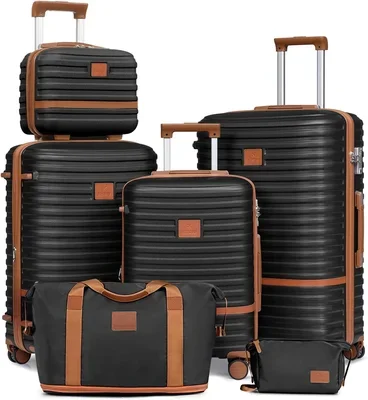
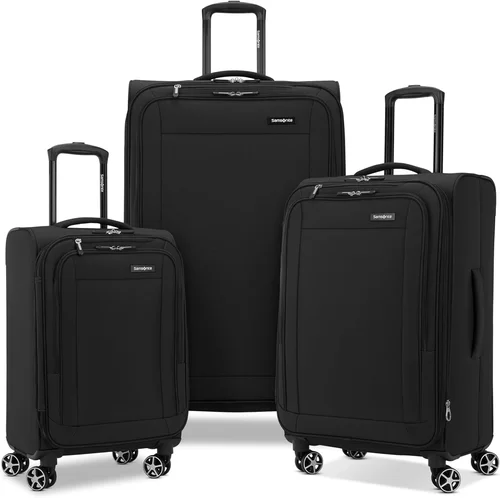
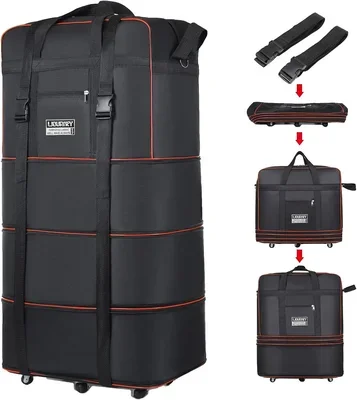
Each type serves a distinct travel personality. Hardside spinners dominate business travel for their professional look and device protection. Softside spinners win for leisure travelers who shop en route and need that external pocket for a water bottle or umbrella. Two-wheelers remain the secret weapon for European cobblestone tours. Sets make sense if you’re outfitting a household or want guaranteed nesting storage. Hybrid convertibles (like the Osprey Meridian or Patagonia Black Hole Wheeled Duffel) are niche but brilliant for trips that mix airports with dirt paths.
Common Buying Mistakes to Avoid
❌ Mistake: Buying Based Solely on Brand Name
Why it’s bad: Big names often charge a “logo tax.” A $600 Samsonite may share the same factory components as a $350 Travelpro. You’re paying for marketing, not necessarily better wheels or zippers.
What to do instead: Compare specs side-by-side: wheel bearing type, denier count, warranty terms, weight. Read 2- and 3-star reviews—they reveal real-world failure patterns that 5-star reviews hide.
❌ Mistake: Ignoring Expanded Dimensions for Carry-On
Why it’s bad: You buy a “carry-on compliant” bag, expand it on the return trip with souvenirs, and get gate-checked (or hit with oversize fees).
What to do instead: Check the manufacturer’s non-expanded dimensions against your airline’s sizer. If you must expand, plan to check it on the return or ship souvenirs separately.
❌ Mistake: Choosing the Lightest Bag Without Checking Durability
Why it’s bad: Ultra-light bags (under 5 lbs for carry-on) often use thinner shells, smaller wheels, and minimal corner protection. One rough handling cracks the shell or shears a wheel housing.
What to do instead: Target the “sweet spot” weight: 6.5–7.5 lbs for polycarbonate carry-on, 5.5–6.5 lbs for ballistic nylon. That range balances payload capacity with structural integrity.
❌ Mistake: Overlooking the Handle Height Range
Why it’s bad: If you’re under 5’4″ or over 6’2″, a two-stage handle forces you to hunch or stretch, causing back strain over long concourses.
What to do instead: Verify at least three handle stages. Better yet, test in store or check reviewer comments from people your height.
❌ Mistake: Assuming “Lifetime Warranty” Covers Everything
Why it’s bad: Many warranties exclude airline damage, cosmetic wear, or zippers. You discover this only when filing a claim.
What to do instead: Read the warranty PDF before buying. Prioritize brands that explicitly cover airline damage (Briggs & Riley, Travelpro, Osprey) and offer easy online claims with prepaid shipping labels.
❌ Mistake: Skipping the “Shake Test” for Interior Organization
Why it’s bad: A beautiful interior layout fails if the divider zipper doesn’t reach the corners, letting socks migrate between compartments.
What to do instead: In store, pack a few items, zip the divider, and shake the bag upside down. Nothing should cross compartments. Online? Watch video reviews that demonstrate the divider seal.
❌ Mistake: Buying a Set When You Only Need One Size
Why it’s bad: Three-piece sets force you to store two empty bags. The “free” carry-on in a set is often lower spec than the standalone model.
What to do instead: Buy pieces individually. Mix brands if it gets you better wheels on the checked bag and a lighter carry-on. Store only what you use.
Budget Guidelines: How Much Should You Spend?
Entry-Level ($80 – $150)
What you get: ABS or thin polycarbonate hardsides; 600D–1200D polyester softsides. Single-spinner wheels (often unsealed bearings). Two-stage handles. Basic zipper (non-YKK). 1–2 year limited warranty.
Best for: Occasional leisure travelers (1–2 trips/year), kids’ luggage, backup bags. Expect 2–4 years of life with careful handling. Brands: Amazon Basics, Rockland, Merax, Kenneth Cole Reaction.
Mid-Range ($150 – $350) — The Sweet Spot for Most
What you get: Genuine polycarbonate (Makrolon or Bayer) or 1680D ballistic nylon. Double spinner wheels with sealed bearings. Three-stage handles. YKK zippers. TSA locks. Lifetime warranties (often excluding airline damage). Weight in the sweet spot.
Best for: Monthly travelers, business trips, family checked bags. 5–10 year lifespan. Brands: Travelpro (Platinum Elite, Maxlite), Samsonite (Freeform, Winfield 3), Delsey (Chatelet, Helium), Briggs & Riley (Baseline Domestic – entry), Eagle Creek (Gear Warrior).
Premium ($350 – $700)
What you get: Advanced polycarbonate blends (lighter, stronger), 1680D–2520D ballistic nylon with Teflon coating. Precision Japanese wheels (Hinomoto Lisof). Ergonomic handles (leather, gel). CX expansion (Briggs & Riley) or similar high-capacity systems. Lifetime warranties including airline damage. Modular interiors (removable cubes, suiter systems).
Best for: Weekly travelers, road warriors, international flyers who check bags. 10–20+ year lifespan. Brands: Briggs & Riley (Baseline, Sympatico), Tumi (19 Degree, Alpha 3), Rimowa (Essential, Original – polycarbonate/aluminum), Victorinox (Spectra, Avolve).
Luxury ($700+)
What you get: Aluminum-magnesium alloy (Rimowa Original), carbon fiber, hand-stitched leather accents, bespoke interior configurations, concierge repair service, status signaling. Performance gains over premium are marginal; you’re paying for craftsmanship, materials, and brand heritage.
Best for: Luxury travelers, collectors, those who view luggage as a lifetime heirloom. Brands: Rimowa, Globe-Trotter, Tumi (Latitude, 19 Degree Aluminum), Louis Vuitton, Goyard.
Expert Tips for Getting the Best Deal
- Time your purchase. Best sales: January (post-holiday), May (pre-summer), Labor Day weekend, Black Friday/Cyber Monday. Luggage goes on deep discount when new collections launch (usually Feb/Mar and Aug/Sep).
- Buy previous-generation models. When a brand updates a line (e.g., Travelpro Platinum Elite 2024 → 2025), the old model drops 20–30% with identical core specs. Check manufacturer “outlet” or “clearance” sections.
- Check authorized retailer outlets. Briggs & Riley, Tumi, and Travelpro have factory outlet stores (online and physical) selling overstocks and returns with full warranty. Savings of 25–40% are common.
- Leverage credit card perks. Many premium cards (Chase Sapphire Reserve, Amex Platinum) offer statement credits for luggage purchases or extended warranty protection that doubles the manufacturer’s coverage.
- Inspect return policies before buying. Buy from retailers with 30–60 day no-questions returns (REI, Nordstrom, Zappos, Amazon). Test the bag at home: pack it, roll it on carpet and tile, expand/compress it. Return if it doesn’t feel right.
- Consider certified refurbished. Briggs & Riley and Travelpro sell factory-refurbished units with full lifetime warranties at 30–50% off. Cosmetic blemishes only; mechanicals are like-new.
- Don’t overlook softside for checked bags. A premium ballistic nylon checked bag (e.g., Travelpro Platinum Elite 29″) often outlasts a mid-range hardside because fabric absorbs impacts that crack shells. And it’s lighter, giving you more weight for contents.
- Register your warranty immediately. Take photos of the serial number tag (usually inside the main compartment or under the handle tube). Register online within 30 days. Saves headaches if you ever need a wheel replacement or handle repair.

Frequently Asked Questions
Q: Can I use an expanded carry-on as a carry-on on the return flight?
A: Technically, no. Airlines measure at the gate, and an expanded bag exceeds the published depth limit. In practice, gate agents rarely measure unless the bag looks obviously oversized. But it’s a gamble. If you plan to expand, budget for a checked bag fee on the return or ship souvenirs home.
Q: Do expandable bags lose their shape over time?
A: Softside bags can develop a permanent “bulge” if stored expanded long-term. Always store luggage collapsed. Hardside expansion gussets are structural and don’t deform, but the zipper track can weaken if forced. Never force an expansion zipper—repack instead.
Q: Are spinner wheels really better than two wheels?
A: On smooth airport floors, yes—effortless 360° maneuvering. On cracked sidewalks, gravel, cobblestones, or snow, two large inline wheels track straighter and don’t get stuck in gaps. If 80% of your travel is airport-to-hotel, spinners win. If you navigate streets, two wheels win.
Q: How do I clean my expandable luggage?
A>Hardside: Wipe with mild soap and water; avoid solvents. Softside: Spot clean with upholstery cleaner or diluted woolite. Never machine wash. Lubricate zippers annually with silicone zipper lubricant (not WD-40). Clean wheel bearings with compressed air and a drop of light oil if they sound gritty.
Q: What’s the difference between “expandable” and “expandable with compression”?
A: All expandable bags have a gusset zipper. “Compression” refers to internal straps that cinch the contents down after you expand, so the bag holds its expanded shape without bulging. Some bags (e.g., Briggs & Riley CX) integrate compression into the expansion system—zip the expansion, then zip a secondary compression panel to lock volume. It’s a premium feature worth it for overpackers.
Q: Can I repair a broken spinner wheel myself?
A: On many mid-range+ bags, yes. Brands like Travelpro, Briggs & Riley, and Osprey sell replacement wheel kits ($15–$30 per wheel) with simple screw-on installation. Hardside bags often require rivet drilling—better left to a repair shop. Check the brand’s website for parts availability before buying.
Q: Is a built-in TSA lock better than a separate padlock?
A: Integrated locks are cleaner (no dangling lock), can’t be lost, and are often more tamper-resistant. However, if the lock mechanism fails, you can’t just cut it off—you may need a locksmith. Separate TSA padlocks ($10–$15 for a 2-pack) are cheap insurance. I use both: integrated for the main compartment, padlock for the expansion gusset.
Q: How much extra space does expansion actually add?
A: Typically 1.5–2.5 inches of depth. On a 22″ carry-on, that’s roughly 2–3 liters (enough for a sweater, shoes, or a few souvenirs). On a 28″ checked bag, 5–8 liters. Marketing claims of “30% more space” refer to volume percentage, not linear inches. Real-world gain is modest but meaningful.
Q: Should I buy a luggage set or individual pieces?
A: Sets save 15–25% vs. buying separately and guarantee nesting storage. But the carry-on in a set is often a lower tier than the checked bag. If you travel solo mostly, buy a premium carry-on and a mid-range checked bag individually. If outfitting a family, a 3-piece set (carry-on, medium, large) from a reputable brand is excellent value.
Q: What’s the best way to pack an expanded bag to avoid wrinkles?
A: Use the “bundle wrapping” method: lay a core item (jacket, folded trousers) flat, layer other clothes around it in concentric circles, then wrap the core over the bundle. Place the bundle in the expanded compartment. Compression straps then lock it flat. Packing cubes also work well—expand the bag, fill cubes, compress.
Our Final Recommendations
Best for Budget-Conscious Buyers: Travelpro Maxlite 5 Expandable Spinner (21″) — At ~$130, it’s the lightest decent spinner (5.4 lbs), has a genuine lifetime warranty (excluding airline damage), and rolls smoothly on sealed-bearing wheels. Compromises: polyester fabric (not ballistic nylon), two-stage handle, basic interior. Perfect for 4–6 trips/year.
Best Overall Value: Travelpro Platinum Elite 22″ Expandable Spinner — ~$280. The gold standard for frequent flyers. 1680D ballistic nylon with DuraGuard coating, precision Magnum wheels, contour grip handle, suiter system, and a lifetime warranty that covers airline damage. Weight: 7.8 lbs. It’s the bag pilots and flight crews buy with their own money.
Best Premium Option: Briggs & Riley Baseline Domestic 22″ Expandable Spinner — ~$450. CX expansion adds 34% capacity (vs. 15–25% typical). Ballistic nylon with self-repairing YKK zippers. Lifetime warranty with no exclusions—airline damage, zippers, wheels, handles all covered forever. Made in USA. Heavier (9.2 lbs), but the only bag you’ll ever need to buy.
Best for Beginners: Samsonite Freeform 21″ Hardside Expandable Spinner — ~$180. Polycarbonate shell, double spinner wheels, TSA lock, 10-year limited warranty. Widely available at Costco/Target for hands-on testing. Forgiving for first-time buyers who aren’t sure what they prefer. Weight: 6.5 lbs.
Best for Advanced Users / Adventure Travel: Osprey Meridian 22/28 Wheeled Duffel Set — ~$400 for the pair. Convertible: carry as backpack (stowaway harness) or roll as spinner. 1680D ballistic nylon, aluminum frame, massive U-zip access, lifetime “All Mighty” warranty (covers everything). Not a traditional suitcase—no rigid divider—but unmatched for trips mixing airports, trains, and dirt roads.
Conclusion: Making the Right Choice
We’ve covered a lot of ground: expansion mechanisms, frame materials, wheel systems, handle ergonomics, interior organization, weight compliance, durability signals, and security features. We’ve compared hardside vs. softside, spinners vs. rollers, and broken down what each price tier actually delivers. We’ve flagged the mistakes that waste money and shared pro timing tactics for the best deal.
The right expandable luggage bag isn’t the one with the most features or the highest price tag. It’s the one that matches your travel rhythm. If you’re a carry-on-only business traveler who values speed and device protection, a mid-range polycarbonate spinner with a dedicated laptop pocket is your ally. If you’re a family checking two bags for a two-week vacation, a matched set of ballistic nylon rollers with lifetime airline-damage warranties will survive the baggage carousel gauntlet. If you’re a digital nomad hopping from coworking space to mountain trail, a hybrid convertible lets you roll through terminals and strap on for the last mile.
Before you click “buy” or walk to the register, run your final contenders through this quick mental checklist:
- Does the non-expanded size comply with my primary airline?
- Is the warranty explicit about airline damage coverage?
- Do the wheels feel smooth and track straight?
- Does the handle adjust to my height without wobble?
- Can I lift the packed weight comfortably via the top/side handles?
- Does the interior layout match my packing style (cubes, suiter, compression)?
If the answer is yes across the board, you’ve found your match. Trust the process, invest in the tier that respects your travel frequency, and enjoy the peace of mind that comes from luggage that simply works—trip after trip, expansion after expansion. Safe travels.