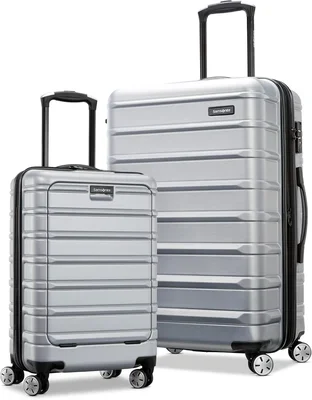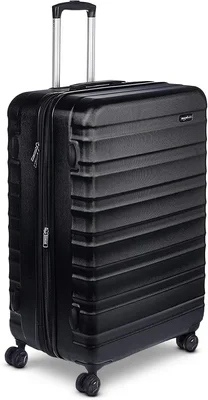
Choosing the right expandable luggage can feel like navigating a maze of brands, materials, and price points, especially when you’re browsing the massive selection on Amazon. This guide exists to turn that maze into a clear path, giving you the knowledge to pick a suitcase that fits your travel style, budget, and durability expectations without second‑guessing every review. By the time you finish reading, you’ll understand the critical factors that separate a reliable travel companion from a short‑lived disappointment, you’ll know which types of expandable luggage suit different trips, and you’ll have a practical budget framework that helps you spend wisely.
We’ll start by breaking down the most important buying criteria — size, construction, wheel quality, handle system, expansion mechanism, warranty, and brand reputation — explaining each in plain language so you can evaluate any listing with confidence. Next, we’ll compare the main categories you’ll encounter on Amazon, from soft‑side spinners to hard‑shell hybrids, and show you the typical price ranges and best‑use scenarios for each. After that, we’ll highlight common pitfalls that trap unwary shoppers, give you a step‑by‑step budget breakdown, share expert timing and purchasing tips, answer the questions travelers ask most often, and finish with concrete recommendations for every type of buyer. Whether you’re a weekend warrior, a frequent business flyer, or a family planning a once‑in‑a‑lifetime vacation, this guide will help you make the right choice the first time.

What to Look for When Buying Expandable Luggage
1. Size and Capacity
Size is the first filter you should apply because it dictates whether the bag fits airline carry‑on limits, fits in your car trunk, or holds enough gear for a two‑week adventure. Most expandable luggage on Amazon lists three dimensions: exterior (including wheels and handles), interior packing volume, and the extra capacity gained when the expansion zipper is opened. For domestic U.S. flights, a 22‑inch carry‑on (roughly 55 cm) is the standard maximum; international carriers often allow 21‑inch (53 cm). Check the product’s “expanded dimensions” — some bags add only 1‑2 inches of depth, while others can increase volume by 25 % or more. If you frequently pack bulky items like shoes or jackets, prioritize a model that expands at least 2 inches in depth. Also note the weight of the empty suitcase; a lightweight 22‑inch spinner around 6‑7 lb (2.7‑3.2 kg) leaves more allowance for your belongings.
2. Build Quality and Materials
The shell material determines durability, weight, and how the bag handles impacts. Hard‑shell cases typically use polycarbonate, ABS, or a polycarbonate/ABS blend. Polycarbonate is the most impact‑resistant and flexible, making it ideal for frequent flyers; ABS is cheaper but more brittle. Soft‑side luggage relies on high‑denier nylon (e.g., 1680D ballistic nylon) or polyester with a water‑repellent coating. Look for reinforced corners, double‑stitched seams, and a protective frame around the zipper line. A quality frame prevents the bag from collapsing when you sit on it or when it’s stacked in an overhead bin. If you see “self‑healing” or “scratch‑resistant” coatings on hard shells, those are genuine durability upgrades, not marketing fluff.
3. Wheel System
Wheels are the single biggest factor in day‑to‑day usability. Four‑wheel spinners (360° rotation) let you glide the bag beside you, reducing wrist strain. Two‑wheel “inline” rollers are more stable on rough pavement but require tilting. On Amazon listings, check for “double‑ball bearing” or “precision‑bearing” wheels — these spin smoother and last longer than simple plastic axles. Wheel diameter matters too: 3‑inch (7.5 cm) wheels handle carpet and cobblestones better than 2‑inch ones. Removable wheels are a bonus; if a wheel cracks you can replace it instead of buying a new suitcase.
4. Handle System
A telescoping handle should lock at multiple heights (usually three) and retract smoothly without wobble. Aluminum or aircraft‑grade alloy tubes resist bending better than thin steel. Grip material matters: a rubberized or contoured foam grip reduces hand fatigue on long walks through terminals. Test the handle’s “push‑button” release — it should click firmly and not stick. Some premium models add a secondary top carry handle and a side handle for lifting into overhead bins; these are worth the extra few dollars if you frequently hoist your bag.
5. Expansion Mechanism
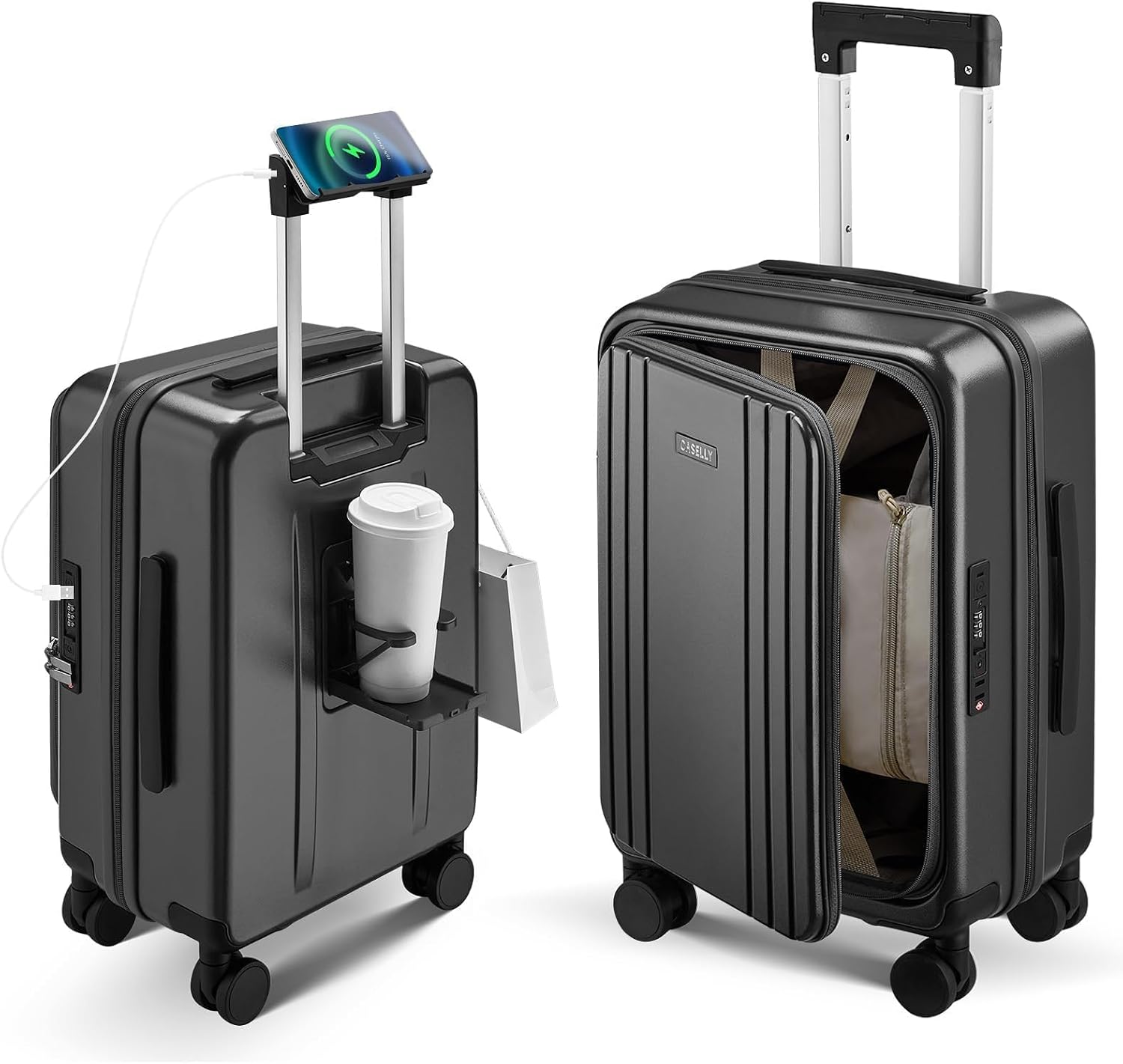
The expansion zipper is the heart of “expandable” luggage. Look for a full‑perimeter zipper that opens the main compartment by 1.5‑2.5 inches (3.5‑6 cm). YKK or SBS brand zippers are industry standards for reliability. A secondary “expansion lock” (a small buckle or Velcro strap) keeps the extra depth from accidentally opening during transit. Some designs place the expansion panel on the front lid rather than the main body; front‑panel expansion gives easier access to the extra space without unpacking the whole bag.
6. Interior Organization
Inside, you want a layout that matches your packing style. Common features include a full‑length zippered divider, mesh pockets for toiletries, compression straps to cinch clothing, and a dedicated laptop or tablet sleeve (often 15‑inch compatible). Removable laundry bags and shoe pockets are nice extras. If you travel with a lot of tech, prioritize a model with a padded, TSA‑friendly laptop compartment that can lay flat for security screening.
7. Security Features
TSA‑approved combination locks are standard on most mid‑range and premium expandable luggage. They allow security agents to open the bag without cutting the lock. Some brands integrate a built‑in lock into the zipper pulls, while others provide a separate lock that threads through the zipper holes. If you value extra peace of mind, look for a lock with a 3‑digit or 4‑digit code and a “reset” function. Hard‑shell cases sometimes include a “double‑coil” zipper that resists forced entry better than a single coil.
8. Warranty and Customer Support
A solid warranty signals manufacturer confidence. Many reputable brands offer a limited lifetime warranty covering defects in materials and workmanship; some extend to wheel and handle replacement. Read the fine print: “lifetime” often means the expected life of the product (usually 5‑10 years) and may exclude airline damage. Check whether the brand has a U.S.-based service center or an easy online claim process — Amazon’s return window (30 days) covers initial defects, but a manufacturer warranty protects you long after that.
9. Brand Reputation and Reviews
While Amazon reviews are valuable, they can be skewed by incentivized feedback. Cross‑reference with independent review sites (e.g., Wirecutter, Consumer Reports) and look for patterns: repeated complaints about wheel breakage, zipper failure, or handle wobble are red flags. Brands like Samsonite, Travelpro, Delsey, Briggs & Riley, and Away have established track records; newer “direct‑to‑consumer” brands often offer comparable specs at lower prices but may have less proven longevity.
10. Price vs. Value
Price alone doesn’t dictate quality. A $120 polycarbonate spinner with a lifetime warranty can outperform a $250 designer label that uses thinner shells. Use the factors above to build a “value score” for each candidate: assign points for material, wheel type, handle, expansion depth, warranty, and organization, then compare the total to the price. This quantitative approach prevents impulse buys driven by flashy photos.
Different Types of Expandable Luggage

Common Buying Mistakes to Avoid
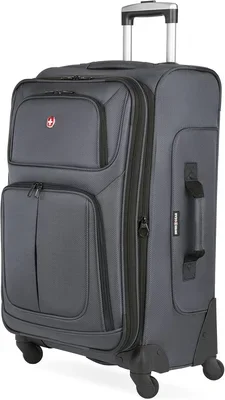
❌ Mistake: Ignoring Airline Size Limits
Why it’s bad: Many shoppers buy a “large” expandable suitcase assuming the expansion zipper will keep them within limits, only to find the expanded dimensions exceed the carrier’s maximum. This forces a gate check, extra fees, or a last‑minute repack.
What to do instead: Verify both the non‑expanded and expanded exterior dimensions against the specific airlines you fly most. Choose a model that stays within limits even when fully expanded, or plan to travel unexpanded on tight‑regulation carriers.
❌ Mistake: Prioritizing Aesthetics Over Wheel Quality
Why it’s bad: A beautiful matte finish looks great in photos, but cheap plastic wheels will seize after a few cobblestone streets, turning a smooth roll into a drag.
What to do instead: Read the wheel specifications first. Look for double‑ball bearing, polyurethane‑tread wheels of at least 3 inches. If the listing doesn’t specify, assume lower quality.
❌ Mistake: Overlooking Weight of the Empty Bag
Why it’s bad: A 10 lb (4.5 kg) hard‑shell suitcase eats a huge chunk of a 50 lb (23 kg) checked‑bag allowance, leaving less room for your gear.
What to do instead: Target carry‑ons under 7 lb (3.2 kg) and checked bags under 9 lb (4 kg). Lightweight polycarbonate or high‑denier nylon models hit these marks.
❌ Mistake: Buying Without a Warranty Check
Why it’s bad: A bargain brand may offer a 1‑year limited warranty that excludes wheel and handle damage — the most common failure points.
What to do instead: Favor brands with lifetime or 10‑year warranties covering wheels, handles, and zippers. Register the product immediately after purchase to activate coverage.
❌ Mistake: Assuming All “Expandable” Zippers Add the Same Volume
Why it’s bad: Some bags only add a shallow 0.5‑inch gusset, giving negligible extra space, while others add a full 2.5‑inch depth.
What to do instead: Look for the “expanded capacity” spec (often listed in liters or cubic inches). Compare that number to the base capacity to gauge real gain.
❌ Mistake: Skipping Review Patterns for Isolated Complaints
Why it’s bad: A single 1‑star review about a broken handle may be an outlier; ten reviews mentioning the same handle failure indicate a systemic flaw.
What to do instead: Sort reviews by “most recent” and filter for keywords like “wheel,” “handle,” “zipper.” Consistent negative trends outweigh a high overall rating.
❌ Mistake: Not Considering Return Logistics
Why it’s bad: Large suitcases are costly to ship back. If the seller doesn’t provide a prepaid return label, you may eat a $30‑$50 return fee.
What to do instead: Buy from Amazon sellers that offer free returns or use Amazon’s own “Fulfilled by Amazon” program, which typically includes hassle‑free returns.
Budget Guidelines: How Much Should You Spend?
Entry‑Level ($60 – $110)
At this tier you’ll find mostly ABS hard‑shell spinners or polyester soft‑side bags. Expect basic 360° wheels (often single‑bearing), a single‑stage telescoping handle, and a modest expansion of 1‑1.5 inches. Warranty is usually 1‑2 years limited. These suit occasional travelers, students, or anyone who flies once or twice a year and doesn’t mind replacing the bag every few seasons. Look for brands like Amazon Basics, Rockland, or Kenneth Cole Reaction for decent value.
Mid‑Range ($110 – $220)
This is the sweet spot for most frequent flyers. You’ll see polycarbonate or polycarbonate/ABS blends, double‑ball bearing wheels, multi‑stage aluminum handles, YKK zippers, and 2‑inch expansion. Warranties extend to 5‑10 years or limited lifetime. Interior organization improves with compression straps, mesh dividers, and sometimes a removable laundry bag. Brands such as Travelpro (Platinum Elite), Samsonite (Freeform, Winfield), Delsey (Chatelet), and Briggs & Riley (Baseline) dominate here. The extra $50‑$100 over entry‑level buys you years of reliable service.
Premium ($220 – $400)
Premium models add refined details: self‑healing polycarbonate shells, precision‑machined aluminum frames, leather‑wrapped handles, integrated TSA locks with 4‑digit codes, and sophisticated interior layouts (e.g., suiter compartments, dedicated shoe pockets). Expansion can reach 2.5‑3 inches. Warranty often becomes a true lifetime guarantee with free repair service. Brands like Rimowa (Essential), Tumi (Alpha 3), and Away (The Bigger Carry‑On) sit here. These suit business travelers who log 50+ flights a year and value a polished aesthetic plus hassle‑free service.
Luxury ($400+)
Luxury luggage leans into heritage craftsmanship, exotic materials (e.g., carbon fiber, titanium frames), and bespoke customization. Expect hand‑stitched leather accents, silent‑run wheels, modular interior systems, and concierge‑level warranty support (door‑to‑door pickup for repairs). Brands include Globe‑Trotter, Hartmann, and high‑end Rimowa lines. Unless you’re a collector or demand the absolute finest, the performance gains over premium are marginal for typical travel.
Expert Tips for Getting the Best Deal
- Shop Off‑Season: Major sales occur in January (post‑holiday), May (Memorial Day), July (Prime Day), and November (Black Friday/Cyber Monday). Prices can drop 20‑35 % during these windows.
- Use Price‑Tracking Tools: Extensions like CamelCamelCamel or Keepa show historical Amazon price curves. Set alerts for your target model to buy at the lowest point.
- Check “Renewed” or “Open‑Box” Listings: Amazon Warehouse deals often offer like‑new luggage with full manufacturer warranty at 10‑20 % off. Inspect the condition notes carefully.
- Bundle with Accessories: Some sellers bundle a packing cube set, luggage tag, or TSA lock. If you need those anyway, the bundle can be cheaper than buying separately.
- Leverage Credit‑Card Purchase Protection: Many premium cards extend warranty an extra year and cover theft/damage for 90‑120 days. Pay with that card to double your safety net.
- Read the Return Policy Before Checkout: Confirm free return shipping and a 30‑day window. If the seller is a third‑party without Amazon fulfillment, returns may be costly.
- Test In‑Store When Possible: If a brand has a physical retailer nearby, handle the suitcase, spin the wheels, extend the handle. Then buy online at the lower price.
- Register Immediately: As soon as the bag arrives, register the serial number on the manufacturer’s site. This activates warranty and often unlocks free repair kits.
Frequently Asked Questions
Q: What does “expandable” actually mean on a suitcase?
A: An expandable suitcase has a zippered gusset that, when opened, increases the interior depth by typically 1.5‑3 inches, adding 15‑30 % more packing volume. The exterior dimensions grow accordingly, so always check the expanded measurements against airline limits.
Q: Are hard‑shell or soft‑side expandable bags more durable?
A: Hard‑shell polycarbonate resists cracks and dents better, making it ideal for checked baggage that gets tossed. High‑denier ballistic nylon soft‑side bags resist tears and abrasions, and they often expand more. For carry‑on use, both can last years if the wheels and handles are quality.
Q: Can I use an expandable carry‑on on international flights?
A: Many international carriers enforce a 21‑inch (53 cm) maximum, which is smaller than the U.S. 22‑inch standard. Choose a 21‑inch model or a 22‑inch that stays within limits when unexpanded. Some brands offer “international carry‑on” versions specifically sized for this.
Q: How do I clean and maintain expandable luggage?
A: Wipe hard shells with a damp cloth and mild soap; avoid harsh chemicals that can damage the coating. For soft‑side nylon, spot‑clean with a fabric cleaner and let air dry. Lubricate wheel bearings annually with a silicone spray, and periodically tighten handle screws.
Q: Is a built‑in TSA lock worth the extra cost?
A: Yes, if you value convenience. Built‑in locks eliminate the need to carry a separate padlock and reduce the chance of losing the key. They also integrate cleanly with the zipper pulls, preventing snagging.
Q: What’s the difference between a spinner and a roller?
A: Spinners have four 360° wheels, letting you push the bag upright beside you. Rollers have two fixed wheels and require tilting. Spinners are easier on wrists but can be less stable on uneven terrain; rollers handle rough surfaces better.
Q: How much extra weight does the expansion mechanism add?
A: The extra zipper panel and gusset typically add 0.3‑0.6 lb (150‑270 g). It’s negligible compared to the overall bag weight, but if you’re ultra‑light, a non‑expandable model saves that fraction.
Q: Can I replace wheels or handles myself?
A: Many mid‑range and premium brands sell replacement wheel kits and handle assemblies. If you’re handy, you can swap them with basic tools. Entry‑level bags often have riveted wheels that aren’t user‑replaceable.
Q: Are smart luggage features (battery, GPS) allowed on planes?
Q: What’s the best way to pack an expandable suitcase to avoid wrinkles?
A: Use the compression straps to secure clothing, roll garments instead of folding, and place heavier items (shoes, toiletry bag) at the wheel end for balance. Packing cubes further organize and compress contents.
Our Final Recommendations
Best for Budget‑Conscious Buyers: Amazon Basics 21‑Inch Hardside Spinner (Polycarbonate/ABS blend). It costs under $90, offers a 1.5‑inch expansion, double‑spinner wheels, and a 3‑year limited warranty. Perfect for occasional domestic trips.
Best Overall Value: Travelpro Platinum Elite 22‑Inch Expandable Spinner. Priced around $180, it delivers a true polycarbonate shell, MagnaTrac self‑aligning wheels, a precision‑glide handle, 2‑inch expansion, and a lifetime warranty with free repair for the first 5 years. It’s the workhorse of many flight crews.
Best Premium Option: Briggs & Riley Baseline Domestic Carry‑On Expandable Spinner. At roughly $350, you get a ballistic nylon exterior with a reinforced frame, CX expansion‑compression system (adds 2.5 inches then compresses back), a lifetime “no‑questions‑asked” warranty covering airline damage, and superb interior organization.
Best for Beginners: Samsonite Freeform 21‑Inch Spinner. Light (6.5 lb), simple 1.5‑inch expansion, smooth double wheels, and a 10‑year limited warranty. The design is intuitive, and the price (~$130) makes it a low‑risk first purchase.
Best for Advanced Users / Frequent Flyers: Tumi Alpha 3 International Expandable Carry‑On. Premium ballistic nylon, aircraft‑grade aluminum telescoping handle, TSA‑approved lock, 2‑inch expansion, and a 5‑year warranty with global service centers. It’s built for 100+ flights per year and retains resale value.
Conclusion: Making the Right Choice
You now have a complete framework for evaluating any expandable luggage listing on Amazon. Start by defining your primary travel pattern — carry‑on only, checked baggage, weekend trips, or extended voyages — then filter by size limits. Next, weigh the material and wheel system against how rough your typical journeys are. Don’t forget the expansion depth, interior layout, and a warranty that actually covers the parts most likely to fail. Use the budget tiers to set a realistic spending ceiling, and apply the expert timing tips to snag the best price. Finally, match your profile to one of our recommended models or use the same criteria to vet another candidate. With this knowledge, you can click “Add to Cart” confidently, knowing your new suitcase will survive the conveyor belts, overhead bins, and cobblestone streets that lie ahead. Happy travels, and may your next packing session be the easiest one yet.