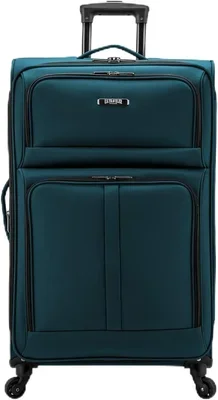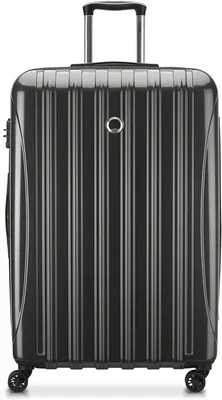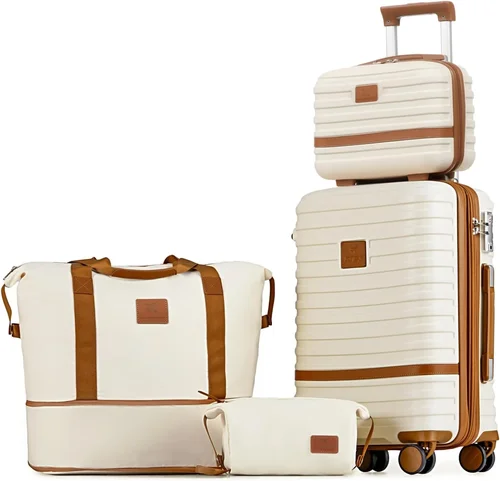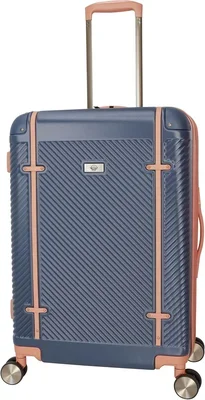
Choosing the right luggage is one of those decisions that seems small until you are standing at a baggage carousel watching a cracked shell circle the belt, or worse, wrestling an overstuffed bag into an overhead bin while a line of passengers waits behind you. The Dockers Metro 24 Expandable Hardside Spinner Upright has earned a loyal following because it sits in that sweet spot where durability meets everyday practicality, but understanding why it works—and whether it works for your specific travel style—requires looking past the marketing photos. This guide exists to translate the spec sheet into real-world performance so you can invest with confidence.
Over the next several sections, we will break down the critical factors that separate a travel companion from a travel headache. We will explore the nuances of hardside materials, spinner wheel geometry, expandable mechanisms, and interior organization. We will also compare the Metro 24 against its direct competitors, outline the most common buying regrets so you can avoid them, and give you a clear budget framework. Whether you are a weekly business commuter, a family vacation planner, or someone who just wants a reliable checked bag for the occasional getaway, you will finish this article knowing exactly what to prioritize and what to ignore.
The luggage market is flooded with options ranging from fifty-dollar specials that barely survive one trip to thousand-dollar status symbols that spend more time in a closet than on a conveyor belt. The Dockers Metro line has carved out a reputation by ignoring both extremes. It targets the traveler who wants airline-compliant dimensions, genuine polycarbonate resilience, and thoughtful organization without paying a premium for a logo. By the end of this guide, you will understand where this specific model shines, where it makes compromises, and how to decide if it deserves a spot in your rotation.

What to Look for When Buying Buying Guide
1. Exterior Shell Material and Impact Resistance
The single most important factor in hardside luggage is the shell material. You will see three main terms thrown around: ABS, polycarbonate, and polypropylene. ABS (Acrylonitrile Butadiene Styrene) is the most affordable. It is rigid and lightweight but tends to be brittle. A hard impact—like a baggage handler tossing it onto a belt—can cause spiderweb cracks or outright shattering, especially in cold weather. Polycarbonate is the gold standard for mid-range to premium luggage. It has a unique molecular structure that allows it to flex under impact and snap back to its original shape. This “memory” effect is why a polycarbonate case can take a beating and still look new. Polypropylene sits between the two; it is more flexible than ABS and cheaper than polycarbonate, but it scratches easily and can feel plasticky.
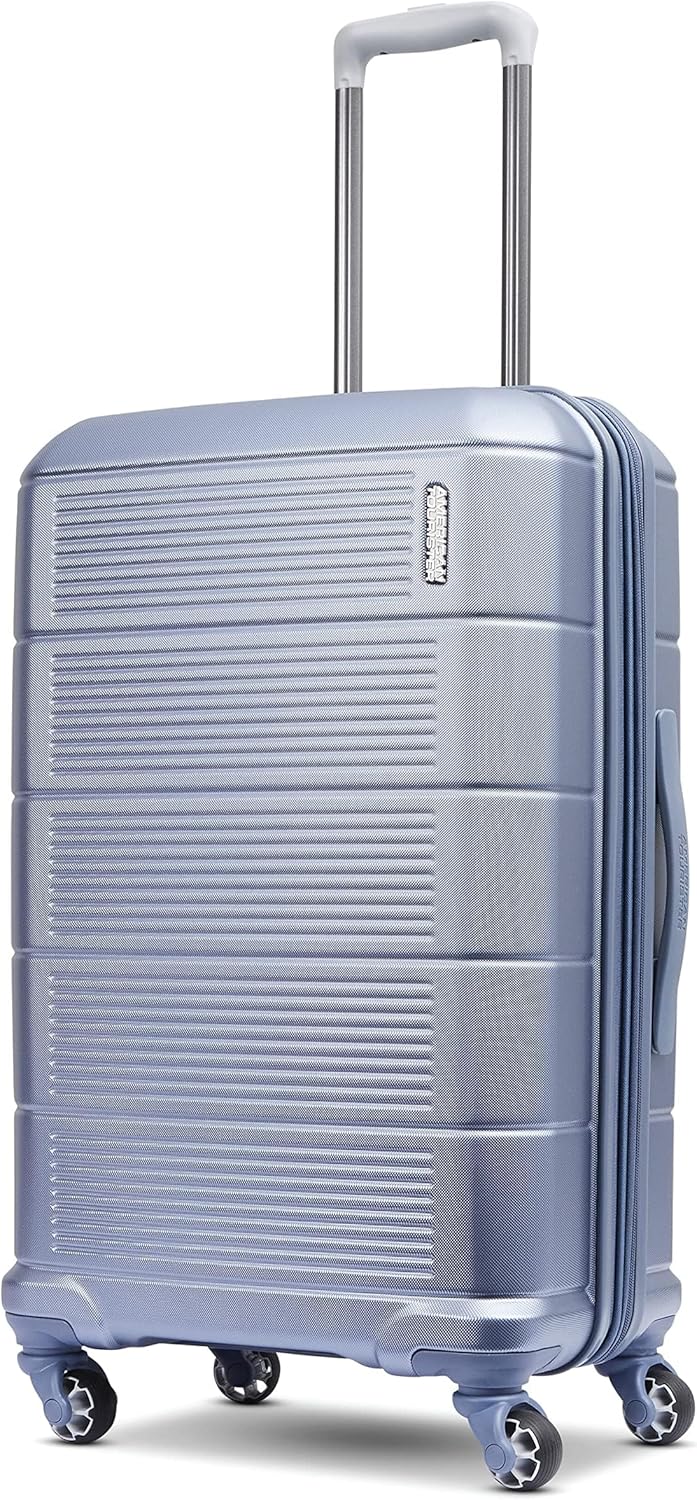
The Dockers Metro 24 uses a polycarbonate composite shell. This is a significant upgrade over pure ABS at this price point. In practical terms, it means the case can absorb the shock of being stacked under heavier bags in a cargo hold without cracking. It also handles temperature swings better—important if you are checking a bag on a winter flight to a cold destination where the cargo hold gets frigid. When evaluating any hardside, press firmly on the center of the lid. If it yields slightly and rebounds, that is polycarbonate behavior. If it feels rock-hard and unyielding, be cautious—it may be ABS or a thin polycarbonate blend that lacks the thickness to flex properly.
2. Spinner Wheel Engineering and Maneuverability
Four spinner wheels (360-degree rotation) are now standard, but not all spinners are created equal. The critical details are wheel diameter, housing construction, and bearing quality. Small wheels (under 1.5 inches) struggle with cracks in pavement, carpet transitions, and the gap between the jet bridge and the aircraft door. Larger wheels (2.5 to 3 inches) roll over obstacles effortlessly. The housing matters just as much: a wheel recessed into a molded cavity in the shell is protected from impacts that snap off protruding wheels. Double wheels (two wheels per corner, eight total) distribute weight better and offer superior stability when the bag is fully packed and heavy, but they add weight and complexity. Single wheels are lighter and simpler to replace.
The Metro 24 features four multi-directional double spinner wheels recessed into the shell. This is a standout feature at its price tier. The double-wheel configuration means each corner has two parallel wheels, effectively giving you eight contact points. When you are rushing through a terminal with a 40-pound packed bag, that stability prevents the “wobble and tip” that plagues single-wheel spinners. The recessed design protects the wheels from being sheared off by baggage handling equipment. Spin the wheels in the store (or check video reviews): they should rotate freely with a fingertip and continue spinning for several seconds. Grinding, stiffness, or wobble indicates cheap bearings that will fail quickly.
3. Telescoping Handle System: Stages, Locking, and Ergonomics
The handle is your primary interface with the bag. A poorly designed handle turns a smooth roll into a wrist-straining ordeal. Look for three things: number of height stages, locking mechanism reliability, and grip material. Two-stage handles (short and tall) force taller users to stoop or shorter users to reach awkwardly. Three-stage handles accommodate a wider range of heights. The locking mechanism should engage with a solid click and release with a single button press—no jamming, no needing two hands. The grip should be contoured rubber or soft-touch plastic, not hard hollow tubing that digs into your palm.
The Metro 24 employs a three-stage aluminum telescoping handle with a push-button release. Aluminum is preferable to steel because it resists corrosion and saves weight. The three stages cover users from roughly 5’2″ to 6’4″ comfortably. The button is recessed to prevent accidental release when the bag is jostled. One often overlooked detail: the handle tubes run inside the interior liner. Cheap bags run them on the outside, eating into packing space and creating lumps that wrinkle clothes. The Metro’s internal channel design preserves a flat, rectangular packing cavity—a subtle but vital feature for efficient packing.
4. Expandable Mechanism: Gusset Design and Capacity Gain
Expandable luggage uses a zippered gusset—a folded panel of fabric that unfolds to add depth. The typical gain is 1.5 to 2.5 inches, translating to 15-25% more volume. However, expansion introduces two risks: zipper stress and dimensional non-compliance. A cheap expansion zipper will burst under the pressure of a fully packed expanded bag. Look for a heavy-duty #10 coil zipper (large teeth) with a lockable pull. Also, check the airline’s maximum checked-bag dimensions (usually 62 linear inches: length + width + height). A 24-inch upright expanded by 2 inches may exceed this limit, triggering oversize fees.
The Metro 24 offers a 2-inch expansion via a heavy-duty YKK zipper. YKK is the industry benchmark for reliability. The gusset is reinforced with a fabric strip that distributes stress across the panel, not just the zipper teeth. In real-world use, this adds roughly 3-4 liters of capacity—enough for a couple of sweaters, a pair of shoes, or souvenirs. Crucially, even fully expanded, the bag stays within the 62-linear-inch limit for most major US carriers (check your specific airline). The expansion zipper also accepts a TSA lock, so you can secure the extra volume without sacrificing security.
5. Interior Organization: Compartments, Straps, and Accessibility
A beautiful shell is useless if the interior is a cavernous void where everything shifts. Effective organization relies on three elements: a divider panel (ideally zippered mesh), compression straps (to cinch down contents and prevent shifting), and dedicated pockets (for shoes, toiletries, electronics). The divider should zip completely closed so items don’t migrate between the two halves when the bag is stood upright. Compression straps should be elasticized or long enough to cross over bulky items. Pockets should be accessible without unpacking the entire bag.
The Metro 24 splits the interior into two equal halves. The lid side features a full-width zippered mesh divider with a large central pocket—perfect for a toiletry kit or electronics. The bottom half has two crossed compression straps with quick-release buckles and a secondary zippered pocket along the hinge side for shoes or dirty laundry. The mesh divider allows visibility so you can locate items instantly. One thoughtful touch: the compression straps attach to the shell via reinforced loops, not sewn directly into the liner fabric, so they won’t tear out under load.
6. Security Features: TSA Locks, Zipper Quality, and Frame Integrity
Security is not just about locks; it is about the entire closure system. A TSA-approved combination lock (built-in or add-on) allows agents to inspect your bag without cutting the lock. But the lock is only as good as the zippers it secures. Coil zippers (nylon teeth) self-heal when misaligned—just zip back and forth. Molded-tooth zippers (plastic teeth) are stronger but cannot self-heal; a single broken tooth ruins the zipper. The zipper pulls should be large enough to grip with cold or gloved hands and have a hole for a lock shackle. Frame integrity matters too: a flexible shell can pop open at the corners under pressure if the zipper track isn’t reinforced.
The Metro 24 includes a recessed, side-mounted TSA combination lock (3-dial, resettable). It secures both the main compartment and the expansion zipper simultaneously—a nice efficiency. The main closure uses a #10 YKK coil zipper with double pulls, each with a lock hole. The zipper track is bonded into a reinforced channel in the shell, preventing the “pop-open” failure mode. The lock is recessed so it doesn’t snag on conveyor belts or adjacent bags. Set your own combination before first use; the default is usually 0-0-0.
7. Weight and Airline Compliance
Every ounce of luggage weight is an ounce less you can pack before hitting the 50-pound checked-bag limit (or 40 pounds on some international/budget carriers). A 24-inch hardside typically weighs 7-10 pounds. Ultra-light models (under 6 pounds) often sacrifice shell thickness or wheel durability. Heavy models (over 10 pounds) eat into your packing allowance. The sweet spot is 7.5-8.5 pounds for a polycarbonate 24-inch spinner. Also, verify the exterior dimensions include wheels and handles. Airlines measure the total envelope. A bag sold as “24 inches” may actually be 25.5 inches with wheels, risking oversize fees.
The Metro 24 weighs approximately 8.2 pounds (varies slightly by production batch). This is competitive. The exterior dimensions are 24″ H x 16.5″ W x 10.5″ D (expands to 12.5″ D). Including wheels and handle, it measures roughly 26″ x 17.5″ x 11″ (expanded 13″), totaling 54.5 linear inches standard, 56.5 expanded—comfortably under the 62-inch limit. Always measure your specific unit upon arrival; manufacturing tolerances can add a fraction of an inch.
8. Warranty, Customer Support, and Repairability
Luggage takes abuse. A warranty is the manufacturer’s vote of confidence. Look for “limited lifetime” coverage that includes wheels, handles, zippers, and shell cracks—not just “defects in materials.” Read the fine print: some require product registration within 30 days; others exclude airline damage (the most common claim). Equally important is repairability. Can you buy replacement wheels, handles, or zipper pulls? Are there authorized repair centers? A $150 bag that lasts ten years because you replaced a $15 wheel twice is a better value than a $100 bag you throw away after one broken wheel.
Dockers (licensed by Samsonite) backs the Metro line with a 10-year limited warranty. It covers manufacturing defects in materials and workmanship. It does not cover airline damage, cosmetic wear, or misuse. However, Samsonite’s global service network is extensive. Replacement wheels, handle assemblies, and lock modules are available as spare parts. Many luggage repair shops are authorized Samsonite centers. This long-term support ecosystem is a major advantage over no-name brands where a broken wheel means landfill.
Different Types of Buying Guide

Common Buying Mistakes to Avoid
❌ Mistake: Buying Based Solely on Price
Why it’s bad: A $60 ABS spinner seems like a bargain until a cracked corner forces you to buy a replacement mid-trip. The cost per trip of a $180 polycarbonate bag that lasts 50 trips is $3.60. The cost per trip of a $60 bag that lasts 3 trips is $20. Cheap luggage also lacks replacement parts, so a single broken wheel renders the whole bag useless.
What to do instead: Calculate cost per expected trip. Set a budget of $150-$200 for a quality 24-inch polycarbonate spinner. Wait for a sale (holiday weekends, end-of-season) to get premium features at mid-range prices.
❌ Mistake: Ignoring Interior Dimensions and Liner Quality
Why it’s bad: Exterior dimensions determine airline compliance, but interior dimensions determine what actually fits. Thick liners, external handle tubes, and bulky wheel wells can steal 10-15% of usable volume. A flimsy liner tears at the seams, spilling contents into the frame channels where they are impossible to retrieve.
What to do instead: Look for published interior dimensions or videos showing packing demos. Check that the liner is ripstop nylon or polyester, not thin taffeta. Ensure handle tubes are recessed into the shell, not protruding into the packing cavity.
❌ Mistake: Overlooking Wheel Recess Design
Why it’s bad: Protruding wheels are the first casualty of baggage handling. They catch on conveyor belts, get crushed by other bags, and snap off. Once one wheel is gone, the bag drags sideways, destroying the remaining wheels and the shell corner.
What to do instead: Prioritize recessed (flush-mounted) wheels. Double wheels are a bonus for stability. If buying online, zoom in on product photos to confirm the wheels sit inside a molded cavity in the shell.
❌ Mistake: Assuming “Carry-On Size” Applies to 24-Inch Uprights
Why it’s bad: A 24-inch upright is a checked bag on virtually all airlines. Carry-on limits are typically 22 x 14 x 9 inches. Buying a 24-inch thinking it fits overhead bins leads to gate-check fees, delays, and the very rough handling you bought hardside to avoid.
What to do instead: If you need a carry-on, buy a 21-22 inch model. The Metro 24 is designed for checked baggage. Use it for trips of 5+ days where you need the volume.
❌ Mistake: Skipping the Expansion Zipper Test
Why it’s bad: Many buyers never open the expansion zipper until they desperately need it—then discover it sticks, misaligns, or bursts under load. A failed expansion zipper leaves you with a gaping hole in your luggage.
What to do instead: Upon receiving the bag, fully expand and collapse it three times. Zip and unzip the expansion zipper slowly. Check for smooth tracking. Apply a silicone zipper lubricant (or a candle wax rub) annually.
❌ Mistake: Not Registering the Warranty Immediately
Why it’s bad: Many limited lifetime warranties require registration within 30-90 days of purchase. Missing this window voids coverage. You discover this only when you file a claim for a cracked shell two years later.
What to do instead: Register the product on the manufacturer’s website the day it arrives. Save the receipt and confirmation email in a “Luggage” folder in your cloud storage.
❌ Mistake: Choosing Color Only for Aesthetics
Why it’s bad: Black, navy, and dark gray are the three most common luggage colors. At baggage claim, you will stare at a river of identical bags. Adding a distinctive ribbon helps, but a unique color (olive, burgundy, champagne, white) makes instant identification effortless.
What to do instead: Pick a color you like that is not black/navy/dark gray. If you love neutrals, choose a textured finish in a lighter shade (silver, champagne, sand) that hides scuffs better than glossy dark colors.
Budget Guidelines: How Much Should You Spend?
Entry-Level ($60 – $100): The “One-Year” Tier
At this price, you are almost exclusively buying ABS hardside or thin polypropylene. Expect single spinner wheels (often protruding), two-stage handles, thin liners, and minimal organization. The shell will flex but not rebound—impact damage is likely. Zippers will be smaller gauge (#8 or #5) and prone to separation. Warranty is typically 1-2 years limited, no parts availability. These bags make sense for: a child’s first suitcase, very infrequent travelers (once a year), or as a disposable bag for a move or storage. Do not expect them to survive weekly business travel or rough international connections.
Mid-Range ($110 – $200): The Sweet Spot (Dockers Metro 24 Lives Here)
This tier delivers genuine polycarbonate shells, recessed double spinner wheels, three-stage aluminum handles, YKK zippers, TSA locks, and full interior organization. Weight lands in the 7.5-9 lb range. Warranties extend to 10 years or limited lifetime with parts support. You get color and finish options that hide wear. This is the rational choice for 90% of travelers: the bag will last 5-10 years with basic care. The Metro 24 typically retails around $160-$190 but frequently drops to $130-$150 on sale. At that price, the value proposition is nearly unbeatable.
Premium ($220 – $400): Refined Engineering and Materials
Here you pay for: lighter weight (6.5-7.5 lbs via thinner but stronger shell blends), precision Japanese Hinomoto wheels (silent, buttery smooth), magnesium or carbon-fiber handle tubes, premium leather or aluminum accents, and sophisticated interior systems (removable packing cubes, compression panels). Brands: Briggs & Riley, Travelpro Platinum Elite, Samsonite Omni PC hardside, Away. Warranties are often unconditional lifetime (including airline damage for Briggs & Riley). Buy here if you travel weekly, value every ounce, or want a “buy it for life” item with white-glove repair service.
Luxury ($450+): Status, Craftsmanship, and Extreme Durability
Aluminum (Rimowa, Tumi, Globe-Trotter), carbon fiber, or proprietary composites. Weight paradoxically increases (aluminum is heavy) but protection is absolute. Hand-stitched leather, monogramming, bespoke interiors. Warranty and repair are concierge-level. These are lifestyle purchases, not purely functional ones. A Rimowa Classic Check-L at $1,200 will outlive you, but it weighs 13 lbs empty. Only for those who derive joy from the object itself.
Expert Tips for Getting the Best Deal
Frequently Asked Questions
Q: Is the Dockers Metro 24 carry-on size?
A: No. The Metro 24 is a 24-inch checked bag. Its dimensions (approx. 26″ H with wheels) exceed the standard 22″ carry-on limit for virtually all airlines. If you need a carry-on, look at the Metro 20 or 21-inch models in the same line.
Q: Can the expansion zipper be locked with the main TSA lock?
A: Yes. The Metro 24’s integrated TSA lock secures both the main compartment zipper pulls and the expansion zipper pull simultaneously. You do not need a separate lock for the expansion gusset.
Q: How does the polycarbonate composite shell hold up to extreme cold?
A: Polycarbonate retains flexibility down to -40°F/-40°C. Unlike ABS, which becomes brittle and cracks in freezing cargo holds, the Metro 24’s shell will flex on impact even in winter conditions. This is a key advantage for ski trips or northern winter travel.
Q: Are the wheels replaceable by the user?
A: The wheels are mounted with screws into the recessed housing. A handy person with a Phillips screwdriver and the correct replacement wheel assembly (available from Samsonite parts department) can replace them in 15 minutes. Many local luggage repair shops also service them.
Q: What is the actual packing capacity in liters?
A: Standard capacity is approximately 68 liters. Expanded capacity is approximately 82 liters. This translates to roughly 7-10 days of clothing for one person, depending on packing style (rolling vs. folding) and bulk of items.
Q: Does the bag have a USB charging port or built-in battery?
A: No. The Metro line focuses on core luggage performance (shell, wheels, handle, organization) rather than tech integrations. This avoids airline restrictions on non-removable batteries and keeps weight down. Use a separate power bank in the interior pocket.
Q: How does the Metro 24 compare to the Samsonite Freeform or Omni PC?
A: All three are Samsonite-group polycarbonate spinners. The Freeform is lighter (approx. 6.9 lbs) with a more modern split-shell design but slightly thinner shell walls. The Omni PC is the closest sibling—similar weight, single spinner wheels (vs. Metro’s double), and often a lower price. The Metro 24 distinguishes itself with double wheels, a more traditional rectangular profile (better for stacking), and the Dockers-branded aesthetic (often more color options).
Q: Can I fit a folded suit in the Metro 24 without wrinkles?
A: The interior width (approx. 15.5″) accommodates a folded suit jacket laid flat if you fold carefully. For wrinkle-free transport, use a garment folder or roll the suit. The compression straps help keep it flat. Many business travelers pair this bag with a dedicated garment bag for critical meetings.
Q: Is the handle comfortable for two-handed pushing (like a cart)?
A: The handle grip is designed for one-handed pulling. It is not wide enough for comfortable two-handed pushing. If you frequently push your bag cart-style, consider a bag with a wider “comfort grip” handle or an add-on handle wrap.
Q: What cleaning and maintenance does the Metro 24 require?
A: Wipe the shell with a damp cloth and mild soap. Avoid solvents. Lubricate the expansion zipper and main zipper annually with silicone spray or beeswax. Check wheel bearings for hair/debris buildup; remove with tweezers. Store the bag unzipped in a dry place to prevent mold on the liner.
Our Final Recommendations
Best for Budget-Conscious Buyers: Dockers Metro 24 (on sale). Target the $130-$150 range. You get polycarbonate, double wheels, TSA lock, and a 10-year warranty for near-entry-level pricing. No other bag delivers this feature set at this price when discounted.
Best Overall Value: Dockers Metro 24 at regular price (~$170). Even at full MSRP, the cost-per-trip over a 7-year lifespan is negligible. The double wheels and internal handle channels alone justify the premium over $100 ABS bags. It is the rational, no-regrets choice for the majority of travelers checking a bag.
Best Premium Option: Briggs & Riley Baseline Domestic Expandable Upright. If your budget stretches to $400+, this bag offers a lifetime warranty that covers airline damage, a CX expansion system that adds 34% capacity without exceeding size limits, and the smoothest wheels in the industry. It is the last checked bag you will ever buy.
Best for Beginners: Dockers Metro 24 in a distinctive color (Olive, Burgundy, Champagne). The intuitive organization (mesh divider, shoe pocket, compression straps) teaches good packing habits. The recessed wheels and TSA lock are foolproof. The 10-year warranty provides a safety net while you learn travel rhythms.
Best for Advanced Users / Frequent Flyers: Travelpro Platinum Elite 25″ Spinner. Slightly larger (25″), lighter (7.8 lbs), with a PrecisionGlide system, Contour Grip, and a dedicated WetPak pocket. It withstands 100+ flights per year. The investment pays off in reduced fatigue and faster airport navigation.
Conclusion: Making the Right Choice
You started this guide wondering if the Dockers Metro 24 Expandable Hardside Spinner Upright is the right bag for you. You now know it is a polycarbonate workhorse with double recessed wheels, a three-stage aluminum handle, a smart interior, and a legitimate 10-year warranty—all for a mid-range price that frequently dips lower. You understand why polycarbonate beats ABS, why recessed double wheels save vacations, and why interior handle channels keep your shirts crisp. You have a framework for budgeting, a checklist of mistakes to avoid, and a calendar for scoring the best deal.
The perfect luggage does not exist—only the perfect luggage for your next trip. If you check a bag 2-6 times a year, want it to survive baggage handling without babying it, and appreciate organized packing without fussy gadgets, the Metro 24 is an outstanding match. If you fly weekly, the lighter, smoother, airline-damage-warrantied premium tier calls your name. If you travel once a year, a budget ABS bag might suffice—but the Metro’s sale price makes that a false economy.
Trust the factors that matter: shell material, wheel housing, handle stages, expansion zipper quality, and warranty backing. Measure your needs against those pillars. Then buy with the confidence that comes from understanding exactly what you are paying for. Your future self—gliding through the terminal while others wrestle wobbly, cracked, overstuffed bags—will thank you. Safe travels.