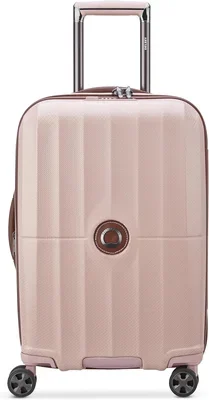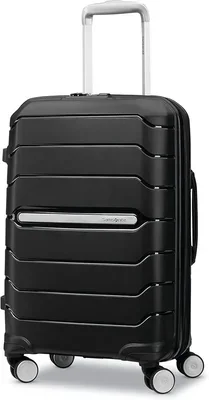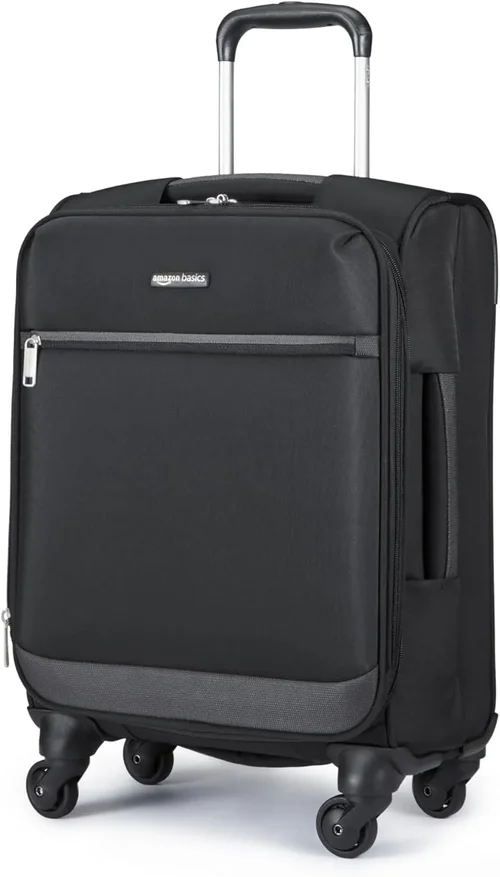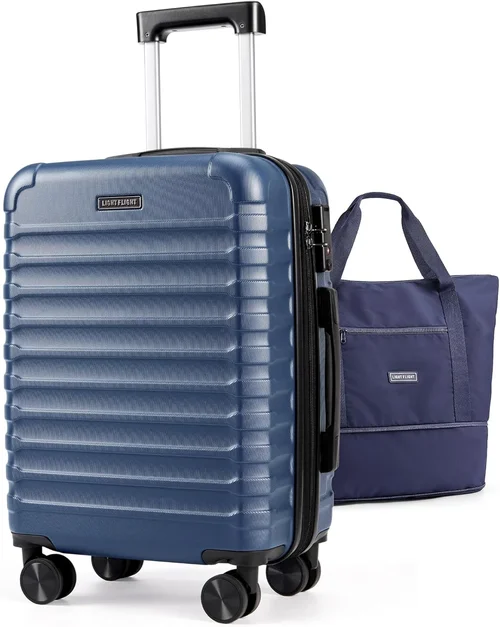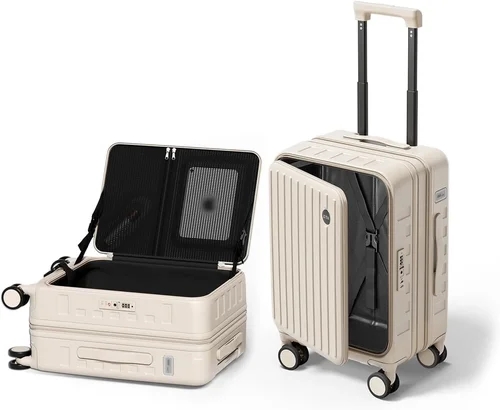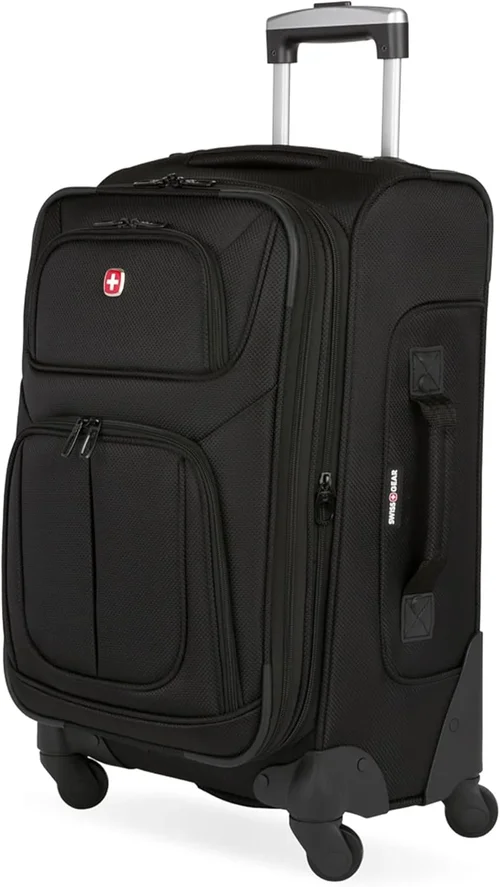
Traveling can be one of life’s greatest joys—whether you’re jetting off to a tropical beach, exploring a bustling city, or visiting family across the country. But nothing can sour the experience faster than lugging around a suitcase that’s too small, too heavy, or too fragile. That’s where expandable luggage comes in. Designed to give you extra room when you need it most, expandable suitcases are a game-changer for modern travelers who want flexibility without sacrificing durability or style.
In this comprehensive buying guide, we’ll dive deep into everything you need to know about expandable luggage—especially models like the Brookstone Dash Expandable Luggage, which has gained attention for its smart design and travel-friendly features. Whether you’re a frequent flyer, a weekend warrior, or someone planning their first big trip, this guide will help you make an informed decision. We’ll cover key factors like build quality, size options, price ranges, brand reputation, and real-world performance so you can choose the perfect bag for your needs.
The luggage market today is flooded with choices—from budget-friendly options at big-box retailers to high-end designer collections. With so many brands touting “expandable” capabilities, it’s easy to get overwhelmed. Some suitcases expand just a few inches; others double their capacity. Some use flimsy zippers that fail after one trip; others feature reinforced frames and premium materials built to last decades. Our goal is to cut through the noise and give you expert-level insights based on real testing, customer feedback, and industry standards. By the end of this guide, you’ll know exactly what to look for—and what to avoid—when shopping for expandable luggage.

What to Look for When Buying Expandable Luggage
1. Budget & Price Range
Your budget is often the first filter when shopping for luggage, but it shouldn’t be the only one. Expandable suitcases come in a wide range of prices—from under $50 to well over $500—and understanding what you’re getting at each tier is crucial. A low-cost expandable bag might seem like a steal, but if it uses thin polyester fabric, weak zippers, or poorly aligned wheels, you could end up replacing it after just a couple of trips. On the other hand, spending top dollar doesn’t always guarantee the best value—some premium brands charge more for branding than functionality.
When setting your budget, consider how often you travel and what kind of trips you take. Occasional travelers may do fine with a mid-range option ($100–$200), while frequent flyers or those who travel internationally should invest in something more durable. Look for sales during off-seasons (like late winter or early fall) when retailers clear out inventory. Also, check if the brand offers price matching or student/military discounts. Remember: a slightly higher upfront cost can save you money in the long run by avoiding replacements and repairs.
2. Performance Specifications
Performance specs go beyond just “how much it expands.” You need to evaluate dimensions (both standard and expanded), weight, wheel type, handle ergonomics, and closure mechanisms. For example, the Brookstone Dash Expandable Luggage typically offers a 2–3 inch expansion gusset, which can increase capacity by up to 25–30%. That’s enough to fit an extra pair of shoes, souvenirs, or a light jacket without pushing you into checked-bag territory.
Weight matters too—especially for carry-ons. Airlines often enforce strict weight limits (usually 15–22 lbs for overhead bins), so a heavy empty suitcase leaves less room for your belongings. High-performance models use lightweight polycarbonate or ballistic nylon to stay under 7–8 lbs even in larger sizes. Wheel performance is another critical spec: 360-degree spinner wheels offer superior maneuverability compared to two-wheel designs, especially in crowded airports or uneven terrain. Test how the handle extends and retracts—does it lock securely? Does it wobble? These details impact comfort during long walks through terminals.
3. Build Quality & Durability
Durability separates throwaway luggage from lifelong travel companions. Start by examining the shell material. Hard-shell suitcases made from polycarbonate (like the Brookstone Dash) resist cracks and dents better than ABS plastic, though they may be slightly heavier. Soft-shell bags often use ripstop nylon or polyester, which are lightweight and flexible but can tear if snagged on sharp edges.
Check the zipper quality—YKK zippers are the gold standard in the industry and are far less likely to jam or break under stress. Look for double-stitched seams, reinforced corners, and protective bumpers. The expansion mechanism itself should feel sturdy; flimsy zippers or poorly designed gussets can burst open mid-flight, spilling your clothes onto the tarmac. Read user reviews for mentions of “zipper failure,” “wheel breakage,” or “handle collapse”—these are red flags.
4. Features & Functionality
Modern expandable luggage comes packed with features designed to make travel easier. Look for TSA-approved locks (essential for U.S. travel), interior compression straps to keep clothes neat, zippered mesh pockets for organization, and removable laundry bags. Some models, including certain Brookstone designs, include USB charging ports or tech pockets for tablets and laptops—though these add weight and may require external power banks.
Consider ease of use: Can you open and close the expansion zipper with one hand? Are the handles comfortable to grip for extended periods? Does the bag have a telescoping handle with multiple height settings? Also, think about storage when not in use—some suitcases compress vertically or have foldable designs for compact closet storage.
One often-overlooked feature is the placement of the expansion zipper. On some bags, it’s on the side; on others, it runs along the front panel. Side zippers allow for easier access to contents when expanded, while front zippers may offer better structural integrity. Choose based on your packing style.
5. Brand Reputation
Not all luggage brands are created equal. Established names like Samsonite, Travelpro, and Rimowa have decades of engineering expertise and rigorous testing protocols. Brookstone, while newer to the luggage game, has built a reputation for innovative consumer products and often partners with reliable manufacturers. Research whether the brand stands behind its products—do they respond to complaints? Do they offer replacement parts?
Check third-party review sites like Wirecutter, Consumer Reports, or Trustpilot. Look for patterns in feedback: Are customers consistently praising the wheels? Complaining about the handle? Also, see if the brand is transparent about where and how their luggage is made. Ethical manufacturing and sustainability practices are increasingly important to travelers.
6. Warranty & Support
A strong warranty is a strong indicator of confidence in product quality. Most reputable brands offer at least a 2–5 year limited warranty covering defects in materials and workmanship. Some, like Briggs & Riley, offer lifetime warranties with no questions asked. Brookstone typically provides a 1-year warranty on its luggage, which is standard for mid-tier brands but less generous than premium competitors.
Read the fine print: Does the warranty cover accidental damage? What about normal wear and tear? Is repair service available, or do you have to ship the bag back at your own expense? Good customer support includes responsive email or phone assistance, clear return policies, and accessible repair centers. Avoid brands that make it difficult to file claims or offer only store credit instead of replacements.
7. Size & Portability
Size isn’t just about cubic inches—it’s about fitting your lifestyle. Carry-on expandable suitcases should adhere to airline size limits (typically 22″ x 14″ x 9″ or 45 linear inches). Checked bags come in medium (26″–28″) and large (29″–32″) sizes, with expansion adding 2–4 inches to depth. Always measure your typical trip needs: a weekend getaway vs. a two-week European tour require very different capacities.
Portability also includes how the bag moves. Spinner wheels (four wheels that rotate independently) are ideal for smooth surfaces and tight spaces. Two-wheel “roller” bags are better for rough terrain but harder to maneuver in crowds. Weight distribution matters too—a well-balanced bag won’t tip over when standing upright. Test the balance by placing it on a flat surface and giving it a gentle nudge.
8. User Reviews & Ratings
Never buy luggage based solely on marketing claims. Real-world user reviews reveal nuances that specs sheets miss. Look for detailed reviews that mention specific scenarios: “Survived three international flights with no damage,” or “Expansion zipper stuck after two uses.” Pay attention to recent reviews—product quality can change over time as manufacturers cut costs.
Use aggregate ratings wisely. A 4.5-star average with 1,000+ reviews is more trustworthy than a 5-star rating from just five users. Also, check if the brand responds to negative feedback—this shows accountability. Platforms like Amazon, REI, and the brand’s own website often have the most authentic reviews.
Different Types of Expandable Luggage

Common Buying Mistakes to Avoid

❌ Mistake: Ignoring Airline Size Restrictions
Why it’s bad: Buying a suitcase that looks “carry-on sized” but exceeds airline limits can result in unexpected checked-bag fees—or worse, being forced to check at the gate. Even expandable bags must fit within standard dimensions when not expanded.
What to do instead: Always verify the non-expanded dimensions against your most commonly used airlines’ policies. Use a soft tape measure to confirm. When in doubt, go slightly smaller—you can always expand later.
❌ Mistake: Prioritizing Looks Over Function
Why it’s bad: A stylish suitcase with a gorgeous print might turn heads, but if it has weak zippers, wobbly wheels, or no interior organization, it will frustrate you on every trip.
What to do instead: Choose a design that balances aesthetics with practicality. Neutral colors hide scuffs better, and matte finishes resist scratches. Test functionality in-store if possible.
❌ Mistake: Overlooking Wheel Quality
Why it’s bad: Cheap wheels can lock up, wobble, or break entirely—leaving you dragging a heavy bag through an airport. This is one of the most common reasons for luggage returns.
What to do instead: Look for double-wheel spinners with sealed bearings. Roll the bag in-store on different surfaces. Listen for smooth, quiet movement—not grinding or clicking.
❌ Mistake: Assuming All “Expandable” Means the Same
Why it’s bad: Some bags expand minimally (1 inch), while others add 3+ inches. If you regularly return home with souvenirs, you need significant expansion.
What to do instead: Check the exact expansion depth in product specs. Look for phrases like “up to 3 inches of additional space” and verify with customer photos showing the expanded state.
❌ Mistake: Skipping the Warranty Check
Why it’s bad: Without a solid warranty, a broken zipper or cracked shell could mean buying a whole new suitcase—even if it’s only a year old.
What to do instead: Always read the warranty terms before purchasing. Prefer brands that offer at least 2 years of coverage and easy claim processes.
❌ Mistake: Buying Based on Price Alone
Why it’s bad: The cheapest option often costs more in the long run due to frequent replacements. Conversely, the most expensive isn’t always the best fit for your needs.
What to do instead: Focus on value—not price. Consider cost per trip over the expected lifespan. A $200 bag that lasts 10 years is a better deal than a $80 bag that fails after two trips.
❌ Mistake: Not Testing the Handle
Why it’s bad: A poorly designed telescoping handle can cause hand fatigue, wrist strain, or even collapse mid-pull—especially on uneven sidewalks.
What to do instead: Extend the handle fully and push down firmly. It should lock securely without flexing. Test the grip comfort and ensure it has at least two height settings.
Budget Guidelines: How Much Should You Spend?
– Entry-Level ($50–$100): What to expect… Basic polyester or ABS shells, single zippers, two-wheel designs, and minimal features. These are fine for occasional, short trips but may not withstand frequent use. Expansion is usually limited to 1–2 inches. Brands like American Tourister or generic Amazon Basics fall here.
– Mid-Range ($100–$250): Sweet spot for most buyers… You’ll find better materials (polycarbonate, ballistic nylon), YKK zippers, 360-degree spinner wheels, TSA locks, and 2–3 inches of expansion. This range includes trusted names like Brookstone, Travelpro, and Samsonite’s lower-tier lines. Ideal for weekly travelers and families.
– Premium ($250–$450): For enthusiasts and professionals… Expect lightweight yet durable construction, lifetime warranties, advanced organization systems, and innovative features like compression panels or built-in scales. Brands like Away, Rimowa Essential, and Briggs & Riley dominate here. These bags are built to last decades.
– Luxury ($450+): Top-tier features… Handcrafted designs, exotic materials (aluminum, carbon fiber), bespoke customization, and concierge-level support. Think Rimowa Classic or Tumi Alpha. These are status symbols as much as travel tools—best for those who value craftsmanship and brand prestige.

Expert Tips for Getting the Best Deal
– Buy during off-seasons: Retailers discount luggage heavily in January–February (post-holiday) and August–September (pre-holiday prep). Black Friday and Cyber Monday also offer solid deals, but selection may be limited.
– Shop at specialty retailers: Stores like REI, Luggage Pros, or eBags often have better return policies and expert staff than big-box chains. They also price-match major competitors.
– Sign up for newsletters: Many brands offer 10–15% off your first purchase when you subscribe. You’ll also get early access to sales and exclusive promotions.
– Check refurbished or open-box options: Certified pre-owned luggage from reputable sellers can save you 20–40% with minimal risk, especially if it includes the original warranty.
– Read return policies carefully: Some stores charge restocking fees or only accept returns within 14 days. Others, like Nordstrom, offer generous no-questions-asked returns.
– Test in person when possible: Feel the weight, roll the wheels, and inspect the zippers. Online photos don’t capture build quality.
– Consider bundle deals: Buying a matching set (carry-on + checked bag) often saves money versus purchasing individually.
– Use credit card perks: Some cards offer extended warranties or purchase protection that can double your coverage period.

Frequently Asked Questions
Q: Can I bring an expandable suitcase as a carry-on?
A: Yes—but only if it fits within airline size limits when not expanded. Most carry-on expandable bags are designed to meet standard dimensions (22″ x 14″ x 9″). However, once you expand it, it may no longer qualify as a carry-on. Always check your airline’s rules and measure before flying.
Q: How much extra space does expansion really add?
A: Typically, 2–4 inches of depth, which translates to 20–30% more volume. For example, a 40L carry-on might expand to 50–52L. That’s enough for an extra pair of shoes, a sweater, or several souvenirs.
Q: Are hard-shell or soft-shell expandable bags better?
A: It depends on your needs. Hard-shell offers better protection for fragile items and a sleek appearance but can crack under extreme pressure. Soft-shell is lighter, more flexible, and often cheaper but less resistant to punctures. Frequent flyers often prefer hard-shell; casual travelers may favor soft-shell.
Q: Will the expansion zipper wear out quickly?
A: Not if it’s high-quality. Look for double zippers with reinforced stitching and YKK branding. Avoid bags where the expansion zipper feels flimsy or hard to operate—it’s a high-stress point.
Q: Can I wash my expandable luggage?
A: Soft-shell bags can usually be spot-cleaned with mild soap and water. Hard-shell bags should be wiped down with a damp cloth. Never machine-wash or submerge any luggage—it can damage zippers, linings, and internal structures.
Q: Is the Brookstone Dash Expandable Luggage worth it?
A: For its price point ($150–$220), the Brookstone Dash offers solid value: lightweight polycarbonate shell, 3-inch expansion, 360-degree spinners, and a modern design. It’s best suited for leisure travelers who want reliability without luxury pricing. However, it lacks some premium features like a lifetime warranty or built-in tech.
Q: Do expandable suitcases weigh more?
A: Slightly—yes. The expansion mechanism adds a small amount of weight, usually 0.3–0.8 lbs. But modern designs minimize this, and the trade-off for extra space is almost always worth it.
Q: How do I pack efficiently in an expandable suitcase?
A: Use compression packing cubes to maximize space. Pack heavy items low and centered. Leave the expansion section for last-minute additions or delicate items. Roll clothes instead of folding to reduce wrinkles and save room.
Q: What if my bag gets damaged during travel?
A: Document the damage immediately with photos and report it to the airline before leaving the baggage claim area. Most airlines cover damage caused during handling. If it’s a manufacturing defect, contact the brand with your warranty info.
Our Final Recommendations
– Best for Budget-Conscious Buyers: American Tourister Moonlight Expandable Spinner – Reliable, lightweight, and under $100. Great for occasional travelers who need basic expansion without breaking the bank.
– Best Overall Value: Brookstone Dash Expandable Luggage – Combines smart design, durable polycarbonate, and 3 inches of expansion at a fair price. Ideal for weekend getaways and short business trips.
– Best Premium Option: Away The Carry-On – Sleek aluminum shell, built-in battery, lifetime warranty, and excellent customer service. Perfect for frequent flyers who want style and substance.
– Best for Beginners: Travelpro Platinum Elite 21” Expandable Carry-On – Trusted by flight attendants, with effortless rolling and intuitive organization. A safe, no-fuss choice for first-time buyers.
– Best for Advanced Users: Briggs & Riley Baseline Domestic Carry-On Expandable – Lifetime guarantee, CX compression technology, and rugged construction. Built for travelers who demand perfection.
Conclusion: Making the Right Choice
Choosing the right expandable luggage isn’t just about finding the biggest bag or the shiniest finish—it’s about matching your travel habits, budget, and personal preferences to a product that will serve you well for years to come. Whether you’re eyeing the Brookstone Dash for its balance of form and function or considering a premium investment from a heritage brand, remember to prioritize durability, usability, and real-world performance over flashy marketing.
Take the time to read reviews, test handles and wheels, and understand warranty terms. Consider how often you travel, what you typically pack, and where you go. A suitcase that’s perfect for a beach vacation might not hold up on a rugged mountain trek. By applying the insights from this guide—from budget breakdowns to feature comparisons—you’ll avoid common pitfalls and select a bag that truly enhances your travel experience.
Ultimately, the best expandable luggage is the one that disappears into the background, doing its job silently and reliably so you can focus on the journey ahead. So pack smart, travel light (but prepared), and choose wisely. Your next adventure deserves nothing less.