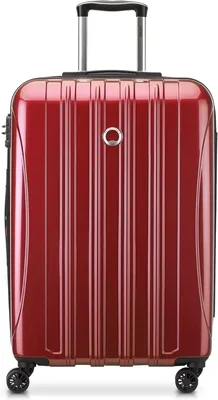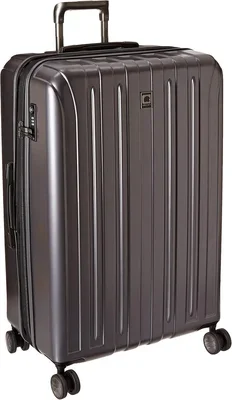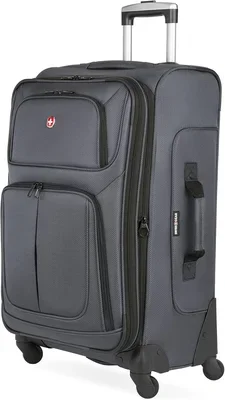
Shopping for expandable luggage can feel like navigating a maze of technical specifications, marketing buzzwords, and endless options. Whether you are a weekend warrior packing for a quick getaway, a business traveler needing maximum flexibility, or a family vacationer trying to squeeze in souvenirs, the right expandable suitcase is a game-changer. This guide exists to cut through the noise and give you the confidence to choose a travel companion that fits your life, not just your closet.
Over the next several sections, we will break down the critical factors that separate a durable investment from a disposable purchase. You will learn how to decode material jargon like “ballistic nylon” and “polycarbonate,” understand the mechanics of expansion zippers, and evaluate wheel systems that actually survive cobblestone streets. We will also explore the current market landscape, comparing budget-friendly workhorses against premium engineering marvels, so you can decide exactly where your money is best spent.
By the end of this article, you will have a clear framework for evaluating any expandable luggage on the market. We will cover common pitfalls that trap unwary buyers, provide a realistic budget breakdown, and share insider tips on when and where to buy. Let us start by looking at the absolute most important features you should evaluate before you even glance at a price tag.

What to Look for When Buying Expandable Luggage
1. Expansion Mechanism and Capacity Gain
The defining feature of this category is the expansion zipper, but not all expansion systems are created equal. The most common design uses a gusseted panel that unfolds when you unzip a secondary perimeter zipper, typically adding 1.5 to 3 inches of packing depth. This translates to roughly 15 to 25 percent more volume. When evaluating this mechanism, look for a double-coil zipper with large, easy-to-grip pulls. Cheap single-coil zippers are the number one failure point; they snag on the fabric gusset, misalign, and eventually burst under pressure.
Pay attention to how the expanded shape affects the bag’s center of gravity. A well-designed expandable suitcase expands outward from the center or evenly around the perimeter, keeping the weight balanced over the wheels. Some budget models only expand on one side (usually the lid), making the case top-heavy and prone to tipping over when stood upright. Test the zipper action in the store if possible—it should glide smoothly without forcing. If it catches on the fabric liner during a showroom test, it will fail on a packed trip.
2. Shell Material: Hardside vs. Softside Construction
This is the foundational decision that dictates durability, weight, and packing style. Hardside luggage (polycarbonate, polypropylene, ABS, or aluminum) offers superior protection for fragile items, is water-resistant, and slides easily into tight overhead bins because the shell does not deform. Polycarbonate is the gold standard for the best strength-to-weight ratio; it flexes under impact rather than cracking. ABS is cheaper but brittle—avoid it for checked luggage. Aluminum is virtually indestructible but heavy and expensive.
Softside luggage (ballistic nylon, Cordura, polyester) uses high-denier fabrics. “Denier” (D) refers to fiber thickness; higher numbers (1680D, 1680D ballistic) indicate a tighter, more abrasion-resistant weave. Ballistic nylon was originally developed for flak jackets—it resists tears and punctures exceptionally well. Softside bags usually feature exterior pockets for quick access to documents or liquids, and the fabric gives slightly, allowing you to stuff them into irregular spaces (like a packed car trunk). However, they absorb water unless treated with a durable water repellent (DWR) coating, and they offer less crush protection for electronics or souvenirs.
3. Wheel System: Spinner vs. Inline Skate Wheels
The wheel assembly dictates 80 percent of your travel experience. Four-wheel spinners (360-degree rotation) are the modern standard for a reason: they allow you to push the bag beside you, navigate narrow airplane aisles sideways, and roll effortlessly on smooth airport floors. Look for double-spinner wheels (two wheels per corner, eight total). They distribute weight better, are significantly more stable on uneven pavement, and if one wheel breaks, the corner still rolls.
Two-wheel inline (roller) bags have larger diameter wheels recessed into the body. They excel on rough terrain—cobblestones, gravel, cracked sidewalks—because the larger wheels roll over obstacles rather than getting swallowed by them. They also offer more interior volume since the wheels don’t protrude into the packing cavity. If your travel involves European train stations, dirt paths, or curbside check-ins, two-wheelers are often the smarter choice. Ensure the wheel housing is reinforced with metal brackets or heavy-duty polymer, not just screwed into the plastic shell.
4. Handle System: Telescoping Mechanism and Ergonomics
A handle that jams, wobbles, or digs into your knuckles ruins a trip. The telescoping handle should be made of aircraft-grade aluminum or high-strength steel with at least three locking positions (short, medium, tall) to accommodate different heights. Test the extension and retraction: it should be smooth, silent, and lock positively with an audible click. Avoid handles with plastic internal gears; they strip quickly.
Grip material matters for comfort. Contoured rubber or gel grips reduce hand fatigue during long walks. Some premium models feature a “comfort track” system where the handle tubes are on the outside of the interior cavity, leaving a flat, uninterrupted packing floor. This is a huge advantage for packing cubes and folded suits. Also check the top and side carry handles—are they padded? Are they riveted or stitched with box-X reinforcement? You will lift this bag more than you roll it (into trunks, overhead bins, onto scales).
5. Interior Organization and Packing Features
The interior layout determines how efficiently you can use that expanded volume. Look for a full-length zippered divider between the two halves. This keeps contents compressed on one side while you pack the other. The best dividers have multiple mesh pockets (for underwear, cables, toiletries) and a wet pocket (water-resistant lining for swimwear or toiletries).
Compression straps (ideally two per compartment, crossing in an X-pattern) are essential. They cinch down clothing to prevent shifting and wrinkles, and they allow you to maximize the expansion zipper’s capacity. Some high-end bags include a removable garment sleeve or suiter for business attire. If you pack cubes (highly recommended), verify the interior dimensions are “cube-friendly”—rectangular with minimal intrusion from wheel wells or handle tubes. A flat bottom when expanded is critical for cube stability.
6. Weight and Airline Compliance
Every ounce of luggage weight is an ounce less you can pack. Most major airlines enforce a 50 lb (23 kg) weight limit for checked bags and strict linear dimension limits (typically 62 linear inches: length + width + height) for both checked and carry-on. A heavy empty bag (over 10 lbs for a large checked spinner) eats into your allowance before you pack a single sock.
Target weights: Carry-on spinners should be 6.5–7.5 lbs; Medium checked (25–27″) 8–9.5 lbs; Large checked (28–30″) 9.5–11.5 lbs. Ultra-light models (under 6 lbs for carry-on) often sacrifice durability (thinner shells, minimal frames). Weigh the empty bag yourself if possible—manufacturer specs can be optimistic. Remember that expanding the bag increases its linear dimensions; a carry-on that expands may exceed overhead bin limits when fully unzipped. Check the expanded dimensions in the specs, not just the standard ones.
7. Security Features: Locks, Zippers, and Frame Integrity
Security is layered. First, the TSA-approved combination lock is mandatory for checked luggage in the US. It allows security agents to inspect and relock your bag without cutting it. Ensure the lock is integrated into the frame (hardside) or a lockable zipper pull (softside), not a flimsy aftermarket padlock loop. Second, puncture-resistant zippers (like YKK RCW or similar coil zippers with a lockable slider) prevent the “pen trick” where a thief opens a zipper with a ballpoint pen and re-zips it closed. Third, a rigid frame or reinforced corners prevents the shell from being pried open at the seams, a common vulnerability on cheaper hardside cases where the shell flexes enough to pop the zipper track.
8. Warranty, Repairability, and Brand Support
Luggage takes a beating. A warranty is only as good as the company backing it. Lifetime warranties (common on premium brands like Briggs & Riley, Tumi, Travelpro, Osprey) often cover functional damage (wheels, handles, zippers) but rarely cover cosmetic damage (scratches, dents) or airline abuse. Read the fine print: does “lifetime” mean the product’s life or your life? Is it transferable? Crucially, check repairability. Can you buy replacement wheels, handles, or zipper pulls directly from the manufacturer? Brands with dedicated repair centers or authorized service networks (like Briggs & Riley’s “Simple as That” warranty or Travelpro’s repair program) save you from buying a new bag when a $15 wheel breaks. Avoid “final sale” or no-name brands with zero support infrastructure.
Different Types of Expandable Luggage

Common Buying Mistakes to Avoid
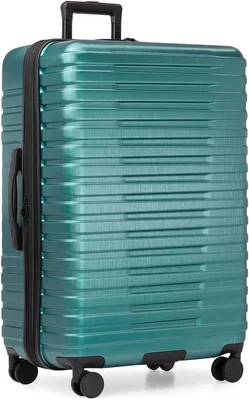
❌ Mistake: Buying Based Solely on Brand Name or Aesthetics
Why it’s bad: A famous logo or a trendy color does not guarantee wheel durability or zipper quality. Many “designer” brands license their name to manufacturers who cut corners on internal components (handle mechanisms, wheel bearings) while charging a premium for the label. You end up paying for marketing, not engineering.
What to do instead: Research the specific model’s component specs. Look for brands that engineer their own hardware (Travelpro, Briggs & Riley, Rimowa, Samsonite’s higher lines). Read 2- and 3-star reviews on retailer sites—they often reveal consistent structural failures that 5-star “looks great!” reviews miss.
❌ Mistake: Ignoring “Expanded Dimensions” for Carry-Ons
Why it’s bad: You buy a carry-on that fits the airline’s sizer in its standard state. You pack it full, expand it for the return trip (souvenirs!), and suddenly it exceeds the maximum linear inches. Gate agents will force you to check it, often with a hefty fee ($35-$75+), and you lose the convenience you paid for.
What to do instead: Check the manufacturer’s listed expanded dimensions. If they exceed your most flown airline’s limits (e.g., 22 x 14 x 9 inches for many US domestic), either don’t expand it on the return, or buy a non-expanding carry-on and a separate foldable duffel for overflow.
❌ Mistake: Choosing the Lightest Bag Possible Without Checking Durability
Why it’s bad: Ultra-lightweight luggage (sub-5 lbs for a 26″ checked) achieves that weight by using thinner shell walls, minimal internal framing, smaller wheel diameters, and lighter handle tubes. These bags crack, dent, and suffer handle failure significantly faster. A 3-lb weight saving is meaningless if the bag cracks on trip two.
What to do instead: Target the “sweet spot” weights mentioned earlier (Section 6). A 7.5 lb carry-on or 9.5 lb large checked bag made of quality polycarbonate or ballistic nylon will last 5-10 years. The extra 1-2 lbs over the ultralight category buys you massive durability gains.
❌ Mistake: Overlooking Wheel Housing Design
Why it’s bad: On many spinners, the wheels are mounted on plastic posts molded into the shell. A hard impact (throwing onto a conveyor, hitting a curb) snaps the post, rendering the bag a drag-bag. Replacing the whole shell is rarely economical.
What to do instead: Look for replaceable wheel modules that bolt onto a metal frame or reinforced corner brackets (common on Travelpro, Briggs & Riley, high-end Samsonite). Spin the wheels in the store—check for lateral play (wobble). Minimal wobble indicates tight tolerances and better bearings.
❌ Mistake: Assuming “Expandable” Means “Pack More Weight”
Why it’s bad: Expansion adds volume, not weight capacity. The airline weight limit (usually 50 lbs) remains the same. If you expand a large checked bag fully, you can easily pack 70+ lbs of clothes. You will pay massive overweight fees ($100-$200 per bag) or be forced to repack at the counter.
What to do instead: Use expansion for bulky but light items (puffy jackets, sweaters, dirty laundry on return, souvenirs). Keep dense items (shoes, books, electronics) in the non-expanded core. Weigh your bag at home with a luggage scale.
❌ Mistake: Neglecting Interior Lining Quality and Seam Construction
Why it’s bad: Thin, unlined interiors or raw-edged seams snag delicate fabrics (silk, knits, compression cubes). Loose threads catch on zippers. Cheap lining tears at the corners, spilling contents into the frame channels where they are impossible to retrieve.
What to do instead: Look for fully lined interiors with bound (finished) seams. High-quality lining is often 150D-210D polyester or nylon with a soft hand. Check that the lining is tacked down at the corners and zipper edges so it doesn’t bunch up and get caught in the expansion zipper.
❌ Mistake: Buying a “Set” Without Evaluating Each Piece Individually
Why it’s bad: 3-piece sets (carry-on, medium, large) are often priced attractively, but the medium and large sizes frequently share the same handle system and wheel size. The large bag, being heavier, stresses those components beyond their design limit, leading to premature failure. You also may not need three sizes.
What to do instead: Buy pieces individually based on your actual travel patterns. Most travelers need a high-quality carry-on and one checked size (usually 26-27″). Spend the set budget on two superior individual bags rather than three compromised ones.
Budget Guidelines: How Much Should You Spend?
Entry-Level ($80 – $180 per bag)
At this tier, you are buying primarily ABS hardside or 600D-1200D polyester softside. Expect: single-coil zippers, plastic handle gears, riveted (non-replaceable) single-spinner wheels, minimal interior organization, and 1-5 year limited warranties. These bags work fine for occasional leisure travel (1-2 trips per year) on smooth surfaces. They will likely show cosmetic wear fast (scratches, scuffs) and functional wear (wheel wobble, handle stick) within 2-3 years of frequent use. Brands: American Tourister, Rockland, Merax, basic Samsonite lines (e.g., Winfield 2 – though that edges into mid-range). Best for: Infrequent flyers, kids’ luggage, tight budgets.
Mid-Range ($180 – $350 per bag) — The Sweet Spot
This is where value peaks. You get: Polycarbonate shells (often Makrolon or Bayer sourced) or 1680D ballistic nylon/Cordura; YKK RCW or equivalent puncture-resistant zippers; double-spinner wheels (often replaceable); aluminum handle tubes with 3+ stops; fully lined interiors with bound seams and compression straps; TSA locks integrated; 10-year to Lifetime warranties with actual repair networks. Weight is optimized but not stripped. Brands: Travelpro (Platinum Elite, Maxlite 5), Samsonite (Freeform, Omni PC hardside; Silhouette XV softside), Briggs & Riley (Baseline Domestic – entry to their line), Delsey (Chatelet Air 2.0), Eagle Creek. Best for: Frequent flyers (4-10 trips/year), business travelers, anyone wanting a 5-10 year bag.
Premium ($350 – $650 per bag)
You pay for: Advanced material engineering (e.g., Tegris thermoplastic composite, Curv woven polypropylene, Roxkin multi-layer), precision-molded shell geometry for stiffness at lower weight, ball-bearing double-spinner wheels (silent, buttery smooth), titanium or carbon-fiber handle tubes, modular interior systems (removable packing cubes, wet pockets, suiter systems), exceptional warranty service (often “no questions asked” functional lifetime), and refined aesthetics. Brands: Briggs & Riley (Sympatico, Torq), Tumi (19 Degree, Latitude), Rimowa (Essential, Original – though Rimowa expansion is limited), Victorinox (Spectra 3.0). Best for: Heavy travelers (15+ trips/year), road warriors, those who value seamless experience and resale value.
Luxury / Specialty ($650 – $1500+ per bag)
This tier includes: Aluminum (Rimowa Original, Tumi Alpha 3 Aluminum), full-grain leather accents, hand-stitched details, proprietary suspension wheel systems, integrated digital tracking (GPS/Bluetooth), bespoke customization, and white-glove concierge repair service. The functional durability gain over Premium is marginal; you are paying for heritage, status, materials, and service experience. Best for: Luxury travelers, collectors, gift buyers, those for whom luggage is a lifestyle statement.
Expert Tips for Getting the Best Deal
- Timing is Everything: The absolute best sales are January (post-holiday clearance), May (Memorial Day), July (Prime Day / Summer travel prep), and November (Black Friday / Cyber Monday). Mid-range and premium brands rarely discount outside these windows. Sign up for brand newsletters for “friends and family” 20-25% off codes.
- Buy “Previous Generation” Models: When a brand updates a line (e.g., Travelpro Platinum Elite v2 to v3), the previous version drops 30-40% instantly. The changes are often cosmetic (new colors, slightly reshaped handle grip). The core components (wheels, frame, zipper) are usually identical. Check manufacturer “Outlet” or “Renewed” sections.
- Leverage Authorized Retailer Price Matching: Many luggage specialty stores (e.g., eBags, Luggage Pros, Paravel, brand direct sites) will match competitor prices and throw in free shipping/returns or a packing cube set. Ask via chat before buying.
- Check “Open Box” / Returned Stock: Major retailers (Amazon Warehouse, Nordstrom Rack, REI Garage, brand outlet stores) sell returned luggage at steep discounts. Since most returns are for “wrong size” or “color not as pictured,” the bag is often pristine. Inspect wheels and zippers upon arrival; return window still applies.
- Register Your Warranty Immediately: Take 5 minutes to register the serial number on the brand’s website the day it arrives. This activates the lifetime warranty, proves ownership for claims, and often extends coverage (e.g., Briggs & Riley adds 1 year). Save the receipt PDF in your cloud storage.
- Test the “Wobble Factor” Before First Trip: Pack it to your typical travel weight. Roll it on carpet, hardwood, and sidewalk. Check handle wobble at full extension. Check spinner alignment (does it track straight when pushed?). Identify defects before you are at the airport. Most brands have a 30-100 day “love it or return it” policy.
- Invest in a Luggage Scale and Packing Cubes: A $10 digital scale saves $100+ in overweight fees. Packing cubes (e.g., Eagle Creek, Gonex, Peak Design) transform the expandable cavity into organized drawers, prevent the “exploding suitcase” when you open the expansion zipper, and make TSA inspection painless.
- Know Your Airline’s Specifics: Budget airlines (Spirit, Frontier, Ryanair, Basic Economy on majors) have stricter carry-on size/weight limits and charge for overhead bins. If you fly these often, prioritize a non-expanding, ultra-light carry-on (under 6 lbs) that fits their personal item sizer (under seat) or a specific “underseater” expandable bag. Don’t buy a standard 22″ spinner for Spirit Airlines.

Frequently Asked Questions
Q: Does expanding my luggage make it more likely to break?
A: Not if the bag is well-made. Quality expansion gussets are reinforced with binding tape and use heavy-duty zippers designed for the stress. However, overpacking an expanded bag stresses the zipper teeth, seams, and frame. The expansion zipper is a structural seam when closed; when open, it bears the load of the contents pressing outward. Pack the expanded section with lighter, compressible items (clothing), not dense heavy items. Keep the main compartment cinched with compression straps to transfer load to the frame, not the zipper.
Q: Can I use an expanded carry-on as a checked bag?
A: Physically, yes. But it is risky. Expanded carry-ons often exceed the 62 linear inch checked limit (e.g., a 22x14x9 carry-on expanded to 22x14x11 = 47 linear inches — fine. But a 22x14x10 expanded to 22x14x12.5 = 48.5 — still fine. The danger is weight: a fully expanded carry-on packed dense can easily hit 40-50 lbs. If the airline weighs it at the gate (common on basic economy or international), you pay checked fees plus potential overweight fees. Also, carry-on frames/wheels are lighter duty than checked bags. Checking a carry-on regularly shortens its life significantly.
Q: How do I clean expandable luggage?
A: Hardside: Wipe exterior with mild soap (dish soap) and water; use a magic eraser for scuff marks on textured polycarbonate. Avoid harsh solvents (acetone, alcohol) on painted/coated finishes. Clean wheels: remove hair/debris from axles with tweezers; spray silicone lubricant (not WD-40) into bearings annually. Softside: Spot clean with upholstery cleaner or mild detergent. Do not machine wash—it destroys waterproof coatings and frame structure. For deep cleaning, use a soft brush and diluted woolite; rinse with damp cloth; air dry fully open. Vacuum interior. Lubricate zippers with zipper wax or silicone stick.
Q: What is the difference between “Expandable” and “Expandable with Suiter”?
A: A standard expandable bag just adds depth via a gusset. An “Expandable with Suiter” includes a dedicated, often removable, garment sleeve or folding panel (suiter) that hangs inside one half of the bag, secured by the lid straps. It allows you to pack a suit, dress, or blazer flat to minimize wrinkles. The suiter itself takes up volume. When expanded, you gain space around the suiter. If you travel for business weekly, a built-in suiter is worth the slight weight/price premium. If rare, a removable suiter (or separate garment bag) is more versatile.
Q: Are spinner wheels really worse on rough terrain?
A: Yes, physics dictates this. Small diameter (typically 1.5-2.5 inch) spinner casters have a high “attack angle” on cracks, gaps, and stones—they fall in and stop. Large diameter (3-4+ inch) inline wheels roll over them. Double spinners (8 wheels) mitigate this significantly by distributing load across two contact points per corner. If 80%+ of your rolling is on smooth airport/hotel/hard floors, spinners win for maneuverability. If you regularly navigate cobblestones, gravel driveways, broken sidewalks, or train platforms with gaps, two-wheel uprights or hybrid frame-load bags are superior.
Q: How important is the “Denier” rating on softside luggage?
A: It is a useful baseline but not the whole story. Denier (D) measures the linear mass density of fibers. Higher D = thicker thread. However, weave type (ballistic vs. twill vs. plain) and coating (PU, PVC, TPU, DWR) matter enormously. 1680D Ballistic Nylon (2×2 basket weave) is vastly more tear/abrasion resistant than 1680D Polyester (plain weave). 840D Ballistic can outperform 1680D Polyester. Look for “Ballistic Nylon” or “Cordura” branding + high Denier (1000D+). Also check for “self-healing” zipper coils and bound interior seams—those indicate overall build quality more than Denier alone.
Q: Can I replace the wheels myself?
A: On many mid-range and premium bags, yes. Brands like Travelpro, Briggs & Riley, Samsonite (higher lines), and Eagle Creek sell wheel kits ($15-$40 per pair) and provide instructional videos. You typically need a Phillips screwdriver and sometimes a wrench. On budget bags (riveted wheels, molded-in posts) or some premium monocoque designs (Rimowa Essential), wheels are not user-replaceable—you need authorized repair. Check the manufacturer’s website for “Parts & Repair” before buying if self-repair matters to you.
Q: What does “Linear Inches” mean and how do I calculate it?
A: Linear inches = Length + Width + Height (including wheels, handles, and any protruding bits like expansion zippers or kick plates). Measure the bag at its widest points. Example: 27.5″ H + 18.5″ W + 11.5″ D = 57.5 linear inches. This is under the standard 62-inch checked limit. Critical: Measure your bag, don’t trust the spec sheet. Manufacturers often measure the box, not the protruding wheels/handle. An “62 linear inch” bag might actually be 63.5 with wheels. That 1.5 inches triggers oversize fees ($150-$200) on many airlines.
Q: Is a built-in USB port / power bank pocket worth it?
A: Generally, no for the integrated port itself. The port is just a pass-through cable (USB-A or USB-C) running from an interior pocket to the exterior. You still must supply your own power bank. The cable adds a failure point (fraying, snagging) and the exterior port is a snag hazard. Most airlines require power banks to be removable and carried in the cabin. If you check the bag, you must remove the bank anyway. Better: Buy a bag with a dedicated, padded, easily accessible interior power bank pocket (with cable routing grommet) and run your own short cable to your device. Or just keep the bank in an exterior pocket.
Q: How do I prevent wrinkles when using the expansion zipper?
A: The expansion zipper creates a gap. If you pack loosely, clothes shift into the gap and wrinkle. Solution: 1) Use packing cubes—they hold shape regardless of expansion. 2) Use the compression straps tightly on the main compartment before expanding. 3) Pack the expanded zone last, with items that don’t wrinkle (knits, activewear, underwear, dirty laundry return). 4) Use tissue paper or dry cleaner bags between layers of woven fabrics (linen, cotton shirts) — the slip prevents creasing. 5) Hang items immediately upon arrival; use the hotel shower steam trick.
Our Final Recommendations
Best for Budget-Conscious Buyers: Samsonite Freeform Hardside Spinner (21″ Carry-On / 25″ / 28″)
This is the benchmark for sub-$200 polycarbonate. It uses a genuine polycarbonate shell (not ABS blend), double-spinner wheels that are surprisingly smooth, a decent 3-stage aluminum handle, and a TSA lock. The expansion zipper is a standard coil but holds up well. Interior is basic but functional with cross straps and a divider. Warranty is 10-year limited. It weighs ~6.7 lbs (carry-on) / ~9.3 lbs (28″). For 1-3 trips a year, this is unbeatable value. Avoid the 3-piece set; buy the 21″ and 25″ separately if you need both.
Best Overall Value (Mid-Range Sweet Spot): Travelpro Platinum Elite 21″ / 25″ / 27″ Expandable Spinner
This is the bag airline crews buy with their own money. The “Magnatrac” double-spinner wheels are the smoothest, quietest, and most durable in the class—replaceable in minutes. The “PowerScope” handle has a contoured grip and stops precisely at 3 heights with zero wobble. The polycarbonate shell uses a honeycomb structure for stiffness. Interior features the “WetPak” pocket, suiter clip, and tie-down straps. Lifetime warranty covers functional damage; Travelpro’s repair center is excellent. Weight: 7.1 lbs (21″) / 9.4 lbs (27″). Price ~$280-$330. It lasts a decade.
Best Premium Option: Briggs & Riley Sympatico CX 22″ / 25″ / 28″ Hardside Spinner
If budget allows, this is engineering perfection. The shell is Makrolon polycarbonate with a woven fiber reinforcement layer (similar to Curv) — incredibly light, stiff, and crack-resistant. The “CX” expansion system is unique: it expands and compresses with a single zipper, using a hidden internal panel that locks the expansion in place, preventing the “bulge.” The “Outsider” handle is external, giving a perfectly flat interior floor. Double-spinner wheels are whisper-quiet. The “Simple as That” lifetime warranty is the industry gold standard—covers airline damage, no receipt needed, free shipping both ways for repairs. Weight: 6.2 lbs (22″) / 8.6 lbs (28″). Price: $450-$600. Worth every penny for heavy travelers.
Best for Beginners / Simple Needs: Travelpro Maxlite 5 Softside Expandable Spinner
For someone wanting lightweight softside simplicity without the complexity of hardside shells or premium pricing. It uses 1200D polyester with DuraGuard coating (water/stain resist). It is very light: 5.4 lbs (21″) / 7.2 lbs (27″). The “PowerScope Lite” handle is 2-stage but sturdy. Wheels are 360-degree spinners (single, not double, but high quality). Two exterior pockets (full-width front, side). Interior has full-zip divider, padded laptop/tablet sleeve (on 21″), and tie-down straps. Lifetime warranty + “Trusted Companion Promise” (covers airline damage for 1 year). Price: ~$160-$220. Perfect for first “real” luggage upgrade.
Best for Advanced Users / Adventure Travel: Osprey Rolling Transporter 40 / 60 / 90 (or Eagle Creek Cargo Hauler)
If your “expandable” need is gear hauling (ski boots, camera cases, diving gear, climbing rack) on rough ground, wheels on a suitcase are the wrong tool. These are frame-load duffels on a chassis. They have massive, replaceable 110mm treaded wheels, a retractable handle, and stowable backpack straps. The main compartment opens like a book (clamshell) with full access. Expansion is via end pockets or compression straps cinching down. Fabrics are 800D-1000D recycled nylon with TPU coating—bombproof. No interior organizers (add your own cubes). Lifetime “All Mighty” warranty. Price: $280-$380. For the traveler whose luggage sees dirt, snow, and truck beds.
Conclusion: Making the Right Choice
Choosing the right expandable luggage is ultimately about matching the tool to your travel reality. We have walked through the critical anatomy—expansion mechanics that won’t fail, shell materials that match your protection needs, wheel systems that suit your terrain, handles that fit your hand, and interiors that organize your life. We have exposed the common traps: the ultra-lightweight illusion, the carry-on expansion size trap, the misleading set discount, and the warranty fine print.
You now have a budget framework that maps price to genuine value, not marketing tiers. You know the “sweet spot” lives in the $180-$350 range for most travelers, where polycarbonate or ballistic nylon meets replaceable double-spinner wheels and lifetime repair support. You have expert timing strategies to buy that sweet spot bag at a discount. And you have specific, vetted recommendations for every traveler profile—from the occasional vacationer to the globe-trotting road warrior to the gear-hauling adventurer.
Remember, the best luggage is the one you don’t think about during your trip. It rolls silently beside you, fits the overhead bin (even expanded), survives the baggage carousel unscathed, and opens to reveal an organized, wrinkle-free wardrobe. Invest in the quality that delivers that invisibility. Your future self, sprinting for a connection or hauling souvenirs through a rainy cobblestone street, will thank you. Safe travels, and pack smart.