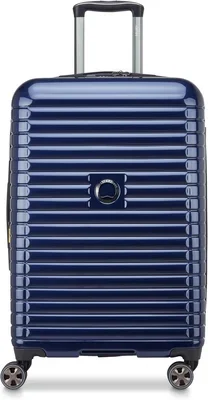
Shopping for luggage can feel overwhelming, especially when you’re staring at a wall of polycarbonate shells all promising durability, lightness, and smooth rolling. If you’ve landed on the Delsey Paris Air Armour 2.0 Hardside Expandable Spinner, you’re already looking at one of the most compelling contenders in the mid-to-premium hardside market. But a smart purchase isn’t just about picking a popular name—it’s about matching a suitcase’s specific engineering to your unique travel habits. This guide exists to bridge that gap. We’re going to peel back the marketing layers and look at the nuts and bolts: the material science behind the shell, the geometry of the spinner wheels, the reality of the expansion gusset, and the fine print of the warranty. By the end, you’ll know exactly which size fits your trip length, whether the price aligns with the value, and how to spot a deal that’s actually worth taking.
The luggage market is flooded with options ranging from budget-friendly basics under $100 to luxury status symbols north of $600. The Air Armour 2.0 sits in a fascinating sweet spot—typically retailing between $220 and $350 depending on size and retailer—offering features often reserved for higher price tiers, like a TSA-approved combination lock integrated into the frame, a fully lined interior with a laundry divider, and Delsey’s proprietary “Securitech” zipper system. But specs on a page don’t tell you how the handle feels after sprinting through a terminal, or whether the expansion zipper holds up when you’ve overpacked for a two-week European tour. That’s where this deep dive comes in. We’ll walk through every critical factor, compare the lineup against itself and the competition, highlight the costly mistakes frequent travelers make, and give you a clear budget roadmap so you can buy with total confidence.

What to Look for When Buying Buying Guide
1. Shell Material and Impact Resistance
The very first thing to understand about any hardside luggage is what it’s made of. The Air Armour 2.0 uses 100% polycarbonate. In layman’s terms, polycarbonate is a high-performance thermoplastic—think of the material used in riot shields or motorcycle helmet visors. It’s not the same as ABS plastic (common in cheaper bags) which tends to crack under sharp impact or become brittle in cold cargo holds. Polycarbonate has a unique property: it flexes under stress and snaps back to its original shape. This means if a baggage handler drops your bag on a corner, or a heavy stack shifts during turbulence, the shell absorbs that energy by bending slightly rather than shattering.
Delsey takes this a step further with a textured finish on the Air Armour 2.0. That subtle diamond-pattern texture isn’t just for looks; it acts like a fingerprint disguise for scratches. A smooth, glossy shell shows every scuff from conveyor belts immediately. The textured matte finish hides the inevitable wear and tear, keeping your luggage looking newer for longer. When evaluating this factor, press your thumb firmly into the shell. It should have a slight give—a reassuring firmness—not feel like a thin plastic storage bin. Also, check the corners. The Air Armour 2.0 features reinforced corner guards. These are the sacrificial zones; they take the beating so the main shell structure doesn’t have to.
2. Wheel Engineering and Maneuverability
Wheels are the heartbeat of a spinner. The Air Armour 2.0 rolls on four double-spinner wheels. “Double spinner” means each corner has two wheels side-by-side on a single axle, rotating 360 degrees independently. This is a massive upgrade over single wheels. Why? Physics. Double wheels distribute the load across a wider surface area. When you tilt the bag to roll it beside you, a single wheel bears the full weight on a tiny contact patch, leading to wobble and rapid bearing wear. Double wheels share that load, tracking straighter over cracks in pavement, carpet seams in hotels, and those dreaded cobblestone streets in old European cities.
But the wheel housing matters just as much as the wheel count. Look for recessed wheels. On the Air Armour 2.0, the wheels sit partially inside the shell profile. This does two things: it protects the wheels from snapping off if the bag is dropped corner-first, and it maximizes internal packing volume because the wheel wells don’t intrude as deeply into the main compartment. Cheap luggage often has wheels bolted onto the outside with flimsy plastic brackets—those are the first things to go. Grab the handle and push the bag around the store (or your living room). It should glide silently with one finger. If you hear grinding or feel resistance, the bearings are low quality or the axle alignment is off.
3. Handle System Ergonomics and Durability
The telescoping handle is your primary interface with the bag. The Air Armour 2.0 features a dual-tube aluminum handle with multiple locking heights. “Dual-tube” means two parallel aluminum tubes run inside the handle channel. This is significantly stronger than a single tube, resisting the bending torque that happens when you yank a stuck bag off a carousel or pull it up stairs. The locking mechanism should engage with a solid, audible click at each height stop—usually three positions to accommodate different user heights.
Pay attention to the grip material. Delsey uses a soft-touch thermoplastic rubber (TPR) grip. It should feel tacky enough to hold with sweaty hands but not so soft that it tears after a few trips. Also, check the top carry handle and the side carry handle. The side handle is crucial for hoisting the bag into overhead bins or car trunks. On the Air Armour 2.0, it’s riveted through the shell with metal hardware, not just screwed into plastic. Give it a firm tug. There should be zero flex at the attachment points. A handle that pulls out of the shell renders a $300 bag useless instantly.
4. Security Features: Zippers, Locks, and Frames
This is where Delsey genuinely differentiates itself. The Air Armour 2.0 uses the Securitech 2 Zipper. Standard coil zippers can be forced open with a ballpoint pen in seconds—the coils separate, the thief takes what they want, and they zip it back up leaving no trace. Securitech zippers have reinforced, wider teeth and a unique slider design that resists this penetration force by up to three times, according to independent testing. It’s not “theft-proof” (nothing is), but it raises the difficulty bar significantly, deterring opportunistic theft.
The integrated TSA combination lock is recessed into the frame, not dangling on a strap. This is a design win. A dangling lock gets caught on conveyor belts, snaps off, or gets smashed. The recessed lock sits flush. It’s a three-dial combination (user-settable) with a TSA keyway on the bottom. Critical tip: Register your combination on Delsey’s website or take a photo of it the moment you set it. If you forget it, a locksmith can open it, but it’s a hassle. Also, understand that TSA agents have master keys. If they inspect your bag, they relock it. But sometimes they don’t, or the lock gets damaged. The Air Armour 2.0’s lock is replaceable by a luggage repair shop, which extends the bag’s life.
5. Interior Organization and Expandability
Open the clamshell. You’re looking at a 50/50 split opening. The Air Armour 2.0 gives you a fully lined interior on both sides. One side typically has a zippered divider panel with a large mesh pocket (great for dirty laundry or shoes). The other side has cross-strap compression system (X-straps) to lock clothes down. The expansion gusset runs around the perimeter of the lid. When unzipped, it adds roughly 1.5 to 2 inches of packing depth—translating to roughly 15-20% more volume.
Here’s the reality of expansion: it changes the bag’s dimensions. A carry-on that expands might no longer fit the sizer at the gate. If you expand a checked bag, you risk exceeding the 62 linear inches (L+W+H) standard for oversized fees. Use expansion strategically: pack the base configuration for the outbound trip, expand only for the return when you’ve accumulated souvenirs. Also, check the zipper track on the expansion gusset. It should be a heavy-duty #10 coil zipper (large teeth) because it takes immense tension when the bag is stuffed. The Air Armour 2.0 uses a robust zipper here, but always zip it slowly and align the teeth to prevent snagging.
6. Weight vs. Capacity Ratio
Every ounce of luggage weight is an ounce less you can pack before hitting airline limits. The Air Armour 2.0 carry-on (21-inch) weighs approximately 7.1 lbs (3.2 kg). The medium (25-inch) is around 9.3 lbs (4.2 kg), and the large (29-inch) hits about 11.2 lbs (5.1 kg). Are these the absolute lightest on the market? No. Ultra-light polycarbonate spinners (like some Samsonite or Travelpro models) can shave 1-2 lbs off these numbers. But they often achieve that by using thinner shell walls, smaller wheel housings, or less robust handle mechanisms.
The Air Armour 2.0 strikes a deliberate balance: it’s light enough for most travelers to manage, but heavy enough to feel substantial and protective. If you’re a chronic overpacker who hits the 50 lb checked bag limit every time, every pound of tare weight hurts. If you pack light and value the bag surviving a rough handling, the extra pound is insurance. Weigh your empty bag at home on a bathroom scale. Know your airline’s specific weight limits (they vary wildly—some international carriers allow only 33 lbs for checked bags in economy). Match the bag size to your typical trip duration: 21-inch for 3-5 days carry-on only; 25-inch for 7-10 days checked; 29-inch for 2+ weeks or family packing.
7. Warranty Coverage and Brand Support
Delsey Paris offers a 10-year limited warranty on the Air Armour 2.0. “Limited” is the keyword. It covers manufacturing defects in materials and workmanship—broken handle mechanisms, wheel bearings seizing, zipper failure, shell cracking under normal use. It does not cover airline damage (crushed corners, torn wheels, punctured shells), cosmetic wear (scratches, dents), or damage from misuse (overpacking until seams burst). This is standard across the industry (Samsonite, Travelpro, Briggs & Riley all have similar exclusions).
What matters is the claim process. Delsey has authorized repair centers in many major cities. If a wheel breaks, you don’t ship the whole bag to France; you take it to a local shop, they order the part from Delsey’s US distributor, and fix it. Keep your proof of purchase (receipt or order confirmation). Register the product on Delsey’s website immediately after buying—it streamlines claims. Compare this to “lifetime warranties” from brands like Briggs & Riley or Osprey, which often cover airline damage but come with a significantly higher upfront price tag. The Air Armour 2.0’s 10-year warranty is a strong vote of confidence in the build quality for its price class.
8. Size Compliance and Airline Realities
This is the factor that costs travelers the most money. The Air Armour 2.0 21-inch carry-on measures approximately 21.7″ x 14.2″ x 9.8″ (including wheels and handles). The industry standard carry-on limit for most US domestic airlines is 22″ x 14″ x 9″. Technically, the Delsey is slightly over in depth (9.8″ vs 9″). In practice, the soft compression of the shell and the fact that wheels/handles are often measured differently by gate agents means it usually flies. But on basic economy fares or strict international carriers (Ryanair, EasyJet, some Asian airlines), they will cage it and charge you.
The 25-inch and 29-inch are checked bags. The 29-inch often exceeds the 62 linear inch limit (L+W+H) when expanded. Measure your specific bag at home with a tape measure. Add the three dimensions. If it’s over 62, don’t expand it for check-in. Also, weigh it packed. A $300 bag doesn’t save you money if you incur $100+ in overweight/oversized fees every trip. Pro move: Buy a portable digital luggage scale ($10-$15). Weigh every bag before you leave the house. It’s the cheapest travel insurance you’ll ever buy.
Different Types of Buying Guide

Common Buying Mistakes to Avoid
❌ Mistake: Buying Based Solely on Brand Name or Looks
Why it’s bad: A beautiful suitcase that cracks on the first trip or has wheels that seize up after six months is a terrible investment, no matter how chic it looks in the hotel lobby. Delsey has multiple lines (Chatelet, Helium, Titanium, Air Armour) with vastly different internal components. The Air Armour 2.0 is engineered for durability; the Chatelet is engineered for aesthetics (though still well-made). Don’t assume the logo guarantees the same quality across lines.
What to do instead: Compare the spec sheet of the specific model. Look for polycarbonate (not ABS), double spinner wheels (not single), Securitech zipper (standard on Air Armour, not all lines), and the 10-year warranty. Read 2-star and 3-star reviews—they reveal real-world durability issues better than 5-star unboxing videos.
❌ Mistake: Ignoring Airline Size/Weight Restrictions for Your Specific Routes
Why it’s bad: You buy the 29-inch large because “more space is better.” You pack it to the brim. At the airport, it weighs 58 lbs (limit 50) and measures 65 linear inches (limit 62). You pay $200 in fees round-trip. The bag cost $330. You just paid a 60% premium on your luggage cost in one trip.
What to do instead: Audit your most flown airlines’ baggage policies before selecting a size. If you fly basic economy on United or American, you may not get a carry-on at all—so a 21-inch is useless unless you upgrade. If you fly Southwest, you get two free checked bags—maybe the 25-inch is perfect. Measure and weigh your packed bag at home. Every. Single. Time.
❌ Mistake: Overpacking the Expansion Zipper
Why it’s bad: The expansion gusset is a flexible fabric panel. When you stuff it to the bursting point, you put immense lateral tension on the zipper teeth and the stitching attaching the gusset to the shell. This is the #1 failure point on expandable luggage. The zipper track separates, the fabric tears, or the slider pops off. Now your bag won’t close flat, and it’s not a warranty claim (it’s misuse).
What to do instead: Use expansion only when necessary. Pack the main compartment first using packing cubes and compression. If you need the extra space, expand, pack the gusset area loosely, and zip slowly while pressing the fabric flat. Never sit on the bag to force the zipper closed. If it’s tight, take something out.
❌ Mistake: Not Registering the Warranty or Losing Proof of Purchase
Why it’s bad: Two years in, a wheel bearing fails. You contact Delsey. They ask for the purchase date and serial number. You bought it on sale at a department store three years ago and threw away the receipt. The warranty is void. You pay $80 for a repair that should have been free.
What to do instead: The moment the box arrives, take a photo of the receipt (or screenshot the order confirmation). Find the white label inside the bag (usually near the handle tube or inside a pocket) with the model number and serial number. Photograph that too. Register on Delsey-Paris.com. It takes 3 minutes and saves you potentially hundreds.
❌ Mistake: Checking a Carry-On Sized Bag Because “It Fits In The Bin Usually”
Why it’s bad: Gate-checking a carry-on exposes it to the same brutal handling as a checked bag, but without the reinforced protection of a larger checked bag’s thicker corners and heavier frame. The Air Armour 2.0 carry-on is tough, but it’s optimized for cabin dimensions, not cargo hold stacking forces. Plus, you lose the benefit of having your essentials with you.
What to do instead: If you must check a bag, use a checked size (25″ or 29″). They have proportionally thicker shell walls and larger wheel bases for stability on conveyor systems. If you’re forced to gate-check your carry-on, remove valuables, electronics, medications, and keys first. Put a luggage tag on it inside and out.
❌ Mistake: Assuming “Spinner” Means “All-Terrain”
Why it’s bad: Spinner wheels are designed for smooth airport terminals, hotel lobbies, and paved sidewalks. They are terrible on gravel, sand, grass, snow, or deep carpet pile. The small diameter and exposed bearings get clogged, jammed, or ripped off. Dragging a spinner up stairs destroys the wheels.
What to do instead: For rough terrain, tilt the bag and pull it on two wheels (the “inline” method) using the telescoping handle. Better yet, if your travel involves significant off-pavement movement, consider a two-wheeled “roller” bag or a travel backpack instead. The Air Armour 2.0 is a spinner—use it as designed.
❌ Mistake: Skipping Luggage Insurance or Credit Card Protection
Why it’s bad: Airlines have limited liability for lost/damaged bags (approx $3,800 domestic, ~$1,700 international under Montreal Convention). But proving value and getting paid is a nightmare. Your $300 bag + $1,000 contents = $1,300 loss. The manufacturer’s warranty doesn’t cover loss or airline damage.
What to do instead: Use a premium travel credit card (Chase Sapphire Reserve, Amex Platinum, Capital One Venture X) that offers baggage insurance/delay coverage. Or buy a standalone travel insurance policy. Document contents with photos and receipts for high-value items. It’s not about the bag—it’s about what’s inside.
Budget Guidelines: How Much Should You Spend?
Entry-Level ($100 – $180): The “Get Me There” Tier
At this price, you’re looking at ABS or ABS/Polycarbonate blend shells, single spinner wheels, basic coil zippers (no anti-theft), plastic handle tubes, and 1-5 year limited warranties. Brands: Amazon Basics, Kenneth Cole Reaction, Rockland, Merax. These bags work fine for 1-2 trips a year, light packing, careful handling. They will scratch visibly, wheels may wobble after a few trips, and the handle may develop play. If you travel once a year for a long weekend, this is rational spending. Don’t expect it to survive weekly business travel or a family vacation with kids jumping on it.
Mid-Range ($180 – $300): The Sweet Spot (Air Armour 2.0 Lives Here)
This is where you get 100% polycarbonate, double spinner wheels, reinforced corners, TSA locks, anti-theft zippers (like Securitech), aluminum handle tubes, and 10-year warranties. Brands: Delsey (Air Armour, Helium Aero), Samsonite (Freeform, Winfield 3), Travelpro (Maxlite 5 – though that’s softside), American Tourister (Belleview). The Air Armour 2.0 sits at the upper end of this tier ($220-$350) because of the Securitech zipper and the specific wheel/housing design. You are paying for longevity—5 to 10 years of frequent travel. This is the tier I recommend for 90% of travelers. The cost-per-trip over the bag’s life is pennies.
Premium ($300 – $500): The “Frequent Flyer” Tier
Here you find lighter weight for the same durability (advanced polycarbonate blends, thinner but stronger walls), premium silent wheels (often Japanese Hinomoto bearings), leather or aluminum accents, more sophisticated interior organization (removable packing cubes, suede lining), and sometimes “unconditional” or “lifetime” warranties that cover airline damage. Brands: Briggs & Riley (Baseline, Sympatico), Tumi (19 Degree, Latitude), Rimowa (Essential – polycarbonate), Victorinox (Spectra 3.0). You’re paying for weight savings (crucial for international weight limits), status aesthetics, and the ultimate peace of mind warranty. If you fly 50+ weeks a year, the weight savings alone justify the premium.
Luxury ($500+): The “Heirloom/Status” Tier
Materials shift to aluminum-magnesium alloys (Rimowa Original, Tumi Alpha 3), carbon fiber, or hand-stitched leather. Wheels are often custom-engineered, silent, and replaceable individually. Warranties are lifetime, often “no questions asked.” Interior fittings are modular luxury. These bags are bought for decades of use, often becoming vintage collectibles. They are heavy (aluminum) or incredibly expensive (carbon fiber). The Air Armour 2.0 is not in this class, nor does it pretend to be. It outperforms many luxury bags in pure utility-to-price ratio.
Expert Tips for Getting the Best Deal

Frequently Asked Questions
Q: Is the Delsey Air Armour 2.0 carry-on guaranteed to fit in overhead bins?
A: It fits the published sizer dimensions of most major US airlines (Delta, United, American, Southwest, Alaska) when not expanded. However, it is marginally over the depth limit (9.8″ vs 9.0″) on paper. In practice, the flexible polycarbonate compresses slightly, and gate agents rarely measure depth on a 21″ spinner unless the flight is completely full and they’re strictly enforcing. On basic economy fares where carry-on is not included, they will measure and force a gate check. On international carriers (especially European low-cost), the limits are often stricter (e.g., 21.5″ x 15.5″ x 9″ but sometimes weight-limited to 7-8kg/15-17lbs). Always check your specific airline and fare class before relying on it as carry-on.
Q: How does the Securitech zipper actually work? Can I still use a regular lock?
A: The Securitech zipper uses larger, more tightly meshed coil teeth and a specialized slider with a narrower gap that prevents a pen tip from forcing the coils apart. It works with the integrated TSA combination lock on the bag. You do not need an external padlock. The lock engages directly with the zipper pullers. If you want to use an external cable lock (e.g., to lock the bag to a bed frame in a hostel), there are small loops on the zipper pulls for that, but the primary security is the built-in system. Do not force an external lock shackle through the zipper pull if it doesn’t fit easily—you’ll damage the Securitech mechanism.
Q: The wheels make a clicking sound on smooth floors. Is that normal?
A: A faint, rhythmic click-click-click on very smooth surfaces (polished marble, glass) is often normal for double spinner wheels. It’s the sound of the two wheels on each axle very slightly engaging/disengaging as they rotate at marginally different speeds due to microscopic floor imperfections or weight distribution. It is not a defect. However, a loud grinding, crunching, or wobbling sensation indicates debris in the bearing, a bent axle, or a cracked wheel hub. Clean the wheels with compressed air and a brush. If noise persists, contact warranty.
Q: Can I replace the wheels myself if they break?
A: Technically yes, but it requires tools (usually Torx/star bits, sometimes rivet drill-out) and mechanical aptitude. The wheels on the Air Armour 2.0 are attached via a metal axle bracket riveted/bolted to the shell. Delsey sells replacement wheel kits (part number varies by size/year). However, I strongly recommend using an authorized repair shop. Improper installation can crack the shell or misalign the axle, causing rapid re-failure. Labor is typically $20-$40 per wheel plus parts. Under warranty, it’s free. Keep the receipt.
Q: Does the expansion zipper weaken the main seal of the bag?
A: No. The expansion gusset is a separate zipper track running parallel to the main lid zipper, sandwiched between the top and bottom shell halves. When closed (non-expanded), the main lid zipper seals the bag completely. The expansion zipper is simply folded flat and tucked under a fabric flap. It does not create a gap. Water resistance is maintained at the main zipper line (which has a water-resistant coating). The expansion zipper itself is not water-resistant when open, obviously.
Q: How does the Air Armour 2.0 compare to the older Air Armour (1.0)?
A: The 2.0 (released ~2021/2022) upgraded the wheels to a wider, more stable double-spinner design with better bearings. It added the Securitech 2 zipper (improved puller strength). The handle tube gauge is slightly thicker. The interior lining is more durable (recycled PET). The shell texture is more scratch-resistant. The 1.0 is discontinued; if you see it “new” at a deep discount, it’s old stock. The 2.0 improvements are meaningful for durability—worth the $20-$40 premium.
Q: What’s the real-world capacity difference between the 25″ and 29″ checked sizes?
A: The 25″ holds roughly 85-95 liters (unexpanded) / 100-110L (expanded). The 29″ holds roughly 115-125L (unexpanded) / 135-145L (expanded). That’s a ~30-35% volume jump. The 29″ is big. It fits two weeks of clothes for two people, or one person’s winter gear + boots + souvenirs. But empty, it weighs 11+ lbs. On a 50 lb limit, you have 39 lbs for stuff. On a 23kg (50.7 lb) international limit, it’s tight. The 25″ at 9.3 lbs empty gives you 40+ lbs payload. Most solo travelers never fill a 29″ without hitting weight limits first. The 25″ is the versatile champion.
Q: Are the colors shown online accurate? Which hides scratches best?
A: Screen calibration varies. The Anthracite (dark charcoal/gray) and Navy Blue are the most scratch-forgiving because the dark, textured finish camouflages scuffs. Silver/Champagne shows marks more readily but looks sharp longer if you baby it. Rose Gold/Blush are fashionable but show every black rubber transfer mark from conveyor belts. If resale/trade-in value matters, Anthracite/Navy hold perception of condition best. Order from a retailer with free returns (Amazon, Delsey.com, Nordstrom) so you can see the color in your lighting.
Q: Can I stack a backpack on top using the “Add-a-Bag” strap?
A: Yes. The telescoping handle has a fabric strap with a snap closure at the back designed for this. It works well with backpacks that have a top carry handle or a dedicated luggage pass-through sleeve. The Air Armour 2.0’s handle is sturdy enough to support a 15-20 lb backpack without bending. However, the stack becomes top-heavy. Don’t let go of it on an incline. It’s a convenience for walking to the gate, not a hands-free transport solution for long distances.
Our Final Recommendations
Best for Budget-Conscious Buyers: Delsey Air Armour 2.0 21″ Carry-On (Sale Price)
If you can catch the carry-on on sale near $200 (common during Prime Day, Black Friday, or via open-box), it is unbeatable value. You get the Securitech zipper, double spinners, 10-year warranty, and polycarbonate shell for near-budget pricing. Stick to the carry-on size to avoid checked bag fees entirely. Pack light, travel free.
Best Overall Value: Delsey Air Armour 2.0 25″ Medium Checked (Standalone)
This is the “Goldilocks” bag. Large enough for a week to 10 days, small enough to stay under 62 linear inches unexpanded, light enough (9.3 lbs) to leave generous weight allowance. It handles family duty (kids’ clothes + yours) and solo long trips. At ~$270-$290, the cost-per-trip over 7-10 years is negligible. It’s the one bag to own if you only buy one checked suitcase.
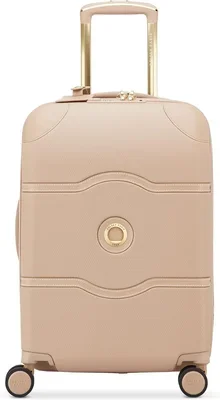
Best Premium Option: Delsey Chatelet Air 2.0 25″ (If Budget Allows)
If you want the Air Armour’s durability but crave a quieter roll (Hinomoto Lisof silent wheels), leather top/side handles, a brake system on the wheels (stops rolling on inclines), and that French atelier aesthetic, spend the extra $80-$120. It’s the same polycarbonate shell DNA, elevated. The brake feature alone is a game-changer on train platforms and jet bridges.
Best for Beginners / Infrequent Travelers: Delsey Helium Aero 21″ or 25″
The Helium Aero is Delsey’s entry-level polycarbonate line (~$140-$180). It has single spinner wheels, standard zippers (no Securitech), and a 10-year warranty. It’s 1-2 lbs lighter than Air Armour. If you travel 1-2 times a year, don’t check bags often, and want the Delsey name/quality without the $250+ price, this is the smart entry point. Upgrade to Air Armour 2.0 when travel frequency increases.
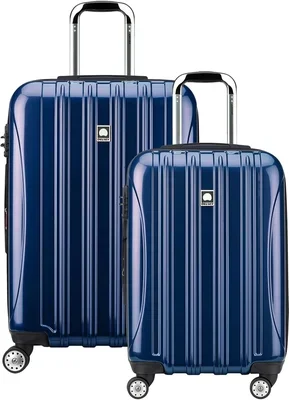
Best for Advanced Users / Road Warriors: Delsey Air Armour 2.0 21″ + 25″ Two-Piece Set
Frequent flyers need a system. The 21″ carry-on for domestic/short trips (fits overhead, saves time). The 25″ checked for international/long trips (capacity, durability). Buying as a set saves ~$50 vs separate. The matching Securitech locks mean one combination to remember. The consistent handle height/feel builds muscle memory. This duo covers 95% of travel scenarios for under $550 total. Add a Delsey underseater backpack for the complete kit.
Conclusion: Making the Right Choice
We’ve covered a lot of ground—from the molecular structure of polycarbonate to the geometry of double-spinner wheels, from the psychology of expansion zippers to the fine print of a 10-year warranty. The Delsey Paris Air Armour 2.0 isn’t just a box with wheels; it’s a carefully engineered travel tool designed to solve specific problems: security (Securitech), durability (polycarbonate + corner guards), maneuverability (recessed double spinners), and organization (thoughtful interior). It sits in that rare sweet spot where price, performance, and longevity intersect.
Your perfect choice comes down to honesty about your travel reality. Are you a weekend warrior who needs a carry-on that slides into an A320 bin every time? The 21″ is your partner. Do you haul gear for a family of four to Orlando once a year? The 25″ or 29″ (unexpanded) saves you baggage fees. Are you chasing status and silence? Look at the Chatelet Air 2.0. The Air Armour 2.0 in any size gives you a foundation of quality that, with basic care—cleaning wheels, not overstuffing expansion, registering the warranty—will reliably serve you for a decade of adventures.
Don’t overthink the color. Don’t underthink the size. Measure your airline’s rules. Weigh your packed bag. Buy during a sale window if you can. And most importantly: use it. A suitcase gathering dust in a closet is a bad investment, no matter how good the specs. The Air Armour 2.0 is built to go places. So pack it, zip it, lock it, and roll. The world is waiting, and your luggage is ready. Safe travels.