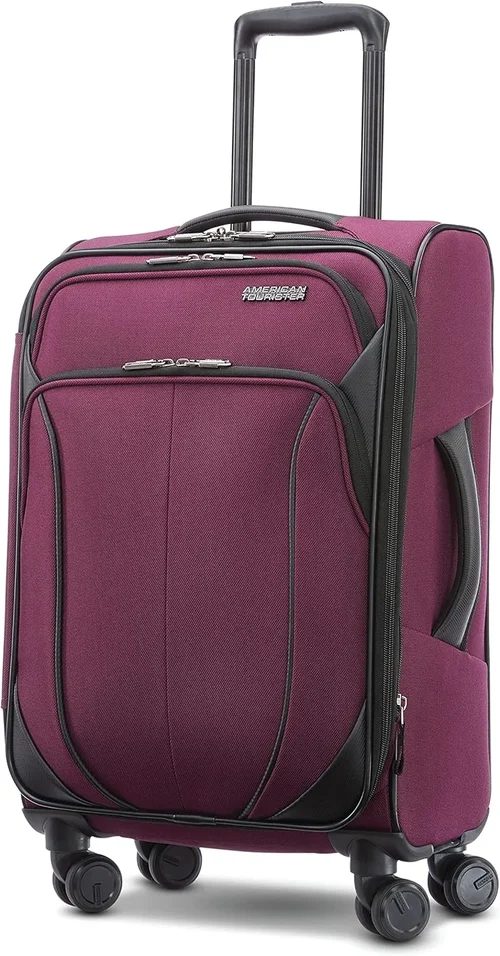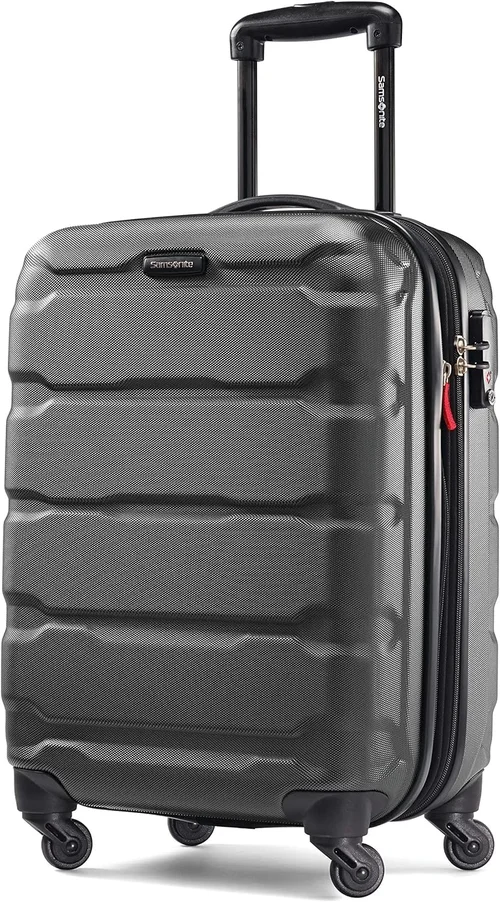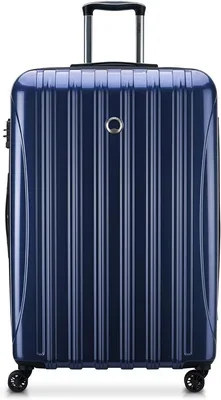
Shopping for a large checked suitcase can feel overwhelming. You are not just buying a box with wheels; you are investing in the vessel that carries your life’s essentials across continents, protects fragile souvenirs, and survives the not-so-gentle handling of baggage systems worldwide. A 29-inch expandable spinner is the workhorse of the luggage world. It is the go-to size for extended trips, family vacations, or anyone who refuses to play the “will it fit in the overhead bin” game. But with so many brands, materials, and price points, how do you separate the travel companions from the travel headaches?
This guide exists to cut through the marketing noise. We will walk through every critical factor—from the type of polycarbonate shell to the quality of the spinner wheels—so you can make a confident, informed decision. Whether you are eyeing a specific model like the Delsey Helium Aero or comparing it against the broader market, you will learn exactly what to prioritize, what to ignore, and how to spot value that lasts for years. By the end, you will know how to choose a 29-inch expandable spinner that fits your travel style, your budget, and your peace of mind.

What to Look for When Buying Buying Guide
1. Shell Material and Construction: The First Line of Defense
The shell is the skeleton of your luggage. For a 29-inch bag, which will be checked and stacked under hundreds of pounds of other luggage, material choice is non-negotiable. You will primarily encounter two categories: hard-shell and soft-shell. Hard-shell cases are typically made from polycarbonate, ABS, or a blend of both. Polycarbonate is the gold standard—it flexes under pressure rather than cracking, making it incredibly impact-resistant. ABS is cheaper and lighter but more brittle; a hard drop on a cold tarmac can shatter an ABS corner. Many mid-range bags use a polycarbonate-ABS composite to balance cost and durability.
Soft-shell luggage uses ballistic nylon, Cordura, or polyester. Denier count (e.g., 1680D) indicates thread thickness and tear resistance. High-denier ballistic nylon is exceptionally tough and offers a degree of “give” that allows you to squeeze the bag into tight car trunks or overhead compartments on smaller planes. However, soft shells offer less protection for fragile items and absorb water unless treated with a durable water repellent (DWR) coating. For a 29-inch spinner destined for the cargo hold, a high-quality polycarbonate hard shell generally offers superior protection for contents and better water resistance.
2. Wheel System: The Heart of the Spinner Experience
This is where the “spinner” name earns its keep. A 29-inch bag fully packed can weigh 50 to 70 pounds. Cheap wheels turn that weight into a wrestling match. You need to look at three things: wheel count, bearing quality, and mounting. Four wheels (spinner) are standard, but eight wheels (double spinner) are a game-changer for heavy loads. Double wheels distribute weight across a wider surface area, reducing the pressure on each individual wheel axle. They roll smoother over cracks, grates, and carpet.
Bearings matter immensely. Sealed ball bearings (often Japanese or German engineered) roll silently and require zero maintenance. Cheap plastic bushings or open bearings grind, wobble, and seize up after a few trips through sand or dirt. Mounting is the hidden failure point. Wheels recessed into the shell (molded into the body) are protected from snapping off if the bag is dropped or crushed. Wheels mounted on external brackets or “feet” are vulnerable leverage points. Grab the bag by the handle and shake it gently; the wheels should spin freely with zero side-to-side wobble.
3. Handle System: Ergonomics and Durability
The telescoping handle is your primary interface with the bag. A poorly designed handle causes wrist strain, back pain, and frustration. Look for a multi-stage locking handle (usually 3-stage) that adjusts to your height. The tubes should be aircraft-grade aluminum or high-strength steel—thin aluminum bends permanently if you yank the bag up a curb. The grip material matters too. Rubberized or gel-infused handles absorb vibration from rough pavement; hard plastic transmits every bump to your joints.
Check the handle housing inside the bag. Does it eat into packing space? Some designs route the handle tubes along the very edges of the interior, leaving a flat packing floor. Others create a large “hump” in the middle of the compartment, making it hard to pack flat items like suits or electronics. Also, test the release button. It should be large, tactile, and operable with a thumb while walking. Sticky or recessed buttons are a daily annoyance.
4. Expandability: The Hidden Volume
The “expandable” feature is a major selling point for 29-inch bags, typically adding 1.5 to 2.5 inches of depth via a zippered gusset. This can increase capacity by 15-25%, turning a 90-liter bag into a 110-liter monster. However, expansion comes with trade-offs. First, airlines have strict linear inch limits (length + width + height). A fully expanded 29-inch bag often exceeds the standard 62-linear-inch checked baggage limit, triggering oversize fees. Second, expansion stresses the zipper and fabric. Look for a heavy-duty #10 coil zipper with large teeth for the expansion gusset—it handles the tension better than standard zippers.
Third, an expanded bag is less stable. The center of gravity shifts, and the wheels are further from the body, increasing tipping risk. Use expansion strategically: pack flat at the start of the trip, expand only for the return journey when you have dirty laundry or souvenirs. Ensure the expansion zipper has a security flap or can be locked (see Security section) so it doesn’t burst open under pressure.
5. Interior Organization: Packing Efficiency
A cavernous empty shell is useless without smart organization. The best 29-inch spinners feature a clamshell opening (50/50 split) with compression straps on one side and a zippered divider panel on the other. Compression straps are essential—they cinch down contents, preventing shifting that wrinkles clothes and unbalances the wheels. Look for elasticized straps with quick-release buckles; fixed elastic straps lose tension over time.
The divider panel should have a large mesh pocket (for visibility) and a zippered pocket (for valuables/undergarments). Some premium models include a removable wet/dry pocket, a suiter sleeve for dresses or suits, or a dedicated padded laptop/tablet sleeve (though at 29 inches, this is checked luggage—never pack electronics you can’t afford to lose). Check the lining material: 150D-210D polyester is standard; antimicrobial or moisture-wicking linings are a nice bonus for damp climates.
6. Security Features: Locks, Zippers, and Frames
Security is twofold: keeping people out and keeping the bag closed. TSA-approved combination locks are mandatory for travel to/from the USA. They allow security agents to inspect and relock without cutting your lock. Integrated locks (built into the frame) are superior to padlocks—they can’t be lost, snagged on conveyors, or forgotten. Look for a three-dial combination (more secure than two) with a key override for TSA.
Zipper security is equally critical. Standard coil zippers can be penetrated with a ballpoint pen and re-zipped without evidence. Look for puncture-resistant zippers (like YKK RCW or similar) or, even better, a zipperless frame closure system (found on some high-end aluminum or polycarbonate bags). If the bag uses standard zippers, ensure the pulls have lockable holes that align perfectly with the integrated lock mechanism. Double-coil zippers (two rows of teeth) offer redundancy—if one row fails, the bag stays closed.
7. Weight: The Invisible Cost
Every pound the bag weighs empty is a pound less you can pack before hitting the airline weight limit (usually 50 lbs / 23 kg for international, sometimes 70 lbs / 32 kg for business class). A 29-inch spinner typically weighs 8-13 lbs. Ultra-light models (6-7 lbs) often sacrifice durability—thinner shells, minimal framing, weaker wheels. Heavy tanks (13+ lbs) eat your allowance before you pack a single shirt. The sweet spot for a durable polycarbonate 29-inch spinner is 9.5 to 11 lbs. This indicates sufficient material thickness for impact resistance without unnecessary bulk. Weigh the bag yourself if possible; manufacturer specs sometimes exclude wheels and handles.
8. Warranty and Brand Support: Your Safety Net
Luggage takes a beating. A warranty tells you how much the manufacturer believes in their product. “Lifetime warranty” sounds great, but read the fine print. Does it cover “wear and tear” or only “manufacturing defects”? Does it cover airline damage (the most common claim)? Brands like Briggs & Riley, Travelpro, and Delsey often offer “worry-free” or “trusted companion” warranties that cover airline damage for the first few years or even life, with minimal hassle. Others require you to ship the bag to a repair center at your cost, which for a 29-inch bag can cost $50+ in shipping alone.
Check for authorized repair centers near you. A brand with a global repair network (or a “send us a photo, we send parts” policy) is infinitely more valuable than one requiring factory service. Register your product immediately upon purchase—many warranties are void without registration.
Different Types of Buying Guide

Common Buying Mistakes to Avoid
❌ Mistake: Buying Based Solely on Brand Name
Why it’s bad: Major brands have entry-level lines that cut corners on wheels, handles, and zippers to hit a price point. A $120 Samsonite may use cheaper components than a $180 Delsey or Travelpro. The logo does not guarantee the internal quality of that specific model.
What to do instead: Compare specifications side-by-side. Look at wheel bearing type, handle tube material, zipper brand (YKK is the standard), and warranty terms. Read 2- and 3-star reviews—they reveal real-world durability issues that 5-star “just bought it” reviews miss.
❌ Mistake: Ignoring the “Linear Inch” Limit
Why it’s bad: A 29-inch bag expanded is often 31-32 inches tall. Add wheels and handle, and you easily exceed the 62-linear-inch standard. Airlines are increasingly strict and automated. An oversize fee ($100-$200 each way) erases any savings from a cheaper bag.
What to do instead: Measure the bag yourself (or check specs carefully) including wheels and handles. If you need maximum volume, look for a bag that maximizes internal dimensions while staying under 62 linear inches externally, or budget for potential fees.
❌ Mistake: Choosing Two Wheels Over Four for “Durability”
Why it’s bad: The old wisdom was that two fixed wheels are tougher. Modern double-spinner wheels (8 wheels total) are engineered for heavy loads and are far more maneuverable. Dragging a 70-lb two-wheeler through a terminal causes wrist and shoulder strain. Spinners let you push the bag beside you, using core muscles.
What to do instead: Embrace the spinner. Just ensure it has double wheels (8 total) and recessed mounting. Test it loaded with 50 lbs in the store—push it one-handed. If it tracks straight and turns effortlessly, the wheel system is solid.
❌ Mistake: Overlooking Interior Volume vs. External Dimensions
Why it’s bad: Thick shells, large wheel housings, and bulky handle tubes eat internal space. Two 29-inch bags can have vastly different packing capacities. A bag with 100L capacity vs 90L is a significant difference for a two-week trip.
What to do instead: Look for the published internal volume in liters. If not listed, check reviews for “packing capacity” comments. A flat interior floor (handle tubes routed to sides) yields more usable space than a humped floor.
❌ Mistake: Skipping the “Shake Test” In-Store
Why it’s bad: Online photos hide rattles, loose rivets, misaligned zippers, and wobbly wheels. A bag that feels solid empty may develop a handle rattle or wheel shimmy at 40 lbs.
What to do instead: If buying in person, load it with a 20-lb weight (ask staff). Extend the handle. Walk fast. Turn sharp corners. Go over a threshold. Listen for rattles. Feel for vibration in the handle. Check that the bag stands upright stably when parked.
❌ Mistake: Assuming “Lightweight” Means “Better”
Why it’s bad: The lightest 29-inch spinners (under 7 lbs) achieve weight savings by using thinner polycarbonate, minimal internal framing, and lighter-duty wheels. They dent, crack, and suffer wheel failure faster. A 10.5-lb bag that lasts 10 years is cheaper per trip than a 7-lb bag replaced every 2 years.
What to do instead: Target the 9.5-11 lb range for polycarbonate. This is the engineering sweet spot for durability-to-weight ratio. Accept the extra 2 lbs as insurance for your belongings.
❌ Mistake: Not Checking Repair Part Availability
Why it’s bad: Wheels, handles, and zipper pulls are wear items. If the brand doesn’t sell replacement parts or have a repair program, a $300 bag becomes trash after a $15 wheel breaks.
What to do instead: Visit the manufacturer’s website before buying. Search “replacement parts” or “warranty claim.” Do they sell wheel kits? Handle assemblies? Is there a video on how to install them? Brands like Travelpro, Briggs & Riley, and Delsey excel here.
Budget Guidelines: How Much Should You Spend?
Entry-Level ($60 – $130): The “Occasional Traveler” Tier
At this price, you are almost exclusively looking at ABS or Polycarbonate/ABS blend hard-shells, or polyester soft-shells. Expect single-spinner wheels (4 wheels, not 8), plastic bushings instead of ball bearings, aluminum handles that may bend, and standard coil zippers without puncture resistance. Warranties are typically “limited lifetime” covering only manufacturing defects, not airline damage. These bags work fine for 1-2 trips per year, careful handling, and light packing. They will likely show cosmetic damage (scratches, scuffs) quickly and may develop wheel wobble or handle stickiness within 3-5 trips. If you travel once a year for a week, this tier is perfectly rational.
Mid-Range ($130 – $280): The Sweet Spot for Most Travelers
This is where you find pure polycarbonate shells (often with a textured finish to hide scratches), double-spinner wheels (8 wheels) with sealed ball bearings, aircraft-grade aluminum handles, YKK zippers (often puncture-resistant), and TSA locks integrated into the frame. Brands like Delsey (Helium Aero, Chatelet), Travelpro (Maxlite 5, Platinum Elite), Samsonite (Freeform, Omni PC), and American Tourister populate this space. Warranties often expand to cover airline damage for 1-3 years (e.g., Delsey’s 10-year limited, Travelpro’s “Trusted Companion” 1-year airline damage coverage). Weight typically falls in the 9.5-11 lb sweet spot. This tier delivers 90% of premium performance for 50% of the cost. For anyone traveling 3+ times a year, this is the minimum recommended investment.
Premium ($280 – $500): The “Frequent Flyer” Standard
Here you pay for refined engineering: lighter yet stronger shell layups (e.g., Tegris, Curv, or advanced polycarbonate blends), whisper-quiet Hinomoto or Japanese double-spinner wheels, ergonomic handles with gel grips and wider tube diameters, zipperless frame closures or ultra-high-security zippers, and comprehensive “no-questions-asked” warranties covering airline damage for life (Briggs & Riley Baseline, some Victorinox lines). Interiors feature modular organization, suiter systems, and premium linings. Weight drops to 8.5-10 lbs despite higher durability. If you fly 10+ times a year, check bags every trip, or carry expensive gear (camera equipment in padded cases, formal wear), the reduced weight, superior maneuverability, and warranty peace of mind justify the premium.
Luxury ($500+): The “Buy It For Life” Category
This tier includes aluminum/magnesium frames (Rimowa, Tumi, Globe-Trotter), carbon fiber composites, and ultra-premium polycarbonate (e.g., Rimowa Essential, Tumi 19 Degree). You pay for materials that are virtually indestructible, iconic design, status signaling, and white-glove service (loaner luggage during repairs, global concierge). Warranties are lifetime, transferable, and cover almost everything. Weight varies—aluminum is heavy (13-15 lbs), carbon fiber is featherlight (6-7 lbs) but costly. These are heirloom pieces. Buy here if luggage is a passion, you want zero compromise, or the bag is a business expense where image matters.
Expert Tips for Getting the Best Deal
- Time Your Purchase: Luggage goes on deep discount during “luggage sale seasons”: January (post-holiday clearance), May (pre-summer), July (Amazon Prime Day / summer clearance), and November (Black Friday / Cyber Monday). The best prices on current models are usually Black Friday and July. Discontinued colors/models appear in January and May.
- Check “Open Box” and “Refurbished”: Major retailers (Amazon Warehouse, Best Buy Outlet, manufacturer certified refurbished pages) sell returned luggage at 20-40% off. Since most returns are for “wrong color” or “too big,” you often get a pristine bag with full warranty. Inspect immediately upon arrival.
- Use Price Tracking Tools: CamelCamelCamel (Amazon), Honey, or Keepa show price history. A “50% off” badge often means 50% off an inflated MSRP, not the actual street price. Set alerts for your target model.
- Buy a Set Only If You Need All Sizes: 3-piece sets (carry-on, medium, large) look like a deal. But if you only check a 29-inch bag, you are paying for two bags you won’t use, and the carry-on in cheap sets is often poor quality. Buy the 29-inch separately; invest in a high-quality carry-on separately.
- Register Immediately for Warranty: Do this the day it arrives. Take photos of the serial number tag (usually inside the lining or on the frame) and your receipt. File them digitally. This saves weeks of hassle if you ever need a claim.
- Test the “Push” Not the “Pull”: In store, don’t pull the bag behind you. Push it alongside you like a shopping cart. This is how spinners are designed to move. It reveals wheel alignment issues and handle vibration instantly.
- Consider “Unbranded” Premium Components: Some direct-to-consumer brands (e.g., Away, Monos, Level8, Arlo Skye) use the same factories and components (Hinomoto wheels, YKK zippers, Bayer Makrolon polycarbonate) as $500 brands but sell for $250-$350 by cutting retail markup. They often have better customer service and modern designs. Don’t ignore them just because they lack a 100-year heritage.
- Pack a “Luggage Repair Kit”: Carry a few zip ties, a small roll of duct tape (wrapped on a pen), and a penknife. A broken zipper pull or cracked shell corner can be temporarily fixed mid-trip, saving your vacation.

Frequently Asked Questions
Q: Is a 29-inch suitcase too big for international travel?
A: It depends on the airline and class. Most international economy flights allow one checked bag at 23 kg (50 lbs) with a maximum linear dimension of 158 cm (62 inches). A standard 29-inch spinner (approx. 29 x 20 x 11 inches = 60 linear inches) fits if not expanded. Expanded, it often exceeds 62 inches. Business/First class often allows 32 kg (70 lbs) and sometimes larger dimensions. Always check your specific airline’s website before packing. For strict budget airlines (Ryanair, Spirit, etc.), a 29-inch bag will almost certainly incur heavy fees.
Q: What is the difference between the Delsey Helium Aero and the Chatelet?
A: Both are 29-inch expandable spinners from Delsey. The Helium Aero is the “modern workhorse”: lighter (approx. 10.4 lbs), deeper textured polycarbonate (hides scratches better), double-spinner wheels, and a lower price point (~$180-$220). The Chatelet is the “heritage style” line: heavier (approx. 12.5 lbs), smoother glossy finish with leather accents, brake-equipped wheels (prevent rolling on inclines), and a higher price (~$280-$350). The Aero is better for pure utility and weight savings; the Chatelet wins on aesthetics, wheel brakes, and interior organization (often includes a suiter). Both share Delsey’s 10-year limited warranty.
Q: Can I replace the wheels on a spinner suitcase myself?
A: On many mid-range and premium bags, yes. Brands like Travelpro, Briggs & Riley, and Delsey sell wheel kits ($20-$40 for a set) and provide installation videos. It usually requires a Phillips screwdriver and 10 minutes. On budget bags (under $100), wheels are often riveted or molded into the shell, making replacement impossible without drilling. Check the manufacturer’s website for “parts” before buying if self-repair matters to you.
Q: Are spinner wheels really worse on rough terrain (cobblestones, gravel, snow)?
A: Small single wheels struggle. Large-diameter (3.5″+) double-spinner wheels with sealed bearings handle rough surfaces surprisingly well. The key is wheel diameter and bearing quality. If your travel involves significant cobblestones or dirt paths, look for “all-terrain” wheels (larger, softer rubber tread) or consider a two-wheeled “roll-aboard” style bag with larger fixed wheels. For 95% of travelers (airports, hotels, sidewalks, taxi trunks), quality double spinners are superior.
Q: Does the Delsey Helium Aero 29-inch have a brake system?
A: No. The Helium Aero features standard double-spinner wheels that rotate 360 degrees freely. The brake system (a lever on the handle that locks the rear wheels) is a feature of the Delsey Chatelet and some high-end Samsonite/Tumi models. On the Aero, you simply tilt the bag back on its two fixed rear feet (or the rear wheels if tilted) to park it. It stays put on flat surfaces but will roll on slopes.
Q: How do I clean a polycarbonate shell?
A: Use a soft cloth, warm water, and mild dish soap. Avoid abrasive cleaners, magic erasers (they dull the texture), or solvent-based products (they can damage the finish or weaken the plastic). For scuff marks from conveyor belts, a small amount of rubbing alcohol on a cloth works well, followed by soap and water. Dry thoroughly. For the interior, vacuum debris, then wipe with a damp cloth and mild detergent; air dry completely open before storing.
Q: What does “10-year limited warranty” actually cover on Delsey?
A: It covers manufacturing defects in materials and workmanship (broken zippers, handle mechanism failure, wheel detachment due to faulty mounting, shell cracking under normal use). It does NOT cover: airline damage (dents, tears, crushed corners), cosmetic wear (scratches, scuffs), damage from overpacking, loss, or theft. For airline damage, you must file a claim with the airline before leaving the airport (Property Irregularity Report). Delsey’s warranty is respected for honoring genuine defects with minimal hassle—often sending replacement parts free.
Q: Should I buy a luggage cover for my 29-inch spinner?
A: It’s personal preference. A stretchy fabric cover protects the shell from deep scratches, scuffs, and dirt, and makes your bag instantly identifiable on the carousel. However, covers add weight (4-8 oz), can snag on conveyor belts, and must be removed for TSA inspection (they’ll cut it off if locked). If you have a glossy shell (like Chatelet) that shows scratches easily, a cover is smart. On a deep-textured matte shell (like Helium Aero), scratches are nearly invisible, so a cover is less necessary.
Q: Can I fit a 29-inch spinner in a standard sedan trunk?
A: Usually, yes, but it’s tight. A 29-inch bag is roughly 30-31 inches tall with wheels. Most sedan trunks have a 30-32 inch opening height. You may need to angle it in or fold a rear seat down. SUVs, hatchbacks, and minivans have no issue. Measure your trunk opening height before buying if you have a small car.
Q: Is it worth paying extra for a zipperless frame closure?
A: For a 29-inch checked bag, yes, if budget allows. Zipperless frames (aluminum or reinforced polycarbonate perimeter) eliminate the #1 failure point: the zipper. They are impossible to puncture with a pen, distribute impact forces around the entire perimeter, and often have better water resistance. However, they add 1-2 lbs and $100-$200+. If you check fragile items or travel to high-theft-risk areas, the security and durability are worth it. For general clothing, a high-quality puncture-resistant zipper (YKK RCW) is 95% as secure for half the cost.
Our Final Recommendations
Best for Budget-Conscious Buyers: Amazon Basics 29-Inch Hardside Spinner (or similar entry-level polycarbonate/ABS)
If you travel once a year and need a basic checked bag, this gets the job done for under $100. It has 4 spinner wheels (single), a push-button handle, and a TSA lock. It won’t survive weekly airline abuse, but for occasional use, the cost-per-trip is unbeatable. Accept that wheels may wobble after a few trips and the shell may crack under severe impact. Pack a backup duffel just in case.
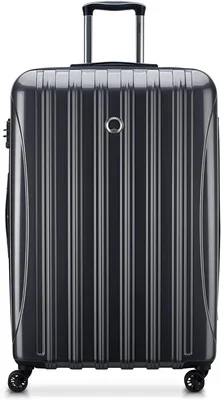
Best Overall Value: Delsey Helium Aero 29-Inch Expandable Spinner
This is the benchmark for the mid-range category. At ~$180-$220, you get a 100% polycarbonate shell (textured, scratch-hiding), 8-wheel double-spinner system with sealed bearings, a comfortable 3-stage aluminum handle, YKK zippers, integrated TSA lock, and a 10-year limited warranty. It weighs ~10.4 lbs, leaving plenty of weight allowance. The interior is thoughtfully organized with tie-down straps and a full zip divider. It hits the durability/weight/price sweet spot perfectly for 90% of travelers. The lack of wheel brakes is the only notable omission vs. the Chatelet.
Best Premium Option: Briggs & Riley Baseline Domestic 29-Inch Expandable Spinner
At ~$450-$500, this is an investment. But the “Simple as That” lifetime warranty covers airline damage forever—no receipt needed, no questions asked. The CX expansion system adds 25% volume without increasing linear dimensions (it expands inward then outward), keeping you legal. The ballistic nylon exterior is virtually tear-proof. The wheels are aircraft-grade. The handle is the industry gold standard. If you fly 15+ times a year, this bag pays for itself in avoided replacement costs and claim hassles. It’s heavier (~12 lbs) but built like a tank.
Best for Beginners: Travelpro Maxlite 5 29-Inch Expandable Spinner
Travelpro is the brand flight crews choose. The Maxlite 5 (~$150-$180) is a soft-sided spinner that is incredibly light (~8.5 lbs), leaving maximum weight for your stuff. It has 4 spinner wheels (single, but high quality), a PowerScope handle with contour grip, and a fabric that resists stains and water. The 2-inch expansion is standard. The “Trusted Companion” warranty covers repair costs for airline damage for 1 year. It’s forgiving, easy to squeeze into tight spaces, and teaches you what you value in luggage without a huge commitment.
Best for Advanced Users / Heavy Packers: Rimowa Essential Trunk Plus (or Trunk) in Polycarbonate
If budget is no object and you demand the best wheels, shell, and status, the Rimowa Essential (~$800-$1000) is the pinnacle of polycarbonate. The grooves aren’t just looks—they add structural rigidity allowing a thinner, lighter shell (approx. 9.7 lbs for 29-inch). The Hinomoto multi-wheel system is the smoothest rolling in the industry. The telescoping handle is stage-less (stops at any height). The zipperless frame closure with TSA locks is absolute security. It fits in a Rimowa-specific leather tag ecosystem. This is for the traveler who views luggage as a critical tool and a design object.
Conclusion: Making the Right Choice
Choosing a 29-inch expandable spinner is ultimately about matching the tool to your travel reality. We’ve covered the anatomy of a great bag: a polycarbonate shell that flexes instead of cracks, double-spinner wheels with sealed bearings that glide under 70 lbs, a handle that fits your height and saves your wrist, an expansion zipper you can trust, and a warranty that has your back when the airline doesn’t. We’ve explored the budget tiers, exposed the common traps, and armed you with pro buying tactics.
Remember, the “best” luggage isn’t the most expensive or the lightest—it’s the one that survives your specific journeys. If you’re a weekend warrior, the mid-range sweet spot (like the Delsey Helium Aero) offers incredible engineering value. If you’re a road warrior, the premium warranty of a Briggs & Riley buys you sleep. If you’re a style-conscious explorer, the Rimowa or Chatelet brings joy to every arrival.
Don’t overthink it. Prioritize wheels and warranty first—those are the heart and the safety net. Then fit the shell, handle, and features to your budget. Measure your trunk, check your airline’s linear inches, and register your warranty the day it arrives. Your future self, standing at baggage claim watching your bag glide off the carousel unscathed, will thank you. Safe travels, and may your zippers never snag.