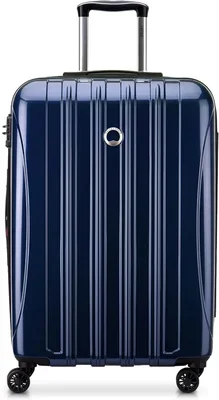
Shopping for a large checked suitcase can feel overwhelming. You’re not just buying a box with wheels; you’re investing in peace of mind for your most valuable belongings during the roughest part of travel: the baggage handling system. The Delsey Helium Aero 29 Expandable Spinner has earned a reputation as a workhorse in the mid-range luggage market, but is it the right workhorse for you? This guide cuts through the marketing jargon to give you the practical knowledge you need to make a confident decision.
We’ll walk through the critical factors that separate a suitcase that survives one trip from one that lasts a decade. You’ll learn how to evaluate shell materials, wheel engineering, and internal organization like a pro. We’ll also compare where this model sits in the current market landscape, break down budget tiers, and highlight the common pitfalls that lead to buyer’s remorse. By the end, you’ll know exactly what to prioritize for your travel style.
The luggage market is flooded with options ranging from budget basics under $100 to luxury status symbols exceeding $1,000. The Delsey Helium Aero 29 Expandable Spinner occupies a sweet spot: it aims to deliver premium features like a polycarbonate shell and double spinner wheels at a price point that doesn’t require a second mortgage. Understanding where it excels—and where it makes compromises—is the key to spending your money wisely.

What to Look for When Buying Buying Guide
1. Shell Material and Impact Resistance
The shell is your first line of defense. The Delsey Helium Aero 29 Expandable Spinner uses 100% polycarbonate. In layman’s terms, polycarbonate is a high-tech plastic that is incredibly tough but flexible. Unlike older ABS plastic (which cracks under pressure) or aluminum (which dents permanently), polycarbonate absorbs impact by flexing and snapping back to shape. This is crucial for a 29-inch bag because checked luggage takes a beating—it gets tossed onto conveyor belts, stacked under hundreds of pounds of other bags, and dragged across tarmacs.
When evaluating any hardside luggage, press firmly on the shell. It should have a slight “give” but feel solid, not flimsy. Look for a matte or textured finish rather than high gloss. Glossy finishes show every scratch and scuff from the first trip, while the textured finish on the Helium Aero hides wear beautifully, keeping your bag looking newer for longer.
2. Wheel Engineering and Maneuverability
Wheels are the single most common point of failure on spinner luggage. The Delsey Helium Aero 29 Expandable Spinner features double spinner wheels—four wheels per corner, eight total. This is a massive advantage over single-wheel spinners. Double wheels distribute the weight of a fully packed 29-inch bag (which can easily hit 50-70 lbs) across a wider surface area. This reduces the load on each individual wheel axle, preventing the dreaded “wobble” or snapped wheel housing.
Look for wheels that are recessed into the body of the suitcase. Recessed wheels are protected from snagging on curbs, conveyor belt lips, and the metal lips of baggage claim carousels. Spin the wheels in the store (or check video reviews closely). They should rotate 360 degrees silently and smoothly with zero grinding. Cheap wheels use plastic bushings that grind down quickly; quality wheels use sealed ball bearings. Delsey generally uses high-quality Japanese-made Hinomoto or equivalent silent-run wheels on this line, which is a major selling point at this price.
3. Handle System Ergonomics and Durability
The telescoping handle is your connection to the bag. A poorly designed handle causes wrist strain, back pain, and frustration. The Helium Aero uses a double-tube aluminum handle system with a push-button release. Aluminum is preferred over steel because it saves weight without sacrificing strength. The double-tube design provides lateral stability—when you push a heavy bag, the handle shouldn’t twist or flex side-to-side.
Check the height settings. Does it lock at multiple heights? This is essential if you share the bag with a partner of a different height, or if you prefer a lower setting for pushing vs. a higher setting for pulling. Also, test the grip. A contoured, rubberized grip reduces hand fatigue significantly compared to a hard plastic tube. Finally, inspect the handle housing inside the suitcase. It should be reinforced with a plastic or metal bracket, not just screwed into the fabric liner. This interior reinforcement prevents the handle tubes from puncturing the liner or bending the shell if the bag is dropped on its handle.
4. Expansion Mechanism and Real-World Capacity
The “Expandable” in the name refers to a zippered gusset that adds roughly 2 inches of packing depth. This is a game-changer for return trips when you’ve acquired souvenirs, dirty laundry bulk, or duty-free purchases. However, not all expansion systems are created equal. On the Delsey Helium Aero 29 Expandable Spinner, the expansion zipper is a heavy-duty #10 coil zipper (larger teeth = stronger) with a fabric gusset that is reinforced at stress points.
Crucially, understand the airline implications. A 29-inch bag expanded often exceeds the standard 62 linear inches (L+W+H) limit for standard checked baggage on many US carriers (like United, American, Delta), pushing you into “oversized” fee territory ($200+ extra). Use the expansion strategically: keep it compressed for the outbound flight to stay within limits, and expand only for the return if needed—and only if your airline allows slightly oversized bags for a standard fee, or if you’re flying internationally where limits are often more generous. The base capacity (approx 100-110 liters) is already massive for a 2-week trip.
5. Security Features: TSA Locks and Zipper Quality
Security is non-negotiable for checked luggage. The Helium Aero features a recessed, TSA-accepted combination lock integrated into the shell. “TSA-accepted” means Transportation Security Administration agents have a master key to open it for inspection without cutting your lock. “Recessed” means the lock mechanism sits flush inside the shell curve, protecting it from being snapped off by baggage handlers or conveyor belts.
Equally important are the main compartment zippers. The Helium Aero uses YKK RCW (Racquet Coil Watertight) or similar high-grade coil zippers. These are self-healing—if a tooth gets misaligned, simply zipping and unzipping usually fixes it. They are also highly resistant to the “pen trick” (where a thief inserts a pen into the zipper teeth to pop them open, then runs the sliders back to close it invisibly). Look for double zipper pulls that lock together into the TSA lock. Single pulls cannot be secured.
6. Internal Organization and Packing Efficiency
A 29-inch cavern needs structure, or your clothes become a jumbled mess. The Helium Aero splits the interior into two equal-depth compartments (clamshell opening). One side typically features a zippered divider panel with a large mesh pocket (great for toiletries, cables, underwear). The other side uses compression straps with a buckle to clamp down clothing volume.
Look for a “liner” that is fully sewn in, not just velcroed or snapped. A sewn-in liner prevents items from slipping behind it into the frame channels where they get crushed or lost. The Helium Aero usually features a premium polyester or twill liner that feels durable. A hidden bonus: check if there is a zippered pocket inside the divider panel or on the lid. These are perfect for hiding valuables, passports, or dirty shoes separate from clean clothes.
7. Weight vs. Durability Trade-off
This is the central dilemma of hardside luggage. The Delsey Helium Aero 29 Expandable Spinner typically weighs in around 10.5 – 11.5 lbs (depending on the specific generation). For a 29-inch polycarbonate spinner, this is impressively light. Many competitors in this size class weigh 12-14 lbs. Every pound of luggage weight is a pound less you can pack before hitting the 50 lb airline limit.
However, ultra-lightweight bags (under 9 lbs for this size) often achieve that by thinning the shell walls or using cheaper wheel assemblies. They crack easier. The Helium Aero strikes a mature balance: it uses enough polycarbonate thickness to be rigid, but utilizes advanced molding techniques (like structural ribs) to maintain strength without bulk. If you are a chronic overpacker who hits 50 lbs regularly, this weight savings is tangible money saved on overweight fees.
8. Warranty and Brand Support Reality
A warranty is only as good as the company backing it. Delsey offers a 10-year limited warranty on the Helium Aero. “Limited” is the key word—it covers manufacturing defects (broken wheel housing, handle mechanism failure, zipper failure, shell cracking under normal use). It does not cover airline damage (crushed corners, torn wheels, punctured shells), cosmetic wear, or loss.
What matters more than the paper warranty is the service network. Delsey has authorized repair centers in many major cities and a relatively responsive customer service team for a mid-tier brand. Before buying, check if there is a repair center near you. If a wheel breaks in year 3, can you drop it off locally, or do you have to ship the empty 29-inch box across the country at your own expense ($40+ shipping)? That hidden cost makes a “lifetime warranty” from a brand with no local support less valuable than a 10-year warranty with a shop 20 minutes away.
Different Types of Buying Guide

Common Buying Mistakes to Avoid

❌ Mistake: Buying Based Solely on Brand Name Recognition
Why it’s bad: Big names like Samsonite or American Tourister have huge marketing budgets, but their entry-level lines often use cheaper materials (ABS blends, single wheels, plastic handle tubes) than a specialized brand’s mid-range model. You pay for the logo, not the engineering.
What to do instead: Compare specs side-by-side. Look at the shell material (pure polycarbonate vs blend), wheel type (double spinner vs single), handle tube material (aluminum vs steel), and warranty terms. The Delsey Helium Aero 29 Expandable Spinner often out-specs similarly priced “big name” suitcases.
❌ Mistake: Ignoring the “Linear Inches” Math
Why it’s bad: A 29-inch suitcase is already large. The listed dimensions (usually ~29 x 20 x 11.5 inches) often exclude wheels, handles, and expansion. With wheels and handle, it’s often 31-32 inches tall. Expanded, it adds 2 inches depth. Total linear inches can easily hit 65-67. Airlines measure at the gate or check-in. If you’re over 62, you pay oversized fees ($150-$200+ each way).
What to do instead: Measure your typical airline’s specific checked bag policy before buying. If you fly basic economy or budget carriers (Spirit, Frontier, European low-cost), a 27-inch or 25-inch spinner is a much safer, cheaper choice. Only buy 29-inch if you fly carriers with generous allowances (international long-haul, Southwest, some premium tickets) or check it as a “standard” bag knowing it’s borderline.
❌ Mistake: Overlooking the Weight of the Empty Bag
Why it’s bad: A 13 lb empty suitcase leaves you only 37 lbs for your stuff on a 50 lb limit. Pack a week’s clothes, shoes, toiletries, and a laptop, and you’re overweight before souvenirs. Overweight fees are $100+ per bag.
What to do instead: Target a 29-inch polycarbonate spinner under 11.5 lbs. The Helium Aero hits this mark. Weigh your packed bag at home with a luggage scale ($10 investment). It saves massive stress and money at the airport.
❌ Mistake: Assuming “Expandable” Means Free Extra Space
Why it’s bad: Using the expansion zipper changes the bag’s official dimensions. It also stresses the zipper and fabric gusset. A fully expanded, fully packed 29-inch bag is extremely heavy and awkward for you to lift into a car trunk or onto a scale, increasing injury risk.
What to do instead: Treat expansion as an emergency buffer, not standard operating procedure. Pack the bag compressed. If you must expand, weigh it immediately. Consider shipping souvenirs home instead of risking fees.
❌ Mistake: Neglecting Wheel Type for Your Terrain
Why it’s bad: Spinner wheels (4 wheels, 360 deg) are amazing on smooth airport floors. They are terrible on cobblestones, gravel, cracked sidewalks, snow, or thick carpet. The small wheels catch, snap, or clog. If your journey involves significant “last mile” walking on rough surfaces, spinners will fail you.
What to do instead: If you travel to Europe, Asia, or adventure destinations with rough terrain, strongly consider a 2-wheel “roller” bag with large, recessed inline-skate wheels (like Briggs & Riley Baseline or Travelpro Platinum Elite). They roll over anything. Only buy the Delsey Helium Aero 29 Expandable Spinner if 90%+ of your rolling is on smooth floors.
❌ Mistake: Not Checking the Interior Liner Quality
Why it’s bad: Cheap liners tear, snag on zippers, and allow items to fall into the frame channels (the gap between the shell and the liner). Retrieving a lost passport or phone from a frame channel requires a seam ripper or destroying the liner.
What to do instead: Open the bag fully. Tug the liner at the corners and near the handle housing. It should be tightly sewn, thick, and smooth. The Helium Aero generally uses a high-quality, fully sewn liner with reinforced corners—verify this on the specific unit you receive.
❌ Mistake: Skipping the “Shake Test” on the Handle
Why it’s bad: A wobbly handle on a 70 lb bag makes steering impossible. It forces you to muscle the bag, causing fatigue. It also indicates weak internal riveting that will eventually fail completely.
What to do instead: Extend the handle fully. Shake the bag vigorously side-to-side and front-to-back. The handle should feel like a solid extension of the shell. Zero play. Zero rattle. If it wobbles in the store, it will break on trip two.
Budget Guidelines: How Much Should You Spend?
Entry-Level ($80 – $150): The “One Trip Wonder” Zone
At this price, you are almost exclusively buying ABS/Polycarbonate blend shells, single spinner wheels (or low-quality doubles), steel handle tubes, and basic zippers. Brands: Amazon Basics, American Tourister (entry), Rockland, generic brands. Expect: Shell cracks on first heavy check-in, wheels seize or fall off within 3-5 trips, handle binds or bends. Zippers split. Weight: often 11-13 lbs despite weaker materials. Verdict: Only for extremely infrequent flyers (once every 2-3 years) who pack light and treat luggage gently. High risk of failure mid-trip.
Mid-Range ($180 – $300): The Sweet Spot (Helium Aero Lives Here)
This is where smart money goes. You get: 100% Polycarbonate shells, quality double spinner wheels (often Hinomoto or equivalent), aluminum double-tube handles, YKK or equivalent zippers, TSA locks, fully lined interiors, 10-year warranties. Weight: 10-11.5 lbs for 29-inch. Brands: Delsey (Helium Aero, Chatelet), Travelpro (Maxlite 5 hardside, though that’s softer), Samsonite (Freeform, Omni PC – though often single wheels at lower end), Ricardo Beverly Hills. Verdict: This tier delivers 5-10+ years of frequent travel. The Delsey Helium Aero 29 Expandable Spinner is a benchmark here—often on sale near $200-$230, offering specs that rival $350 bags.
Premium ($350 – $600): The “Buy It For Life” Aspiration
You pay for: Refined wheel silence/smoothness (magnetically levitated or precision bearings), handle ergonomics (leather grips, smoother extension), lifetime warranties that actually cover airline damage (Briggs & Riley), proprietary features (Tumi’s tracer, Samsonite’s Track&Go), tighter tolerances, premium packaging. Shell material is often the same polycarbonate, just molded with more complex geometry. Brands: Briggs & Riley (Baseline, Sympatico), Samsonite (Proxis, Securipak), Tumi (19 Degree, International), Victorinox (Spectra 3.0). Verdict: Worth it if you travel weekly for work and the bag is a tax write-off, or if you value the “lifetime repair even if airline crushed it” promise of Briggs & Riley. Diminishing returns on pure durability vs mid-range.
Luxury ($800+): Status and Aluminum
Materials shift to aluminum-magnesium alloy (Rimowa, Tumi Aluminum, Zero Halliburton) or carbon fiber. Weight jumps to 13-16 lbs empty. Dents are badges of honor. Wheels and handles are jewelry. Warranty is concierge-level. Verdict: Not a practical buying decision. It’s a lifestyle purchase. The Delsey Helium Aero 29 Expandable Spinner outperforms these on weight and dent-resistance (polycarbonate flexes; aluminum dents permanently).
Expert Tips for Getting the Best Deal
- Time Your Purchase: Luggage goes on deep sale 3-4 times a year: January (post-holiday clearance), May (pre-summer travel prep), July (Amazon Prime Day / competitor sales), and November (Black Friday / Cyber Monday). The Helium Aero frequently drops 20-30% off MSRP during these windows. Set a price alert on CamelCamelCamel or Honey.
- Check “Open Box” / “Renovated” at Major Retailers: Best Buy, Amazon Warehouse, Nordstrom Rack, and Delsey’s own outlet site often sell returned Helium Aero units with cosmetic-only issues (scuff on shell, missing tag) for 40-50% off. Since the shell hides scratches anyway, this is a steal. Inspect wheels and handle immediately upon arrival.
- Buy the 3-Piece Set If You Need Multiple Sizes: If you also need a carry-on (21-22 inch) and a medium checked (25 inch), the 3-piece Helium Aero set is often priced barely higher than buying the 29-inch alone on sale. You get matching aesthetics, nesting storage, and uniform wheel/handle feel.
- Register Your Warranty Immediately: Take 5 minutes on Delsey’s website. Register the serial number (inside the bag, near the handle housing or on a tag). Upload your receipt. This activates the 10-year coverage and speeds up any future claim. Unregistered bags often get “proof of purchase” runaround.
- Protect the Wheels During Storage: Don’t stand the bag on its wheels in a hot garage or attic for months. The constant pressure flattens the soft polyurethane tire tread, creating a “thump-thump” flat spot. Store it on its side or hang it from the top handle if possible.
- Use Packing Cubes + Compression Straps: The Helium Aero’s compression straps work best with packing cubes. Cubes create rigid blocks that the straps can compress evenly. Loose clothes shift, making the bag bulge and stress the shell/zipper. Cubes also make TSA inspections neat—agents lift a cube, see through mesh, replace it.
- Carry a Pen & Paper for the Combo Lock: Set your TSA lock combination before you leave home. Write it down in your phone notes AND on a slip of paper in your wallet. Forgetting a 3-digit code on a checked bag at 6 AM is a nightmare. TSA cannot open a lock you set if you forget the code—they cut it.
- Know Your Airline’s Specific “Free Checked Bag” Dimensions: Some airlines (like Southwest) allow 62 linear inches including wheels/handles for free checked bags. Others (United, Delta basic economy) charge for any checked bag. Measure your Helium Aero (with wheels) before you fly. If it’s 63 inches, you’re technically oversized on some carriers. Knowledge prevents surprise fees.

Frequently Asked Questions
Q: Is the Delsey Helium Aero 29 Expandable Spinner carry-on size?
A: Absolutely not. The 29-inch designation refers to the height of the packing compartment. With wheels and handle, it stands roughly 31-32 inches tall. This is a large checked bag only. It will not fit in any overhead bin. Delsey makes 21-inch and 25-inch versions of the Helium Aero for carry-on and medium checked needs.
Q: How much does the Helium Aero 29 weigh empty?
A: It typically weighs between 10.6 lbs and 11.2 lbs depending on the specific production year/version (Delsey updates the line periodically). This is very light for a 29-inch polycarbonate spinner. Many competitors weigh 12.5 – 14 lbs. This 1.5-3 lb savings directly translates to more packing allowance before hitting the 50 lb limit.
Q: Can the wheels be replaced if they break?
A: Yes, but with caveats. The double spinner wheel housings are riveted or screwed into the shell. Delsey sells replacement wheel kits (often 2-packs) through their website and authorized repair centers. A handy person with a rivet gun or small bolts/nuts can DIY. However, it requires removing the interior liner (unsewing a section) to access the fasteners. A local luggage/shoe repair shop can usually do it for $30-$50 per wheel if you’re not handy. This is standard for almost all molded polycarbonate luggage.
Q: Does the expansion zipper weaken the bag’s structure?
A: No, not on this model. The expansion gusset is a heavy-duty fabric panel sewn between the top and bottom shell halves. When compressed (zipped closed), the two shells sit flush against each other, locked by the zipper. The structural integrity relies on the shell-to-shell contact, not the zipper. The zipper merely holds the gap closed. When expanded, the fabric gusset bears the load. It is reinforced at the corners. It is designed for this load.
Q: Is the TSA lock easy to set? I’m bad at combinations.
A: Yes, it’s a standard 3-dial recessed lock. The factory default is usually 0-0-0. To set your own: Open the lock (0-0-0). Find the small reset button (usually a tiny pinhole or lever on the side/bottom of the lock mechanism). Press it firmly with a pen tip while turning the dials to your desired code. Release the button. Scramble the dials. Test it. Write the code down immediately. It takes 30 seconds.
Q: How does it handle rain? Is the zipper waterproof?
A: The polycarbonate shell is waterproof. The YKK RCW (or similar) main zippers are water-resistant—they have a polyurethane coating and tight coil construction that repels driving rain and splashes. They are not submersion waterproof (don’t throw it in a pool). The expansion zipper is standard coil, less water-resistant. In heavy downpours, water can eventually seep through the zipper teeth. For monsoon travel, use a luggage cover or line the interior with a trash bag / dry bag.
Q: Can I fit a folded suit or dress in the 29-inch without wrinkles?
A: The interior dimensions are roughly 28″ x 19″ x 11.5″ (compressed). A standard suit folded in a garment bag (approx 22″ x 11″) fits flat on the bottom with room to spare. Use the compression straps to hold it tight. For dresses, lay flat, use tissue paper, and place on top. The clamshell opening allows full access. It’s far better for formal wear than a softside where clothes shift into a ball.
Q: What is the difference between the Helium Aero and the Chatelet Air 2.0?
A: Both are Delsey 100% polycarbonate 29-inch spinners. The Helium Aero is the “performance” line: matte textured finish, more utilitarian look, slightly lighter, often cheaper. The Chatelet Air 2.0 is the “style” line: faux leather accents (top/side carry handles, corner guards), glossy/metallic finish options, silkier interior liner, slightly heavier (~11.5-12 lbs), higher MSRP. Mechanically (wheels, handle, frame, lock, expansion), they are nearly identical. Choose Helium Aero for pure function/value; Chatelet for aesthetics.
Q: Does it have a USB port or battery pocket?
A: No. The Helium Aero is deliberately “dumb luggage.” It has no built-in battery, USB port, GPS tracker, or scale. This is a feature, not a bug. Airlines ban smart bags with non-removable batteries in checked luggage. Adding a power bank adds weight and a failure point. Buy a separate 20,000mAh power bank ($25) and keep it in your carry-on. It’s more versatile and airline-compliant.
Q: What if the airline damages it on the first flight?
A: File a damage claim at the airport baggage service office before you leave the claim area. Get a written report (Property Irregularity Report – PIR). Take photos of the damage and the tag. Contact Delsey warranty with the PIR report and photos. Airline damage is the airline’s liability, not the manufacturer’s warranty. However, Delsey’s warranty covers manufacturing defects that might have contributed (e.g., wheel housing snapped because rivet was defective). If the shell cracked from a 200lb bag dropped on it, that’s the airline’s claim. Delsey repair centers can often fix airline damage for a reasonable fee if the airline denies the claim.
Our Final Recommendations
Best for Budget-Conscious Buyers: Delsey Helium Aero 29 (On Sale)
If you watch prices and catch a sale (sub-$220), this is unbeatable value. You get premium polycarbonate construction, double Hinomoto-style wheels, and a 10-year warranty for the price of a budget blend bag. It outperforms almost everything under $250. Sign up for price alerts. Buy the 3-piece set if you need a carry-on too—the per-bag cost drops dramatically.
Best Overall Value: Delsey Helium Aero 29 Expandable Spinner (Standard Price)
Even at full MSRP (~$280-$300), it remains the benchmark for the “smart traveler” category. It balances weight (10.8 lbs), durability (pure PC, double wheels), features (TSA lock, expansion, great liner), and warranty (10yr, decent support) better than Samsonite Freeform (single wheels, heavier), Travelpro Maxlite Hardside (thinner shell), or Ricardo (heavier). It’s the safe, smart, boring-good choice.
Best Premium Option: Briggs & Riley Sympatico 29″ Spinner
If budget stretches to $500-$550, the Sympatico is the upgrade. Why? The lifetime warranty covers airline damage. They will repair a crushed corner or torn wheel for free, forever. It uses CX expansion technology (expands 34% then compresses back smaller than original via a clever mechanism). Wheels are whisper-quiet MagnaTrac. Handle is superb. It’s heavier (~12.5 lbs), but the “we fix airline damage” promise is worth the weight penalty for frequent checkers.
Best for Beginners: Delsey Helium Aero 29 (3-Piece Set)
New to checking bags? Buy the 3-piece set (21″ carry-on, 25″ medium, 29″ large). You get a matched system. Learn packing discipline with cubes in the 25″. Use the 29″ only for family trips or long stays. The consistent wheel/handle feel across sizes builds muscle memory. The carry-on fits overheads; the 25″ is the perfect “sweet spot” checked size (usually under 62 linear inches even with wheels). You’re set for any trip length.
Best for Advanced Users / Rough Terrain: Travelpro Platinum Elite 29″ Rollaboard (2-Wheel)
If your “advanced” travel involves cobblestones, dirt paths, snow, or hauling bags up hotel stairs in Europe, do not buy a spinner. Buy the Travelpro Platinum Elite 29″ Rollaboard (2-wheel). It has massive, sealed-bearing inline skate wheels that roll over bricks and gravel effortlessly. The PowerScope handle is the industry gold standard. It’s lighter (9.5 lbs) because 2-wheel systems are simpler. It has a lifetime warranty covering airline damage. It fits the Helium Aero’s capacity but survives terrain that destroys spinners.
Conclusion: Making the Right Choice
Choosing a large checked suitcase is ultimately about matching the tool to your specific travel reality. The Delsey Helium Aero 29 Expandable Spinner earns its popularity by nailing the fundamentals: a tough, lightweight pure polycarbonate shell that hides scratches; smooth, durable double spinner wheels that actually handle the weight of a packed 29-incher; a comfortable, stable handle; and a smart interior that keeps you organized. It does this at a price that respects your wallet.
Remember the priority order: Wheel quality and shell material first (they determine survival), weight second (determines packing freedom), organization and security third (determines daily ease), warranty and support fourth (determines long-term value). Don’t be seduced by gadgets, colors, or brand prestige alone. A bag that rolls straight, weighs little, and protects your gear is a joy; a pretty bag with seized wheels is a burden.
You now have the framework to decide. If you fly mostly smooth airports, need maximum capacity for family or long trips, and want a 5-10 year partner that won’t break the bank, the Helium Aero 29 is a fantastic choice. Buy it on sale, register the warranty, pack it with cubes, and travel confidently. The world is waiting—go see it with the right gear.